

Best DNA test: Find the right genetic test for your health
Finding the right DNA test depends solely on your personal goal. If you are looking for the best DNA test for weight management, a metabolism analysis is exactly what you need. If, on the other hand, you want to understand your health risks preventively or explore your ancestry, specialized tests are clearly the better choice. So the most important question is not, “Which test is the best?” but rather, “Which test suits me best?”
Which DNA test is right for you?
The world of DNA tests is vast and may seem a little confusing at first glance. But don't worry—the choice is easier than you think. The key is to clearly define your personal goal.
Do you finally want to understand why certain diets simply do not work for you? Or are you looking for ways to specifically optimize your athletic performance? Perhaps you simply want to take proactive steps for your long-term health and learn about potential genetic predispositions.
Each of these goals requires a different type of analysis. For example, a test focused on your metabolism provides valuable insights into your individual need for carbohydrates, fats, and proteins. A health test, on the other hand, covers entirely different areas.
This decision tree shows you at a glance how to link your main goal to the appropriate test category.
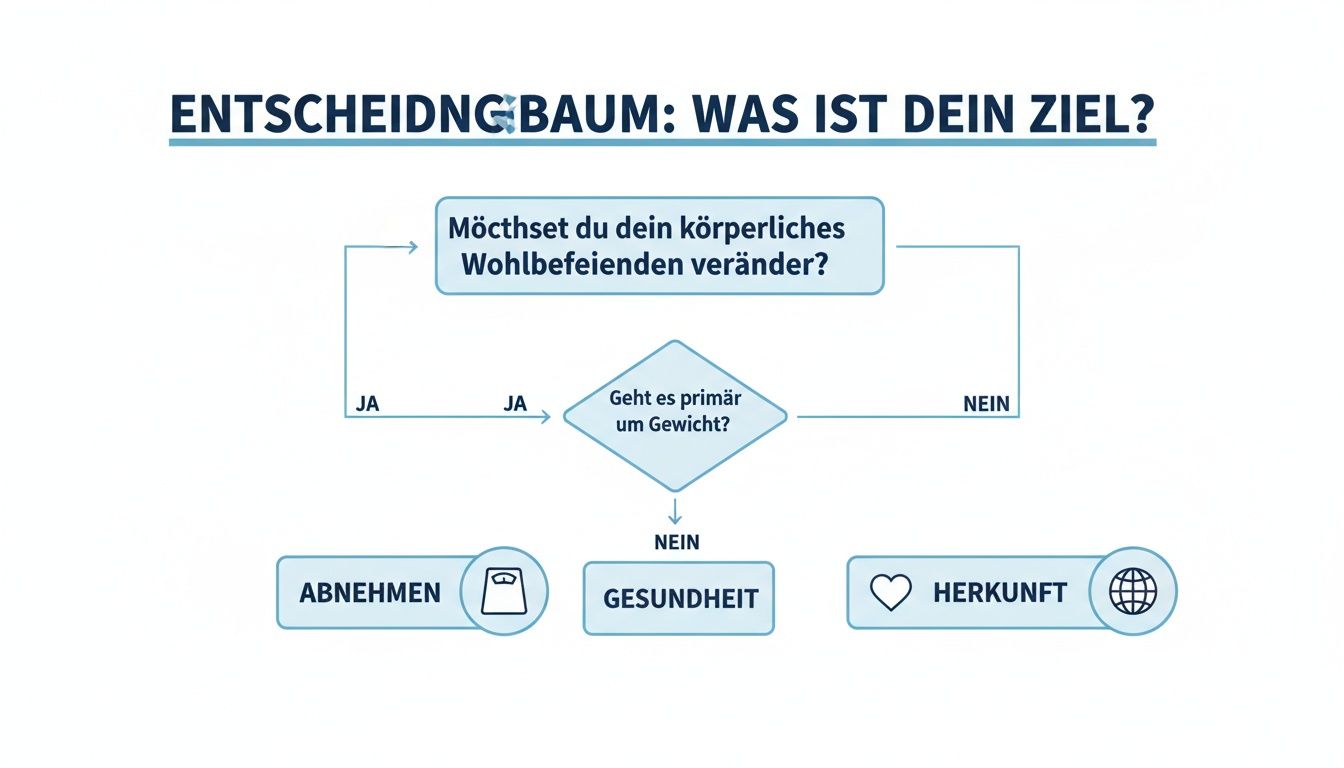
The graphic makes it clear: The journey to personalized health always begins with a clear question: What do I actually want to achieve?
Define your personal health goal
To find out which DNA test offers you the greatest benefit, you should briefly consider what motivates you most.
- Weight management: Do you want to lose weight, maintain your weight, or finally understand which diet is truly genetically suited to you? Then a DNA metabolism test is the right choice.
- Fitness and performance: Do you want to take your training to the next level, improve your recovery, or find out what type of athlete you are? A metabolism test can also provide valuable insights here.
- Prevention and longevity: Are you interested in knowing your genetic predispositions to certain health risks so you can take early action? In this case, a health risk test makes sense.
Knowing your goal allows you to choose the test that will ultimately provide actionable and relevant information. If you are still unsure, you can find further help in our guide to find the right test for your needs.
Overview of DNA test types for your goals
To make the decision even easier, we have put together an overview here. This table compares the most common DNA test categories and shows which test type best matches specific health and lifestyle goals.
| Your goal | Suitable DNA test type | What you will learn | Ideal for |
|---|---|---|---|
| Lose weight & maintain weight | DNA metabolic analysis | Your metabolic type, response to macronutrients (fat, carbohydrates, protein), optimal type of exercise, satiety behavior. | Anyone frustrated by diets who is looking for a personalized nutrition and training plan. |
| Boost fitness & performance | DNA metabolic analysis | Predisposition for endurance versus strength sports, muscle fiber type, recovery ability, risk of tendon & ligament injuries. | Athletes and fitness enthusiasts who want to optimize their training based on their genetics. |
| Health & prevention | DNA health risk test | Genetic predispositions to diseases (e.g., cardiovascular disease, metabolic disorders), carrier status for hereditary diseases. | Health-conscious people who want to take proactive action and minimize risks through preventive measures. |
| Origins & ancestry | DNA ancestry test | Ethnic composition, geographical origins of your ancestors, family connections. | People who want to explore their roots and learn more about their family history. |
Each of these tests opens a door to a better understanding of yourself. Choose the key that fits the lock you want to open.
The main types of DNA tests at a glance
Not all DNA tests are the same. Before you start looking for the “best” test, you should ask yourself one crucial question: What do I actually want to know? Most analyses can be divided into three major categories, each providing completely different answers.
Imagine your DNA as a huge, personal handbook. No test reads this book from cover to cover. Instead, it opens exactly the chapters that are relevant to your goals. Choosing the right test is therefore the first and most important step toward gaining truly valuable insights.
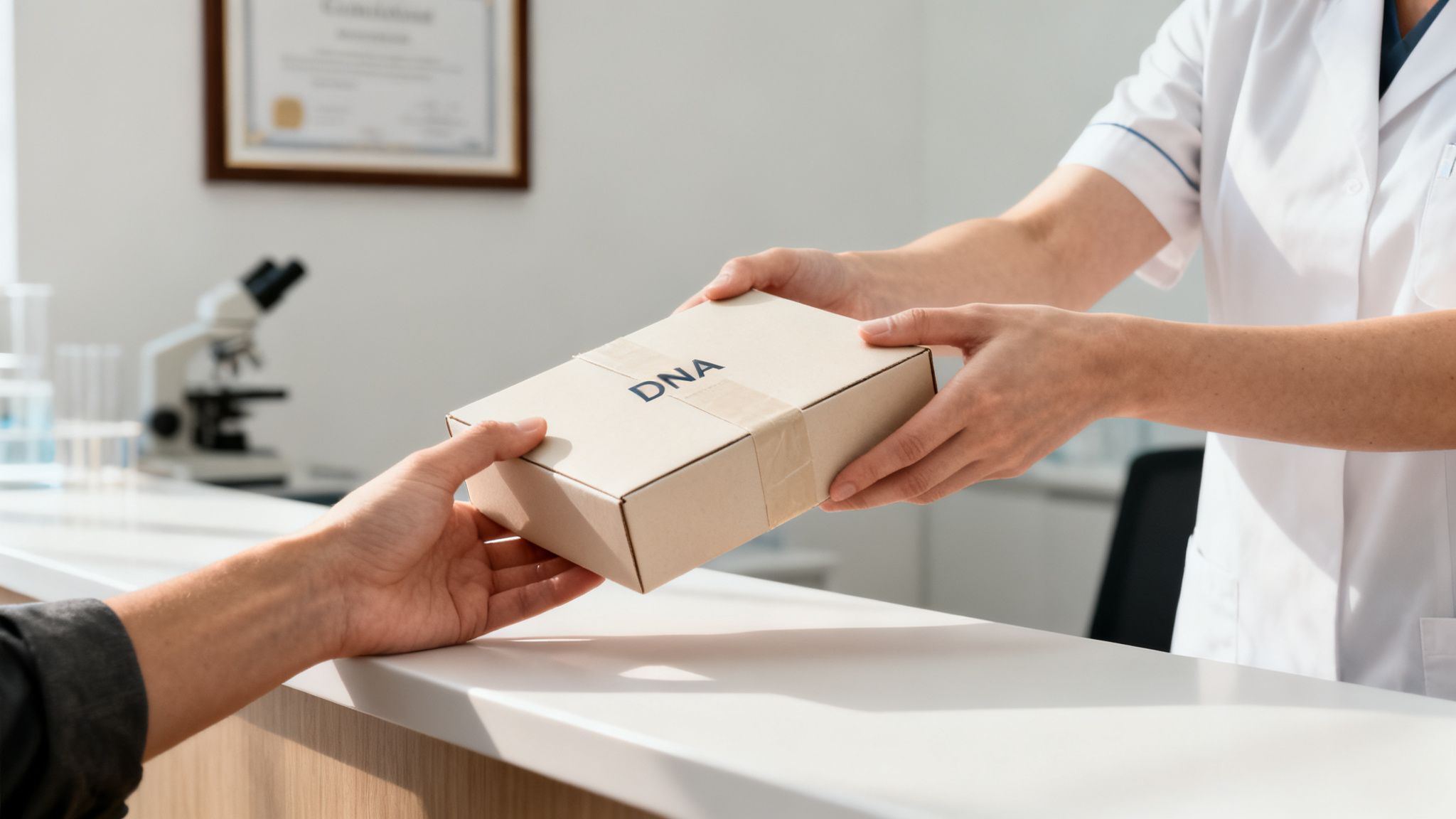
DNA metabolic tests for nutrition and weight loss
By far the most popular and practical category for anyone looking to optimize their diet, weight, or fitness. A metabolic test, such as the mybody® DNA Test, specifically examines the genes that regulate how your body handles nutrients and energy.
For example, you learn how your body reacts to carbohydrates, fats, and proteins. Are you naturally someone who can process carbohydrates well, or should you focus more on healthy fats? Such analyses provide you with a scientific foundation and put an end to the endless guesswork involved in dieting.
The benefits in everyday life are immediately noticeable:
- Personalized nutrition plans: You receive clear recommendations on which foods and macronutrient distribution are ideal for you.
- Lose weight more effectively: Knowing how your metabolism works can help you create a calorie deficit in a much smarter and more sustainable way.
- Optimize your training: The analysis can even provide clues about which type of exercise (endurance vs. strength) suits you best and how quickly you recover.
The market for such tests is booming, especially in Germany, as more and more people seek individualized health solutions instead of blanket answers. Studies suggest that DNA-based nutrition plans can increase weight-loss success rates by 30–40%. Learn more about the growing demand for DNA synthesis methods on researchnester.com.
Tests for general health risks
This type of test goes a step further and examines genetic predispositions related to specific health aspects. It is less about your daily diet and more about long-term prevention and gaining a better understanding of your own body.
A health risk test is not a diagnostic tool that tells you whether you have a disease. Rather, it shows you where your genetic “weaknesses” may lie so that you can take proactive steps to counteract them.
Such a report can provide you with information about predispositions to cardiovascular issues, metabolic disorders, or how your body processes important vitamins, for example. It is like a genetic compass that helps you tailor your lifestyle toward prevention. If you would like to learn more about how to interpret such results correctly, read our detailed guide to DNA analysis.
DNA ancestry tests
Ancestry tests are the third major category and are perfect for anyone curious about their roots. They compare your DNA with reference populations from around the world to decode your ethnic composition and the geographical origins of your ancestors.
These tests are fascinating for genealogy and for gaining a better understanding of your family history. However, they usually offer no direct benefit for specific health or nutrition goals. They answer the question, “Where do I come from?”—not, “How should I live?”
This is how you recognize reputable, high-quality providers
The DNA testing market is booming, and it is easy to lose track. Which provider is really good? Don’t worry—there are a few clear quality indicators you can use to find the best DNA test for you and avoid unscrupulous providers. After all, this concerns your genetic data—they are extremely personal, so you should not compromise.
A good decision is based above all on trust, transparency, and scientific rigor. Two things top the list: the quality of the laboratory and completely watertight data protection.
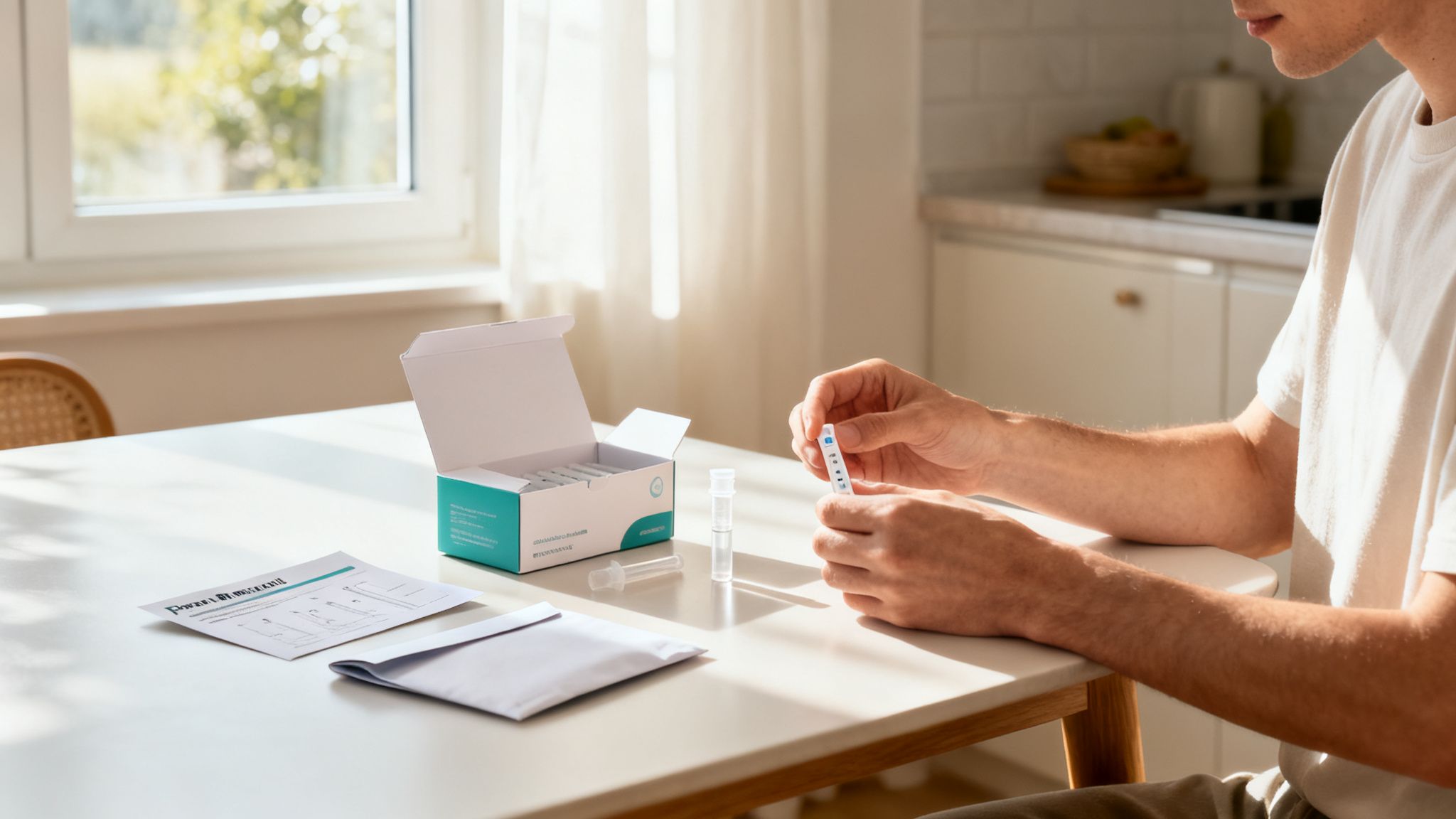
Look for recognized laboratory certifications
The laboratory is the heart of every DNA analysis. A reputable provider does not send your sample just anywhere; it works exclusively with laboratories certified according to internationally recognized standards. Such certificates are not merely flashy marketing seals, but hard evidence of quality and precision.
Look out especially for these seals:
- ISO certifications (e.g., ISO 9001 or ISO 15189): These standards ensure that everything in the laboratory runs according to plan—from standardized processes and strict quality management to validated analytical procedures. This minimizes errors and makes your results reliable.
- Accreditation according to national standards: In Germany, for example, this means accreditation by DAkkS (the German Accreditation Body).
A certified laboratory guarantees that your sample remains uncontaminated, that the analysis is performed using the best technology, and that the results are genuinely accurate. Providers such as mybody® therefore consistently work only with ISO-certified partner laboratories. This ensures that everything is carried out to the highest scientific standards.
Check privacy and data security
Your genetic data is probably the most private information there is about you. Protecting it must therefore be the top priority. You can trust a provider if it has a crystal-clear and uncompromising privacy policy.
Important to know: Your genetic data must never be used for anything else or sold to third parties without your explicit permission. A reputable provider will guarantee this clearly and unequivocally in its privacy policy.
Pay attention to the following points to ensure that your data is genuinely secure:
- GDPR compliance: The provider must clearly commit to the European General Data Protection Regulation (GDPR). This is the foundation.
- Pseudonymization: Your sample should be processed in the laboratory only under a number—in other words, a pseudonym. This means no one there can establish a direct connection to you.
- Secure data transmission: Your results belong in an encrypted customer account and have no place in an unsecured email.
- No data sales: The privacy policy must clearly state that your data will not be sold to pharmaceutical companies, insurance providers, or anyone else. Period.
Precision is everything—not only in DNA forensics, but also in consumer health tests. Reputable providers such as mybody® Lab GmbH therefore use comparable, state-of-the-art methods such as Next-Generation Sequencing (NGS) to analyze, for example, your metabolism or potential intolerances. In certified laboratories, the error rate during DNA extraction is less than 0,1 %, which is crucial for absolutely reliable health analyses.
By checking off these points, you can be sure that you are getting not only accurate but also safe results. In our article, you can learn even more about what to look out for when taking an online DNA test.
How to use your DNA results correctly
At last, the moment has arrived: You are holding your DNA report in your hands. It offers an incredibly fascinating, but perhaps also somewhat intimidating, glimpse into your personal genetic world. At first glance, the many numbers, technical terms, and recommendations can seem quite overwhelming. But do not worry—we will guide you through it. Together, we will decode this personal handbook and turn it into a clear, actionable plan for your everyday life.
The most important thought here: Do not view the results as rigid rules, but as your very own personal guideposts. Your genes are not your destiny. But they show you which paths are easiest and most effective for you to achieve your health goals.
From knowledge to concrete action
Imagine that your report shows you are a “carbohydrate type.” That is incredibly valuable information, but what do you do with it now? Of course, this does not mean that you should eat nothing but pasta and bread from now on. Rather, it is a smart indication that your body prefers complex carbohydrates as an energy source and can process them particularly well.
This is how you turn this insight into a concrete action:
- Prioritize complex carbohydrates: Consciously include whole-grain products, oats, quinoa, and legumes in your meals.
- Reduce simple sugars: While your body handles complex carbs well, you should still keep simple sugars from sweets or white-flour products in mind and generally avoid them.
- Timing is everything: Use a carbohydrate-rich meal specifically before exercising to optimally replenish your energy stores and give it your all during training.
You can apply this principle to every area of your report. Every genetic predisposition is an opportunity to intelligently adapt your lifestyle—instead of blindly chasing every new trend.
Putting health risks into the right context
Some reports also provide information about genetic predispositions related to certain health aspects, such as an increased need for vitamin D or a tendency toward higher cholesterol levels. Reading “increased risk” can initially make you feel uneasy. What matters, however, is understanding what it really means.
A genetic risk is not a diagnosis. It’s an opportunity to reset the course through preventive measures. As the saying goes: Your genes load the gun, but your lifestyle pulls the trigger.
An increased risk only means that you should pay a little more attention to this aspect of your health. It’s essentially an invitation to be proactive and take matters into your own hands.
Example: lactose intolerance: Your test shows a high probability of lactose intolerance.
- The bad response: You panic, immediately eliminate all dairy products from your diet, and feel completely unsure.
- The good response: You simply pay conscious attention to how you react to yogurt, cheese, or milk. Perhaps you tolerate fermented products very well, or discover that lactose-free alternatives are the perfect solution for you.
Or your test may indicate a genetic predisposition to lower vitamin D levels. This is a clear prompt to have your levels checked regularly by your doctor, perhaps spend a little more time in the sun, and adjust your diet accordingly.
Your DNA report is the starting point of an incredibly exciting journey. It gives you the map, but you choose the route through your daily decisions. If you now want to delve deeper into how to optimally adjust your diet after a test, you’ll find more valuable tips in our guide to optimizing your diet after a DNA test. Use this knowledge as your very own tool to take charge of your health.
Your simple path to a personal DNA analysis
Want to know what’s in your genes and find the right DNA test for you? Perfect! The journey from initial curiosity to fascinating insights into your body is much simpler than most people think. We’ll guide you through the process step by step and show you how easy and secure DNA analysis with mybody® is.
The great thing is that you can do everything from the comfort of your own home. No doctor's appointment, no complicated forms. You remain in full control and can do everything at your own pace.
Get your sample in just a few minutes
The most important part of the whole process is collecting the sample—and it really is child's play. Instead of a blood draw, which puts many people off, we rely on a simple saliva test.
- Order your test kit: Choose the DNA test on mybody-x.com that best suits your goals and order it directly to your home.
- Collect your sample: The kit includes simple instructions and a sample tube. All you have to do is provide a small amount of saliva in it. It takes less than five minutes.
- Activate and return: Register your kit online using the enclosed code. This is important so that we can later assign your sample anonymously. Then simply place the sample in the prepaid return envelope and send it through the mail.
A small but crucial tip: Please do not eat, drink, smoke, or chew anything for 30 minutes before collecting your sample. This keeps your saliva sample clean and uncontaminated—the basis for truly accurate results.
As soon as your sample arrives at the laboratory, the actual analysis begins. Your sample is handled there using pseudonymization. This means that no one in the laboratory knows your name or personal details; everything is processed using the unique code on your test kit.
What happens in the laboratory and how you receive your results
At our ISO-certified partner laboratory, DNA is extracted from your saliva. We then use specialized methods to examine the genetic markers relevant to your test in detail—for example, the genes that control your metabolism or nutrient requirements. The entire process is subject to the strictest quality controls, so you can rely on the accuracy of your results.
After the analysis, we translate the scientific raw data into an understandable and, above all, actionable report for you. As soon as your personal results report is ready in your secure customer account on our website, we will send you an email. You can then log in directly and discover what lies within you.
The entire process is transparent and designed for maximum security. The following table provides another clear overview of the journey from your order to your results.
Your path to DNA analysis in 4 steps
This table provides a clear overview of the entire process, from ordering the mybody® DNA test to receiving your personalized results.
| Step | Your action | What happens behind the scenes | Approximate duration |
|---|---|---|---|
| 1. Order | You order your mybody® test kit online. | We assemble your kit and ship it. | 1–3 business days |
| 2. Sample collection | You collect the saliva sample and send it back. | Your sample is sent to our certified laboratory. | 5–10 minutes + mailing time |
| 3. Analysis | You wait for the notification by email. | Your DNA is extracted and scientifically analyzed. | 10–15 business days |
| 4. Results | You log in to your account and view the report. | Your data is translated into easy-to-understand recommendations. | Immediately after notification |
As you can see, the path to your genetic insights is clear and straightforward. You are only a few steps away from understanding your body on a whole new level.
The mybody® DNA Test in Detail
Are you wondering why so many health-conscious people choose mybody® for their DNA analysis? The answer is actually quite simple: We combine scientific precision, personalized support, and absolute data security. This turns a simple test into a truly valuable tool for your personal health goals.
For us, striving to be the best DNA test for you means much more than simply providing data. It means giving you understandable, actionable, scientifically sound insights that can genuinely help you improve your lifestyle.
Science and precision in a certified laboratory
The foundation of every reliable DNA analysis is the laboratory. Here, we make no compromises and work exclusively with ISO-certified specialist laboratories in Germany. This certification guarantees that every single step—from receiving the sample to analysis—meets the highest quality standards.
Our experts use state-of-the-art analytical methods to precisely decode your genetic markers. This ensures that you receive results you can rely on 100%.
More than just data: Actionable recommendations
A good DNA test does not simply provide you with a heap of raw genetic data; it translates it into clear, understandable language. This is precisely one of our greatest strengths: Our reports are prepared so that you understand them immediately and can apply them in everyday life.
- Nutrition: You learn not only which metabolic type you are, but also receive specific food lists and personalized recipe suggestions.
- Fitness: We show you whether you respond better to endurance or strength training and how you can specifically optimize your recovery.
- Health: You receive targeted lifestyle tips to fully harness your genetic potential and proactively address potential risks.
Our journey doesn’t end with the result. It’s only just beginning. We see ourselves as your partner, helping you turn knowledge into concrete, positive changes in your everyday life.
Your trust is our greatest asset
Your genetic data is extremely sensitive. That’s why protecting it is our highest priority. We guarantee that your data will be handled in a way that goes far beyond legal requirements.
- Strict GDPR compliance: Your data is processed in accordance with the strictest European data protection regulations.
- Pseudonymization: Your sample is processed in the laboratory only under a code, with no connection to your personal data.
- No data selling: Your genetic information is never shared with third parties—such as insurance companies or pharmaceutical companies. Period.
- Data sovereignty: You retain full control at all times and can request that your data be deleted.
Germany’s leading role in highly precise analytical methods such as digital PCR allows us to offer you exceptional accuracy. mybody® Lab GmbH uses these advanced methods for our saliva tests, which can identify predispositions to nutrient deficiencies with up to 95% accuracy, for example. For the more than 11,300 satisfied customers who rate us an average of 4.77 stars, evidence-based health optimization becomes a reality. Learn more about developments in the digital PCR market at fortunebusinessinsights.com.
Frequently asked questions about DNA tests
Choosing to take a DNA test naturally raises questions. That’s a good thing, because it concerns your highly personal health data. To give you peace of mind, we’ve compiled the most important answers for you—clearly and concisely.
How secure is my genetic data?
To be completely honest: Protecting your data is our top priority. For a reputable provider like mybody®, it comes first and is handled in accordance with the strict requirements of the European General Data Protection Regulation (GDPR).
Here’s what this means for you:
- Pseudonymization: Your saliva sample receives a unique barcode in the laboratory. It’s like a pseudonym—no one there can directly link the sample to your name.
- Encryption: Your results are securely encrypted and stored exclusively in your password-protected customer account. Only you have access.
- No data selling: Your genetic information is never sold or shared with third parties. Not with insurance companies, pharmaceutical companies, or anyone else.
You therefore retain full control at all times and can also have your data deleted at any time.
What happens to my sample once the analysis is complete?
This is also a crucial question that reveals a lot about the provider. At mybody®, your biological sample is properly destroyed once the analysis is complete. It is not stored or reused for other purposes unless you give your explicit, separate consent.
Your sample serves one purpose only: the analysis you commissioned. Once that is complete, the material is safely disposed of. This ensures that your genetic privacy is protected to the greatest possible extent.
How reliable are the results of a DNA metabolic test?
Reliability depends on two things: the quality of the laboratory and the scientific foundation. Providers that take this seriously work exclusively with ISO-certified laboratories. There, analyses are performed using state-of-the-art technologies and under extremely strict quality controls.
The scientific basis for a metabolic test has developed over many years. The genes—or more precisely, the SNPs—we examine have been linked to specific metabolic functions in countless studies. It’s important to understand, however, that the results are not medical diagnoses. They show your predispositions and potential—a roadmap, not a final destination.
How long do I have to wait for my report?
It takes some time from returning your sample to receiving your completed report. In general, you can expect a processing time of 10 to 15 business days once your sample has arrived at our laboratory.
This period is necessary to carefully extract and analyze your DNA and translate the complex results into an easy-to-understand report for you. As soon as everything is ready, we’ll send you an email.
Does health insurance cover the cost of a DNA test?
Preventive DNA tests, such as metabolic analyses to optimize your nutrition, are generally not covered by statutory health insurance. Statutory health insurers classify them as individual healthcare services (IGeL), meaning you cover the costs yourself.
Depending on their plan, some private or supplemental health insurance providers may reimburse part or even all of the costs. You’ll need to clarify this individually with your insurance provider.
Are you ready to use the personalized insights from your DNA and finally achieve your health goals? At mybody®, you’ll find scientifically based analyses that provide clear, actionable recommendations for your nutrition, training, and overall well-being.



Share now:
Online DNA Test 2026: The 7 Best Providers for Your Health Goals
Where can you get a DNA test? The ultimate guide