

What is epigenetics? 6 mechanisms that control your genes
"It runs in the family" – a phrase you've probably heard many times. Many believe our genes are a fixed script that predetermines our lives and our health. But what if you could change the script yourself? This is precisely where the fascinating world of epigenetics comes into play, a crucial factor that significantly influences your health.
Imagine your DNA as a vast library full of books, with each book corresponding to a gene. Epigenetics doesn't change the text in these books, but acts like a librarian: it decides which books get read and which remain unread on the shelf. Through tiny chemical markers, like 'bookmarks,' it controls which genes are active and which are silenced. The best part? These bookmarks aren't permanent. Your lifestyle, diet, and environment can all change them, thus influencing gene activity.
This article answers the central question: What is epigenetics ? I'll delve deep into this fascinating field with you and explain how these mechanisms work in a way that's easy to understand and avoids technical jargon. You'll learn about the six most important epigenetic processes, from DNA methylation to the role of non-coding RNAs. I'll show you how, through conscious choices, you can take the lead in your own health story and actively shape the potential of your genes. Discover how you can take control of your well-being.
1. DNA methylation: The dimmer switch for your genes
DNA methylation is one of the best-studied and most important mechanisms when we ask ourselves: What is epigenetics? Think of this process as a dimmer switch for your genes. It doesn't determine whether a gene is present, but rather how strongly it is transcribed and translated into a protein. Essentially, it regulates gene activity without altering the DNA sequence itself.
How exactly does the dimmer switch work?
During DNA methylation, small chemical markers called methyl groups (CH₃) attach directly to specific locations on your DNA strand. This attachment usually occurs at cytosine bases located upstream of a guanine base, also known as CpG islands.
- Gene activity is "tweaked" : When many methyl groups attach to the start sequence (promoter) of a gene, it becomes difficult for the cellular machinery to read this gene. The methyl groups essentially block access. The gene is inactivated or "silenced."
- The gene is "turned lighter" : If these methyl groups are missing, the gene is accessible and can be actively read.
This mechanism is crucial for our development and health. For example, it ensures that a liver cell only activates the genes it needs for its specific tasks, while genes for nerve functions remain switched off.
The following infographic shows you how this process takes place at the molecular level.
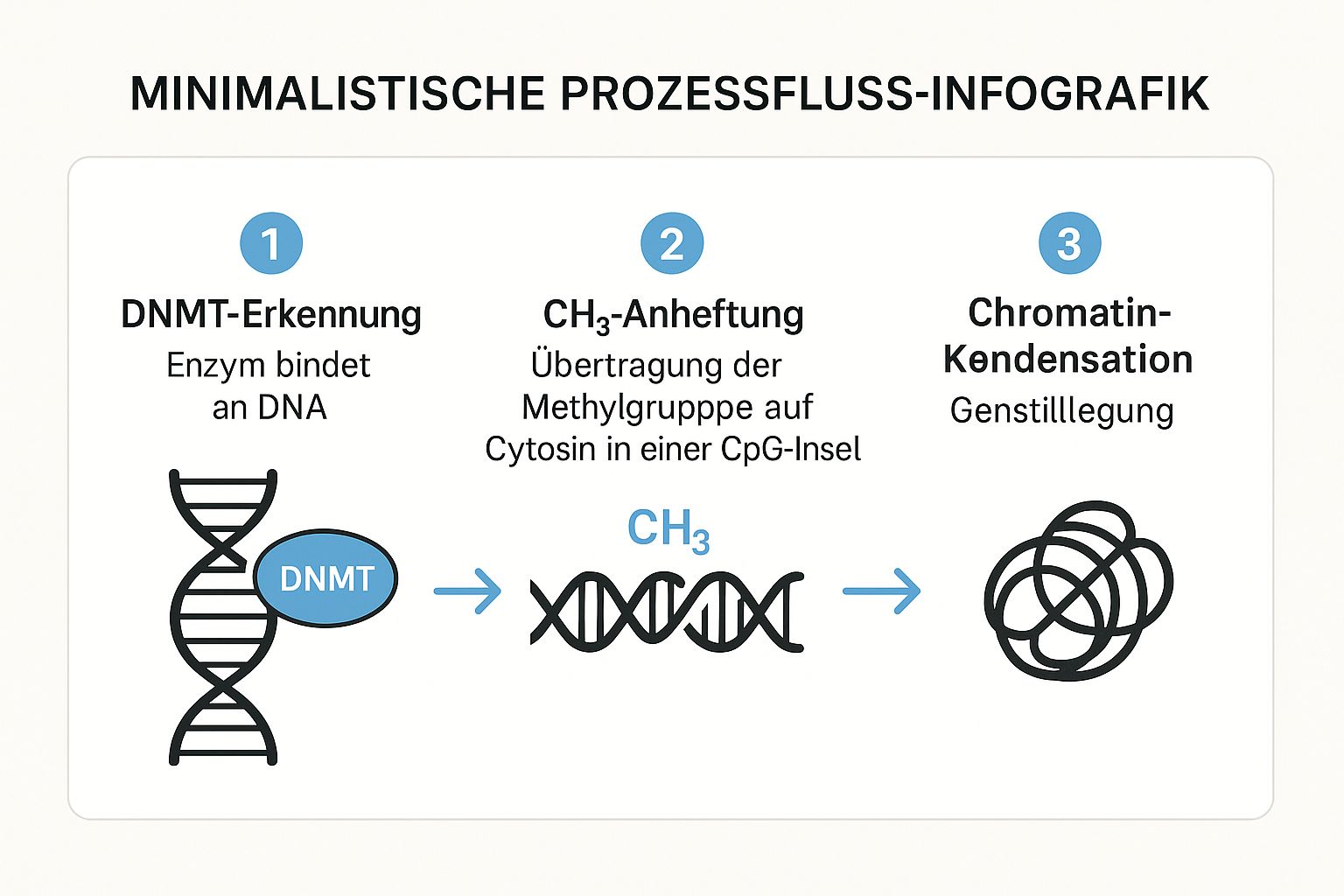
As the graphic illustrates, the attachment of methyl groups leads to a denser packaging of the DNA, which makes the gene physically inaccessible and effectively switches it off.
Practical examples: Where methylation plays a role
Faulty methylation patterns are involved in the development of various diseases:
- Cancer development : In many types of cancer, so-called tumor suppressor genes are mistakenly silenced by excessive methylation (hypermethylation). These genes are actually meant to prevent uncontrolled cell growth. If they are "switched off," tumors can develop more easily.
- Genomic imprinting : In certain diseases such as Beckwith-Wiedemann syndrome, faulty methylation leads to genes being incorrectly activated or deactivated depending on parental origin, resulting in growth disorders.
What you can do yourself: Your lifestyle as a regulator
The fascinating thing about epigenetics is that you can actively influence it. Your methylation patterns are not set in stone.
Strategic insight : DNA methylation is a dynamic process. Nutrients like folic acid, vitamin B12, and choline are so-called "methyl group donors." This means your body needs them to form the small chemical tags that regulate your genes. A deficiency can therefore directly lead to faulty epigenetic patterns.
Here are three specific tips to positively support your methylation patterns:
- A diet rich in folic acid : Include green leafy vegetables (spinach, kale), legumes, and whole grains in your diet. Folic acid is a key building block for methylation. To learn more about how you can influence your genes with the right diet, read on here .
- Regular exercise : Sport has been shown to promote healthy methylation patterns and contribute to the activation of genes that, for example, stimulate metabolism.
- Stress management : Chronic stress can negatively alter methylation patterns and activate pro-inflammatory genes through the release of hormones such as cortisol. Techniques like meditation or yoga can counteract this.
2. Histone modifications: The packaging artists of your DNA
Besides DNA methylation, there is a second key mechanism that answers the question "What is epigenetics?" : histone modifications. Imagine your DNA as an extremely long thread. To fit into the tiny cell nucleus, it must be wound up in a space-saving manner. This is precisely where histones come into play: they are proteins that act as a kind of spool around which the DNA winds. The way this DNA is wrapped determines whether a gene can be transcribed or not.
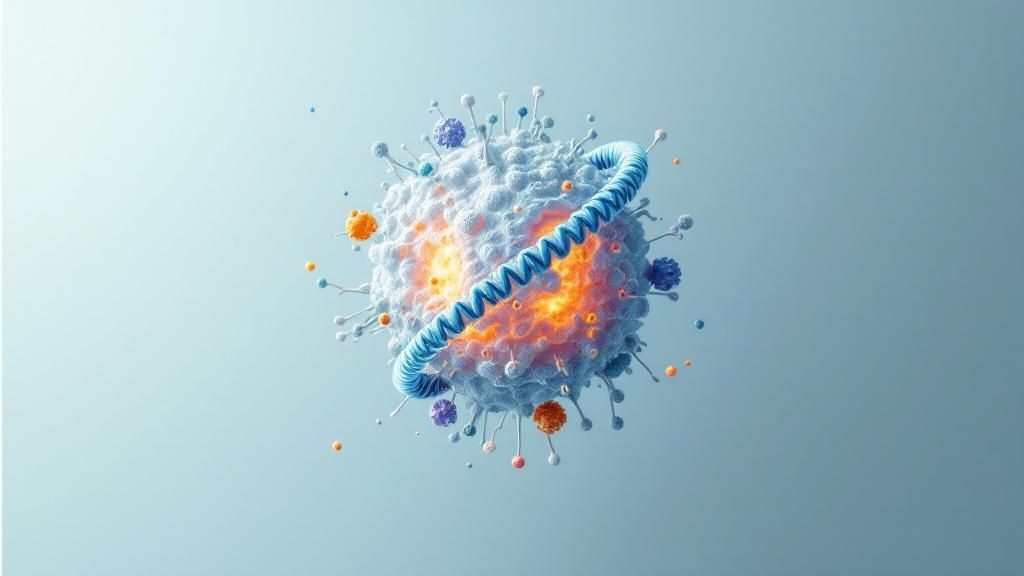
As the graphic shows, histone modifications are like small sticky notes attached to these coils. They change how tightly or loosely the DNA is wound, thus controlling access to the genes.
How exactly does DNA packaging work?
Various chemical groups can be attached to the "tails" of histone proteins that protrude from the DNA strand. This process alters the structure of the chromatin (the complex of DNA and proteins). The most important modifications are:
- The gene is "unpacked" (activated) : Acetylation is the crucial process here. By attaching acetyl groups (Ac), the positive charge of the histones is neutralized. Since the DNA is negatively charged, the bond loosens, the DNA becomes more accessible, and the genes can be read.
- The gene is "tightly packaged" (deactivated) : The removal of acetyl groups (deacetylation) or the addition of certain methyl groups (me) can tighten the DNA packaging. This blocks access for the cellular reading machinery and silences the gene.
This entire set of markers is often referred to as the "histone code." It is incredibly complex and dynamic, precisely controlling which genes are active in which cell at what time.
Practical examples: Where the histone code plays a role
Dysregulation in the histone code is involved in many processes and diseases:
- Memory formation : Studies show that learning processes and the formation of long-term memories are linked to specific histone modifications in the brain. Certain acetylations appear to be necessary to activate the genes responsible for strengthening neuronal connections.
- Inflammatory processes : Chronic inflammation can be influenced by histone deacetylase inhibitors (HDAC inhibitors). These substances promote acetylation, loosen chromatin, and can thus enhance the activity of anti-inflammatory genes.
- Cancer : Similar to DNA methylation, incorrect histone markings can also lead to growth-inhibiting genes being switched off or growth-promoting genes being overactivated in cancer.
What you can do yourself: Your lifestyle as a code editor
The histone code also reacts to environmental influences and your lifestyle. Therefore, you have the opportunity to positively influence these epigenetic switches.
Strategic insight : Certain nutrients in our food act as natural HDAC inhibitors. This means they can help keep genes "open" and active that are beneficial to our health. Your diet, therefore, provides the building blocks and regulatory signals for your epigenetic machinery.
Here are three specific tips to support your histone modifications:
- Eat foods rich in sulforaphane : This substance, found in abundance in broccoli sprouts and other cruciferous vegetables, is a known HDAC inhibitor. It can help activate genes that protect the body from oxidative stress.
- Include butyrate sources : Butyrate is a short-chain fatty acid produced by gut bacteria during the fermentation of dietary fiber. It is an important energy source for intestinal cells and also a potent HDAC inhibitor. A high-fiber diet rich in vegetables and whole grains promotes butyrate production.
- Harness the power of polyphenols : Compounds such as resveratrol (in red grapes), curcumin (in turmeric) and epigallocatechin gallate (EGCG, in green tea) can influence the enzymes responsible for histone modifications, thus contributing to a healthy epigenetic profile.
3. Chromatin Remodeling: The Architects of Your DNA Packaging
Besides DNA methylation, chromatin remodeling is another key mechanism that answers the question, "What is epigenetics?" Don't imagine your DNA as a loose thread, but rather as an extremely tightly packed ball of fibers wrapped around proteins (histones). This packaging is called chromatin. Remodeling is the process by which this packaging is actively reshaped to either make certain gene segments accessible or to hide them.
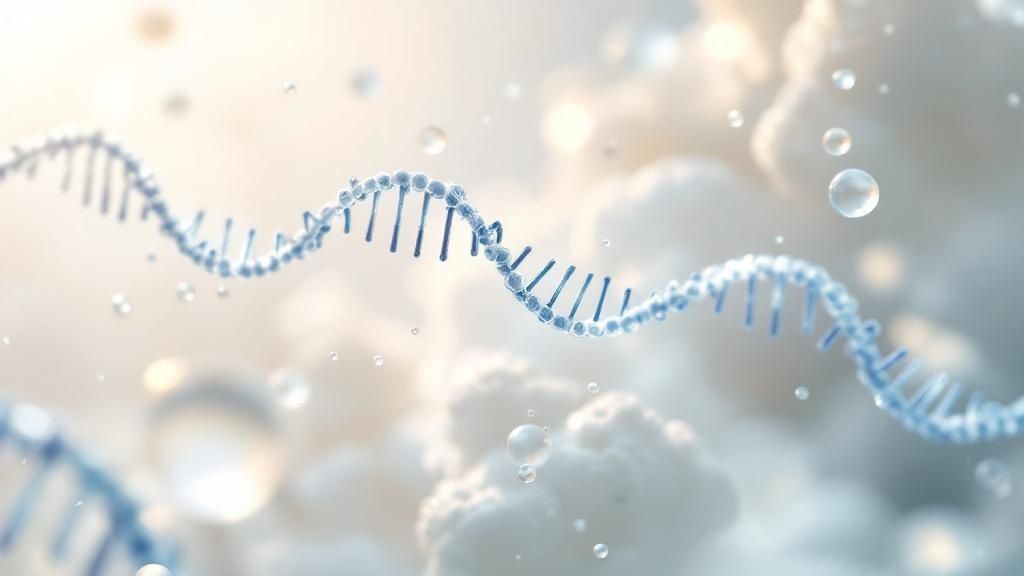
How exactly do these architects work?
Specialized protein complexes, known as chromatin remodelers, use cellular energy (in the form of ATP) to move histones along the DNA, remove them, or change their composition. They can be visualized as a team of construction workers remodeling the DNA scaffold so that specific machines can access the blueprints (genes).
- The gene is "exposed" : The remodelers loosen the packaging in a specific area. This makes the gene physically accessible to the transcription machinery, which can read and activate it.
- The gene is "hidden" : Conversely, they can also pack the DNA more densely, which blocks access and effectively silences the gene.
This dynamic remodeling is essential for almost all cellular processes, from cell division and DNA repair to the specialized function of every single cell in your body.
Practical examples: When architects make mistakes
If the chromatin remodeling complexes do not function properly, this can have serious health consequences, as gene regulation is disrupted.
- Cancer development : Mutations in genes encoding remodeling complexes such as SWI/SNF are found in approximately 20% of all human tumors. When these "architects" fail, genes that control cell growth can no longer be properly regulated.
- Developmental syndromes : CHARGE syndrome is a rare disorder caused by mutations in the CHD7 gene. CHD7 is an important remodeler for the development of many organs, which is why defects lead to heart defects, growth disorders, and other symptoms.
- DNA repair : Complexes like the INO80 complex are crucial for repairing DNA double-strand breaks. They make the damaged site accessible so that the repair enzymes can do their work.
What you can do yourself: Support your cellular order
Although many serious diseases are caused by genetic mutations in these complexes, the function of chromatin remodeling also depends on external factors. Energy and the right building blocks are crucial here.
Strategic insight : Chromatin remodeling is an energy-intensive process. The "architects" constantly require fuel in the form of ATP. Therefore, an adequate supply of macro- and micronutrients is essential for these fundamental cellular processes to function smoothly.
Here's how you can create the conditions for healthy chromatin remodeling:
- Ensure an energy supply : A balanced diet with complex carbohydrates, healthy fats, and proteins ensures that your cells have enough energy for processes like chromatin remodeling. Without fuel, the machines stop working.
- Consume antioxidants : Cellular stress caused by free radicals can damage DNA and the protein complexes that work on it. A colorful diet rich in fruits and vegetables (e.g., berries, bell peppers, broccoli) provides antioxidants that protect your cellular machinery.
- Don't forget B vitamins : Vitamins like B3 (niacin) are precursors for molecules involved in energy production and DNA repair. A good supply, for example through nuts, seeds, and legumes, supports cellular infrastructure. To gain a deeper understanding of what a nutrient is and how it works at the cellular level, you can learn more here.
4. Non-coding RNAs: The directors of your gene expression
Previously, RNA was thought to be primarily a messenger, carrying genetic instructions from DNA to the cell's protein factories. But epigenetics has shown that this is only half the story. A large portion of our RNA is not translated into proteins at all. These so-called non-coding RNAs (ncRNAs) are not simple messengers, but active directors that orchestrate the script of our genes. They are a key answer to the question: What is epigenetics?
How exactly do these RNA regulators work?
Think of non-coding RNAs (ncRNAs) as mobile switches. Unlike site-bound DNA methylation, these RNA molecules can move around the cell and bind specifically to other molecules. They can thus control gene activity at multiple levels. Key players include microRNAs (miRNAs) and long non-coding RNAs (lncRNAs).
- Gene is "silenced" : A microRNA can bind to a messenger RNA (mRNA) that is currently carrying the instructions for a protein. This binding either blocks or even degrades the mRNA before the protein can be produced. The gene is thus silenced post-transcriptionally.
- Genes are "redirected" : Long non-coding RNAs can take on more complex tasks. They can guide proteins like a scaffold to specific locations in the genome or alter the 3D structure of chromatin to switch entire gene clusters on or off.
This mechanism enables incredibly fine and rapid control of gene expression, which is essential for cellular processes such as differentiation, response to stress, or defense against viruses.
Practical examples: Where ncRNAs play a role
Dysregulation of ncRNAs is often a driver of disease, highlighting their importance:
- Cancer development : Certain microRNAs, such as miR-21, act as so-called "oncological miRNAs." Their concentration is greatly elevated in many types of cancer. They specifically silence tumor suppressor genes, thereby promoting uncontrolled cell growth and metastasis.
- X-chromosome inactivation : In females, the lncRNA called XIST ensures that one of the two X chromosomes is silenced in each cell. This natural epigenetic process prevents an overabundance of gene products and is a prime example of the power of ncRNAs.
What you can do yourself: Your lifestyle as a conductor
The activity of your ncRNAs is also not fixed, but responds to environmental influences and your lifestyle. Diet plays a particularly important role here, as certain nutrients directly affect the production and function of these regulatory molecules.
Strategic insight : Certain micronutrients and phytochemicals can regulate the expression of miRNAs. For example, curcumin from turmeric can lower the concentration of onco-miRNAs, while resveratrol from grapes can activate miRNAs that contribute to longevity.
Here are three specific tips to positively influence your ncRNA profiles:
- Antioxidant-rich diet : Include foods rich in polyphenols, such as berries, dark chocolate, green tea, and colorful vegetables. These substances can positively modulate the activity of ncRNAs involved in inflammatory processes and cellular aging.
- Omega-3 fatty acids : Fatty fish like salmon or plant-based sources like flaxseeds and walnuts provide essential fatty acids. These can regulate the expression of miRNAs, which are important for cardiovascular health and inflammation control.
- Avoiding environmental toxins : Pollutants such as bisphenol A (BPA) from plastics or pesticides can disrupt ncRNA patterns and thus increase the risk of disease. Being mindful of these substances also protects your epigenetic regulation.
The interaction between nutrients and genes is a core aspect of nutrigenetics. If you'd like to delve deeper, learn more here about what nutrigenetics is and how it shapes our lives .
5. Genomic Imprinting: Parental Inheritance
Genomic imprinting is a fascinating and highly specific mechanism that delves deeply into the question of what epigenetics is . Imagine your genes have a memory of which parent they came from. That's precisely what happens during imprinting: certain genes are exclusively expressed from the maternal or paternal copy, while the other is silenced. This process is essential for normal development.
How exactly does parental memory work?
The mechanism behind genomic imprinting is, in most cases, the already known process of DNA methylation. During the development of egg and sperm cells, specific epigenetic marks—that is, methyl groups—are added to or removed from certain genes. This imprinting persists after fertilization and ensures that only one of the two gene copies (either the one from the mother or the one from the father) is active in the offspring's cells.
- Maternal imprinting : The gene inherited from the father is actively read, while the maternal gene is silenced by methylation.
- Paternal imprinting : The gene inherited from the mother is active, while the paternal gene is silenced.
This selective silencing affects only a small portion of our genes, roughly 100 to 200, but these play a crucial role in growth, metabolism, and brain function. This ensures a precise "dose" of gene products necessary for healthy development.
Practical examples: When the embossing gets out of sync
Errors in this finely tuned process can result in serious developmental disorders, as either both gene copies are active or both are silenced.
- Prader-Willi and Angelman syndromes : These two distinct disorders arise from errors in the same region on chromosome 15. In Prader-Willi syndrome, the active paternal contribution is missing, while in Angelman syndrome, the active maternal contribution is missing. This vividly illustrates how crucial parental lineage is for gene function.
- Beckwith-Wiedemann syndrome : This is a growth disorder often caused by faulty methylation in the IGF2 gene. Normally, only the paternal copy of this growth-promoting gene is active. In the case of imprinting error, both copies are active, leading to excessive growth.
What you can do yourself: Basics for healthy inheritance
Even though genomic imprinting is largely determined during germ cell development and reacts less dynamically to lifestyle than other epigenetic markers, the fundamental building blocks for it are all the more important. A healthy epigenetic base is crucial.
Strategic insight : The nutrients responsible for methylation also play a central role in establishing genomic imprinting. Especially during pregnancy and even before, an optimal supply of methyl group donors is essential to support correct epigenetic programming for the next generation.
Here are three tips on how you can support the epigenetic foundations:
- Ensure adequate intake of B vitamins : Folic acid (vitamin B9), B6, and B12 are essential for the methylation cycle. Include plenty of lentils, beans, eggs, nuts, and green vegetables in your diet. Targeted supplementation may be beneficial during certain life stages.
- Avoiding environmental pollutants : Certain chemicals, such as bisphenol A (BPA) from plastics, have been shown to interfere with epigenetic processes and disrupt methylation. Reduce your exposure by using glass containers and BPA-free products.
- Incorporate healthy fats : Omega-3 fatty acids, such as those found in fatty fish (salmon, mackerel) and flaxseed, have anti-inflammatory properties and can help promote a healthy epigenetic balance.
6. X chromosome inactivation: The genetic equalizer
X-chromosome inactivation is a fascinating epigenetic phenomenon that occurs in female mammals, including humans. To understand what epigenetics does here, it's important to know that women have two X chromosomes (XX), while men have only one (XY). To prevent women from receiving a double dose of gene products from the X chromosome, one of the two X chromosomes in each cell is randomly silenced early in development.
How exactly does this mechanism work?
This process, also called Lyonization after its discoverer Mary Lyon, ensures that men and women express a functionally equivalent amount of genes from the X chromosome. It is a large-scale epigenetic silencing process controlled by various mechanisms such as DNA methylation and histone modifications.
- Random deactivation : In each female cell, either the X chromosome inherited from the mother or the X chromosome inherited from the father is randomly deactivated.
- Formation of the Barr body : The silenced X chromosome is packed extremely tightly, forming a structure known as a Barr body. It remains in this inactive state for the rest of the cell's life.
- Mosaic pattern : Because the choice of which X chromosome to inactivate is random, a mosaic of cells is formed. In some cell lines, the paternal X chromosome is active, in others the maternal one.
This elegant mechanism is a prime example of how epigenetics regulates gene expression without altering the DNA sequence. It ensures "dose compensation" and is essential for normal development.
Practical examples: Where X-inactivation becomes visible
Errors or variations in this process can have far-reaching consequences and are sometimes even visible to the naked eye:
- Tortoiseshell cats : The classic example is female cats with a tortoiseshell coat pattern. The gene for coat color is located on the X chromosome. If one X chromosome carries the allele for black fur and the other carries the allele for orange fur, random inactivation results in a coat with black and orange patches, depending on which X chromosome is active in the skin cells.
- X-linked disorders : In women who are carriers of an X-linked disorder such as hemophilia, the severity of symptoms can vary greatly. If the healthy X chromosome is randomly inactivated in many relevant cells, more severe symptoms can occur.
What you can do yourself: Understand and use the process
Even though you cannot directly influence X-inactivation, it impressively demonstrates how dynamic our gene regulation is and how crucial epigenetic processes are for our health.
Strategic insight : X-inactivation is a perfect example of the complexity of epigenetic regulation. It illustrates that our genetic fate is not solely determined by DNA sequence. Understanding such mechanisms is fundamental for approaches in personalized medicine and for longevity strategies.
Here are three aspects you can take away from this knowledge:
- Raising health awareness : If X-linked diseases occur in your family, knowledge about X-inactivation helps to understand why symptoms can vary in severity between women.
- View epigenetics as a whole : The same mechanisms (DNA methylation, histone modifications) that silence an entire chromosome also act on individual genes and can be influenced by lifestyle factors.
- Potential for the future : Research into X-inactivation provides important insights for the development of therapies that target gene reactivation. This knowledge is incorporated into modern approaches to longevity. If you would like to learn more about how epigenetics and longevity are connected, you will find fascinating insights here .
Comparison of the 6 epigenetic mechanisms
| mechanism | Implementation complexity 🔄 | Resource requirements ⚡ | Expected results 📊 | Ideal use cases 💡 | Main advantages ⭐ |
|---|---|---|---|---|---|
| DNA methylation | Means: enzymatic methyl group attachment | Moderate: DNMTs, sequencing tools | Stable gene silencing, developmental control | Genomic imprinting, cancer diagnostics | Stable, reversible epigenetic marking |
| histone modifications | High: diverse and combinatorial modifications | High: specialized antibodies, ChIP-seq | Rapid, specific gene regulation | Learning and memory research, signal response | Dynamic, finely adjustable, fast-acting |
| Chromatin remodeling | High: ATP-dependent nucleosome restructuring | High: ATP, special assays (ATAC-seq) | Dynamic accessibility of DNA | Development, DNA repair, cancer research | Essential for flexible gene expression |
| Non-coding RNAs (ncRNAs) | Medium to high: RNA interference complex | Medium to high: RNA-Seq, bioinformatics tools | Fast and flexible gene regulation | Therapeutic use (RNAi), biomarker identification | Fine-tuning of gene expression |
| Genomic Imprinting | Means: parental control of origin via methylation | Moderate: Methylation-specific PCR | Parent-specific gene expression | Developmental biology, syndrome diagnostics | Precise dose control, evolutionarily important |
| X chromosome inactivation | Medium to high: lncRNA-mediated heterochromatin formation | Methods: Inactivation assays, FISH | Dose compensation in female mammals | Sex chromosome regulation, developmental biology | Efficient dose compensation, evolutionary advantage |
You are the director of your health: Your path with mybody-x
After this profound journey through the world of epigenetics, one thing is certain: you are far more than just the sum of your genes. The question " What is epigenetics ?" leads us to one of the most encouraging insights in modern biology. It is the scientific proof that you are not passively at the mercy of your genetic predisposition, but rather possess the ability to actively influence the activity of your genes and thus take control of your own health.
We've seen how mechanisms like DNA methylation and histone modifications act as dimmers for your genes, and how your daily behavior—your diet, exercise, sleep, and stress management—directly affects these switches. Every bite you eat, every workout, and every night of restful sleep sends signals to your cells and can positively alter your body's epigenetic pattern. You are the director writing the script for your health.
From knowledge to action: Your personal epigenetic roadmap
Understanding the theory is the first important step. But how do you translate this knowledge into concrete, practical actions? The key is not to blindly follow general recommendations, but to know your own individual starting point. What works optimally for one person may be ineffective for another. Your unique genetic makeup and your current epigenetic profile determine which measures will bring you the greatest benefit.
This is where the path to personalized health begins. Instead of guessing which nutrients you need or which diet best suits your metabolism, you can gain targeted insights into your biology.
Actionable takeaways for implementation:
- Nutrition as a tool: Don't just think of food as calories, but as carriers of information for your genes. Nutrient-rich foods like broccoli (sulforaphane), green tea (EGCG), or turmeric (curcumin) have been shown to trigger positive epigenetic changes.
- Movement as a signal: Regular physical activity, whether endurance training or strength training, can positively influence DNA methylation patterns in muscle cells and thus optimize metabolic processes.
- Stress management as a protective shield: Chronic stress leads to the release of hormones like cortisol, which can negatively alter epigenetic markers. Techniques such as meditation, mindfulness, or yoga are more than just relaxation – they are active gene maintenance.
- Sleep as a repair mechanism: During sleep, crucial regenerative processes take place that also restore epigenetic balance. Prioritize consistent and restful sleep.
Your starting point: Understand your body with mybody-x
The most effective way to proactively shape your health begins with a deep understanding of your own physical capabilities. This is precisely where we at mybody-x come in. We believe that everyone has the right to accurate information about their own body in order to make informed decisions.
Our scientifically based at-home self-tests, such as the DNA metabolic analysis or the gut microbiome test , are your window into your personal biology. They don't provide you with generic advice, but rather a detailed analysis of your individual profile.
Strategic analysis: Instead of groping in the dark, you receive a concrete, data-driven roadmap. You learn which nutrients are particularly important for your body, how your metabolism reacts to fats and carbohydrates, and which foods optimally support your well-being. These insights form the basis for your very own, epigenetically effective decisions.
This approach transforms the abstract concept of epigenetics into a tangible and actionable plan for your life. You no longer have to guess, but can take targeted action. Take control now and shape your own health – we'll accompany you on this journey with scientific expertise and understandable, actionable recommendations.
Are you ready to write the next chapter of your health story? The tests from MYBODY Lab GmbH provide you with the scientific basis to precisely tailor your diet and lifestyle to your individual needs and thus unlock the full potential of your epigenetics. Discover now at MYBODY Lab GmbH which test is the right first step for you.
Share:
Want to lose weight sustainably? Your genetic code knows the way.
Longevity nutrition: How to eat for healthy aging and a long life