
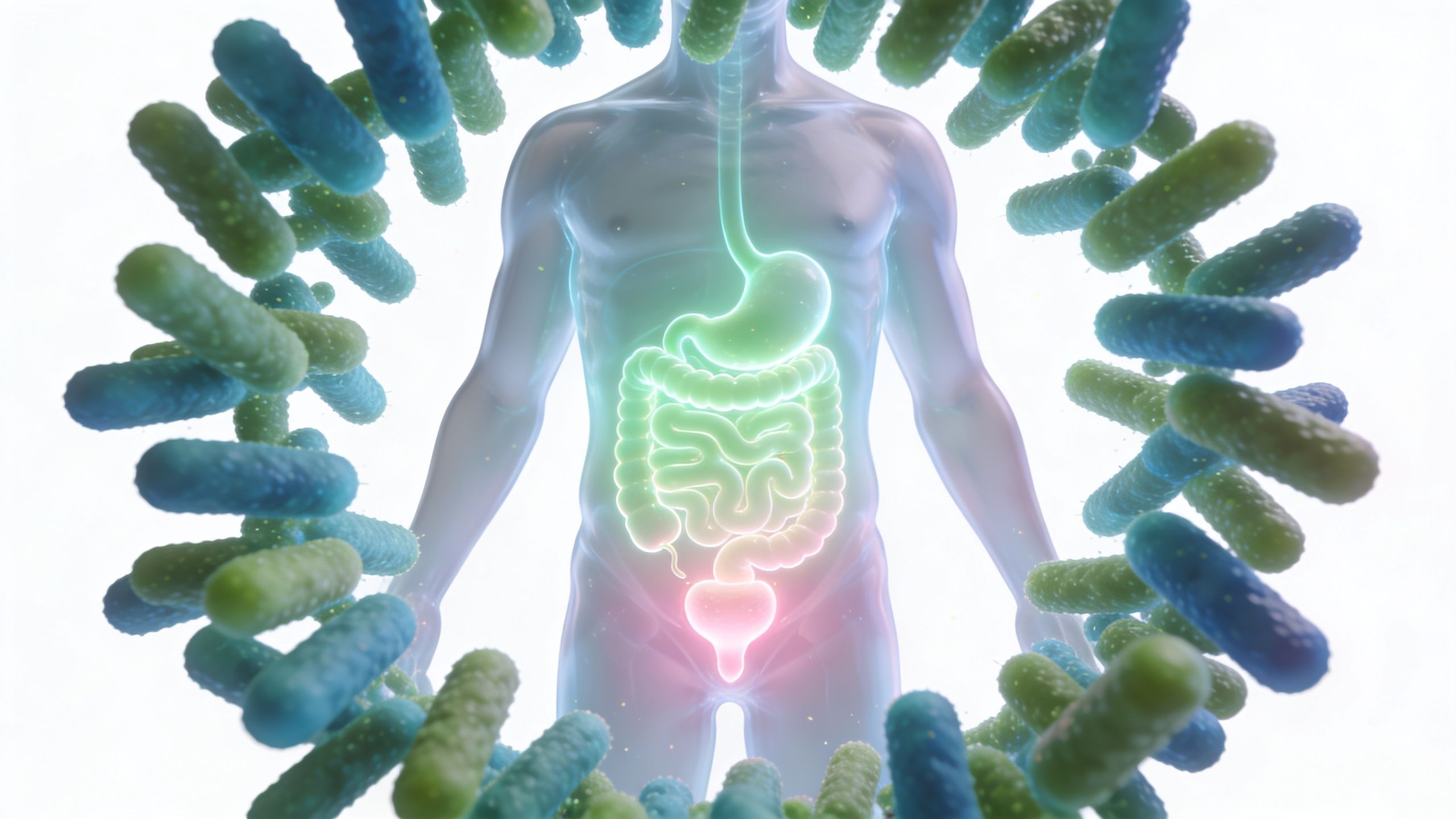
Lactobacilli: Your Guide to Gut Health, Vaginal Health & Immune Defenses
Once again, you sit down to breakfast and wonder whether it will work this time. You bought plain yogurt, reduced your sugar intake, tried one probiotic, then another. For a few days, your stomach feels somewhat calmer. After that, everything is back to how it was—or simply feels unpleasant in a different way.
If this pattern sounds familiar, it is not a sign that you lack discipline. Rather, it shows how difficult health can become when only general advice is available. Many people work their way through recommendations with genuine effort—recommendations that sound sensible but do not fit their own situation.
At this point, focusing on lactobacilli becomes important. They are among the bacteria that play a role in several areas of your microbiome and are often overlooked. That is precisely why many people get caught in a frustrating cycle of hoping, testing, and switching again. One more yogurt, one fewer capsule, another restriction. It feels proactive, but often remains guesswork.
And that is precisely the crux of the matter. Lactobacilli are fascinating. It becomes even more helpful when you understand why general advice so often fails. Your body does not function according to trend lists, but more like a garden with its own soil conditions. What grows for one person may do little for the next. Without knowing what is actually going on in your microbiome, even a well-intentioned health plan can quickly turn into trial and error.
The good news is that you do not have to keep guessing indefinitely. By taking a closer look, you can make decisions that better match your symptoms, habits, and goals. That is exactly what this is about. Not the next quick tip, but an understandable picture of how lactobacilli work and why a thorough microbiome analysis is often the much shorter route to real results.
Lactobacilli: the unsung heroes in your body
Maybe you know this pattern: You make an effort, eat more mindfully, try a probiotic, cut something out, hope for relief in your gut, and still notice little clear improvement. That frustration is understandable. Especially when it comes to the microbiome, many people do not fail because of a lack of effort, but because general advice rarely fits their individual starting point.
Lactobacilli play a greater role in this context than their unassuming name might suggest. They belong to the microorganisms that help maintain a stable environment in several sensitive areas of the body. In the gut, on mucous membranes, and especially wherever your body has to decide every day what to tolerate and what to defend against.
Anyone who wants to understand more deeply how these fellow inhabitants fit into the bigger picture will find a solid foundation in this introduction to the microbiome and its function in the body.
Why so many people get stuck when it comes to gut health
Many complaints lead straight into a trial-and-error cycle. People try yogurt, capsules, fermented foods, or elimination rules. Sometimes something feels good in the short term. Sometimes nothing happens at all. Both can be confusing.
The issue is often not the lactobacilli themselves, but whether this particular measure suits your current microbiome. A garden does not grow better simply because you use some kind of fertilizer. Only once you know the soil can you tend it effectively.
-
Eating more fermented foods
It may be useful. But it does not answer whether your body is currently benefiting from it. -
Taking a probiotic just in case
Some people notice an improvement. Others spend weeks trying without any clear effect. -
Eliminating foods as a precaution
This can ease symptoms, but it still does not explain why the balance has been disrupted.
You do not need to become even more disciplined. Often, what you mainly need is greater clarity about what is actually happening in your microbiome.
Why lactobacilli receive so much attention
Lactobacilli help create an environment in which beneficial microorganisms are more likely to thrive and unwanted germs encounter less favorable conditions. This effect is particularly well known on mucous membranes, such as in the vaginal area, where an acidic environment is part of the natural protective function.
That is exactly why lactobacilli fascinate so many people. They represent the hope of deliberately improving the body’s internal balance. The crucial point, however, is that more is not automatically better, and the right approach depends on your body, your symptoms, and your starting point.
That is why simply trying things out often produces mixed results. Anyone who wants to improve their health more efficiently needs not the next guess, but a more precise look at their own microbiome.
What exactly are lactobacilli, and what do they do?
Think of lactobacilli as your personal security team. They are there before problems arise and help maintain a stable environment. Their most important trick is surprisingly simple: they process carbohydrates and produce lactic acid.

The simple explanation in everyday language
Lactic acid may sound rather unremarkable at first. But in your body, it is extremely useful. It creates an acidic environment. Many unwanted microbes feel much less comfortable in such an environment. Lactobacilli therefore do not make the area “sterile”; instead, they help ensure that the right microbes maintain the upper hand.
If you are still unsure about the term microbiome, this article provides a good introduction to what it means exactly: What Is the Microbiome?.
What Microbiology Says About This
Lactobacilli are gram-positive, catalase- and oxidase-negative, microaerophilic rods that break down carbohydrates into lactic acid through fermentation. They are part of the normal flora of the urogenital tract and the gastrointestinal tract. Their protective factors include hydrogen peroxide and bacteriocins, natural antibacterial substances that protect the epithelium and inhibit inflammation (Wikipedia entry on Lactobacillus).
This sounds technical, but it can be translated quite easily:
-
Lactic acid production
They alter their environment so that disruptive microbes have a harder time. -
Hydrogen peroxide
Certain strains can use them to inhibit other microorganisms. -
Bacteriocins
These are natural defense substances that act like a finely tuned regulatory system.
Practical rule: Not every “good” microbe does everything. With lactobacilli, the species and strain matter greatly.
This is exactly where confusion often arises. Many people say “probiotics” as if it were a uniform category. In reality, it is more like a toolbox. And you do not need every tool, just the right one.
Intestines, Vagina, and Immune System: Where Lactobacilli Pull the Strings
You make an effort, eat more mindfully, perhaps try a probiotic, and hope for greater calm in your body. Yet some symptoms remain vague. Sometimes your stomach acts up, sometimes your mucous membranes, and sometimes you feel as though you are constantly getting slightly out of balance. This trial-and-error experience frustrates many people because it shows that the body does not work in isolated parts.
Lactobacilli play a role in several places at once. They influence the environment in the intestines, shape the vaginal flora, and interact closely with the immune system. Understanding this also makes it clear why blanket advice often falls short. What matters is not only whether lactobacilli are present, but where they are, which ones they are, and in what context.

In the Intestines
In the gut, lactobacilli work as part of a well-coordinated system. They help shape the environment, communicate with the intestinal mucosa, and influence how well other microbes can establish themselves. So the focus is less on individual "superbacteria" and more on a functioning interaction.
When this interaction becomes disrupted, it often feels vague. A bloated stomach after normal meals, fluctuating digestion, or the feeling that you have suddenly become more sensitive to certain foods. Such signals do not prove a specific deficiency. But they do show that taking a closer look at the microbiome may be more useful than repeatedly trying random approaches.
In the vagina
In the vagina, the role of lactobacilli is particularly easy to understand. They produce lactic acid and thereby help maintain an acidic environment. This environment makes it more difficult for many unwanted microbes to multiply significantly. Professional bodies such as the AWMF in its guideline on bacterial vaginosis describe this protective function of a vaginal flora dominated by lactobacilli.
This is particularly relevant and noticeable for many women. Recurring irritation, bacterial vaginosis, or yeast symptoms often seem like isolated episodes, but they are frequently connected to the local environment. That is why blanket advice such as "just take more probiotics" often falls short. If symptoms recur, it is worth taking a closer look at your diet, pH environment, and individual triggers. This article on nutrition for vaginal yeast infections is also relevant.
For the immune system
The immune system is closely connected to the mucous membranes. A large part of its daily work takes place where your body comes into contact with the outside world. The gut and vaginal mucosa are therefore not side issues, but highly monitored boundary surfaces.
Lactobacilli are not miracle cures. They work more like reliable team members in the background. When the microbial environment is balanced, your body can often process stimuli more calmly and appropriately. That is precisely why simply trying things out so often produces mixed results. Without knowing where the balance is disrupted, you can quickly end up treating the wrong problem.
A resilient immune system does not begin with supplements. It begins with an environment that supports your mucous membranes and puts less strain on your body.
Three common misconceptions
| Misconception | What is more realistic |
|---|---|
| "Lactobacilli are only for the gut." | They also play an important role in the vaginal environment and on mucous membranes. |
| "The main thing is lots of probiotics." | What matters is which species and strains suit your situation. |
| “If I don’t have anything acute, everything is fine.” | An imbalance can also develop gradually and show nonspecific symptoms. |
Understanding gut problems: 4 typical scenarios
Not everyone with an imbalanced microbiome looks the same. That is precisely what makes the topic so confusing. Some people mainly feel it in their abdomen, others in their resilience, and still others through recurring mucosal complaints.

The bloated person
You eat something completely ordinary, and shortly afterward your abdomen feels tight. Not always dramatically, but often enough that you are constantly thinking about it. Which meal will work today, and which one is better avoided? That takes energy.
This pattern often involves more than just “eating the wrong foods.” The gut can then seem like a system that reacts overly sensitively to minor stimuli. Lactobacilli are not the only variable, but they are among the microbes that influence digestive processes and the balance in the gut.
The susceptible person
You may not have a spectacular test result, but you often feel unstable. After stressful periods, something quickly gets thrown off. Sometimes your digestion, sometimes your general well-being, sometimes the feeling that you are constantly falling behind.
This is emotionally draining because from the outside, everything often looks “normal.” Inside, it still does not feel resilient. Especially then, it is worth looking at the microbiome instead of simply taking even more things on a hunch.
If your body is constantly fluctuating, it does not automatically mean you lack discipline. Sometimes you simply lack the information about where to start.
The stressed person
Here, the focus is not primarily on the gut, but on fatigue, inner restlessness, or mood swings. Many people are surprised that lactobacilli are mentioned in this context at all. Yet the gut-brain axis is a real field of research.
In the context of this axis, studies show that certain strains such as L. reuteri have the potential to support mental health. A German study by Heidelberg University showed that this strain could reduce cortisol levels by 22 percent and reduce anxiety symptoms in 68 percent of participants (Cerascreen on Lactobacilli and Bifidobacteria).
This does not mean that a probiotic replaces a mental illness or “makes stress go away.” It only shows that your microbiome can also play a role in such issues.
The person with recurring intimate complaints
You may know this pattern: symptoms go away, return, disappear briefly, and then come back again. This is not only physically frustrating but often mentally draining as well. Many people then start testing one new remedy after another without knowing why the problem keeps returning.
The lactobacilli perspective is particularly useful in cases like these. When the protective environment is weakened, the mucous membrane remains more vulnerable. In that case, another random attempt often does not help; only a targeted strategy will.
A brief self-check
If you found yourself nodding internally at several points, a microbiome imbalance may be contributing:
-
Your digestion fluctuates frequently
Sometimes bloated, sometimes sluggish, sometimes sensitive to food. -
Your resilience feels unstable
You manage to function, but not with the consistency you would like. -
Symptoms keep returning
Especially if you have already tried several things. -
You react inconsistently to recommendations
What helps others may do little for you or even make things worse.
This self-check can point you in a direction. It does not replace a reliable answer.
Yogurt, capsules, and more: How to support lactobacilli in a targeted way
You eat more yogurt, try a probiotic, and stop overlooking sauerkraut. Two weeks later, you still ask yourself: Why do I barely notice anything? This is exactly where health optimization often becomes frustrating. Not because you are not trying hard enough, but because lactobacilli are not a one-size-fits-all topic.
The practical key is to understand the different approaches in the right context. Every option has its place. But every option also has limitations.
Fermented foods as a foundation
Yogurt, kefir, sauerkraut, or kimchi can provide a useful foundation if you want to support your microbiome in everyday life. They provide microorganisms and fit well into a diet designed to ease the overall burden on the gut.
Even so, they are not a precision tool.
With fermented foods, you usually do not know exactly which strains they contain, how many reach your gut, or whether they suit your current situation. It works a little like mixing different seeds in a garden. The soil may benefit, but which plant will actually grow in the end remains unclear.
Especially after a course of antibiotics, it often helps to take a closer look at rebuilding your gut flora. If this applies to you, you can find practical background information in the article on rebuilding your gut flora after antibiotics.
Capsules and targeted strains
Probiotics in capsule form are more precise because specific bacterial strains are selected. This is helpful because different lactobacilli perform different functions.
For vaginal health, Lactobacillus rhamnosus GR-1® and reuteri RC-14®, for example, have been well studied. A German practice survey described oral probiotics containing these strains as very well tolerated. The same source also notes that they are suitable for restoring and maintaining a healthy vaginal flora (Pharmazeutische Zeitung article on the practice survey involving 698 users).
That sounds specific. And that is precisely the advantage of capsules. You are no longer working only with the general idea of “more good bacteria,” but with strains that have been studied for specific applications.
Why even good products are often not the right fit
This is where many people start to feel uncertain. A high-quality probiotic can be useful and still fail to meet your needs. That does not mean your body is “difficult.” It simply shows that general advice quickly reaches its limits with an individual microbiome.
A simple guide can help:
- Use fermented foods as a foundation if you want to make your diet more gut-friendly.
- Choose targeted strains when there is a specific reason, such as after taking antibiotics or in the case of recurring intimate discomfort.
- Get data if you have already tried many things and cannot find a clear direction.
A dietary supplement can be useful. Without insight into your microbiome, however, choosing one often remains a gamble with an uncertain chance of success.
That is exactly why trial and error can be so exhausting. You invest time, money, and hope, but your starting point remains unclear. Instead of continuing to experiment on a hunch, modern analytical methods such as an at-home microbiome test enable a data-driven approach. mybody x Gesundheit, for example, offers such a test.
Stop Guessing: Your Path to an Optimized Microbiome
You may know the feeling: You change your breakfast, try a probiotic, cut out sugar, start the next thing two weeks later, and eventually wonder why so little has clearly improved. This frustration is understandable. It often arises not because you are not doing enough, but because an important piece is missing: your personal starting point.
This is exactly where you can see what you can take away from the previous sections. Lactobacilli do not perform the same function everywhere. In the gut, they help stabilize the environment and keep unwanted microbes in check. In the vagina, they contribute to an acidic pH that provides protection. Through their metabolic products, they also influence signals relevant to mucous membranes and the immune system. When these areas function so differently, it becomes clear why a general tip does not automatically suit your body.
A microbiome functions in many ways like a garden. You may see that something is not growing well. But without looking at the soil, moisture, and light, it remains unclear whether you need more water, different plants, or simply patience. Likewise, with lactobacilli, not every measure produces the same result.
That’s why an analysis is the more logical next step for many people, especially if they have already tried quite a few things. It does not replace a medical opinion, but it can give you much better guidance: Are there indications of an imbalance? Are certain groups of bacteria missing? Do your previous measures actually fit what is currently going on in your gut?
This is how experimentation becomes a plan
| Step | What this gives you |
|---|---|
| Organize your symptoms and previous attempts | You recognize patterns instead of evaluating only individual symptoms |
| Have your microbiome analyzed | You get a tangible starting point for your decisions |
| Compare the results with your diet, daily routine, and, where appropriate, supplements | Your next steps become more targeted and often easier to understand |
mybody x Gesundheit also offers at-home microbiome tests. The product name matters less than the principle behind it: understand first, then take targeted action.
When you know what role lactobacilli are likely to play in your case, optimizing your health becomes calmer, clearer, and more efficient. You don’t have to start perfectly. Above all, you need a direction that suits your body.
Your gut instinct deserves facts
Lactobacilli are fascinating because they show how strongly small biological processes can influence your everyday life. Digestion, mucous membranes, immune defenses, even your overall sense of well-being. Everything is more closely connected than many people long thought.
The most important insight, however, is not just that lactobacilli are important. What matters is that your microbiome is unique. That’s why the same yogurt, the same capsule, or the same dietary rule may work for someone else while barely changing anything for you.
You don’t need to feel guilty about it. You simply need a more precise next step. If you want to understand what is really going on in your gut, measuring will take you further than guessing. That’s where gut instinct becomes genuine guidance.
Your health is not a one-size-fits-all solution. Your strategy shouldn’t be either.
If you want to understand your body through real data rather than guesswork, mybody x Gesundheit offers at-home tests for your gut, blood, hormones, and more. This allows you to find out more precisely from home what your body really needs.



Share now:
Microbiome Analysis: Your Guide to Gut Health
Gut microbiome test: Your guide to gut health