
Longevity nutrition: How to eat for healthy aging and a long life
Imagine being able to influence not only how many years you live, but more importantly, how you spend those years. That's the essence of longevity nutrition – a conscious way of eating that extends your healthspan . In other words, the time you feel truly vital, active, and full of energy.
How your diet sets the course for the future
Longevity is about so much more than simply growing old. It's about having the strength for a mountain hike at 80 or a clear mind at 90 to truly enjoy time with your grandchildren. Your diet is one of the most powerful tools you have at your disposal to influence this.
Every single meal is like a message to your body. It can either fuel inflammation and accelerate aging processes – or protect your cells and trigger vital repair mechanisms. The longevity diet is all about sending the right signals.
More than just counting calories
Forget rigid diet plans and strict prohibitions. The approach to a long, healthy life is far more flexible and focuses on your cellular health. You'll learn to understand how specific nutrients influence your genes and how you can actively prevent age-related diseases.
The reality is unfortunately sobering: Our modern eating habits have a direct, often negative, impact on our life expectancy. In Germany, it averages around 78.3 years for men and 83.2 years for women . What's truly sobering is that a large proportion of deaths are attributable to diet-related diseases such as cardiovascular disease. You can find more information about these connections in this article on life expectancy and nutrition .
These figures clearly illustrate how crucial the daily choices on your plate really are.
The cornerstones of longevity nutrition
To give you a clear overview of what's important, I've summarized the key principles in a table.
Cornerstones of longevity nutrition
This table summarizes the most important principles of longevity nutrition to give you a quick overview.
| principle | Why it's important | Practical implementation |
|---|---|---|
| Plant-based diet | Provides a wealth of vitamins, minerals and protective plant compounds (polyphenols) that protect cells from stress. | Make vegetables, fruits, legumes, nuts, and seeds the basis of your meals. Consider meat and fish more as side dishes. |
| High nutrient density | Every calorie provides your body with valuable building blocks, instead of delivering empty energy that burdens your metabolism. | Prefer unprocessed foods. Think of a colorful vegetable stir-fry instead of a frozen pizza, or berries instead of gummy bears. |
| Anti-inflammatory | Chronic, silent inflammation is a major driver of aging. The right foods can extinguish this "fire" in the body. | Specifically incorporate foods such as fatty fish (salmon, mackerel), berries, green leafy vegetables, turmeric and olive oil. |
| Metabolic health | Stable blood sugar and good insulin sensitivity protect against type 2 diabetes and keep your energy levels constant. | Always combine carbohydrates with proteins, fats, and fiber. Avoid sugary drinks and snacks. |
These principles are not a rigid set of rules, but rather guardrails to help you make the right decisions for your health.
Your body isn't a machine that simply gets fueled with calories. It's a complex biological system that responds to the quality of your food. Longevity nutrition is the art of optimally supporting this system.
The most important nutrients for your cell health

Every bite you take sends a message to the trillions of cells in your body. But which of these messages do they truly understand to keep you healthy and vibrant? Let's delve into the biochemistry of longevity – without the complicated jargon.
Imagine your cells as tiny, highly efficient power plants. Day after day, they are exposed to attacks, whether from environmental toxins, stress, or normal metabolic processes. This constant stress generates free radicals , small, aggressive particles that attack cell structures and accelerate the aging process.
This is exactly where the heroes of longevity nutrition come into play: nutrients that protect and repair your cells and boost their function to peak performance.
Antioxidants: Your personal bodyguards
The first line of defense against this cellular stress is formed by antioxidants . They capture free radicals and neutralize them before they can cause damage. You can really think of them as personal bodyguards, throwing themselves protectively in front of your cells.
The most effective bodyguards are found in plant-based foods, primarily in the form of polyphenols . These are precisely the pigments, flavor compounds, and tannins that make fruits and vegetables so unique.
Here are some top sources of polyphenols:
- Dark berries: Blueberries, blackberries and aronia berries are packed with anthocyanins, which have an extremely strong antioxidant effect.
- Green tea: The EGCG (epigallocatechin gallate) it contains is a well-known star among cell protectors.
- Dark chocolate: Cocoa with a high percentage (over 70% ) is an excellent source of valuable flavonoids.
- Nuts and seeds: Walnuts and flaxseeds in particular are full of protective plant compounds.
Every colorful plate of food directly contributes to your cellular defense system. The variety of colors ensures that you absorb a broad spectrum of different antioxidants.
Omega-3 fatty acids: The anti-inflammatories
Acute inflammation is vital for our immune system. Chronic, low-grade inflammation, on the other hand, is one of the main drivers of aging processes and many lifestyle diseases. Omega-3 fatty acids are your strongest allies here, as they act like a natural extinguisher for these silent "fires" in the body.
They help to downregulate pro-inflammatory processes and keep cell membranes supple and healthy – which is absolutely crucial for communication between cells.
The best sources of anti-inflammatory omega-3 fatty acids are:
- Fatty cold-water fish: salmon, mackerel, herring and sardines.
- Plant-based alternatives: Algae oil is a fantastic vegan source of the directly usable fatty acids EPA and DHA.
- Flaxseeds, chia seeds and walnuts: They provide the precursor ALA, which the body can then convert.
Dietary fiber: Food for your allies in the gut
Dietary fiber is so much more than just a digestive aid. It's the favorite food of your good gut bacteria – your microbiome . A healthy microbiome is the foundation for a strong immune system, optimal nutrient absorption, and even influences your mood.
When your gut bacteria ferment fiber, they produce short-chain fatty acids like butyrate. This molecule serves as an energy source for the cells of your intestinal lining and has a strong anti-inflammatory effect throughout the body. A smart longevity diet therefore consciously strengthens your gut's natural allies.
Focus on special longevity molecules
In addition to these basic nutrients, longevity research is increasingly focusing on certain specific molecules. These molecules have the ability to specifically boost cellular cleansing processes.
One of these processes is autophagy , a kind of recycling program within the cell. In this process, damaged or old cell components are broken down and reused. This keeps the cell fresh, young, and functional.
Two known substances that can trigger this process are:
- Spermidine: Found in abundance in wheat germ, mature cheese, mushrooms and soy products.
- Resveratrol: Found primarily in the skin of red grapes, but also in peanuts and mulberries.
These molecules send signals that help cells renew themselves. They directly influence how your genes are read—a fascinating field known as epigenetics. If you want to delve deeper into how your lifestyle can control your genes, you'll find plenty of exciting insights in our article on what epigenetics is .
Now that you know the key players for your cell health, you will see nutrition tables and ingredient lists in a completely different light.
Success formulas of the world's longest-living people
We don't need to completely reinvent the wheel when it comes to longevity nutrition . Sometimes, all it takes is a look at cultures that have been demonstrating for generations how to live a healthy and vibrant life to 100. Welcome to the "Blue Zones."
These are those special places in the world where an above-average number of people reach an advanced age in impressive health. Researchers have examined these regions very closely to uncover their secrets. We're now taking a short trip to Okinawa (Japan), Sardinia (Italy), and Ikaria (Greece) to take a closer look at their nutritional blueprints.
You'll be surprised how many similarities are hidden behind the seemingly so different cuisines.
Mediterranean wisdom from Sardinia and Ikaria
When people hear the term "Mediterranean diet," they often immediately think of olive oil, lots of fish, and perhaps a glass of red wine. But the recipe for success for the people in the Mediterranean Blue Zones, such as Sardinia and Ikaria, is much more profound. Their diet is above all else: simple, local, and extremely plant-based .
Their plates are piled high with:
- Legumes: Lentils, chickpeas and beans are daily companions and provide valuable protein and important fiber.
- Whole grains: Instead of refined white flour, barley, old wheat varieties or homemade sourdough bread end up on the table here.
- Wild herbs and vegetables from the garden: Whether dandelion, fennel or countless other herbs – they end up in salads every day or are brewed into tea and are full of secondary plant compounds.
- Healthy fats: High-quality olive oil, nuts and seeds are the main sources of fat, not butter or animal fats.
Meat, especially red meat, is a real rarity. It is usually only eaten on special occasions and then only in small quantities. Even fish is not on the menu every day, but rather a few times a week.
A key principle is eating in rhythm with the seasons. Meals are determined by what is currently growing in one's own garden or available at the local market. This guarantees not only maximum freshness but also the highest nutrient density.
Hara hachi bu: the secret of Okinawa
The Japanese island of Okinawa long held the record for the highest life expectancy worldwide. The traditional Okinawan diet is a perfect example of a nutrient-rich yet low-calorie diet. Their secret can be summed up in one short sentence: "Hara hachi bu".
This Confucian principle means something like: "Eat only until you are 80% full." This conscious, moderate calorie restriction is a real key principle for longevity, as it triggers cellular repair processes called autophagy.
The traditional Okinawan diet is known for:
- Sweet potatoes: In the past, the purple sweet potato was a staple food, making up a large portion of daily calories. It is packed with vitamins and antioxidants.
- Soy products: Tofu and miso are important, everyday protein sources.
- Green and yellow vegetables: Bitter melon (“Goya”) and many other local vegetables are an integral part of every meal.
Interestingly, the traditionally living Okinawans – unlike those in typical Japanese cuisine – eat very little rice and hardly any fish. Their diet is over 90% plant-based .
The common denominators for your longevity
Although the cuisines of Sardinia and Okinawa may seem completely different at first glance, a closer look reveals surprising similarities. You can integrate these universal principles directly into your everyday life – without having to go searching for wild herbs. If you'd like to delve even deeper, our comprehensive guide to longevity nutrition offers even more detailed insights and practical tips.
The following table summarizes the core principles of the nutritional models for a long life in a clear and concise manner.
Nutritional models for longevity compared
A direct comparison of the core principles of the Mediterranean diet, the Okinawa diet, and the diet in the Blue Zones.
| feature | Mediterranean diet | Okinawa diet | Blue Zones (General) |
|---|---|---|---|
| Plant content | Very high, focus on vegetables, fruit, whole grains, legumes | Extremely high (over 90%), sweet potatoes as a base | Predominantly plant-based, meat as an exception |
| Protein sources | Legumes, fish, little red meat | Soy (tofu, miso), legumes, hardly any fish/meat | Beans, lentils, nuts, small amounts of fish |
| Fat sources | Olive oil, nuts, seeds | Low fat content, mainly from plants | Vegetable fats (olive oil, nuts) |
| Calorie intake | Moderate | Low, principle of "Hara hachi bu" (80% full) | Generally moderate, often with fasting periods |
| Processed foods | Minimal, fresh and seasonal | Virtually non-existent, traditional preparation | Virtually none, focus on whole foods |
As you can see, it's always about a natural, plant-based diet with moderate calorie intake. These are the timeless rules that work across cultures.
In fact, life expectancy in Germany has improved dramatically since the 19th century, largely due to better nutritional standards. From the mid-20th century to the present day alone, it has increased by approximately 14 years for men and 15 years for women . Projections indicate that by 2070 we could even reach over 84 years for men and 88 years for women if we continue to optimize our diets. You can find more information about the development of life expectancy in Germany at Statista.com .
The graphic below shows how the recommended macronutrient distribution for longevity differs from the average Western diet.
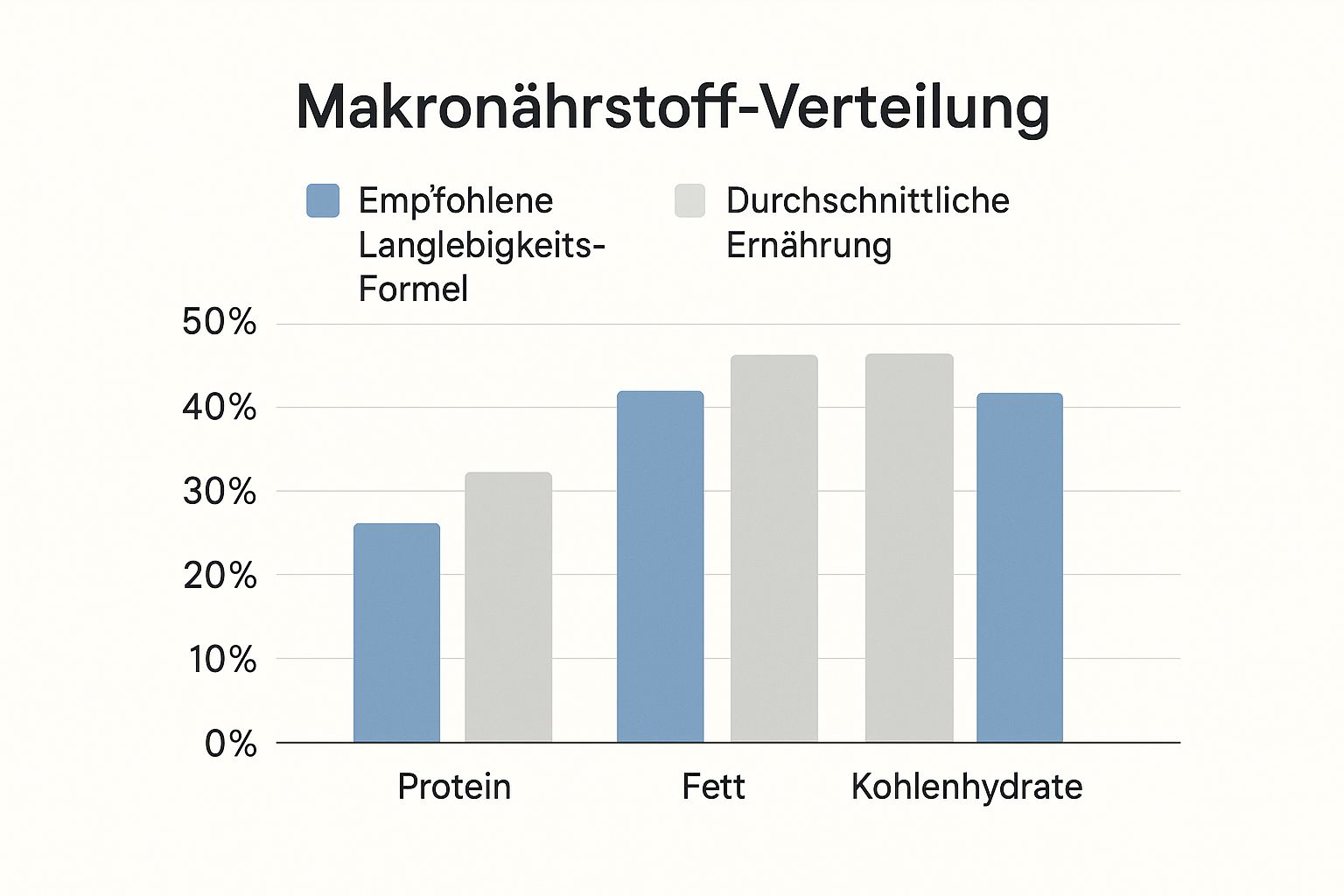
The visualization makes it clear: A diet for longevity focuses on a higher protein and lower fat intake, while the carbohydrate content remains similar. The crucial difference, however, lies in the quality of these nutrients.
Implementing your longevity strategy in everyday life

The best knowledge about nutrients and the habits of the world's longest-living people remains purely theoretical if it isn't applied to everyday life. Now it gets practical: How do you integrate this knowledge into your life in a way that feels good and, above all, is feasible? This section is your toolbox to finally make your personal longevity diet a reality.
Forget the pressure to make everything perfect overnight. Sustainable change happens in small, conscious steps that, over time, develop into strong habits. It's not about perfection, but about a clear, healthy direction.
Your weekly shopping as a strategy tool
Your journey to greater longevity doesn't start on your plate, but in the supermarket. With a smart shopping strategy, you'll almost automatically make healthier choices and create an environment that supports your goals.
Instead of wandering aimlessly through the corridors, try this:
- Always start in the produce section. Fill your cart with as many different colors as possible. Each color represents different protective plant compounds.
- Next, let's talk about protein sources. Opt for plant-based options like lentils, beans, and tofu, or choose high-quality fish such as salmon or mackerel. Meat should remain a conscious exception.
- Avoid the middle aisles as much as possible. They're usually full of highly processed products, sugary snacks, and ready-made meals. You'll almost always find the best foods for your longevity diet at the edges of the supermarket.
Your shopping cart is a reflection of your future health. Fill it with foods that nourish your cells, rather than just filling them up.
Smart cooking for more energy in everyday life
Eating healthily doesn't have to be complicated or time-consuming. With a few simple basic recipes and clever preparation, you can save a lot of time and always have a nutrient-rich option at hand.
Your energy-rich breakfast:
A good start to the day stabilizes your blood sugar and provides long-lasting energy. Ditch the sugary breakfast cereals. Instead, choose a combination of protein, healthy fats, and complex carbohydrates.
An example? Porridge made with rolled oats (fiber), topped with a handful of berries (antioxidants), a spoonful of nut butter (healthy fats), and a few chia seeds (omega-3). It takes less than five minutes and keeps you full and focused for hours.
Quick, nutrient-dense meals:
For lunch and dinner, the "bowl method" is a real game-changer. It's super flexible and ensures you cover all the important nutrient groups.
Here's how to build your longevity bowl:
- The basis: Complex carbohydrates such as quinoa, whole grain rice or sweet potatoes.
- The protein: A serving of lentils, chickpeas, tofu or a piece of grilled salmon.
- The vegetables: Fill the bowl with raw or steamed vegetables. Broccoli, spinach, bell peppers, tomatoes – the more colorful, the better.
- Healthy fats & toppings: Avocado, nuts, seeds or a high-quality olive oil dressing round off the whole thing.
Optimize the timing of your meals
It's not just what you eat that matters, but also when you eat. Breaks between meals give your body the chance to initiate important cleanup and repair processes – a process called autophagy. This is precisely where intermittent fasting comes in.
The most well-known method is the 16:8 model : You eat within an 8-hour window and fast for the remaining 16 hours (including sleep). This can mean simply skipping breakfast and eating your first meal at midday.
For many, this is an easy way to reduce calorie intake and boost cell regeneration without constantly feeling hungry. However, it's important to listen to your body. Intermittent fasting isn't suitable for everyone, especially those with pre-existing medical conditions.
Simple food swaps with a big impact
You don't have to give up everything you love. Often, simply replacing certain foods with smarter alternatives is enough. These small swaps, known as "food swaps," can make a huge difference to your health.
| Instead of... | Choose instead... | Why it's better |
|---|---|---|
| White bread & pasta | Wholegrain bread, quinoa, lentil pasta | Provides more fiber and complex carbohydrates that help keep blood sugar stable. |
| Sugary sodas | Water with lemon, unsweetened tea | It saves huge amounts of empty calories and protects against blood sugar spikes. |
| Plant oils (sunflower) | Olive oil, avocado oil | Provides anti-inflammatory fatty acids instead of pro-inflammatory omega-6 fats. |
| Chips & Crackers | A handful of nuts, roasted chickpeas | Contains valuable fats, proteins and fiber instead of refined carbohydrates. |
Every person is unique and reacts differently to food. What's a superfood for one person might be less beneficial for another. This is precisely where modern science comes in. If you want to understand how your genes influence your diet, our article on the fundamentals of nutrigenetics offers fascinating insights into how you can tailor your diet even more precisely to your individual predisposition.
Why nutrition is only one part of the whole picture
You've optimized your diet, cook with the best ingredients, and pay attention to essential nutrients? Fantastic, you've laid the foundation for your longevity strategy .
But let's be honest: A nutrient-rich diet alone is like a powerful engine in a car without wheels. Its full potential is only realized when all the parts work together.
A truly healthy and resilient body is always the result of a well-rounded approach. So let's consciously think outside the box and discover the most important allies that will amplify the positive effects of your longevity diet many times over.
Exercise as a nutrient booster
Imagine being able to flip a switch after every meal that improves nutrient absorption by your cells and easily prevents blood sugar spikes. That's exactly what exercise does. And don't worry, you don't have to run a marathon to achieve it.
Even a relaxed 15- to 20-minute walk after eating works wonders. Your muscles need energy and draw sugar directly from your blood, naturally stabilizing your blood sugar levels. This relieves the burden on your pancreas and improves your insulin sensitivity – an absolute cornerstone of longevity.
Regular exercise, whether walking, cycling, or yoga, also boosts blood circulation. This means that all the valuable vitamins, antioxidants, and fatty acids from your food actually reach where they are needed: your cells.
Exercise is not a punishment for what you've eaten. It's your partner in nutrition, ensuring that every nutrient can have its full effect.
Stress management as a protective shield
You can eat as healthily as you like – if you're under constant stress, you'll sabotage your own efforts. Chronic stress constantly floods your body with the hormone cortisol , and a persistently elevated cortisol level can undo even the best-laid nutrition plans.
The consequences are far-reaching:
- Elevated blood sugar: Cortisol releases sugar reserves, leading to blood sugar fluctuations and cravings for exactly the things you want to avoid.
- Abdominal fat: The hormone promotes the storage of visceral fat, which is particularly metabolically active and pro-inflammatory.
- Weakened immune system: Chronic stress lowers your immune defenses and makes you more susceptible to any infection that is currently circulating.
- Poor digestion: Stress practically paralyzes digestion. This leads to poorer nutrient absorption and can trigger intestinal problems.
Fortunately, you can actively counteract this. Short, conscious breaks in everyday life are extremely effective. Simple breathing exercises – inhaling for four seconds, exhaling for six seconds – can calm your nervous system within minutes. Mindfulness practices or a short walk in nature also help to lower cortisol levels.
Sleep as the ultimate repair program
Sleep is not a passive state, but the most important regeneration phase for your body and brain. While you sleep, crucial processes take place that are absolutely essential for your longevity.
The most intensive cell repair takes place at night; the brain is cleansed of metabolic waste products, and growth hormones essential for tissue regeneration are released. Even a single night of poor sleep can reduce insulin sensitivity by up to 25% the following day and raise inflammatory markers in the blood.
Good sleep is therefore not an option, but a necessity for the success of your longevity diet . Establish a consistent evening routine, avoid blue light from screens before bedtime, and ensure a cool, dark, and quiet sleeping environment.
This holistic approach, where nutrition, exercise, stress management, and sleep go hand in hand, is the real key. If you'd like to delve deeper into the various pillars of a long and healthy life, you'll find a comprehensive overview in our article on the importance of longevity .
The starting signal for your healthy years is now.
Let's summarize the most important points: Your longevity diet isn't about becoming perfect overnight. It's about progress. It's about making one decision each day that's just a little bit better than the one from the day before.
You now have the tools at your fingertips: A plant-based, nutrient-rich, and minimally processed diet is the most effective way to actively extend your healthspan. Don't see these principles as a rigid set of rules, but rather as flexible guidelines that you can easily adapt to your daily life.
Start small. Really small. Simply add a handful of spinach to your next meal, or swap that sugary afternoon drink for a glass of water. Each of these tiny steps may seem insignificant, but over time they add up to a huge gain for your health and vitality.
Ultimately, it's not just the number of years you live that counts, but the quality with which you fill them. Your diet is the most powerful tool you possess to maximize both.
The best time to change course? Right now. Your future self will thank you.
Frequently asked questions about longevity nutrition
Anyone starting to change their diet often has many questions. That's perfectly normal – after all, it's about changing deeply ingrained habits. To dispel any remaining uncertainties and encourage you on your journey, I'll answer some of the most frequently asked questions I encounter about longevity nutrition .
Will I have to give up my favorite foods forever?
No, absolutely not! A longevity diet isn't about dogmatic deprivation or obsessive perfectionism. Instead, think of the 80/20 rule : If you adhere to nutrient-rich principles 80% of the time, you can consciously enjoy the remaining 20% without guilt.
A slice of birthday cake or pizza with friends is simply part of a fulfilling life. What's crucial is that the foundation of your diet is sound. This way, indulgence becomes a conscious exception that doesn't undermine your health goals, rather than a rule that ruins everything.
How quickly will I see results?
This varies greatly from person to person. You might notice some positive effects after just a few weeks: more energy, more stable blood sugar levels, or improved digestion. Many people report simply feeling more alert and mentally clear.
Other, more profound changes occur at the cellular level and aren't immediately noticeable. Understand this: Longevity nutrition isn't a sprint, it's a marathon. It's about building long-term health that will sustain you for decades. Give your body the time to adapt and regenerate.
The greatest gain isn't what you see on the scale in the short term, but the healthspan you build up over the years. It's an investment in your future, vital self.
Is a longevity diet expensive?
This myth persists, but it's not true. Sure, exotic superfoods or special supplements can be expensive, but the foundation of a truly longevity-promoting diet is surprisingly budget-friendly.
Here are a few simple tips on how to save money:
- Opt for seasonal and regional vegetables: They are often cheaper, fresher, and have the most nutrients.
- Include legumes: lentils, beans and chickpeas are unbeatable, affordable and healthy sources of protein and fiber.
- Buy in bulk: Nuts, seeds or whole grains are often significantly cheaper in larger packages.
- Reduce your meat consumption: Buying less meat, but of higher quality, often saves money and is a huge benefit to your health.
A well-planned, plant-based diet is almost always cheaper than a diet based on expensive convenience foods and lots of meat.
Do you want to do more than just follow general principles and know exactly what your body truly needs? At mybody-x.com, we help you understand your individual predisposition. Use scientifically sound tests to find out how your metabolism works and which nutrients are crucial for you personally. Discover your own personal path to greater health and vitality at https://mybody-x.com .


Share:
What is epigenetics? 6 mechanisms that control your genes
DNA test for nutrition: Your personal guide to optimal nutrition