

Genetics and obesity – understanding the influence and making the most of the opportunities
Few things occupy people in Germany, Austria, or Switzerland as much as their own body weight. The question of why a healthy diet and exercise sometimes simply are not enough quickly arises. Research findings from Charité show that genetic factors can explain 40 to 70 percent of body weight in identical twins. Anyone who wants to learn more about the influence of hereditary factors and personalized strategies for sustainable weight loss will find practical, scientifically sound guidance here.
Table of contents
- What do genetic influences on obesity mean?
- Key genes and epigenetic mechanisms explained
- Individual susceptibility: Genes versus lifestyle
- Opportunities: Personalized analyses and therapies
- Limits, risks, and importance of lifelong prevention
Key findings
| Point | Details |
|---|---|
| Genetic influences are significant | Genes can explain 40–70% of body weight in identical twins and are an important part of an individual’s weight profile. |
| Lifestyle has a major influence | Although genes play a role, diet, exercise, and stress management can modulate the effects of genetic predispositions. |
| Personalized health strategies | Genetic analyses enable individualized treatment approaches tailored to specific genetic predispositions. |
| Prevention is crucial | A healthy diet and sufficient exercise can minimize genetic risks and regulate weight over the long term. |
What do genetic influences on obesity mean?
Your genes play a surprisingly large role in weight regulation. Scientific studies show that genetic factors can explain 40–70% of body weight in identical twins. This means: Your DNA is not your destiny, but an important building block for understanding your individual weight profile.
The genetic influences on obesity are complex and involve various mechanisms:
- Metabolism genes: Influence how quickly your body burns calories
- Hunger genes: Regulate feelings of satiety and appetite control
- Hormone genes: Control hormones that influence fat storage
Interestingly, research from Charité – epigenetic markers shows that changes can arise as early as the embryonic stage that increase the risk of obesity—particularly in women.
This does not mean that you are powerless. Genes are more of a starting point than a fixed verdict. Your lifestyle, diet, and physical activity have an enormous influence on how these genetic predispositions actually manifest.
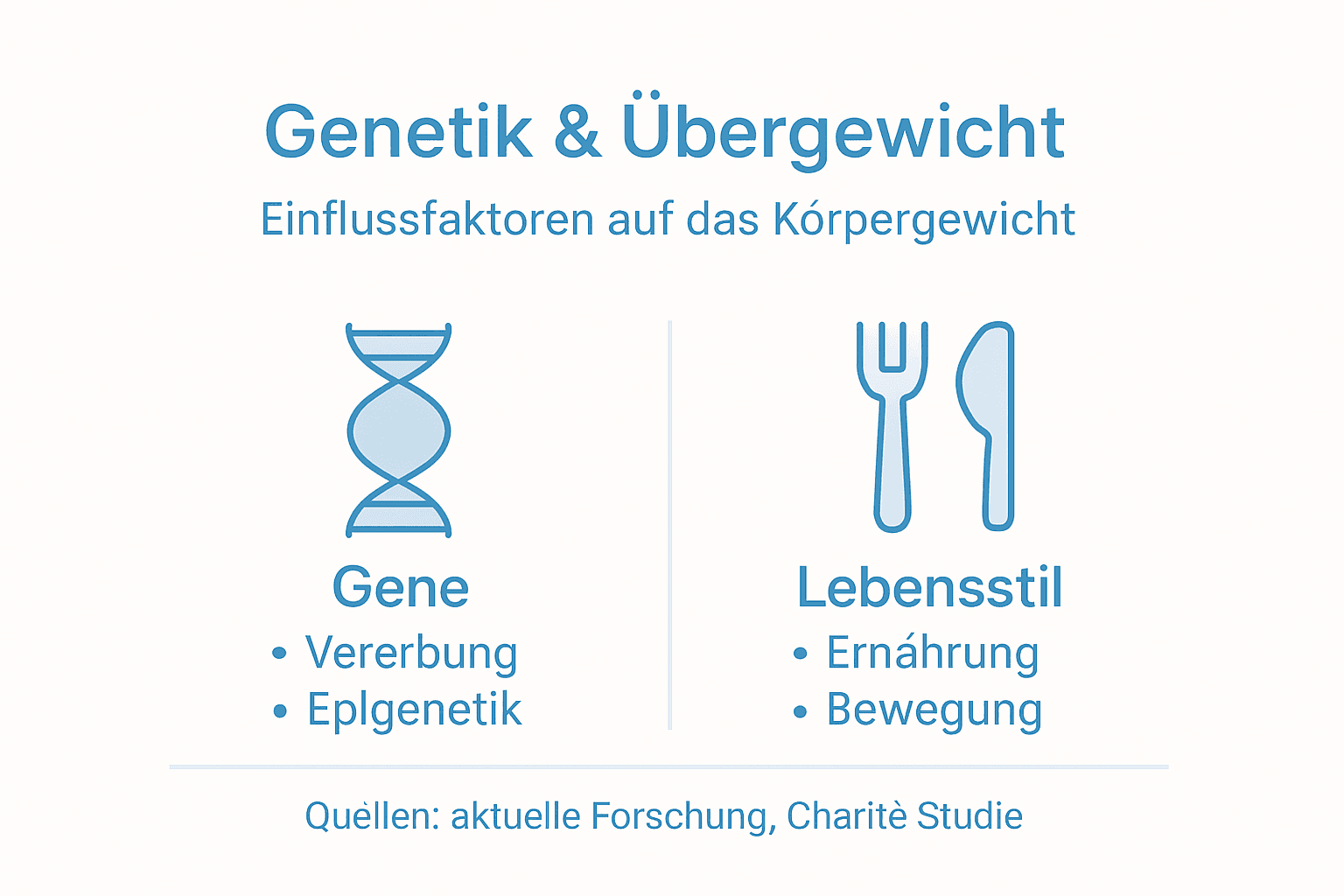
Pro tip: Do not let your genetic predisposition discourage you; instead, use this knowledge as an opportunity for a personalized health strategy.
Key genes and epigenetic mechanisms explained
Being overweight is not just a matter of lifestyle; it also has a complex genetic component. There are two basic forms of genetic influence on body weight: monogenic and polygenic obesity, which involve different mechanisms.
Monogenic obesity is characterized by the following features:
- Very rare form of the disease
- Results from mutations in individual genes
- Often leads to extreme obesity as early as childhood
- Accounts for less than 5% of obesity cases
Polygenic obesity, on the other hand:
The following overview helps explain the genetic mechanisms involved in obesity:
| Type of genetic influences | Key difference | Typical onset | Implications for treatment |
|---|---|---|---|
| Monogenic obesity | Mutation of a single gene | Often begins in childhood | Targeted gene therapy possible |
| Polygenic obesity | Combination of many genetic variants | More common in adulthood | Focus on prevention and lifestyle |
- Is the most common form of weight-related problems
- Arises from the interaction of many genetic variants
- Each genetic variant has only a small individual effect
- Cumulative effects lead to weight risk
The epigenetic changes associated with obesity show fascinating dynamics: an increased body mass index can actually alter markers in the genome and influence signaling pathways associated with metabolic diseases.
Epigenetic mechanisms such as DNA methylation play a central role. They regulate which genes are active without altering the underlying DNA sequence. This means that your lifestyle can directly influence gene activity—an encouraging approach to prevention and treatment.
Pro tip: Do not view your genes as an unchangeable fate, but as a dynamic system that you can positively influence through mindful nutrition and lifestyle choices.
Individual susceptibility: Genes versus lifestyle
The question of overweight cannot be answered simply—it is a complex interplay between genetic predisposition and lifestyle. Genetic predisposition does not automatically mean that you will inevitably become overweight.

Scientific studies on parental influence paint a fascinating picture: Parents’ behavior and eating habits shape their children’s health significantly more than previously assumed.
The most important influencing factors at a glance:
Genetic influences:
- Metabolic rate
- Hormonal regulatory mechanisms
- Appetite regulation
- Body fat distribution
Lifestyle influences:
- Eating habits
- Amount of physical activity
- Stress management
- Sleep quality
Your genes invite you—the way you live decides!
Interestingly, lifestyle factors can significantly modulate genetic susceptibility to overweight. This means you have more control than you may think. Your daily choices regarding diet, exercise, and stress management can positively influence genetic predispositions.
Pro tip: View your genes as a starting point, not a destination—with conscious decisions, you can actively shape your genetic framework.
Opportunities: Personalized analyses and therapies
Modern medicine is revolutionizing the treatment of overweight through highly precise, individualized approaches. Genetic analyses now enable a completely new understanding of personal weight regulation.
Modern treatment options for obesity aim to understand and specifically treat individual genetic causes.
The most important personalized analysis approaches:
Genetic diagnostics:
- Identification of specific gene variants
- Assessment of individual metabolic predisposition
- Early detection of risk factors
- Tailored prevention strategies
Modern treatment options:
- Central nervous system regulation of body weight
- Pharmacological individual-case treatments
- Influence on molecular signaling pathways
- Personalized nutrition recommendations
The more precisely we understand the genetic blueprint, the more precisely we can intervene!
Experts distinguish between monogenic and polygenic causes of overweight. Novel treatment approaches, such as influencing the leptin–melanocortin signaling pathway, are showing promising results. Early detection can not only improve treatment outcomes, but also minimize complications and reduce stigmatization.
Pro tip: View genetic analyses as a personal health compass—not as a verdict, but as an opportunity for individual optimization.
Limits, risks, and importance of lifelong prevention
Genetic predisposition does not automatically mean a predetermined fate, but rather an individual starting point for health decisions. Lifelong prevention is the key to minimizing genetic risks and actively shaping your own health.
Genetic factors and the importance of prevention show that the environment and lifestyle are decisive, even when a genetic predisposition is present.
The most important prevention strategies:
Nutritional prevention:
- Balanced, nutrient-rich diet
- Mindful calorie choices
- Avoidance of ultra-processed foods
- Regular meals
Exercise prevention:
An overview of the most important preventive measures and their scientific benefits:
| Preventive measure | Scientific benefits | Recommendation for everyday life |
|---|---|---|
| Balanced diet | Reduced risk of overweight | Fresh meals every day |
| Regular exercise | Improved metabolism | Exercise 3–5 times per week |
| Stress reduction | Reduces hormonal disruptions | Schedule time for relaxation and breaks |
| Adequate sleep | Supports weight regulation | At least 7 hours per night |
- Regular physical activity
- Strength training to build muscle
- Endurance training
- Stress reduction through exercise
Genes set the stage—your lifestyle decides!
Science shows that genetic risks can be significantly modulated through targeted interventions. A holistic approach that combines nutrition, exercise, stress management, and mental health is essential.
Pro tip: View your genes as a guide, not a roadblock—with the right strategy, you can positively influence your genetic predisposition.
Use your genetic potential for a healthy weight
Obesity has many causes, and as the article shows, genetic factors play a decisive role in metabolism, hunger regulation, and hormone release. This is exactly where mybody®x comes in: with our DNA metabolism tests for your optimal nutrition – mybody®x, we offer scientifically sound insights into your individual genetics. This way, you can understand how your body processes calories and which diet is best for you.
Start your individual journey toward a healthier body now with a tailored solution for obesity. Discover https://mybody-x.com our comprehensive analyses and benefit from personalized recommendations. With state-of-the-art laboratory technology, personal consultation, and maximum data protection, we accompany you on your path to lasting well-being. Use your knowledge of genetics and lifestyle today for sustainable success.
Frequently asked questions
What are genetic influences on obesity?
Genetic influences on obesity refer to the role genes play in regulating body weight. They can explain 40–70% of body weight variation in identical twins and include factors such as metabolic rate, hunger regulation, and hormonal control.
How do monogenic and polygenic obesity differ?
Monogenic obesity is a rare form caused by mutations in individual genes and often occurs during childhood. Polygenic obesity involves the interaction of many gene variants and is the most common form of obesity, typically occurring in adulthood.
Can lifestyle and diet influence genetic predispositions?
Yes, lifestyle factors such as diet, exercise, and stress management can significantly modulate genetic susceptibility to obesity and positively influence the effects of genetic predispositions.
What preventive measures can I take against obesity?
Preventive measures include a balanced diet, regular physical activity, stress reduction, and sufficient sleep. A holistic approach that combines these elements can help minimize genetic risks.
Recommendation
- WeightLoss SLIM DNA test | DNA-based weight loss – mybody®x
- What is epigenetics? 6 mechanisms that control your genes – mybody®x
- Genetic test for weight loss: My honest experience – Is it worth it? – mybody®x
- Gen Diet: How your DNA optimizes nutrition – mybody®x
- 7 valuable tips for orthopedic pillows for comfort and health | Afrokoptiki



Share now:
Your personalized metabolic nutrition plan for noticeable results
Benefits of DNA-based nutrition recommendations