

Benefits of DNA-based dietary recommendations
The ongoing struggle with weight and a sluggish metabolism is part of everyday life for many people in Germany and neighboring countries. DNA-based dietary recommendations are increasingly attracting interest because they decode personal genetic predispositions and use them to derive individual nutrition strategies. Here you can learn how modern DNA analyses can help tailor your diet to your genetic needs and thereby optimize both weight management and metabolism.
Table of contents
- What are DNA-based nutrition recommendations?
- Scientific foundations and analytical methods
- Applications: nutrition, weight, anti-aging
- Data protection and security in DNA tests
- Risks, costs, and alternative methods
Key findings
| Point | Details |
|---|---|
| Personalized nutrition | DNA-based dietary recommendations use genetic analyses to develop individual nutrition strategies. |
| Scientific basis | The method is based on modern molecular biology techniques that enable more precise dietary recommendations. |
| Data protection | Protecting genetic data is crucial, particularly in compliance with the GDPR. |
| Costs and risks | DNA-based tests are expensive and often require careful consideration of their effectiveness and data protection requirements. |
What are DNA-based nutrition recommendations?
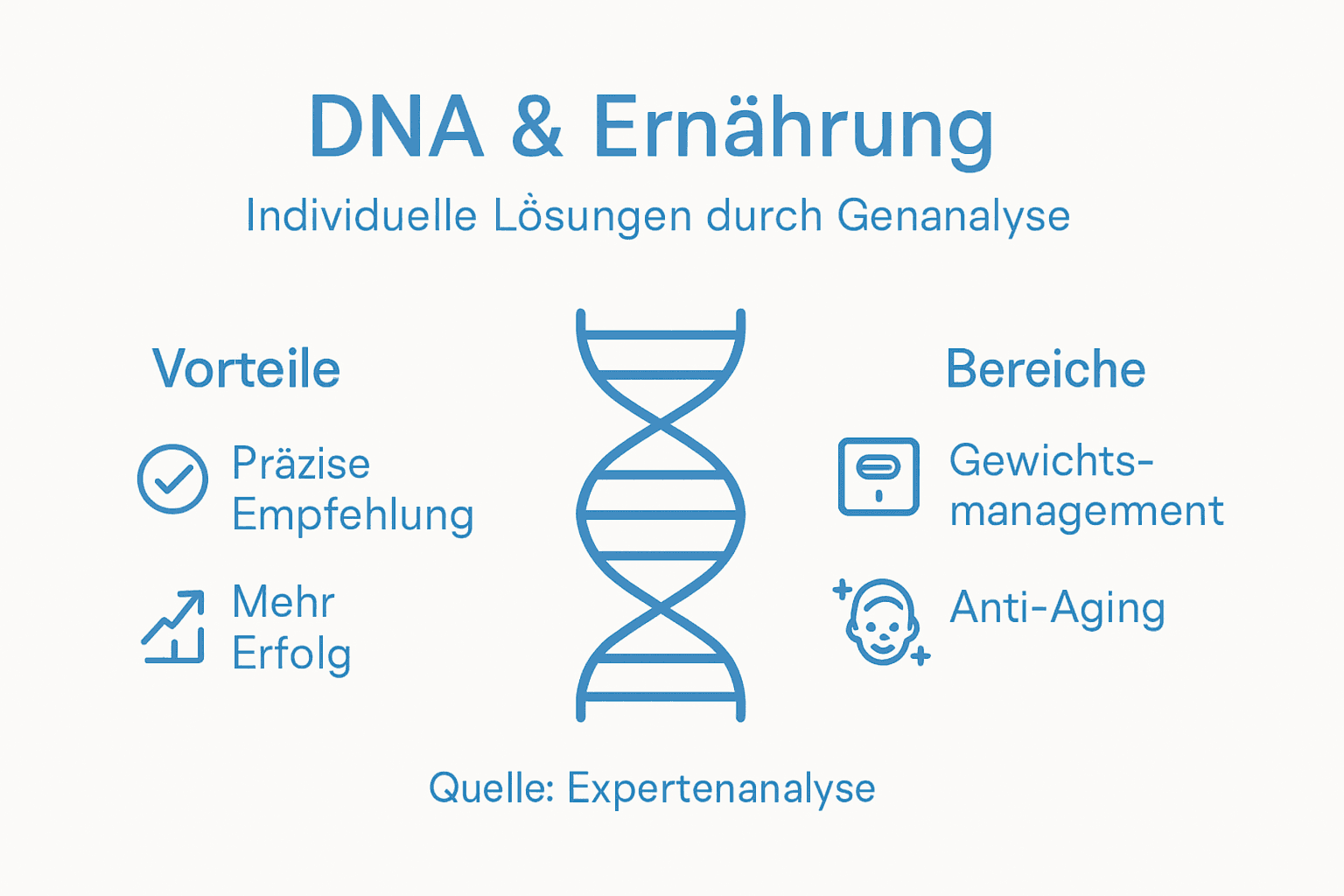
DNA-based dietary recommendations are an innovative approach to personalized nutrition counseling that places a person's individual genetic predispositions at the center. This scientific method uses state-of-the-art genetic analyses to develop tailored nutrition strategies based on your personal biological characteristics.
The central aim of this method is to identify genetic variations that have a direct impact on metabolism, nutrient utilization, and nutritional needs. Personalized nutrition approaches take complex factors into account, such as:
- Individual metabolic responses
- Genetic predispositions affecting nutrient absorption
- Potential risks of diet-related diseases
- Optimal nutrition strategies based on your DNA
By analyzing specific genetic markers, nutrition experts can develop precise recommendations that go far beyond general dietary guidelines. These recommendations help you adjust your diet so that it is optimally suited to your individual genetic makeup.
The scientific basis of this method lies in the finding that not everyone responds to nutrients and foods in the same way. While standardized dietary recommendations take a general approach, DNA-based recommendations take your unique genetic characteristics into account.
Pro tip: Before implementing DNA-based nutritional recommendations, always consult a nutritionist to interpret the results holistically.
Scientific foundations and analytical methods
The scientific foundations of DNA-based nutritional recommendations are based on complex molecular biological analytical methods that make it possible to identify and interpret individual genetic variations. Molecular biological analytical methods such as the polymerase chain reaction (PCR) play a central role in this process.
The most important scientific analytical methods include:
- DNA sequencing for identifying genetic markers
- Polymerase chain reaction (PCR) for amplifying specific DNA segments
- Gel electrophoresis for visualizing genetic variations
- Bioinformatic analysis of complex genetic data
Mathematical optimization models help translate the genetic information obtained into specific nutritional recommendations. These models consider not only individual metabolic characteristics but also aspects such as typical eating habits and potential health risks.
The scientific approach goes far beyond traditional nutritional counseling. Instead of blanket recommendations, precise nutritional strategies tailored to an individual’s genetic makeup are developed. This makes it possible to identify potential nutrient deficiencies at an early stage and initiate personalized preventive measures.
Pro tip: When considering DNA-based nutritional analyses, pay attention to the quality and scientific validation of the analytical methods used.
Here is an overview of scientific analytical methods and their benefits:
| Analytical methods | Purpose of the method | Contribution to nutritional recommendations |
|---|---|---|
| DNA sequencing | Detection of specific genetic variations | Determination of individual metabolic types |
| Polymerase chain reaction | Amplification of DNA segments | Ensuring precise genetic analyses |
| Gel electrophoresis | Representation of genetic differences | Visualization of potential risks |
| Bioinformatics | Evaluation and interpretation of data | Conversion into practical recommendations |
Applications: nutrition, weight, anti-aging
DNA-based nutrition recommendations offer a comprehensive range of applications that go far beyond traditional nutritional counseling. Personalized nutrition strategies enable precise adaptation of diet and lifestyle to individual genetic profiles.
The main areas of application include:
- Nutritional optimization: Identifying individual nutrient needs
- Weight management: Customized strategies for weight regulation
- Anti-aging: Prevention and slowing of aging processes
- Metabolic optimization: Improving metabolic health
In the area of weight regulation, genetic analyses can help understand individual metabolic characteristics. This enables the development of nutrition strategies tailored to a person's specific genetic predispositions. Different genetic markers influence, for example, fat burning, nutrient absorption, and feelings of hunger.

The anti-aging aspect is becoming increasingly important. By analyzing genetic variations, personalized nutritional recommendations can be developed that may potentially slow the aging process and support health at the cellular level. This includes targeted recommendations for nutrients that reduce inflammatory processes and promote cell regeneration.
Pro tip: Consult a nutrition expert to interpret your DNA analysis results holistically and implement them in an effective nutrition strategy.
Data protection and security in DNA tests
The security of genetic data is a central issue in DNA-based health analyses. Genetic data requires special protection and is subject to strict data protection regulations, particularly in Germany and the European Union.
The most important data protection aspects include:
- Confidentiality: Complete anonymization of personal health data
- Consent: Transparent information requirements before conducting the test
- Security: Encrypted storage of sensitive information
- Right to control: Ability to delete personal data
The General Data Protection Regulation (GDPR) defines clear guidelines for processing sensitive genetic information. Providers must ensure that personal health data cannot be misused for other purposes and is fully protected from unauthorized access.
Protection against potential discrimination is particularly important. Genetic data can provide insights into health risks and hereditary predispositions, which is why responsible handling of this information is essential. Reputable providers implement multiple layers of security mechanisms to comprehensively protect their customers' privacy.
Pro tip: Before taking a DNA test, review the provider's privacy policy and look for transparent information about data processing and storage.
Risks, costs, and alternative methods
DNA-based nutrition tests offer interesting insights, but require a critical examination of their limitations and costs. Costs and scientific evidence vary by provider and typically range from 150 to 300 euros.
The key risks and challenges include:
- Limited scientific evidence: No complete guarantee of effectiveness
- High costs: Investment of between 150 and 300 euros
- Complex interpretation: Additional counseling is often required
- Data privacy risks: Sensitive genetic information
Alternative methods for personalized nutrition optimization often offer more affordable and less complex approaches. Traditional nutritional counseling, metabolic tests, and comprehensive health checks can provide comparable insights without the financial and data privacy challenges of DNA tests.
Experts recommend viewing genetic analyses as a complementary tool, not as the sole basis for decisions. A holistic approach that considers nutrition, exercise, individual health goals, and personal circumstances remains crucial for sustainable results.
Comparison of traditional nutritional counseling with the DNA-based method:
| Characteristic | Traditional consultation | DNA-based recommendation |
|---|---|---|
| Level of personalization | General, population-wide | High, genetically tailored |
| Effort | Low to medium | High, complex |
| Cost | Low to moderate | Medium to high |
| Prediction of potential risks | Limited | Precise, genetics-based |
| Data privacy requirements | Standard | Very high, sensitive |
Pro tip: Before undergoing an expensive DNA test, consult a nutrition expert to evaluate whether it makes sense for your individual health goals.
Discover your perfect diet with DNA-based tests
Would you like to know how your individual metabolism affects your nutrition and are you looking for a scientifically sound solution for your health and well-being? DNA-based nutrition recommendations provide precisely the personalized insights that help you get the most out of your nutrition. Instead of general advice, they take your unique genetic characteristics into account for optimal nutrient absorption, weight regulation, and long-term anti-aging.
Now take advantage of the innovative DNA Metabolism Tests for Your Optimal Nutrition – mybody®x and benefit from ISO-certified laboratory analyses, personalized reports, and a holistic approach that connects nutrition, lifestyle, and health. Whether you want to lose weight specifically or optimize your nutrition based on scientific principles, mybody® offers comprehensive advice and the highest level of data security for your personal health data.
Start today and discover your individual nutrition potential at mybody-x.com. For targeted support with weight issues, you can also find our Individual Solution for Overweight | Lose Weight Permanently – mybody®x offers. Trust in tested quality and use your genetic knowledge for a healthy, energetic life.
Frequently Asked Questions
What are DNA-based nutrition recommendations?
DNA-based nutrition recommendations are personalized nutrition strategies based on a person's genetic predispositions. They help account for nutrient needs and individual metabolic responses.
How are DNA-based nutrition recommendations developed?
Genetic analyses identify specific genetic markers that influence metabolism and nutrient absorption. Nutrition experts use this data to develop tailored recommendations.
What are the benefits of DNA-based nutrition recommendations?
They enable precise dietary adjustments based on individual genetic profiles, help regulate weight, and may contribute to preventing diet-related diseases.
Are there risks associated with DNA-based nutrition recommendations?
Yes, there are risks, such as limited scientific evidence of effectiveness and data protection challenges. A critical assessment and professional advice are recommended.



Share now:
Genetics and Obesity – Understanding the Impact and Seizing Opportunities
Genetic testing: How you can live healthier with knowledge of your genes