

Balancing Your Gut Flora: Everything Important for Your Health
More than 1,500 different bacterial species thrive in our intestines and influence far more than just digestion. The gut flora is at the center of modern research because it shapes our immune system, well-being, and even our mood. Misconceptions persist, but a balanced microbiome can prevent disease and noticeably improve quality of life. Here you will learn what really lies behind the gut flora and why its diversity is so crucial to your health.
Table of Contents
- Gut Flora: Definition, Functions, and Misconceptions
- The Influence of Gut Flora on the Immune System and Digestion
- Recognizing the Connection Between the Gut and the Mind
- Lack of Diversity: Causes and Consequences
- Modern Methods for Analysis and Optimization
Key Findings
| Point | Details |
|---|---|
| Gut Flora and Health | The gut flora is essential for digestion, immune regulation, and overall health. A healthy microbiota supports metabolism and psychological well-being. |
| Influence of Diet and Lifestyle | A varied, fiber-rich diet and regular exercise promote the diversity of the gut flora. Reducing stress and avoiding unnecessary antibiotics are also important. |
| Gut-Brain Axis | The connection between the gut and the brain shows that the health of the microbiome directly affects mental well-being. Probiotic foods can support emotional balance. |
| Analysis Strategies | Modern analytical methods, such as stool tests, help determine the composition of the gut flora precisely. Individual strategies can be developed based on this to optimize gut health. |
Gut Flora: Definition, Functions, and Misconceptions
The gut flora is a complex microbiological ecosystem in our digestive tract, consisting of trillions of bacteria, viruses, and fungi. It plays a central role in our health and includes more than 1,500 different bacterial species that live and function in our intestines.
These microorganisms perform numerous vital functions: They support digestion, produce important vitamins such as B12 and K, regulate our immune system, and protect us from harmful pathogens. Interestingly, our gut flora consists not only of bacteria, but is a complex interplay of various microorganisms that are in constant interaction with our body.
There are many common misconceptions about gut flora. For example, many people believe that all bacteria are harmful. In fact, most gut bacteria are not only harmless but absolutely essential for our health. A healthy microbiome contributes to metabolic regulation, weight control, and even mental health. The composition of our gut flora can be influenced by diet, stress, medications, and lifestyle. A microbiome test can help provide insight into the individual composition and health of one’s gut flora.
Certain factors are crucial for a balanced microbiome: a varied, fiber-rich diet, sufficient exercise, stress reduction, and consciously avoiding unnecessary antibiotics can positively influence the diversity and health of our gut flora. Probiotic foods such as yogurt, kefir, or sauerkraut can help build and maintain a healthy diversity of bacteria.
The Influence of Gut Flora on the Immune System and Digestion
The gut is responsible not only for digestion but also plays a central role in our immune system. Scientific studies show that gut flora has an enormous influence on our health and immune defenses. Our gut health directly influences how our immune system functions.
An intact microbiome supports immune defense on several levels. According to experts, gut bacteria actively interact with immune cells by promoting the maturation and activation of defense cells. Approximately 70–80% of all immune cells are located directly in the gut, underscoring its immense importance for our health.
The composition of our gut flora affects not only digestion, but also inflammatory processes, metabolism, and even our mental state. A balanced gut flora can reduce autoimmune diseases, improve nutrient absorption, and effectively defend against pathogens. Scientific research shows that a healthy microbiome can lower inflammatory markers and minimize the risk of chronic diseases.

To promote healthy gut flora, several strategies are particularly effective: A high-fiber diet, regular exercise, stress reduction, and avoiding unnecessary antibiotics can significantly improve gut health and immune function. Probiotic foods such as yogurt, kefir, and fermented vegetables help support the diversity and balance of gut bacteria.
Recognizing the Connection Between the Gut and the Mind
The gut-brain axis is a fascinating biological communication link that shows how closely our digestive system and mental health are intertwined. Scientific studies on the gut microbiota demonstrate that our gut flora can have an enormous influence on our psychological state.
Bidirectional communication between the gut and brain occurs through complex neural, hormonal, and immunological signaling pathways. Changes in the gut flora can directly influence mental states such as stress and depression. Gut bacteria produce neurotransmitters such as serotonin, which regulate our mood and emotional balance.
Research shows that a disrupted microbiome can correlate with various mental health challenges. People with depression, anxiety, or chronic stress often show significant differences in the composition of their gut flora. The quality of our gut microbiota can therefore directly influence our mental resilience and emotional stability.
To positively influence the connection between the gut and the mind, holistic strategies are essential: A balanced, nutrient-rich diet, stress management, sufficient sleep, and regular exercise can support gut health and psychological balance. Probiotic and prebiotic foods, as well as relaxation techniques such as meditation, can help harmonize the gut-brain axis.
Lack of Diversity: Causes and Consequences
A reduced gut flora diversity can have far-reaching health consequences. The diversity of gut bacteria is crucial to our health, and an imbalance can cause various physical and mental problems. Improving gut health therefore means actively supporting bacterial diversity.
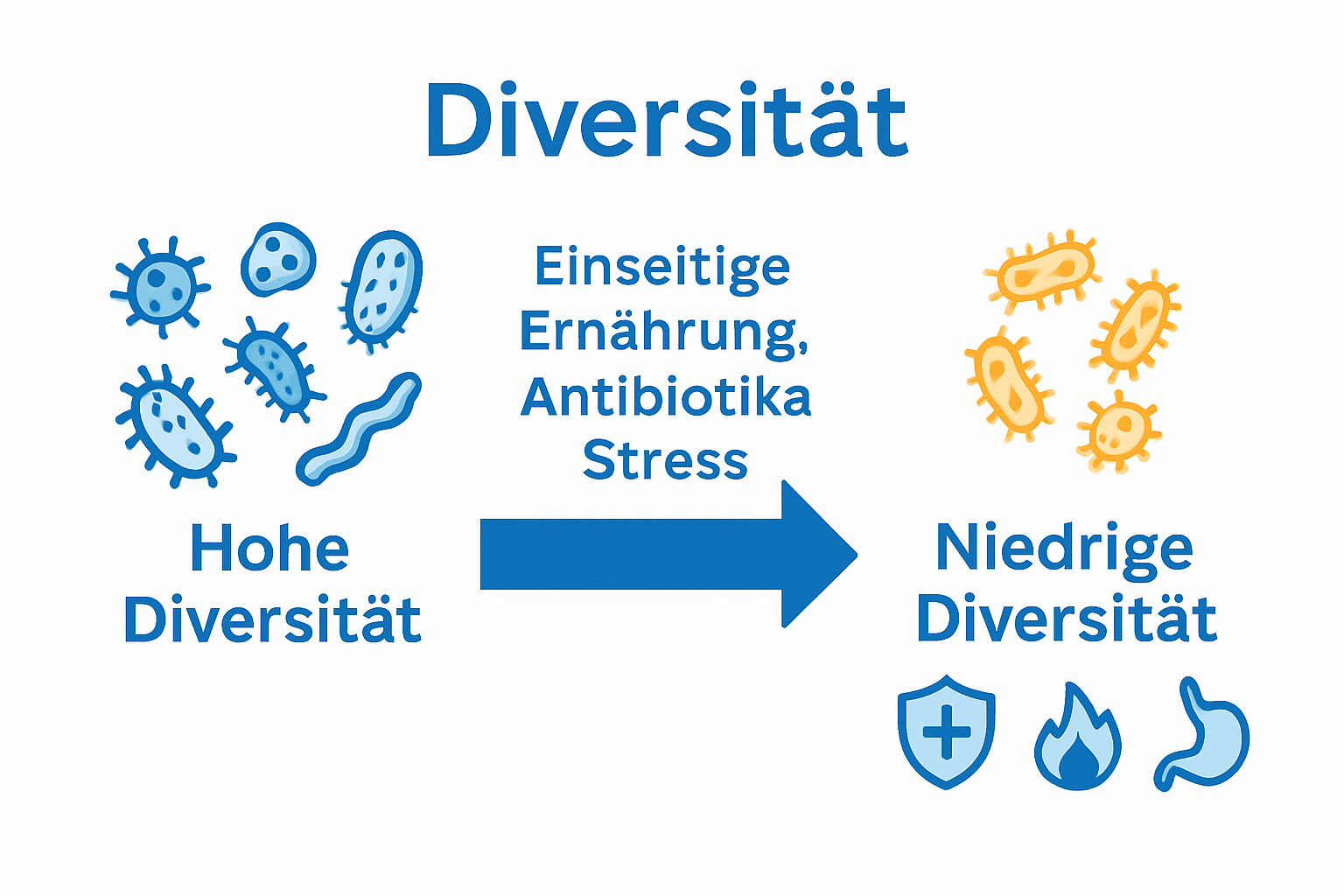
The main causes of insufficient diversity include a one-sided diet, frequent antibiotic use, chronic stress, lack of sleep, and an unhealthy lifestyle. Ultra-processed foods, too little fiber, and an excessive emphasis on sugar and animal products systematically reduce the diversity of gut bacteria.
The consequences of low microbial diversity can be serious: weakened immune function, increased susceptibility to inflammation, digestive problems, metabolic disorders, and even a higher risk of mental health conditions such as depression. An imbalanced gut microbiome can also impair nutrient absorption and promote the development of allergies and autoimmune diseases.
To improve gut microbiome diversity, holistic approaches are important: A varied, fiber-rich diet with plenty of whole grains, vegetables, and fermented foods, regular exercise, stress reduction, and sufficient sleep can have a positive effect on bacterial diversity. Probiotic foods and targeted dietary supplements can additionally help build a healthy and diverse gut microbiome.
Modern Methods for Analysis and Optimization
Modern analytical technologies have revolutionized the study of the gut microbiome. Advanced DNA sequencing methods now enable highly precise analysis of microbial composition and provide detailed insights into how our gut microbiome functions.
Stool tests provide a comprehensive analysis of the gut microbiome, examining not only the bacterial species but also their proportions and functions. These scientific testing methods can provide indications of dysbiosis, inflammatory markers, and potential health risks.
Various evidence-based strategies exist for optimizing the gut microbiome: Probiotic therapies, targeted dietary changes, stress management, and the responsible use of antibiotics are key approaches. Modern diagnostics make it possible to develop individually tailored interventions adapted to the specific microbial composition.
The keys to sustainable gut microbiome optimization lie in a holistic approach: A balanced diet rich in fiber, prebiotics, and fermented foods, regular exercise, sufficient sleep, and stress reduction can significantly improve the diversity and health of the gut microbiome.
Targeted support for the gut microbiome for greater well-being and health
An imbalanced gut can bring many challenges, such as digestive problems, a weakened immune system, or even mood swings. The diversity and balance of the gut flora are crucial to your health and can be strongly influenced by individual factors such as diet and stress. If you want to balance your gut flora and achieve sustainable health goals, it is important to know the composition of your microbiome precisely and optimize it in a targeted manner.
With the Gut Flora Analysis – For Healthy Gut Flora - mybody®x, you receive a professional, ISO-certified analysis of your gut microbiota from the comfort of your home. You can also complement this with our offerings on Understanding and Relieving Digestive Problems | mybody®x and individual At-Home Intolerance Tests | mybody®x to identify causes and sustainably improve your well-being. Start today with scientifically validated methods at mybody-x.com and bring your health into the best balance.
Frequently asked questions
How can I balance my gut flora?
A balanced, fiber-rich diet, sufficient exercise, stress reduction, and consciously avoiding unnecessary antibiotics are crucial for promoting healthy gut flora.
What role does the gut flora play in the immune system?
The gut flora plays a central role in the immune system, as around 70–80% of all immune cells are located in the gut. It supports immune defense by promoting the maturation and activation of immune cells.
How does the gut flora affect my mental health?
The gut flora has a direct influence on mental health. Disruptions in the microbiota can correlate with stress, anxiety, and depression because gut bacteria produce neurotransmitters such as serotonin.
What can I eat to improve my gut flora?
Foods such as whole-grain products, fruit, vegetables, and fermented products like yogurt and sauerkraut can help promote the diversity and health of the gut flora.
Recommendation
- Gut health nutrition: Your immune system booster for autumn – mybody®x
- Building up your gut flora: Your nutrition guide for a healthy feeling in your gut – mybody®x
- Microbiome test explained: How gut flora analysis works – mybody®x
- Healthy gut: How to strengthen your gut flora | Gut health – mybody®x


Share now:
What is microbiome analysis? Everything you should know
Gut health: Everything you need to know for your well-being