

Understanding digestive problems and providing targeted relief
TL;DR:
- Digestive problems are complex and require an individualized approach, as both the person and the cause vary considerably. Scientifically validated measures such as adjusting fiber intake, exercising, and following a low-FODMAP diet offer effective support, while careful self-observation is crucial. Additional therapies such as antispasmodics, peppermint oil, or psychotherapy can help, while tests such as microbiome analyses are supportive only and are not a substitute for individualized diagnosis.
Digestive problems affect millions of people, yet the most common advice falls remarkably short: “Eat more fiber and drink more water.” Anyone who has struggled with bloating, cramps, or irregular bowel movements for months knows that such blanket recommendations rarely help. Irritable bowel syndrome, constipation, and motility disorders are biologically complex, and the same interventions affect different people in completely different ways. Real improvement does not come from standard recipes, but from understanding your own body’s mechanisms and selecting appropriate, scientifically validated strategies.
Table of contents
- Fundamentals and mechanisms of digestive problems
- Evidence-based basic measures for constipation and typical symptoms
- Low-FODMAP diet: Individual nutrition strategy for digestive problems
- Personalized approaches: self-management and food diary
- Further evidence-based therapies and holistic strategies
- Our perspective: Why the one right path for your gut does not exist
- Your next step for digestive problems
- Frequently asked questions about digestive problems
Key findings
| Point | Details |
|---|---|
| Individual mechanisms | The causes and symptoms of digestive problems are highly individual and require tailored solutions. |
| Take a scientific, evidence-based approach | Proven basic measures and evidence-based diets are most effective for typical complaints. |
| Personalization increases success | Keeping a food diary and practicing self-management can help identify the most effective strategies. |
| Holistic treatment | A multimodal approach combining diet, exercise, and targeted medication usually provides the greatest benefit. |
| Beware of promises | Not every test or intervention is useful—focus on improving symptoms rather than achieving perfection. |
Fundamentals and mechanisms of digestive problems
Digestive problems may sound trivial, but they are not. The term encompasses a broad range of conditions, from occasional feelings of fullness to chronic diseases that impair quality of life. The first important step is to clearly distinguish these conditions from one another, because different diagnoses require different measures.
Common digestive disorders at a glance
| Disorder | Main symptoms | Prevalence |
|---|---|---|
| Irritable bowel syndrome (IBS) | Cramps, bloating, alternating stools | approx. 12% of the population |
| Chronic constipation | Less frequent, hard stools | approx. 15% of adults |
| Motility disorders | Altered bowel movements, nausea | variable |
| Bloating (meteorism) | Bloated abdomen, pressure | very common |
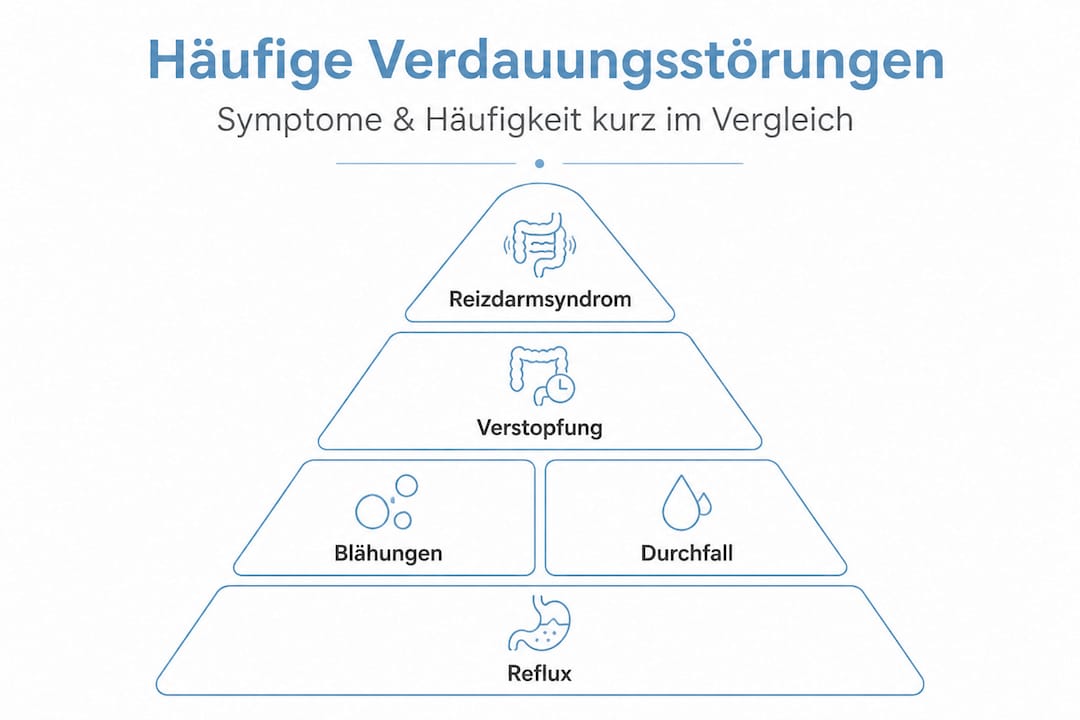
These diagnoses are underpinned by biological processes that one should at least understand in broad terms in order to make informed decisions.
The three key mechanisms
Science has identified the gut-brain axis, microbiome, and motility as the most important drivers behind most digestive disorders. What does this mean in concrete terms?
The gut-brain axis is a bidirectional communication channel between the central nervous system and the enteric nervous system of the gut. Stress, anxiety, or lack of sleep directly affect intestinal motility. Anyone who suddenly gets diarrhea before a stressful appointment is experiencing this mechanism in real time.
The microbiome refers to the community of billions of bacteria, fungi, and viruses that live in the intestines. The importance of the microbiome for digestion, the immune system, and even mood is well established. What is fascinating is that the effects of diet vary greatly depending on an individual’s microbiome. Two people can eat the same dish but react in completely different ways.
Motility describes how quickly and evenly food is transported through the intestines. Intestinal transit that is too slow leads to constipation, while transit that is too fast leads to diarrhea. Both extremes can be influenced, but the cause must be known before taking action.
“Digestive problems are almost never caused by a single factor. They result from a complex interplay of nerves, microorganisms, and muscles.” An approach that takes all three levels into account is more successful in the long term than treating symptoms alone.
To illustrate this: Person A with irritable bowel syndrome mainly suffers from stress-related cramps but hardly reacts to specific foods. Person B has identical symptoms caused by fructose intolerance. The same treatment helps Person A but not Person B, or vice versa. Personalization is not a luxury here but a necessity. A microbiome analysis can help make these individual differences more visible.

Evidence-based basic measures for constipation and typical symptoms
Basic measures are not glamorous, but they work. What matters is implementing them correctly and understanding why they help. Knowing these steps also helps you recognize when they reach their limits.
The most important basic measures, step by step
-
Increase your fiber intake: The German Nutrition Society recommends 30 grams of fiber per day. Most adults consume only half that amount. Soluble fiber (e.g., from oats and psyllium husks) absorbs water in the bowel, softens the stool, and promotes motility. Insoluble fiber (e.g., from whole grains) increases stool bulk.
-
Adjust your fluid intake: Fiber without sufficient water can worsen constipation instead of improving it. The rule of thumb is 30 ml per kilogram of body weight per day, or about 2 to 2.5 liters for a person weighing 70 kilograms.
-
Incorporate physical activity: Moderate exercise directly stimulates intestinal peristalsis. Just 30 minutes of brisk walking every day can measurably help with constipation.
-
Rethink your meal structure: For some people, many small meals may be better than three large ones. Eating hurriedly and failing to chew thoroughly, on the other hand, significantly slows digestion.
-
Use laxatives selectively: According to Apotheken Umschau, fiber, fluids, and exercise are the first choices, while laxatives such as macrogol or bisacodyl can be useful when needed. Important: Stimulant laxatives should not be used continuously, as the bowel can become accustomed to them.
| Measure | Time to take effect | Suitable for |
|---|---|---|
| Psyllium husks | 1 to 3 days | Long-term use |
| Macrogol | 1 to 2 days | Short to medium term |
| Bisacodyl | A few hours | Short-term acute treatment |
| Physical activity | Continuous | Prevention and treatment |
Pro tip: Start with 5 grams of psyllium husks daily in a large glass of water and increase the amount slowly over two weeks. Increasing your fiber intake too quickly often causes exactly the bloating you are trying to get rid of.
When is specialized diagnostic testing necessary?
Some warning signs require immediate medical evaluation and must not be dismissed with self-treatment. Blood in the stool, unintentional weight loss, nighttime symptoms, or newly occurring symptoms after the age of 50 are clear warning signs. These symptoms may indicate organic diseases such as inflammatory bowel disease or, in the worst case, tumors. Self-management is valuable, but it has limits.
Low-FODMAP diet: Individual nutrition strategy for digestive problems
General dietary recommendations help many people, but they are often not enough for persistent irritable bowel syndrome. This is where the low-FODMAP diet comes in. It is scientifically proven, structured, and offers a personalized approach for more complex symptoms.
What does low-FODMAP mean?
FODMAP stands for fermentable oligosaccharides, disaccharides, monosaccharides, and polyols. These are short-chain carbohydrates that are poorly absorbed in the small intestine, reach the large intestine, and are fermented there by bacteria. The result: bloating, cramps, diarrhea, or constipation. According to the DGVS guidelines, the low-FODMAP diet is evidence-based and particularly effective for irritable bowel syndrome with pain, bloating, and diarrhea.
The three phases of the low-FODMAP diet
-
Elimination phase (4 to 8 weeks): All high-FODMAP foods are removed from the diet. These include wheat, certain dairy products, onions, garlic, apples, and legumes, among others. This phase may sound radical, but it is limited in time.
-
Reintroduction phase: Individual FODMAP groups are gradually reintroduced on a trial basis. Each group is tested separately to identify individual triggers. This is the crucial step toward personalization.
-
Personalization phase: Based on the results, an individualized meal plan is created. Many people tolerate some FODMAPs well and do not need to permanently avoid wheat, dairy, or fruit.
| FODMAP group | Examples | Common symptoms |
|---|---|---|
| Fructose | Apples, honey, agave syrup | Bloating, diarrhea |
| Lactose | Milk, yogurt, cream cheese | Cramps, diarrhea |
| Fructans | Wheat, onions, garlic | Feeling of fullness, bloating |
| Polyols | Sorbitol, xylitol, stone fruit | Diarrhea, cramps |
Pro tip: Keep a detailed food diary during the elimination and reintroduction phases. Record not only what you ate, but also your stress level, sleep quality, and symptom intensity on a scale from 1 to 10. Patterns often become apparent only when comparing several weeks.
The diet is not without risks. Anyone who follows it without support risks malnutrition due to elimination phases that last too long or may overlook important triggers. Professional advice is indispensable for complex cases. Details on nutrition for irritable bowel syndrome show what other factors can be adjusted. Those who want to delve deeper into the scientific details of the low-FODMAP diet will find the complete guidelines there.
Personalized approaches: self-management and food diary
The low-FODMAP diet is a powerful tool, but the principle of individualization goes further. Identifying triggers is an active, ongoing process, not a one-time event.
Tools for self-monitoring
Effective self-management is based on data, not gut feeling. The following approaches have been tested in practice and help identify triggers systematically:
- Food diary: Record what was eaten and when each day. Digital apps make this much easier, but a simple notebook works too.
- Symptom log: Document stool frequency, consistency (Bristol Stool Form Scale), pain intensity, and bloating daily.
- Contextual factors: Sleep, stress, physical activity, and the menstrual cycle (in women) significantly influence digestive symptoms and should also be recorded.
- Time delay: Many reactions do not occur until 12 to 24 hours after eating. A short-term log may miss this delay.
With a focus on individualized nutritional planning, the key difference from general dietary recommendations is that individualized planning actually takes one's own response into account rather than relying on statistical averages.
Microbiome tests: opportunities and limitations
Microbiome analyses have become hugely popular in recent years. A microbiome test shows the composition of the gut bacterial population and can provide initial indications of which strains are over- or underrepresented. At the same time, it is important to remain realistic.
“Individualized FODMAP reintroduction, microbiome analysis, and a food diary do increase personalization, but no test replaces clinical diagnostics or makes symptom management unnecessary.”
There is no universally ideal microbiome. Its composition varies considerably from person to person, and what is healthy for one person may be completely normal or insignificant for another. A microbiome test is a complementary tool, not a miracle solution. Anyone looking for an IBS nutrition guide will find practical recommendations there that go beyond microbiome testing.
Pro tip: Start with a food diary before investing in expensive tests. Systematic self-observation can often identify 60 to 70 percent of triggers without the need for external analyses. Tests can then provide valuable additional context, but they are not a basis for the initial steps.
Further evidence-based therapies and holistic strategies
Diet and self-management provide a strong foundation. However, when symptoms persist or are severe, it is worth considering additional treatment options. The evidence for several complementary treatments is good.
An overview of established treatment options
According to DGVS guidelines, the following options are advisable in addition to dietary measures:
- Antispasmodics: Active ingredients such as mebeverine or butylscopolamine directly reduce intestinal cramps. They affect intestinal muscle function and act quickly in cases of acute pain.
- Peppermint oil: Enteric-coated capsules containing peppermint oil have shown a demonstrable effect on irritable bowel syndrome pain in studies. The mechanism of action involves calcium channel inhibition in the intestinal muscles.
- Low-dose amitriptyline: This antidepressant works in irritable bowel syndrome through its effect on the gut-brain axis, not as a conventional antidepressant. It reduces visceral hypersensitivity, meaning increased pain perception in the gut.
- Probiotics: Certain strains can alleviate bloating and diarrhea. The evidence is strain-specific. Lactobacillus rhamnosus GG and Bifidobacterium strains have the strongest evidence.
- Psychotherapy and gut-directed hypnotherapy: These methods can be particularly effective in the long term for digestive disorders with a strong stress component. They directly target the gut-brain axis.
The function of microbiome analysis can help determine whether a probiotic approach makes sense in an individual case.
More than 70 percent of people with irritable bowel syndrome experience an improvement in their symptoms when they use more than one treatment modality at the same time. This is not a coincidence but reflects the complexity of the condition.
Pro tip: Combine dietary adjustments with a psychological component. Even simple relaxation techniques such as diaphragmatic breathing or mindfulness measurably reduce activity in the gut-brain axis. The synergy between the two approaches is greater than the sum of their individual parts.
Important warning: Avoid opioids
Using codeine-containing painkillers or opioids for chronic digestive problems is dangerous. They significantly slow intestinal motility and cause dependence. Short-term relief leads to long-term deterioration. The treatment recommendations of the DGVS explicitly advise against this. Anyone suffering from the effects of such medications should discuss this with a doctor and deliberately switch to tolerable alternatives.
Our perspective: Why the one right path for your gut does not exist
For years, we have seen people with digestive problems become frustrated as they move from one diet trend to another. Gluten-free, keto, detox, juice cleanses. Usually without lasting success. Not because these people acted incorrectly, but because they followed general recipes that did not suit their specific bodies.
The science is clear on this point: There is no universally healthy microbiome. There is no diet plan that works for everyone. There is no single pill or measure that resolves digestive problems for everyone. Starting with personalized nutrition advice will get you further than following the latest trend.
What we find particularly concerning is the hype surrounding microbiome tests. Products are marketed with the promise of revealing or creating the “ideal microbiome.” But as the Focus report on the microbiome hype shows, this concept is not scientifically tenable. The test is a tool, not an oracle.
Our experience shows: People who take their symptoms seriously, document them systematically, and then follow a structured, step-by-step approach achieve better results than those who immediately invest in expensive all-inclusive packages. Pragmatism beats perfection. And sometimes the most honest thing we can say is: Start with a food diary. It costs nothing but often provides the most valuable insights.
Personalization does not mean trying every new technology. It means understanding your own response to different stimuli and adjusting it step by step. That requires patience, but it lasts.
Your next step for digestive problems
Knowledge is the essential first step, but without individual implementation it remains abstract. If you are ready to move from general recommendations to genuine solutions tailored to you, mybody® offers exactly that. With ISO-certified microbiome analyses, DNA metabolism tests, and personalized nutrition reports, you gain concrete insights into your own biology, conveniently from home. All tests on mybody-x.com can be ordered with free shipping from 49 euros, and a personal consultation service is available to support you. More than 11,300 satisfied customers trust it. With the money-back guarantee, you take no risk.
Frequently asked questions about digestive problems
What are typical triggers for digestive problems?
Common triggers include stress, a low-fiber diet, insufficient fluid intake, certain medications, and changes in the microbiome. According to the DGVS, irritable bowel syndrome, constipation, and motility disorders are among the most common diagnoses.
How quickly does a dietary change help with irritable bowel syndrome?
Initial improvements often appear after two to six weeks, especially when the low-FODMAP diet is professionally supervised with an elimination phase lasting four to eight weeks.
What role do probiotics play in digestive problems?
Probiotics provide noticeable relief for some people with digestive disorders, depending on their individual symptoms and the strain selected. According to DGVS guidelines, they can be useful depending on the symptoms, but they are not equally effective for everyone.
Should everyone have a microbiome test?
A microbiome test is not essential, as there is no reference standard for an ideal microbiome. The Focus report makes clear that its benefit for direct treatment is limited and that these tests are not the gold standard.
What treatments are available besides dietary changes?
Antispasmodics, peppermint oil, amitriptyline, and psychotherapy can also be helpful. According to the DGVS, opioids should be strictly avoided in digestive disorders.
Recommendation
- Finally understand and relieve intolerances – mybody®x
- Guide to improving digestion: Step by step to greater well-being – mybody®x
- Digestive problems: what to do? Your guide to quick relief and lasting results – mybody®x
- How do I optimize my digestion: Step-by-step to better digestion – mybody®x
- ebook Nutrition as a Central Pillar in Gastroenterology Patients



Share now:
Leaky Gut Syndrome: Symptoms and Help 2026
Gut microbiome: Your key to health & well-being