
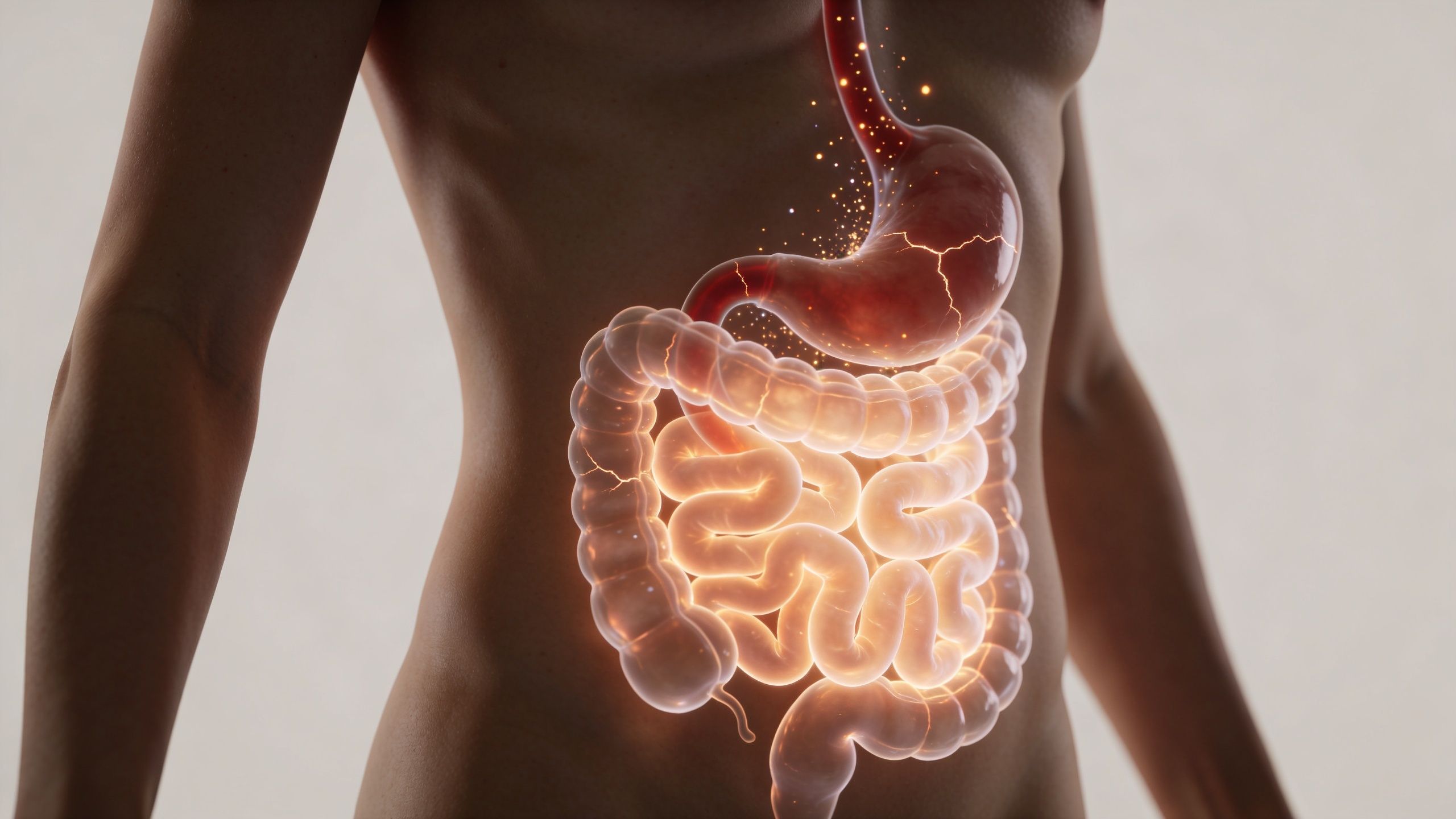
Leaky Gut Syndrome: Symptoms and Help in 2026
You wake up in the morning already feeling drained before your first coffee. After eating, your stomach feels tight, brain fog sets in during the afternoon, and in the evening you wonder why your body reacts so sensitively to completely normal days. Maybe you have already reduced your sugar intake, drunk more water, tried probiotics, or started some kind of “gut cleanse.” Even so, you are left with the feeling that something inside is out of balance.
This is exactly where many people come across the term leaky gut syndrome or Leaky Gut Syndrome. Online, it often sounds like a single explanation for everything. In reality, it is more complicated. Your symptoms can be very real, even if the term itself is scientifically controversial.
That is why it is important to take an honest look—not at myths, but at what can actually happen in the gut. Bloating, fatigue, skin problems, or difficulty concentrating are often caused by genuine factors such as irritable bowel syndrome, dysbiosis, intolerances, or nutrient deficiencies. Once you understand this, uncertainty can turn into a plan.
Do you often feel sluggish and unwell? Your gut could be the answer
You eat something completely ordinary, and shortly afterward the mystery begins. Your stomach feels bloated. Your mind becomes sluggish. Later, you feel ravenously hungry even though you have actually eaten enough. In the evening, you are left with the feeling that your body has overreacted to an ordinary day.
Many searches for answers begin with precisely these vague complaints. Not because people are exaggerating, but because the symptoms are difficult to classify. Digestion, energy, skin, and concentration are more closely connected than they may seem at first glance.
Why the topic resonates with so many people
The gut is more than a digestive tube. It functions more like a border station with many tasks at once. Food is broken down, nutrients are absorbed, signals are processed, and the intestinal lining must constantly decide what to let through and what to keep out. When something in this system gets out of balance, it can manifest in many different ways.
That is why the term leaky gut syndrome immediately seems plausible to many people. It appears to offer a simple explanation for complaints that no one has been able to clearly connect so far. But this is exactly where confusion often arises. The term is widely used online, while the medical classification is considerably more cautious.
Complaints without a clear explanation do not mean that you are imagining things. They are a sign that a closer look is needed.
Where readers often take a wrong turn
Simple culprits quickly appear online. Gluten. Milk. Sugar. Stress. Histamine. Candida. It sounds neat and reassuring because a single cause promises a single solution. The body rarely works that straightforwardly.
Another perspective is more helpful. Instead of looking for a single culprit, it is worth asking: What patterns do your symptoms show, and what triggers them? That is where a sensible path toward greater clarity begins.
- For digestive complaints, it is worth looking at bowel habits, diet, everyday stress, and the microbiome.
- When you experience fatigue and exhaustion, nutrient deficiencies, sleep problems, or low-grade inflammatory processes may also be contributing factors.
- When symptoms vary after eating, intolerances or unfavorable dietary habits are often the cause.
This approach moves you away from buzzwords and toward gathering evidence instead. That is exactly what bridges the gap between understandable skepticism and real symptoms. You do not have to believe every theory. But you can systematically examine what may be behind your symptoms. Everyday observations, targeted conversations with specialists, and, where appropriate, well-chosen home tests such as those from mybody®x can help you collect personal data and get closer to the actual causes.
What is leaky gut syndrome really?
Your gut works like a highly sophisticated border post. It is meant to absorb nutrients, water, and other beneficial substances while keeping germs, irritants, and incompletely digested components at a distance. The intestinal lining performs this task together with tiny connections between cells known as tight junctions.
As long as this system is well regulated, much of it goes unnoticed. When the barrier becomes more permeable than intended, experts refer to this as increased intestinal permeability. This is often where the confusion surrounding the term leaky gut begins.

The difference between the term and the phenomenon
Leaky gut syndrome is not a uniformly defined, officially recognized medical condition. That is why many doctors and scientists approach the term with caution. The phenomenon itself—that is, increased intestinal permeability—is real, however, and well known in research.
This is an important distinction for people affected by these symptoms. The term from the internet often sounds like a ready-made diagnosis. In medicine, it is more of an observation that can occur with various symptoms or conditions. These include, for example, inflammatory bowel disease, celiac disease, and certain forms of functional bowel disorders.
In other words, leaky gut is usually not a clearly defined label, but an indication that the protective function of the intestine should be examined more closely.
Why this distinction changes so much
Anyone who adopts the term as a quick explanation for everything can easily end up with blanket rules, strict prohibitions, or expensive promises. A more sensible question is: What is placing stress on the intestinal barrier in your case, and how are the symptoms showing themselves?
This perspective includes both sides. It takes symptoms seriously while remaining scientifically sound. That is where the topic becomes understandable. You neither have to believe every leaky-gut theory nor dismiss your symptoms simply because the term is imprecise.
A helpful approach is similar to troubleshooting in everyday life. If moisture appears in a house, you do not just talk about the wet wall. You look for the cause. Is a pipe leaking, is water coming in from outside, or is there a ventilation problem? The gut is similar. Increased permeability may be part of the picture, but it does not yet answer the question of the actual trigger.
What you should remember
When you search for leaky gut syndrome, you often encounter two extremes. One side considers the entire topic nonsense. The other turns it into the main cause of almost every complaint.
The more helpful perspective usually lies between these extremes. The intestinal barrier is biologically significant. Changes to it may play a role. But gaining real clarity requires more than a buzzword. It requires patterns, triggers, and, when appropriate, personal measurements. That is precisely why well-chosen home tests such as those from mybody®x can be useful. They do not replace a medical diagnosis, but they can help you collect your own data and gradually get closer to the actual problem.
The most common causes of a leaky gut
A “leaky gut” usually does not develop out of nowhere. It is often the result of several stressors accumulating over weeks or months. The intestinal barrier is sensitive to diet, medication, stress, and changes in the microbiome.

Diet and everyday patterns
What you eat regularly affects not only digestion but also the environment in your gut. A very one-sided diet, many highly processed products, and little fiber can shift the balance of the microbiome. Some people notice this directly. Others notice it more indirectly, for example through a feeling of fullness, unsettled digestion, or stronger reactions to certain meals.
Typical stumbling blocks include:
- Lots of sugar and little variety: This can promote unfavorable bacteria in the gut.
- Low fiber intake: Gut bacteria often then lack the “food” they need for a stable balance.
- Constantly irritating foods: Alcohol, very fatty meals, or a diet consisting predominantly of highly processed foods can place additional strain on sensitive digestion.
Medications and hidden irritants
Medications can also affect the intestinal barrier. NSAIDs such as ibuprofen are discussed particularly often. If taken frequently, they can strain the mucous membrane and weaken the gut's protective function.
Infections, a pre-existing bowel disease, or prolonged irritation can also play a role. The gut continually regenerates, but it needs favorable conditions to do so.
Anyone who regularly takes painkillers and also complains of abdominal problems should not overlook this connection.
Stress and the microbiome
Stress is not an esoteric factor but a real physical burden. Many people notice it first in their gut. Under constant tension, digestion, sleep, eating habits, and often the composition of the microbiome also change. This is one of the reasons why symptoms often become worse during hectic periods.
Particularly important is dysbiosis, meaning an imbalance in the gut flora. When beneficial bacteria have too little space and other groups take over, this can irritate the mucous membrane and promote inflammatory processes.
It is often a combination of factors
In practice, it often looks like this:
- A stressful period throws sleep and digestion out of balance.
- Add to that rushed meals, little fiber, and more coffee or sweets.
- Perhaps an infection as well, or frequent use of painkillers.
- The gut becomes irritated, and suddenly occasional bloating turns into a constant issue.
So it is rarely about “the one culprit.” That is precisely why it is so important to narrow down triggers systematically instead of guessing.
Symptoms that extend far beyond the abdomen
When people think of leaky gut syndrome, they first think of stomach pain, bloating, or irregular bowel movements. That is understandable. After all, the gut is at the center of the issue. But many symptoms do not appear there alone.

Why gut stress can affect the whole body
The gut is closely connected to the immune system, nutrient absorption, and the nervous system. When something gets out of balance there, some people first notice it as a digestive problem. Others are more likely to notice fatigue, irritated skin, or “brain fog”.
In Germany, around 27% of adults report gastrointestinal symptoms. At the same time, Germans consume an average of 23 g of fiber per day instead of the recommended 30 g. A low-fiber diet and high sugar consumption can promote microbiome imbalances and associated symptoms. These figures are mentioned in the Harvard Health overview on leaky gut and intestinal complaints.
Typical symptoms outside the gut
Many people affected report a mix of local and general symptoms, for example:
- Fatigue and exhaustion: Especially when digestion is unsettled at the same time.
- Brain fog: Your head feels slow, foggy, or unfocused.
- Skin reactions: Blemished skin, redness, or a feeling that the skin is “reacting too”.
- Mood swings: The gut and nervous system are closely connected.
- Diffuse reactions after eating: Not always clearly allergic, but still noticeable.
If fatigue and a lack of energy are particularly troubling you, a deficiency of important micronutrients may also play a role alongside the gut. You can find more information in the article on nutrient deficiencies associated with fatigue and a lack of energy.
An irritated gut does not automatically explain every symptom in the body. But it can be one piece of the puzzle, especially when several symptoms occur together.
Where readers often feel uncertain
A common mistake happens here. Some people read a list of symptoms and recognize themselves in all of them. That does not mean that increased intestinal permeability is the cause of everything. It simply means that it may be worthwhile to take the gut seriously as one contributing factor.
That is why combining two questions is always helpful:
What exactly am I feeling? and what can actually be measured or narrowed down in my case?
Diagnosing Leaky Gut: How to Finally Gain Clarity
You have symptoms, have been reading about leaky gut, and would ideally like a test that immediately tells you in black and white what is going on. This is exactly where things often become confusing. With increased intestinal permeability, there is no single standard test that counts as conclusive proof in every case.
This does not mean that your symptoms are imaginary. It simply means that diagnosis tends to work more like piecing together a puzzle than like a simple rapid check.
What is actually tested medically
In medicine, the lactulose-mannitol test is used, among other methods. It examines how well certain sugar molecules pass through the intestinal barrier. Zonulin is also discussed as a possible marker. According to the Cleveland Clinic overview of leaky gut syndrome and testing approaches, zonulin may be elevated in some patients with irritable bowel syndrome, but it is not suitable as a single, definitive answer.
This is exactly where uncertainty often arises. An abnormal marker can be an indication, but it does not replace careful interpretation.
That is why good diagnostic approaches examine the same problem from several perspectives.
Clarity comes from investigating the causes
A helpful question is: Which measurable factors could explain or contribute to my symptoms? The gut functions like a protective filter. When this filter is irritated, it is worth looking not only at the barrier itself but also at the influences that strain it every day.
These include, for example:
- The microbiome, meaning the composition of your gut bacteria
- Signs of dysbiosis when the bacterial balance has become disrupted
- Recurring reactions to certain foods
- Nutrient deficiencies that can impair regeneration, the mucous membrane, and energy balance
Home tests are useful for investigating these causes. mybody x Gesundheit offers, among other things, microbiome analyses, nutrient tests, intolerance tests, and a leaky-gut-related testing approach for use at home. A stool sample can provide indications of dysbiosis. Depending on the question, these results can be supplemented with additional markers to create a clearer overall picture.
If you are looking for a practical starting point, the article Testing for leaky gut and better understanding relevant markers provides a helpful overview.
Practical rule: A single value rarely explains the whole picture. The results become more meaningful when symptoms, diet, microbiome, and blood markers are considered together.
How to recognize serious diagnostics
Serious diagnostics do not promise miracles. They show what can be measured, where the limits are, and which next steps make sense.
Things you can pay attention to:
- The test is not presented as a definitive diagnosis. It provides clues that need to be interpreted.
- Markers are explained. Zonulin and other laboratory values are building blocks, not final verdicts.
- A concrete plan follows from the results. Good diagnostic testing helps you make targeted adjustments to your diet, stress, sleep, or further examinations.
This gives you not just a laboratory report, but a reliable direction for your next decisions.
Your action plan to heal your gut in a targeted way
When the gut is irritated, blind activism rarely helps. A clear plan works better. In functional practice, the 4-R principle is often used for this purpose. It is not a rigid rule, but a useful framework for addressing symptoms systematically.
Remove and Replace
Remove means reducing everything that repeatedly irritates your gut. This may include certain foods, alcohol, highly processed products, or unhelpful eating patterns such as constant snacking. If you react noticeably to individual meals, taking a structured look at possible triggers can be helpful.
Replace does not mean simply buying supplements. It is about structuring digestion and daily life so that your gut has less work to do. Regular meals, thorough chewing, drinking enough, and a calm eating environment may sound trivial, but they are often the missing starting point.
Reinoculate and Repair
Reinoculate means rebuilding a more favorable gut environment. This happens primarily through food. Greater plant diversity, a high-fiber diet, and well-tolerated fermented products can help support the microbiome. If your gut reacts very sensitively, proceed slowly and observe closely what you actually tolerate.
Repair focuses on the intestinal lining itself. Regeneration, sleep, stress reduction, and an adequate supply of nutrients play a central role here. Many people focus only on what to eliminate. But the body also needs materials for repair.
Healing in the gut rarely happens through one major intervention. It usually comes from many small, repeated decisions.
Nutrition compass for a healthy gut
| Promotes gut healing (Do's) | Can irritate the gut (Don'ts) |
|---|---|
| Regular, relaxed meals | Hectic eating on the go |
| High-fiber foods according to tolerance | A very one-sided, low-fiber diet |
| A wide variety of plant foods in everyday life | Persistently high consumption of highly processed foods |
| Drink enough fluids | A lot of alcohol or recurring trigger foods |
| Keep a symptom diary | Constantly guessing without structure |
If you want to tailor your diet more specifically, the overview of the Leaky Gut Diet Table can help.
What you can do immediately in everyday life
Not everything requires lab results. You can start a few steps right away:
- Keep an honest record: For two weeks, note your food, symptoms, sleep, and stress.
- Increase fiber slowly: Don't go from zero to one hundred. Otherwise, a sensitive gut often rebels even more.
- Review medications carefully: You should keep an eye especially on frequent use of painkillers.
- Create breaks between meals: Constant snacking often keeps the digestive tract unsettled.
- Take stress seriously as a physical factor: Breathing exercises, walks, and better sleep are not minor details.
When tests make the difference
An action plan becomes much better when you don't just guess. A microbiome test can provide indications of dysbiosis. An intolerance test can help organize potential triggers. A nutrient test can show whether fatigue, recovery problems, or mucosal issues are being worsened by deficiencies.
The goal isn't perfection. The goal is to turn assumptions into concrete next steps.
Conclusion: Take control of your gut health
The term leaky gut syndrome often causes more confusion than clarity. But that doesn't make your symptoms any less real. The helpful approach, therefore, is not to cling to a controversial label, but to carefully investigate the possible triggers.
If your gut keeps sounding the alarm, it's worth looking at the bigger picture. Diet, stress, the microbiome, intolerances, and nutrient status are interconnected. Focusing on just one aspect often means overlooking the actual connection.
The good news is that you don't have to feel your way around in the dark. Once you take a systematic approach, things become clearer. And that's exactly what often goes missing first with chronic symptoms: the feeling of having influence over your own body again.
Your next step doesn't have to be perfect. It just needs to be specific.
If you no longer want to just Google your symptoms but understand them better, mybody x Gesundheit offers at-home self-tests for the gut microbiome, nutrients, intolerances, and other areas of health. This allows you to collect personal data and make more informed decisions about what your body really needs.



Share now:
Elektrolyte verstehen: Funktion, Einfluss und Ernährungstipps
Understand digestive problems and relieve them effectively