

Gut flora analysis: Your complete guide to microbiome analysis
An analysis of your gut flora is essentially an inventory of your gut. You take a close look at which bacteria, viruses, and fungi are present to get a clear picture of your health. With a simple at-home test, such as the mybody-x gut flora test, you can find out whether your internal ecosystem is in balance or whether there's an imbalance that might be behind your digestive issues, persistent fatigue, or skin problems.
What your gut reveals about your health
Imagine your gut as a colorful, vibrant garden. Trillions of microorganisms live here – a complex ecosystem we call the microbiome . And this microbiome is so much more than just a digestive aid. It's your very own personal health manager.
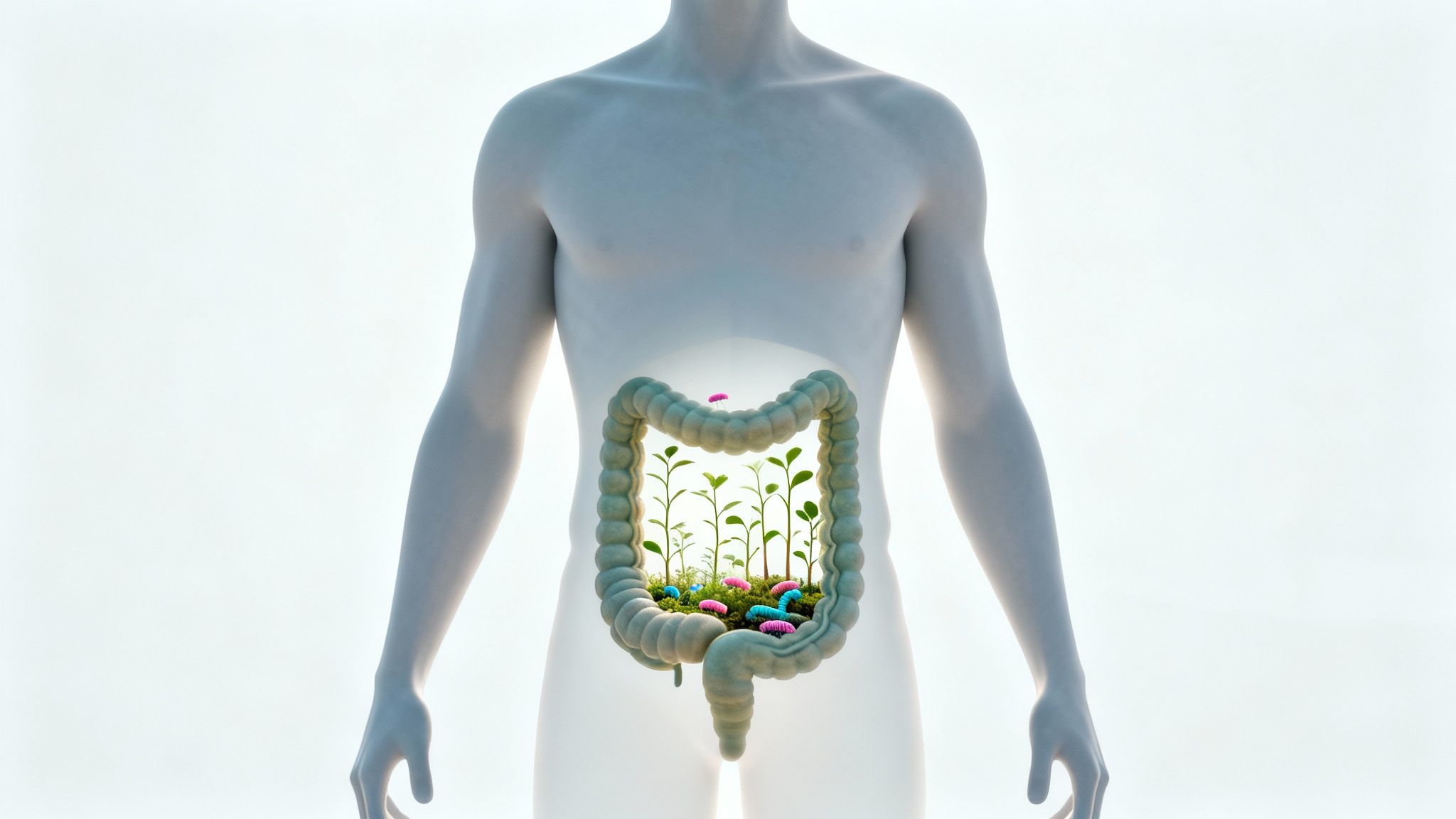
Your microbiome plays a role in everything: it influences your immune system, your mood, and even your body weight. Day after day, these tiny inhabitants communicate with your body, ensuring that everything runs smoothly. The diversity within this microbiome is the true key to your well-being.
A delicate balance
If everything is going well, your microbiome is in a harmonious balance. Experts call this state eubiosis . In this state, the beneficial bacteria work together, breaking down nutrients, producing essential vitamins, and keeping harmful germs in check.
However, if this system becomes unbalanced, we speak of dysbiosis . This imbalance can have very different causes:
- A one-sided diet with lots of sugar and processed foods
- Persistent stress in everyday life or at work
- Taking medication, especially antibiotics
- Too little exercise and poor sleep
Dysbiosis rarely goes unnoticed. It can manifest itself through all sorts of symptoms that you wouldn't initially associate with the gut – for example, bloating, unexplained fatigue, or skin problems. You can read more about the precise importance of the microbiome for your health in our further article.
Learn to understand the language of your gut
An analysis of your gut flora is like an exclusive look behind the scenes of your body. It gives you the chance to get to the bottom of the true causes of recurring ailments and take control of your health. Instead of just treating symptoms, you tackle the problem at its root.
A healthy gut microbiome is not only crucial for digestion. It is the foundation for a strong immune system and mental well-being – the basis on which your overall health is built.
The composition of your gut bacteria is as unique as your fingerprint and reacts extremely sensitively to your lifestyle. Even small changes can have a significant impact. Research shows that even radical diets can profoundly alter the gut bacteria community. A study by Charité – Universitätsmedizin Berlin found that a severely calorie-restricted diet significantly reduced the total number of microorganisms, while certain bacteria, such as Clostridioides difficile , better known as a hospital superbug, suddenly proliferated. Such shifts can disrupt energy balance and play an important role in weight regulation.
A home self-test can show you exactly where you need to start. It provides valuable information about which bacterial strains are dominant in your gut, whether there's a lack of diversity, or whether harmful germs have perhaps taken hold. With this knowledge, you can take targeted steps to revitalize your gut flora and improve your well-being in the long term.
This is how we look inside your gut today: Modern analysis methods explained in an easy-to-understand way
How do we actually peer into this hidden cosmos inside your gut? Modern science has developed impressive tools for this purpose. An examination of the gut flora essentially involves deciphering the DNA of the countless microorganisms in a stool sample. This allows us to learn not only exactly who lives in your gut, but also what these tiny helpers are up to all day long.
Highly specialized laboratories, like mybody-x's partners, use state-of-the-art DNA sequencing for this. You can think of it as them reading the genetic material of your gut microbiota and creating a precise profile of your personal microbiome. But not every method is the same – there are two main approaches you should be aware of.
16S rRNA sequencing: The “census” in the gut
16S rRNA sequencing is a well-established and widely used method for analyzing bacterial diversity. Think of it as a kind of "census" for bacteria.
The focus is on a very specific gene segment, the so-called 16S rRNA gene. This gene is present in almost all bacteria, but differs slightly from species to species – it functions almost like a barcode. By comparing these "barcodes," the laboratory can identify and count the different bacterial families and genera.
The 16S method is great for answering basic questions:
- How diverse is my gut flora, really?
- Which major groups of bacteria can be found in my body?
- Is there a significant imbalance between the major tribes?
This method gives us a solid and reliable overall picture of the bacterial community in your gut. For many scientific studies and clinical applications, it is the gold standard when it comes to assessing bacterial diversity.
Shotgun Metagenomic Sequencing: The entire ecosystem in view
While 16S analysis focuses on bacteria, shotgun metagenomic sequencing goes a crucial step further. This method analyzes all genetic material in the sample, not just the DNA of bacteria, but also that of viruses, fungi, and other microorganisms.
The analogy is this: The 16S method counts the trees in the forest, while the shotgun method also records the bushes, flowers, mushrooms, and animals. It provides information not only about who is there, but above all, what these inhabitants can do .
Shotgun Metagenomic Sequencing examines the functional potential of your microbiome. This means the analysis deciphers which genes responsible for metabolic processes – such as vitamin production or fiber breakdown – are present in your gut.
This much deeper analysis paints an incredibly detailed and comprehensive picture of your gut ecosystem. It's particularly valuable for understanding the complex connections between your microbiome and your health. If you're wondering how such a test works, you'll find all the important information in our step-by-step guide to the microbiome test .
To clarify the differences, here is a brief comparison:
Comparison of analysis methods for the intestinal flora
A comparison of the two leading technologies for microbiome research to clearly illustrate their strengths and areas of application.
| feature | 16S rRNA sequencing | Shotgun Metagenomic Sequencing |
|---|---|---|
| What is being analyzed? | A specific marker gene (16S rRNA) of bacteria | The entire DNA of all microorganisms (bacteria, viruses, fungi, etc.) |
| Result | "Who is there?" – Composition of the bacterial community | "Who is there AND what can they do?" – Composition & functional potential |
| accuracy | Identification at genus or family level | Identification down to the species level, also for viruses and fungi |
| Information depth | Good for an overview of bacterial diversity | Very in-depth, encompassing the entire ecosystem and its capabilities |
| scope | Standard for many studies on bacterial diversity | Ideal for detailed, personalized health analyses |
Both methods have their place, but for a truly comprehensive picture of the gut ecosystem, the shotgun analysis provides deeper and therefore often more valuable insights for your personal health.
Why ISO-certified laboratories are so crucial
Regardless of the method used, the quality of the analysis depends entirely on the laboratory. That's why at mybody-x we work exclusively with ISO-certified laboratories in Germany. ISO certification is not just a piece of paper, but an internationally recognized seal of quality. It guarantees the highest standards in all processes, quality assurance, and the accuracy of the results.
For you, this means quite specifically:
- Reliability: You can be sure that your sample will be analyzed according to the strictest scientific criteria.
- Precision: State-of-the-art technology and standardized processes ensure exact and repeatable results.
- Data protection: Your sensitive health data is protected according to the strict requirements of the GDPR.
Only in this way can an intestinal flora analysis provide a reliable basis on which you can specifically improve your health.
Understanding your gut flora results correctly
You're finally holding the results of your gut flora analysis in your hands – a document full of technical terms, diagrams, and numbers. At first glance, this can seem quite overwhelming. But don't worry, we'll go through it together step by step and decipher what the values really tell us about your health.
This document offers you a personal glimpse into the fascinating ecosystem that lives in your gut. Every single value, every group of bacteria, tells a small part of the story about your well-being. After reading this section, you will not only be able to read your results, but truly understand them.
The diversity of your gut microbiota
The first and perhaps most important value in your report is diversity . Imagine your gut as a colorful garden: a healthy, flourishing garden doesn't just have a few blades of grass, but countless different plants – flowers, shrubs, trees, and herbs. It works the same way in your gut.
High diversity means that many different types of microorganisms live in your gut. This is a great sign of a robust and resilient microbiome. Such a diverse system can respond much better to disturbances, whether caused by stress, an unhealthy meal, or medication. Conversely, if diversity is low, your gut microbiome becomes more susceptible to "weeds"—that is, harmful germs that can proliferate.
The following graphic shows how complex analytical methods in the laboratory – such as 16S rRNA or shotgun sequencing – are used to make precisely this diversity visible.

Each method provides important pieces of the puzzle, which our experts in the laboratory assemble into a clear overall picture of your gut health.
The great showdown of the bacterial strains
Your test results will also show you the ratio of the major bacterial phyla to each other. The ratio of Firmicutes to Bacteroidetes is particularly interesting here. These two groups make up over 90% of all gut bacteria in most healthy people.
- Firmicutes: These bacteria are true masters at extracting energy from food – even from the smallest, indigestible fiber.
- Bacteroidetes: This group is also involved in the breakdown of complex carbohydrates and dietary fiber and plays a key role in a healthy immune system.
A balanced ratio between these two is crucial. Studies suggest that a strong predominance of Firmicutes is often associated with increased body weight, as they are extremely efficient at extracting calories from food.
A gut flora analysis is not a snapshot set in stone. Rather, see it as a signpost. It shows you exactly where you stand and in which direction you can go to actively take control of your gut health.
Your most important helpers and their tasks
Besides the major strains, there are also individual key bacteria whose presence reveals a lot about your gut health. Your lab report will likely go into more detail about some of them:
- Akkermansia muciniphila: This bacterium acts like a bodyguard for your intestinal barrier. It feeds on the mucus layer lining your intestinal wall, stimulating it to continuously produce new, protective mucus. Too little Akkermansia can be a sign of a weakened intestinal lining.
- Faecalibacterium prausnitzii: This bacterium is one of the most important producers of butyric acid (butyrate). Butyric acid is the main energy source for your intestinal cells and has strong anti-inflammatory properties. A deficiency of this important nutrient can therefore be associated with inflammatory processes in the gut.
Markers for inflammation and a leaky intestinal barrier
Modern gut flora tests, such as those from mybody-x, often look deeper than just at the bacteria and measure additional biomarkers in your stool sample.
- Calprotectin: This is an important marker of inflammation. Elevated levels can indicate inflammatory processes in the intestine and should definitely be investigated by a doctor.
- Zonulin: This marker indicates the permeability of your intestinal barrier, better known as "leaky gut." Elevated zonulin levels mean that the connections between the cells of your intestinal wall (the so-called "tight junctions") are looser than they should be.
Understanding your test results is the first important step towards improvement. If you'd like to delve deeper into the topic, our guide offers further valuable tips on how to analyze your gut flora test results and use them to improve your health . With this knowledge, you'll be well-equipped to translate the results into concrete, positive changes.
How to become the gardener of your gut
Your gut flora isn't a static structure, but a living ecosystem that reacts directly to your lifestyle. Imagine you're the gardener of this inner garden. With the right nutrients and a little attention, you ensure that the beneficial "plants"—your good bacteria—thrive, while keeping the "weeds" in check.
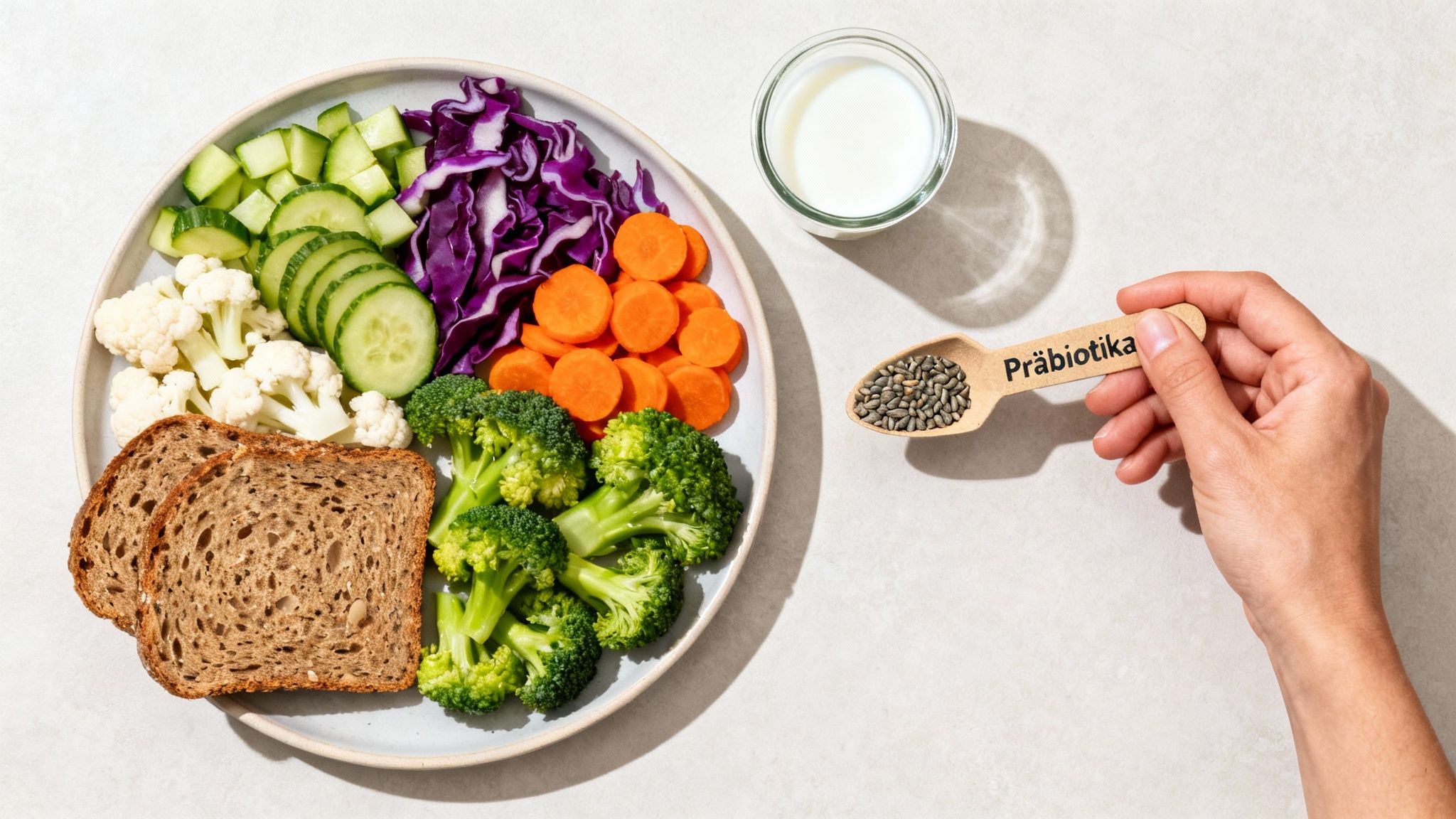
The good news is: you don't have to completely turn your life upside down. Even small, conscious changes in your daily routine can make a huge difference to your well-being. A targeted analysis of your gut flora provides you with the perfect roadmap so you know exactly where to start.
Feed your best friends: prebiotics
Your beneficial gut bacteria love one particular snack: fiber. These indigestible plant fibers, also known as prebiotics , are the favorite food of your good microbes. When they ferment these fibers, valuable substances like short-chain fatty acids (for example, butyrate) are produced, which strengthen your intestinal lining and inhibit inflammation.
To optimally nourish your good bacteria, simply integrate more of these foods into your diet:
- Vegetables: Artichokes, leeks, onions, garlic and asparagus are true powerhouses for your microbiome.
- Whole grain products: Oatmeal, whole grain bread or quinoa not only provide you with energy, but also your gut microbiota.
- Legumes: Lentils, chickpeas and beans are not only great sources of protein, but also packed with valuable fiber.
Get reinforcements: Probiotics
Besides eating the right food, you can also directly introduce new, beneficial inhabitants to your gut. Probiotics are live microorganisms that are good for your health when consumed in sufficient quantities. You'll find them primarily in fermented foods.
Fermentation is an age-old method of preserving food. Bacteria or yeasts convert sugar into acid or alcohol. The result is not only delicious products, but also an extra dose of beneficial bacteria for your gut.
Regularly consuming probiotic foods is like releasing beneficial insects into your garden. They help maintain the ecological balance and naturally suppress pests.
Scientific studies support this. A project at the University Hospital of Freiburg, for example, has shown that the daily consumption of fermented foods like yogurt, combined with prebiotic fiber from rolled oats, can have a lasting positive effect on the microbiome. Such findings suggest that this diet could even have a preventative effect against metabolic and inflammatory diseases. You can read more about the exciting results of the Freiburg study here.
More than just nutrition: your holistic approach
Your gut is closely connected to your entire body, especially your brain. This is known as the gut-brain axis . Therefore, factors beyond diet also have a direct impact on your gut flora.
Stress management: Chronic stress can negatively alter the composition of your microbiome and weaken the intestinal barrier. Techniques such as meditation, yoga, or simple breathing exercises help to lower your stress level and thus also calm your gut.
Sufficient sleep : Sleep deprivation also disrupts your internal ecosystem. A regular sleep rhythm of 7-8 hours per night not only supports your regeneration but also promotes a diverse and healthy gut flora.
Movement in everyday life: Regular, moderate exercise also has a positive effect on the diversity of your gut bacteria. You don't have to run a marathon – even a daily walk, especially after meals, stimulates digestion and is good for your microbiome.
By harmonizing these pillars – nutrition, stress, sleep, and exercise – you'll become the true master gardener of your gut. To guide this process effectively and create the right foundation, learn how to build up your gut flora with the right diet . This will lay the groundwork for a thriving internal ecosystem and an all-around good feeling in your gut.
From diagnosis to personal action plan
You now understand your diagnosis, know the key players in your gut, and understand how your lifestyle influences this entire ecosystem. That's half the battle! Knowledge is the first step, but real change only begins with implementation. And that's exactly where we come in: We'll transform the findings from your gut flora analysis into a concrete, personalized roadmap.
Think of your lab report as a treasure map – it shows you exactly where the levers for your health are hidden. With a mybody-x test, you don't get raw data, but clearly presented results and tailored recommendations. They are the perfect foundation for taking control of your health right now.
What your individual diagnosis means for you
Every diagnosis is as unique as you are. Therefore, your action plan must be tailored directly to your analysis results. Let's look at a few typical scenarios and what conclusions can be drawn from them.
Scenario 1: Low bacterial diversity. Does your test result show low diversity? We see this frequently, and it's a clear signal from your gut: it would like more variety on your plate! Your goal should be to eat as many different plant fibers as possible to feed a wide range of beneficial bacteria.
- Your action plan: Aim to eat 30 different plant-based foods per week. It sounds like a lot at first, but this includes not only fruits and vegetables, but also nuts, seeds, herbs, spices, and whole grains. Start small and simply increase the number each week.
Scenario 2: Lack of butyric acid producers. Are you lacking important helpers like Faecalibacterium prausnitzii , which produce butyric acid (butyrate)? Butyric acid is the ultimate super fuel for your intestinal cells and has a strong anti-inflammatory effect.
- Your action plan: Deliberately incorporate foods rich in resistant starch and inulin into your daily routine. These include cooled potatoes or rice, green bananas, oatmeal, lentils, artichokes, chicory, and leeks. These fibers are the favorite food of your butyric acid producers.
Your mybody-x results are more than just a score – they're the starting point for your personal health journey. The recommendations are your compass, helping you make the right choices for your body.
Building the bridge from knowledge to action
A lab result alone won't change anything. You'll only notice improvements if you consistently follow the recommendations. The mybody-x gut flora test is specifically designed to support you in this process.
You don't just receive a list of foods, but also concrete suggestions on how to integrate them into your daily life. With mybody-x, you also have the opportunity to clarify any questions with experts and refine your plan. This turns dry theory into practical application.
Make progress visible and stay motivated
Changes in the microbiome take time. It's a marathon, not a sprint. That's why it's so important to keep track of your progress to stay on track. And that's exactly where follow-up tests come in.
A follow-up analysis of your gut flora after a few months can show you in black and white how your efforts have paid off. Seeing how the diversity of bacteria has increased or how important key bacteria have multiplied is a huge motivation and reinforces your progress.
Science continually demonstrates how dynamically the gut microbiota reacts to our lifestyle. In Germany, clinical studies are constantly investigating these connections. For example, a study at German universities observed how the gut microbiota changes during an endurance training program. In addition to microbial data, body fat percentage, muscle mass, and blood pressure were also recorded. Such research impressively illustrates how closely the gut, exercise, and diet are intertwined. If you'd like to learn more, you can find further insights into the study results .
Your action plan is your personal tool to become the gardener of your gut. With clear goals, achievable steps, and the ability to measure your success, you take full control of your well-being.
Frequently asked questions about gut flora analysis
You've already learned a lot about the fascinating world of your gut, but perhaps you still have a few practical questions. That's perfectly normal! Therefore, we've compiled the most frequently asked questions we receive about examining the gut flora .
We want to eliminate any remaining uncertainties and get straight to the point with all the answers – directly from practical experience.
For whom is a gut flora analysis truly useful?
Basically, a home self-test is interesting for anyone who wants to better understand their body and take control of their well-being. However, in some situations, an analysis is particularly valuable:
- For persistent, unclear digestive problems: You know the feeling – constant bloating, constipation, diarrhea or irritable bowel syndrome symptoms, but nobody can find the cause.
- After repeated antibiotic use: Antibiotics are sometimes essential, but they often leave a trail of destruction in your gut. A test will show you where you stand and how you can specifically rebuild your gut flora.
- In cases of chronic fatigue and lack of energy: Often, an unexplained exhaustion is caused by an imbalanced gut ecosystem.
- If you want to optimize your diet: Are you wondering which foods are truly best for you and your beneficial gut bacteria? This analysis provides you with the perfect, personalized roadmap.
An analysis of your gut flora isn't a miracle cure, but it's an incredibly powerful tool. Think of it as a precise map of your internal ecosystem. With it, you can take targeted steps toward better health.
How does sample collection at home work?
Don't worry, the days of unpleasant procedures are over. Many people shy away from the idea of a stool sample, but modern test kits like those from mybody-x make the process incredibly easy, hygienic, and completely discreet. The test kits are designed so that you can complete everything in just a few minutes.
And it's that easy:
- Your test kit comes with everything you need: a sample tube with stabilizing fluid, clear instructions and a handy paper stool catcher.
- You simply stretch the stool catcher over the toilet bowl. This way, the sample never comes into contact with the water.
- Using the small spoon on the lid of the tube, you take a tiny amount of stool from different places – that's almost it.
- Then screw the tube on tightly, shake briefly, and place it in the enclosed, pre-paid return envelope. Off to the post office with it!
The whole process really only takes a few minutes and is cleaner and easier than most people think.
How long will I have to wait for my results?
Once your sample has been sent off, the real magic begins in the lab. DNA analysis is a highly complex process that requires care and precision.
You can generally expect a processing time of about 2 to 4 weeks . This timeframe covers the period from when your sample arrives at the lab until your personal results are activated in your secure online customer area at mybody-x. Why so long? Because we first have to extract the DNA, then sequence it, and then analyze and process the enormous amount of data so that you can actually understand it in the end.
What are the limitations of a gut flora analysis?
An analysis of your gut flora provides invaluable insights, but it's important to remain realistic. The test is a detailed snapshot of your microbiome and reveals connections – but it does not constitute a medical diagnosis.
If your test results show elevated inflammation markers (such as calprotectin) or if you are experiencing acute, severe symptoms, the analysis is the ideal starting point for a consultation with your doctor or therapist. It provides them with valuable information to initiate targeted further steps.
Ultimately, the analysis is an important piece of the puzzle in the overall picture of your health. It gives you the knowledge to make smart decisions and, together with experts, find the best path to your well-being. Your body is unique – a test helps you better understand its language.
Are you ready to unlock the secrets of your gut and take your health to the next level? With mybody-x 's precise and easy-to-understand analyses, you'll receive not just data, but a clear plan for your well-being. Discover the potential within you now.


Share:
Your gut microbiome test for a better gut feeling
What to do for a healthy gut flora: Step-by-step instructions