

Your gut microbiome test for a better gut feeling
A gut microbiome test is essentially an inventory of your gut. A simple stool sample reveals which bacteria live there and – more importantly – whether they are in balance. The analysis provides insights into how your gut flora influences your digestion, immune system, and even your overall well-being. It's a self-test you can do at home, helping you better understand your body and take targeted steps to improve your health.
What a gut microbiome test can really do for you
Do you often feel bloated, constantly tired, or simply have the feeling that something's not quite right with your digestion? You're not alone. Many people struggle with nonspecific symptoms, the cause of which is often unclear. This is precisely where a microbiome test as a home self-test can finally shed light on the matter and provide valuable answers.

Imagine your microbiome as a colorful, vibrant garden inside your gut. Trillions of microorganisms live in this fascinating ecosystem, performing countless tasks for your health. A test is, in a sense, a detailed inventory of this garden: It shows you which "plants" (bacteria) are growing there, whether there are enough beneficial bacteria, or whether "weeds" (harmful bacteria) have perhaps taken over.
Clarity instead of guesswork
Instead of remaining in the dark, such an analysis provides you with concrete, scientifically sound insights. It can uncover connections you might never have suspected and is often the first step towards a better gut feeling.
A test can be especially helpful if you:
- You often suffer from digestive problems: These include bloating, constipation, diarrhea or irregular bowel movements.
- If you don't tolerate certain foods well: An imbalance in your gut flora is often the hidden cause of intolerances. An intolerance test from mybody-x.com can provide further clarity in this case.
- If you want to optimize your metabolism: Your microbiome plays a central role in the utilization of nutrients and can even influence your weight.
- If you want to strengthen your immune system: Since around 70% of your immune cells are located in the gut, a healthy gut flora is the foundation for strong defenses.
A gut microbiome test is not a miracle cure, but an incredibly powerful tool. It provides you with a personalized map of your gut health, enabling you to take targeted and effective steps for your well-being.
The analysis will finally help you understand what your body is trying to tell you. You'll receive not just raw data, but a clear roadmap with personalized recommendations for your diet and lifestyle. If you'd like to learn more about the specific benefits, read our article on the 7 advantages of microbiome testing . This will empower you to make informed decisions and take control of your health.
How your gut affects your overall health
Your gut is so much more than just a digestive organ – it's the command center for your overall well-being. Sure, smooth digestion is important, but the gut's functions extend far beyond that. Imagine it as a vast, complex ecosystem teeming with trillions of microorganisms. Together, they form your very own microbiome.

These tiny helpers are absolutely essential for your health. They not only break down food components that your body couldn't process on its own, but also produce vital vitamins like vitamin K and some B vitamins. You can also check whether you're getting all the necessary nutrients with a nutrient test from mybody-x.com.
Your immune system resides in the gut.
Would you have guessed that? Approximately 70% of your immune system resides directly in your gut. Your gut bacteria are essentially the personal trainers for your immune cells. They teach them to distinguish between friend (beneficial bacteria, food) and foe (pathogens).
A diverse and balanced microbiome acts like a natural protective barrier: The beneficial bacteria colonize the intestinal wall, making it very difficult for harmful germs to establish themselves. At the same time, they produce substances that strengthen the intestinal barrier and keep inflammation in check. If this delicate balance is disrupted, the immune system can overreact or become weakened – and you become more susceptible to infections.
Imagine your microbiome like a flourishing garden. The more diverse the plants (strains of bacteria), the more resistant the entire ecosystem is to pests. A gut microbiome test is essentially a soil analysis for your garden: it shows you exactly where you might need to replant or weed a little.
Research in this area is gaining momentum in Germany as well. For example, the Institute of Nutritional Science at the University of Giessen is conducting a study investigating how fermented foods influence the gut microbiome. This demonstrates how much the gut is coming into focus as a key factor in overall health. You can read more about current research approaches at the University of Giessen here.
The gut-brain axis: Your gut feeling doesn't lie
Your gut feeling isn't just your imagination; it's pure biology. The gut and brain are in constant, direct communication via the so-called gut-brain axis . Your microbiome produces important neurotransmitters like serotonin – often known as the "happiness hormone" – and thus directly influences your mood and emotional well-being. Your hormonal balance is a complex system, the state of which you can examine more closely with a hormone test from mybody-x.com.
An imbalance in the gut can therefore manifest itself through mood swings, constant fatigue, or concentration problems. If you'd like to delve deeper into this fascinating interplay, check out our article on the importance of the microbiome for your health .
Taking good care of your gut flora is therefore one of the best investments you can make in your long-term health – from digestion to a strong immune system to your mental strength.
Here's how easy the at-home test is.
The thought of a lab analysis is daunting for many – it sounds like a hassle, complicated instructions, and perhaps even unpleasant procedures. But don't worry: A modern gut microbiome test from mybody-x.com is designed so that you can easily, discreetly, and hygienically perform it at home as a self-test. The entire process is designed to make your life as easy as possible.
When you open your mybody®x test kit, you'll find everything you need for sample collection. You don't need to buy or prepare anything extra – just unpack and get started.
Your path to the trial in just three steps
The actual sample collection is the most important, but also the simplest part of the whole process. It's all done in just a few minutes, completely stress-free. Here's how to proceed:
- Preparation: The kit includes clear, illustrated instructions that guide you step by step. You will also find a sample tube containing a stabilizing fluid and a handy stool collection paper.
- Sampling: Simply hang the stool collection paper in the toilet. This makes sampling clean and incredibly easy. Use the small spoon integrated into the lid of the tube to collect a tiny amount of your stool sample.
- Packaging: Next, tightly close the sample tube and place it in the enclosed, prepaid return envelope. That's it – your sample is securely packaged and ready for shipping.
The entire process is designed to be completely discreet and clean. The special liquid in the test tube ensures that the composition of your microbiome remains unchanged on its way to the laboratory. This is crucial for an absolutely precise result.
As soon as your sample arrives at the lab, the high-tech analysis begins. Specialized experts use state-of-the-art technology to decipher the genetic information of the microorganisms in your sample. From this scientifically sound data, your personalized results report is generated – presented in an easy-to-understand way and full of valuable insights.
This practical process makes it easy to delve into the world of your gut health without much effort. If you'd like to know more, we have a complete step-by-step guide to microbiome testing in our guide. This way, you'll be well-prepared and can be sure that everything will go smoothly.
Choose the right analysis method for clear results
If you decide to have a gut microbiome test , you naturally want to know exactly what's going on in your gut. But not all tests are created equal. The analysis method used in the lab is absolutely crucial in determining how deep and detailed the insights into your internal ecosystem truly are. It's therefore worthwhile to understand the differences in order to really make sense of the results.
The two most common methods are 16S rRNA sequencing and the much more modern shotgun metagenome sequencing. To make this more tangible, simply imagine the two methods as two different ways of exploring an unfamiliar city.
16S sequencing: the view from the hill
16S sequencing is a long-established method. It examines a very specific gene (the 16S rRNA gene) that is present in almost all bacteria. This allows it to identify which types of bacteria are present in your sample and how they are distributed.
This method gives you a good initial overview of the composition of your gut flora. It's like looking down on a city from a hilltop: you can recognize the different districts, see where the residential areas are located, and where the industry is situated. You get a solid idea of the overall structure.
What this aerial view doesn't tell you, however, is what the residents in the individual city districts actually do all day. Similarly, the 16S method provides only very limited information about the actual functions of your gut bacteria.
Shotgun sequencing: the walk through the streets
This is where it gets really exciting, because shotgun metagenome sequencing takes things a crucial step further. Instead of just looking at a single gene, this method analyzes the entire genome of all microorganisms in your sample – including viruses, fungi, and other inhabitants.
This not only allows for a much more precise identification of the species, but also unlocks their functional potential. So you learn not only who is present, but above all, what these microbes are actually capable of. Let's stick with the city example: It's like taking a walk directly through the streets. You see people at work, understand their tasks, and how they interact with each other. This method provides a far more detailed and meaningful picture of your gut health.
The following table directly compares the two methods so you can see the differences at a glance.
Comparison of testing methods for the gut microbiome
| feature | 16S rRNA sequencing | Shotgun metagenome sequencing |
|---|---|---|
| What is being analyzed? | A single marker gene (16S rRNA) | The entire genetic material of all microorganisms |
| What is being recorded? | Mainly bacteria | Bacteria, viruses, fungi, archaea |
| accuracy | Identifies genera, often not the exact species. | Identified down to the exact species and strain |
| Functional analysis | No direct information about functions | Detailed analysis of metabolic pathways and functions |
| analogy | View from a hill | Detailed walking tour through the streets |
| Suitable for | Simple composition analyses | Comprehensive health analyses and personalized recommendations |
For you as a user, this means: If you truly want to understand why you might have certain symptoms and what your gut microbiome does (or doesn't do) for your health, the shotgun method is clearly superior. The home self-tests from mybody-x.com utilize precisely this advanced technology.
The process from your sample to the finished analysis in the laboratory is designed to be extremely simple.
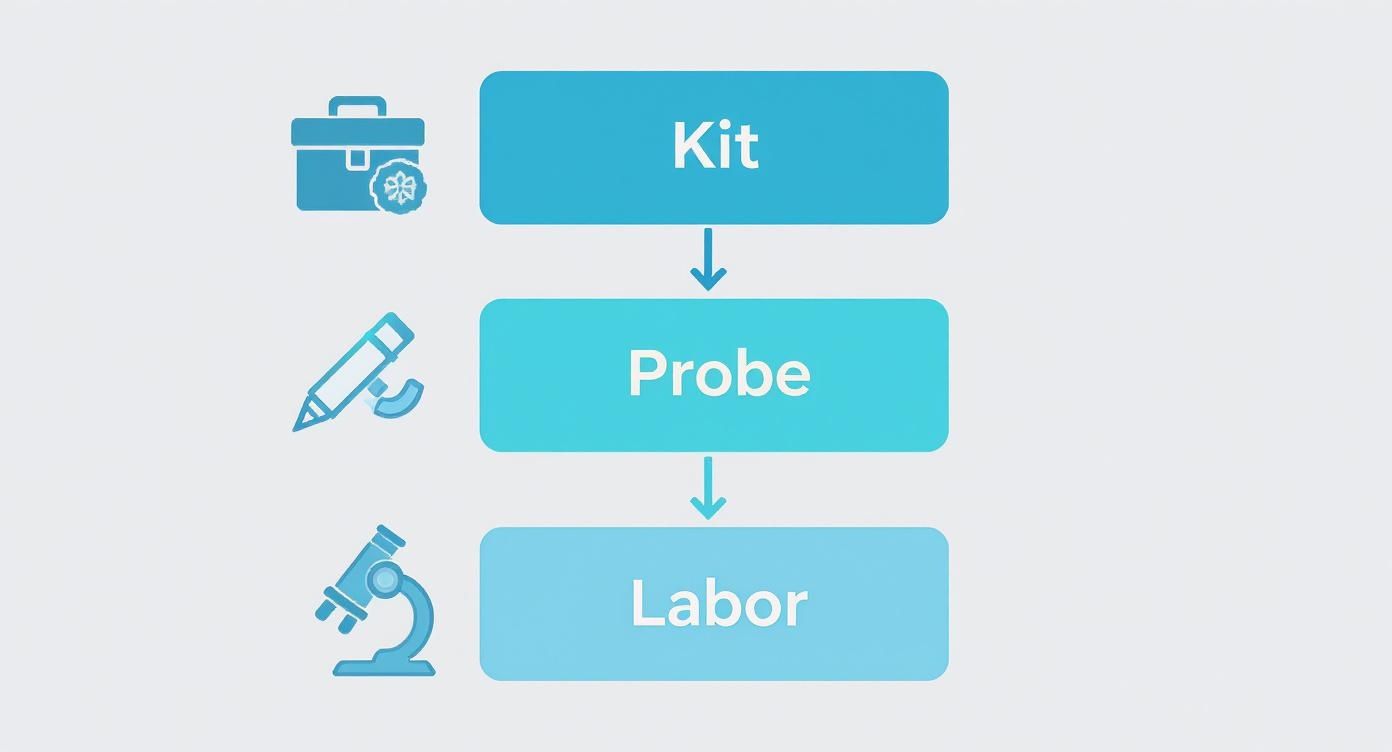
Each of these steps is standardized to ultimately provide you with a reliable and precise data basis for your analysis.
The importance of such in-depth insights is becoming increasingly evident in medical practice. Studies suggest that in approximately 80% of patients with inflammatory bowel disease (IBD), a correct diagnosis could be made based solely on the bacterial composition.
A good understanding of the analysis methods is therefore key to correctly assessing the significance of your test results. If you want to delve deeper into the subject, you can find more information in our article on the basics of microbiome analysis .
Understanding and correctly using your test results
The moment has finally arrived: You're holding your results in your hands – a truly exciting moment! But what do all those graphs, numbers, and technical terms mean all at once? Don't worry. Your results report isn't an unreadable document, but rather your very own roadmap to feeling better about your gut. We'll help you interpret it.
Your report is typically divided into several key sections. Each highlights a different aspect of your internal ecosystem, and together they provide a surprisingly clear picture of your gut health.

The most important values in your report
A key factor is the diversity of your gut flora. Imagine it like a healthy, thriving forest: it consists of countless plant, animal, and fungal species, all keeping each other in balance. It's very similar in your gut – a high diversity of bacterial species makes your microbiome more resilient and efficient. Low diversity can be a sign that your "inner garden" needs a little TLC.
Another important point is, of course, the specific composition of your microbiome. Here you can find information on:
- Dominant bacterial groups: The ratio of Firmicutes to Bacteroidetes is often particularly interesting here. These two major phyla influence, among other things, how efficiently your body extracts energy from food. An imbalance can therefore directly affect your metabolism.
- Beneficial bacteria: Your report also shows you how well supplied you are with the "good guys" like lactobacilli or bifidobacteria. They are essential for the production of short-chain fatty acids like butyrate , which is the main energy source for your intestinal cells.
- Potentially problematic bacteria: And of course, you'll find out if certain bacteria, which can cause discomfort if present in excessive numbers, have taken hold in your body.
The important thing is: your results report is not a judgment, but a snapshot. It highlights your potential and gives you the tools to make targeted improvements. Each value is a piece of the puzzle that helps you better understand your body's signals.
From result to concrete action
The real strength of a gut microbiome test lies in the personalized recommendations. You don't just get raw data, but a clear, actionable plan for your everyday life.
Here's a concrete example:
Your report indicates a low concentration of Faecalibacterium prausnitzii , an important butyrate producer. At the same time, you often suffer from bloating and feel lethargic. The appropriate recommendation could be: Specifically incorporate more resistant starch (e.g., from cooled potatoes) and inulin (from chicory or onions) into your diet to "feed" this beneficial bacterium.
The increasing relevance of such analyses for preventative healthcare is also evident in research. For example, the German Research Foundation (DFG) is funding a project investigating the role of the microbiome in the early detection of colorectal cancer. You can read more about this pioneering research project on gut health here.
Your test results are the starting point. Use the recommendations as your personal guide to make small but effective adjustments and finally take control of your gut health.
Finding the right provider for your test – what really matters
The market for gut microbiome tests is booming, and the sheer number of options can quickly become overwhelming. But how do you recognize a provider you can truly trust – one that delivers not just raw data, but real added value for your health? With a few simple criteria, you're guaranteed to make the right choice.
The key to reliable results is the quality of the laboratory. Make absolutely sure that the provider works with a laboratory certified according to ISO standards . This seal of approval is not just a formality; it guarantees that all analytical processes are standardized, scientifically validated, and carried out with the highest precision. This is the absolute foundation for results you can trust.
Data protection and scientific rigor: Your data in safe hands
Your health data is among the most sensitive information you can possess. A reputable provider must therefore strictly adhere to the General Data Protection Regulation (GDPR). This means your data will be anonymized, securely stored, and used exclusively for your personal analysis. Transparency is crucial here – the provider should be able to clearly explain to you at any time what happens to your sample and your data.
Equally important is the scientific basis of the test. Check whether the analysis method (such as modern shotgun metagenome sequencing) reflects the current state of research. And even more importantly: Are the recommendations you receive based on sound scientific evidence?
A good testing provider won't leave you alone with your lab report. They will translate the complex data into understandable insights and give you concrete, actionable tips for your everyday life – tailored to your individual results.
Your checklist for selecting a provider
To find the right partner for your health journey, you can use these points as a guide:
- Certified laboratory: Does the provider work with a laboratory certified according to ISO 15189 (or equivalent)?
- Strict data protection: Are the requirements of the GDPR not only met, but also made transparent?
- Understandable results: Do you get a clearly presented report with personalized recommendations, or just an unannotated wasteland of data?
- Personal support: Is there someone available to help you if you have questions? Does the provider perhaps even offer free coaching with health experts?
A provider like mybody®x meets precisely these high standards. The analyses for the home self-tests are conducted in German, ISO-certified laboratories, data protection in accordance with GDPR is a top priority, and thanks to a results guarantee, you can be sure that you will receive not only precise data but also reliable support on your path to greater well-being.
Your most frequently asked questions about the gut microbiome test
You probably still have a few questions before you take the plunge and examine your gut health. No problem! Here we answer the questions our customers most frequently ask, so you feel confident and well-informed.
How often should I get tested?
Your first test is a kind of "foundation laying" – it shows you exactly where you stand. This is your personal starting point.
If you then start adjusting your diet or lifestyle based on your results, a follow-up test after about three to six months is a great idea. This way you'll see in black and white what your efforts have achieved and how your microbiome is changing for the better. A real boost of motivation!
Do I need to change my diet before the test?
Please don't! For an honest and meaningful result, it's extremely important that you eat normally for the two weeks before the sample is taken. The test should reflect your everyday life, not an exceptional period. Only then can we give you recommendations that are truly relevant to you.
Imagine putting on someone else's glasses before an eye test – the result would be inaccurate. It's the same with your microbiome: we want to see your true current state in order to help you in the best possible way.
Is the test useful in cases of acute symptoms?
A gut microbiome test is an ingenious tool for examining your lifestyle and taking long-term steps to improve your health. It helps you understand the profound connections between your gut and your overall well-being.
However, it's important to note: it's not a medical diagnostic tool for acute illnesses. If you suddenly experience severe or worrying symptoms, your first step should always be to see a doctor. This will help rule out any serious medical causes.
Are you ready to finally listen to your gut feeling and take control of your health? At mybody®x, you get scientifically sound home self-tests that provide you with clear answers and tailored recommendations – from gut microbiome tests and nutrient analyses to intolerance and hormone tests.
Discover the gut microbiome test now at mybody-x.com .


Share:
Microbiome Importance: Influence on Health and Well-being
Gut flora analysis: Your complete guide to microbiome analysis