

Kefir for health: Understanding why it matters
Kefir is considered an ancient secret of the Caucasus mountain peoples and promises healthy fermentation for modern everyday life. When you think of fermented dairy products, you usually think of yogurt or quark. Yet hardly anyone knows that kefir grains form a living symbiosis of bacteria and yeasts that transforms milk into a true nutrient cocktail. Many people are surprised by how versatile and beneficial this beverage can be—and kefir’s health benefits extend far beyond its taste.
Table of contents
- What is kefir and where does it come from?
- Why is kefir healthy for the body?
- How does kefir affect digestion?
- What nutrients does kefir contain?
- Kefir in everyday life: Ways to incorporate it
Summary
| Overview | Explanation |
|---|---|
| Kefir is a healthy superfood. | Kefir contains probiotics, vitamins, and minerals that support the body. |
| Regular consumption promotes digestion. | Probiotic cultures in kefir improve the gut flora and alleviate digestive problems. |
| Kefir may strengthen the immune system. | Microorganisms in kefir regulate the immune system and have anti-inflammatory effects. |
| Kefir supports cardiovascular health. | Consuming kefir may help lower cholesterol levels and protect the heart. |
| Using kefir in a variety of ways in your diet. | Kefir can be used in smoothies, dips, or as a yogurt substitute for a healthy diet. |
What is kefir and where does it come from?
Kefir is a fascinating fermented milk beverage with a remarkable history and unique health properties. Its origins date back centuries and are deeply rooted in the traditions of the mountain peoples of the Caucasus.
The origins of kefir
The name “kefir” comes from the Caucasus region, where shepherds and nomads traditionally made this beverage. They discovered that milk stored in leather bags with special grains fermented into a tangy, slightly sparkling drink. Scientific studies show that kefir was already used centuries ago as both food and medicine.
The composition of the kefir culture
Kefir differs fundamentally from other fermented dairy products due to its complex microbiological composition. The so-called kefir grains are not cereal grains, but living symbioses of bacteria and yeasts embedded in a matrix of proteins, lipids, and sugars. These microorganisms transform milk into a nutrient-rich beverage that:
- Contains probiotic cultures
- Has a unique, mildly tart flavor
- Rich in vitamins and minerals
The fermentation process produces a beverage that is not only delicious but also offers numerous health benefits. Kefir grains work like a natural fermentation laboratory, transforming ordinary milk into a functional food with impressive properties.
Why is kefir healthy for the body?
Kefir is far more than just a refreshing beverage. Its health-promoting properties make it a true superfood that supports your body in many ways. Its unique combination of probiotics, vitamins, and minerals makes kefir a genuine health booster.
The power of probiotics
The heart of kefir's health benefits lies in its probiotic cultures. Scientific studies show that these microorganisms regulate the immune system and possess anti-inflammatory and antioxidant properties. The diverse bacterial strains support the gut microbiome and may alleviate digestive problems.
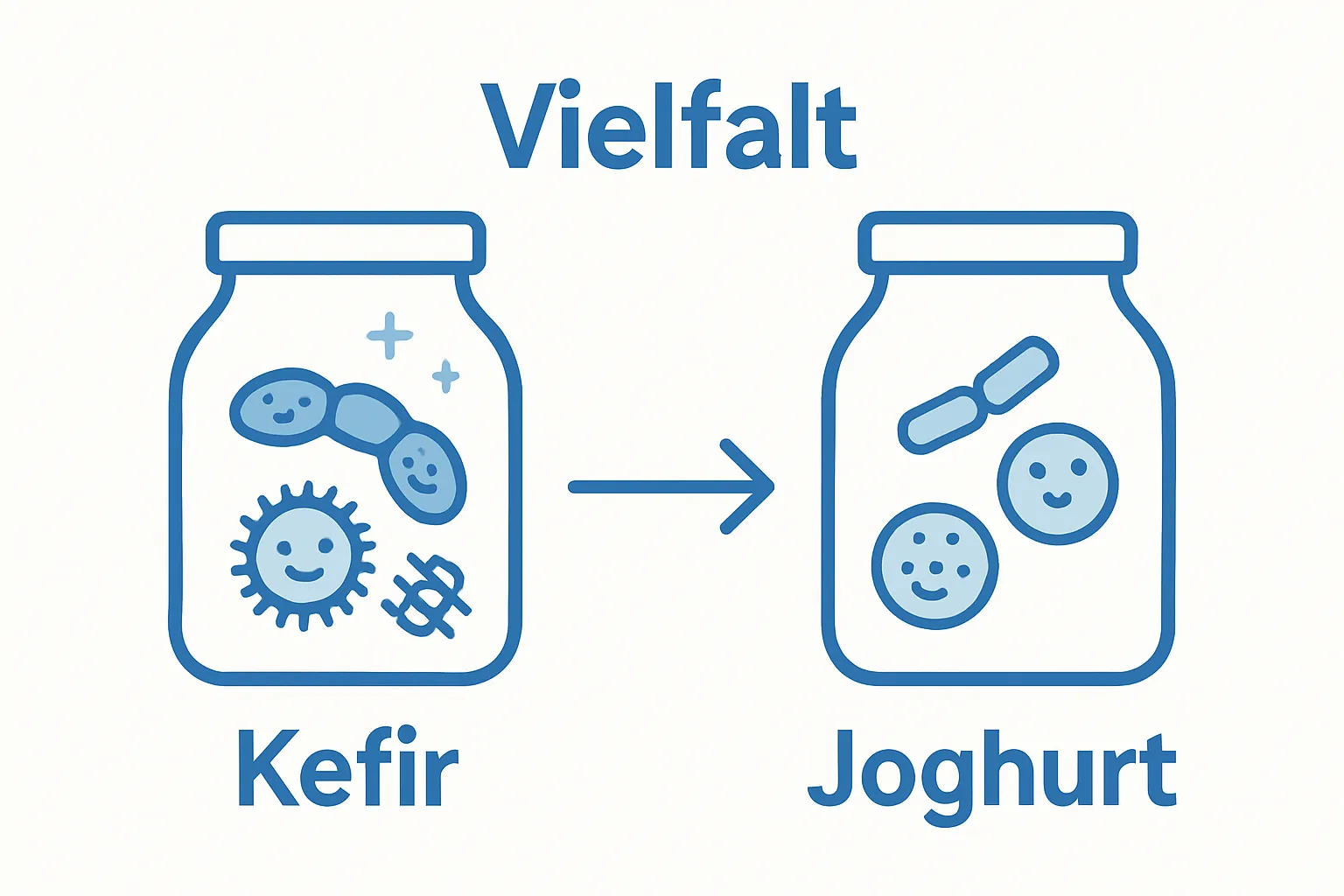 This is particularly important for your gut health and immune defenses.
Cardiovascular health and metabolism
Kefir offers more than just digestive support. Regular consumption can have positive effects on your metabolism and cardiovascular health. The microorganisms it contains help regulate cholesterol levels and may reduce the risk of cardiovascular disease. Kefir also supports:
- Improving insulin sensitivity
- Promoting a healthy metabolism
- Supporting weight regulation
Thanks to its nutrient-rich composition, kefir is an ideal beverage for anyone who consciously wants to support their health. Its diverse effects make it a true all-rounder in a healthy diet.

How does kefir affect digestion?
Digestion is a complex process in which kefir can play a surprisingly positive role. As a natural probiotic, it supports gut health in a way that goes far beyond ordinary foods. Its unique properties make it a valuable ally for a balanced digestive tract.
The microbiological balance
Scientific studies show that kefir promotes the growth of beneficial gut bacteria and improves the composition of the gut microbiota. The microorganisms it contains help displace harmful bacteria and establish a healthy balance in your digestive system. This is particularly interesting for anyone who wants to manage digestive problems such as irritable bowel syndrome.
Reducing inflammation and supporting digestion
Kefir has a positive effect on the intestinal lining and can reduce inflammatory processes. The probiotic cultures not only support digestion but may also alleviate symptoms such as:
- Bloating
- Feeling of fullness
- Irregular digestion
relieve. By strengthening the intestinal barrier, kefir helps the body absorb nutrients more efficiently while eliminating toxins. Its natural enzymes facilitate digestion, making it a gentle yet effective aid for a healthy metabolism.
What nutrients does kefir contain?
Kefir is more than just a refreshing drink—it is a true treasure trove of nutrients that comprehensively nourish your body. Its complex composition makes it a superfood that offers far more than conventional dairy products. Its range of nutrients is impressive and diverse.
Vitamins and minerals
Every sip of kefir contains important vitamins and minerals. Vitamin B12, calcium, phosphorus, and magnesium are particularly noteworthy. These nutrients play a crucial role in bone, nerve, and metabolic health. Vitamin B12, for example, supports the formation of red blood cells and helps prevent anemia.
Proteins and bioactive components
Scientific studies show that probiotic kefir milk also contains bioactive peptides that may help regulate blood pressure. The proteins it contains are easy to digest and provide:
- Essential amino acids
- High biological value
- Support for muscle building
Fermentation further enriches kefir with valuable enzymes and micronutrients that support your health in many ways. A true power drink for anyone who consciously pays attention to their diet.
Below you will find an overview of important vitamins, minerals, and bioactive components in kefir, as well as their health benefits.
| Nutrient / Component | Health benefits |
|---|---|
| Vitamin B12 | Supports red blood cell formation, strengthens nerves |
| Calcium | Promotes bone health and helps maintain healthy teeth |
| Phosphorus | Energy and bone metabolism, cellular health |
| Magnesium | Relaxes muscles, supports nerve function |
| Probiotic bacteria | Improves gut flora, strengthens the immune system, has anti-inflammatory effects |
| Bioactive peptides | Supports blood pressure regulation |
| Essential amino acids | Promotes muscle growth, essential building blocks for proteins |
Kefir in everyday life: Ways to incorporate it
Kefir is more versatile than most people realize. Instead of consuming it only as a drink, you can creatively incorporate it into your daily diet. With a few simple tricks, it becomes a culinary all-rounder that enriches your meal plan while supporting your health.
Versatile preparation methods
Kefir can be enjoyed in many ways beyond simply drinking it plain. It is excellent as a base for smoothies, dips, dressings, or even as a baking ingredient. For those interested in gut health, it offers a gentle way to make their diet nutrient-rich. Experiment with different variations such as kefir bowls, marinades, or using it as a substitute for yogurt in recipes.
Daily consumption recommendations
To achieve the maximum health benefits, nutrition experts recommend a daily amount of approximately 200–250 ml of kefir. You can choose between different variations:
- Pure and natural
- With fresh fruit
- As a smoothie base
- In overnight oats
- As a dressing for salads
Make sure to choose high-quality kefir without added sugar. Quality is crucial for its health benefits.
Here you will find a comparison of how kefir can be integrated into your daily diet and the ways you can enjoy it.
| Form of consumption | Description/Examples |
|---|---|
| Pure and natural | Enjoyed directly as a refreshing drink |
| With fruit | Mixed with fresh fruit as a snack or dessert |
| Smoothie base | Base for creamy smoothies |
| Overnight oats | For breakfast recipes and meal prep |
| Salad dressing | For mixing light dressings |
| Baking ingredient | As a substitute for yogurt or milk in baking |
| Dip or bowl | For savory and sweet variations |
Your gut health is the key—taking action is worthwhile
Kefir impressively demonstrates how important the balance of your gut flora is for well-being and digestion. Perhaps you know the feeling of bloating, intolerances, or discomfort even though you actually follow a mindful diet. But without clarity about your own gut and potential disruptive factors, it is difficult to make the best decisions for your health. This is where modern science comes in, giving you the tools to take targeted and effective action.
Start now with a personal gut flora analysis – For a healthy gut flora. Find out what your gut bacteria are like and which diet best supports your digestion. If you often suffer from digestive problems, our solutions for digestive problems and, if you are unsure about intolerances, the right at-home intolerance test can help. Take advantage of modern analyses now and secure your personal edge with mybody®x. Discover how easy it can be to truly understand and strengthen your health.
Frequently asked questions
What is kefir and how is it made?
Kefir is a fermented milk drink made from kefir grains and milk. The kefir grains contain live bacteria and yeasts that ferment the milk and transform it into a lightly sparkling, nutritious drink.
Why are the probiotic cultures in kefir healthy?
The probiotic cultures in kefir support gut health, regulate the immune system, and have anti-inflammatory properties. They can alleviate digestive problems and promote the growth of beneficial bacteria in the gut.
What health benefits does kefir offer?
Kefir can have positive effects on metabolism and cardiovascular health. It helps regulate cholesterol, supports insulin sensitivity, and promotes healthy digestion.
How can kefir be incorporated into your daily diet?
Kefir can be enjoyed on its own or used in smoothies, dips, dressings, and baked goods. Nutrition experts recommend a daily amount of approximately 200–250 ml to make the most of its health benefits.
Recommendation
- Gut health nutrition: Your immune system booster for autumn – mybody®x
- Microbiome test explained: How gut flora analysis works – mybody®x
- Build a healthy gut flora: Your nutrition guide to a healthy gut feeling – mybody®x
- Diet for irritable bowel syndrome: Soothe your stomach with these tips – mybody®x
- Improve gut health: Simple ways to greater well-being



Share now:
Get your gut microbiome tested: 12 providers reviewed for 2025
Meaning of Microbes: The Role of the Microbiome in Our Health