

The importance of microbes: The role of the microbiome in our health
Our bodies are home to a vast, invisible universe. Did you know that a healthy adult harbors around 100 trillion microorganisms, which together weigh up to 2 kilograms? It sounds incredible. Yet these tiny inhabitants do not make us sick; they are vital partners in our well-being. Especially in the gut, they drive processes that most people have never heard of.
Table of contents
- What is the microbiome and where can it be found?
- Why is the microbiome important for our health?
- How does the microbiome work in the human body?
- What factors influence the microbiome?
- What are the effects of an unbalanced microbiome?
Quick summary
| Takeaway | Explanation |
|---|---|
| The microbiome protects against disease. | Microorganisms actively defend the body against infections and regulate the immune system. |
| Diet has a significant impact on the microbiome. | A fiber-rich diet promotes healthy bacteria, while sugar and processed foods are harmful. |
| Mental health depends on the microbiome. | Gut bacteria communicate with the brain and influence mood and emotions. |
| Microbiome tests offer personalized insights. | Tests can analyze your microbiome composition and provide targeted support. |
| An imbalanced microbiome poses health risks. | Digestive problems and a weakened immune system can result from an imbalanced microbiome. |
What is the microbiome and where can it be found?
The microbiome refers to all the microorganisms that live in and on our bodies. These tiny organisms—including bacteria, fungi, viruses, and archaea—exist in a complex community and play a crucial role in our health. Our bodies host these microorganisms in various places, with the gut by far representing the largest and most significant microbiome.
The diversity of microorganisms
If you imagine that more microorganisms live in your body than human cells, you may be surprised. In fact, a healthy adult has around 100 trillion microorganisms, which together account for approximately 1–2 kg of body weight.
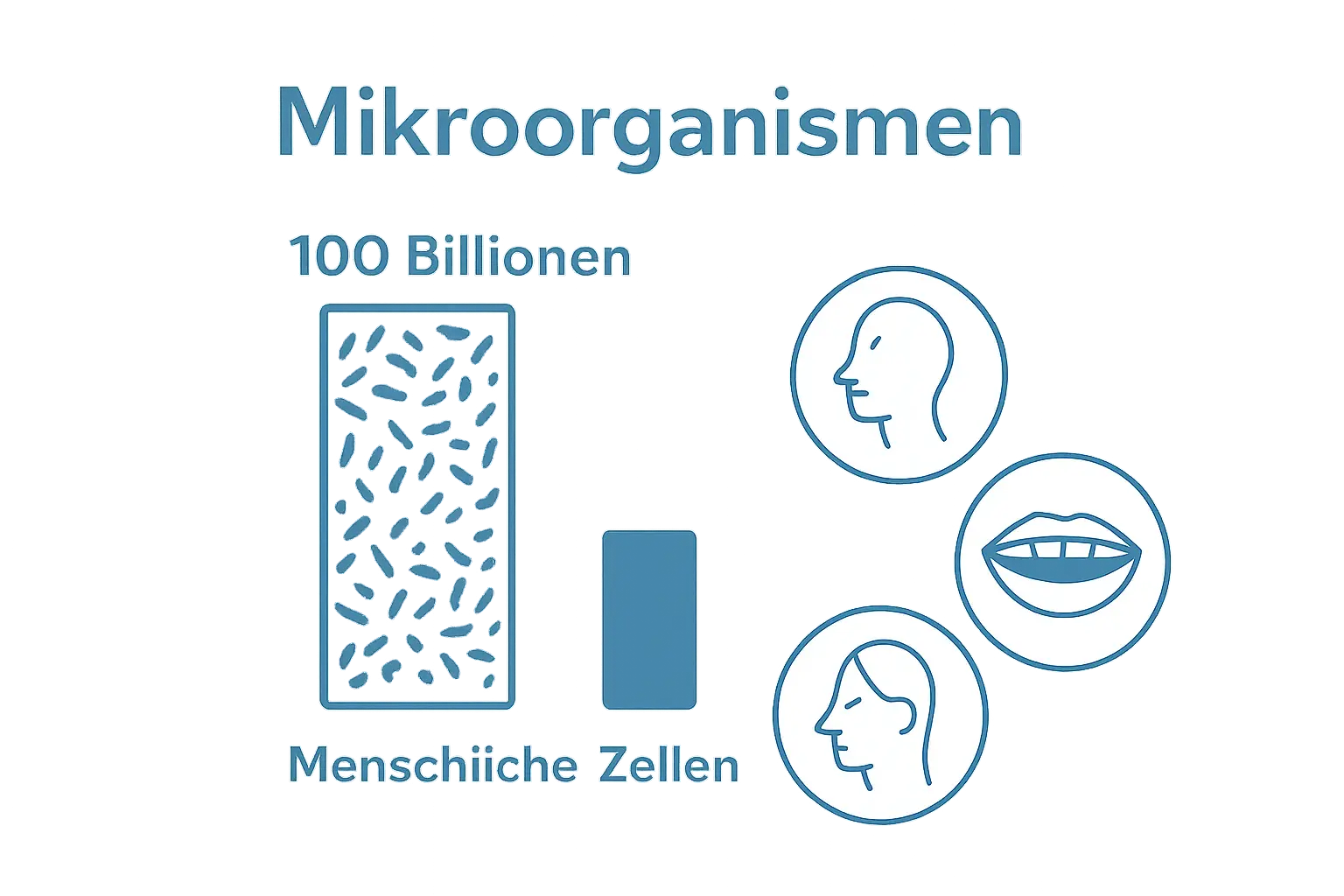 These microorganisms are not intruders or pathogens, but vital partners of our bodies. They are found not only in the gut, but also on the skin, in the mouth, in the vagina, and even in our airways.
Below you will find an overview of the most important microbiome sites in the human body and their special characteristics.
| Body area | Importance | Special features |
|---|---|---|
| Gut | Central to digestion, immune defense, and metabolism | Largest microbiome, greatest diversity |
| Skin | Protective barrier, defense against pathogens | Different regions, unique to each individual |
| Mouth | Beginning of digestion, protection against pathogens | One hundred different bacterial species |
| Vagina | Protection against infections, pH regulation | Particularly sensitive balance |
Microbiome hotspots in the human body
Microorganisms are mainly found in the following areas of the body:
- Gut: By far the largest and most significant microbiome site
- Skin: Every area of skin has its own specialized microbiome
- Mouth: A complex ecosystem with hundreds of different bacterial species
- Vagina: A sensitive microbiome with an important protective function
Our microbiome is as unique as a fingerprint. Scientific studies show that every person has an individual composition of microorganisms influenced by factors such as diet, lifestyle, genetics, and the environment.
With a microbiome test, you can learn more about your individual gut flora and understand how you can specifically support it.
Why is the microbiome important for our health?
The microbiome is far more than just a passive collection of microorganisms in our bodies. It is a complex and dynamic system that is crucial to our health and well-being. Its importance extends far beyond what was previously assumed.
Protection and immune defense
Our microbiome acts as a kind of biological line of defense against pathogens. The microorganisms living in our bodies compete with harmful bacteria for nutrients and living space, thereby actively protecting us from infections. Scientific research shows that a healthy microbiome regulates and stimulates the immune system.
Digestion and metabolism
The microorganisms in our gut play a central role in digestion. They help break down nutrients that our bodies cannot process on their own. Certain bacteria produce important vitamins such as vitamins K and B12 and support the absorption of minerals. In addition, they influence our metabolism and can even affect our body weight.
Mental health and emotions
A fascinating aspect of the microbiome is its connection to the so-called gut-brain axis. Our gut bacteria communicate directly with our brain through neural pathways and messenger substances, and can therefore influence our mood, emotions, and even our mental health. Disruptions in the microbiome are now linked to depression, anxiety disorders, and other mental illnesses.
With a gut flora nutrition guide, you can learn how to specifically support and strengthen your microbiome. Science is showing increasingly clearly: A healthy microbiome is the key to a healthy body and mind.
How does the microbiome work in the human body?
The microbiome is a complex and dynamic ecosystem that is in constant interaction with our bodies. These microorganisms function like an intelligent network that not only responds to stimuli but also actively influences our health.
Communication and interaction
Microorganisms communicate with one another and with human cells through chemical signals and messenger substances. This exchange is crucial for regulating various bodily functions. Bacteria can activate or deactivate genes, control metabolic processes, and even influence immune responses. Scientific studies show that this communication is extremely complex and precise.
Metabolic processes and metabolism
Each group of microbes in the body has specific functions. For example, gut bacteria break down dietary fiber into short-chain fatty acids, which serve as an energy source for intestinal cells. At the same time, they produce important enzymes and vitamins that our bodies cannot produce themselves. These metabolic processes directly influence our nutritional metabolism, hormone balance, and even our immune system.
Adaptability and mutability
The microbiome is highly dynamic and constantly adapts to external influences. Factors such as diet, stress, medications, and environmental conditions can change the composition of microorganisms within just a few hours. This flexibility enables the microbiome to respond quickly to challenges and protect our body.
With a gut microbiome analysis, you can gain detailed insights into how your individual microbiome functions and understand how to support it optimally.
What factors influence the microbiome?
The microbiome is a sensitive ecosystem influenced by numerous internal and external factors. Its composition and diversity can change rapidly and profoundly, with direct effects on our health.
The following table summarizes key factors that influence the composition and diversity of your microbiome, along with a brief overview of their respective effects.
| Factor | Influence on the microbiome |
|---|---|
| Diet | Determines diversity and beneficial bacterial species; rapid adaptation is possible |
| Stress | Can disrupt the balance and negatively affect bacteria |
| Sleep deprivation | Impairs bacterial balance and diversity |
| Lack of exercise | Reduces diversity and weakens protective mechanisms |
| Environmental toxins | Reduces bacterial diversity and can promote harmful species |
| Medications (e.g., antibiotics) | Reduces bacterial diversity; recovery time is often several months |
Diet as a key factor
Our daily diet has the greatest influence on the microbiome. Different foods promote different types of bacteria and can change the composition of our gut flora within just a few days. Scientific studies show that a fiber-rich diet with plenty of vegetables, fruit, and whole grains positively affects the diversity of gut bacteria, while highly processed foods and excessive sugar can damage it.
Lifestyle and environmental influences
In addition to diet, other factors play a significant role:
- Stress: Chronic stress can negatively affect the microbiome
- Sleep deprivation: An irregular sleep schedule disrupts the bacterial balance
- Lack of exercise: Regular exercise promotes the diversity of gut bacteria
- Environmental toxins: Chemicals and pollutants alter the composition of the microbiome
Medical influences
Medications in particular have a significant impact on our microbiome. Antibiotics can drastically reduce bacterial diversity and often take months to recover. Other medications, such as antidepressants, cortisone, or contraceptives, can also alter the composition of our gut bacteria.
If you would like to learn more about your individual gut flora and develop targeted optimization strategies, we recommend a microbiome test, which provides detailed insights into your personal bacterial ecosystem.

What are the effects of an unbalanced microbiome?
A disrupted microbiome can have far-reaching consequences for our health. When the delicate balance of gut bacteria is disturbed, it can cause various physical and psychological problems.
Digestive problems and inflammation
An imbalanced microbiome often leads to digestive disorders. The disrupted bacterial community can cause digestive problems such as bloating, diarrhea, constipation, or irritable bowel syndrome. Scientific studies show that a disrupted gut microbiome can trigger chronic inflammatory processes in the body, which in turn increase the risk of various diseases.
Immune system and susceptibility to illness
The microbiome plays a central role in our immune defenses. An imbalanced microbiome weakens immune function and makes us more susceptible to infections. Possible consequences include:
- More frequent colds and infections
- Slower wound healing
- Increased susceptibility to autoimmune diseases
- Chronic inflammation
Mental health and metabolism
Surprisingly, a disrupted microbiome affects not only the body but also our mental health. The gut-brain axis enables direct communication between gut bacteria and the brain. An imbalanced microbiome can contribute to mood swings, anxiety, and even depression. It can also negatively affect metabolism and increase the risk of obesity, diabetes, and cardiovascular disease.
If you notice symptoms of a disrupted microbiome, a leaky gut syndrome test can provide valuable insights into your health and identify potential treatment options.
Your microbiome in focus – individual solutions for your health
Did you recognize from the article how crucial your microbiome is for your well-being, energy, and immune system? Problems such as digestive issues, fatigue, or recurring infections often develop unnoticed, right in your gut. Many people feel the effects of an imbalance but don't know how to take targeted action. This is exactly where the analyses from mybody®x come in. With a microbiome analysis for your gut flora, you can find out the current state of your gut health – scientifically precise, with personalized recommendations for your diet and everyday life.
Don't wait until symptoms slow you down. Use our service to detect problems early and take active steps to address them. Find the right solution for your needs – from analyses for digestive problems to comprehensive health checks. Your path to a better quality of life begins now at mybody®x.
Frequently asked questions
What is the microbiome?
The microbiome refers to all the microorganisms that live in and on our bodies, particularly in the gut.
Why is the microbiome important for our health?
The microbiome plays a crucial role in our health by protecting our immune system, supporting digestion, and communicating with our brain, which can affect our mental health.
What factors influence the microbiome?
The composition of the microbiome is influenced by factors such as diet, lifestyle, stress, lack of sleep, and environmental factors.
What are the effects of an unbalanced microbiome?
An unbalanced microbiome can lead to digestive problems, a weakened immune system, and negative effects on mental health.
Recommendation
- Microbiome test explained: How gut flora analysis works – mybody®x
- Microbiome test: Your guide to better gut health – mybody®x
- Build a healthy gut microbiome: Your nutrition guide for a healthy feeling in your stomach – mybody®x
- Gut health nutrition: Your immune system booster for autumn – mybody®x
- Improve gut health: Simple ways to enhance your well-being



Share now:
Kefir’s health benefits: Understanding why it matters
Step-by-step optimization of gut health for greater well-being