

Is kefir healthy? Everything you need to know about your health
Did you know that kefir can contain up to 61 different microorganisms ? This living dairy product is considered a true powerhouse for health. More and more people are discovering kefir because it not only provides probiotic cultures but is also rich in vitamins and minerals. For those who want to enrich their diet and actively do something good for their body, kefir offers an exciting and versatile option.
Key findings
| Point | Details |
|---|---|
| Kefir as a source of nutrients | Kefir provides important minerals and vitamins that contribute to bone health and energy metabolism. Its probiotic cultures promote gut health. |
| Microbiological diversity | Kefir contains up to 61 different microorganisms that enhance its health-promoting effects. This differs significantly from yogurt and milk. |
| Reduced lactose content | Kefir is well-tolerated by many people with lactose intolerance due to the fermentation process. After 48 hours of fermentation, the lactose content is significantly reduced. |
| Creative uses | Kefir can be used in many ways, e.g. in smoothies, as an ingredient in baking or as a base for dressings, which makes it easier to integrate into the diet. |
Table of Contents
- Kefir: Definition, origin and main ingredients
- Nutrients and health-promoting ingredients of kefir
- Effects of kefir on digestion and microbiome
- Possible intolerances and risks associated with kefir
- Kefir compared to yogurt and drinking milk
- Tips for selection, storage and integration into everyday life
Kefir: Definition, origin and main ingredients
Kefir is a fascinating fermented product with an intriguing history. This traditional milk drink originated in the North Caucasus region, where shepherds discovered that milk fermented in leather sacks with special microorganisms, resulting in a unique beverage. According to Wikipedia , kefir is produced by fermenting milk with kefir grains , which contain a symbiotic culture of lactic acid bacteria and yeasts.
The production of kefir is a fascinating microbiological process. Approximately 2-5% kefir grains are added to the milk, after which a complex fermentation begins. These grains consist of a community of various microorganisms that grow and multiply during the process. The result is a thick, fermented milk product with a slightly sour taste and interesting health benefits.
- Main ingredients of kefir:
- Lactic acid bacteria
- Yeast fungi
- Milk proteins
- Small amounts of carbon dioxide
- Occasionally small amounts of alcohol
A special characteristic of kefir is its versatility. Depending on the milk used and the fermentation time, the drink can develop different consistencies and flavor profiles. Read more about the health benefits of kefir and discover why this traditional drink is so popular today.
Nutrients and health-promoting ingredients of kefir
Kefir is more than just a dairy product – it's a true nutritional powerhouse , providing your body with a wealth of essential minerals and vitamins. According to EatSmarter, kefir contains significant minerals such as calcium , magnesium , and phosphorus , as well as essential B vitamins like B12 and B2, and vitamin D. These nutrients play a crucial role in bone health, energy metabolism, and cell protection.
The bioactive substances in kefir are particularly interesting. Organic acids and peptides not only give the drink its characteristic flavor, but also support important bodily functions. They promote gut health, strengthen the immune system, and can reduce inflammatory processes in the body. Learn more about the importance of gut health here .
- Key nutrients in kefir:
- Calcium for bones and teeth
- Magnesium for muscle and nerve function
- B vitamins for metabolism
- Probiotic cultures for gut flora
- Proteins for muscle building
For people who care about their health, kefir is an excellent addition to their daily diet. The combination of nutrients and probiotic cultures makes it a true all-rounder for well-being and vitality.

Effects of kefir on digestion and microbiome
Kefir is much more than just a drink – it's a powerhouse for gut health . According to EatSmarter, kefir contains probiotic lactic acid bacteria, which play a crucial role in our digestion and immune system. These live microorganisms help stabilize and support the gut flora, which has a positive impact on our overall health.
Kefir's microbiological diversity is particularly impressive. Compared to conventional yogurt, kefir contains 10-34 different strains of bacteria and yeasts, making it a true all-rounder for gut health. Discover more about the importance of your gut microbiome to understand just how vital this diversity is. According to NutriScan , fermentation also reduces the lactose content by 80-90% and contains lactase, making it especially appealing for people with lactose intolerance.
- Benefits of kefir for digestion and microbiome:
- Strengthens the intestinal flora
- Supports the immune system
- Improves digestion
- Reduces lactose
- Promotes nutrient absorption
For anyone who wants to support their gut health naturally and effectively, kefir is an excellent choice. Its unique probiotic properties make it a true health elixir that strengthens both body and mind.
Possible intolerances and risks associated with kefir
Although kefir offers numerous health benefits, there are some important aspects to consider when using it. Lactose sensitivity is a common concern, but according to Gesundpedia , homemade kefir contains very little lactose after about 48 hours and is often suitable even for people with lactose intolerance. This makes it a potentially good alternative for people with dairy intolerances.
Another important aspect to keep in mind is the low alcohol content . Small amounts of alcohol are produced during fermentation, which requires special caution for individuals with a history of alcohol dependence. You can find more information about intolerances here to better understand your individual needs.
- Potential risks and intolerances of kefir:
- Low lactose content
- Minimum alcohol content
- Possible allergic reactions
- Some individuals may experience digestive problems.
- Caution is advised for those with a weakened immune system.
For most people, kefir is a safe and healthy food. Those who are unsure should start by consuming small amounts and paying attention to any reactions. If you have pre-existing medical conditions or specific health concerns, it is advisable to consult a doctor beforehand.
Kefir compared to yogurt and drinking milk
While yogurt and milk are popular dairy products, kefir stands out due to its unique composition and health benefits. According to Yasmin Spire , kefir contains significantly fewer calories per 100 ml than full-fat yogurt and simultaneously offers an impressively wide variety of microorganisms.
The crucial difference lies in the microbiological composition . While standard yogurt usually contains only 2-3 strains of bacteria, kefir harbors up to 61 different microorganisms. Learn more about the importance of the microbiome and how this diversity can positively influence your health. Compared to conventional milk, kefir offers not only more nutrients but also probiotic benefits.
- Comparative features:
- Kefir: Up to 61 microorganisms
- Yogurt: 2-3 strains of bacteria
- Drinking milk: No probiotic cultures
- Kefir: Lower calorie content
- Kefir: Better digestibility
For those seeking more than just a refreshing drink, kefir is an excellent choice. It combines the taste of dairy products with exceptional health benefits that go far beyond those of conventional milk drinks.
Here is a comparison of the most important features:
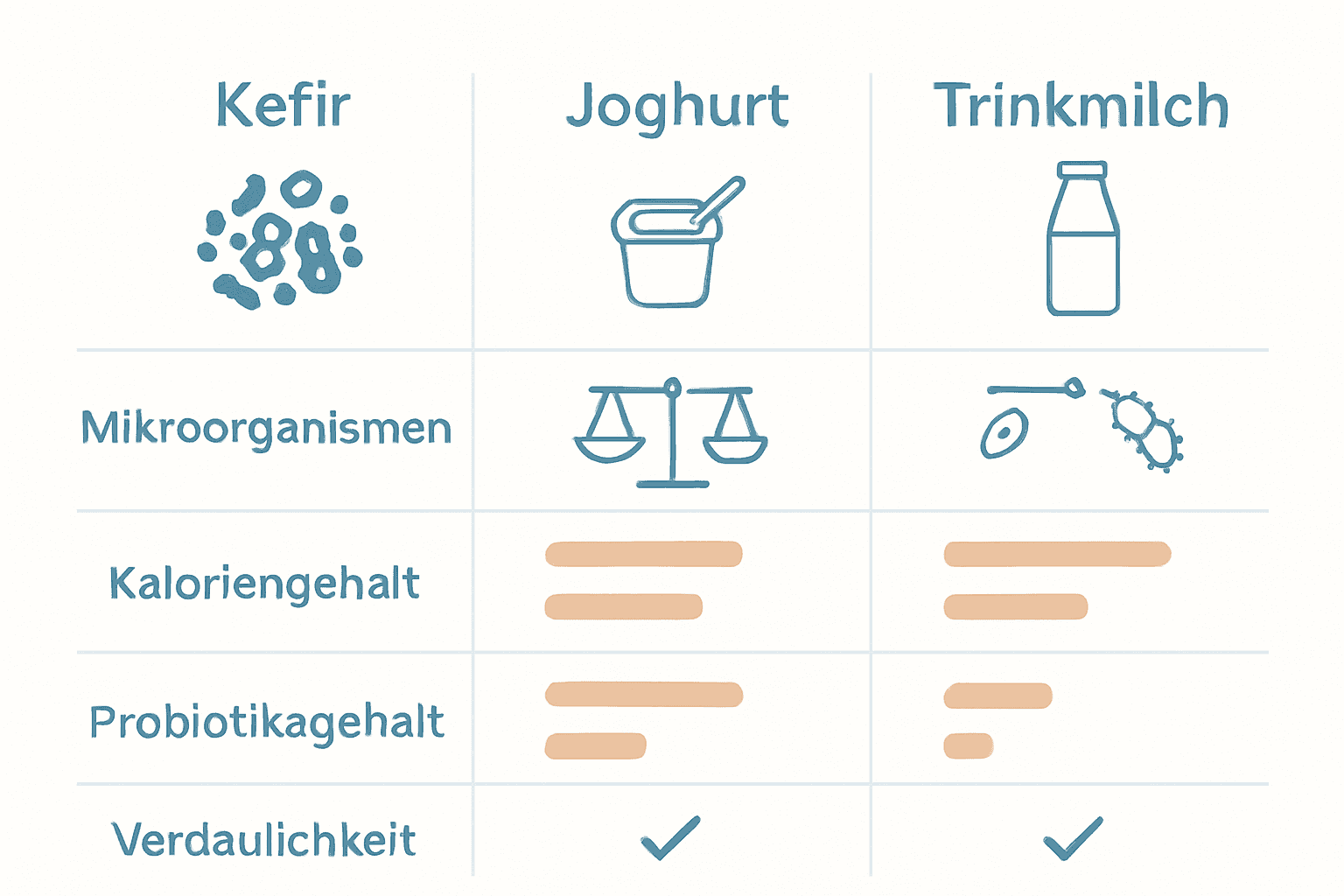
| feature | kefir | yogurt | Drinking milk |
|---|---|---|---|
| microorganisms | Up to 61 strains Bacteria & Yeasts |
2-3 bacterial strains | No probiotic cultures |
| calories | Rather low | Higher (depending on fat content) | Variable (usually higher) |
| Probiotic content | High | Medium | No |
| digestibility | Very good Low lactose |
Good Contains lactose |
It can be difficult for some. |
| The taste | Sour, slightly tangy | Mild, creamy | Neutral, slightly sweet |
Tips for selection, storage and integration into everyday life
When buying kefir, there are some important selection criteria to consider to ensure enjoyment and quality. According to Gesundpedia, you should pay particular attention to the best-before date and preferably choose varieties with 1.5% fat, which are lower in calories and excellent for a balanced diet. Learn more about an optimal nutritional strategy for your health goals.
Storage is crucial for taste and quality. According to Wikipedia , fermentation is a delicate process that ideally takes place at 20-25°C for 12-24 hours in a light-protected container. Kefir should be refrigerated and consumed promptly after opening to maintain maximum freshness and probiotic effectiveness.
- Practical tips for using kefir in everyday life:
- As a breakfast drink
- Incorporate into smoothies
- As a base for dressings
- Use for baking
- As a snack
Creativity is key! Kefir can be integrated into your diet in many ways – whether as a refreshing drink, an ingredient in baked goods, or a base for delicious sauces. Its versatility makes it a true all-rounder in healthy cooking.
Your health begins in the gut – discover the right support now.
Many people wonder whether kefir alone is enough to permanently strengthen their gut flora or get digestive problems under control. Often, it remains unclear what the true state of one's gut and microbiome really is. Symptoms such as bloating, discomfort, or intolerances can occur despite a healthy diet and are rarely easy to diagnose without targeted analysis.
Gain clarity and take the next step towards your well-being. With a professional gut flora analysis or an at-home intolerance test from mybody®, you'll receive easy-to-understand results and personalized recommendations that go far beyond general advice. Discover all the latest health tests and valuable expert knowledge at mybody-x.com . Take proactive steps to protect your gut health now and experience how easy personal prevention can be.
Frequently Asked Questions
Is kefir healthy for digestion?
Kefir is healthy for digestion because it contains probiotic lactic acid bacteria that stabilize the intestinal flora and support digestion.
What are the most important nutrients in kefir?
Kefir contains important nutrients such as calcium, magnesium, B vitamins and probiotic cultures, which are crucial for bone health, energy metabolism and gut health.
How does kefir differ from yogurt?
Kefir contains up to 61 different microorganisms, while yogurt usually only has 2-3 strains of bacteria. Furthermore, kefir generally has fewer calories and is easier to digest.
Can kefir be consumed by people with lactose intolerance?
Yes, kefir is often suitable for people with lactose intolerance, as the lactose content is significantly reduced through fermentation and it contains lactase, which aids the digestion of lactose.



Share:
SIBO symptoms: Everything you need to know about intestinal problems
Drink kefir in the morning or evening to achieve optimal results.