

SIBO symptoms: Everything you need to know about intestinal discomfort
Around 70 percent of patients with irritable bowel syndrome also unknowingly have SIBO. This previously often underestimated disorder of the small intestine can cause severe symptoms and frequently goes undiagnosed. If bloating, abdominal pain, or even fatigue keeps recurring, a bacterial imbalance could be the trigger. Knowing the basics and causes of SIBO increases the chances of receiving the right treatment and achieving a better quality of life.
Key findings
| Point | Details |
|---|---|
| SIBO definition | SIBO is a condition in which bacteria multiply excessively in the small intestine, often due to impaired intestinal function. |
| Symptoms and types | The most common symptoms include bloating and abdominal pain; symptoms vary depending on the bacterial type (hydrogen-, methane-, or hydrogen sulfide-dominant). |
| Diagnostic methods | The standard diagnosis is made through breath tests measuring hydrogen and methane; additional tests may support the diagnosis. |
| Treatment approach | Successful treatment combines antibiotics, probiotics, and dietary adjustments; preventive measures are crucial for avoiding relapses. |
Table of contents
- What is SIBO? Definition and basics
- Typical and less well-known SIBO symptoms
- How does SIBO develop? Causes and risk factors
- Diagnostic methods for SIBO: From laboratory tests to self-testing
- Treatment options and prevention of SIBO
What is SIBO? Definition and basics
The term SIBO (Small Intestinal Bacterial Overgrowth) describes a complex intestinal disorder in which bacteria multiply excessively in the small intestine. Diving deeper into gut health can help you better understand this condition.
According to medical knowledge, SIBO occurs when bacteria from the large intestine migrate into the small intestine and grow there uncontrollably. This can have various causes:
- Disorders of intestinal peristalsis
- Reduced stomach acid production
- Weakened immune system
- Chronic diseases
- Advanced age
Particularly interesting: In up to 70% of patients with irritable bowel syndrome, SIBO may be a previously unrecognized cause of their symptoms. Typical symptoms include bloating, abdominal pain, nausea, and diarrhea. Diagnosis is usually made through a breath gas analysis, which can detect bacterial overgrowth.
Treatment is individualized and generally includes a combination of antibiotics, probiotics, dietary changes, and treatment of possible underlying conditions. A holistic approach is crucial for restoring balance to the gut flora.
Typical and less well-known SIBO symptoms
The symptoms of SIBO are diverse and can vary greatly from person to person. Learn more about gut health diagnostics to better understand these complex symptoms.
According to medical findings, symptoms can be divided into different categories:
Main gastrointestinal symptoms
- Extremely bloated abdomen, especially within the first hour after eating
- Severe abdominal pain and cramps
- Recurring diarrhea
- Constipation in some cases
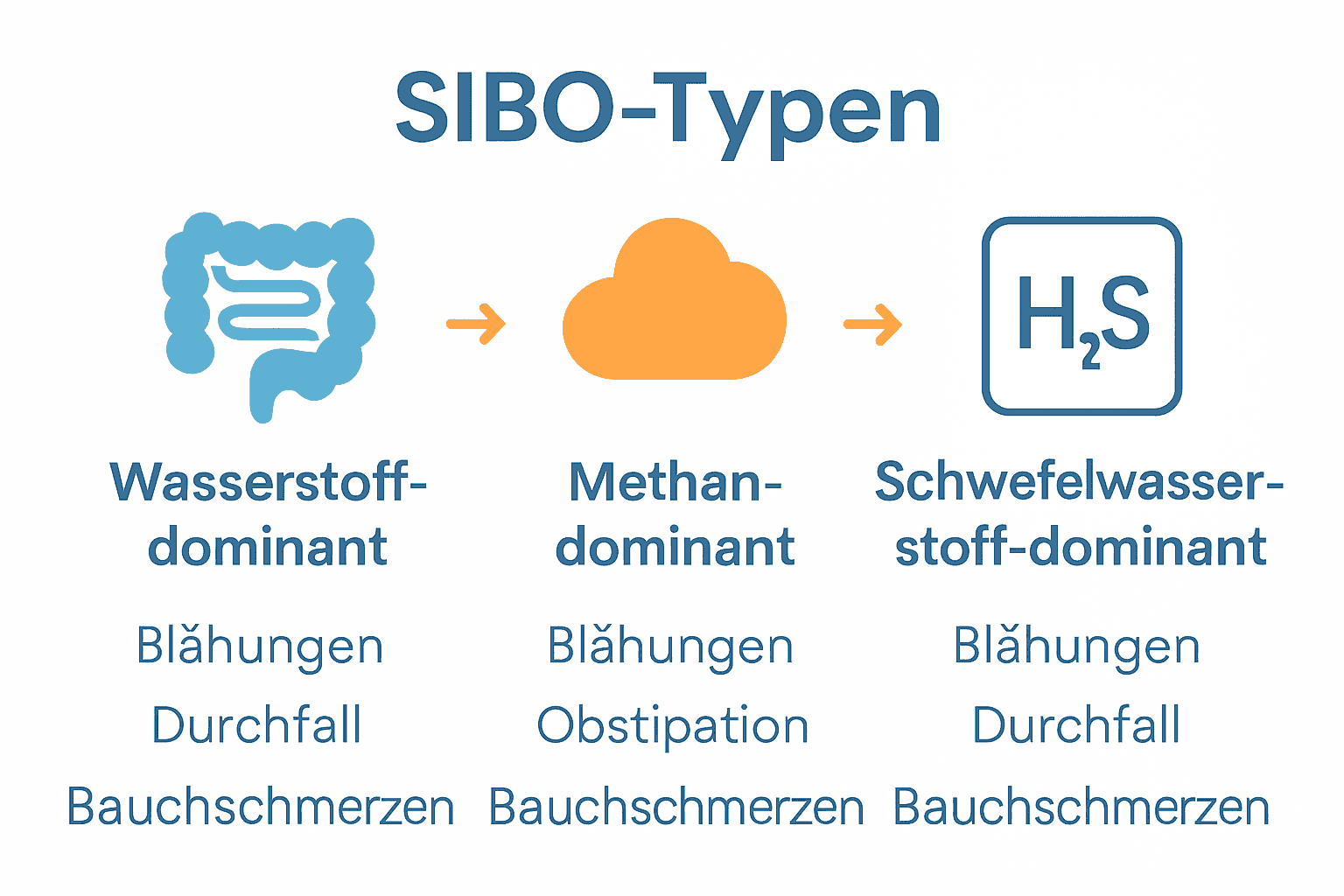
SIBO types by gas production
Surprisingly, symptoms differ depending on the predominant bacterial type:
- Hydrogen-dominant SIBO: Frequently associated with diarrhea and abdominal cramps
- Methane-dominant SIBO: Characterized by constipation and extreme bloating
- Hydrogen sulfide-dominant SIBO: Characterized by foul-smelling bloating and, in some cases, joint discomfort
Less well-known symptoms also include fatigue, difficulty concentrating, and unexpected headaches. These systemic symptoms show that SIBO affects not only the digestive tract but the entire body.

Here is an overview of the SIBO types and their most common symptoms:
| SIBO type | Common symptoms | Notes |
|---|---|---|
| Hydrogen-dominant | Diarrhea Abdominal cramps |
Usually occurs in patients with irritable bowel syndrome |
| Methane-dominant | Constipation Extreme bloating |
Often leads to chronic constipation |
| Hydrogen sulfide-dominant | Foul-smelling bloating Joint discomfort |
Rarely, can cause systemic symptoms |
Important to know: Not every affected person experiences all symptoms with the same intensity. An individual medical diagnosis is essential to identify the specific form of SIBO and treat it effectively.
How does SIBO develop? Causes and risk factors
SIBO results from complex interactions between various factors that disrupt the natural gut flora and function. Learning more about gut health and syndromes can help you better understand these connections.
Primary triggers and risk factors
SIBO can develop for several reasons:
-
Food poisoning: Can cause lasting damage to the gut flora.
-
Leaky ileocecal valve: Allows bacteria to migrate.
-
Reduced stomach acid production: Reduces natural defense mechanisms.
-
Sluggish bowel function: Slows digestive processes.
-
Chronic stress: Impairs intestinal function.
Medical risk factors
Certain health conditions significantly increase the risk of SIBO:
-
Weakened immune system
-
Pre-existing digestive tract conditions
-
Increasing age
-
Chronic inflammation
-
Frequent use of medications
It is particularly interesting that eating snacks between meals too frequently can disrupt small intestinal clearance and thereby promote bacterial colonization. The combination of various risk factors makes SIBO a complex condition requiring individual attention.
Important to know: Not every risk factor automatically leads to SIBO. A thorough medical examination can help identify individual causes and develop targeted treatment strategies.
Diagnostic methods for SIBO: From laboratory tests to self-testing
SIBO can be identified using various diagnostic procedures, ranging from simple self-tests to complex laboratory examinations. Detailed analyses of gut health can provide additional insights into digestive function.
Primary diagnostic methods
The breath test is the standard method for diagnosing SIBO. It measures hydrogen and methane levels to detect bacterial overgrowth in the small intestine. The procedure is simple:
-
Ingestion of a sugar solution
-
Multiple breath samples collected over several hours
-
Analysis of gas concentrations
Additional examination methods
In addition to the breath test, there are other diagnostic approaches:
-
Stool examination: Analysis of the bacterial composition
-
Blood tests: Screening for nutrient deficiencies and inflammatory markers
-
Endoscopic examinations: Direct examination of the intestine to determine the causes
Self-testing and prevention
Those affected can document initial signs themselves using symptom diaries and food logs.
Important: Do not self-diagnose; always seek medical advice.
A thorough medical evaluation is crucial, as SIBO is often mistaken for other digestive disorders. A professional diagnosis helps develop the best individualized treatment strategy.
Treatment options and prevention of SIBO
SIBO requires a holistic treatment approach that goes beyond merely addressing symptoms. Discover our SIBO dietary strategies for effective and sustainable treatment.
Medical treatment options
The treatment of SIBO comprises several coordinated approaches:
-
Antibiotic therapy: Targeted reduction of bacterial overgrowth
-
Probiotics: Restoring the natural intestinal environment
-
Nutrient correction: Correcting existing deficiencies
-
Treatment of underlying conditions: Addressing underlying causes
Alternative treatment methods
An innovative treatment option is the so-called elemental diet, in which only predigested nutrient shakes are consumed for 2–3 weeks. The aim of this diet is to starve the bacterial overgrowth and restore the intestinal environment.
Preventive strategies
The following measures are recommended to prevent SIBO and avoid relapses:
-
Balanced, fiber-rich diet
-
Regular exercise
-
Stress reduction
-
Low-FODMAP diet in consultation with healthcare professionals
Important to know: Relapses are not uncommon with SIBO. A long-term, holistic strategy and close collaboration with healthcare professionals are crucial for lasting treatment success
Understand your digestive symptoms and take targeted action
Bloating, abdominal pain, and persistent digestive problems burden your everyday life and can significantly restrict your overall quality of life. SIBO in particular often goes undetected and leads to a cycle of uncertainty and recurring symptoms. Many people affected are looking for answers and individually tailored solutions.
With modern laboratory tests from mybody® Lab, you gain clarity about the composition of your microbiome and reliably uncover hidden causes such as SIBO or nutrient deficiencies. We offer ISO-certified at-home self-tests that provide in-depth insights into your metabolism and gut health. Discover our holistic microbiome analyses, learn more about nutrient status tests, and benefit from personalized recommendations specifically tailored to address your symptoms.
Finally restore balance to your gut health. Start now at https://mybody-x.com Find your individual analysis and a sustainable solution for SIBO symptoms—for greater well-being and renewed energy.
Frequently asked questions
What are the main symptoms of SIBO?
The main symptoms of SIBO include an extremely bloated abdomen, severe abdominal pain, recurring diarrhea, and sometimes constipation.
How is SIBO diagnosed?
SIBO is primarily diagnosed using a breath test that measures hydrogen and methane levels in the breath to detect bacterial overgrowth in the small intestine.
What causes can lead to SIBO?
SIBO can be caused by various factors, such as food poisoning, an incompetent ileocecal valve, reduced stomach acid production, sluggish intestinal motility, and chronic stress.
What treatment options are available for SIBO?
Treatment for SIBO often includes a combination of antibiotic therapy, probiotics, nutrient correction, and dietary adjustments. An elemental diet may also be used to reduce bacterial overgrowth.



Share now:
Soften your stool: Step-by-step instructions for home
Is kefir healthy? Everything you need to know for your health