
Rebuilding gut flora: How long does it really take?
Are you wondering how long it takes to rebuild your gut flora? The honest answer is: It depends entirely on you, your body, and your lifestyle. You may feel the first positive changes after just a few days, but truly stable and diverse gut flora usually requires several months of targeted support.
Your realistic timeline for a healthy gut
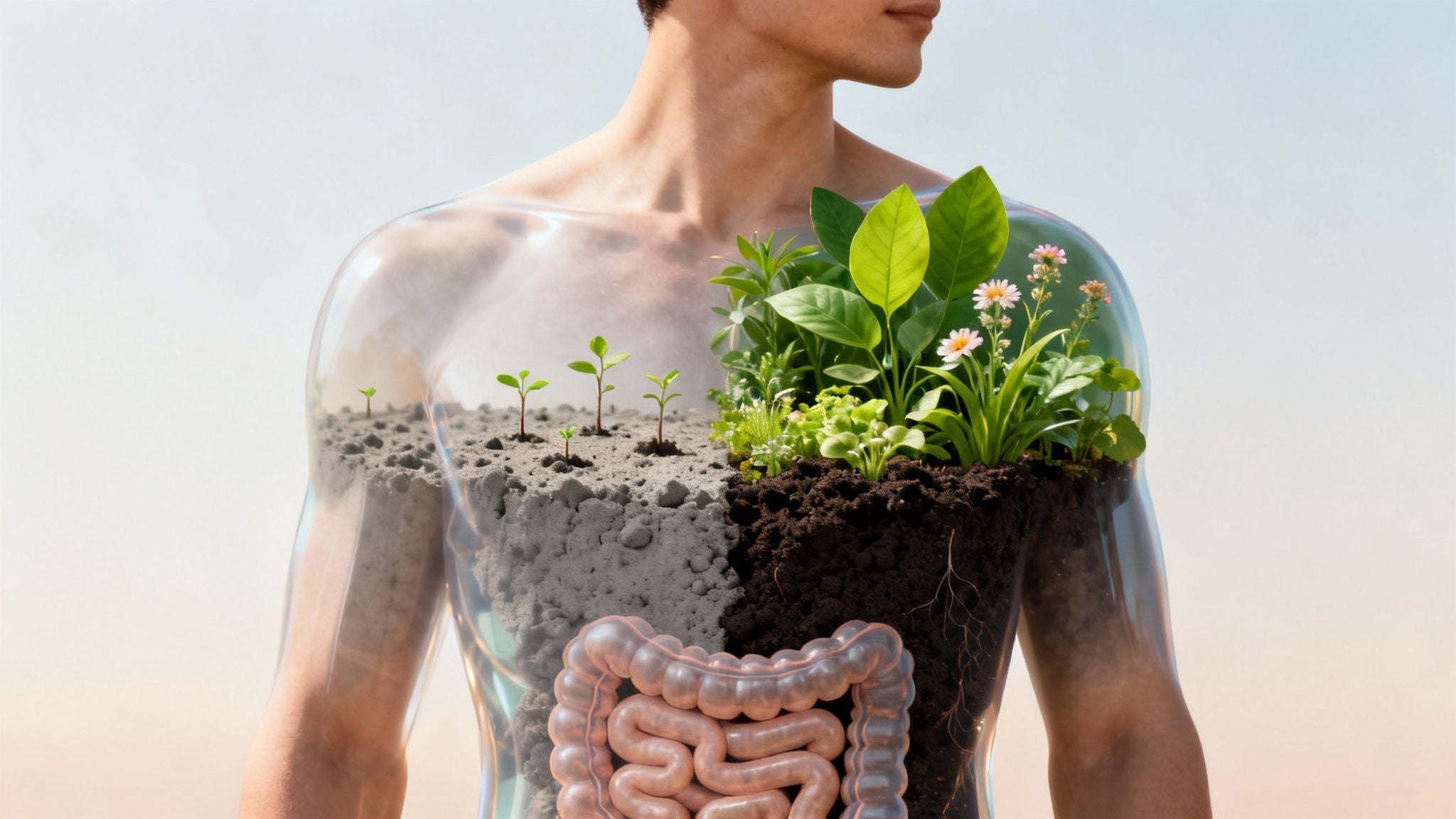
Rebuilding your gut flora is not a short sprint, but rather a longer journey that requires patience and the right tools. Think of it like tending a garden: A brief rain shower may help, but for lasting growth you need the right soil, good nutrients, and regular care. The same is true of the trillions of microorganisms in your gut.
Many people underestimate how closely gut health is linked to our overall well-being. In Germany, around 25% of the population struggles with gastrointestinal problems several times a year—one in ten even suffers from them chronically. These are millions of people whose quality of life is affected by a disrupted microbiome. If you want to learn more, read here about why gut health is so important.
The three phases of rebuilding your gut
To set realistic expectations, it helps to divide the process into three phases. Each phase has its own duration and requires a different focus:
- Short-term changes (days to weeks): Even small adjustments, such as more fiber or probiotic foods, can positively influence the composition of your microbiome within just a few days. You may notice easier digestion or less bloating.
- Medium-term stabilization (weeks to months): This phase is about permanently establishing the new, beneficial bacterial strains. Consistent nutrition, effective stress management, and sufficient exercise are essential here.
- Long-term resilience (several months to years): Building a truly resilient and diverse microbiome that quickly recovers even after antibiotic treatment or stressful periods is a long-term goal. This is the ultimate challenge.
The following graphic shows you this typical timeline and visualizes what happens in your gut over days, weeks, and months.
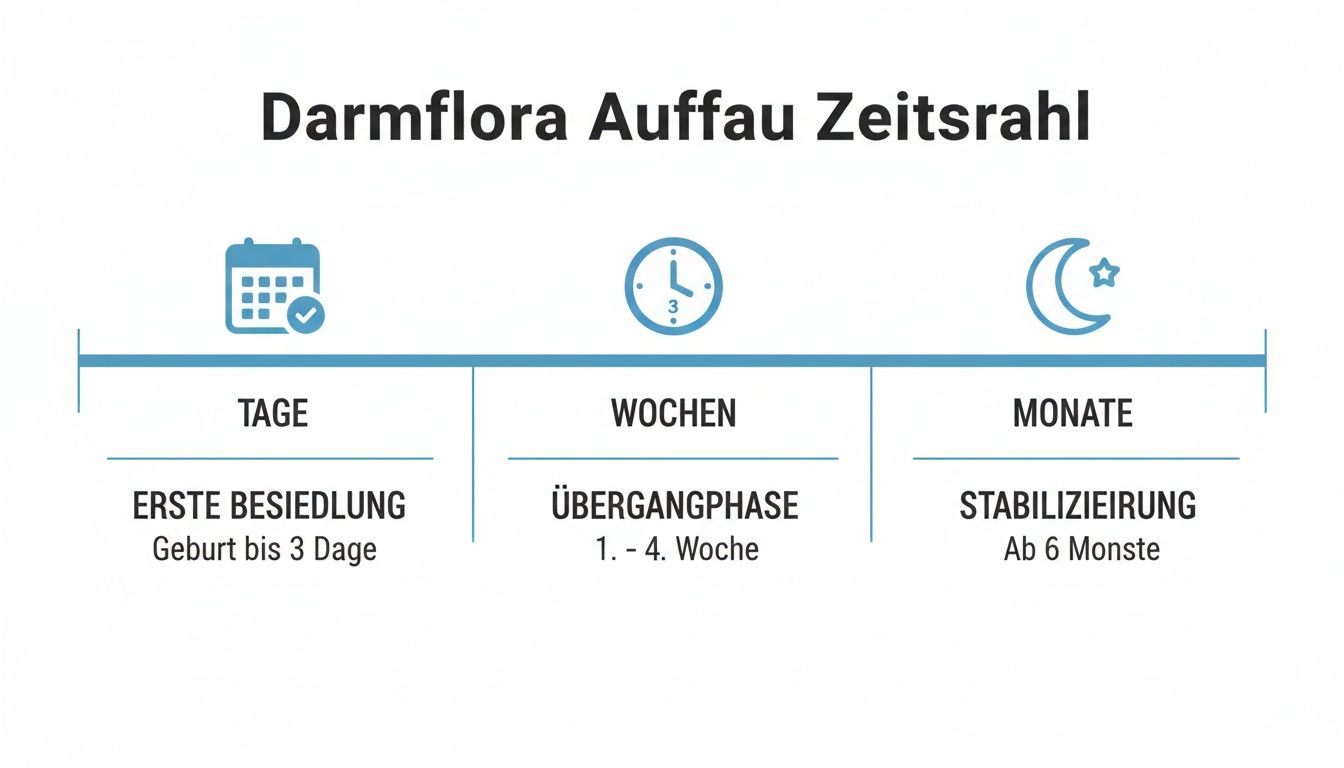
So you see: rapid results are absolutely possible, but sustainably strengthening your gut is a marathon, not a sprint.
To give you an even better overview, we have summarized the most important steps and time periods in a table.
A realistic timeline for rebuilding your gut flora
This table provides an overview of the different phases and time periods that are typical for rebuilding the microbiome.
| Phase | Duration | What happens in your gut | Your most important measures |
|---|---|---|---|
| Initial adjustment | 1–4 weeks | The first beneficial bacterial strains begin to grow, and inflammation may decrease. | Focus on fiber-rich, anti-inflammatory foods. Probiotics may help. |
| Stabilization | 1–6 months | The diversity of beneficial bacteria increases, and the gut barrier begins to regenerate. | A consistent diet, stress management, sufficient sleep, and regular exercise. |
| Long-term resilience | 6+ months | Your microbiome becomes more resilient to disruptions such as stress or unhealthy meals. | Maintaining healthy habits and regularly “feeding” your gut bacteria with prebiotics. |
This plan is, of course, a guideline—every body is different. What matters is that you stick with it and listen to your body’s signals.
Which factors influence your personal timeline
You’re doing everything you can to change your diet and establish healthy habits, but everything seems to be happening much faster for your friend? That is completely normal. There is no one-size-fits-all answer to the question “How long does it take to rebuild the gut flora?” because the journey is as individual as you are.
Your body is not a standardized system but a complex interplay of countless influences. Think of your microbiome as a very personal garden: The nature of the soil (your genetics), the weather (your lifestyle), and past events (such as a drought caused by antibiotics) determine how long it takes for everything to bloom again.
Let’s take a closer look at the key factors that shape your personal timeline. This knowledge helps you set realistic expectations and be more patient with yourself when things simply need time.
The impact of antibiotics and medications
Antibiotics are often lifesaving, but for your gut flora they act like a clear-cut in a forest. They mow everything down without distinguishing between “good” and “bad” bacteria, drastically reducing the diversity of your microbiome. Studies show that although the gut flora often recovers within a few weeks, it can take up to six months or longer for some beneficial bacterial strains to return to their previous levels.
Important to know: Some types of bacteria may never return on their own after antibiotic treatment. That is precisely why targeted support after taking antibiotics is so crucial—to fill those gaps again with beneficial microorganisms.
Other medications, such as painkillers (e.g., ibuprofen) or acid blockers, can also negatively affect the composition of your gut flora when taken long term and slow down the rebuilding process.
Your eating habits as fuel
Your diet is probably the greatest lever at your disposal. It determines which bacteria in your gut get food and can multiply—and which do not.
- Sugar & processed foods: A diet rich in sugar and simple carbohydrates primarily feeds undesirable bacteria and fungi. These can promote inflammation and actively hinder the development of a healthy flora.
- Low-fiber diet: If fiber from vegetables, fruit, and whole grains is lacking, your beneficial helpers are practically starved. They depend on these fibers as their primary source of energy.
- Lack of variety: If you always eat the same things, you also support only a very limited number of bacterial species. A colorful, varied diet is the key to a diverse and resilient microbiome.
Your eating habits over the past few years form your starting point. Someone who has been eating mindfully for a long time starts with a much more stable foundation than someone whose daily life has so far been shaped by fast food.
Stress and sleep: your invisible adversary
Your gut and brain are closely connected through what is known as the gut-brain axis and are in constant communication. Chronic stress is therefore pure poison for your gut health. Stress hormones such as cortisol can make the gut barrier more permeable (the so-called “leaky gut”) and negatively alter the composition of your gut flora.
Sleep deprivation has a very similar effect. While you sleep, important regenerative processes take place in your body—including in your gut. Too little or poor-quality sleep disrupts this delicate balance and can significantly slow down the rebuilding process.
Age and genetics: the given conditions
As we age, the composition of our microbiome naturally changes. Diversity may decrease, and the number of certain beneficial bacteria, such as bifidobacteria, often declines. This means that rebuilding the gut flora later in life simply takes a little more time and targeted support.
Your genetic predisposition also plays a role. Your genes influence how your body responds to certain nutrients and which bacterial strains thrive particularly well in your gut. If you would like to explore more deeply how your DNA shapes your health, you can find fascinating insights in our explanations of DNA analysis for nutrition and health.
Each of these factors contributes to how long the journey to a healthy gut flora will take for you. The key is to understand your personal situation and take a holistic approach that not only focuses on your diet but also takes your entire lifestyle into account.
How to nourish your gut flora through your diet
Your diet is by far the most powerful tool for actively accelerating the rebuilding of your gut flora. But what does eating “gut-friendly” actually mean? It’s not just about cutting out unhealthy foods. Rather, it’s about deliberately providing your trillions of tiny helpers with the right “nourishment.”
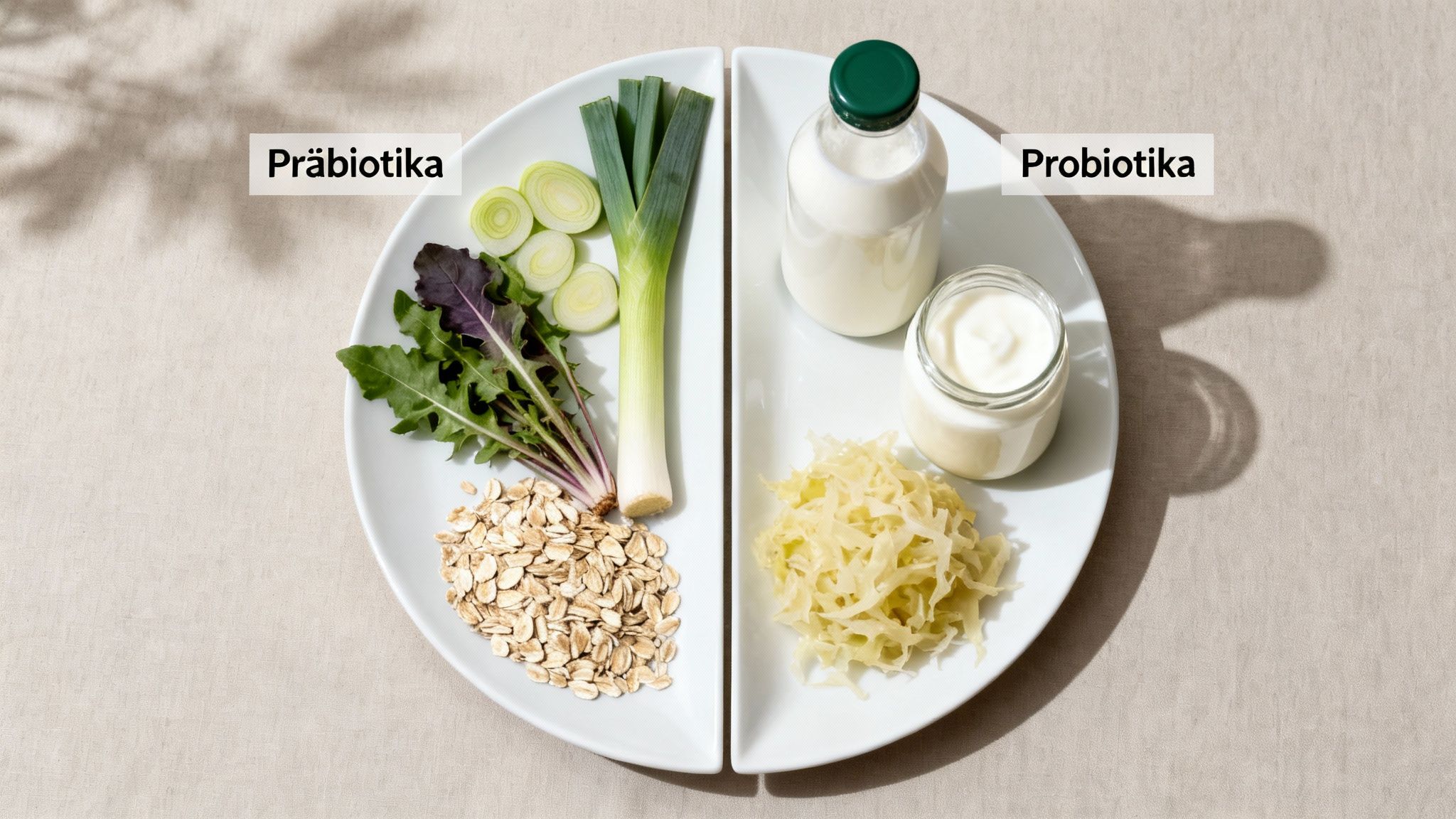
Imagine your gut as a garden again. To make it flourish, you need two crucial things: fresh seedlings (the beneficial bacteria) and the right fertilizer (the nourishment for these bacteria). In the world of gut health, we call these probiotics and prebiotics.
Probiotics and prebiotics: the unbeatable team
Anyone who understands these two terms holds the key to positively influencing the answer to the question “How long does it take to rebuild gut flora?” They work best as a team, which is why they are often referred to as synbiotics—a clever combination of both.
- Probiotics are the living helpers. These are beneficial, living microorganisms that you consume through food. They settle in your gut and support the beneficial bacteria already present there.
- Prebiotics are the nourishment. These are indigestible components of food, usually special dietary fibers, that serve as food for your beneficial gut bacteria. Without this nourishment, even the best probiotic helpers cannot multiply.
So, if you eat probiotic foods without also providing prebiotic nourishment, it’s like planting new plants in barren soil. They will struggle to take root. Only the combination of both makes your strategy truly effective.
Your plate as a source of diversity
Diversity is the magic word for a robust microbiome. The more different plant fibers you eat, the more diverse your community of gut bacteria will be. After all, each bacterial strain has its own preferences.
For targeted development, experts recommend a Mediterranean diet rich in vegetables, legumes, whole grains, and fermented foods such as yogurt or sauerkraut. These provide lactic acid bacteria and promote microbial diversity—a key to stability, as diversity keeps pathogens in check.
This type of diet is rich in both components. Here are some specific foods that you can easily incorporate into your everyday routine:
Top sources of prebiotics (the food):
- Vegetables: Chicory, artichokes, leeks, onions, garlic, asparagus, Jerusalem artichoke
- Fruit & more: Chilled potatoes (resistant starch!), bananas (especially those that are still slightly green), apples
- Legumes: Lentils, chickpeas, beans
- Whole grains: Oats, rye, barley
Top sources of probiotics (the helpers):
- Fermented vegetables: Sauerkraut (important: not pasteurized!), kimchi, pickles
- Dairy products: Plain yogurt (with live cultures), kefir, buttermilk
- Beverages: Kombucha, water kefir
- Asian products: Miso, tempeh
You don’t have to change everything at once. Just start by adding one of the two components to each meal. That alone can make a huge difference.
A gut-friendly day: it’s that easy
What does this look like in practice? It’s easier than you might think. Here’s an example of how you can effortlessly incorporate prebiotics and probiotics into your day.
Example daily plan:
- Breakfast: A bowl of oats (prebiotic) with a spoonful of plain yogurt (probiotic) and a handful of berries.
- Lunch: A large mixed salad with chickpeas (prebiotic) and a kefir-based dressing (probiotic).
- Dinner: A lentil and vegetable skillet with leeks and onions (prebiotics). Served with a small portion of raw sauerkraut (probiotic).
This simple plan provides your gut inhabitants with everything they need to thrive. With small but effective changes like these on your plate, you can actively influence how long it takes to rebuild your gut and strengthen your well-being from within. You can also find more detailed information and recipes in our guide to nutrition for rebuilding your gut flora.
Targeted support: How probiotics and prebiotics can help you get back on track
A gut-friendly diet is essential, of course. But sometimes your gut simply needs a little more support to get started. Especially after antibiotic treatment, in cases of persistent symptoms, or if you simply want to speed up the rebuilding process, probiotics and prebiotics can make a crucial difference as targeted supplements. Think of them as a professional gardening team for your microbiome.
The market for these products is huge and quite confusing. So how are you supposed to find the right one for you in the jungle of capsules, powders, and drinks? The answer lies not in the fanciest label or the highest price, but in the smart combination and quality of the ingredients.
Probiotics: What really matters when choosing
A good probiotic supplement is much more than just a random collection of bacteria. It is a carefully assembled team in which every player has a very specific role. You can recognize high-quality products by a few key features.
1. The right bacterial strains Not all bacteria are the same. Different strains have different strengths. Look for products that contain a blend of several well-researched strains. The key players are often:
- Lactobacilli: They feel most at home in the small intestine, where they help digest lactose and defend against unwanted germs.
- Bifidobacteria: These specialists mainly live in the large intestine. There, they are crucial for an intact intestinal barrier and produce important short-chain fatty acids.
A combination of both groups is ideal because they can cover different areas of your gut. If you would like to delve even deeper into the world of these hardworking helpers, read our article about bifidobacteria and lactobacilli.
2. The right dosage (CFU) The potency of a probiotic is given in “colony-forming units” (CFU). An effective dose for general gut support is often between 5 and 20 billion CFU per day. After a course of antibiotics, a higher dose may also be useful to quickly make up for the losses.
3. Protection from stomach acid Your stomach acid is an extremely harsh environment and would destroy many of the valuable bacteria before they even reach the intestines. That is why it is important for the capsules to be gastro-resistant. This ensures that your new helpers actually reach the place where they are needed.
Don’t forget prebiotics: Fuel for your helpers
What applies to nutrition also applies to dietary supplements: The best probiotics are useless if they have no food to help them colonize and multiply. Many high-quality products, known as synbiotics, already have the solution on board and directly contain a prebiotic component. This is extremely practical, as it means the newcomers are optimally supplied from the very beginning.
A good synbiotic not only provides the new bacteria (probiotics), but also includes their favorite food (prebiotics). This increases the microorganisms’ chances of survival and noticeably accelerates the development of the gut microbiota.
Look for ingredients such as inulin, fructooligosaccharides (FOS), or galactooligosaccharides (GOS) on the ingredients list. These dietary fibers are the perfect food for lactobacilli and bifidobacteria.
How to use it correctly for maximum effectiveness
Even the best product is ineffective if used incorrectly. With a few simple but crucial tricks, you can get the most out of it:
- Timing is everything: It is best to take probiotics on a relatively empty stomach, for example 20–30 minutes before breakfast. This way, they pass through the stomach more quickly and are exposed to its aggressive acid for less time.
- Patience and consistency: Probiotics are not painkillers that take effect after half an hour. Give your body time. A course should be followed consistently for at least four weeks, and preferably for more than three months, to see lasting results.
- Listen to your body: You may experience mild bloating at first—a sign that your gut is getting used to its new residents. This is usually a good sign and should resolve on its own after a few days.
By deliberately using probiotics and prebiotics as supplements to your diet, you give your gut the best possible head start. This allows you to actively influence the answer to the question “Rebuilding gut flora: how long does it take?” in your favor and significantly shorten the path to greater well-being.
How your lifestyle can speed up the rebuilding of your gut flora
Your diet is a powerful lever, but by no means the only one. If you are wondering how long it takes to rebuild your gut flora, you should also take a close look at your lifestyle. Your gut is sensitive to much more than what ends up on your plate—it reflects your entire daily life.

Often, it is the overlooked helpers—sleep, exercise, and effective stress management—that make the crucial difference. They create the ideal environment in which your beneficial gut bacteria can thrive, multiply, and want to stay with you in the long term.
Stress: the silent saboteur of your gut flora
Have you ever heard of the gut-brain axis? It is, so to speak, the direct data highway between your head and your stomach. Chronic stress constantly sends alarm signals to your gut through this connection, which can have serious consequences.
The stress hormone cortisol makes the protective gut barrier more permeable and disrupts the composition of your gut microbiota. In plain English: Even if you eat perfectly, ongoing stress can undo your progress.
Your body cannot distinguish between the stress caused by a hungry saber-toothed tiger and the stress caused by an approaching deadline. For your gut, both are threats that can trigger an inflammatory response and displace beneficial bacteria.
Smart stress management is therefore not a nice extra exercise, but a central building block for successfully rebuilding your gut. Even a few minutes a day can have a major impact:
- Breathing exercises: Take just two minutes three times a day to breathe deeply into your abdomen and slowly exhale. This immediately calms your nervous system.
- Mindfulness breaks: Pause briefly and focus on your senses. What do you see, hear, and feel right now? This helps pull you out of the carousel of thoughts.
- Digital time-outs: Consciously put your phone aside, especially during meals and before going to bed.
Exercise: gentle fertilizer for your gut
Exercise is good not only for your muscles and heart, but also for your little gut inhabitants. Regular, moderate activity acts like fertilizer for your beneficial bacteria. It stimulates the production of butyrate—a short-chain fatty acid that serves as the primary energy source for your intestinal cells and has anti-inflammatory effects.
You don't have to run a marathon. Even a brisk walk of 20 to 30 minutes after eating stimulates intestinal activity, improves circulation, and thus supports a healthy microbiome.
Sleep: the most important phase of regeneration
While you sleep, your entire body regenerates—and your gut is no exception. Sleep deprivation disrupts your internal rhythm, which directly affects the diversity and activity of your gut bacteria. Studies show that just a few nights of poor sleep can disrupt the delicate balance of the microbiome.
Here are a few simple tips for a gut-friendly sleep routine:
- Keep regular bedtimes, even on weekends.
- Avoid blue light from screens for at least one hour before going to bed.
- Ensure a cool, dark, and quiet sleeping environment.
By incorporating these three pillars—stress, exercise, and sleep—into your daily routine, you create the best possible conditions. This not only accelerates the development of your gut flora, but also ensures that your results are lasting and strengthens your well-being from the inside out.
When a professional microbiome analysis is worthwhile
Have you changed your diet, reduced stress, and perhaps even started taking targeted probiotics, but your digestion simply refuses to settle down? Or would you rather avoid lengthy trial and error and take a targeted, data-driven approach from the outset? In that case, a professional stool analysis could be the crucial next step.
Instead of groping around in the fog, this kind of analysis gives you a crystal-clear picture of the state of your inner ecosystem. Think of it as a detailed map of your gut that shows you exactly where the problem areas are—and which paths lead to improvement.
What a microbiome analysis really reveals
A modern stool analysis is much more than a simple sample taken at the family doctor’s office. It provides precise data on the key factors of your gut health.
A professional analysis measures more than just the diversity of your bacteria. It also detects silent inflammation, a leaky gut barrier (leaky gut), or an imbalance between beneficial and harmful microbes. The result: You finally receive specific, personalized starting points.
A detailed report can provide answers to crucial questions:
- How high is your bacterial diversity? A lack of diversity is often the true root of many problems.
- Is there an imbalance (dysbiosis)? Could there be too many putrefactive bacteria while protective strains are lacking?
- How is your gut barrier doing? Values such as zonulin may indicate leaky gut syndrome.
- Are silent inflammations active? Markers such as calprotectin provide reliable information about this.
The following illustration shows a small excerpt from the mybody® microbiome test report. You can immediately see how clearly and understandably the composition of your microbiome is presented.
This insight is worth its weight in gold. It helps you understand the real causes of your complaints instead of merely treating the symptoms.
Who can benefit most from a test?
Of course, a microbiome analysis is not absolutely necessary for everyone. But in certain situations, it is extremely valuable. If you identify with any of the following points, a test could be an absolute game changer for you:
- For chronic and unexplained digestive complaints such as constant bloating, cramps, or irregular bowel movements.
- If you simply notice no improvement in your symptoms despite a healthy diet and lifestyle.
- After multiple courses of antibiotics, to understand the exact extent of the damage and rebuild your gut in a targeted way.
- To optimize your gut health preventively and proactively, instead of waiting for problems to arise.
With the results in hand, you can finally develop a tailored strategy. If you would like to learn more about how such a test works and everything it can reveal, you can find all the details in our comprehensive article on the mybody® microbiome test. This is how you take your gut restoration to the next level and finally gain clarity.
Your burning questions about gut restoration—answered briefly and clearly
Have a very specific question and don’t want to browse through the entire article first? Perfect. Here you’ll find the most important answers at a glance—clear, easy to understand, and without unnecessary fuss.
How long does it really take to build up the gut flora?
This is a very individual journey. You often feel the first positive effects, such as calmer digestion, after just a few days or weeks.
But if you want to build a stable, resilient gut flora that can withstand the occasional indulgence or periods of stress, you should expect three to six months. After antibiotic treatment, it can even take six months or longer for your microbiome to fully recover. Patience is key here.
Is it possible to restore the gut flora in just one week?
No, unfortunately that’s a myth. A complete rebuild in just seven days is not biologically possible.
What you can achieve in one week is to set the right course. With a conscious, fiber-rich diet and perhaps your first probiotics, you give beneficial bacteria a kind of head start. But a sustainable, stable gut flora that supports you in the long term is a marathon, not a sprint.
Which foods should I avoid?
To create the best possible environment for your gut bacteria, you should reduce certain “troublemakers.” They feed exactly the wrong inhabitants in your gut.
- Sugar & white flour: They are like fast food for undesirable bacteria and yeasts, allowing them to multiply rapidly.
- Highly processed foods: Artificial additives, emulsifiers, and unhealthy fats can disrupt the delicate balance of your microbiome.
- Too much alcohol: It can irritate the sensitive intestinal lining and reduce the diversity of your beneficial bacteria.
How do I know that things are getting better?
You rarely see the first results on a scale or in a lab value. You feel them.
The most common first sign is significantly calmer and more regular digestion. Many people also report less bloating, more energy throughout the day, and even clearer skin once balance is restored in the gut.
Be kind to yourself and your body. Every small step forward is a win on the journey toward a healthy gut flora and a better awareness of your body. The secret is to keep at it and listen to the signals your body sends you.
Are you tired of guessing and finally want to know exactly what’s going on in your gut? With the mybody-x.com microbiome test, you get a precise analysis of your gut ecosystem. Based on this, you receive personalized recommendations to strengthen your gut flora in a targeted and effective way. Find your personal path to greater well-being now.



Share now:
Your complete guide to the saliva test for hormones
Constantly tired despite getting enough sleep: what’s really behind it