


How to do a blood test at home: A guide to precise results
ca. 8 Minuten

More than 50 percent of all at-home blood tests deliver reliable results only when every step is carefully prepared. Many people underestimate the importance of a calm workspace and careful technique when collecting a sample. This guide helps you avoid common mistakes and get everything right, step by step, so your blood values can truly provide clarity about your health.
Table of contents
- Step 1: Preparing the test kit and workspace
- Step 2: Collecting the blood sample as instructed
- Step 3: Correctly seal and package the blood sample
- Step 4: Send the sample to the lab
- Step 5: Review your results in the online portal
Summary
| Important point | Explanation |
|---|---|
| 1. Create a clean work environment | A calm, clean workspace improves the accuracy of blood collection and minimizes distractions. |
| 2. Follow the instructions carefully | Precisely following the steps in the instructions is essential for collecting the blood sample correctly. |
| 3. Seal and label the sample correctly | Properly sealing and labeling the sample prevents contamination and ensures reliable lab analyses. |
| 4. Ensure the sample is shipped promptly | Sending the sample to the lab promptly significantly improves the accuracy of the test results. |
| 5. Carefully review the results | The online portal's analysis provides specific recommendations for improving your health based on your blood values. |
Step 1: Preparing the test kit and workspace
When doing a blood test at home, careful preparation is key to precise results. You need a clean work area and focused attention at every step.
First, set up a quiet table with enough space. Lay out the complete test kit for reliable analyses and arrange all the materials clearly. Wash your hands thoroughly with soap and warm water to remove bacteria. Dry your hands completely so that moisture does not interfere with sample collection.
Pay particular attention to having a stable, well-lit work surface. Remove distractions such as your smartphone or coffee cup. Read the instructions in the kit carefully and prepare all the necessary supplies, such as disinfectant wipes, bandages, and blood collection materials. A calm environment helps you work with focus and precision.
Warning: Shaky hands or nervousness can make sample collection more difficult. Take your time, breathe deeply, and stay relaxed. If you feel unsure or have doubts, taking a short break or seeking professional advice may help.
Step 2: Collecting the blood sample as instructed
Now comes the crucial moment of blood collection. Precise technique is essential for reliable capillary blood analyses.
Hold your hand below your heart and gently rub it to stimulate blood flow. Thoroughly disinfect the puncture site with the disinfectant wipe provided and let it air-dry briefly. Carefully prick the side of your finger with the lancet at exactly a 90-degree angle. The side of the finger is less sensitive to pain than the fingertip.
Gently press your finger from the bottom upward to form a large drop of blood. Place the drop directly on the designated area of the test strip or in the sample tube. Avoid contact with the skin or other surfaces.

Important: Stay completely calm and focused throughout the sample collection process. A steady hand and relaxed breathing minimize shaking and improve precision.
Step 3: Correctly seal and package the blood sample
After carefully collecting the blood, correctly sealing and packaging your sample is essential for accurate blood test results from home tests.
First seal the sample tube or test strip according to the instructions provided. Make sure there is no contact with air and the sample is completely sealed. Use the labels provided to clearly identify your sample. Note the date and time the sample was collected.
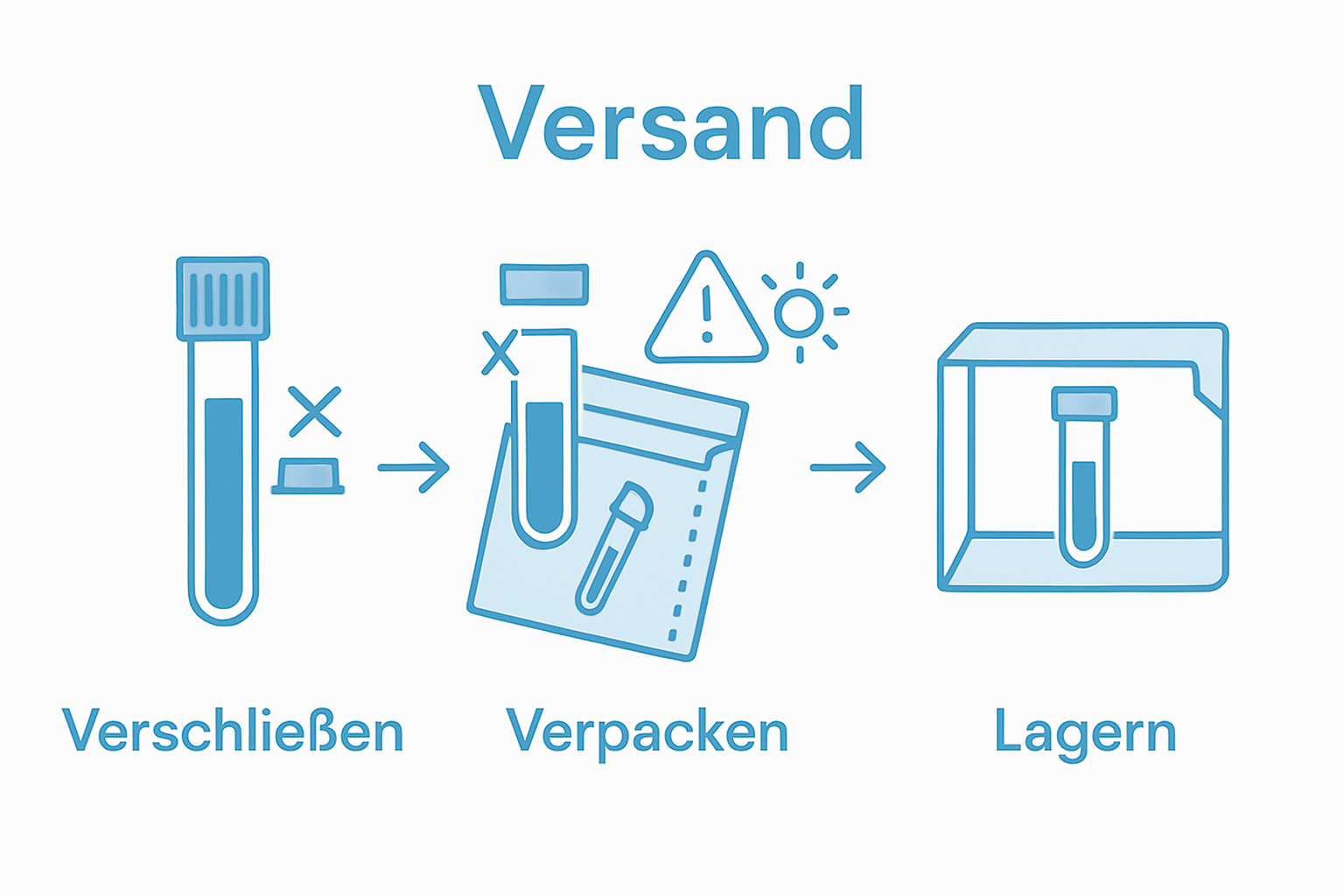
Carefully place the sample in the prepared shipping envelope. Make sure the sample container is transported securely and upright. Use the protective packaging provided to minimize shocks and temperature changes.
Important: Keep the sample in a cool, dark place until shipping. Avoid direct sunlight or extreme temperature fluctuations, which could affect the sample quality.
Step 4: Send the sample to the lab
The final step of your blood test is shipping it for precise laboratory analysis. This is where the quality of your results is determined.
First check all documents and labels for completeness. Carefully place the sample tube in the prepaid return envelope. Make sure the envelope is fully sealed and undamaged. Place the accompanying form separately but in the same envelope.
It’s best to use a postal mailbox or take the package directly to a post office. Avoid mailboxes in very hot or cold locations. Shipping your sample securely helps prevent contamination or damage to your blood sample.
Important: Send your sample as soon as possible after collection. The sooner the laboratory receives your sample, the more precise the analysis results can be.
Step 5: Review your results in the online portal
The most exciting moment of your blood test has arrived. With your personal micronutrient analyses, you can now gain a clear understanding of your health.
Log in to the online portal using your credentials. There you’ll find a detailed report of your blood test results. Pay particular attention to the charts and comparison values, which help you interpret your results comprehensively. Each value is clearly displayed and compared with reference ranges.
The results provide you with not only numbers but also specific recommendations. If you see out-of-range values, you’ll find directly related suggestions for your diet or lifestyle. This allows you to take an active role in improving your health.
Important: Don’t be alarmed by values that are slightly out of range. If you have concerns or medical questions, contact a doctor you trust for a professional interpretation.
Optimal health starts with precise at-home tests
Performing a blood test correctly at home is essential for reliable results and for identifying micronutrient deficiencies or other health concerns. Many people find it challenging to collect a blood sample correctly and send it safely to a laboratory. Uncertainty during sample collection or fear of inaccurate results can make it harder to take steps toward better health.
At-home health tests – Discover all tests - mybody®x overcome this obstacle. Our professionally designed kits and comprehensive instructions make testing simple and safe. Your sample is analyzed with the utmost precision in ISO-certified laboratories. This gives you reliable results and personalized recommendations to help you sustainably improve your diet and lifestyle.
Discover our range of tests, from micronutrients and hormones to intolerances, at mybody-x.com. Don’t wait—take control of your health with accurate and convenient at-home testing.
Frequently asked questions
How do I prepare my workspace for an at-home blood test?
To prepare your workspace for a blood test at home, find a quiet, stable table with enough space. Set out all the materials you need, such as the test kit, disinfectant wipes, and small containers, and make sure your hands are thoroughly washed.
What steps does blood collection involve according to the instructions?
The blood collection involves several steps: Disinfect the puncture site, prick the side of your finger with the lancet, and gently press to form a drop of blood. Make sure to place the drop of blood directly onto the test strip or into the sample tube to ensure accuracy.
How do I seal the blood sample correctly?
After collecting the blood, it is important to seal the sample tube or test strip correctly. Make sure it is not exposed to air, label the sample with the date and time, and place it securely in the mailing envelope to protect it from contamination.
When should I send my blood sample to the lab?
Send your blood sample as soon as possible after collecting it. Ideally, it should be shipped within 30 minutes to 1 hour to maximize the accuracy of the analysis results.
How do I check my blood test results in the online portal?
Simply log in to the online portal with your login details to view your analysis results. The report shows you detailed values and comparison data, making it easy to interpret the results and, if necessary, take steps to improve your health.
Recommendation
- At-home stool test: How to check your gut health | MYBODY-X – mybody®x
- Irritable bowel syndrome test: Finally get clarity about your gut – mybody®x
- Guide: Capillary blood test – measure your blood values at home – mybody®x
- Get your testosterone tested: Simply and discreetly from home – mybody®x
- Changing household batteries: Step-by-step guide - accu.blog


