
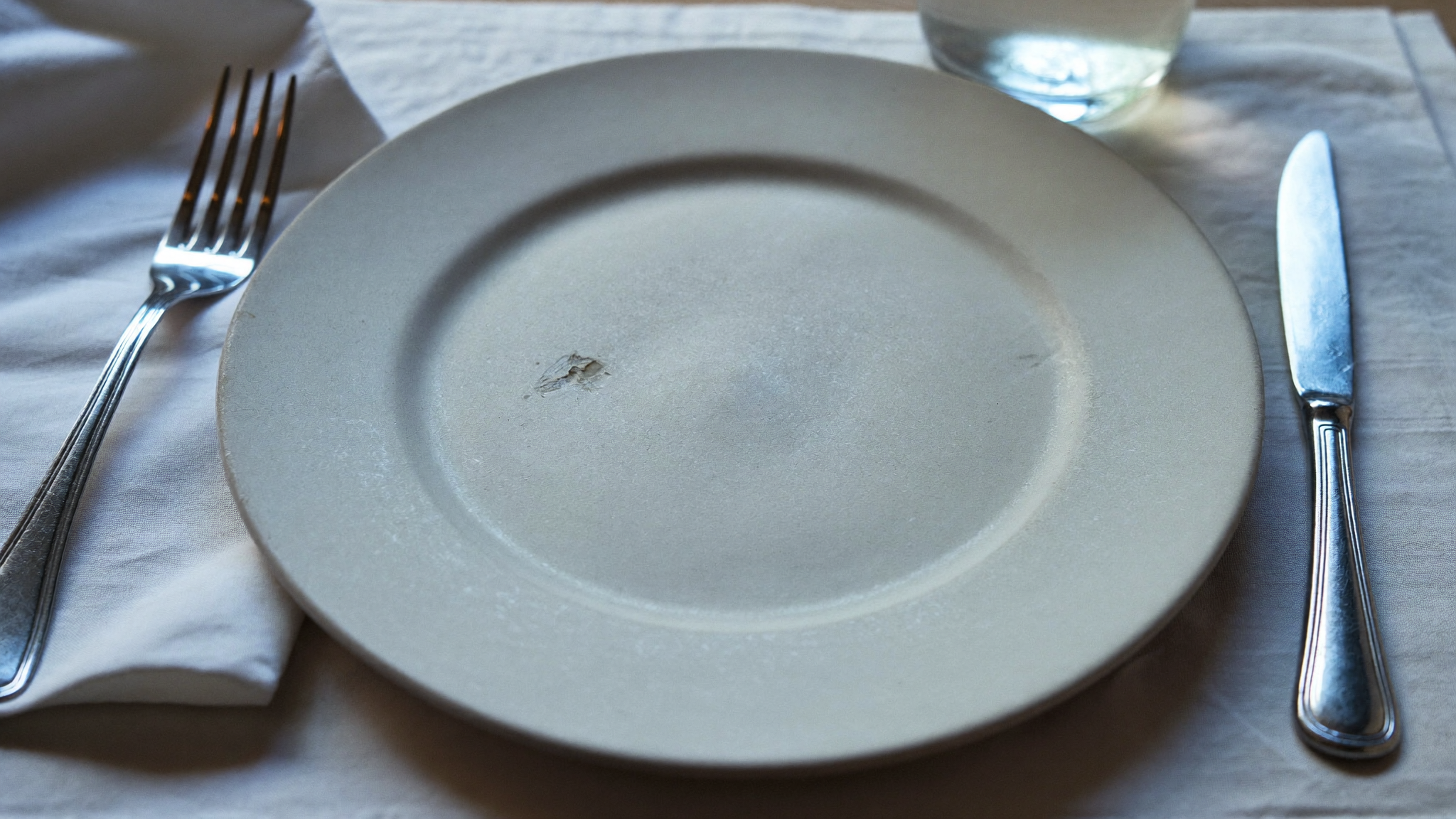
Fasting for a blood draw: what is and is not allowed
The essentials at a glance
Fasting means: do not eat anything for at least 6 to 8 hours. Water is usually permitted and even advisable, but coffee is not, not even black coffee. And medications should not be stopped on your own; discuss them beforehand instead.
This article summarizes what is otherwise spread across many individual questions: the hours, the drinks, the exceptions, and the question of which values it actually matters for. After all, fasting is by no means necessary for every blood draw.
First, you will read what fasting exactly means, followed by the rules for drinking, smoking, and medications, an overview in table form, why it matters for some values, and what happens if you forgot after all.
What to expect in this article
1. What fasting exactly means
2. Drinking, smoking, brushing your teeth: individual questions
3. Medications and dietary supplements
4. The overview at a glance
5. Why it matters for some values
6. What to do if you forgot
7. What applies to at-home self-tests
8. What you will take away from this article
Frequently asked questions
Sources
What fasting exactly means
Hardly any phrase in everyday medical practice prompts as many follow-up questions. “Please come fasting” is written on the appointment slip, and from then on the guessing begins: From when? Does water count? The latte on the way? The sugar substitute in chewing gum?
The basic rule is reassuringly clear, and it comes from the Institute for Quality and Efficiency in Health Care:
Documented source
“However, you should not eat anything at all during at least the last 6 to 8 hours before the examination or operation begins.”
Institute for Quality and Efficiency in Health Care (IQWiG)
What does “fasting” mean?, as of 27 March 2024
In practical terms, for an appointment at eight in the morning: dinner at 10 p.m. is no problem, but a late-night snack at 2 a.m. is not. If your appointment is late in the morning, do not reschedule breakfast—skip it instead; it is otherwise hardly possible to observe six to eight hours in the morning.
Key message
Do not eat anything for six to eight hours; water is usually permitted. However, the medical practice or laboratory that scheduled the appointment will always tell you what applies in your individual case.
The last sentence is more important than anything else in this article. The exact requirements depend on the specific examination and should therefore be discussed with the medical practice (IQWiG, 2024). If your instructions differ from what is stated here, follow your instructions.
Why the time of your appointment makes a difference
Six to eight hours sounds like a fixed amount of time, but in everyday life it is primarily a matter of appointment planning. If your appointment is at half past seven, all you need to do is stop eating after dinner and leave in the morning without breakfast. If you only get a slot in the late morning, you face a different challenge: breakfast is skipped, and the hours beforehand are long.
That is why the first practical recommendation is as simple as it is effective: When scheduling the appointment, ask for an early-morning slot if you are supposed to arrive fasting. In many practices, this is easily possible because fasting blood draws are routinely grouped in the morning anyway.
For people who work shifts, the rule applies in principle, not literally. Anyone who works at night and sleeps in the morning is not in the classic fasting state after waking up. What matters here is the time since the last meal, not the time of day. Mention this when scheduling the appointment; the results can only be interpreted later if the conditions are known.
And one point that many people underestimate: staying fasting for longer does not make the results more informative. Anyone who stops eating as early as the afternoon out of caution puts their metabolism in a different state from the one for which the reference ranges were established. The instruction is a sensible minimum, not a competition.
Drinking, smoking, brushing your teeth: the individual questions
Water is the good news. It is generally allowed, and a glass of plain water is often still unproblematic two to three hours before the examination (IQWiG, 2024). What is more, being adequately hydrated often makes drawing blood easier because the veins are easier to see. Anyone who arrives fasting and thirsty as well makes things harder for everyone involved.
Coffee and tea, on the other hand, count as food, not as drinks. This also applies to black coffee without milk or sugar: caffeine affects circulation and metabolism, and for that reason alone, it is not a good idea before a blood draw. If you cannot leave the house without coffee, schedule the appointment early and drink it afterward.
Alcohol should be avoided at least the evening before, and preferably for 24 hours beforehand. It significantly affects several values, including liver values and blood lipids. A glass of wine the evening before a liver-function test can change exactly the result that is supposed to be checked.
Chewing gum and sweets count as food, including sugar-free varieties. Chewing starts the digestive process, and sugar substitutes are not without effect. Brushing your teeth, on the other hand, is unproblematic as long as you do not swallow the toothpaste.
Smoking should also be avoided. You should refrain from it before an operation anyway (IQWiG, 2024), and before a blood draw, nicotine affects circulation and individual values. Exercise the morning beforehand is also not a good idea: Exertion can temporarily increase muscle enzymes and thereby alter values that would otherwise be unremarkable.
The gray area: Flavored water, broth, intermittent fasting
Between “water yes” and “food no” lies a zone in which the answers vary. This includes water with lemon, spritzers, broth, and flavored calorie-free drinks. The safest interpretation is the strict one: plain water, still or sparkling, and nothing else.
The reason is not strictness for its own sake. Broth contains salt and protein components, spritzers contain sugar, and with flavored drinks it is often unclear exactly what they contain. Each of these ingredients can shift a test result, and afterward you will not know which one did.
People who eat at regular intervals generally have it easier here than others. The eating window can usually be shifted so that the appointment falls during the fasting phase anyway. One note, however: Those accustomed to very long periods without food should have the time of their last meal ready when asked. An unusually long break represents a different starting condition from a normal night, and both belong in the interpretation.
Medication and dietary supplements
The most important rule here is a prohibition: Never stop taking a medication on your own because you are supposed to fast for a blood draw. Whether a preparation should be taken or omitted before the draw is decided by the prescribing practice, and the answer depends on the medication and the purpose of the examination.
A common misunderstanding concerns the term itself: If a medication is to be “taken on an empty stomach,” that does not mean the same thing as being fasting for a blood draw. It means taking it before a meal, and having a sip of water with it is, of course, perfectly fine (IQWiG, 2024). After taking it, you should wait at least 30 minutes before eating.
Dietary supplements require particular caution. High-dose biotin, often found in preparations for skin, hair, and nails, can distort certain laboratory measurements. Therefore, all preparations you take should be reported before the blood draw, including those you consider harmless. Do not leave them out silently; mention them.
Anyone with diabetes who takes insulin or blood-sugar-lowering medication should always clarify the procedure beforehand. Remaining fasting for a long time is not harmless in this situation, and the practice will coordinate the appointment and medication accordingly.
Children, pregnant people, older people
The general rule is intended for healthy adults. It applies only to a limited extent to children, because long fasting periods are more taxing for them. Practices and clinics therefore provide their own instructions based on age and examination. These instructions are authoritative, not what is written somewhere online for adults.
During pregnancy, some examinations require fasting as part of the procedure, while others explicitly do not. Here too, the instructions come from the supervising practice. Extending the fasting period on your own is not a good idea during pregnancy.
For older people, the issue is less avoiding food than drinking. The sensation of thirst decreases with age, and anyone who also avoids water out of caution may arrive poorly hydrated. This is unfavorable for the blood draw because the veins are harder to find, and it is also bad for circulation. Water is allowed, and it is particularly advisable for this group.
The overview at a glance
The table summarizes what is covered in the preceding chapters. It serves as general guidance; if in doubt or if instructions differ, always follow what the practice or laboratory tells you.
| What | Allowed? | Why |
|---|---|---|
| Water, unsweetened | generally yes | provides no energy and makes the blood draw easier |
| Coffee, including black coffee | no | Caffeine affects circulation and metabolism |
| Tea, unsweetened | better not | Black and green tea contain caffeine; ask about herbal tea if in doubt |
| Juice, soda, milk | no | contain energy and mainly alter blood sugar and blood lipids |
| Alcohol | no, preferably avoid it for 24 hours beforehand | affects liver values and blood lipids, among other things |
| Chewing gum, candy | no, even sugar-free gum or candy | Chewing starts digestion; sweeteners are not ineffective |
| Brushing your teeth | yes | as long as the toothpaste is not swallowed |
| Smoking | no | Nicotine affects circulation and individual values |
| Exercise the morning before | better not | Physical exertion can temporarily increase muscle enzymes |
| Medication | only after consultation | never omit them on your own; the prescribing practice decides |
Chapter at a glance
Do not eat anything for at least 6 to 8 hours (IQWiG, 2024). Water is generally allowed and makes the blood draw easier; coffee and tea count as food. Avoid alcohol for approximately 24 hours beforehand, as well as chewing gum and smoking. Never stop taking medication on your own; discuss it beforehand instead.
Two things stand out in this table. First, the right-hand column gives almost the same reason everywhere: It's about the comparability of the measurement, not rules for their own sake. Second, there are hardly any strict prohibitions, but mainly things you should mention. That's the real key: Not every deviation ruins the appointment, but every unmentioned deviation makes the result uncertain.
If you look at the table again before your appointment, it's best to do so the evening before. At that point, you can still influence most things: the glass of wine, the late snack, the workout the next morning. In the morning itself, the list is shorter, because all that remains is water, brushing your teeth, and avoiding coffee.
Why it matters for some values
Fasting is not a ritual but serves a specific purpose: Some values change so significantly after eating that they would not be comparable without this requirement. The best-known examples are blood sugar and triglycerides, the fats from food in the blood. Both rise significantly after a meal and only fall again over the course of several hours.
Fasting makes values comparable, not better.
This sentence dispels a common misunderstanding: Coming in fasting doesn't produce better values, but reliable ones. The purpose is comparability, so that today's value matches the reference range and your value from last year. If you cheat, you are undermining the meaningfulness of your own result.
The opposite is just as important: For many values, it makes no difference. A complete blood count, inflammation markers, thyroid values, iron status, and many vitamins can also be measured after breakfast. That's why some appointment slips don't mention fasting—and that's not an oversight but a deliberate decision.
What this means for you: Ask if it isn't stated. A call to the practice takes two minutes and saves you either an unnecessary restriction or a second appointment. You can read what the individual values mean in the Biomarker Lexicon with 67 Explained Blood Values.
Fasting value and random value are two different things
The same measurement sometimes appears under different names in test results. For blood sugar, there is the fasting value and the random value—that is, a measurement taken at any time of day regardless of when you last ate. Both are valid measurements. They answer different questions and are measured against different reference ranges.
This explains an observation that irritates many people: Two values measuring the same thing can differ widely without either of them being wrong. What matters is that the record states the conditions under which the measurement was taken. That is exactly what the question about when you last ate is intended to establish, and exactly why an honest answer is worthwhile.
The same applies to blood lipids. Whether they are measured while fasting or not depends on the question being asked; both variants are used. Which one applies to you is decided by the practice issuing the order, not by a general rule from a guide.
For you, this mainly means one thing: Compare your values with values obtained under the same conditions. A fasting value from today next to a random value from two years ago does not produce a trend line but an optical illusion.
What to do if you forgot
It happens, and it is not a disaster. The coffee out of habit, the bread roll on the way, the juice while brushing your teeth. What matters is what you do afterward, and that is simple: Say so. Before the blood draw, not afterward.
The practice then decides whether the appointment should go ahead anyway, whether only some of the values should be determined, or whether a new appointment would make more sense. All three options are fine. The fourth is not: staying silent and hoping. A blood sugar value after breakfast that is entered in the record as a fasting value can lead to a suspected diagnosis that nobody needs.
The same applies to the other points: the glass of wine last night, the workout in the morning, the new product from the drugstore. Mentioning them makes the results interpretable. Concealing them creates a puzzle that may then have to be solved with another examination.
If you regularly feel dizzy during blood draws
Some people react to blood draws with dizziness or circulatory problems, and experience shows that being fasting does not make this easier. Only one sentence is important here, and it should be addressed to the staff before the needle comes: Say that it has happened to you before.
The blood is then drawn while you are lying down rather than sitting, and afterward you remain lying down for a few more minutes. This is not special treatment but routine. Anyone who conceals it and then collapses in the waiting room gains nothing from it, and neither does the practice.
Having had enough to drink helps twice in this situation: the veins are easier to find, and your circulation is more stable. Water is allowed, and in this situation, it is more than allowed. If you know you can eat something after the blood draw, pack a small breakfast and eat it right afterward in the waiting area.
What applies to at-home self-tests
The same rules apply to tests you perform at home, but no one reminds you of them. If a test includes values that should be measured while fasting, this is stated in the instructions, and those instructions are not a recommendation but a prerequisite for ensuring that your result matches the reference range.
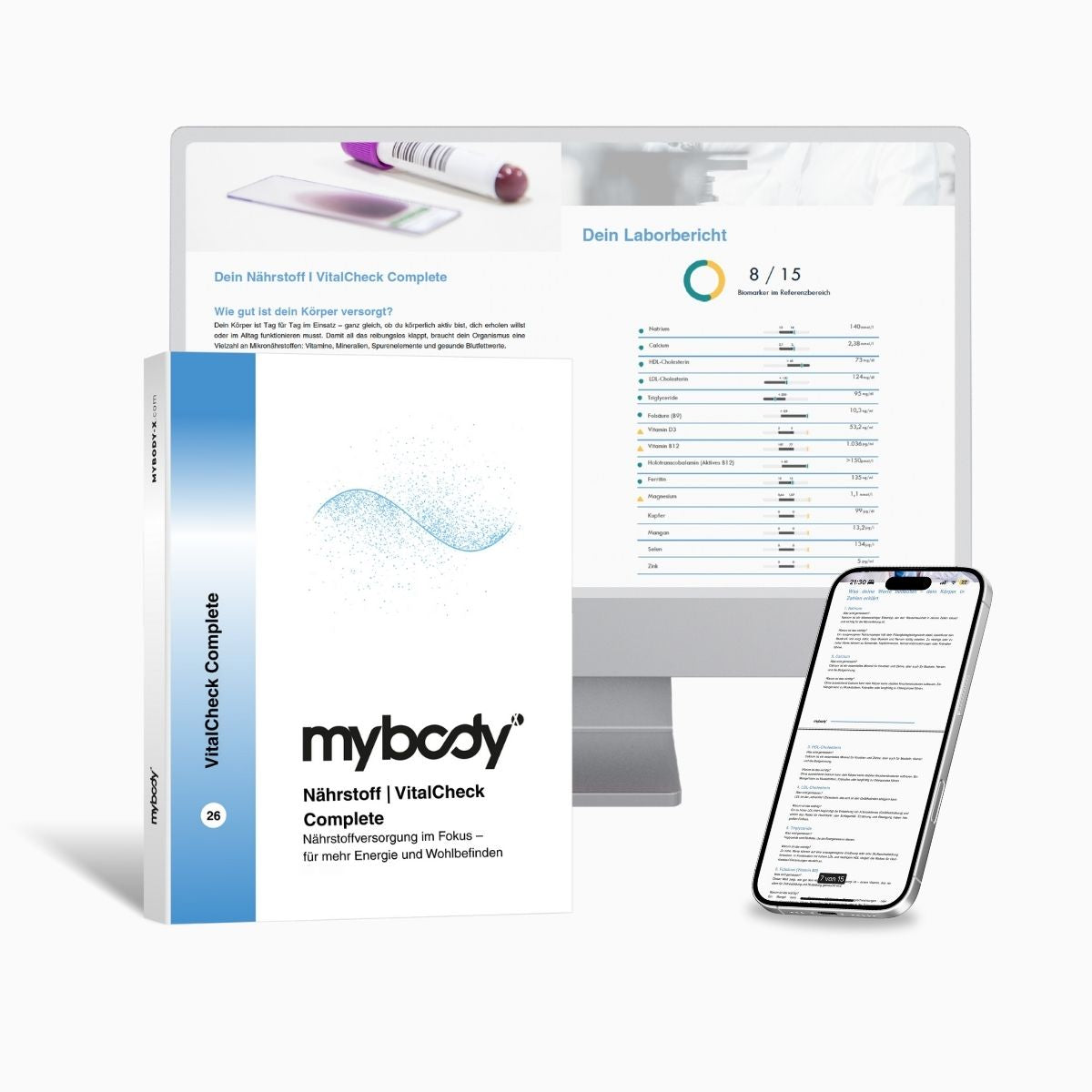
In practical terms, this means collecting the sample in the morning, before breakfast, with water as the only beverage beforehand. If you also drink enough fluids and keep your hands warm, it is easier to collect sufficient capillary blood from the fingertip. At mybody®x (MYBODY Lab GmbH), this is described accordingly for VitalCheck, with the analysis performed in an ISO-certified laboratory in Germany.
Capillary blood test
VitalCheck | Complete Nutrient & Mineral Test
18 biomarkers from capillary blood with a digital report. The instructions specify what to consider before collecting the sample. What the test does not do: It does not provide a diagnosis or replace a medically ordered blood test.
Laboratory analysis 3–5 business days after receipt of the sample
Product page information, accessed on 08/26/2026
The article Laboratory Value Abbreviations explains how to read the results afterward., which translates the common abbreviations in a table.
What a home test can and cannot do
A self-test is a snapshot taken under conditions that you create yourself. That is both its advantage and its limitation. The advantage: You choose the time and can follow the instructions calmly, without a waiting room or time pressure. The limitation: No one is standing beside you to notice if something is not done according to the instructions.
That is why capillary blood tests require the same care as in a medical practice—and in one respect, even more. The sample should be sent promptly, because the time between collection and receipt by the laboratory matters. If you prick your finger on Friday evening and leave the sample over the weekend, you may have done everything right initially and still end up with an uncertain result.
And the sentence that applies to every test, regardless of who provides it: A self-test result is an assessment, not a diagnosis. It does not replace a medically ordered examination, nor does it answer any question that belongs in a medical practice. What it can do is provide a basis for a more targeted visit.
What you will take away from this article
If you remember one thing, remember these three numbers and one word: 6 to 8 hours without food, water is fine. Everything else is an exception, and for those the guiding principle is: What the practice or laboratory tells you takes precedence over every guide, including this one.
And keep the purpose in mind: It is about comparability, not better values. Once you understand that, you follow the instruction not as a chore, but because it benefits you. A value obtained under the same conditions as its reference range is the basis for any meaningful interpretation.
It started with the appointment slip bearing the word “fasting” and the puzzlement that followed. That question has now been answered, and the rest is a two-minute phone call. If you first want to know where you stand, the consultation is free and does not try to sell you anything.
Frequently asked questions
How long before having blood drawn must I stop eating?
You should not eat anything for at least 6 to 8 hours before the test (IQWiG, 2024). For an early-morning appointment, your usual dinner is generally sufficient; skip breakfast. If your practice's instructions differ, follow them because the practice knows the specific test.
Can I drink water before having blood drawn?
Generally, yes. A glass of plain water is often still fine 2 to 3 hours before the test (IQWiG, 2024). It provides no energy and does not affect the usual fasting values. Being well hydrated can even make the blood draw easier because the veins are easier to see.
Is black coffee without sugar allowed?
No. Even without milk and sugar, coffee contains caffeine, which affects circulation and metabolism. For the values to be comparable, it therefore counts as food, not a drink. If it is hard to imagine the morning without coffee, an appointment as early as possible helps: Afterward, there is no reason not to have it.
Which blood values require fasting at all?
Especially where values respond strongly to meals, such as fasting blood glucose and triglycerides. For many other tests, fasting is not necessary, including a complete blood count, inflammation markers, thyroid values, and iron values. The practice that ordered the test can tell you whether it matters in your case.
What should I do if I accidentally ate?
Tell them before the blood is drawn. The practice will then decide whether the appointment should go ahead, whether only some of the values should be measured, or whether it would be better to schedule a new appointment. Concealing it is the only truly bad option, because a value obtained when you were not fasting but documented as a fasting value can lead to an incorrect assessment.
Next step
If you want to determine your values at home
VitalCheck Complete measures 18 biomarkers from capillary blood and includes sampling instructions and a digital report. The Biomarker Lexicon explains what the individual values mean.
Go to VitalCheck Complete Go to the Biomarker LexiconRead more
You might also be interested in
The appointment procedure itself, step by step.
Which values are included and what they indicate.
Sources
- Institute for Quality and Efficiency in Health Care (IQWiG): What does “fasting” mean? (as of 27.03.2024) – gesundheitsinformation.de
The literal quotation regarding the 6 to 8 hours, the recommendation to drink a glass of plain water 2 to 3 hours beforehand, the note about smoking before an operation, the explanation of taking medication on an empty stomach, and the general principle of discussing the exact requirements with the practice are taken from [1]. The classification of individual drinks, chewing gum, exercise, and alcohol in the table is general guidance; the practice's or laboratory's instructions always take precedence. Information on price, sample type, biomarkers, and laboratory comes from the mybody®x product page, accessed on 26.08.2026; processing times follow the central specification for each test type. All sources were accessed and checked on 26.08.2026.

mybody®x Editorial & Expert Team
Blood analysis interpretation Laboratory diagnostics Nutritional science
This article was created by the mybody®x editorial and expert team. The team combines the interpretation of blood analyses, laboratory diagnostics, and nutritional science. The people who contribute to it are listed on the authors page.
Published on 26.08.2026 · Last updated on 26.08.2026
The content is for general information and does not replace medical advice, diagnosis, or treatment. The practice's or laboratory's instructions always determine how to prepare for a blood draw—they know the specific examination.

Share now:
Losing weight after 60: what really matters now
Hormones and Skin: What’s Connected and What Isn’t