

Testing for nutrient deficiencies: How to identify what your body is lacking
A deficiency of important nutrients often develops quietly. But your body speaks clearly when it is lacking something. Persistent fatigue, hair loss, or ongoing difficulty concentrating are often the first, loud warning signs of an underlying nutrient deficiency. If you interpret these symptoms correctly, you are already well on your way to finding the cause and taking targeted action.
Interpreting the body's warning signs correctly
Do you often feel completely exhausted for no apparent reason? Do you find it difficult to focus? Sure, it is easy to blame everyday stress. But much more often, a tangible deficiency of important building blocks such as iron, vitamin B12, or magnesium is behind it. Listen to your body—these signals are not imagined; they are its way of drawing attention to an imbalance.
Nutrient deficiency symptoms can manifest in countless ways and are not always obvious at first glance. They range from very noticeable physical problems to subtle mental changes.
From fatigue to brittle nails
Pay deliberate attention to recurring patterns. You may suddenly notice your brittle nails, your skin may feel dry, or you may seem to catch every infection going around. Even small, cracked corners of the mouth (angular cheilitis) can be a simple but clear indication of an iron or B-vitamin deficiency. Each of these symptoms is a small piece of the puzzle that helps you understand the bigger picture.
A small practical tip: Keep a symptom diary. For two to four weeks, simply note when each symptom occurs and how severe it is. It may sound like a lot of effort, but it is an incredibly valuable aid when talking to your doctor or therapist.
This is not a rare phenomenon, by the way. Data from the Federal Statistical Office reveal a disturbing reality: Approximately 25% of hospital patients in Germany are malnourished or at high risk of malnutrition. This highlights how fundamental good nutrient intake is for our health. If you are interested in the figures in more detail, you can find more information in the statistics on malnutrition.
Here is a brief overview to help you better identify common deficiencies and their typical signs:
Common deficiencies and their typical symptoms
An overview of the most important vitamins and minerals, their functions in the body, and the most common signs of a deficiency.
| Nutrient | Typical deficiency symptoms | At-risk groups |
|---|---|---|
| Iron | Pale skin, fatigue, brittle nails, hair loss, difficulty concentrating | Women (menstruation), pregnant women, vegetarians/vegans, athletes |
| Vitamin B12 | Exhaustion, numbness, tingling, memory problems, burning tongue | Vegans, older people, people with gastrointestinal disorders |
| Vitamin D | Fatigue, muscle weakness, bone pain, increased susceptibility to infections | People with little sun exposure, older people, people with dark skin |
| Magnesium | Muscle cramps (e.g., calf cramps), nervousness, sleep disorders, headaches | Athletes, people under stress, diabetics, alcohol consumption |
| Zinc | Weakened immune system, poor wound healing, skin problems (acne), hair loss | Vegetarians/vegans, people with chronic intestinal diseases |
This table gives you an initial indication. Ultimately, a test provides the clarity needed to confirm suspicions.
The link between deficiency and lack of motivation
That persistent fatigue that feels like a leaden blanket is a classic sign of nutrient deficiencies. When even the smallest task becomes a huge hurdle, quality of life suffers enormously. A targeted nutrient deficiency test can be the decisive step toward finally gaining clarity and regaining your energy. Learn more about how you can uncover the link between nutrient deficiencies, fatigue, and lack of motivation.
Ultimately, the goal is not just to treat the symptoms but to tackle the root of the problem. Early diagnosis prevents a deficiency from worsening and gives you back control over your health.
Which nutrient test is right for you?

Do you feel like something is missing and finally want certainty? Great, you have taken the first step. But now you face the next question: Which test is actually right for you and your concerns? The world of diagnostics is vast—from blood and urine to saliva and hair analyses. Each method has its own characteristics, and not every test is suitable for every nutrient.
Unfortunately, there is no universal “everything checker.” Choosing the right test depends entirely on your symptoms, your life situation, and the suspected deficiency. So it is less a shot in the dark and more a targeted approach.
Blood, urine, or saliva—which is actually useful?
For most nutrients, the blood test is by far the most common and informative method. It gives you a clear picture of the vitamins and minerals currently circulating in your body. But be careful—even here, subtle differences can determine whether the result is accurate or misleading.
A typical example that often leads to misunderstandings is the measurement of minerals such as magnesium or potassium. A standard analysis of blood serum (the liquid component of blood) measures only what is floating outside your cells. The problem? Most of these important minerals are located inside the cells. As a result, your serum level can appear completely normal while a significant deficiency is already present inside the cells.
Here, an analysis of whole blood is often the much better choice because it provides a far more complete picture of your nutrient status. It is therefore worth checking carefully beforehand which analysis method is recommended for the nutrient you want to measure. If you would like to explore the topic in greater depth, our article explains how a blood test can reveal your nutrient deficiency.
Of course, other testing methods also have their place:
- Urine tests: Great for checking the excretion of certain substances. Think iodine or water-soluble vitamins. They show how your body is currently processing and excreting these nutrients.
- Saliva tests: They are particularly popular in hormone diagnostics. However, for measuring minerals, they are often less reliable than a good blood test.
- Hair mineral analyses: They are like a diary of your nutrient status. They can show long-term exposure to heavy metals or trace-element levels over several months, but they do not reflect your current status.
For most vitamins and minerals, a blood test is considered the gold standard. Especially when a deficiency in vitamin D, vitamin B12, or iron is suspected, it provides the most reliable results for an initial assessment.
At-home test or would you rather see a doctor?
The next big question: Do you take a test conveniently at home, or do you go the traditional route through a doctor or laboratory? Both have their place; it all depends on your goal.
At-home tests for your own four walls: These kits, usually designed as dried blood spot tests involving a small finger prick, are incredibly convenient. You collect the sample yourself, whenever and wherever you want, and simply send it to a laboratory. Ideal for an initial screening or if you want to regularly monitor known levels such as vitamin D. The quality naturally depends entirely on the provider and the certified laboratory they work with.
Laboratory analysis by a doctor or naturopath: This option provides comprehensive care. Your doctor knows your medical history, can select the right parameters based on your symptoms, and evaluate the results directly in context. The downside: If there is no clear medical necessity, the costs may be higher, and it naturally requires more time and effort.
Your decision therefore depends on what you need. Would you like a quick overview and feel confident interpreting the results yourself? Then an at-home test is a great option. But if you are looking for a comprehensive diagnosis with direct consultation and a treatment plan, seeing a specialist is the safer choice.
From the doctor’s consultation to the report: This is how a nutrient test works
Okay, you have decided to get to the bottom of the issue and have yourself tested for a nutrient deficiency. Great, that is the first important step! But what happens next? Many people imagine the process as more complicated than it really is. We will guide you through it and show you what happens from the initial consultation with the doctor to the completed laboratory report.
It all starts with a consultation with your doctor or therapist. The aim is to develop a clear picture of your situation. The more precise your description, the better. What symptoms are you experiencing? Since when? What does your typical diet look like? Are you already taking any supplements? This information helps determine which range of tests makes sense—whether a basic screening is sufficient or a comprehensive nutrient profile is needed.
Preparing for sample collection
Once the decision has been made to have a blood test, the question usually arises: Do I need to fast? The answer is: It depends. For many values, especially iron and anything related to blood sugar, fasting is essential for the blood draw. This usually means 8–12 hours without eating so that the results are not distorted. Water or unsweetened tea are almost always allowed, however. Your doctor will tell you exactly what to do.
There are also a few things to keep in mind with other testing methods:
- Urine test: The first urine of the morning is generally used for this. It is the most concentrated and therefore provides a more accurate picture of what your body is excreting.
- Saliva test: You should not eat, drink, or brush your teeth shortly before collecting the sample.
- At-home tests (dried blood): A simple trick: Wash your hands thoroughly with warm water beforehand. This stimulates circulation and makes it much easier to obtain the blood drops.
This infographic illustrates very clearly how precise and thorough the laboratory process is—from receiving the sample to completing the analysis. 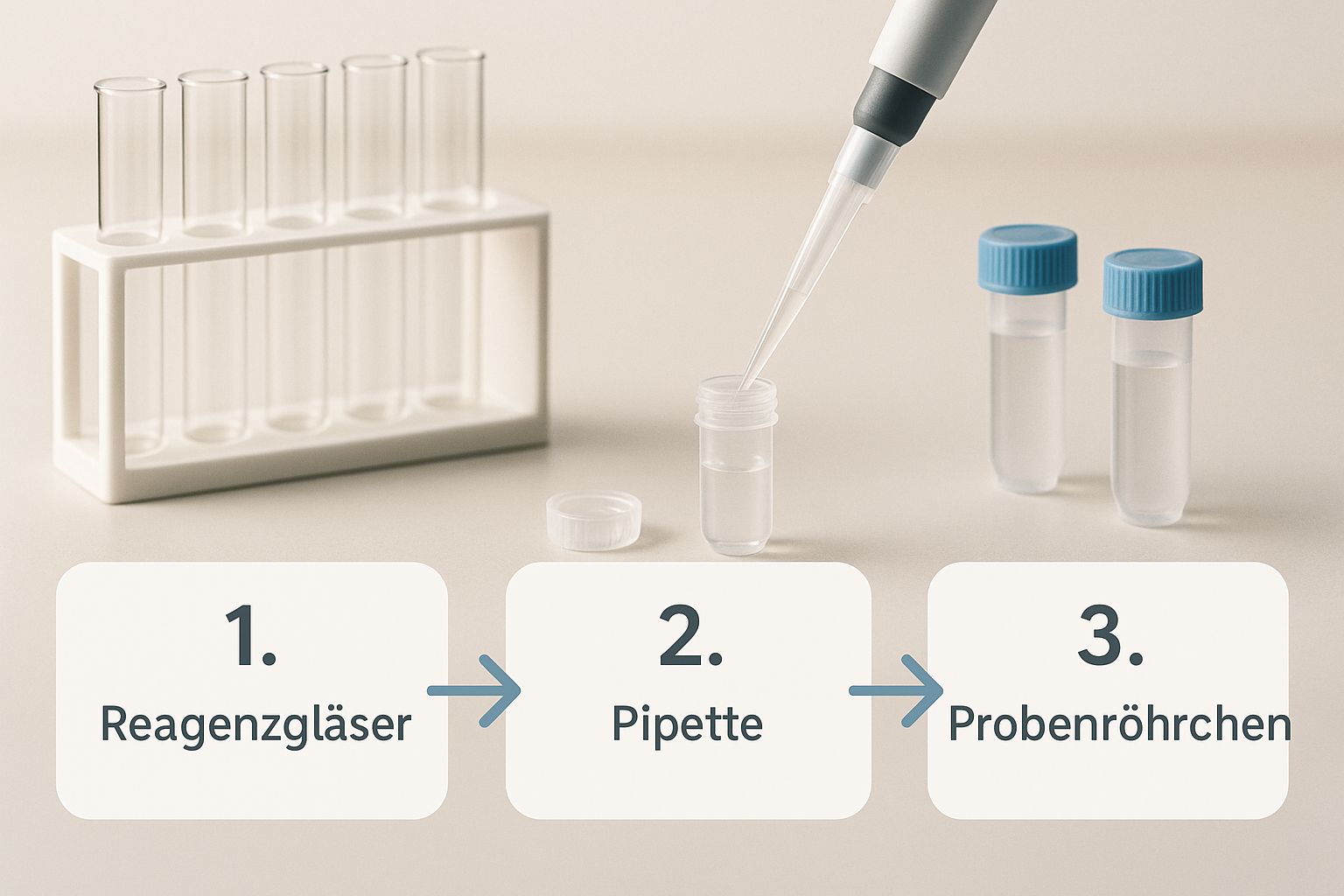 You can immediately see how important accuracy is for a reliable result.
An important practical tip: Avoid taking your dietary supplements for at least 24 to 48 hours before having your blood drawn. This is especially important for high-dose biotin (vitamin B7), as it can significantly distort the laboratory results for other values, such as thyroid hormones.
From analysis to the completed report
As soon as your sample has been collected, the actual work begins in the laboratory. Using modern analytical equipment, the concentration of each individual nutrient in your sample is determined with great precision. For you, this means waiting for now.
But how long does this take? The waiting time depends entirely on the scope of the analysis and the laboratory’s workload.
- Standard tests such as a complete blood count or individual vitamin tests are often available after just 1–3 business days.
- Comprehensive nutrient profiles or more specialized analyses (such as a whole-blood mineral analysis) may also take one to two weeks.
Once the lab report is complete, it is sent to your doctor or directly to you. This puts the key to improving your care in a targeted way in your hands. The next step is to read these numbers correctly and translate them into concrete measures.
Your lab results, finally explained clearly
At last, you are holding the report in your hands—a document full of numbers, abbreviations, and technical terms. But what do these values actually mean for you and your health? Don’t worry—we’ll help you shed light on the lab results and decode the flood of numbers.
Your report will generally contain one column with your personal values and another with the so-called reference ranges (or “normal ranges”). These ranges indicate which values were measured in 95% of a healthy comparison group. If your value falls within this range, it is officially considered “normal.”
Why normal is not always optimal
Here is the crucial point: “Within the normal range” does not necessarily mean that your value is also “optimal” for your personal well-being. Many experts agree that official reference ranges are often very broad. A value that just barely falls within the lower end of the normal range can already cause initial functional limitations and symptoms, even though it is still considered unremarkable statistically.
A typical example from practice: The reference range for ferritin (iron stores) in women is often between 15 and 150 µg/l. A value of 20 µg/l is therefore considered “normal,” yet countless women already report hair loss, fatigue, and concentration problems at levels below 50 µg/l. The goal should therefore not be merely to be “within the normal range,” but to aim for an individually optimal value.
Data from the German Nutrition Society (DGE) highlight how widespread suboptimal nutrient status is. Around 30% of the population has an inadequate supply of vitamin D, even though their levels may not yet qualify as a pathological deficiency. You can find more about these representative DGE data directly on its website.
Serum vs. whole blood—a small difference with a major impact
Another important aspect you may find on your test report is the type of sample. The analysis is usually performed using blood serum, the liquid portion of the blood. This is entirely sufficient for many values, such as vitamin D or hormones.
However, some minerals are found primarily inside the blood cells, not outside them. These include magnesium, potassium, and zinc in particular. Measuring them in serum can quickly lead to misleading results. Your serum level may appear completely normal, while a deficiency is already present in your cells—that is, where the nutrients are actually needed.
- Serum analysis: Measures the concentration in the liquid portion of the blood. It is well suited for most vitamins and hormones.
- Whole blood analysis: Measures the concentration in the entire blood, including the blood cells. It is significantly more informative for intracellular minerals such as magnesium or potassium.
So if you want to take a closer look at your mineral status, a whole blood analysis is often the more precise method. If in doubt, ask specifically for it.
Keep individual factors in mind
Laboratory values are only a snapshot and should never be considered in isolation. Your personal situation, lifestyle, and even your genetic predisposition play a decisive role in interpreting the results.
Factors such as chronic stress, intense exercise, certain medications, or your dietary habits can significantly affect your nutrient requirements. Genetic characteristics may also cause your body to absorb or metabolize certain vitamins less effectively. In our in-depth article, you can learn how a genetic nutrition test can provide insight into your individual needs.
So your test result is much more than just a collection of numbers. It is a valuable tool that helps you better understand your body's signals. Use it as a starting point to ask the right questions when discussing the results with your doctor or therapist, so you can find the best path to greater well-being.
From test result to a targeted action plan

A test result showing a deficiency is no reason to panic. Quite the opposite: It is a fantastic opportunity. Think of the result as your personal roadmap, showing you the direct path to more energy and well-being. Now it is time to take the right steps.
The first and most important measure is almost always to adjust your diet. This is where the greatest potential lies, because a balanced diet is and remains the foundation of healthy nutrient intake. So before reaching for capsules and powders, take an honest look at your meal plan.
Changing your diet as the foundation
Does your test show an iron deficiency? Then consciously include more lentils, spinach, or high-quality meat in your meals. Are you lacking magnesium? Reach for nuts, seeds, and whole-grain products. Your body is designed to make the best use of nutrients from real foods.
The challenge is that our modern eating habits often make it difficult to ensure adequate nutrition. The German National Nutrition Survey II shows, for example, that vegetable consumption in Germany often falls short of recommendations, while men in particular eat too much meat. You can find more about the fascinating findings on eating habits in Germany directly in the study.
Targeted supplementation when necessary
Sometimes diet alone simply isn't enough to correct a pronounced deficiency quickly and effectively. In this case, dietary supplements are an entirely sensible tool. However, it is important to approach this correctly:
- The dose makes the poison: More is not always better. An overdose, especially of fat-soluble vitamins such as vitamins A, D, E, and K, can harm your body. So strictly follow the recommendations based on your test results.
- Quality over quantity: Pay attention to bioavailability. This term describes how well your body can absorb and use a substance. For magnesium, for example, magnesium citrate is often more bioavailable than the cheaper magnesium oxide.
- Nutrients are team players: Nutrients rarely work alone. Vitamin D, for example, needs magnesium to be activated in the body in the first place. And iron is absorbed much better when you take it together with vitamin C.
Taking a single nutrient in isolation is rarely the best strategy. A holistic approach that also takes the most important co-factors into account usually leads to results more quickly and sustainably.
Another crucial factor for good nutrient absorption is a healthy gut. Even the best diet and the most expensive supplements are of little use if your gut cannot absorb nutrients properly. In our article, you can learn why your gut is the key to your well-being and how you can support it in a targeted way.
Keep track of your progress and avoid overdosing
Once you have started taking action, a little patience is required. It takes some time for the body's stores to be replenished. To check your progress while preventing an overdose, a follow-up test after some time is essential.
Depending on the deficiency and the dosage of the supplements, a follow-up test is generally recommended after three to six months. This test shows you in black and white whether your efforts are paying off and whether the dosage may need to be adjusted. This way, you can make sure you are on the right track without going to the other extreme. The whole process is a cycle: measure, take action, and measure again.
A few questions that keep coming up
When it comes to your own health, there are naturally always plenty of questions. Especially when it comes to nutrient deficiency tests, there are a few recurring questions that cause uncertainty. To make sure you are well informed, I have answered the most frequently asked questions here in a clear and easy-to-understand way.
Does health insurance cover the cost of a nutrient test?
We hear this question often—and rightly so, because cost is naturally an important factor. In the vast majority of cases, statutory health insurance providers cover the cost of a nutrient test only when there is a justified medical suspicion. This means your doctor must identify specific symptoms indicating a particular deficiency and then order the test.
If you simply want to check your status out of curiosity, this usually falls under so-called individual health services (IGeL). You generally have to pay for these yourself. Things are often somewhat better with private health insurance, but even then, it is always a good idea to ask in advance exactly what is covered.
How reliable are at-home nutrient tests?
The reliability of at-home tests is a hotly debated topic. The short answer is: it depends entirely on the test. Quality can vary considerably.
- Dried blood tests (capillary blood): For certain parameters, such as vitamin D or omega-3 fatty acids, these tests can deliver surprisingly accurate results. However, the prerequisite is that the analysis takes place in a certified specialist laboratory, as is the case with us.
- Saliva or urine tests: These are well suited to certain analyses, such as hormone diagnostics. However, when it comes to determining most minerals, they are often significantly less informative than a conventional blood test.
A high-quality at-home test is a fantastic first step. It can substantiate a suspicion or help you monitor the success of a treatment. However, it cannot replace a comprehensive medical diagnosis and the subsequent advice of an expert.
How often should you have your nutrient levels tested?
There is no general rule here—the ideal frequency always depends on your individual situation. However, there are a few useful guidelines you can follow.
For healthy people without particular risk factors or specific symptoms, a check-up as part of the annual preventive examination is often entirely sufficient.
The situation is different if a deficiency has already been diagnosed and you have started treatment. In that case, your doctor or therapist will very likely recommend a follow-up test. This usually takes place after three to six months. This makes it easy to check whether the treatment is working and whether the dosage may need to be adjusted.
During special phases of life, such as following a vegan diet, living with chronic conditions, or being pregnant, shorter testing intervals may also be advisable to ensure that you and your body are optimally supplied.
Would you like to quickly and easily gain clarity about your nutritional status? MYBODY Lab GmbH offers scientifically validated at-home nutrient tests analyzed in ISO-certified laboratories. Discover now how you can specifically optimize your health at https://mybody-x.com.



Share now:
Blood Test for Food Intolerances – Understand Your Body’s Signals