

What is examined in a complete blood count? Here’s the full overview
You have probably heard of a “complete blood count,” but what exactly does it involve? Think of it as a detailed health check for your body. It shows whether all the important areas—from energy supply to immune defense—are functioning smoothly. We will now take a look together at what is examined in a complete blood count and why this knowledge helps you understand your own health much better.
What your blood reveals about you
Think of your body as a huge, perfectly organized company. Your blood would then be the logistics network that continuously transports oxygen, delivers nutrients to every single cell, and reliably removes waste products. It is the lifeline that holds everything together and keeps it running.
But how do you know whether this complex system is actually functioning smoothly? This is exactly where the complete blood count comes in. It is much more than just a dry list of numbers—it provides deep insight into your body’s current state.
A window into your health
With the help of a blood analysis, doctors can draw conclusions about many fundamental processes in your body. The values provide information about how well you are supplied with oxygen, how your immune defense is doing, and whether your blood clotting is working properly. This knowledge is the basis for interpreting your body’s signals more effectively and taking active steps to support your well-being.
A complete blood count is not a general “everything check,” but a highly targeted analysis of the different blood cells. It focuses on the quantity, shape, and distribution of the most important cell types in your blood.
It provides very specific answers to important questions about your body’s functions:
- How well is my body being supplied with oxygen? This can be determined from the red blood cells and the blood pigment hemoglobin.
- How strong is my immune defense right now? The number and different types of white blood cells provide information about this.
- Is my wound healing working as it should? This is assessed by taking a closer look at the platelets.
Once you have read this article, you will not only know the individual terms. You will also have a much better understanding of what the results mean and how you can use them for your personal health goals.
The difference between a basic and a complete blood count
When your doctor suggests a blood test, you often hear the terms “basic” and “complete” blood count. But what is the actual difference? You can think of it very simply: the basic blood count is something like a quick preliminary check.
It provides an initial, basic inventory and examines the three main components of blood:
- Red blood cells (erythrocytes): They are the diligent oxygen taxis that supply every single cell in the body.
- White blood cells (leukocytes): They are the police force of your immune system, constantly on patrol to fend off intruders.
- Platelets (thrombocytes): The rapid response team that is immediately on hand when injuries occur to close wounds.
This basic check already provides a good initial overview of your general health. But to truly find out what is examined in a complete blood count, we need to go one level deeper.

The crucial addition: the differential blood count
The complete blood count is the specialist, the detective among blood analyses. It naturally includes all the values from the basic blood count, but adds one crucial component: the so-called differential blood count.
Here, the “immune police”—the white blood cells—are examined very closely and divided into their various specialized units.
A complete blood count is therefore not just about how many immune cells there are, but above all what type of cells are in action. This provides incredibly precise clues about what is currently happening in your body.
Each of these specialized units has its own role. Neutrophils, for example, are experts at fighting bacterial infections, while lymphocytes primarily combat viruses. This detailed breakdown enables a doctor to determine much more precisely whether it is a bacterial infection, an allergic reaction, or perhaps a virus after all.
The diagnosis is therefore much more targeted and goes far beyond the general impression provided by a complete blood count. If you are wondering how this accuracy affects the cost of a complete blood count, we have summarized the most important information for you. This in-depth analysis is precisely the invaluable added benefit of a complete blood count.
Your oxygen transport in detail: What red blood cells reveal
It is best to imagine your red blood cells, the erythrocytes, as a huge fleet of small oxygen taxis. They work tirelessly, traveling between your lungs and every single cell in your body and delivering the energy you need to live. Your performance, concentration, and general well-being depend directly on the efficiency of these small but vital helpers.
That is precisely why analyzing them is central to the question of what is examined in a complete blood count. This examination is one of the most common laboratory tests in Germany because, through the detailed analysis of various cell types and parameters such as hemoglobin and hematocrit, it provides valuable clues about a wide range of conditions—from simple anemia to hidden inflammation. If you would like to explore the subject in greater depth, you can find a comprehensive explanation of the complete blood count here.
The basic values for your energy
To get an accurate picture of your oxygen supply, we look at several values that come together like individual puzzle pieces to form an overall picture. Each value provides very specific information about your red blood cells.
The three most important measurements are:
- Hemoglobin (Hb): This is the red blood pigment that binds oxygen. You can think of it as the “seat” for oxygen in the taxi. A low value means that less oxygen is transported, which is often noticeable through fatigue and paleness.
- Hematocrit (Hct): This value indicates the percentage of all blood cells relative to the total blood volume. A value that is too low may indicate anemia, while a value that is too high makes the blood more viscous.
- Red blood cells (RBC): This simply counts the total number of your red blood cells. It is the first indication of whether there are enough “oxygen taxis” on the road at all.
These three cornerstones already provide a very good overview. But the complete blood count would not be “complete” if it did not go into even greater detail.
The indices: A look at quality
Beyond the absolute counts, the so-called red blood cell indices are determined. They reveal details about the condition and quality of your red blood cells and help narrow down the cause of any potential problems.
You can think of it this way: While hemoglobin and hematocrit measure the overall performance of your taxi fleet, the indices analyze how well each individual vehicle is equipped and loaded.
- MCV (Mean Corpuscular Volume): This value describes the average size of your erythrocytes. If they are too small (microcytic), iron deficiency is often the cause. If, on the other hand, they are too large (macrocytic), a vitamin B12 or folate deficiency could be responsible.
- MCH (Mean Corpuscular Hemoglobin): This measures how much hemoglobin is found on average in a single red blood cell—in other words, how much “cargo” each taxi carries.
- MCHC (Mean Corpuscular Hemoglobin Concentration): This value indicates how concentrated the hemoglobin is within the red blood cells. It helps put the two previous values into perspective.
These values work together, quite literally, like an orchestra. Based on how they interact, a doctor can determine not only whether anemia is present, but also draw very specific conclusions about its possible cause. This makes it clear why taking a close look at red blood cells is so important for assessing your daily energy and vitality.
Overview of red blood cell values
A summary of the most important parameters, their function, and what deviations may mean.
| Parameter | Function in the body | Possible significance of a deviation |
|---|---|---|
| Erythrocytes (RBC) | Transport of oxygen from the lungs to the cells | Too low: anemia, blood loss. Too high: dehydration. |
| Hemoglobin (Hb) | Protein in erythrocytes that binds oxygen | Too low: may indicate anemia, iron deficiency, or chronic diseases. |
| Hematocrit (Hct) | Proportion of blood cells in total blood volume | Too low: anemia, overhydration. Too high: dehydration, polycythemia. |
| MCV | Average size of red blood cells | Too low: iron-deficiency anemia. Too high: vitamin B12 or folate deficiency. |
| MCH | Average hemoglobin content per erythrocyte | Provides information about the “load” of each individual blood cell. |
| MCHC | Average hemoglobin concentration in erythrocytes | Used for more precise classification of anemias. |
Taken together, these values provide a differentiated picture of your oxygen supply and are therefore an indispensable part of preventive healthcare and diagnostics.
Your immune system explained in detail
The real key to the complete blood count is the detailed analysis of your immune cells—the so-called differential blood count. While the basic blood count only records the total number of all white blood cells (leukocytes), the complete blood count breaks down your personal security team in the finest detail.
Imagine your immune system as a highly specialized response team. Each specialist has a very specific task, and only by knowing who is currently on duty can you assess the situation correctly.
That is precisely what makes blood count analysis a central tool in medicine. According to the German Association of Laboratory Physicians, around 9 million laboratory test results are produced in Germany every day—a huge proportion of them being blood counts. This impressive figure shows how important this simple examination is to our healthcare system.
The specialists of your immune system
To understand what your doctor is looking for in a complete blood count, let’s take a look at the key players in your immune defenses. The respective number of these cell types reveals a great deal about the kind of threat your body is currently fighting.
-
Neutrophils: These are your body’s “first responders.” During a bacterial infection, such as tonsillitis, they are the very first to arrive at the scene. An increase in their number is therefore a strong warning signal of a bacterial attack.
-
Lymphocytes: These cells are your immune system’s memory. They specialize in defending against viruses and “remember” previous infections. If the same virus returns, they can react in the blink of an eye. Elevated lymphocyte levels therefore often indicate a viral illness such as the flu.
-
Monocytes: You could also call them the “cleanup crew” or the “big eaters” (macrophages). Their job is to remove cell debris, old cells, and pathogens. In a sense, they ensure that order is restored after a battle.
The specialists for allergies and parasites
In addition to these three main groups, there are two other specialists who are called into action mainly for very specific problems. Only the interaction of the entire team enables a precise interpretation of the immune response.
Put simply: An increase in neutrophils usually indicates bacteria, while elevated lymphocytes are more likely to point to a virus. The differential blood count makes precisely this crucial distinction visible.
Here are the other two experts:
- Eosinophilic granulocytes: Their numbers typically surge during allergic reactions such as hay fever. But they are also needed to defend against parasites, such as worms.
- Basophilic granulocytes: These cells also play a role in allergic processes and are known, among other things, for releasing histamine.
Analyzing these different cell types is therefore like a situation report, showing which challenges your body is currently responding to. If you would like to delve even deeper into the fascinating world of the body's defenses, you can read here how exactly the immune system works.
The following graphic provides an overview of another important component of your blood: blood platelets, or thrombocytes.
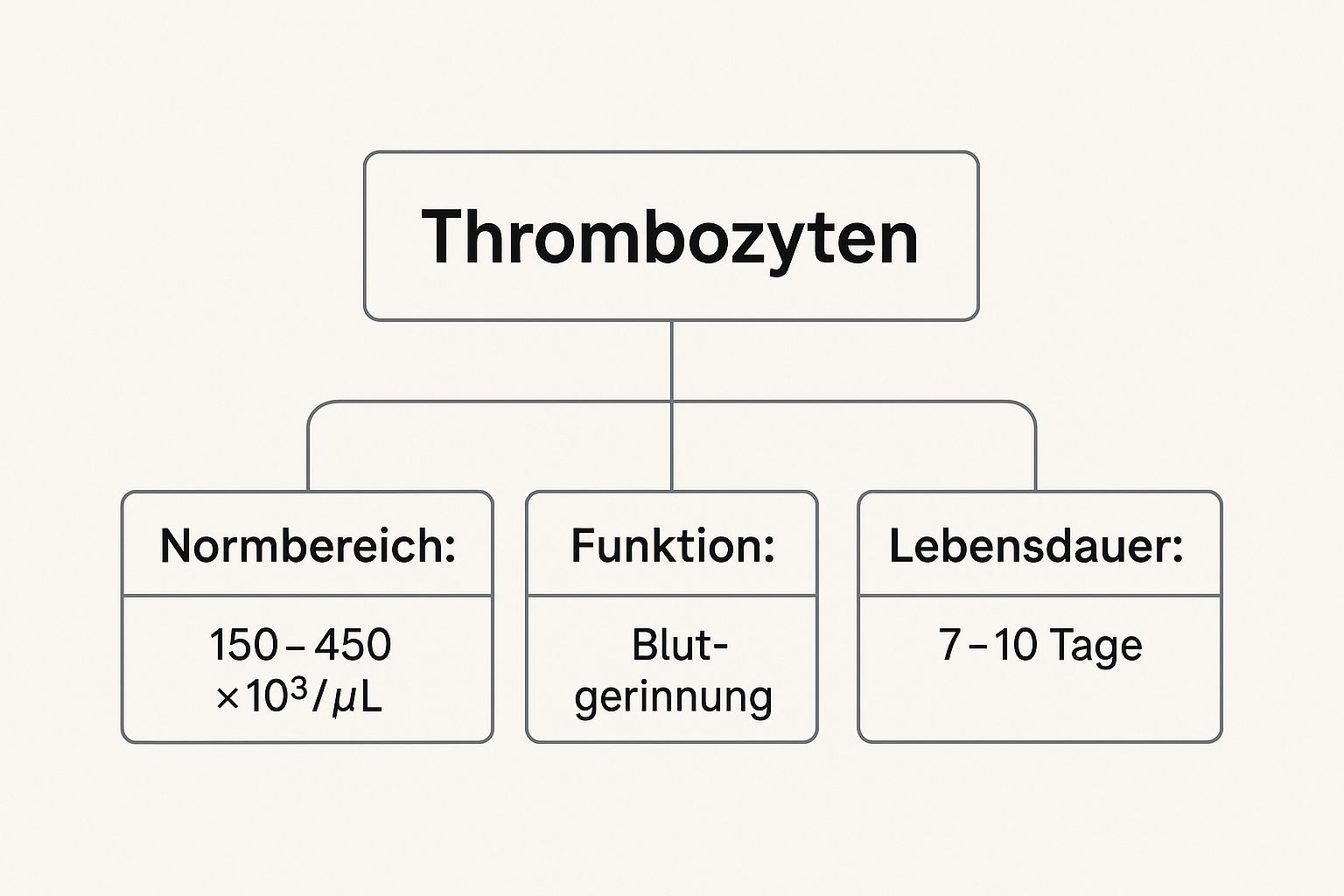
As the illustration shows, platelets are essential for blood clotting and, with a lifespan of about one week, have a fairly short life expectancy.
What your laboratory values really mean
You are holding your laboratory report in your hands, looking at a column with your results and, directly next to it, the so-called “reference ranges.” But what do these numbers really tell you? One thing is especially important: These ranges are not laws set in stone, but statistical averages determined from a large group of healthy people.
But your body is unique. Your age, sex, fitness level, and even what you ate yesterday can influence your values. A single value that is slightly out of line is therefore rarely a reason to panic.
Never consider your blood values in isolation; always view them in the overall context. The goal is to recognize patterns and understand what your body is trying to tell you.
Imagine a single laboratory value as a piece of a puzzle. Only when you put several pieces together does a clear picture emerge. A slightly low hemoglobin level, for example, may say little on its own. But if small, pale red blood cells (a low MCV value) are present at the same time, iron deficiency suddenly becomes very likely.
Recognize connections and take proactive action
This is precisely where the true strength of a well-interpreted blood count lies. It helps you identify trends early—often long before any symptoms become noticeable. Perhaps your lymphocytes are at the upper limit while your neutrophils are rather low. This could be a subtle sign that your immune system is quietly fighting off a virus.
Sometimes it’s the small clues that provide the decisive impetus:
- Constantly tired despite getting enough sleep? It’s worth looking not only at the red blood cells, but also at your iron stores (ferritin) or vitamin B12.
- Getting sick unusually often? The differential blood count tells you how your different immune cells are doing and whether there is an imbalance somewhere.
- General discomfort without a clear reason? Sometimes minor shifts in several values, taken together, point to an emerging inflammation or nutrient deficiency.
This initial interpretation is the most important step. If you want to delve even deeper to find out which specific diseases can be detected, you’ll find helpful information about diseases and the complete blood count in our in-depth article.
In addition to the standard blood count values, there are also specialized analyses that can, for example, determine whether substances are detectable in laboratory results, which may also be relevant in certain situations. So think of your blood count as what it is: an incredibly valuable snapshot of your health. It’s your opportunity to better understand your body and take targeted action to support your well-being.
From a complete blood count to a targeted self-test
A complete blood count at the doctor’s office is a fantastic tool. It provides a broad but basic overview of what’s going on in your bloodstream—especially how your oxygen supply and immune defenses are doing. It answers the question of what is tested in a complete blood count. But what if you want to dig deeper and investigate specific things in a targeted way?
This is exactly where mybody-x self-tests come in. They are the logical next step when you have specific questions that go beyond simply counting blood cells.
When the results are unremarkable but you don’t feel well
This scenario is frustrating and yet so common: Your complete blood count from the doctor shows no abnormalities, but you still constantly feel tired, unfocused, or simply drained. That’s because a doctor’s blood test often provides no information about the status of important nutrients or hormones—they aren’t routinely tested.
At this point, you can take action yourself and investigate the cause in a targeted way. mybody-x’s at-home tests give you the opportunity to look deeper and truly understand your body.
- For constant tiredness: An iron deficiency or vitamin B12 test can reveal hidden deficiencies that drain all your energy. Often, that is exactly what’s missing.
- For digestive problems: Do you often experience stomach rumbling or feel that you don’t tolerate certain foods well? A specialized test can finally provide clarity. In our guide, you can learn more about how a blood test for food intolerances can help you identify the potential culprits.
- For stress and inner restlessness: Do you often feel overwhelmed and out of balance? A hormone test that measures your stress hormone cortisol can provide valuable insights into your hormonal balance.
Take charge of your well-being
The complete blood count provides an important foundation—a kind of snapshot. But often, it is only the starting point. If you really want to take a proactive approach to your health, you sometimes have to become a detective yourself.
mybody-x’s at-home tests are your toolkit for using the insights from a blood count as a starting point. They help you investigate the causes of how you personally feel and take control of your health on your own terms.
Instead of living with unexplained symptoms or waiting for general symptoms to appear, you can take a targeted look at specific areas of your body. You don’t just receive lab results, but concrete, personalized recommendations for action. This allows you to turn knowledge into action and work purposefully on your vitality and long-term well-being.
Frequently asked questions about the complete blood count
To wrap things up, let’s answer a few questions we keep receiving about the complete blood count. This way, you’ll have all the important information at hand and know exactly what is examined in a complete blood count and what to expect.
Do I need to fast for a complete blood count?
This is one of the most frequently asked questions—and the answer is a clear “yes and no.”
For a blood count alone—that is, counting and analyzing your blood cells—you do not actually need to be fasting. What you eat has little direct effect on the number of your red or white blood cells.
In most cases, other important values are checked at the same time as the blood is drawn, such as blood sugar (glucose) or blood lipids (triglycerides, cholesterol). And for these values, it is absolutely essential to be fasting; otherwise, the results are not meaningful. That is why your doctor will almost always ask you not to eat anything for 8 to 12 hours before the appointment. A sip of water is usually allowed.
How often should you have a complete blood count done?
There is no one-size-fits-all answer here, as the right frequency depends entirely on your personal situation.
- Are you healthy and fit? Then an examination as part of a general health check every few years is completely sufficient.
- Do you have chronic conditions or take medication regularly? In that case, your doctor will probably order blood counts at shorter intervals to monitor your condition.
Even with unclear symptoms such as persistent exhaustion, pale skin, or feeling like you catch every infection going around, a complete blood count is an important piece of the puzzle when searching for the cause. Persistent fatigue, for example, may indicate an iron deficiency. You can find out more in our guide to the iron deficiency self-test.
How much does a complete blood count cost for self-paying patients?
If the test is medically necessary—for example, because you have symptoms or a disease needs to be monitored—your health insurance will cover the costs.
If you want to have a blood count done purely as a check-up for yourself, without a doctor ordering it, it is considered an individual healthcare service (IGeL). You then have to cover the costs yourself.
Prices vary slightly depending on the laboratory and medical practice, but they usually range from around 20 to 50 euros. It’s best to ask the practice directly beforehand so there are no surprises.
Would you like to keep a close eye on specific values that go beyond a complete blood count—such as your vitamin D level, hormone balance, or possible food intolerances? Discover the specialized at-home tests from mybody-x and take your health into your own hands. Find the right test for you now at mybody-x.com



Share now:
Blood Test for Food Intolerances – Understand Your Body’s Signals
How you can regulate your hormone balance