

What are hormone levels? Effects on health and well-being
Sudden mood swings, unexplained weight gain, or persistent fatigue push many health-conscious women and men in Central Europe to their limits. Particularly during life stages such as puberty or menopause, the body can seemingly fall out of balance. A stable hormone level is the key to energy, balance, and well-being. Those who understand the background and rely on sound analyses regain control over their health.
Table of contents
- Definition and importance of hormone levels
- Important types of hormones and their functions
- Physical and psychological signs of imbalance
- Modern testing methods: blood, saliva, and urine tests
- Risks, limitations, and helpful measures for disorders
Key findings
| Point | Details |
|---|---|
| Hormone levels are crucial for health | A balanced hormone level affects many bodily functions and should be checked regularly. |
| Hormonal imbalance manifests in a variety of symptoms | Both physical and psychological complaints may indicate an imbalance. |
| Modern testing methods help with diagnosis | Blood, saliva, and urine tests offer different advantages for determining hormone levels. |
| Prevention is crucial | A proper diet, stress management, and exercise are important for maintaining a stable hormonal balance. |
Definition and importance of hormone levels
The hormone level describes the concentration of chemical messengers in our blood that are responsible for numerous bodily functions. These endogenous signaling molecules play a crucial role in regulating metabolism, growth, development, and emotional processes.
Hormones are produced by various glands in the body and have very specific functions. The hormone level can reflect various conditions, such as:
- Sex hormones during the reproductive phase
- Stress hormones during emotional strain
- Growth hormones during development
- Thyroid hormones for metabolism
A balanced hormone level is crucial for health. Fluctuations can cause various symptoms, ranging from mood swings to metabolic disorders. These changes occur particularly during hormonal life stages such as puberty, pregnancy, and menopause.
Importance for health
The importance of hormone levels cannot be underestimated. Hormones regulate almost all bodily functions and influence:
- Energy balance
- Sleep rhythm
- Sexual functions
- Immune system
- Emotional stability
- Muscle growth and body fat
Pro tip: Have your hormone levels checked regularly with a blood test to detect possible imbalances at an early stage.
Important types of hormones and their functions
The human body contains a wide variety of hormones, each of which fulfills specific tasks in different body systems. Hormones act as chemical messengers that regulate specific functions in different areas of the body via the bloodstream.
The most important hormone groups include:
- Sex hormones: Control reproduction and sexual development
- Stress hormones: Regulate responses to challenges
- Growth hormones: Control cell growth and regeneration
- Metabolic hormones: Influence energy balance and bodily functions
The most important hormones include:
- Testosterone: Male sex hormone
- Estrogen: Female sex hormone
- Cortisol: Main stress hormone
- Insulin: Regulates blood sugar levels
- Thyroid hormones: Control metabolism
Hormones influence nearly all bodily functions and are essential for our physiological balance.
These hormones are produced in various glands, such as the hypothalamus, pituitary gland, thyroid, and adrenal glands. Each hormone has a precise function and interacts in complex ways with other messengers.
Here you will find an overview of important hormones, their main functions, and their production sites:
| Hormone | Main function | Production site |
|---|---|---|
| Testosterone | Development of male characteristics | Testes |
| Estrogen | Regulates the menstrual cycle | Ovaries |
| Cortisol | Control of the stress response | Adrenal cortex |
| Insulin | Lowers blood sugar levels | Pancreas |
| Thyroid hormones | Metabolism control | Thyroid |
Pro tip: Have your testosterone levels tested regularly to detect hormonal imbalances at an early stage.
Physical and psychological signs of imbalance
A hormonal imbalance can manifest in many ways and affects both physical and psychological processes. Symptoms of a hormonal imbalance can vary widely.
Physical signs include:
- Irregular menstrual cycles
- Weight fluctuations
- Unexplained hair loss
- Skin changes
- Tiredness and exhaustion
- Digestive problems
- Loss of libido
Psychological symptoms often include:
- Mood swings
- Depressive moods
- Concentration problems
- Sleep disorders
- Feelings of anxiety
- Emotional instability
The complexity of hormonal fluctuations often makes an accurate diagnosis difficult.
Women in particular are affected by hormonal imbalances, for example during menopause, after pregnancy, or due to prolonged stress. The causes can vary widely—from thyroid disorders and metabolic problems to hormonal changes.

Pro tip: Identify hormonal imbalances at an early stage and have them professionally assessed to prevent long-term health consequences.
Modern testing methods: blood, saliva, and urine tests
Determining hormone levels requires precise diagnostic procedures that use different measurement methods. Modern hormone testing includes various testing methods, each offering specific advantages and providing distinct insights.
The most important testing methods at a glance:
- Blood test: Considered the standard method
- Saliva test: Measures free hormones
- Urine test: Detects hormone excretion
- 24-hour urine test: Documents hormone fluctuations
Advantages and disadvantages of the different testing methods:
-
Blood test
- Most accurate method
- Measures total hormone levels
- Requires blood collection
- Most comprehensive analysis
-
Saliva test
- Non-invasive
- Measures active hormones
- Easy to perform
- Not yet fully scientifically validated
Choosing the right testing method depends on the individual health concern.
For a comprehensive hormone analysis, experts often recommend combining different testing methods. This enables a differentiated assessment of the hormonal situation and supports precise medical interpretation.
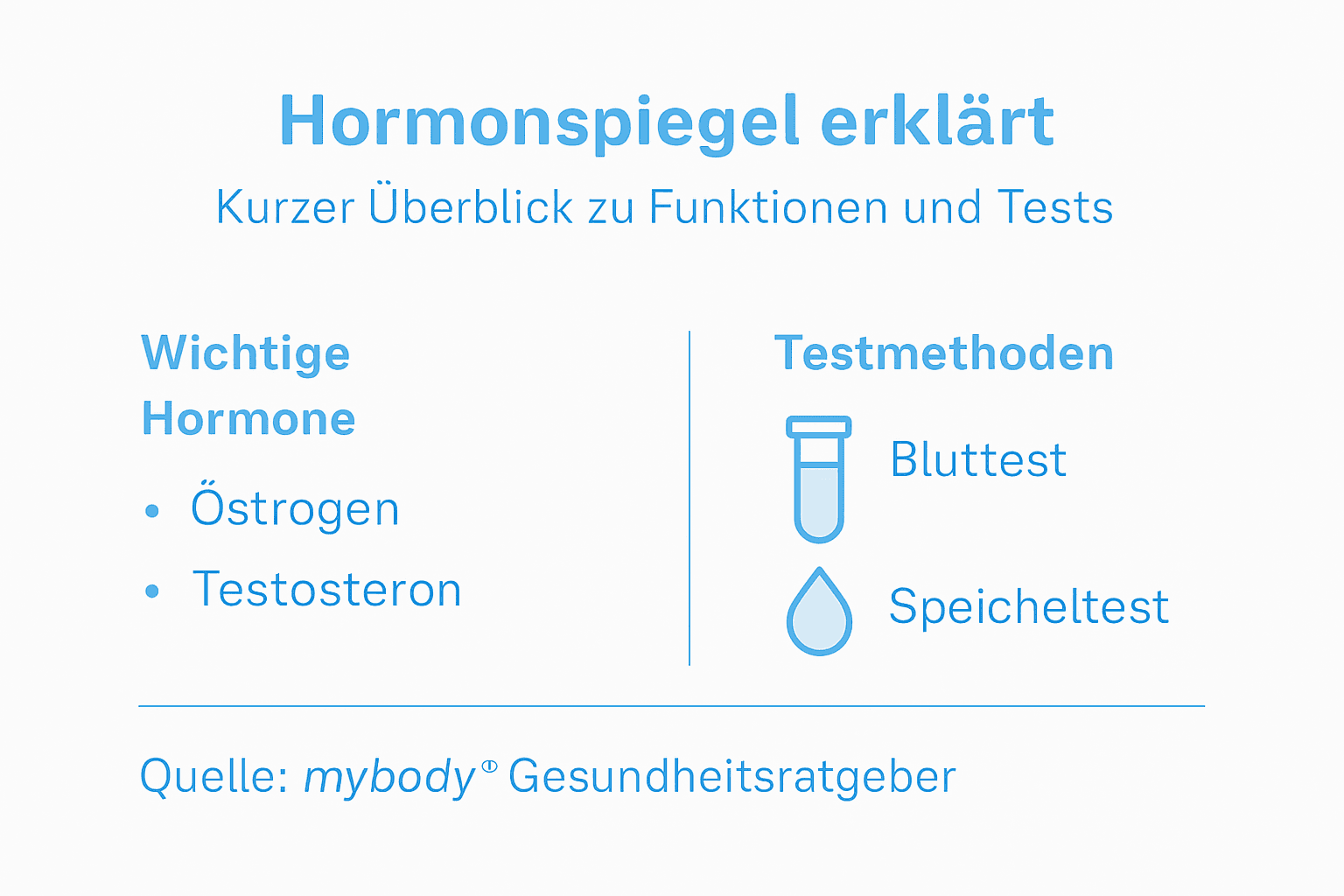
The following table compares modern methods for hormone testing and shows their ideal areas of application:
| Test method | Suitability | Best suited for |
|---|---|---|
| Blood test | Highest accuracy | Diagnosis of chronic disorders |
| Saliva test | Practical for everyday use, simple | Screening for stress hormones |
| Urine test | Identify trends | Progress monitoring, daily profiles |
| 24-hour urine test | Track fluctuations | Hormonal cycle, long-term monitoring |
Pro tip: Nutrient analyses in the blood can provide additional information about hormonal relationships.
Risks, limitations, and helpful measures for disorders
The hormonal balance is a complex system that can involve various risks and challenges. Managing hormonal disorders requires individualized strategies.
Potential risks and limitations include:
- Increased risk of thrombosis
- Risks of heart disease
- Cancer risks
- Metabolic disorders
- Psychological stress
Helpful measures for regulation:
- Dietary changes
- Stress management
- Regular exercise
- Adequate sleep
- Medical advice
Prevention and targeted therapies are crucial for maintaining balanced hormone levels.
Especially with hormone therapies, individual risk factors must be carefully weighed. For example, women going through menopause should discuss the advantages and disadvantages of hormone therapy in detail with medical specialists.
Pro tip: Nutrition for hypothyroidism can help positively influence hormonal imbalances.
Find Balance in Your Hormone Levels and Take Active Control of Your Health
An unbalanced hormone level can negatively affect many aspects of our well-being. You may experience fatigue, mood swings, or metabolic changes that place a strain on your daily life. Hormones regulate essential bodily functions such as stress responses and sexual health, making it all the more important to identify imbalances early and address them specifically. With professional at-home hormone tests – triglycerides, cortisol, testosterone & more – mybody®x, you can conveniently and safely check your hormone status.
mybody® offers not only scientifically validated analyses but also personalized recommendations for diet and lifestyle based on your individual hormone profile. Use modern diagnostics based on proven blood and saliva tests to optimize your long-term health. Discover how small changes can have a major impact and take the first step toward greater balance and quality of life with mybody®. Start your personal hormone analysis now and take charge of your health in a self-determined and sustainable way.
Frequently asked questions
What are the main causes of a hormonal imbalance?
A hormonal imbalance can be caused by various factors, including stress, thyroid disorders, certain medications, lifestyle factors such as diet and exercise, and hormonal changes during puberty, pregnancy, or menopause.
How can I have my hormone levels checked?
To check your hormone levels, you can have a blood, saliva, or urine test. Blood testing is the most common method and is considered the most accurate, while saliva and urine tests can be used for specific questions.
What symptoms indicate a hormonal imbalance?
Symptoms of a hormonal imbalance may include irregular menstrual cycles, weight fluctuations, mood swings, fatigue, sleep disturbances, and skin changes. These signs can vary and are often different for each individual.
What steps can I take to regulate my hormone balance?
To regulate your hormone balance, you should maintain a balanced diet, use stress management strategies, exercise regularly, and get enough sleep. Medical advice is also recommended, especially if you have existing health issues.
Recommendation
- Find your hormone balance for greater well-being this fall – mybody®x
- At-home hormone test: Understand your body’s signals – mybody®x
- Get your testosterone tested: Easily and discreetly from home – mybody®x
- Understand the causes of high inflammation levels and take targeted action – mybody®x
- Natural Estrogen and Progesterone: Hacks to Get More of It December 2025



Share now:
Hormone status: When is a test really worthwhile for you?
Pimples before your period: causes, tips, and how to bring your skin back into balance