
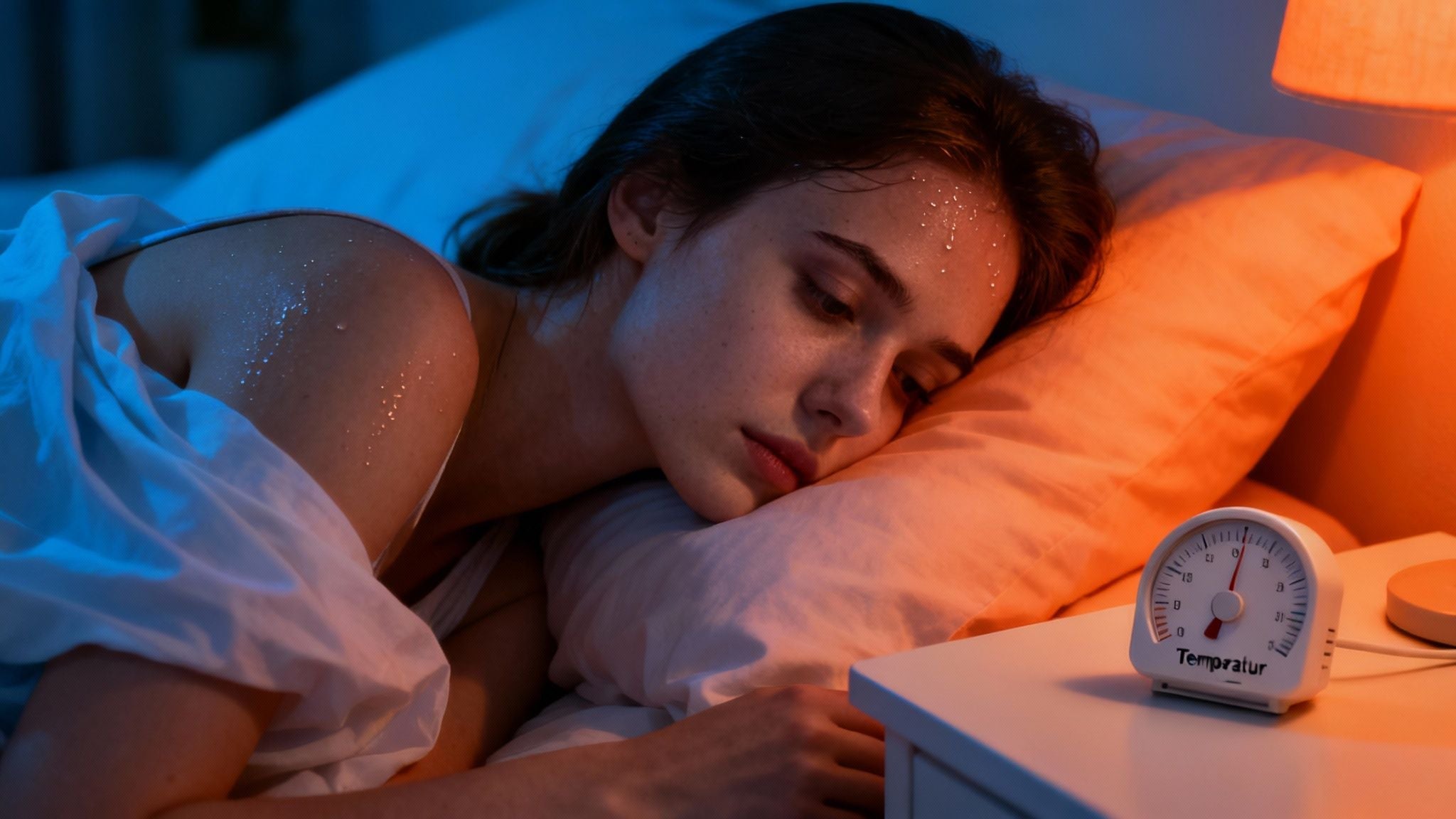
The real causes of night sweats and what you can do about them
The causes of night sweats are incredibly varied. They range from completely harmless things, such as a duvet that is too warm, to medical reasons, such as hormonal changes. Fortunately, there is usually nothing serious behind it, but if you regularly sweat at night, it is a signal from your body—and you should pay attention to it.
Why do I wake up drenched in sweat at night?
You may know the feeling: You wake up in the middle of the night, your pajamas are uncomfortably sticking to your body, and you wonder what is going on. This feeling is not only disruptive; it is also a clear sign from your body that something is out of balance.

Sweating is essentially your body's ingenious air-conditioning system. It keeps you from overheating. The autonomic nervous system controls the process—more precisely, the hypothalamus in your brain. Think of it like the thermostat in your home. When this thermostat detects that your body temperature is too high, it sends signals to millions of sweat glands, which then cool you down through the evaporation of sweat.
We speak of night sweats when this process is so intense at night that your clothes or even your bedding become thoroughly wet. In other words, your internal thermostat is overactive.
The most common triggers of night sweats
The reasons for night sweats are often easy to find and lie directly in our surroundings or habits. So before you start worrying, it's best to go through these everyday factors first.
Sometimes, it's very simple things:
- Your sleeping environment: Is your bedroom too warm? The ideal temperature is 16–18 °C. Perhaps you're still using a thick winter duvet in summer, or your bedding isn't breathable enough.
- Your evening routine: A glass of wine or beer in the evening can dilate your blood vessels and raise your body temperature. Spicy or very heavy meals shortly before bedtime can also rev up your metabolism and make you sweat.
- Psychological strain: Stress and tension put your body into a kind of mild state of alert. The stress hormone cortisol can disrupt your body's temperature regulation and leave you sleeping restlessly and sweating.
Night sweats are not immediately a sign of illness. Often, it is the sum of small, everyday habits that causes things to boil over—and the sweating to begin.
When the body sends signals
Sometimes, however, night sweats are more than just a reaction to external circumstances. They can be a symptom of deeper processes taking place in your body. This isn’t about panicking, but about correctly interpreting your body’s signals. Accompanying symptoms are the key clues.
Pay attention to whether the sweating occurs along with other changes. These could include unexplained weight loss, constant fatigue, fever, or swollen lymph nodes, for example. Hormonal changes—such as those during menopause or caused by thyroid dysfunction—are also among the most common causes. An imbalance in your hormones can seriously disrupt your internal thermostat.
This is exactly where a look at your blood values, such as the one provided by a mybody®x blood test, can offer valuable initial clues. It can help you narrow down the possible causes more specifically and understand what is happening in your body.
To give you a quick overview, we’ve summarized the most common causes in a table.
Common causes of night sweats at a glance
This table gives you an overview of the key categories of causes of night sweats, ranging from harmless to medically significant.
| Cause category | Typical examples | How you can recognize it |
|---|---|---|
| Lifestyle & environment | A bedroom that is too warm, thick blankets, alcohol, spicy food, stress | The sweating is often irregular and can be improved by making adjustments (e.g., using a thinner blanket). |
| Hormonal changes | Menopause, overactive thyroid, pregnancy | Often occurs along with hot flashes, mood swings, or changes in weight. |
| Medications | Antidepressants, hormone preparations, cortisone, fever reducers | The sweating often begins shortly after you start taking a new medication. |
| Infections | Flu-like infections, tuberculosis, inflammation in the body | Usually accompanied by fever, chills, fatigue, and aching limbs. |
| Serious illnesses | Lymphomas (lymph node cancer), leukemia, autoimmune diseases | Accompanying symptoms such as significant weight loss, fever, and swollen lymph nodes are typical here. |
This overview shows how broad the range of possible causes is. It’s important to listen to your body and not hesitate to seek medical advice if symptoms persist or concern you.
When your hormones take control
Hormonal fluctuations are among the most common culprits behind night sweats—especially in women. Think of your hormone system as a finely tuned orchestra: if even one instrument gets out of sync, it can disrupt the entire symphony of your well-being. And that kind of imbalance can seriously affect your sleep.

Your body is a masterpiece of regulation, controlled by a complex network of hormones. They direct countless processes, from your metabolism and mood to your body temperature. When this sensitive system becomes unbalanced, the consequences are often clearly noticeable—for example, through night sweats.
Menopause as the Main Suspect
When we talk about hormones and night sweats, most people immediately think of menopause. And rightly so. During this stage of life, production of the female sex hormone estrogen decreases significantly. This decline directly affects the hypothalamus, essentially the control center for our body temperature in the brain.
You can think of it this way: Your body’s internal thermostat suddenly becomes extremely sensitive. It interprets even the slightest temperature fluctuations as overheating and immediately initiates countermeasures—it triggers hot flashes to get rid of the supposed heat. If this happens at night, you wake up drenched in sweat.
For many women, this is an enormous burden. According to the STADA Health Report 2023, 42 percent of German women rate their sleep quality as poor, compared with just 30 percent of men. Data from the Barmer health insurance fund show a similar trend: Between 2012 and 2022, the number of insured people with sleep disorders rose by 36 percent. Particularly notable: Among women aged 40 to 49—the typical age for perimenopause—there was an increase of 40 percent. These figures paint a clear picture of how much hormonal changes can disrupt sleep.
More Than Just Menopause
But menopause is not the only hormonal cause. There are other important players in the hormonal orchestra whose imbalance can also lead to night sweats:
- The thyroid: An overactive thyroid (hyperthyroidism) turns your body’s metabolism all the way up. It essentially runs at full speed permanently, leading to increased heat production and heavy sweating.
- Progesterone and testosterone: Estrogen is not the only factor that matters. The balance between all sex hormones is crucial. A deficiency of the calming hormone progesterone, for example, can promote inner restlessness and thus also sweating at night.
- Cortisol, the stress hormone: If you are under constant stress, your cortisol levels also remain consistently elevated. This hormone disrupts your sleep cycle and activates the sympathetic nervous system, which can also lead to bouts of sweating. You can read more about what cortisol is and how it works here.
To better understand the connections, here you’ll find a great overview of hormones and how they work.
A hormonal imbalance is like a poorly conducted orchestra—the individual instruments are no longer playing together, resulting in disruptive symptoms such as night sweats. The good news is that you can find out which instruments are out of tune.
Find clarity with a hormone test
If you suspect that your hormones are behind your sleepless, sweaty nights, you don't have to remain in the dark any longer. A blood test can provide valuable insights into your hormonal balance and help you get to the root of the problem.
The mybody®x hormone test is a simple and discreet way to do exactly that—all from the comfort of your own home. Instead of waiting weeks for a doctor's appointment, you can gain clarity with a simple blood sample from your fingertip.
It's that easy:
- Order the test kit: Everything you need to collect the sample is shipped directly to your home.
- Collect your sample: Use a small finger prick to collect a few drops of blood. It's quick and straightforward.
- Analysis in a specialist laboratory: Your sample is professionally analyzed in one of our ISO-certified laboratories in Germany.
- Easy-to-understand results: You receive a clear report that explains your hormone levels (e.g., estrogen, progesterone, testosterone) in an understandable way. You also receive personalized recommendations for nutrition and lifestyle.
Such a test is your first crucial step toward regaining control. Instead of merely treating symptoms, you address the problem at its root. This allows you to take targeted measures to restore your hormonal balance and finally sleep peacefully through the night again.
How your daily routine affects sleep
Often, it isn't the major, medically serious problems that rob us of sleep at night. Much more often, it's the small, almost unnoticed habits of our everyday lives that push things over the edge and make the body sweat at night. Let's take a closer look at your lifestyle, because this is often where the decisive causes of night sweats are hidden.
Some triggers are obvious. A glass of wine in the evening may feel relaxing, but alcohol dilates the blood vessels and heats the body from within. While you sleep, your body is busy breaking down the alcohol—a process that raises body temperature and can lead to bouts of sweating. A very spicy or heavy meal shortly before bedtime can have a very similar effect. Spices such as chili contain capsaicin, which sends a heat signal to the brain and activates the sweat glands.
Your nervous system under constant stress
Another often completely underestimated factor is chronic stress. In our hectic daily lives, many people's nervous systems are running at full speed. The body constantly releases stress hormones such as cortisol and adrenaline and remains in a constant “fight-or-flight” mode.
During the day, we may only feel this as inner restlessness or tension. At night, however, when the body is actually supposed to regenerate, this pent-up energy can be released. Your overactive nervous system throws off your internal thermostat and causes sudden waves of heat. The effects of extreme psychological stress can be particularly profound, such as that caused by the effects of violence in the nursing profession, which can severely disrupt sleep and contribute to such symptoms.
Your body does not forget the day's stress just because you are lying in bed. Night sweats can be an outlet for the tension that has built up over hours or even days.
To break this vicious cycle, even small changes to your evening routine can make a huge difference.
- Relaxation exercises: Techniques such as meditation, gentle yoga, or simple breathing exercises help your nervous system slow down and switch to rest mode.
- Reduce screen time: The blue light from smartphones and tablets inhibits the production of the sleep hormone melatonin. It is best to put your devices aside at least an hour before going to sleep.
- Optimal sleeping environment: A cool, dark, and quiet bedroom is worth its weight in gold. The ideal temperature is 16–18 °C. Breathable bedding made from natural fibers such as cotton or linen also prevents heat buildup.
Hidden disruptive factors in your diet
But what if you already follow all of this and still wake up drenched in sweat? Then it is worth digging deeper and looking at what is going on inside your body. Sometimes it is not the obvious habits, but silent imbalances that throw your metabolism out of sync.
Two areas are particularly suspicious here:
- Nutrient deficiencies: Certain vitamins and minerals are essential for regulating your nervous system and hormone balance. A deficiency in magnesium, vitamin B12, or vitamin D can, for example, promote inner restlessness and sleep disorders, which can also manifest as night sweats.
- Food intolerances: When your body cannot properly process certain foods, it often triggers a silent inflammatory response. This ongoing strain on the immune system can stress the entire body and lead to nonspecific symptoms such as fatigue, digestive problems—and night sweats, too.
Such hidden causes are barely recognizable from the outside. A targeted look at your blood values can provide valuable clues here. If you suspect that your diet plays a role, a mybody®x nutrient test or intolerance test is a simple way to gain clarity. This can help you get to the real reasons for your restless nights and receive specific, personalized recommendations to restore your body’s balance. By the way, you can learn how strongly our genes influence sleep and reactions to substances such as caffeine in our article about the connection between genes, sleep, and caffeine.
When medications or illnesses are behind it
Sometimes night sweats are more than just a reaction to the wrong duvet or a stressful day. They can be a quiet but important signal from your body that you shouldn’t ignore. Let’s take a look at the medical causes together—objectively and without fearmongering, because knowledge is the first step toward improvement.
Night sweats can, for example, be a side effect of certain medications. The body responds to some active ingredients by readjusting its internal thermostat. This is often harmless, but it’s good to be aware of the connection.
Medications as possible triggers
Do you notice that you wake up drenched in sweat at night shortly after starting a new medication? This could be the cause. Certain groups of medications are known to get the sweat glands working overtime.
These include:
- Antidepressants: In particular, the so-called selective serotonin reuptake inhibitors (SSRIs) can affect the temperature center in the brain and thus lead to increased sweating.
- Hormone preparations: Anything that affects your hormone balance can trigger hot flashes. Classic examples include cortisone or certain cancer treatments.
- Blood pressure and blood sugar medications: Some medications for high blood pressure or diabetes list excessive sweating as a possible side effect.
- Fever-reducing medications: It sounds paradoxical, but it’s true: Medications such as acetylsalicylic acid or paracetamol can cause intense bouts of sweating as your body temperature drops.
If you suspect that a medication is responsible, never stop taking it on your own. Instead, talk to your doctor. There are often well-tolerated alternatives. To better understand the connections, it may be helpful to learn more about the complex topic of medications and their interactions.
When your body calls for help
In addition to medications, various illnesses can also cause night sweats. Your body often uses sweating as part of its natural defense or regulation strategy.
Often, harmless infections such as the flu or a cold are accompanied by fever. Your body fights the intruders and regulates its temperature in the process—this naturally leads to sweating, especially at night when the fever subsides.
Severe night sweats that persist for weeks and are accompanied by other symptoms should always be evaluated by a doctor. They are a nonspecific symptom that may indicate various underlying processes.
Chronic conditions may also be a possible cause. An overactive thyroid (hyperthyroidism), for example, really speeds up the metabolism, which can lead to constant sweating. Diabetes can also damage the nerves that control our sweat glands, disrupting nighttime sweat production.
When you should see a doctor
In most cases, night sweats are harmless. However, there are certain warning signs that should prompt you to seek professional advice without delay. These accompanying symptoms may indicate a more serious cause and should be thoroughly investigated.
Pay particular attention to these signs:
- Unexplained weight loss: You lose weight even though you have not changed your diet or exercise routine.
- Persistent fever: Your temperature remains slightly elevated for days or weeks, without any clear infection.
- Severe, persistent fatigue: You feel constantly exhausted and completely drained during the day.
- Swollen lymph nodes: You feel painless lumps in your neck, armpits, or groin.
These symptoms are important pieces of the puzzle for your doctor to arrange the right examinations. A comprehensive blood count is often the first step to check inflammation markers, blood sugar, or thyroid hormones. A mybody®x blood test can already provide valuable initial indications in advance, helping you go into your consultation well prepared and support the search for the causes in a targeted way.
How to gain clarity with a blood test
Have you tried everything already? Made the bedroom cooler, reduced your stress, and only drunk herbal tea in the evenings—yet you still wake up drenched in sweat? If you can rule out external circumstances as the cause, it's time to take a look inside your body. The true causes of night sweats often lie deeper, and a blood test can serve as your personal guide.
Think of your body as a finely tuned orchestra. Hormones, nutrients, and signaling molecules—all have to work together perfectly. Even the slightest discord can throw the entire system off balance and trigger symptoms such as night sweats. A blood analysis is like looking at this orchestra's sheet music: it provides objective data and shows you where something is going wrong.
Which blood values really matter
A blood count is far more than just a list of numbers. It tells a story about your health. When it comes to night sweats, there are a few prime suspects that often provide valuable clues about the underlying cause.
Here are the most important biomarkers that can shed light on the matter:
- Hormones: An imbalance of sex hormones, especially estrogen and progesterone, is one of the most common causes, particularly in women. Thyroid hormones (TSH, fT3, fT4) are just as important. An overactive thyroid ramps up your metabolism and, with it, your internal body temperature.
- Inflammation markers: Values such as C-reactive protein (CRP) can reveal whether low-grade inflammation is smoldering in your body. Such chronic processes keep your immune system on high alert and can significantly disrupt your temperature regulation.
- Important nutrients: Sometimes missing building blocks are also to blame. A deficiency in vitamin D or magnesium, for example, can impair the nervous system, leading to inner restlessness and sleep problems—often accompanied by sweating.
- Blood sugar levels: A blood sugar level that fluctuates sharply puts the body under intense stress. If it drops at night (hypoglycemia), the body sounds the alarm and often reacts with a sudden bout of sweating.
A blood test translates your body's signals into understandable facts. It puts an end to guesswork and gives you a clear foundation you can finally act on.
Your first step toward greater control—right from the comfort of home
The thought of crowded waiting rooms and long waits for appointments puts many people off getting to the bottom of things. This is exactly where mybody®x self-tests come in. We offer a simple, discreet, and fast way to check important health values—from the comfort of your own sofa.
This puts you in control. Instead of being left in the dark, you can take a proactive approach. With just a few drops of blood from your fingertip, you gain valuable insights. Your sample is then analyzed in our ISO-certified partner laboratories in Germany, so you can rely on the accuracy of the results.
Two of our tests are particularly helpful if you want to get to the bottom of your night sweats:
- The hormone test: Do you suspect that hormonal fluctuations—whether caused by menopause, stress, or the thyroid—could be the trigger? Then this is the perfect starting point. It gives you a clear overview of your most important hormone levels. Learn more here about the precise determination of hormone status and how it can help you.
- The nutrient test: This test is your comprehensive health check-up. It analyzes a broad range of values, from vitamins and minerals to liver and kidney values and inflammation markers. This quickly reveals nutrient deficiencies or other hidden imbalances.
The biggest advantage? You don’t just receive numbers, but an easy-to-understand report with specific recommendations for action tailored to you, covering nutrition and lifestyle. You can immediately see which adjustments you can make to bring your body back into balance—for finally having more peaceful, drier nights.
Your roadmap to more peaceful nights
Now that we’ve looked at the many possible causes of night sweats, it’s time to take action yourself. Think of this section as your personal toolkit for reclaiming more peaceful nights and more restful sleep.
The good news is that you don’t simply have to put up with night sweats. Often, you can feel a huge improvement with just a few simple yet clever adjustments to your daily routine. It’s about finding out what works best for you and your body.
Optimize your sleep environment
A crucial first step is to take a critical look at your bedroom. Your body needs a cool environment to truly switch into rest mode. A room temperature between 16 and 18°C is considered ideal for preventing overheating at night.
The right materials in your bed are just as important:
- Bedding: Choose breathable natural fibers such as cotton, linen, or bamboo. These fabrics are true experts at wicking moisture away from the body and preventing heat buildup.
- Sleepwear: Here, too, less is often more. Lightweight, loose-fitting clothing made from the same natural fibers is the best choice. Synthetic fabrics, on the other hand, act like a plastic bag and only promote more sweating.
- Duvet: Adjust your duvet to the season. A lightweight summer duvet can make all the difference on warm nights.
Find your evening routine
The last hour before bedtime has a huge impact on how you sleep. Create a small ritual that signals to your body: Now it is time to wind down. This could be a short meditation, a few gentle stretching exercises, or a warm bath.
What you eat and drink also plays a major role. Certain foods really fire up your metabolism and warm you from the inside. Therefore, it is best to avoid the following during the last few hours before going to bed:
- Spicy seasonings: Chili, pepper, and similar spices can noticeably increase your body temperature.
- Heavy meals: When your digestion is working at full speed, it generates heat.
- Alcohol and caffeine: Both can disrupt your sleep and stimulate sweat production.
The journey from uncertainty to clarity regarding night sweats can look like a simple decision-making process in which a blood test provides the crucial clue.

This illustration shows how a mybody®x blood test can bridge the gap between vague symptoms and concrete knowledge, enabling you to take targeted next steps.
Your body is constantly sending you signals. It is up to you to use the right tools to understand them. A mybody®x test can be exactly the tool that helps you translate your body's language and take targeted action for your well-being.
When you implement these practical tips and combine them with the valuable insights from a mybody®x hormone test or nutrient test, you create your own personal and effective plan. This allows you to take responsibility for your health and lay the foundation for calm, dry, and restorative nights.
Your questions about night sweats – our answers
Do you wake up at night drenched in sweat and wonder what is causing it? Here we answer the most frequently asked questions about the topic so you can put your remaining uncertainties to rest.
Is there always something serious behind night sweats?
No, not at all. In most cases, night sweating is harmless and has very simple causes, such as a blanket that is too warm, spicy food in the evening, or stress. However, it can of course also be a sign of an impending cold or hormonal changes.
You should pay close attention if you sweat heavily for an extended period and notice other symptoms at the same time. These include fever, unintentional weight loss, or unexplained, persistent fatigue. This combination may indicate underlying causes of night sweats and should be medically evaluated.
Can men also experience hormone-related night sweats?
Yes, absolutely! Many people immediately associate hormones and night sweats with menopause in women. However, a declining testosterone level, often referred to as andropause, can cause very similar symptoms in men.
A hormone test that measures testosterone levels can quickly provide clarity. This can determine whether an imbalance in male hormones is responsible for the night sweats.
Night sweats are not exclusively a women’s issue. Hormonal changes can also play a crucial role in men and should be considered as a possible cause.
Which mybody®x test is right for me if I suffer from night sweats?
That depends entirely on what you suspect is causing it or what other symptoms you are experiencing. Here is a brief guide:
- Hormone test: The first choice if you are a woman over 40 or also suffer from mood swings, irregular cycles, or hot flashes. It is also ideal for men who suspect low testosterone levels.
- Nutrient test: Do you often feel tired, unfocused, and lacking energy? This test can reveal whether you are lacking important vitamins or minerals that also affect sleep and body temperature.
- Food intolerance test: If, in addition to night sweats, you often suffer from digestive problems or skin irritation, an undiagnosed food intolerance could be the silent stress factor for your body.
Are you unsure? No problem! Our team will be happy to help you find the test that best suits you and your situation.
Do you finally want to get to the causes of your night sweats and sleep soundly through the night again? Discover the right at-home blood test at mybody®x and gain clarity. Visit https://mybody-x.com now and take your health into your own hands.

Share now:
Menopause in women: Your guide to stages, symptoms, and hormone tests
Sleep disturbances during menopause: what causes are really possible