

Menopause in women: Your guide to phases, symptoms, and hormone tests
First things first: Menopause is not a disease. It is a completely natural and important stage of life that marks the transition from the fertile years into a new, often very empowering phase. Of course, this process brings profound hormonal changes that can trigger a whole range of physical and emotional symptoms. But that is precisely the point: understanding what is happening in your body and making the right choices for your well-being.
What menopause really means for you
Try not to see menopause as an ending, but rather as a kind of realignment for your body. It is a unique opportunity to reinterpret the signals it sends you and proactively take care of your well-being. Instead of letting yourself feel unsettled, you can build trust in your body and demystify this stage of life.
And you are far from alone in this. On the contrary: In Germany, more than 9 million women are currently going through menopause. This huge number makes it clear how important the topic is and that countless other women share your experiences.
Your body is speaking a new language
During this time, your hormones' well-coordinated team can get thoroughly disrupted. These very hormonal shifts are at the root of many familiar symptoms. It helps enormously to understand what is actually happening.
- Sleep problems: Are you suddenly finding it harder to fall asleep or stay asleep? This could be due to declining progesterone levels—our body's own calming hormone.
- Emotional roller coaster: Do you find yourself getting irritated more quickly, feeling more tearful, or simply more emotional than usual? Fluctuating estrogen levels can directly affect your mood.
- Lack of energy: Often tired and lacking motivation? Hormonal changes can turn your entire energy metabolism upside down.
Knowledge is your strongest tool during this phase. When you understand the causes behind your symptoms, you can stop fighting against your body and start supporting it in a targeted way.
The first step toward greater clarity
These symptoms are not imaginary. They are very real signals from your body, showing you that an imbalance has developed—one you can actively address. The key is knowing your own personal hormonal status. Instead of feeling your way in the dark and guessing, you can gain a clear overview.
A well-founded understanding of your hormone levels is often the first and most important step toward greater quality of life and self-determination. A hormone test you can take at home can provide valuable guidance and help you better understand the connections. If you would like to learn more about how to understand and specifically address the various aspects of women’s health, you will find valuable information here. This insight empowers you to make informed decisions about your health and navigate menopause with confidence.
Navigating the three stages of menopause with confidence
Menopause is not a switch that is flipped from one day to the next. Rather, it is a gradual transition, a personal journey that often spans an entire decade and unfolds in three stages. Knowing the “map” of this journey can help you navigate the path with greater calm and confidence.
Many people think menopause only begins when their period stops. But the first signs often appear years earlier—so subtly that they are easy to overlook or misinterpret. Understanding what is happening in your body helps you correctly interpret the symptoms and see them for what they are: signposts on your own personal path.
Phase 1: Perimenopause
Perimenopause is, so to speak, the “preparatory phase” and begins for many women in their early to mid-40s. During this time, your ovaries slowly reduce their hormone production. However, this does not happen evenly or in an orderly way, but rather chaotically—much like an orchestra suddenly playing without a conductor.
The result is sharply fluctuating hormone levels, especially estrogen and progesterone. This constant up and down is precisely what causes the first typical symptoms. You may notice that your cycle becomes irregular, your bleeding changes, or your period stops altogether at times. If you would like to learn more about the connections within your body, our guide to the female cycle and menstruation offers valuable insights.
In addition to changes in the menstrual cycle, other signs may also become noticeable:
- Sleep disturbances, often linked to declining progesterone levels.
- Mood swings, ranging from sudden irritability to inner restlessness.
- First hot flashes or night sweats that seem to come out of nowhere.
- Difficulty concentrating or the feeling of having “brain fog” (Brain Fog).
This phase can last between four and ten years. For many women, it is the most turbulent time because the hormonal chaos is at its greatest.
Phase 2: Menopause
Menopause itself is not a long period, but a single, clearly defined point in time. Medical professionals refer to menopause when you have had no menstrual bleeding for exactly twelve consecutive months. This moment marks the official end of your fertile years.
The average age at menopause in Germany is around 51 years. But don't worry, the range is broad: it is completely normal for it to occur as early as 45 or as late as 55.
Although it is only one day on the calendar, this day is an important milestone. It marks the beginning of the last of the three phases.
Phase 3: Postmenopause
As soon as menopause is reached, postmenopause begins. This phase lasts for the rest of your life. Your body has now adapted to the persistently low hormone levels and found a new balance. Many of the turbulent symptoms of perimenopause, such as severe mood swings, now noticeably subside.
However, the persistently low estrogen level brings new issues that you should now pay more attention to:
- Bone health: The risk of osteoporosis increases because estrogen's protective effect on the bones is absent.
- Cardiovascular system: Here too, the protective effect of estrogen is lost, which may increase the risk of related diseases.
- Urogenital health: Issues such as vaginal dryness, an overactive bladder, or more frequent urinary tract infections may become more prominent.
To give you a quick overview, we have summarized the three phases here once again:
The phases of menopause at a glance
| Phase | Typical age/duration | Main hormonal change | Common signs and symptoms |
|---|---|---|---|
| Perimenopause | Early 40s to early 50s (approx. 4–10 years) | Sharp, irregular fluctuations in estrogen and progesterone | Irregular cycles, hot flashes, sleep problems, mood swings |
| Menopause | Average age: 51 (a single point in time) | The ovaries almost completely stop producing estrogen | The last menstrual bleeding |
| Postmenopause | After menopause (lifelong) | Persistently low estrogen and progesterone levels | Perimenopause symptoms subside, but the risk of osteoporosis and cardiovascular disease increases |
Each phase has its own characteristics, but with the right knowledge, you can prepare well and actively support your well-being.
The following infographic beautifully shows how menopause is embedded as a completely natural stage in a woman's life journey.
The illustration makes it clear: menopause (symbolized by the moon) is just as natural a transition as youth (flower) and the fertile years (heart).
Understanding your body’s language during menopause
Hot flashes, sleepless nights, unexplained extra pounds on the scale – the symptoms of menopause are as unique as you are. Instead of simply dismissing them as bothersome side effects, it is worth listening more closely. Your body is not trying to annoy you. Rather, it is speaking a new language and sending you clear signals that something fundamental is currently changing inside.
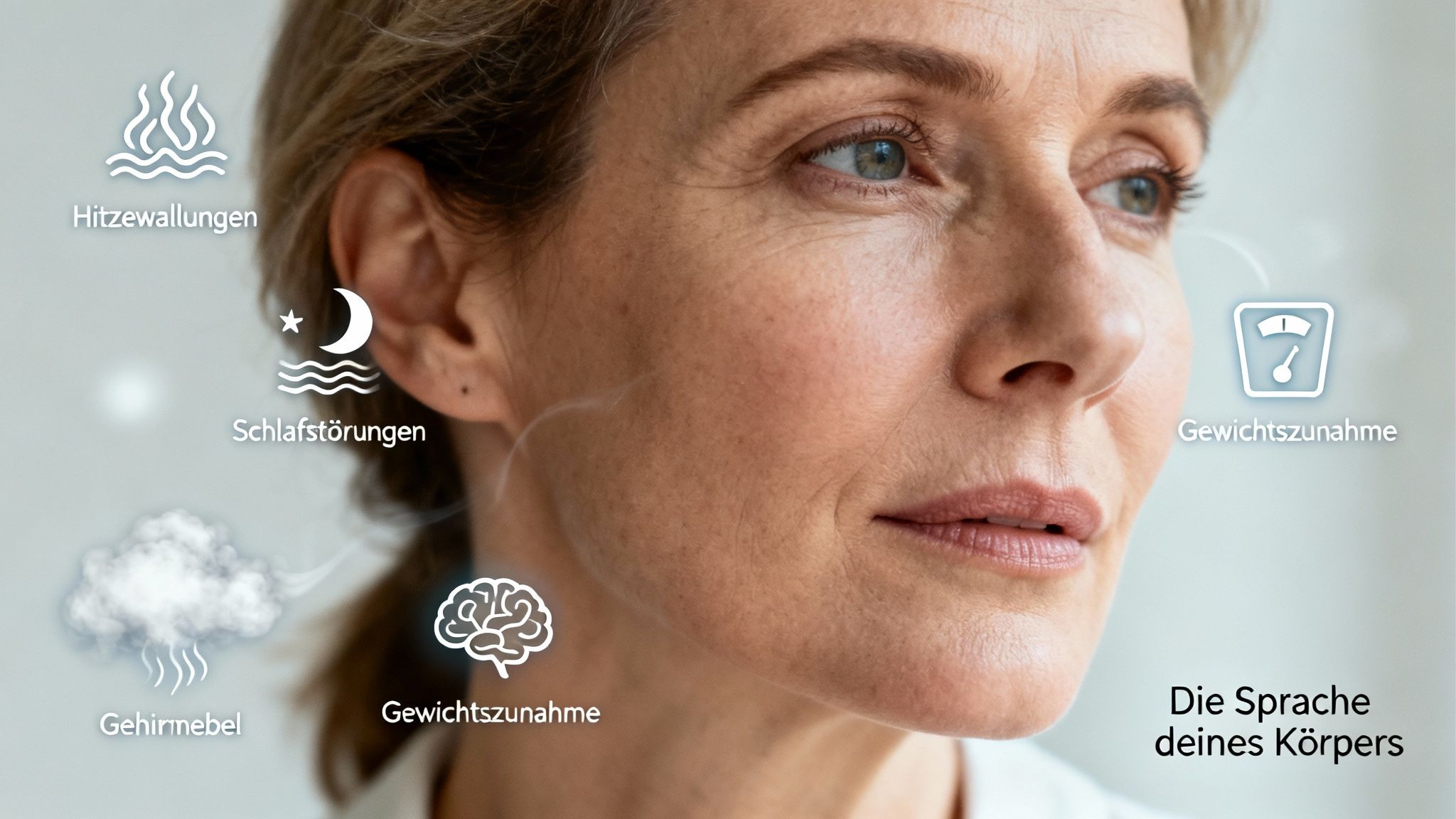
These symptoms are not imagined. They are direct biological reactions to the hormonal shifts taking place in your body. Once you understand these connections, you can stop merely enduring the discomfort. Instead, you can start viewing them as measurable imbalances that you can actively influence.
The messages behind the most common symptoms
Every sign has a cause that is usually deeply rooted in your hormonal system. Let’s “translate” some of the most common symptoms to understand what is really behind them.
-
Hot flashes and night sweats: When estrogen levels decline, your brain’s “thermostat” – the temperature regulation center in the hypothalamus – becomes confused. It overreacts to even the slightest temperature fluctuations and sounds the alarm: “Too hot!” Your body then tries to get rid of heat quickly through sudden sweating and dilated blood vessels. The result is the dreaded hot flash.
-
Sleep disturbances: The hormone progesterone often plays the leading role here. It has a calming, anxiety-relieving, and sleep-promoting effect. When its levels fall, falling and staying asleep become a challenge for many women. Night sweats that jolt you awake naturally do not make things any better.
-
Weight gain, especially around the abdomen: Estrogen helps determine where your body stores fat. As estrogen levels decline, fat storage shifts away from the hips and thighs directly to the abdominal area. At the same time, metabolism slows down, and age-related muscle loss adds to the problem. This suddenly makes weight control much more difficult.
-
Mood swings and irritability: Estrogen has a direct connection to mood-regulating neurotransmitters in the brain, such as serotonin and dopamine. The sharp fluctuations during perimenopause can therefore feel like an emotional roller coaster – from anxiety and sadness to unexplained anger, anything goes.
You are not alone in your experiences
It is important to know that what you are experiencing is completely normal. In Germany, two thirds of the more than 9 million women going through menopause struggle with moderate to severe symptoms that have a lasting impact on their everyday lives. The best-known symptom, hot flashes, affects up to 85 percent of all women, often accompanied by sleep disturbances, exhaustion, and emotional tension. The experts at Wexxeljahre provide more information about how widespread these symptoms really are.
Your symptoms are not a weakness, but measurable biological signals. They show you where your body needs support to find its new balance.
Recognizing these signals for what they are—concrete indications of a hormonal imbalance—is the first crucial step toward improvement. Instead of groping in the dark, you can investigate the causes in a targeted way. Read more about the various menopause symptoms and their underlying causes in our related article.
From Suspicion to Certainty
The good news is that you do not have to guess what is going on in your body. The “language” of your hormones can be measured and analyzed. Looking at your personal hormone levels can finally provide clarity and show you which imbalances could be behind your symptoms.
A mybody-x hormone test gives you the opportunity to get an initial overview of your hormone status easily from home. With this knowledge, you can not only better understand your body's signals, but also take targeted steps to actively take charge of your well-being and navigate menopause with confidence.
Which Hormones and Blood Values Really Matter Now
To understand what is behind your symptoms, we need to take a closer look at the secret directors in your body: your hormones. Imagine them as a finely tuned orchestra. As long as everyone plays in harmony, you feel energized, balanced, and simply good. But during menopause, this orchestra starts to falter—some instruments become quieter, others louder, and the overall interplay is disrupted.
This very hormonal chaos is the reason for the many typical symptoms of menopause in women. The good news is that you can find out which instruments in your orchestra are out of tune. A blood test provides the crucial clues.
The Main Actors in the Hormone Drama
During menopause, four hormones in particular take center stage, and the way they interact changes dramatically. They are the key players that have a major impact on your well-being.
-
Estradiol (the most important estrogen): This hormone is a true all-rounder. It not only ensures a regular cycle, but also keeps your skin elastic, your bones strong, your mood stable, and your memory sharp. When estradiol levels fall, it explains symptoms such as hot flashes, dry skin, joint pain, and the dreaded “brain fog.”
-
Progesterone: Many also call it the “feel-good” or “calming hormone.” It promotes deep, restorative sleep and has a balancing effect on the psyche. When progesterone levels fall—which often happens early in perimenopause—sleep disturbances, inner restlessness, and irritability are common consequences.
The balance between estrogen and progesterone is crucial to your equilibrium. Progesterone often declines first, while estrogen continues to fluctuate significantly. This imbalance, known as estrogen dominance, can intensify many symptoms during perimenopause.
The control hormones from the brain
While the ovaries reduce their production, your brain desperately tries to counteract it. Two hormones from the pituitary gland become important indicators in the process.
-
FSH (follicle-stimulating hormone): This hormone's job is to stimulate the ovaries to produce estrogen. When the ovaries no longer respond properly, the brain sends out more and more FSH—it practically “shouts” louder, hoping to finally be heard. A persistently elevated FSH level is therefore a clear sign that you are going through menopause.
-
LH (luteinizing hormone): LH is actually responsible for ovulation. Its levels also rise during menopause because communication between the brain and ovaries is simply no longer working smoothly.
Important supporting roles you should know about
Your hormonal system is a complex network. That is why other levels can also strongly affect your well-being during this phase. Symptoms such as fatigue or weight gain are not always caused solely by sex hormones.
- TSH (thyroid-stimulating hormone): The thyroid is the engine of your metabolism. An underactive thyroid, indicated by an elevated TSH level, often causes symptoms very similar to those of menopause: weight gain, exhaustion, and depressive moods.
- Cortisol: The famous stress hormone. Chronic stress leads to persistently high cortisol levels, which in turn promotes sleep disturbances, cravings, and the storage of abdominal fat—all problems that are already common during menopause.
- Vitamin D: Strictly speaking, it is also a hormone and is essential for strong bones. Since the risk of osteoporosis increases after menopause, having sufficient vitamin D levels is particularly important now.
Your path to clarity: A look at your values
As you can see, the interaction is quite complex. Guessing which hormone is responsible for your symptoms is like flying blind. A blood test can finally shed light on the situation and provide you with a clear basis of data.
With a simple at-home test, you can check the most important values and get an initial sense of your individual hormonal situation. A mybody-x hormone test measures relevant markers and provides you with valuable insights. Would you like to learn more? In our guide, we explain everything important about a hormone test at home. This knowledge is an invaluable foundation for taking targeted action and having an informed conversation with your doctor or health coach. It is your first crucial step toward taking control of your well-being again.
Your path to greater well-being: What you can control yourself
Understanding what happens hormonally during menopause in women is the first important step. But genuine well-being only emerges when you also put this knowledge into practice. That’s why we’ll now take a close look at the specific strategies you can use to take charge of and actively improve your quality of life.

Your body is currently reorganizing itself. Instead of fighting against it, you can support it wonderfully now. The foundation consists of three powerful pillars that you can immediately incorporate into your daily life: nutrition, exercise, and stress management.
Pillar 1: The right diet as a hormone booster
What ends up on your plate now has an even greater impact on your well-being. Your metabolism becomes somewhat slower, and your body reacts more sensitively to certain foods. However, a conscious diet can help alleviate symptoms and provide your body with exactly what it needs now.
Protein is your new best friend
As we age, our bodies tend to break down muscle mass. Proteins are the building blocks of your muscles and actively counteract this process. More muscle means a more active metabolism—and that helps enormously combat unwanted weight gain around the abdomen.
- Your goal: Include a good source of protein in every main meal.
- Good sources: Lean meat, fish, eggs, legumes (such as lentils or chickpeas), tofu, Greek yogurt, and quark.
Healthy fats for nerves and hormones
Omega-3 fatty acids in particular are worth their weight in gold right now. They are essential for hormone production and have anti-inflammatory effects. They can also help balance mood swings and counteract the dreaded “brain fog.”
- Choose: Fatty fish (such as salmon or mackerel), flaxseeds, chia seeds, walnuts, and high-quality olive oil.
Fiber for stable blood sugar
Foods rich in fiber keep you full for longer and prevent cravings. How? They help keep your blood sugar levels stable. This is especially important because major blood sugar fluctuations can further fuel hot flashes and fatigue.
- Include more: Vegetables of every color, whole-grain products, oats, and legumes.
Every woman is different. What works for your friend may not be the best solution for you. This is where a mybody-x nutrient test can provide valuable insights. It shows whether you may have unnoticed deficiencies—for example, in vitamin D, iron, or B vitamins—that are draining your energy further.
Pillar 2: Exercise as a shield against weight gain and bone loss
During menopause, exercise is not a “nice to have” but a “must”—but it needs to be done the right way. The goal is not to exhaust yourself completely every day, but to provide the targeted stimulus your body needs now.
Strength training for metabolism and bones
By now at the latest, it is the perfect time to start strength training—or intensify it. Building muscle not only boosts your metabolism but also strengthens your bones. This is the best way to prevent osteoporosis.
Endurance training for heart health and a good mood
Regular, moderate endurance training such as brisk walking, cycling, or swimming strengthens your cardiovascular system. It is also a fantastic mood booster because it promotes the release of feel-good hormones.
A good mix could look like this:
- Strength training 2–3 times a week: Focus on exercises for large muscle groups.
- Moderate endurance training 2–3 times a week: 30–45 minutes each time to get your heart pumping.
- Movement in everyday life: Take the stairs instead of the elevator and build regular walks into your routine. Every step counts!
Pillar 3: Stress management for inner balance
Chronic stress is like pouring oil on the fire during menopause. The stress hormone cortisol promotes the storage of belly fat, disrupts sleep, and can even intensify hot flashes. Active stress management is therefore not a minor issue but a key factor in your well-being.
- Breathing exercises: Just a few minutes of deep, conscious breathing each day can immediately calm your nervous system.
- Mindfulness and meditation: These techniques help you step off the endless mental carousel and arrive in the present moment.
- Nature and gentle movement: Time outdoors, yoga, or stretching have been proven to reduce stress.
- Set priorities: Learn to say “no” sometimes and schedule regular time-outs just for yourself.
Your personal roadmap with mybody-x
These strategies are an excellent foundation for every woman. But to take truly targeted measures that suit you, you need to know your individual starting point. A mybody-x hormone test can show you exactly how your personal balance of estrogen, progesterone, and other important hormones is doing.
With your specific results in hand, you can take much more targeted action. For example, if your test shows a significant progesterone deficiency, you could give even higher priority to stress management and measures that promote sleep. The personalized recommendations in your test results give you a clear roadmap—not only to combat symptoms, but also to address their underlying causes—so you can navigate menopause with confidence and energy.
The most frequently asked questions about menopause
Menopause raises many questions—that is completely normal. This transitional phase is complex and often accompanied by uncertainty. That is why we have compiled answers to the questions we encounter most often here. We want to help you put your final doubts to rest and feel more confident about your journey.
Am I already going through menopause in my early 40s?
Absolutely. Not only is it possible, it is actually quite typical. The first phase, known as perimenopause, begins for most women in their early to mid-40s. It often announces itself subtly, with initial hormonal fluctuations that become noticeable through irregular cycles, sleep problems, or mood swings—often years before periods stop completely.
Do I always need to see a doctor right away if I have symptoms?
Not necessarily. Many women cope well with mild to moderate symptoms by making lifestyle changes. Even small changes to your diet, physical activity, and stress management can often bring significant improvement.
However, if the symptoms are putting you under significant strain, limiting your everyday life, or you are simply unsure, you should make an appointment with a doctor. This can rule out serious conditions and allow you to discuss options such as hormone replacement therapy.
A blood test can be a great first step toward gaining clarity. With a mybody-x hormone test, you can easily check the most important levels from home and have a solid basis for talking with your doctor.
Can I still get pregnant during menopause?
Yes, as long as you are still having periods—even if they have become very irregular—pregnancy is theoretically possible. Fertility does decline rapidly during perimenopause, but ovulation can still occur from time to time. Only once you have gone twelve consecutive months without bleeding and have officially reached menopause can you rule out natural pregnancy.
Why am I gaining weight even though I eat and exercise the same way as always?
Countless women know this feeling—and it is frustrating. Several factors are at play:
- Hormonal chaos: Declining estrogen levels cause our bodies to store fat preferentially around the abdomen rather than the hips and thighs.
- Slower metabolism: As we age, the body simply uses less energy at rest. Our basal metabolic rate decreases.
- Muscle loss: From around age 40, we lose muscle mass—and muscles are our most important calorie burners.
The result: With the same calorie intake and exercise, we suddenly gain weight. The best counterstrategies are a protein-rich diet to stay fuller for longer and targeted strength training to maintain muscle.
Are hot flashes actually dangerous?
They are not directly dangerous, but they can severely limit quality of life. Anyone who constantly wakes up drenched in sweat at night suffers from sleep deprivation, which affects the entire day. They occur because hormonal fluctuations disrupt our brain’s internal thermostat.
What newer studies suggest, however, is interesting: Very frequent and intense hot flashes could be an early indication of a potentially higher risk of cardiovascular disease. All the more reason to take them seriously.
What can I do if I do not want to take hormones?
Traditional hormone replacement therapy is not the only option. You have many other ways to manage your symptoms. The foundation is always a healthy lifestyle:
- Nutrition: Eat a protein- and fiber-rich diet and avoid sugar. This keeps your blood sugar levels stable and helps with weight management.
- Exercise: The perfect combination is strength and endurance training. It not only strengthens muscles and bones but also lifts your mood.
- Stress management: Techniques such as yoga, meditation, or simple breathing exercises have been shown to relieve hot flashes and sleep disturbances.
- Plant-based helpers: Some women swear by the power of plants such as red clover, black cohosh, or soy. They contain phytoestrogens, which may have a soothing effect.
Your journey through menopause is as unique as you are. There is no one-size-fits-all solution. The key to success is listening to your body and finding out what feels good for you now.
With the self-tests from mybody-x, you get a clear picture of your hormonal status. Use this knowledge to take targeted control of your health and navigate menopause with confidence and informed decision-making. Discover the right tests for you now at https://mybody-x.com.



Share now:
Nutrient deficiencies during breastfeeding – symptoms and prevention
The real causes of night sweats and what you can do about them