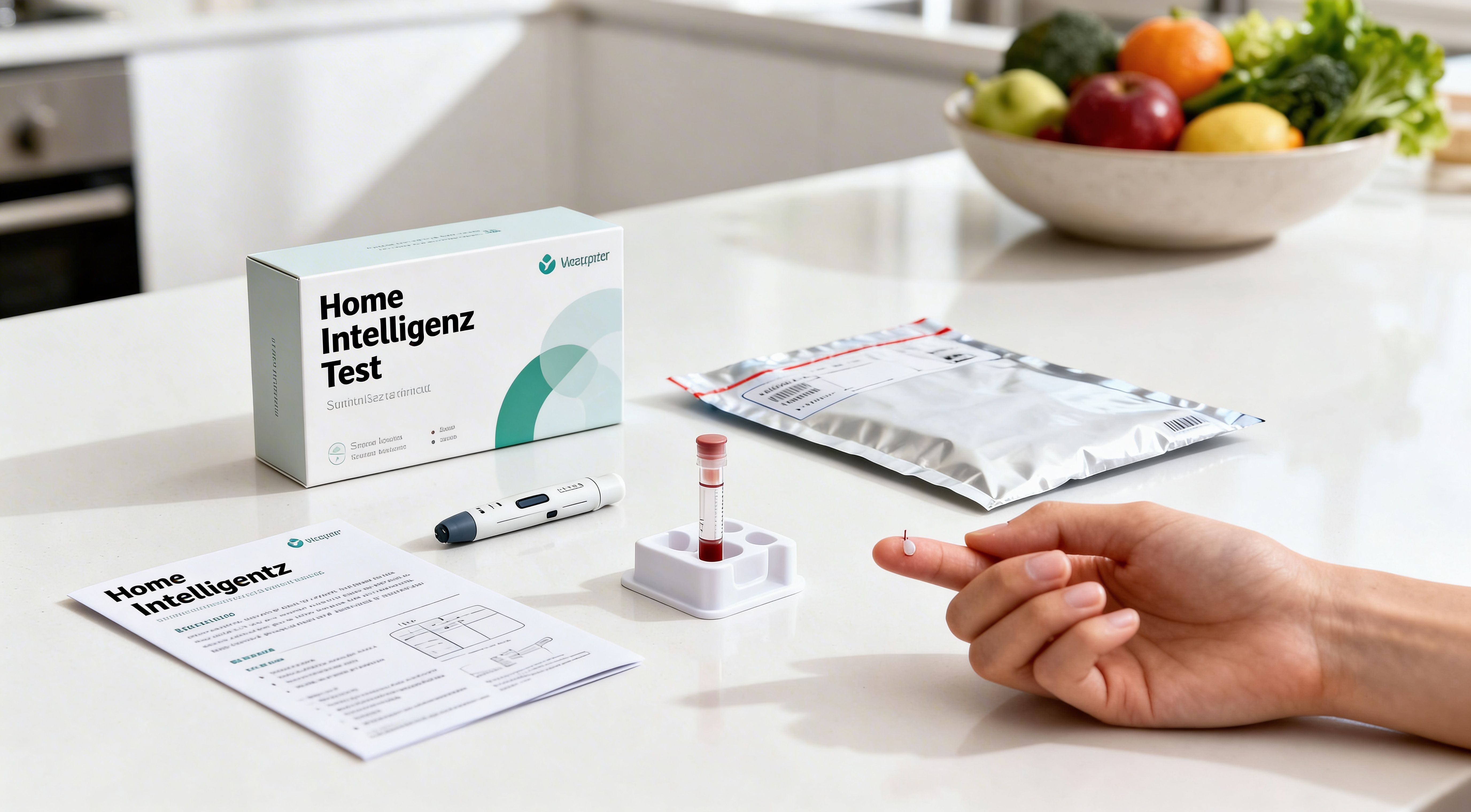
Do you often feel run down, bloated, or do you have skin problems after eating? Such symptoms are not imagined; they are clear signals from your body. Often, these are not classic allergies, but rather unrecognized food intolerances. The first step to regaining a better quality of life is to get these intolerances tested.
Are a bloated stomach and fatigue due to an intolerance?

Perhaps you know the feeling: lunch was delicious, but shortly afterward, your stomach rumbles, a heavy fatigue overtakes you in the afternoon, or your skin suddenly reacts with itching. Many people attribute such complaints to everyday stress or a "bad" meal. But often, there's more behind it – specifically, a reaction of your body to certain foods.
You should take these signals seriously. Instead of accepting them and suffering through the day, you can pinpoint the cause.
Typical symptoms that may indicate an intolerance
The insidious thing about intolerances is that their symptoms often appear gradually and with a significant delay – in contrast to allergies, which usually trigger immediate and severe reactions. This makes it incredibly difficult to identify the culprit yourself in everyday diet.
Look out for these common signs:
- Digestive problems: A constant bloated stomach, feeling of fullness, diarrhea, or constipation.
- Persistent fatigue: You often feel tired and lacking energy, especially after eating. You can read more about this in our article on the causes of chronic fatigue.
- Skin changes: Unexplained rashes, acne, eczema, or itching.
- Headaches and migraines: Recurrent headaches for which there is no other plausible explanation.
This list shows how differently the body can react. What causes stomach pain in one person can cause skin problems in another. The common denominator is often a food that your body cannot process properly.
You are not alone with your complaints
Food intolerances are no longer a niche phenomenon. Did you know that around 18% of Germans are affected, while true allergies only occur in about 4%? These figures show how many people are looking for answers to their diffuse health problems.
Your body is sending you signals. An intolerance test is the first proactive step to take responsibility for your health and better understand your body's language.
Getting to the bottom of the causes is the key to greater well-being. Instead of fumbling in the dark and randomly eliminating foods, a targeted blood test, like the mybody-x intolerance test, can finally provide clarity.
Such a test precisely analyzes how your immune system reacts to a variety of foods. The result is like a personal roadmap that shows you exactly which foods you should tentatively avoid to adjust your diet and bring more ease back into your life.
What intolerance testing methods are available?
If you notice that your body reacts with discomfort to certain foods, you face an important question: How do I find out what's behind it? There are various ways to get intolerances tested, and each method has its own advantages and disadvantages. The right choice depends entirely on your symptoms and your personal situation.
Imagine the different tests as tools: For a nail, you need a hammer; for a screw, a screwdriver. Similarly, a specific test is perfect for one type of intolerance, but hardly meaningful for another.
Medical tests for specific suspicions
If you suspect you suffer from a classic intolerance like lactose, fructose, or sorbitol intolerance, your general practitioner or a specialist is usually the first point of contact. Very specific procedures are used here.
One of the most well-known tests is the H2 breath test. The principle is simple: you drink a solution with a high dose of the suspected sugar, for example, lactose. If your small intestine cannot process this sugar properly, it moves into the large intestine. There, bacteria break it down and produce hydrogen (H2). This enters your lungs via your blood and can be measured in your exhaled breath. If the H2 value rises significantly, the case is quite clear.
- Advantages: This procedure is the gold standard for diagnosing carbohydrate intolerances and provides clear results when performed correctly.
- Disadvantages: The test can trigger the very symptoms you want to avoid – bloating, abdominal cramps – and you have to spend several hours at the doctor's office. Also, only one substance is tested at a time.
If a true food allergy is suspected, which manifests immediately (Type I allergy), an IgE blood test or a prick test on the skin may be considered. These tests look for specific IgE antibodies responsible for rapid and often severe reactions like swelling or difficulty breathing.
Modern blood tests for tracing
But what if symptoms only appear hours or even days after eating? Chronic fatigue, skin problems, or a constant bloated stomach are typical examples. This is where so-called IgG blood tests come into play, as offered by mybody-x. These analyze whether your immune system reacts to a variety of foods by forming IgG antibodies.
An elevated IgG level is not an allergy in the classic sense. Rather, it is an indication that your body is "fighting" a food. This can lead to subtle, chronic inflammation, which in turn causes your symptoms.
Such tests are incredibly valuable if you suffer from diffuse symptoms and simply can't pinpoint the trigger. They scan a wide range of foods at once and provide you with a clear, prioritized list. Learn more about how you can detect intolerances in our in-depth article.
Further diagnostic methods
In addition to breath and blood tests, there are other approaches that can help you gain clarity.
- Stool analyses: These can provide information about the composition of your gut flora (microbiome), inflammatory markers, or overall digestive performance. An imbalance of gut bacteria, also known as dysbiosis, can promote or worsen intolerances.
- Elimination diet: This is the supreme discipline in practice. Based on a test result or a strong suspicion, you consistently avoid potentially problematic foods for a certain period (usually 4-6 weeks). If your symptoms noticeably improve during this time, it's a strong indication. Afterward, you reintroduce the foods one by one and carefully observe your body's reaction.
Of course, an elimination diet is elaborate. But it is also extremely insightful. An IgG test, like the one from mybody-x, provides you with the perfect basis for it. Instead of fumbling in the dark, you know exactly which foods you should tentatively omit. This makes the whole process much more efficient and the chances of success much higher.
Easily test intolerances from home with mybody®x
Let's be honest: who wants to deal with crowded waiting rooms and unclear statements when their stomach is bothering them? The idea of arranging a doctor's appointment, only to perhaps go home without a concrete result, deters many from pursuing their complaints. But there's a much more convenient solution: You can get your intolerances tested, comfortably in your own home.
With a blood test from mybody®x, you take control yourself – discreetly, without waiting, and exactly when it suits you. The entire process takes place in your familiar environment. This not only saves a lot of time, but above all, a lot of stress.
Your test kit comes directly to your home
As soon as you order your test, we will send you a small package. Inside, you'll find everything you need for the sample. Don't worry, you don't have to be a medical professional – every step is simple and clearly explained.
The mybody®x test kit contains everything necessary:
- Illustrated instructions that guide you step-by-step through the process.
- Two small lancets for a gentle prick of the fingertip.
- A sample tube to collect a few drops of blood.
- Disinfectant wipe and plaster for a clean procedure.
- A pre-paid return envelope for direct shipment to the laboratory.
Taking the sample is really uncomplicated. A small prick, a few drops of blood – that's it. Many of our customers are surprised at how quick and painless the whole thing is.
The biggest advantage of a home test? You are in control. You determine the time and place. No stress, no rush – just you and the first step towards more clarity.
After taking the sample, you put everything in the return envelope and take it to the post office. From here, we take over. Your sample goes directly to our certified partner laboratory in Germany.
Precise analysis in a German specialist laboratory
Now the most important background part begins. Your blood sample is analyzed with the utmost care in an ISO 9001 certified laboratory. Experts work here with state-of-the-art technology, because we know: you must be able to rely 100% on the results.
Your data protection is just as important to us. The entire process is subject to the strict requirements of the General Data Protection Regulation (GDPR). Your personal data is safe with us and treated with absolute confidentiality.
The following infographic gives you a quick overview of common testing methods, including the blood test we use at mybody®x.

As you can see, in addition to breath and stool tests, the blood test is a central method for detecting reactions to a variety of foods.
Perhaps you know this: you eat your breakfast, and a short time later, your stomach rebels with bloating or cramps. These are typical signs of lactose intolerance, one of the most common intolerances. An evaluation by KKH Krankenkasse shows that diagnoses have significantly increased here. This is exactly where a mybody®x blood test comes in: it helps you track down the triggers. Already over 11,314 customers have significantly improved their quality of life in this way.
Your personal results report: More than just numbers
After a few days, you will receive a notification: Your result is in! You can view it digitally in your secure customer account at any time. However, we do not send you an incomprehensible data table, but a clear and actionable plan.
Your findings show you exactly which foods your body reacts to with elevated IgG values. And most importantly: you get concrete recommendations for action. We explain how to set up a rotation diet and what delicious alternatives there are for your meal plan. If you want to delve deeper into the topic, also read our detailed article on intolerance testing.
Understanding and implementing your test result correctly

The moment has arrived: your mybody®x test result is before you. Finally, clarity – a huge step. But often, the next question immediately arises: "What now?" You are not alone in this. Let's decipher your findings together and see what these values mean for you and your daily life.
Your result is not an endpoint, but the starting signal for your journey to more well-being. See it as your very own map, showing you the way to a diet that truly suits you and your body.
Interpreting IgG reactions correctly
In your findings, you will see which foods your body reacts to with an increased concentration of IgG antibodies. First and foremost: an increased IgG reaction is not a classic type I allergy, which is mediated by IgE antibodies. So, you don't have to fear an anaphylactic shock, as can occur with a severe peanut allergy.
Imagine an IgG reaction more like a constant "nuisance fire" in your body. Your immune system is unknowingly busy fighting certain food components. This can lead to subtle, chronic inflammatory processes that manifest in diffuse symptoms such as fatigue, skin problems, or digestive complaints.
Your test result is not a lifelong list of prohibitions. It is a snapshot – and a powerful tool to give your body a break and specifically relieve your immune system.
The strength of the reaction in the test report helps you prioritize. Foods that trigger a strong reaction should be avoided more consistently at first than those with only a mild reaction.
The practical roadmap for your dietary change
Your mybody®x findings are the perfect basis for a targeted adjustment of your diet. Two methods have proven particularly effective: the elimination and rotation diet.
- Elimination Diet: Here, you avoid all foods with strong to moderate reactions for a certain period. In practice, a duration of four to eight weeks has proven very effective.
- Rotation Diet: Instead of complete abstinence, you eat the problematic foods only every four to seven days. This way, you avoid constant confrontation for your immune system. This method is often easier to implement in everyday life for many.
Let's say your test shows a strong reaction to wheat, cow's milk, and chicken egg. A sensible first step would be to completely eliminate these three foods from your diet for the next six weeks. This may sound like a big challenge at first, but today there are fantastic and delicious alternatives. Instead of wheat bread, you might try one made from buckwheat, and instead of cow's milk, you might opt for oat or almond drinks.
After this "rest period," the most exciting part comes: you reintroduce the foods individually and with some间隔. This way, you'll know exactly which food actually triggers your symptoms and, more importantly, in what quantity you might tolerate it.
You are not alone – we support you
We know from experience that a diagnosis can raise many questions. How do I plan my meals? What do I buy? That's why our service doesn't end with the test result.
Every mybody®x customer has the opportunity to take advantage of a free consultation with our health experts. In this personal conversation, they will help you:
- Understand your findings in detail.
- Develop a realistic and practical meal plan.
- Find practical tips for shopping and delicious alternatives.
This conversation is your chance to clarify any open questions and get started with motivation. Use this support – it's a firm part of our promise to you. If you want to delve deeper into the matter, you will find a lot more information in our article on intolerance testing via blood.
How to improve your well-being long-term
An intolerance test is a powerful tool. Finally, you have a clear indication of which foods are causing problems for your body. But true, sustainable health is more than just omitting certain things. Now begins the truly exciting part of your journey: actively helping your body to find balance again.
You have relieved your system through dietary changes – a huge first step! The next logical step is to specifically strengthen it. Your body has an amazing ability to regenerate if you give it the right building blocks.
More than just abstinence: the power of rebuilding
Imagine you discover a leak in a pipe. First, you turn off the main tap to stop the water damage. But that's not enough. After that, you have to repair the pipe and fix the damage. It's the same with your body after an intolerance test.
Omitting problematic foods stops the constant irritation of your immune system and gut – you've turned off the "main tap." Rebuilding is the "repair": you strengthen the systems that have been compromised by the continuous stress. Two areas are in focus here:
- The gut as a center: Targeted support can help regenerate the intestinal lining strained by intolerances and alleviate subtle inflammation.
- The microbiome as an ally: A diverse and healthy gut flora is crucial. It not only supports your digestion but is also a central player for a strong immune system.
The German Allergy and Asthma Association confirms a decades-long increase in food intolerances. While only about 4% of the population suffer from true allergies, up to 30% report discomfort after eating – often due to intolerances. Tests like those from mybody®x offer a modern way to detect causes such as histamine or fructose intolerance from home. If you want to delve deeper into research trends, you can read further insights from experts here.
Your health is a journey, not a one-time event. A test is the compass, but the actual hike is about understanding, nourishing, and strengthening your body long-term.
Looking beyond the plate: nutrients and hormones
Sometimes, digestive problems, constant fatigue, or skin impurities are not solely due to intolerances. They can also be a symptom of a deeper imbalance. Long-term intolerances, for example, can impair nutrient absorption in the gut and thus lead to deficiencies.
Here it becomes clear why a holistic approach is so valuable. You've adjusted your diet, but the energy still isn't back? Your skin remains troubled? Then it's time to look a level deeper.
Possible connections you should keep in mind:
- Iron deficiency: Often leads to classic fatigue and malaise.
- Vitamin D deficiency: Plays a key role in the immune system and mood.
- Hormonal imbalances: An imbalance of hormones like cortisol can massively influence your energy level and stress resistance.
This is precisely where supplementary tests from mybody®x can provide the decisive clue. A nutrient deficiency test or a hormone test reveals whether there might be another cause behind your remaining symptoms. This way, you get a complete picture and can take targeted countermeasures.
Your companion: mybody®x
Taking your health into your own hands can feel overwhelming at first. But you don't have to go this path alone. We at mybody®x see ourselves as your reliable partner.
We offer you not only precise tests, but also the knowledge and support you need to translate the results into real, positive changes. With understandable reports, personal advice, and a large knowledge portal, we accompany you step by step.
View your health as an exciting project. Every piece of information you gain about your body gives you more control. Every small step – be it eliminating a food, replenishing a nutrient, or specifically building up your gut flora – is a victory on the path to more energy and joy of life.
Frequently asked questions about intolerance tests
Are you thinking about an intolerance test, but still have a few unanswered questions in your head? Most people do. We have collected the most common questions for you and answer them here – honestly and without jargon, so you can make the right decision for yourself.
How reliable is an at-home blood test for intolerances?
That is probably the most important question: Can such an at-home test even be reliable? The answer is a clear yes. A blood test like the one from mybody®x is so reliable because your sample is analyzed in a certified specialist laboratory in Germany.
The test precisely measures the specific IgG antibodies in your blood. Even if the result is not an official medical diagnosis, it provides you with an extremely valuable clue. You see in black and white which foods your immune system reacts to, and you can finally understand where your symptoms might be coming from.
Does the health insurance cover the costs for an IgG test?
IgG self-tests are generally a private service and are not covered by statutory health insurance. In technical terms, this is called an "individual health service" (IGeL).
It is best to see it as a conscious investment in your well-being. Instead of waiting for diffuse complaints to turn into serious problems, you take your health into your own hands.
What is the difference between an IgG test and an allergy test (IgE)?
These two tests are often confused, but they measure fundamentally different reactions of your body. Knowing the difference is crucial to interpreting the results correctly.
- IgE test (classic allergy): This test looks for IgE antibodies, which are responsible for immediate reactions. Think of hay fever or a peanut allergy: symptoms like swelling, rash, or shortness of breath usually appear within minutes.
- IgG test (intolerance): This involves IgG antibodies, which are associated with delayed reactions. Symptoms – such as digestive problems, fatigue, or headaches – often creep in hours or even days after eating. This is exactly what makes it so difficult to find the trigger yourself.
Do I have to avoid positively tested foods forever?
No, and that's one of the best pieces of news! A positive result does not mean that you have to eliminate a food from your diet for the rest of your life. This is a common concern that we can alleviate for you.
The test serves as a basis for a temporary dietary change, for example, an elimination diet. You specifically give your body a break so that your immune system can recover.
Our experience shows: After a few months, you can gradually reintroduce many of the foods. Often, they are then tolerated again without problems in normal quantities.
Are you ready to get to the bottom of your symptoms and improve your quality of life? With mybody®x, you'll find out what really works for your body. Discover the mybody®x blood test and start your journey to greater well-being today.


Share:
At-Home Food Intolerance Test: Find Clarity & Well-being
Intolerance Test: Find out what truly does you good