
Get Your Micronutrients Tested and Correct Deficiencies in a Targeted Way
Do you often feel tired, unfocused, or simply not quite at your best? The cause could be hidden deep within your cells— a silent imbalance in your nutrients. If you are considering getting your micronutrients tested, you have already taken the first and most important step: You want to understand your body better and find answers instead of continuing to grope in the dark.
Why Taking a Look at Your Micronutrients Really Makes a Difference
Does this sound familiar? You actually eat healthily, get enough sleep, and exercise regularly, but you still lack the energy for everyday life. We like to attribute such vague symptoms to normal stress. But they could be the first quiet cries for help from your body, drawing attention to a deficiency in important vitamins and minerals.
Micronutrients are the invisible heroes that keep countless processes in your body running. They regulate your energy metabolism, keep your immune defenses active, and ensure stable hormone production. If even one of these tiny building blocks is missing, the whole system can become unbalanced.
The Silent Epidemic: Nutrient Deficiencies Are More Widespread Than You Think
A deficiency in important nutrients is no longer just a problem in developing countries. It has arrived right among us, including in Germany. Our modern lifestyle places considerable demands on your body: stress, environmental pollutants, and highly processed foods can drive up the need for vitamins and minerals. At the same time, the nutrient content of many of our foods is declining.
The National Nutrition Survey II provides alarming figures on this. Many people in Germany do not even reach the recommended amounts of essential nutrients.
- For vitamin D, the figures are 81.2% of men and 90.9% of women.
- For folate, it is as many as 74.4% of men and 80.6% of women.
These data, which you can read about in detail here, show in black and white how crucial it is to know your own status.
A blood test is like looking under the hood of your body. It shows you exactly where the fuel is missing so that you can replenish it specifically instead of just guessing blindly.
Why Guessing Is Not a Good Strategy
If you suspect a deficiency, reaching for some nutritional supplements from the drugstore is often the first impulse. But that is rarely the best idea. Without knowing exactly what you are really lacking, you risk taking the wrong supplements or dosing them completely incorrectly.
For some nutrients, having “too much” can be just as problematic as having “too little.” In addition, vitamins and minerals can influence one another. If you take one substance without proper oversight, you could disrupt the balance of another.
A targeted blood test, such as the mybody-x Micronutrient Test, provides a solid, scientific foundation here. It gives you precise data about your nutritional status and shows you how to address deficiencies in a targeted way tailored to your needs. Instead of remaining uncertain, you get clear facts and personal recommendations to finally take your health into your own hands.
Would you like to learn more about the various signs? In our article about typical symptoms of nutrient deficiency, we go into even greater detail.
The mybody-x micronutrient test process
Are you thinking about having your micronutrient levels checked, but wondering how it really works from home? Don’t worry—we’ll guide you through it and show you step by step how simple and transparent the journey to your personal results with mybody-x is. The entire process is designed to give you maximum clarity with minimal effort.
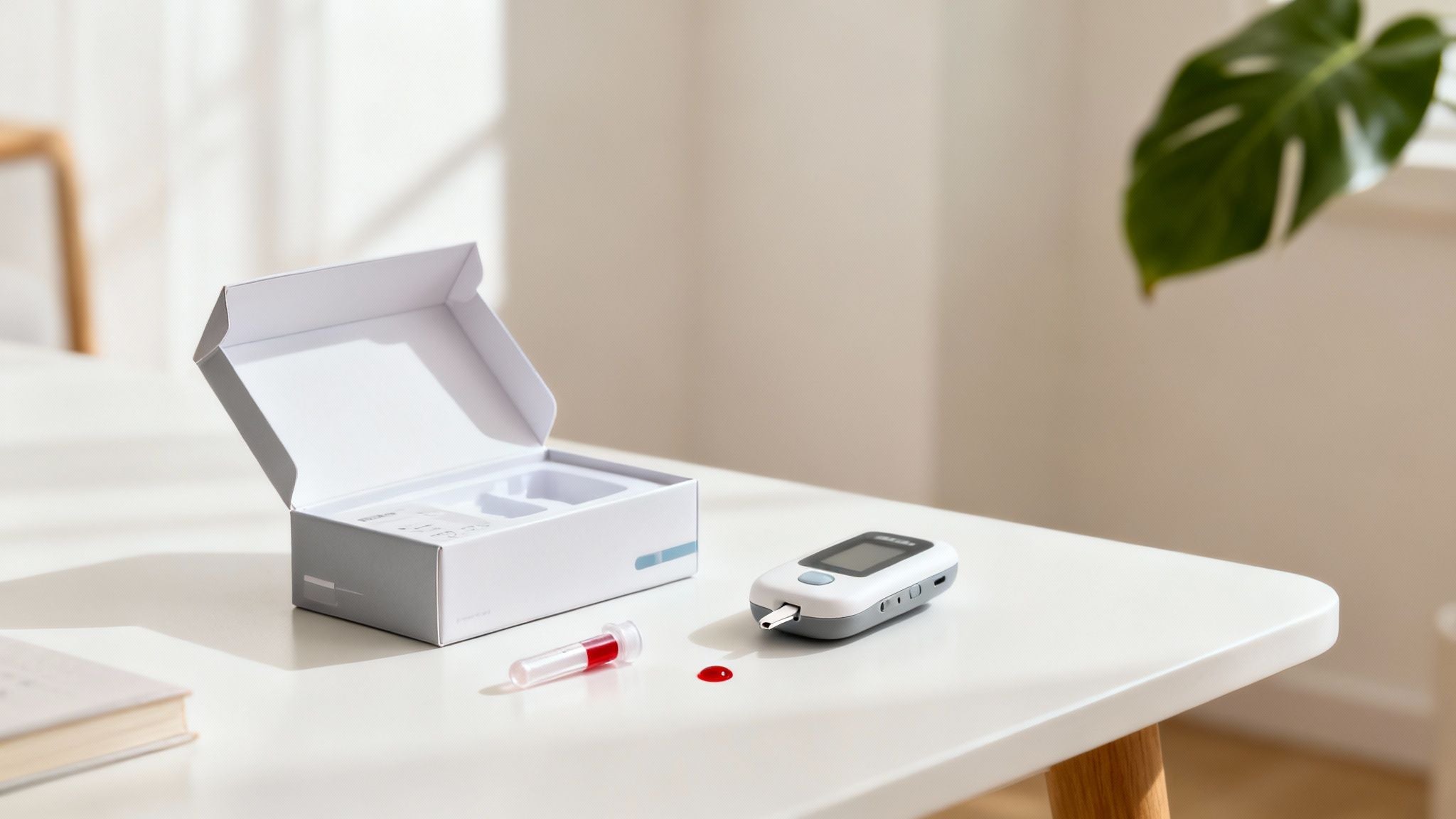
It all begins with your desire for certainty. You simply order the mybody-x Micronutrient Test online, and just a few days later, you’ll find a discreet test kit in your mailbox. No long wait for a doctor’s appointment, no complicated trips—you set the pace.
From ordering to collecting the sample
As soon as you open your test kit, you immediately see that everything has been thought of. Alongside the sample-collection materials, there is a simple, illustrated guide that leaves no questions unanswered. For the blood collection, all you need is a small, painless prick in your fingertip. Using the included equipment, you collect a few drops of blood—and that’s it.
After that, you activate your test kit online using your individual test ID. This is an important step because it allows us to later assign your sample anonymously to your personal, secure online account. Your data is protected according to the highest standards (GDPR and ISO 27001).
The following graphic shows the journey many people take: from vague symptoms and uncertainty to a clear analysis through a targeted blood test.

A targeted test closes this exact gap between mere guesswork and well-founded knowledge about your own body.
Scientific precision from a certified laboratory
After collecting the sample, you pack everything in the prepared return envelope and send it directly to our partner laboratory. Your sample therefore does not end up just anywhere, but in a specialist laboratory in Germany certified according to DIN EN ISO 15189, which is also used by doctors and clinics for analyses.
Interestingly, this approach is already part of everyday life for many people. A representative Forsa survey showed that 51% of Germans took dietary supplements last year—often just as a precaution. Since micronutrient tests are rarely covered by health insurance, self-tests such as the one from mybody-x offer a reliable alternative for determining your actual needs before you start taking random supplements.
The mybody-x test specifically analyzes the vitamins and minerals that are essential for energy, the immune system, and your overall well-being. These include vitamin D, B12, magnesium, zinc, and iron, among others—precisely the nutrients for which deficiencies are particularly common among the population.
As soon as the laboratory analysis is complete—which usually takes just a few business days—we’ll notify you. You can then access your results in your personal online account. They are presented clearly and include initial, actionable recommendations. If you’d like to feel even more confident, you can view the entire process in detail here.
How to properly understand and interpret your test results
The test is complete, the results are here—and now what? Many people feel a little unsure at first when they are looking at laboratory values. But don’t worry, we won’t leave you alone with them. We’ll show you how the mybody-x results report is structured so that you can understand it easily and recognize the story behind the numbers.

How your results report is structured
Your personal mybody-x report has been deliberately designed so that you can understand it intuitively. Instead of overwhelming you with medical jargon, we use a simple visual traffic-light system. At a glance, you can immediately see which of your values fall within the green (optimal), yellow (needs monitoring), or red (critical) range.
Each individual value is not only displayed but also explained in an easy-to-understand way. So you learn not only what your level is, but also the important role this micronutrient plays in your body. This helps you truly understand how everything is connected to your health.
What the values really mean
A value is far more than just a number—it’s a window into your inner balance. Let’s go through this using a specific example.
Scenario: Vitamin D deficiency
- Your result: Your vitamin D level is in the red range. The report shows you the exact value in ng/ml and compares it with the scientifically recommended optimal range.
- The explanation: You learn that vitamin D is essential not only for strong bones, but also for your immune system and even your mood. A deficiency can manifest as fatigue and increased susceptibility to infections.
- Your insight: Suddenly, your constant winter fatigue makes sense! It’s not simply the “winter blues,” but a measurable condition that you can now address in a targeted way.
This principle applies to every nutrient we analyze, from magnesium to zinc. Your report translates complex laboratory data into language you understand and immediately shows you where action is needed. If you want to delve deeper into the subject, our guide explains what a blood analysis actually is and provides valuable background information.
Mild deficiency or serious deficit? Here’s how to interpret it
Not every value that deviates from the normal range is immediately a reason to panic. This is exactly where the mybody-x report helps you interpret your results correctly.
- Yellow range (Mild deficiency): This value is a friendly indication that your nutrient supply is not quite optimal. Often, small, targeted adjustments to your diet are enough to get it under control. Think of it like your car’s fuel warning light—you can still drive, but you should refuel soon.
- Red range (Severe deficiency): Urgent action is needed here. Your stores have probably already been significantly depleted, and you may already be clearly experiencing symptoms. In this case, the recommendations are more intensive and may also include targeted use of dietary supplements.
Your results report is more than just a snapshot. It’s the starting point for conscious change and the first step toward taking charge of your health.
Use your personal recommendations
The heart of your report is the recommendations tailored to you. We won’t leave you out in the cold with raw data alone. For every value that isn’t in the green range, you’ll receive specific—and above all, actionable—tips.
These may include suggestions for specific foods, small lifestyle adjustments, or guidance on how to supply your body with targeted nutrients. This advice is your personal guide to getting your levels back on track and taking the next steps toward greater well-being safely and knowledgeably.
From analysis to action: your personal action plan
Your test result is in front of you—great! But that's only the beginning. The raw data is one thing, but the real value emerges now, when you move from knowledge to action. We'll show you how to translate the recommendations from your mybody-x report into concrete, practical measures for everyday life and thus kick-start positive change.

The path back to balance often begins on your plate. But don't worry, it's not about radical diets. Rather, it's all about smart, targeted adjustments that truly fit you and your life.
Case study: Vitamin D deficiency
Imagine that your report shows a significant vitamin D deficiency. This is a very common scenario, especially during the darker months. Your personalized recommendations would likely suggest a sensible combination of nutrition, lifestyle, and targeted supplementation.
Adjust your diet:
Your first step is to consciously put more vitamin D-rich foods on the table. Your meal plan could look like this more often:
- Fatty fish: Salmon, herring, and mackerel are fantastic natural sources.
- Mushrooms: Mushrooms grown under UV light can make a valuable contribution.
- Fortified foods: In the supermarket, look for dairy products or plant-based alternatives with added vitamin D.
Optimize your lifestyle:
The sun is and remains our most important source of vitamin D. So your action plan could be very simple: Use your lunch break more often for a 20-minute walk in the fresh air. Even on cloudy days, enough UV light reaches your skin.
Your body is a clever system. Give it the right building blocks through nutrition and the right impulses through your lifestyle, and it will begin to regulate itself.
Targeted supplementation:
In cases of a pronounced deficiency, as occurs in over 80% of the population in Germany, diet alone is often not enough. Your mybody-x report gives you a clear recommendation on when taking a vitamin D supplement makes sense. Choose a high-quality form (D3) and an appropriate dosage, often combined with vitamin K2 for optimal utilization.
Case study: iron deficiency
Another typical issue, especially among women, is a low iron level. Fatigue and paleness are often the first signs. In this case, your action plan would focus on an iron-rich diet and ways to improve absorption.
Your focus should therefore be on incorporating foods that are rich in this important trace element.
- Animal-based sources: Red meat, especially liver, provides so-called heme iron. Your body can absorb it particularly well.
- Plant-based sources: Lentils, chickpeas, pumpkin seeds, spinach, and oats are excellent plant-based sources of iron.
The key to plant-based iron is to improve its absorption. Always combine iron-rich plant foods with a source of vitamin C. A glass of orange juice with your oatmeal or a few strips of bell pepper with your lentil salad can increase iron absorption many times over. Conversely, you should not drink coffee, black tea, or consume dairy products directly with iron-rich meals, as they can inhibit absorption.
In our guide, you will find 7 more nutrition tips for a diagnosed deficiency to help improve your well-being.
Your personal roadmap
Think of your mybody-x results report as your very own roadmap. It takes the guesswork out of the process and gives you clear, scientifically sound, and above all, achievable steps to follow.
Start with small, practical changes. Choose one or two recommendations each week and firmly incorporate them into your daily routine. This turns a simple analysis into a lasting improvement in your health and quality of life. You now have the control and knowledge to give your body exactly what it really needs.
Avoid common mistakes and stay healthy in the long term
The path to optimal nutrient intake is not a sprint but a marathon. Your test result is a fantastic foundation, but true success only becomes apparent when you stay on track and cleverly avoid common pitfalls. Many people make the mistake of becoming complacent after their initial successes and falling back into old patterns.
One of the most common misconceptions is the assumption that a single test is sufficient forever. However, your body is not a static structure but a dynamic system. Your need for micronutrients is constantly changing—due to your lifestyle, age, stressful periods, or even seasonal influences such as less sunlight in winter.
When is it useful to take another test?
Seeing your progress in black and white is one of the strongest motivators of all. It’s not about compulsive monitoring, but about making sure that your measures are actually working and that your body continues to be optimally supplied.
Repeating a test of your micronutrient levels is a smart decision, especially in these situations:
- To monitor progress: Have you specifically corrected a deficiency over several months? A follow-up test will show you whether your stores have been replenished. A good time to do this is usually after three to six months.
- When circumstances change: Pregnancy, a period of intensive training, or prolonged stress—all of these change your nutrient requirements. A test gives you the reassurance that everything is in balance.
- As an annual check-up: Just as you take your car for regular inspections, an annual nutrient check can also be useful. This allows you to keep an eye on your levels and prevent deficiencies at an early stage.
Repeating a test is not a sign of distrust in your efforts, but an act of self-care. It helps you fine-tune your strategy and ensure that you stay on the right track over the long term.
Know the pitfalls of supplementation
Another classic pitfall is how you handle dietary supplements. Many people tend to act on a scattergun basis or misjudge the dosage. The motto “more is better” is often completely wrong here and can even be counterproductive.
Be sure to consider interactions: Some nutrients are true team players, while others interfere with each other’s absorption. Zinc and iron, for example, compete for the same transport pathways in the gut. So if you take both at a high dose at the same time, the absorption of one nutrient may be significantly impaired. Conversely, vitamin C is a true booster of iron absorption.
Your mybody-x report already provides you with valuable, personalized guidance on this. It’s not just about knowing what you’re lacking, but also how to best provide it to your body. This is how you build sustainable, healthy habits that go far beyond simply correcting a deficiency and become a lasting part of your mindful lifestyle.
Your questions – our answers about micronutrient testing
You probably still have a few questions before you get started. That’s completely normal! We’ve collected the most frequently asked questions we receive about micronutrient testing and provide clear, easy-to-understand answers.
How often should I have my micronutrient levels checked?
That depends entirely on you, your lifestyle, and, of course, the results of your first test. Have you identified a specific deficiency and worked on correcting it? Then a follow-up test after around three to six months is a great idea. This way, you can see in black and white whether your efforts have paid off.
For everyone else who simply wants to make sure everything is within the normal range, an annual check-up can become a good routine. This way, you can keep an eye on your levels and take action early, long before any initial symptoms become noticeable.
Can’t I recognize a deficiency without a test?
Sure, symptoms such as constant fatigue, concentration problems, or a weak immune system are often the first warning signs. The problem is that they are highly nonspecific and can have countless causes. A blood test, on the other hand, provides you with objective and measurable data and shows you clearly what your body is really lacking.
Relying solely on gut feeling and randomly taking various supplements is not only often ineffective, but can even backfire in the worst case. A test gives you the confidence you need to make smart, targeted decisions.
Does health insurance cover the cost?
As a rule, statutory health insurance providers only cover such a test if a doctor has solid grounds to suspect a deficiency disease. A test purely for prevention or to optimize your health, such as the mybody-x micronutrient test, is therefore normally a service you pay for yourself.
The major advantage for you: You have full control, don’t need a doctor’s referral, and receive your results presented in a transparent and easy-to-understand way.
What is the difference between the mybody-x home test and a test at the doctor’s office?
The key advantage of the mybody-x test is convenience. You collect the sample easily, discreetly, and with minimal discomfort at home—whenever it fits into your day. Your sample is then analyzed in the same certified specialist laboratories in Germany that doctors and clinics also work with.
Your results then won’t arrive as a cryptic note in your mailbox, but as an easy-to-understand online report directly on your screen—including personal recommendations you can implement right away.
Are you ready to finally gain clarity about your nutrient intake? With the mybody-x micronutrient test, you establish the scientific basis for taking targeted control of your health. Order your test now and start your journey toward more energy and well-being. Order your micronutrient test now



Share now:
At-home iron test: How to easily check your iron levels
Food Intolerance Self-Test: Find Out What Really Works for You