
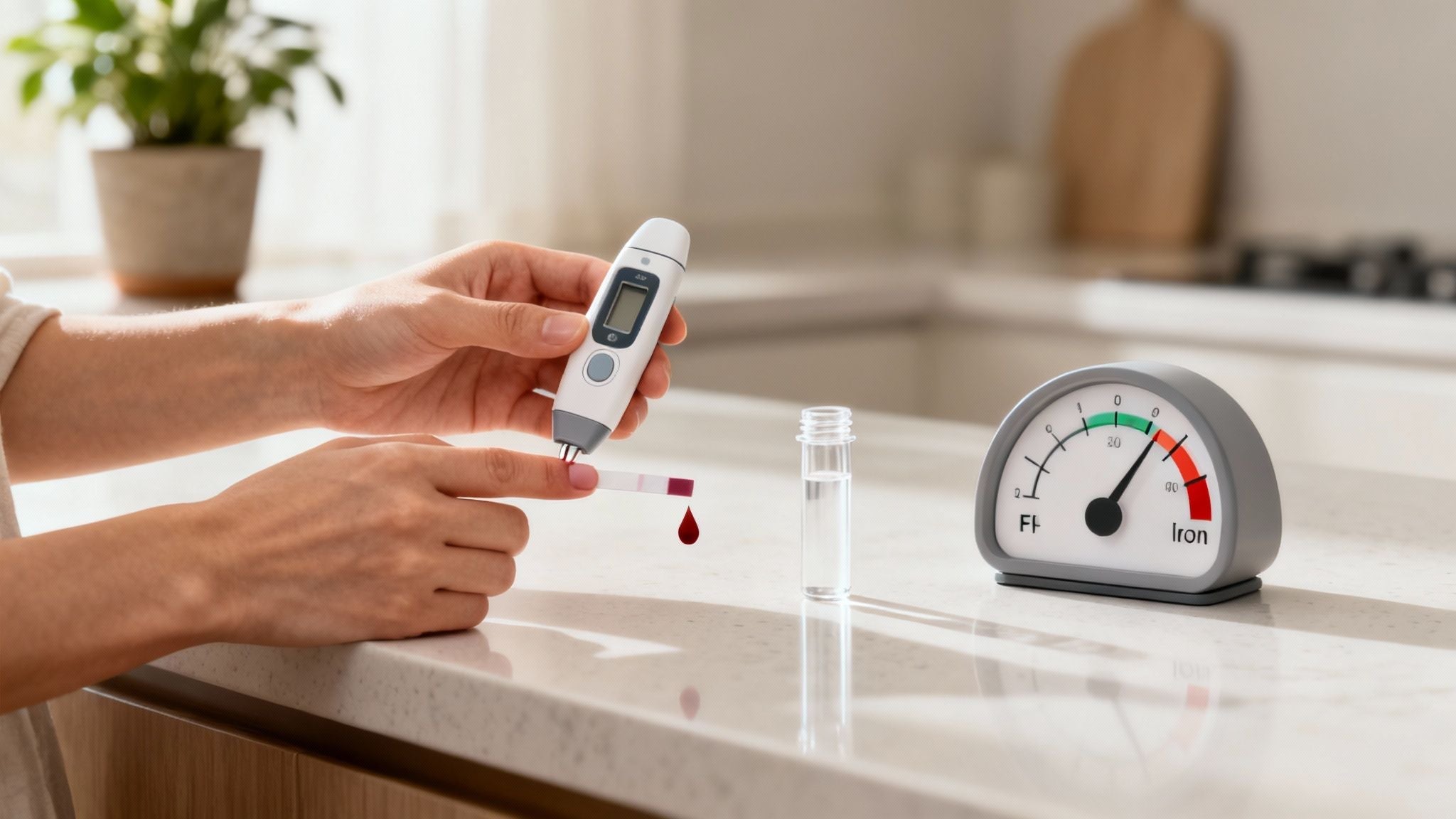
At-home iron test: Checking your iron levels is this easy
Do you often feel sluggish and unfocused, and lack the energy for everyday life? Then an at-home iron test could quickly provide clarity as to whether an iron deficiency might be behind it. With this simple test, you can check the level of your iron stores and get an important initial indication of your iron status, helping you better understand your body.
Why fatigue often starts with iron deficiency
Constant exhaustion is more than just a sign of too much stress or poor sleep. It is often a clear signal from your body that it is missing something important. Iron plays a particularly crucial role here, as it is the trace element that is central to your energy levels. Think of it as the spark plug in your body's engine: without this spark, everything runs on low power.
Iron's main role is transporting oxygen in the blood. It is the central component of the red blood pigment hemoglobin. If you lack iron, your body can produce less hemoglobin. The result? Less oxygen reaches your cells and muscles—and that is exactly what causes the debilitating fatigue and lack of energy you may be familiar with.
What an at-home iron test measures
An at-home iron test focuses on one particularly important value in your blood: ferritin. Ferritin is a protein that stores iron in your body. You can think of it as the fuel gauge for your iron reserves. If your ferritin level is low, your stores are depleted—even if your standard blood count still appears unremarkable at first glance.
A deficiency often develops gradually. The body first depletes its stores before the symptoms become clearly noticeable. In addition to fatigue, other signs may include:
- Difficulty concentrating and feeling forgetful
- Pale skin and brittle nails
- Hair loss and dry skin
- Increased susceptibility to infections
With the mybody-x iron self-test, you take your health into your own hands. You do not have to wait weeks for a doctor's appointment to get initial answers. Instead, you can conveniently collect a small blood sample at home and have it professionally analyzed by our certified laboratory. In the end, you will receive an easy-to-understand report that clearly shows you where you stand and provides you with initial recommendations for action.
Fatigue is one of the most common symptoms of nutrient deficiencies. If you would like to learn more about which vitamins may be lacking when you feel tired, you will find more valuable information in our guide. This will give you a comprehensive picture of the causes of your exhaustion.
How an at-home test reliably measures your iron levels
Perhaps you’re wondering how a small prick in the finger can really be just as informative as a complete blood draw at the doctor’s office. The answer is actually quite simple: It lies in the clever combination of modern technology and strict laboratory standards that makes the at-home iron test so reliable. The entire process is designed so that you can carry it out safely and without difficulty on your own.
The key to accuracy lies not in where the blood is drawn—from a vein or the fingertip—but in how it is analyzed. Your sample is not evaluated at home. You send it to a certified medical laboratory. There, exactly the same thing happens as with any other blood sample: It undergoes standardized, highly precise analytical procedures.
From the prick to a precise laboratory result
The entire process is designed to provide you with maximum safety and comfort. It all begins by collecting just a few drops of blood from your fingertip. Don’t worry, it sounds worse than it is. The mybody-x test kit contains a tiny, sterile lancet that makes the prick quick and virtually painless.
You then collect the blood in a special sample tube. This tube is prepared so that your sample remains stable during transport and safely reaches the laboratory. Once it arrives, the experts take over. They determine your ferritin level using scientific methods that guarantee absolute precision. In the end, you receive a detailed report that clearly and understandably breaks down your results.
The following graphic shows you the simple journey from the first symptoms to a tangible result.
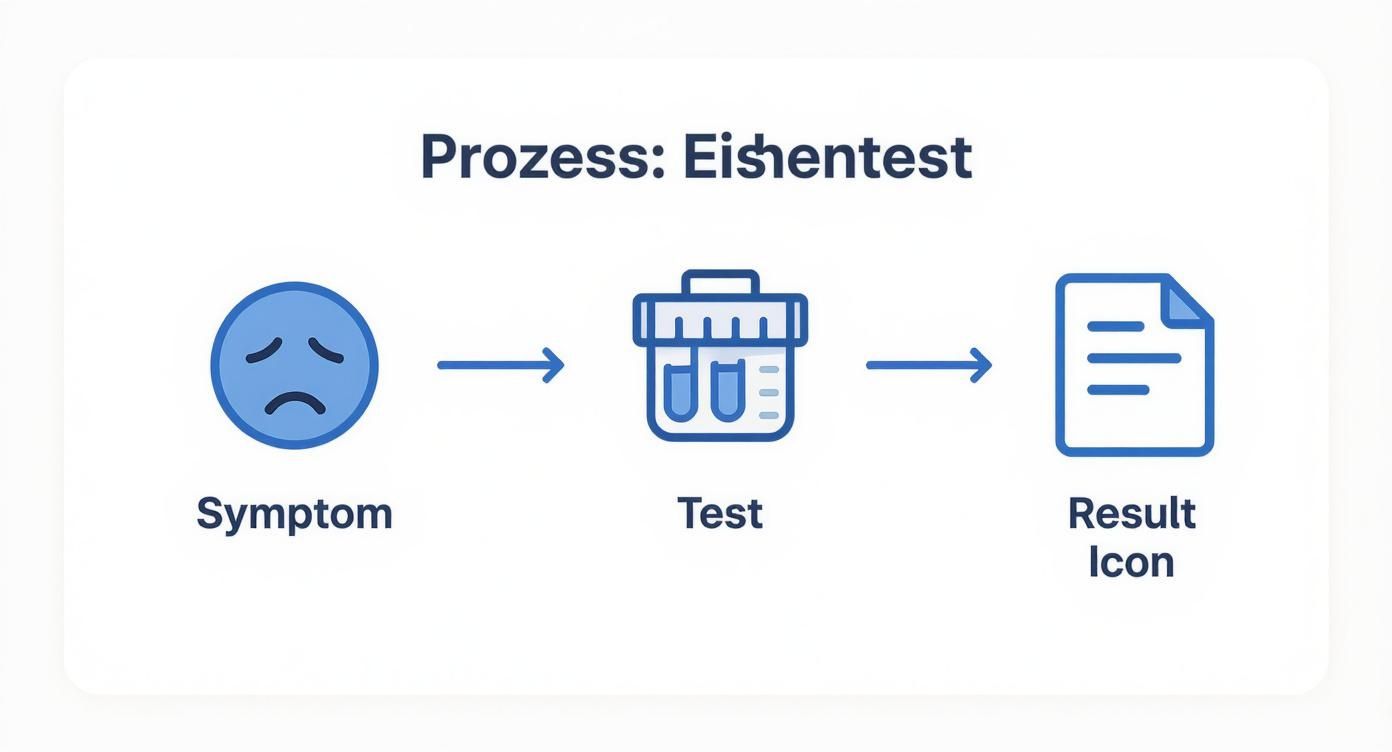
You can see: The test bridges the gap between a vague feeling that something is wrong and a concrete, data-based insight into your body.
How safe is at-home sample collection?
The so-called capillary blood collection method—drawing blood from the tiny vessels in the fingertip—is an established and scientifically fully recognized method. For many laboratory analyses, including measuring ferritin levels, it provides results just as accurate as blood drawn from a vein.
To make the differences clearer, here is a brief comparison:
Comparison of sample collection methods
| Feature | At-home iron test (mybody-x) | Blood draw at the doctor’s office |
|---|---|---|
| Location | Conveniently at home | Doctor’s office or laboratory |
| Time required | Just a few minutes | Appointment scheduling, waiting time |
| Blood volume | A few drops | One or more tubes |
| Pain perception | Minimal prick in the fingertip | Needle inserted into the arm vein |
| Flexibility | Can be performed at any time | Dependent on practice hours |
| Result | Analysis in a certified specialist laboratory | Analysis in a specialist laboratory |
As you can see, the decisive point—the analysis in a specialist laboratory—is identical for both methods. You simply save yourself the trip and the waiting time.
The only important thing is to follow the steps in the instructions precisely. This ensures that you obtain a clean and sufficient sample, which is the basis for an accurate measurement result.
To ensure that everything goes smoothly, we have created a detailed guide to capillary blood collection that takes you through the process step by step.
In short: The mybody-x iron self-test combines the convenience of collecting a sample at home with the precision and reliability of a professional diagnostic laboratory. You can therefore fully trust the results and use them as a solid basis for the next steps in managing your health.
What your ferritin level really means
Your test result from the at-home iron test is in front of you, but what do you do with this number now? To understand what it means for your health and energy levels, we need to take a closer look at the most important marker of your iron status: your ferritin level.
It's best to think of your iron stores as your car's fuel tank. The iron currently circulating in your blood as part of hemoglobin is the fuel that keeps the engine running. Ferritin, on the other hand, is the fuel gauge for your reserve tank. A low ferritin level means that your reserves are almost depleted—even if the engine may still be running smoothly.
But as soon as an unexpected strain arises, such as a stressful period, a cold, or intense exercise, your body draws on precisely this reserve. Once the tank is empty, everything quickly comes to a standstill. You feel this as fatigue, difficulty concentrating, or hair loss.
Interpreting ferritin levels correctly
Ideal ferritin levels are not the same for everyone; they depend heavily on sex and age. A level that is completely normal for a young woman could already indicate a deficiency in a man.
A large data analysis in Germany has revealed some interesting differences. Women between 18 and 45 have an average level of 46.6 µg/l, while women over 45 already have a level of 97.5 µg/l. Men have the highest levels, averaging 183.3 µg/l. You can learn more about the background to these differences in this analysis of standard iron levels.
These figures make it clear why a blanket assessment makes no sense. Your mybody-x results report therefore always places your personal value in the context of the reference ranges that apply to you.
What do the different ranges mean?
- Low level (< 30 µg/l): Your iron stores are severely depleted. Symptoms such as fatigue, pale skin, or brittle nails are now likely. You should take action here.
- Normal level (30 - 150 µg/l for women / 30 - 300 µg/l for men): Your stores are well filled and your body is optimally supplied.
- Elevated level: Too much iron is not good either. A high level may indicate inflammation in the body or other health issues and should be medically evaluated.
Your mybody-x report does not just give you a number—it interprets it for you. You can see at a glance where you stand and receive initial, specific recommendations for action. If you want to explore the topic in greater depth, you can learn more about the significance of your ferritin levels in our further article. This allows you to confidently interpret your results and plan the next sensible steps for your health.
How to specifically replenish your iron stores
Did your at-home iron test show a low result? Look at it positively: this is no reason to worry, but your chance to take action! Now you know what your body is lacking and can give it exactly what it needs for more energy and well-being.
The good news is that you can usually bring your iron stores back into the healthy range with a few targeted dietary adjustments.
The most important step is to consciously put more iron-rich foods on your plate. However, it is good to know that your body processes iron from different sources very differently. The trick is to combine the right foods cleverly.
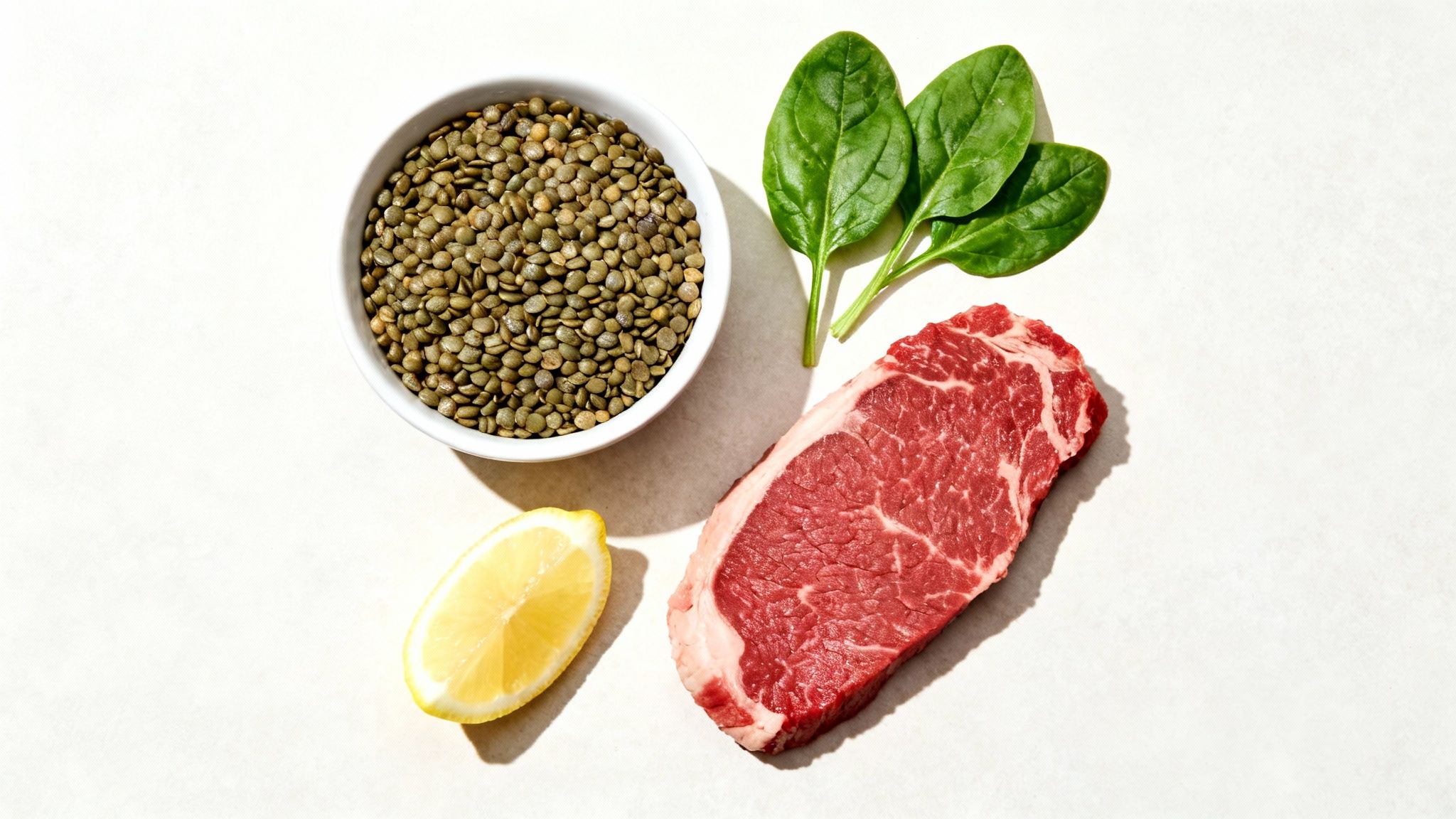
Animal-based vs. plant-based iron: A small but important difference
Your body can absorb iron from animal products, known as heme iron, particularly well. You could say it is about two to three times more readily available to your body than iron from plant sources.
- Top animal-based sources: Red meat, liver, and poultry.
Plant-based foods, on the other hand, contain non-heme iron. The body cannot utilize it quite as easily, but it is still an extremely important source—especially if you follow a vegetarian or vegan diet.
- Top plant-based sources: Legumes such as lentils and chickpeas, oats, nuts (especially pistachios), seeds such as pumpkin seeds, and green vegetables such as spinach or Swiss chard.
The challenge, then, is to maximize the absorption of plant-based iron. And this is exactly where a crucial helper comes into play.
How to get the most out of your diet
Vitamin C is your iron levels’ best friend. It helps your intestines convert the harder-to-absorb non-heme iron into a form that can be absorbed much more easily. The solution is simple: always combine plant-based foods rich in iron with a source of vitamin C.
A glass of orange juice with oatmeal, a few strips of bell pepper in a lentil salad, or a squeeze of lemon over spinach—these simple tricks can increase iron absorption severalfold.
At the same time, there are also a few “iron blockers” that can inhibit absorption. These mainly include coffee, black and green tea, as well as calcium from dairy products. It is best to avoid consuming these directly with your iron-rich meals and instead leave a gap of around two hours.
By the way, iron deficiency is not uncommon in Germany. Estimates suggest that around 14 percent of men and as many as 58 percent of women are affected. Since our bodies lose around one to two milligrams of iron every day, regularly getting enough iron through our diet is extremely important. Pregnant women need even more—up to 30 milligrams per day—which shows how crucial a mindful diet can be.
Would you like to explore the topic in even more depth? In our guide, we explain exactly what you should eat if you have an iron deficiency to effectively replenish your iron stores.
Who should keep an eye on their iron levels?
A home iron test is certainly not a must for everyone. For some people, however, it can be an incredibly valuable tool for taking an active approach to their own health. It provides important insights, often long before a genuine iron deficiency appears with full force and clear symptoms.
If you belong to one of the following groups, regular monitoring of your iron levels could be especially useful. Certain stages of life, habits, or dietary patterns can significantly increase your iron requirements or make absorption more difficult.
Who runs out of iron faster
Some circumstances in life are real “iron thieves” and draw on your stores more than others. Take a moment to check in with yourself—does any of this apply to you? Then getting tested is a good idea.
-
Women of childbearing age: Through their monthly periods, women regularly lose blood and therefore valuable iron. If menstruation is particularly heavy, this loss can quickly become significant.
-
Pregnant and breastfeeding women: During pregnancy, the body switches into supply mode—the baby needs iron for growth, and quite a lot of it! Requirements increase enormously. More iron is also needed during breastfeeding to produce nutritious milk.
-
Vegetarians and vegans: Plant-based iron is somewhat more difficult for our bodies to utilize than iron from animal sources. Those who follow a purely plant-based diet should therefore know their iron sources well and combine them wisely to prevent their stores from becoming depleted in the first place.
-
Endurance athletes: Anyone who trains regularly and intensely simply uses more. Iron is lost not only through sweat but also through tiny micro-injuries in the muscles. A deficiency can quickly affect performance.
People with chronic gastrointestinal conditions such as celiac disease or Crohn’s disease should also make sure they know their levels. In their case, iron absorption in the intestines may be impaired, significantly increasing the risk of deficiency.
It is particularly important to check iron status during crucial growth phases as well. The Robert Koch Institute’s KiGGS Wave 2 health study showed how essential it is to monitor micronutrients in children and adolescents. Good nutritional status is the foundation for healthy physical and mental development. You can find out more in the study on children’s health in Germany. A simple iron test can help identify deficiencies early and prevent long-term consequences such as poor concentration or fatigue.
The most important questions about the iron test
Are you considering taking an at-home iron test but still have a few questions? That’s completely understandable. Here, we answer what most people want to know before taking the test, so you feel confident and well informed.
How reliable is the at-home test really?
One of the most common concerns—and one we can put to rest: A high-quality at-home iron test, such as the one from mybody-x, is just as precise as a measurement at the doctor’s office. The reason is simple: Your sample is analyzed in a certified German specialist laboratory. Exactly the same scientific standards are used there as for a blood sample taken at a doctor’s office.
The only difference is comfort: You collect the sample yourself with a small finger prick instead of having blood drawn from a vein. So, in the end, the result for your ferritin level is just as reliable.
Do I need to fast for the test?
No, this isn’t necessary for the ferritin test. Something else is much more important: Make sure your hands are clean and, above all, warm before collecting the sample. This stimulates blood flow and makes it easy to collect the few drops of blood.
It’s best to briefly read through the instructions for your test kit—they explain everything step by step so you can get an accurate result.
A low level is no reason to panic, but rather a valuable indication. See it as the first step toward actively doing something for your health and regaining control.
Help, my iron level is too low! What now?
A low level may be worrying at first, but try to see the positive side: Now you know what you can work on! Your mybody-x results report provides you with specific, easy-to-implement recommendations right away, often relating to nutrition. This is your personal starting point.
However, we definitely recommend discussing the results with your doctor as well. They can investigate the causes more thoroughly and develop a strategy with you to specifically replenish your iron stores. This way, you can gradually regain your energy and well-being.
Are you ready to finally gain clarity about your iron status and take control of your energy? With the mybody-x iron self-test, you receive a reliable analysis and clear recommendations that genuinely help.
Order your test now and take the first, decisive step toward greater vitality. Learn more and find the right test for you at https://mybody-x.com.



Share now:
Do a blood test yourself: Your guide to greater clarity
Get your micronutrient levels tested and address deficiencies in a targeted way