
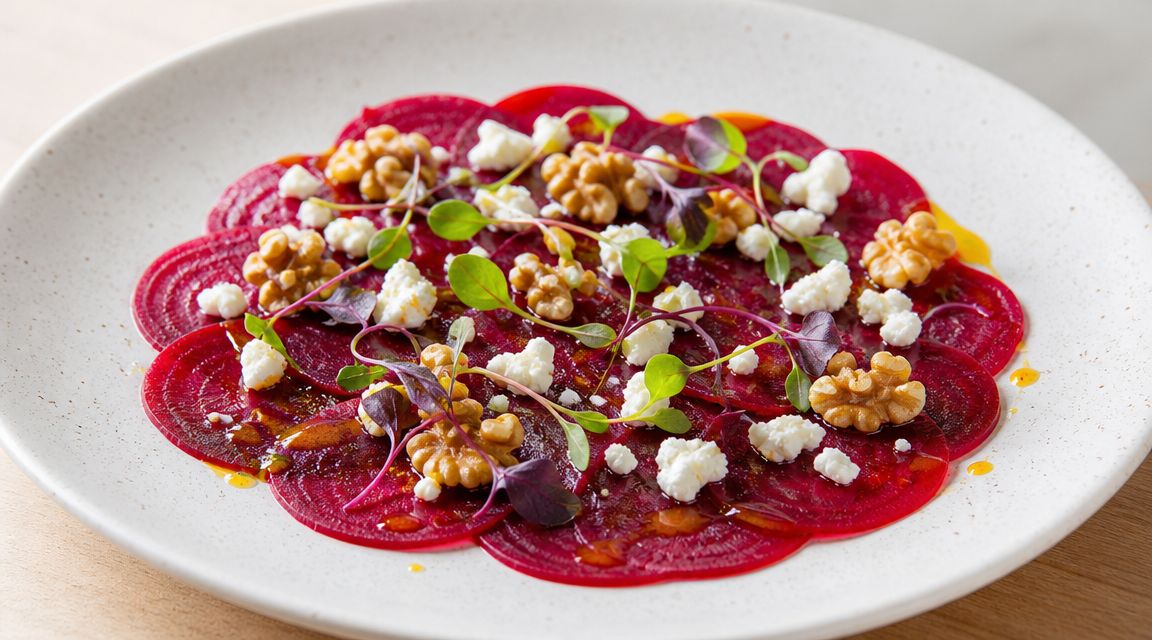
Beetroot Carpaccio with Feta Cheese and Walnuts: Easy
You want to eat something light that feels fresh, looks beautiful, and still gives you the feeling that you are doing something good for your body. At the same time, you may know the problem: Many “healthy” recipes sound good but leave open whether they really suit your everyday life, your goals, or your digestion.
That is exactly why it is worth taking a closer look at beetroot carpaccio with feta cheese and walnuts. In Germany, the dish has long been more than just a pretty starter. It combines familiar ingredients with a modern preparation method and can be adapted well to different needs when you know what matters.
More than just a recipe for your well-being
Perhaps you know this situation: In the evening, you feel like something fresh but do not want to end up with the same old standard salad again. Then a plate of finely sliced beetroot, creamy feta cheese, and crunchy walnuts is just right. It looks special, but at its core it is remarkably uncomplicated.

Why the dish fits so well into everyday life
Beetroot is not a trendy vegetable that appeared overnight. It has been cultivated for centuries in Central Europe and has become established in German cuisine as a classic winter and storage vegetable. That also explains why it now appears so naturally in modern form as carpaccio, as described in the discussion of beetroot in the context of German cuisine.
That is what makes the dish so appealing. It is presented in a modern way, but it is culinarily familiar. So you do not have to learn anything exotic; instead, you use a familiar vegetable in a new, elegant way.
What your body may like about it
The combination works not only in terms of flavor. Many people also find it pleasant because several contrasts come together here:
- Earthy freshness from the beetroot
- Salty creaminess from feta cheese
- Texture and roasted flavor from walnuts
- Acidity and a touch of sweetness from a well-matched dressing
This dish often feels lighter than classic starters, but it is flavorful enough that you do not miss anything.
This is exactly where the difference between “just delicious” and “right for me” begins. When you pay attention to your body, you quickly notice: Not every healthy meal feels equally good for everyone. Some people eat a carpaccio like this and feel pleasantly full. Others are sensitive to cheese, larger portions, or certain combinations.
A good introduction to mindful eating
Beetroot carpaccio with sheep’s cheese and walnuts is therefore a good dish for learning. It lets you easily observe how you respond to individual components. Do you tolerate the cheese well? Do you feel better with a smaller amount of nuts? Do you feel more comfortable with a fresh citrus or orange dressing than with a heavier version?
When you start taking these signals seriously, eating becomes easier. You no longer cook only by following a recipe. You gradually understand why a dish feels perfect one day but not another.
The ingredients list for your perfect carpaccio
You do not need a long shopping list for a good beetroot carpaccio. What matters is that each ingredient has a clear purpose. Beetroot brings freshness and substance, sheep’s cheese provides seasoning and creaminess, walnuts add bite, and the dressing brings everything together into a harmonious whole.

Understanding the basics
A solid basic structure helps you cook just as a good framework helps when building a house. You know what the dish is built on in terms of flavor, and you can make targeted changes later without losing its balance.
| Ingredient | Role on the plate | What you can pay attention to |
|---|---|---|
| Beetroot | Foundation, color, earthy flavor | slice thinly for a delicate texture |
| Sheep’s cheese | Creaminess, seasoning, salty note | choose the amount carefully if you are sensitive to salt |
| Walnuts | Crunch, nutty flavor | use as an accent rather than a large handful |
| Dressing | Freshness, harmony of flavors | balanced rather than too sweet |
Considering the individual ingredients sensibly
Beetroot gives the dish its character. It not only adds color to the plate, but also provides fiber and plant compounds that fit well into a vegetable-rich diet. If you want to add more variety to your everyday meals, it is a great place to start, especially when finely sliced, raw, or lightly cooked.
Sheep’s cheese greatly changes the mouthfeel. It acts as a creamy counterpart to the firm beetroot and quickly turns a light starter into a filling meal. If you often notice thirst, a feeling of fullness, or an unpleasant heaviness after eating, it is worth paying attention to the amount, salt content, and your personal tolerance.
Walnuts are small but impactful. They add structure and valuable fats. Many people tolerate them well, while others react to larger amounts of nuts with abdominal pressure or a fuzzy feeling in the mouth. In that case, a smaller portion is often a better approach than avoiding them completely.
Key point: A good carpaccio feels balanced when freshness, seasoning, fat, and texture complement one another.
Quantities that often work well in everyday cooking
In everyday life, it helps to take a simple look at the proportions on the plate. The beetroot is the base. The cheese complements it. The walnuts add accents. This keeps the dish flavorful without making it too heavy.
An orange vinaigrette works well for the dressing because it serves several purposes at once. Orange juice adds gentle sweetness and acidity, apple cider vinegar sharpens the freshness, olive oil rounds it out, and a little honey can soften the beetroot's earthy notes. For more guidance on such combinations, see this guide to healthy cooking and choosing balanced ingredients.
Why individuality matters more than rigidly following a recipe
The search for healthy recipes is widespread. But a dish only truly suits you when it fits your body and your everyday life. If you often feel tired, notice discomfort after cheese-based dishes, or do not feel quite well despite eating balanced meals, taking a personal look at your nutritional intake can be worthwhile.
Nutrient or intolerance tests can provide clues as to why certain combinations agree with you or do not. This makes the carpaccio more than just a beautiful recipe. It becomes a tool for learning to choose ingredients more consciously and adapt them to your body's signals.
How to make your carpaccio paper-thin and flavorful
You may know the feeling: The ingredients are good, but everything looks heavy rather than refined on the plate. With carpaccio, it is often not the recipe idea but the precision of the preparation that makes the difference. Beetroot in particular needs some attention, because its texture quickly determines whether the dish tastes fresh and light or dense and earthy.

Preparing the beetroot properly
Paper-thin slices are the foundation here. Think of it like a good vinaigrette: if the base is not right, it is difficult to balance out the rest. Thick slices require more chewing, absorb the dressing unevenly, and push the delicate flavors of feta and walnut into the background.
If the beetroot is still very firm, briefly pre-cook it, let it cool completely, and then cut it into slices as even as possible with a sharp knife or mandoline. This keeps the surface smooth, allowing the dressing to settle over it later like a fine film instead of disappearing into coarse pieces.
If you tend to experience digestive discomfort or react sensitively to raw vegetable fibers, this lightly pre-cooked version is often more pleasant. Reactions like these show you that cooking influences not only flavor but also digestibility.
Use walnuts strategically
Walnuts provide more than crunch. Brief toasting makes them more aromatic and gives them a rounder flavor by balancing their bitter notes. This is especially helpful if raw nuts sometimes feel heavy on your stomach or quickly become overpowering.
Place them in a pan without additional oil and toast them only until they become fragrant. That is all you need. You can also find tips on the right timing for toasted flavors and dressing in these kitchen notes for beetroot carpaccio.
A small step, a big difference.
If you use these basics more often, a good overview of methods for balanced, practical everyday dishes can help.
The dressing should bring everything together
The dressing has a clear purpose here. It should bring together the earthy sweetness of the beetroot, the saltiness of the sheep's cheese, and the warm nuttiness without overpowering any one component.
An orange vinaigrette works well because it combines acidity, fruitiness, and a touch of mildness. Use olive oil, fresh orange juice, a little apple cider vinegar, and, if you like, a small amount of honey. If you are sensitive to sugar or want to keep an eye on your blood sugar, you can leave out the honey and rely more on the freshness of the orange and vinegar.
Wait until just before serving to add the dressing. This keeps the slices looking distinct, and the walnuts retain their crunch.
How to arrange the plate harmoniously
Arrange the beetroot on a flat plate with a slight overlap. This layering works like roof tiles. Each slice remains visible, and you get several elements in every bite. Then scatter the sheep's cheese loosely over the top and add the walnuts last.
When arranging the dish, it is better to work in small amounts. Too much cheese takes away freshness, too much dressing softens the surface, and too many nuts can quickly make the dish seem heavy.
Common mistakes and how to avoid them
Most problems arise in three areas: slicing, timing, and balance.
- Slices that are too thick turn the carpaccio into more of a sliced beetroot salad.
- Dressing too early takes away the plate's sense of contrast and waters down the texture.
- Too much sheep's cheese masks the delicate sweetness of the beetroot.
- Unroasted walnuts offer less aroma and often a duller bitterness.
If you pay attention to your own body's signals, the dish becomes even more helpful. If you often feel bloated after eating raw beetroot, try the lightly cooked version. If you are sensitive to cheese, reduce the amount or choose an alternative. This is exactly how a beautiful plate becomes a meal that suits you.
Variations and adjustments for your needs
Most online recipes leave open how to adapt the dish for weight management or blood sugar awareness, even though there is a high demand for information precisely here, as demonstrated by the look at the gaps in many standard recipes.

If you want to keep the dish lighter
Beetroot carpaccio with feta and walnuts is quickly considered a “light appetizer.” This is often true, but not automatically. Cheese, honey, and nuts make the dish flavorful, but they can also make it significantly more substantial than it might seem at first glance.
Then simple adjustments can help:
- Less cheese, more herbs. This preserves the seasoning without making the plate taste overly salty.
- Use nuts selectively instead of sprinkling them generously. A little crunch is often more than enough.
- Keep the dressing light. More acidity and freshness, less sweetness.
If you are sensitive to certain foods
Personalization is particularly worthwhile with this dish. Some people are sensitive to larger amounts of beetroot. Others find that feta tends to cause them bloating, stomach discomfort, or an unpleasant aftertaste.
Then you can think practically:
| Need | Possible adjustment |
|---|---|
| sensitive to cheese | Try using less feta or an alternative |
| Nuts cause problems | Reduce the walnuts or replace them with roasted seeds |
| you want more satiety | combine the carpaccio with a suitable side dish |
| you are sensitive to sweetness | Use honey in the dressing very sparingly |
Practical rule: If you regularly notice discomfort after an otherwise fresh dish, it is often not the entire recipe but a single ingredient or the portion size.
Vegan, practical for everyday life, or suitable for guests
For a vegan version, you can replace feta with a plant-based feta alternative. A slightly more tart dressing without honey can also work well if you prefer to bring sweetness through orange rather than additional sweetener.
If you have guests, a neutral base is a good choice. Serve the beetroot and dressing separately from the cheese and toppings. That way, everyone can customize their own plate. You can also find more inspiration for flexible combinations in the healthy dishes from mybody-x.
When an intolerance test may be useful
If you often wonder why some supposedly healthy dishes do not agree with you, it is a sign to take a closer look. Not every problem is obvious. Sometimes it is the quantity, sometimes the combination, and sometimes an individual sensitivity.
An intolerance test can help you examine such patterns in a more structured way. It does not replace mindful observation, but it can turn suspicions into concrete clues. Then a beautiful recipe becomes a dish that not only looks good but also feels good.
Where enjoyment meets health on your plate
Existing recipes rarely address tolerance issues such as possible FODMAP concerns with beetroot or lactose- and histamine-related questions concerning sheep's cheese, even though these are common nutritional questions in German-speaking countries. The article on unresolved tolerance questions surrounding the dish highlights this.
That is precisely why this dish is so interesting. It shows you that enjoyment and mindfulness can go hand in hand. You can serve it as a light starter, turn it into a small meal with a suitable side dish, or prepare it for guests so that each person can make their plate more suitable for their individual tolerance.
If you are cooking during a special stage of life, such as pregnancy, it is also worth consulting reliable guidance on sensitive foods. The guide for expectant parents is a useful addition.
The dish also fits well into a broader view of nutrition, as beetroot is often mentioned in connection with colorful, plant-focused meals. If this approach interests you, you will find more practical ideas in the article about antioxidant foods in everyday life.
Nutrition usually becomes truly helpful when you stop guessing and get to know your body better. That is precisely where taking a structured look at nutrients, intolerances, or personal dietary patterns can be useful. mybody x Gesundheit offers at-home self-tests in areas such as nutrients, intolerances, and DNA-based nutrition, so you can make decisions with more guidance rather than relying solely on how you feel.
If you want to find out which foods, nutrients, and dietary strategies really suit your body, take a look at mybody x Gesundheit. There you will find at-home self-tests and further information that can help you turn healthy recipes into a personalized approach to nutrition.



Share now:
Leaky Gut Nutrition List PDF: Your Plan for Gut Health
Stuffed Peppers with Quinoa: Your Healthy Favorite Recipe