

Vitamin D3 deficiency and the thyroid: what is established and what is not
The most important points at a glance
The direct answer first: A connection between vitamin D deficiency and thyroid diseases has not been established by any of the relevant German institutions. The DGE, BfR, RKI, IQWiG, BZfE, Verbraucherzentrale, and the relevant AWMF guidelines were reviewed—in the primary care guideline on elevated TSH levels, the term “vitamin D” does not even appear once.
There is even a statement pointing in the opposite direction. In its guideline, DEGAM states that there is no evidence of any patient-relevant benefit from trace elements, herbal preparations, or dietary supplements for hypothyroidism and Hashimoto’s thyroiditis—explicitly including vitamins.
What is well established, however, is that both issues exist independently. According to the RKI, around 30 percent of adults in Germany have inadequate vitamin D levels, and according to IQWiG, about 5 in 100 people have hypothyroidism. The fact that two common findings often occur together says nothing about causation, however.
What to expect in this article
1. What the guidelines say about the connection
2. Why both findings so often occur together
3. Vitamin D: requirements, sources, and threshold values
4. The thyroid and its values
5. The two values in direct comparison
6. Three misconceptions about this topic
7. What applies to supplements
8. When testing makes sense
9. What ultimately matters
Frequently asked questions
Sources
What the guidelines say about the connection
Anyone searching online for “vitamin D and Hashimoto’s” or “vitamin D deficiency thyroid” will find plenty. Anyone searching the guidelines and the relevant institutes will find nothing—and this absence is the real answer.
“
“There is no evidence that the (additional) administration of trace elements, herbal preparations, or dietary supplements (e.g., iodine, selenium, vitamins) provides any patient-relevant benefit in hypothyroidism or Hashimoto’s thyroiditis.”
German Society for General and Family Medicine (DEGAM)
S2k guideline “Elevated TSH Level in General Practice,” AWMF Register No. 053-046, 2023 edition
This sentence answers the question about dietary supplements—not the question of a cause. That is why here is the result of the complete review: In the same guideline, the term “vitamin D” does not appear anywhere in the document. The IQWiG pages on hypothyroidism and Hashimoto’s thyroiditis do not mention vitamin D either.
The opposite is also true: nothing can be found.
The view from the other side confirms the picture. The DGE statement on vitamin D and the prevention of chronic diseases considers falls, fractures, cancer, type 2 diabetes, high blood pressure, cardiovascular diseases, and overall mortality—thyroid diseases do not appear as an endpoint.
In the DGE review of extraskeletal diseases, the only autoimmune diseases mentioned are multiple sclerosis and type 1 diabetes mellitus. And in the IQWiG evidence report on vitamin D supplementation, prepared on behalf of the Federal Ministry of Health, the terms thyroid, hypothyroidism, Hashimoto’s, and thyroiditis do not appear.
What “not established” means here
One important clarification: The fact that these institutions find no evidence for a statement does not mean that it has been disproven. It means that the statement may not be presented as fact in a guide—and that no one should make a supplement dependent on it.
This distinction is particularly relevant in practice when it comes to thyroid issues. Anyone who considers vitamin D deficiency the cause of their symptoms may not investigate further—and may overlook the evaluation that would actually help.
It is also worth looking at the structure of the statements. The DGE review does consider autoimmune diseases—but specifically multiple sclerosis and type 1 diabetes. The thyroid is not absent because no one thought of it, but because no reliable evidence was found for it.
The same applies to the IQWiG evidence report: It examined, among other things, overall mortality, fractures, cardiovascular events, cancer, infections, falls, and depression. That is also a broad list—and the thyroid does not appear there either. Two independent analyses therefore reach the same conclusion.
Why both findings so often occur together
If no connection has been established, why do so many people report that both were diagnosed in their case? The answer lies in the prevalence rates.
Sources: Robert Koch Institute, Journal of Health Monitoring 2/2016, DEGS1 data · Institute for Quality and Efficiency in Health Care (IQWiG), 2024 · German Nutrition Society (DGE), 2025.
Add the first two numbers together, and the puzzle is solved. If around one-third of adults have an inadequate vitamin D supply, then statistically this also applies to around one-third of people with hypothyroidism—entirely without any causal connection.
There is also an effect stemming from the diagnostic process itself. People who see a doctor because of fatigue and lack of energy often have both values measured. If both are then abnormal, this creates the impression of a connection—but in reality, only two common findings were sought and found at the same time.
Why this misconception is so persistent
Inferring a cause from simultaneity is not a sign of gullibility, but the most obvious explanation that comes to mind. When two abnormalities appear on the same sheet of paper, they seem connected—the sheet itself suggests the connection.
The symptoms reinforce this effect. Fatigue, lack of motivation, and concentration problems are attributed to both conditions, and they are also the most common complaints in general medical practice. Three factors that are all very common will inevitably overlap frequently.
This also shows what a personal account can contribute to this question—namely, very little. The fact that someone felt less tired after taking a vitamin D supplement could be due to many things: the season, thyroid treatment started at the same time, or a change in daily routine. That is precisely what studies with control groups are for, and those are precisely what is missing here.
In brief
A connection between vitamin D deficiency and thyroid disease has not been established by the DGE, BfR, RKI, IQWiG, BZfE, the relevant AWMF guidelines, or other authoritative sources. The fact that both findings often occur together is explained by their prevalence: According to the RKI, around 30 percent of adults in Germany have insufficient vitamin D levels, while according to IQWiG, about 5 in 100 people have an underactive thyroid. Two common findings will inevitably coincide frequently—but that is not evidence of a causal relationship.
Vitamin D: requirements, sources, and threshold levels
According to the DGE, vitamin D occupies a special position among the vitamins: unlike other vitamins, it can be produced by the body itself from precursors already present in the body. That is precisely why the usual calculation of requirements works differently in this case.
The DGE estimate of 20 micrograms, or 800 International Units, per day explicitly applies in the absence of endogenous synthesis—that is, when the skin contributes nothing. With regular time spent outdoors, the body's own production accounts for 80 to 90 percent of vitamin D supply, while diet accounts for only 10 to 20 percent.
Why diet has little impact
According to the DGE, only a few foods—mostly of animal origin—contain significant amounts of vitamin D, especially fatty fish such as salmon, herring, and mackerel; in considerably smaller amounts, liver, vitamin-D-fortified margarine, egg yolk, and some edible mushrooms. A normal diet provides only 2 to 4 micrograms per day.
Then there is the season. Unlike during the summer months, sunlight in Germany from October to March is not strong enough, according to the DGE, to ensure sufficient vitamin D production. The body bridges these months with what it stored during the summer.
Threshold levels in the blood
25-hydroxyvitamin D is measured, abbreviated as 25(OH)D. The RKI classifies the values as follows: Serum concentrations above 50 nmol/l are considered adequate, values between 30 and below 50 nmol/l indicate suboptimal levels, and values below 30 nmol/l indicate inadequate levels. In the other commonly used unit, according to the DGE, 50 nmol/l corresponds to 20 ng/ml and 30 nmol/l to 12 ng/ml.
What matters is what a low level alone means—namely less than the term suggests. According to IQWiG, citing the RKI, vitamin D deficiency exists only when too little vitamin D is detected in the blood and there are signs of bone disease at the same time. Such symptomatic deficiency is very rare in Germany.
This distinction explains an apparent contradiction. Around 30 percent of adults are below the threshold of 30 nmol/l—if that were equivalent to a disease, Germany would have a mass health problem. It does not: A low laboratory value describes a nutritional status, not a disease.
The DGE presents the same classification from the other perspective: The majority of the population does not have a vitamin D deficiency—yet almost 60 percent of German residents do not reach the desirable blood concentration of 50 nanomoles per liter. Both statements are true at the same time, and both need to be read together.
The thyroid and its levels
In an underactive thyroid, the thyroid gland produces too few hormones, according to IQWiG. Approximately 5 in 100 people in countries such as Germany are affected, with women and older people more often affected.
IQWiG identifies Hashimoto’s thyroiditis as the most common cause—an inflammation of the thyroid caused by an inappropriate immune response. Other causes include removal of the thyroid, radiation therapy, severe iodine deficiency, certain medications such as lithium, and congenital disorders.
The symptoms are nonspecific and partly overlap with what people attribute to vitamin D deficiency: fatigue, difficulty concentrating, low mood, dry skin, hair loss, weight gain, constipation, and sensitivity to cold. This also explains why the two issues are often linked in people’s minds.
The TSH level and its age-based thresholds
According to IQWiG, an elevated TSH level in the blood may be a sign of an underactive thyroid. The DEGAM guideline specifies the thresholds and differentiates them by age: In primary care, TSH levels above 4.0 mU/l in people aged 18 to 70, above 5.0 mU/l in people over 70 up to 80, and above 6.0 mU/l in people over 80 should be interpreted as elevated.
The same guideline contains a statement that is important for this article: TSH screening should not be performed in asymptomatic adults. Routine TSH screening should also not be performed in women wishing to become pregnant or during pregnancy if there is no known thyroid disease.
Subclinical hypothyroidism and its open question
There is a distinct constellation between an unremarkable result and one requiring treatment. In subclinical hypothyroidism, the TSH level is elevated without symptoms; according to IQWiG, an estimated 5 in 100 people have this constellation, and each year 2 to 5 in 100 of them develop symptomatic hypothyroidism.
According to IQWiG, it is unclear whether treating subclinical hypothyroidism has any benefits. This is an important side note for this topic: even within thyroid diagnostics, not every abnormal value leads to a consequence. Expecting a vitamin D value alongside it to lead to a consequence is correspondingly far-fetched.
Regarding the prevalence of Hashimoto’s thyroiditis, IQWiG provides specific figures: an estimated 4 in 1,000 women and 1 in 1,000 men develop it. Here, too, the difference between the sexes is clear—and here, too, it has nothing to do with vitamin D status, for which the RKI finds no significant sex differences: 29.7% of women compared with 30.8% of men.
The two values in direct comparison
The following comparison places 25(OH)D and TSH side by side according to the same criteria. The last line is the one this article is about.
| Criterion | 25-OH vitamin D | TSH |
|---|---|---|
| What is measured | Vitamin D status in the blood | The pituitary gland’s control signal to the thyroid |
| Thresholds | Above 50 nmol/L sufficient · 30 to below 50 nmol/L suboptimal · below 30 nmol/L deficient (RKI) | Elevated above 4.0 mU/L (ages 18–70), above 5.0 mU/L (ages 70–80), and above 6.0 mU/L (age 80 and older) (DEGAM) |
| Main source or site of production | Produced by the body in the skin; 80 to 90% with regular time spent outdoors | Pituitary gland – not the thyroid itself |
| Screening in people without symptoms | According to IQWiG, regular monitoring is not necessary | According to DEGAM, this should not be done in asymptomatic adults |
| Evidence of a connection with the respective other value | None in the reviewed source material | None in the reviewed source material |
Information based on the Robert Koch Institute, the German Nutrition Society, IQWiG, and the DEGAM S2k guideline 053-046. The last line is based on a review of these institutions’ publications and AWMF guidelines 053-046 and 083-055 on August 5, 2026, and is identified as such.
Three misconceptions about this topic
Assumptions about vitamin D and the thyroid persist, all sharing the same underlying idea: they turn a simultaneous occurrence into a cause. Three of them are worth correcting.
What applies to supplements
The DGE makes vitamin D supplementation conditional on two requirements: Supplements are recommended only when inadequate intake has been confirmed and when targeted improvement cannot be achieved through diet or the body’s own production.
Two common findings often inevitably coincide—this is not evidence of a causal relationship.
If supplementation is used, the BfR specifies a clear range: Consumers should choose products providing up to about 20 micrograms of vitamin D—or 800 international units—per day. The tolerable total intake for adults is 100 micrograms, or 4,000 international units, per day.
High-dose products regularly exceed this upper limit. The BfR lists fatigue, muscle weakness, nausea, cardiac arrhythmias, and weight loss as symptoms of an overdose—complaints that overlap uncomfortably with those of hypothyroidism.
Two common findings often inevitably coincide—this is not evidence of a causal relationship. The same sentence also applies to supplements: The fact that someone is less tired after taking a vitamin D supplement says nothing about whether the thyroid was involved.
What does not argue against getting vitamin D from sunlight
One point that is often overlooked in discussions about supplements: According to the DGE, overdoses are only possible through excessive oral intake—consistently more than 100 micrograms per day—and not through excessive exposure of the skin to sunlight. The body regulates its own production.
In practice, this means that getting regular outdoor exposure has a built-in safety limit, whereas taking high-dose supplements does not. This is not an argument against supplements when they are justified—but it is an argument against taking them speculatively or in arbitrary amounts.
With thyroid diseases, there is an additional reason for restraint. According to IQWiG, hypothyroidism is treated with L-thyroxine, taken once daily and preferably half an hour before breakfast. This is a prescription medication with a dosage determined by a doctor—anyone who takes additional preparations on their own should mention this at least at the doctor's office.
When testing makes sense
Both institutions advise against routine testing: According to IQWiG, regular checks of vitamin D blood levels are not necessary, and according to DEGAM, TSH screening should not be performed in asymptomatic adults. These two sentences belong, unabridged, in an article that mentions testing.
The situation is different when symptoms are present or one of the risk constellations applies. The DGE considers people who spend very little time outdoors or go outside only with their entire bodies covered, older people, infants, and people with dark skin to be groups at increased risk of insufficient vitamin D supply.
The DGE is clear on the question of age: In older age, the skin's ability to produce vitamin D declines significantly and may be reduced to less than half compared with younger age. The same group is affected by thyroid conditions—according to IQWiG, women and older people are particularly frequently affected.
The overlap between the risk groups is the final ingredient creating the impression of a connection. A 70-year-old woman belongs to the more frequently affected group for both issues—for two entirely independent reasons: for vitamin D, because vitamin D production in the skin declines; for the thyroid, for reasons that the IQWiG does not link to vitamin D status.
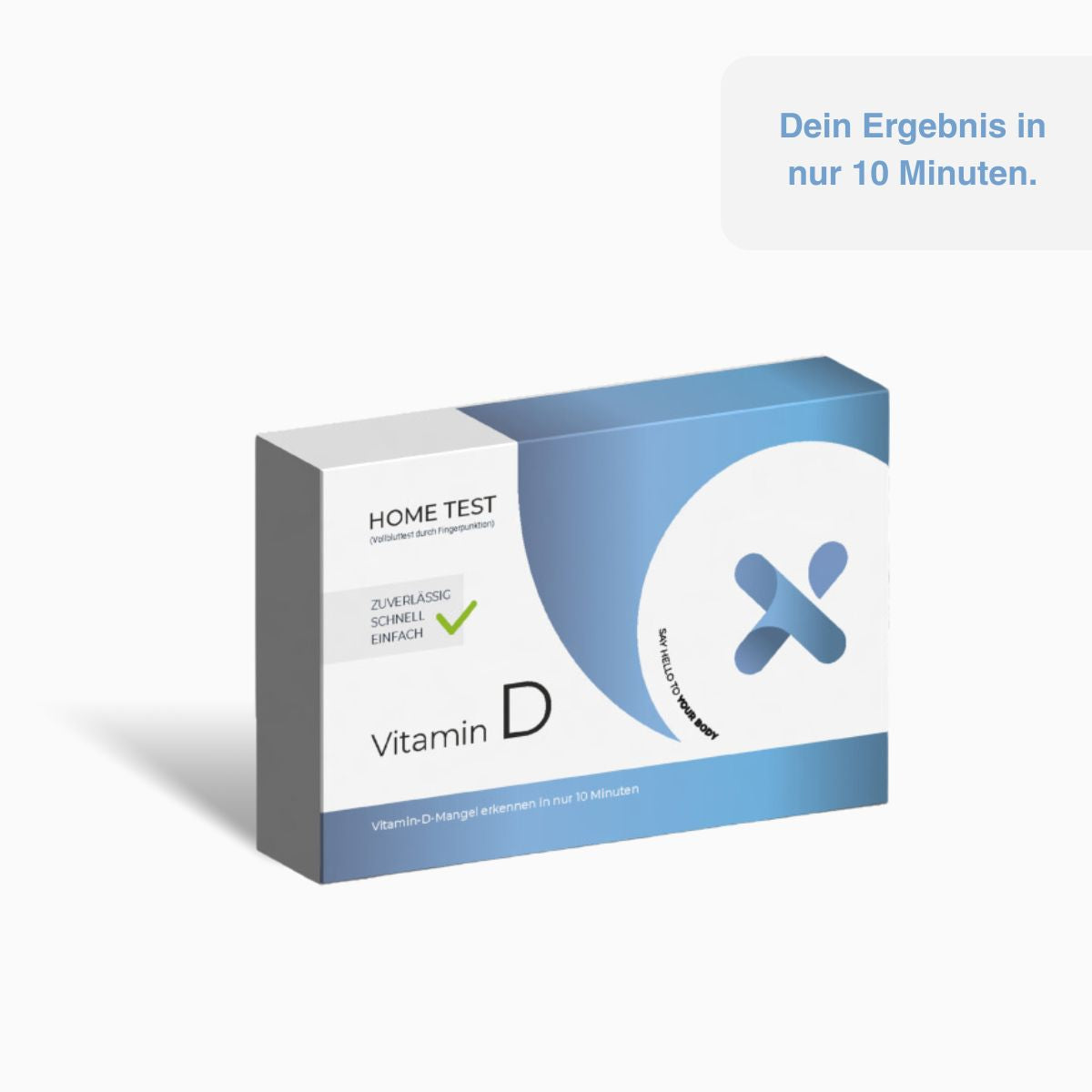
Vitamin D self-test
It tests 25-hydroxyvitamin D from capillary blood and provides the result at home. What the test does not do: It measures no thyroid levels—neither TSH nor fT3 or fT4—and does not provide an exact numerical value, but rather a threshold result. It does not provide a diagnosis. And it does not answer the question addressed in this article: A low vitamin D level says nothing about the thyroid.
Price: €14.50 · Sample type: Capillary blood · Processing time: Results in 5–10 minutes · Laboratory: No laboratory processing, evaluated at home
To the vitamin D self-testAnyone who wants to look at both areas together—and that is precisely what this topic is about—needs a test that measures vitamin D and thyroid levels together.
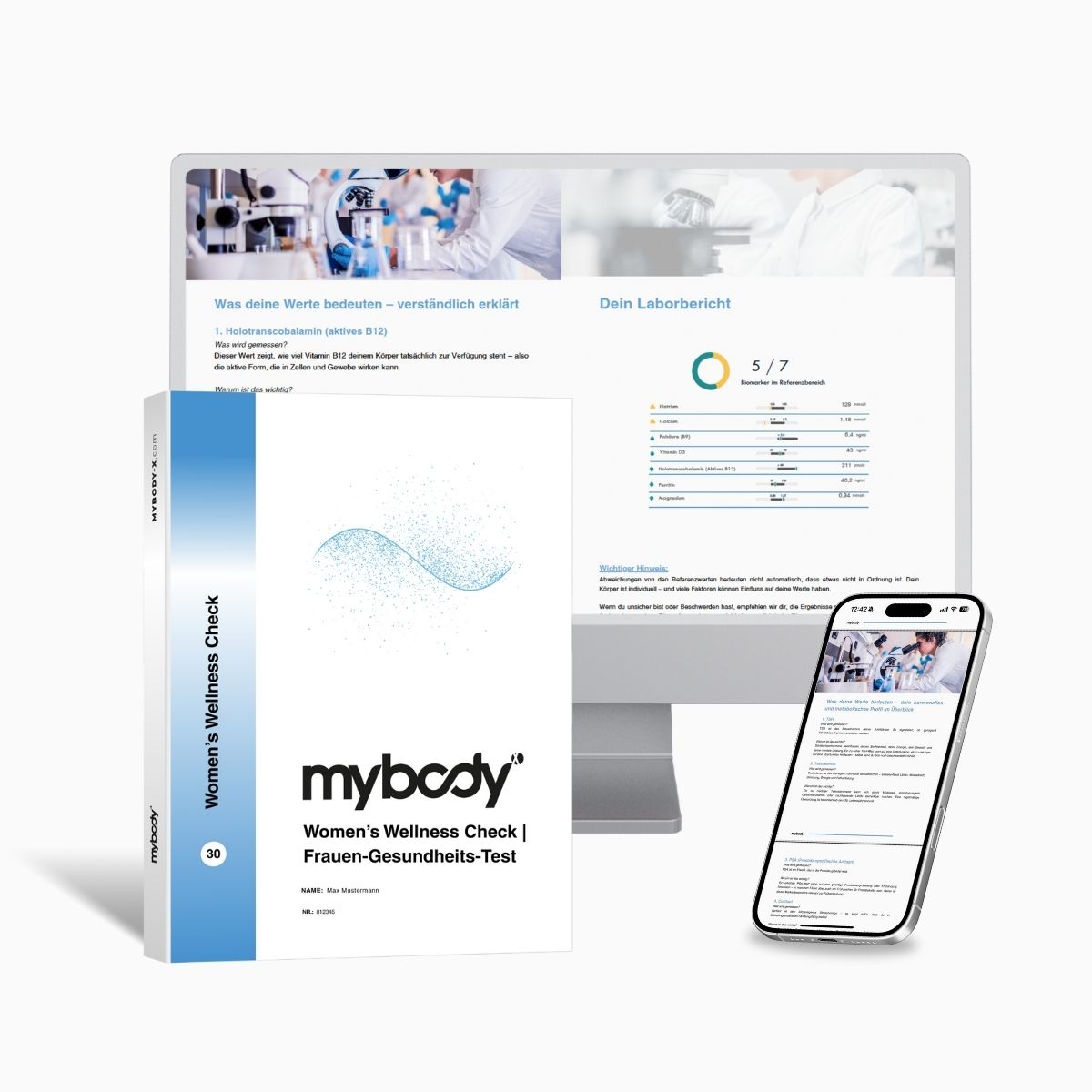
Women's Wellness Check | Women's Health Test
Measures 16 biomarkers from capillary blood and is the only test in the range to measure 25-OH vitamin D3 as well as TSH, fT3, and fT4 together—along with ferritin, cortisol, HbA1c, and blood lipids, among others. What the test does not do: It does not provide a diagnosis or determine a cause. Nor does it demonstrate a connection between the two areas—having two values on the same report does not connect them.
Price: €169.00 (instead of €199.00) · Sample type: Capillary blood · Processing time: Kit shipping 1–3 business days, laboratory analysis 3–5 business days after receipt of the sample · Laboratory: ISO-certified laboratory analysis in Germany
Women's Wellness CheckAll price and service information is current as of August 5, 2026. Prices and the scope of services may change; the respective product page is always authoritative.
What ultimately matters
The question in the title can be answered, and the answer is unremarkable: German professional institutions have found no evidence of a connection between vitamin D deficiency and thyroid disorders. Anyone who reads something else is not reading a guideline.
What this changes for you: Treat the two issues separately. A low vitamin D level is a vitamin D issue and is assessed according to the criteria of the DGE and BfR. An abnormal TSH level is a thyroid issue and is evaluated according to the criteria of DEGAM. One does not imply anything about the other.
Your specific next step: If you have symptoms that fit an underactive thyroid—fatigue, sensitivity to cold, difficulty concentrating—the focus should be on your TSH level and a conversation with your doctor, not on a vitamin D supplement. And if you belong to one of the vitamin D risk groups mentioned, that is a separate reason for action, regardless of your thyroid.
Frequently asked questions
Are vitamin D deficiency and the thyroid related?
Not according to the source material reviewed here. No evidence of a connection can be found in the materials from the DGE, BfR, RKI, IQWiG, BZfE, Verbraucherzentrale, or in AWMF guidelines 053-046 and 083-055. The term “vitamin D” does not appear anywhere in the DEGAM guideline on elevated TSH levels. The fact that both findings often occur together can be explained by how common they are.
Does vitamin D help with Hashimoto’s?
In its S2k guideline, DEGAM states that there is no evidence of a patient-relevant benefit from trace elements, herbal preparations, or dietary supplements—including vitamins—in hypothyroidism and Hashimoto’s thyroiditis (as of 2023). An existing thyroid disorder is treated by a doctor, not with supplements.
How much vitamin D is needed?
The DGE gives an estimated value of 20 micrograms, or 800 International Units, per day—explicitly in the absence of the body’s own production. With regular time spent outdoors, the skin contributes 80 to 90 percent, while the diet contributes only 10 to 20 percent. A normal diet provides just 2 to 4 micrograms per day.
At what level is vitamin D deficiency present?
The RKI classifies 25(OH)D serum concentrations above 50 nmol/L as sufficient, 30 to below 50 nmol/L as suboptimal, and below 30 nmol/L as deficient. IQWiG emphasizes an important point: According to the RKI, vitamin D deficiency is present only when too little is found in the blood and there are also signs of bone disease—something that is very rare in Germany.
Should I have both values tested?
Without symptoms, both organizations advise against it: According to IQWiG, regular monitoring of vitamin D blood levels is not necessary, and DEGAM states that TSH screening should not be performed in asymptomatic adults. The situation is different if you have symptoms or belong to a risk group—in that case, testing may be useful, but as a basis for a conversation with a doctor, not to establish a connection between the two values.
Two topics, two approaches
If you want to keep track of both areas, you can—but as two separate questions. In both cases, an abnormal result is the beginning of a conversation with a doctor, not the end of the search.
View Women's Wellness Check Vitamin D self-testYou might also be interested in
→ Vitamin D3 deficiency: Signs, causes, and what really helps
The vitamin D topic on its own—without taking the detour through the thyroid.
→ Selenium and the thyroid: What the nutrient does and doesn’t do
The same question for a different nutrient—with an equally matter-of-fact answer.
Sources
- German Society of General Practice and Family Medicine (DEGAM): S2k guideline “Elevated TSH level in general practice,” AWMF register no. 053-046, as of 2023 — register.awmf.org
- German Nutrition Society (DGE): Reference values for vitamin D and FAQ on vitamin D, as of 2025 — dge.de
- Robert Koch Institute (RKI): Vitamin D status in Germany, Journal of Health Monitoring 2/2016, DEGS1 data basis — rki.de
- Institute for Quality and Efficiency in Health Care (IQWiG): Hypothyroidism and Hashimoto’s thyroiditis, as of 2024, as well as vitamin D deficiency and vitamin D requirements, as of 2023 — gesundheitsinformation.de
- German Federal Institute for Risk Assessment (BfR): Selected questions and answers on vitamin D, as well as press release no. 27/2023 on high-dose vitamin D supplements — bfr.bund.de
- Verbraucherzentrale: Iodine supply in Germany, as of 2025 — verbraucherzentrale.de
The quotation concerning the lack of evidence for dietary supplements in hypothyroidism and Hashimoto’s disease, the age-specific TSH thresholds, and the statements on TSH screening are taken from source [1]. The estimate of 20 micrograms in the absence of endogenous synthesis, the proportions of 80 to 90 and 10 to 20 percent, the information on foods and the time of year, the conversion from nmol/l to ng/ml, the risk groups, and the conditions for supplementation are taken from source [2]. The thresholds for 25(OH)D and the proportion of 30.2 percent are taken from source [3]. The frequency, causes, and symptoms of hypothyroidism, the information on Hashimoto’s thyroiditis, and the statements on the definition of deficiency and the lack of need for regular vitamin D testing are taken from source [4]. The maximum amounts of 20 and 100 micrograms, the symptoms and consequences of overdose, and the risks of high doses are taken from source [5]. The statement concerning possible consequences of excessive iodine intake is taken from source [6]. The fact that no evidence of a connection between vitamin D and thyroid diseases can be found at any of these institutions or in the AWMF guidelines 053-046 and 083-055 is based on a review of these publications on August 5, 2026, and is identified as such in the text. Product information is taken from the mybody®x product pages, accessed on August 5, 2026.

mybody®x Editorial & Expert Team
Blood values Hormones Micronutrients
This article was created and medically reviewed by the mybody®x Editorial and Expert Team. The team combines expertise in nutrigenetics, microbiome and gut science, blood analysis interpretation, nutritional science, and laboratory diagnostics.
Published on August 5, 2026 · Last updated on August 5, 2026
Medical notice: This article is intended for general information and does not replace medical advice, diagnosis, or treatment. Abnormal thyroid values should be medically evaluated; thyroid hormones are prescription-only and must not be started, discontinued, or adjusted in dosage without medical guidance. Vitamin D supplements should be taken in consultation with a doctor, particularly at higher doses.



Share now:
Vegan nutrition pyramid: Structure and critical nutrients
Lose 5 kilos: a realistic timeline instead of a wishful number