

Determining your metabolic type: Everything that matters
Surprisingly many people don't know their own metabolic type, even though it significantly influences how effectively they use energy and regulate their weight. Understanding your own metabolism allows you to focus more effectively on nutrition and health, instead of relying on general advice. Learn about the opportunities offered by metabolic typing and how it can help you better achieve your individual needs and goals.
Table of contents
- What exactly does metabolic typing mean?
- Different metabolic types and characteristics
- Scientific methods for type determination
- Benefits and limitations of metabolic analysis
- Risks, costs and alternatives at a glance
Key findings
| Point | Details |
|---|---|
| Individual metabolic type | Every person has a unique metabolic type that influences their energy utilization and nutrient processing. |
| Objectives of typing | Metabolic typing aims to optimize individual nutrition and exercise and to support weight management. |
| Scientific methods | The metabolic type is determined through blood analyses, genetic tests and other diagnostic procedures. |
| Benefits and limitations | Metabolic analyses offer valuable insights, but they are not always clear and require professional interpretation. |
What exactly does metabolic typing mean?
Metabolism is far more than just a biochemical process in the body. According to de.wikipedia.org, it encompasses all chemical transformations of substances in the body, including the conversion of food into intermediate and end products. These biochemical processes serve to build up, break down, and maintain body tissue, as well as to generate energy for vital functions.
Metabolic typing means that every person has an individual metabolic type, characterized by specific traits. Similar to a fingerprint, your metabolism is unique and influences how quickly or slowly your body processes nutrients, generates energy, and burns calories. A metabolic test for weight loss: Your personal guide to success can help you understand your individual metabolic type.
The individual adaptability of our metabolism is astonishing. As de.wikipedia.org explains, metabolic diversity enables organisms to survive in different environments. In humans, this means specifically: your metabolism reacts to diet, exercise, stress, and genetic factors completely differently than that of your neighbor or friend.
The main goals of metabolic typing are:
- Understanding individual energy generation
- Optimizing nutrient utilization
- Adjusting diet and exercise
- Weight management support
- Improvement of general health
Different metabolic types and characteristics
Metabolism is a complex system with various forms. Wikipedia explains that organisms can be classified into different metabolic types based on their energy and carbon sources. In humans, we primarily distinguish between different metabolic profiles, which significantly influence weight, energy levels, and health.
The most important human metabolic types can be roughly divided into four categories:
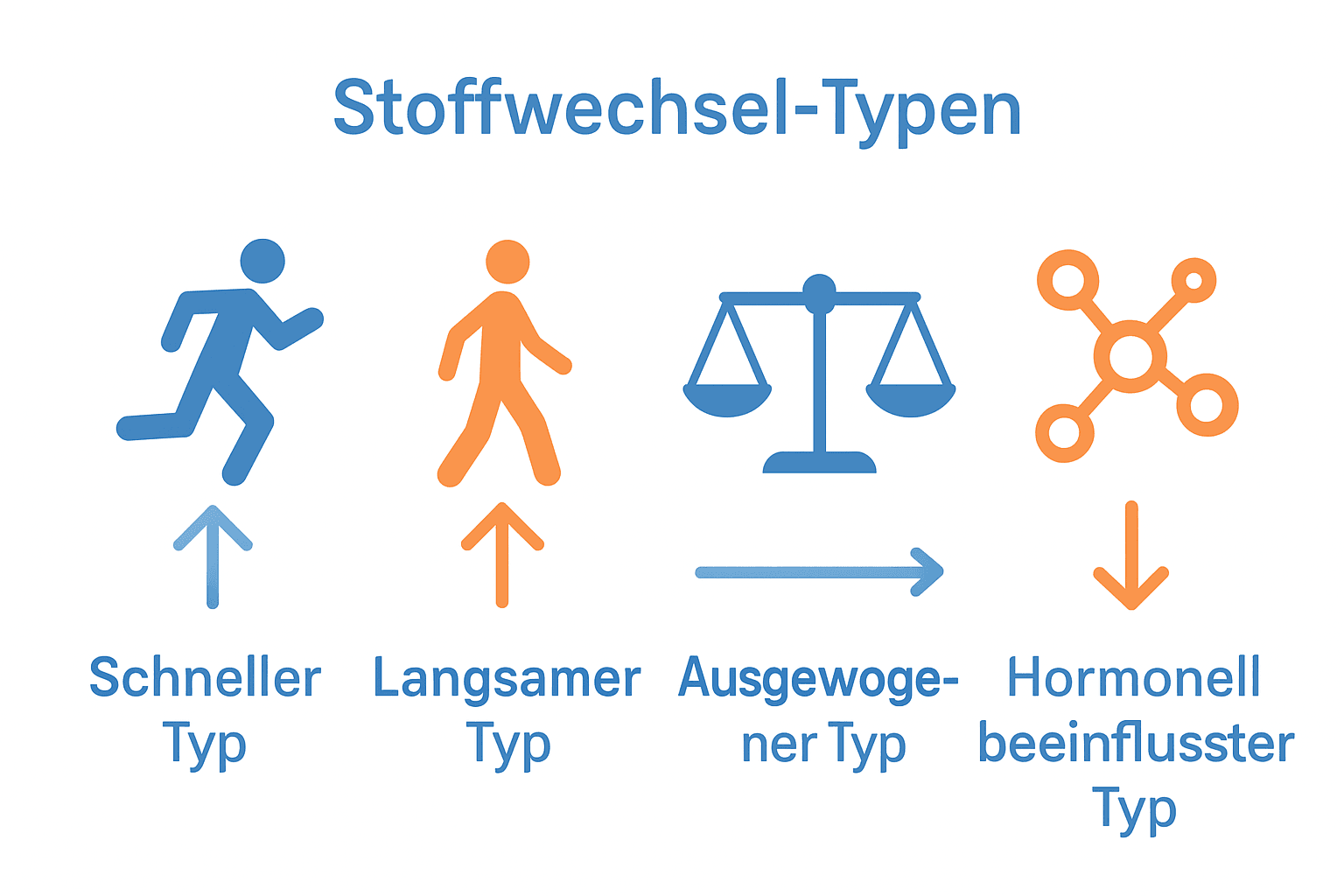
- Fast metabolism type : Burns calories very quickly, usually stays slim.
- Slow metabolic type : Tends to gain weight, stores energy efficiently
- Balanced metabolic type : Relatively stable weight, moderate energy conversion
- Hormonally influenced metabolic type : Strong interactions with hormones
Energy production in the human body occurs via various metabolic pathways. Wikipedia confirms that aerobic and anaerobic energy metabolism are crucial for converting nutrients into energy. Eight tips to naturally boost your metabolism can help you support your individual metabolic type.
It's important to know that your metabolic type isn't set in stone. Through targeted nutrition, regular exercise, and a healthy lifestyle, you can positively influence and optimize your metabolism. Understanding your personal metabolic type is the first step towards better health and well-being.

Scientific methods for type determination
Metabolic typing requires precise scientific methods. Wikipedia shows that determining an individual's metabolic type can be done through various diagnostic procedures, including analyses of metabolic products in blood or urine, genetic tests, and measurement of the metabolic rate under resting conditions.
The most important scientific research methods include:
- Blood tests : Measurement of metabolic markers and hormones
- Genetic tests : Identification of specific metabolic variants
- Calorimetry : Precise measurement of basal metabolic rate
- Hormonal tests : Analysis of thyroid and insulin functions
- Body composition analysis : Determination of muscle and fat percentage
According to de.wikipedia.org, if specific metabolic disorders are suspected, additional biochemical tests are used to identify enzymes and metabolic abnormalities. Genetic testing for weight loss: My honest experiences can give you further insights into the possibilities of modern metabolic diagnostics.
Modern methods combine various analytical techniques to create a comprehensive picture of your individual metabolism. The goal is to develop personalized recommendations for diet, exercise, and lifestyle that are optimally tailored to your specific metabolic type.
Benefits and limitations of metabolic analysis
Metabolic analyses offer deep insights into our bodily functions. Wikipedia shows that such tests enable the identification of metabolic disorders caused by genetic defects or acquired factors. They can contribute to early diagnosis and targeted treatment.
The benefits of a comprehensive metabolic analysis include:
- Early detection of potential health risks
- Personalized nutrition recommendations
- Optimizing fitness and performance
- Improving weight management
- Identification of nutrient deficiencies
Is metabolic analysis useful? How it helps your health clarifies that not all analyses are the same. de.wikipedia.org underlines the complexity, as organisms use different metabolic pathways to adapt to environmental conditions.
The limitations of this analysis must be critically examined. Not all metabolic abnormalities can be detected by standard tests, and their interpretation requires medical expertise. Metabolic analysis is a valuable tool, but not a panacea. It should be understood as part of a holistic health strategy that includes individualized counseling, lifestyle changes, and professional medical care.
Risks, costs and alternatives at a glance
Metabolic analyses present both opportunities and challenges. Wikipedia (de.wikipedia.org) clarifies that such tests can be associated with risks such as false-positive or false-negative results. This necessitates a careful and professional interpretation of the test results.
The costs for metabolic analyses vary depending on the scope of the examination:
- Basic blood test : 50-150 euros
- Genetic metabolic analysis : 200-500 euros
- Comprehensive metabolic analysis : 500-1000 euros
How much does a genetic test cost? The complete price overview helps you better understand the financial aspects. de.wikipedia.org also emphasizes that there is no universal method for determining metabolic type, which underscores the importance of individual considerations.
Alternatives to professional analysis include non-invasive methods such as:
- Keep a food diary
- Regular exercise and activity measurement
- Self-monitoring of energy levels
- Consultation with nutritionists
- Lifestyle adjustments based on body signals
It is important to understand that a metabolic analysis is a tool, not a panacea. It should be seen as part of a holistic health strategy that includes individual consultation, lifestyle changes, and professional medical care.
Discover your individual metabolic type for better health and well-being
Do you know that feeling of seeing no progress in your weight or energy levels despite eating healthily and exercising? This is precisely where determining your metabolic type comes in. This article explains how important it is to better understand your personal metabolism in order to tailor your diet and lifestyle accordingly. Whether you want to optimize your energy metabolism, improve your nutrient absorption, or lose weight permanently – the right approach starts with a precise analysis.
Take advantage of this opportunity and benefit from state-of-the-art diagnostics with DNA metabolic tests for your optimal nutrition – mybody®x . There you'll find simple, scientifically sound at-home tests that provide detailed insights into your individual metabolism. In addition , at-home hormone tests – triglycerides, cortisol, testosterone & more – mybody®x help you better understand and effectively manage hormonal influences on your metabolism. For sustainable weight management, we also offer specially developed solutions in our category "Individual Solutions for Overweight | Permanent Weight Loss – mybody®x" .
Don't wait any longer and start your personal metabolic analysis now at mybody-x.com . With our ISO-certified laboratory service, data protection-compliant processes, and individual consultation, you're on the best path to more energy and a healthier life.
Frequently Asked Questions
What is metabolic typing?
Metabolic typing identifies a person's individual metabolic type, which is characterized by specific properties and influences how nutrients are processed and energy is obtained.
How many metabolic types are there?
There are roughly four main categories of metabolic types: fast, slow, balanced, and hormonally influenced metabolic types.
What methods are used to determine metabolic type?
Various scientific methods are used to determine the metabolic type, including blood analyses, genetic tests, calorimetry and hormonal examinations.
What are the advantages of a metabolic analysis?
The benefits of a metabolic analysis include early detection of health risks, personalized nutritional recommendations, fitness optimization, and improved weight management.
Recommendation
- 8 tips to naturally boost your metabolism – mybody®x
- Nutrition for athletes to achieve peak performance – mybody®x
- Metabolism explained simply: 9 facts you need to know – mybody®x
- Boost your metabolism naturally – 8 simple tips for more energy and – mybody®x
- Replacing household batteries: Step-by-step instructions - accu.blog
- Create and optimize test forms for better conversion rates



Share:
Slow metabolism: what to do and how to naturally boost it
Achieve your weight loss goals step-by-step: Your path to success