
Diet and Stomach Pain: What Really Helps in 2026
You may know the feeling: The meal was actually good, you are looking forward to a relaxing evening, and then your stomach starts acting up. First comes a feeling of pressure. Then pulling, burning, or cramps. Suddenly, all you can think about is what you ate and why your stomach is reacting like this again.
That is exactly what makes stomach pain after eating so exhausting. It often occurs in everyday life, seemingly without any clear warning. Many people then try to “just eat bland foods” or eliminate individual foods. Sometimes this helps briefly. Sometimes nothing happens at all. And that is exactly where uncertainty arises.
Introduction: When Your Stomach Rebels After Eating
Maybe it starts after a quick lunch break with greasy food. Or in the evening after pizza, sweets, or an indulgent restaurant meal. Your stomach feels hard, there is pressure rising upward, and perhaps bloating or nausea joins in. Situations like these are not uncommon.
In Germany, around 30% of adults regularly suffer from gastrointestinal complaints, with stomach pain after eating being one of the most common symptoms. According to the 15th DGE Nutrition Report, this is directly related to diet quality. A diet high in sugar and fat significantly increases the risk of digestive problems such as stomach pain.
This is important because it changes the way you look at the problem. Your stomach is not simply “acting up.” It is often reacting to very specific stimuli. What, how much, and how quickly you eat all play a role. If you also frequently suffer from pressure in your stomach, this article on stomach pressure and bloating may help you too.
Stomach pain after eating is often not random, but feedback from your digestive system.
Many people look for a definitive list of permitted and forbidden foods. This is understandable, but it often falls short. Similar symptoms can have very different triggers. That is precisely why it is worth taking a step-by-step look at how diet and the stomach are connected.
Common Dietary Causes of Stomach Pain
Stomach pain after eating often results from a combination of several factors. The stomach responds not only to the food itself, but also to how well it is broken down, transported onward, and processed by the rest of the digestive system. That is why identical meals can affect two people in completely different ways.

Fat, spice, and acidity as classic irritants
High-fat meals often take longer to leave the stomach. For sensitive people, it can feel as though the food is literally sitting there. Pressure, fullness, belching, or burning are then more likely, especially after fried foods, heavy sauces, fast food, or very large portions.
Spicy seasonings, large amounts of garlic, citrus fruits, or highly acidic products can further irritate the stomach lining. This is especially true when it is already irritated. In such cases, even small amounts may be enough to trigger symptoms.
Intolerances, infections, and your individual pattern
Another common trigger is food that your body does not process well. Examples include lactose, fructose, or certain components of grains. Many people are surprised because they do not always react immediately. This is typical. Sometimes the amount matters, sometimes the combination with other foods, and sometimes the condition of the gut that day.
Bacterial causes may also be behind persistent symptoms. An easy-to-understand overview of Helicobacter pylori and possible stomach problems can help put these connections into perspective.
Practical guidance: If symptoms repeatedly occur after the same foods or meals, a food and symptom diary is often the quickest way to gain clarity.
It is not just the food that matters, but also how quickly you digest it
People who eat hastily chew less and swallow more air. The stomach then has to process larger bites and is stretched further. This can increase pressure, bloating, and belching. Carbonated drinks often make this effect even worse.
Coffee is also a good example of why blanket lists are often not enough. Some people tolerate it without any problems, while others react to even a small cup with burning or nausea. In other situations, people likewise look for practical guidance when they suddenly feel unwell. In that context, MYGREEN's help for consumers may be an interesting supplementary example.
Why standard lists often fall short
Many guides mention the same suspicious foods. This is a useful first step. However, it is often not enough for a lasting solution. Your microbiome—the community of bacteria in your gut—also influences how well you tolerate fiber, dairy products, or certain types of sugar. Genetic differences, such as those involving enzymes or metabolism, also play a role.
That is why the simple rule of "eating foods that are gentle on the stomach" fails for many people. One person reacts to yogurt, another to tomatoes, and a third to a seemingly healthy muesli with nuts, dried fruit, and lots of raw vegetables. The symptoms look similar, but the causes often are not.
If no clear pattern emerges despite a cautious diet, a personalized analysis may be useful. The NutriCare | INFINITY DNA test examines, among other things, genetic differences in nutrient utilization, potential intolerance tendencies, micronutrient needs, and metabolic type. Such results do not replace a medical diagnosis. However, they can help you replace general lists of prohibited foods with more specific, individually suitable choices.
The right diet for stomach pain
After eating, you feel a pulling sensation, pressure, or burning in your upper abdomen. That is exactly when a rigid list of prohibitions is not helpful, but a clear plan is. Your stomach needs foods that irritate it as little as possible while also showing you what you can actually tolerate.
The key idea is simple: A sensitive stomach often reacts like an overloaded construction site. The more that arrives at once, the more likely everything is to grind to a halt. Mild, manageable meals make it easier to calm symptoms and identify triggers.
What is often good for your stomach
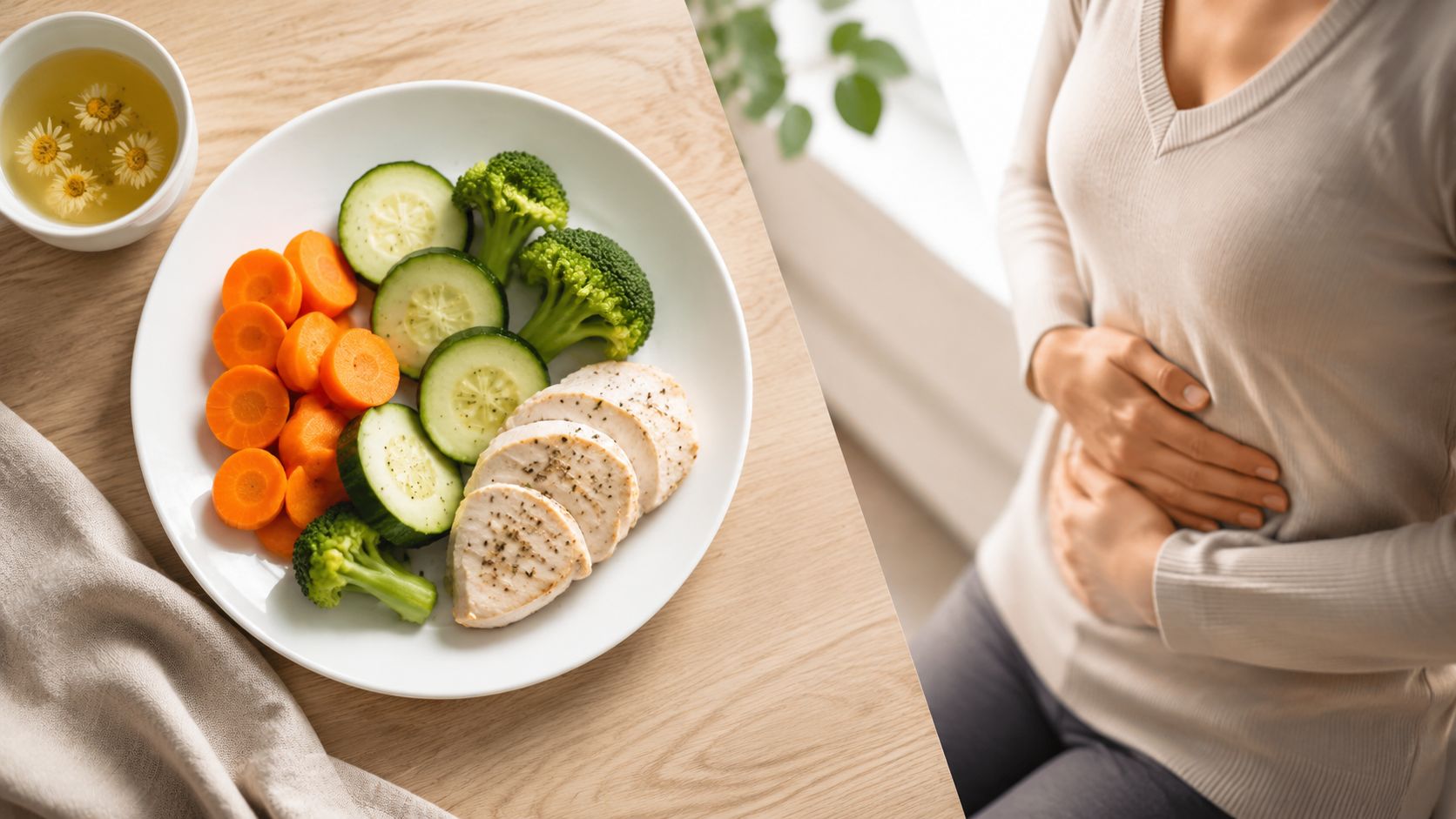
During acute phases, simple foods are usually the most pleasant. Steamed vegetables, softly cooked potatoes, rice, porridge, mild soups, or small amounts of easily digestible protein sources are often well tolerated. Still water and mild herbal or fruit teas are also often better tolerated than alcohol, heavily sweetened drinks, or highly carbonated beverages.
When you have stomach pain or gastritis, the composition of plant-based foods can also help. The NDR guide to nutrition for gastritis describes vegetables and mild, low-sugar fruit as sensible choices because they often irritate the stomach less than highly processed, fatty, or very sweet products.
The quantity is important here. Even a well-tolerated food can cause problems if the portion is too large.
What you should avoid during acute symptoms
An irritated stomach usually does not tolerate extremes well. These include, above all:
- Very fatty foods such as fried foods, fast food, or heavy cream sauces
- Heavily spiced meals with a lot of heat
- Very sweet products in large quantities
- Carbonation, alcohol, and heavily sweetened drinks
- Late, large evening meals
However, these foods are not a universal list of foods to avoid. This is precisely where many standard recommendations fall short. Some people react strongly to fat, while others react to acidity, lactose, fructose, sugar alcohols, or certain types of fiber. This is often also related to the microbiome and, in some cases, genetic differences in digestive enzymes.
If bloating, a feeling of fullness, or alternating bowel movements occur in addition to stomach pain, it is also worth taking a look at the diet for irritable bowel syndrome. In that case, the cause often lies not only in the stomach itself, but in the interaction between the stomach, intestines, and individual tolerance.
Food checklist for a calm stomach
| Recommended (bland foods) | Foods to avoid (irritating foods) |
|---|---|
| Steamed vegetables | Fried foods |
| Mild, low-sugar fruit in small quantities | Very sweet desserts and large amounts of sugar |
| Rice, potatoes, oatmeal | Very large portions |
| Mild tea and still water | Alcohol and highly carbonated drinks |
| Light, simply seasoned dishes | Very spicy, highly acidic, or heavy meals |
An irritated stomach primarily needs predictable meals. The simpler the food, the easier it is to recognize what agrees with you.
Small steps often achieve more than strict bans
Many people immediately eliminate anything that sounds even remotely suspicious. This makes everyday life more difficult and often provides little clarity. A systematic approach is more helpful.
- First reduce the intensity of irritation in your meals, meaning less fat, spice, acidity, and sugar at once.
- Choose smaller portions so the stomach is not overstretched.
- Test suspected foods individually instead of changing several things at once.
- Observe when the symptoms occur and what they feel like, such as burning, pressure, nausea, or bloating.
This makes it easier to recognize patterns. These patterns are important because stomach pain related to diet is rarely simply a matter of being "healthy" or "unhealthy." A muesli with raw vegetables, nuts, and dried fruit may suit one person well but be too much at once for another.
If even a cautious bland diet does not provide a clear picture, that does not mean you are doing anything wrong. It means it is worth taking a closer look. Personalized diagnostics, for example regarding the microbiome, intolerances, or genetic metabolic characteristics, may then be the next sensible step toward moving from general rules to a diet that truly suits your body.
7 practical everyday tips for a healthy stomach
Many complaints are caused not only by individual foods, but also by eating habits. The good news: You can often change these habits quickly in everyday life.

What you can put into practice
The optimal meal structure for a sensitive stomach consists of five to six small meals spread throughout the day. Large portions overwhelm the stomach, while frequent smaller amounts help stabilize gastric acid production and reduce pressure, as explained by the NDR guide to sensitive stomachs.
What you can pay attention to in everyday life:
- Eat smaller portions, but more regularly. A huge lunch can have effects for hours. Smaller amounts are much more comfortable for many people.
- Chew thoroughly. This relieves the stomach because the preparatory work already begins in the mouth.
- Make time to rest while eating. Eating on the go often increases air swallowing and tension.
- Choose stomach-friendly drinks. Still or low-carbonation water and mild teas are often the better choice.
- Eat lighter in the evening. Heavy meals shortly before bedtime can increase pressure and burning sensations for many people.
- Move gently after eating. A short walk is often more comfortable than lying down straight away.
- Observe patterns rather than individual exceptions. One bad day doesn’t say much. Repeated reactions to the same situation are more meaningful.
If you are unsure
Not every digestive disorder feels the same. Sometimes it is more like pressure, sometimes a feeling of fullness, and sometimes a mixture of nausea, belching, and pain. If you are looking for practical everyday tips, you can find further simple approaches in this article about what helps with digestion.
Eating more slowly sounds trivial. For many people, however, it is precisely the difference between “so-so” and “symptom-free.”
When general tips aren’t enough: Find the true cause
Some people do everything “right.” They eat mild foods, drink little coffee, avoid fat, and eat smaller portions. Yet their stomach remains sensitive. If this sounds familiar, the problem may not be a lack of discipline, but rather that you’re addressing the wrong level of the solution.
Why one-size-fits-all advice often falls short
A bland diet is based on averages. But your body is not average. Your stomach reacts not only to fat or spice, but also to the interplay of digestion, gut flora, tolerance, and genetic predisposition.
For chronic or recurring symptoms, it is therefore worth thinking more individually. Not everyone processes nutrients in the same way. Not every gut flora responds in the same way to fiber, dairy products, or certain carbohydrates.

The underestimated factor: the microbiome
This is where the topic of diet for stomach pain becomes particularly interesting. The stomach does not work in isolation. It is closely connected to the intestines. When the gut flora is out of balance, this can affect how you tolerate food and how strongly your digestive system reacts to certain foods.
According to BIG direkt gesund, 45% of people affected by gastritis or heartburn experience significantly fewer symptoms with a personalized diet tailored to the microbiome. This is precisely the aspect missing from many general guides.
Genetics and nutrition are more closely connected than many people think
Genetic differences can also explain why conventional recommendations only work partially for you. Some people cope better with a particular distribution of nutrients than others. Others are more sensitive to certain food groups or have different micronutrient requirements.
If recurring symptoms affect your everyday life, modern diagnostics are therefore a logical next step. Instead of eliminating foods based only on suspicion, you gain a more reliable foundation. This can help you structure your diet more purposefully and avoid unnecessary restrictions.
Not every sensitive digestive system needs more restrictions. Sometimes it needs more precise information.
Especially with persistent symptoms, this is often the difference between endless trial and error and a plan that better suits your body.
When you should see a doctor for stomach pain
You eat more cautiously, chew more thoroughly, and avoid irritants. Nevertheless, your stomach continues to make itself known. In that case, it is important not to treat the symptoms solely as a dietary issue, but also to have them medically evaluated.

You should take these warning signs seriously
Please have stomach pain medically evaluated if one or more of these points apply to you:
- Symptoms lasting several days or recurring pain without an identifiable cause
- Sudden, severe pain or intense bouts of cramping
- Blood in the stool or vomit
- Unintentional weight loss
- Fever or night sweats
- Difficulty swallowing
- Pain that radiates to the back or chest
These signs may indicate more than a sensitive stomach after eating. For example, consider inflammation, an ulcer, gallbladder problems, an intolerance causing a severe reaction, or, more rarely, a condition outside the stomach. The abdomen is not an isolated organ. It works more like an interconnected system in which the stomach, intestines, nerves, hormones, and immune system are closely linked.
What you can do before your appointment
Until you have been assessed by a doctor, the main priority is to reduce the strain on your body. Eat smaller portions, choose simple foods that you tolerate well, and allow enough time to rest between meals. Late, very heavy dinners can worsen symptoms. This was already mentioned above.
It is important to note that such measures can temporarily ease symptoms, but they do not clarify the cause. Especially if general guidelines make little difference for you, this supports the central idea of this article. Stomach pain is often more personal than guidebooks suggest. The microbiome, genetic predisposition, and individual reactions to foods may play a role. Seeing a doctor can help rule out dangerous causes and determine whether further diagnostics would be useful.
If you experience very severe pain, circulatory problems, black stools, or bloody vomiting, do not wait for a routine appointment; seek medical help immediately.
Conclusion: Your individual path to better gut awareness
Stomach pain after eating is distressing, but you are not powerless against it. In many cases, it is worth starting by getting the basics right: less irritating foods, smaller portions, and calmer eating habits.
If your stomach continues to rebel despite this, it is not a sign of failure. Rather, it may indicate that your body should be examined more closely. That is exactly when personalised diagnostics become interesting—not as a trend, but as a sensible shortcut to greater clarity.
Ultimately, it is not about rigid prohibitions. It is about finding your own approach to eating with stomach pain. An approach that reduces discomfort while still allowing you to enjoy your food.
If you no longer want to manage your digestion based solely on how you feel, MYBODY Lab GmbH may be a useful place to start. The company offers modern health analyses for DNA, the microbiome, metabolism, and nutrient status that you can carry out from home. Such assessments can help you better understand connections between your diet, food tolerance, and recurring stomach problems, and plan your next steps with greater confidence.



Share now:
Have your hormone status checked: Your path to health in 2026
Nutrition Basics: Your Guide for 2026