

Keto diet: Science, benefits, and risks 2026
TL;DR:
- The keto diet is based on a metabolic shift into ketosis, with carbohydrates greatly reduced.
- In the short term, it promotes weight loss and energy-efficient functioning, but its long-term risks remain unclear.
- It is particularly suitable for certain medical indications; for others, individual counseling is recommended.
Many people believe that the keto diet simply means eating more fat and cutting out carbohydrates. Unfortunately, it is not that simple. The ketogenic diet is based on a precise metabolic mechanism that shifts your body into a completely different operating mode. Whether it makes sense for you depends on your genetics, health goals, and pre-existing conditions. This article explains what really happens in your body, what the science actually proves, and who keto is suitable for. And who definitely is not.
Table of contents
- Fundamentals and mechanism of the keto diet
- Scientific evidence: benefits and potential risks
- Who Is the Keto Diet Suitable For? – Personalized Recommendations
- Keto Diet in Practice: Everyday Implementation and Alternatives
- Personal assessment: The truth about the keto diet in everyday life
- Your Personal Path to Healthy Eating
- Frequently Asked Questions About the Keto Diet
Key findings
| Point | Details |
|---|---|
| Keto diet explained | The keto diet is a very low-carbohydrate, high-fat diet that puts the metabolism into ketosis. |
| Benefits and risks | In the short term, the keto diet may help with weight loss, but it carries long-term health risks and is not suitable for everyone. |
| Individual recommendations | A keto diet should only be started after personal assessment and medical advice, especially if you have pre-existing conditions. |
| Alternatives available | Low-carb and Paleo are sensible alternatives to the strict keto diet for many situations. |
Fundamentals and mechanism of the keto diet
The ketogenic diet reduces carbohydrates to under 50 grams per day, sometimes even below 20 grams. At the same time, fats provide up to 75 percent of daily calorie intake, while protein accounts for about 20 percent. This sounds radical because it is.
Normally, your body runs on glucose. Glucose comes from carbohydrates and is the preferred fuel for the brain and muscles. When you drastically reduce carbohydrates, your glycogen stores (the sugar reserves in the liver and muscles) are depleted within about 24 to 48 hours. Then the actual process begins: after 72 hours without carbohydrates, the liver switches to producing ketone bodies such as beta-hydroxybutyrate, which the brain and organs use as an energy source. At the same time, insulin levels drop sharply, significantly accelerating the mobilization of fat from adipose tissue.
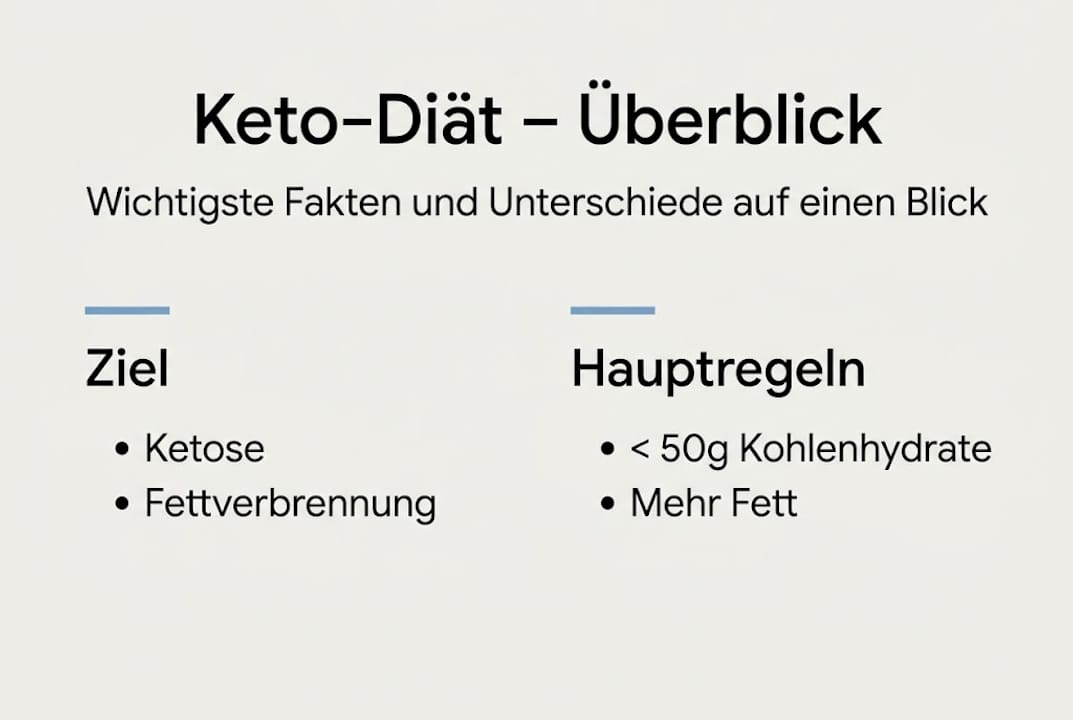
This state is called ketosis. It is the core of the entire diet and also the reason why it differs so fundamentally from other dietary patterns.
| Characteristic | Keto diet | Low-carb | Normal diet |
|---|---|---|---|
| Carbohydrates | under 50 g/day | 100 to 150 g/day | 200 to 300 g/day |
| Main energy source | Ketone bodies | Glucose and fat | Glucose |
| Insulin level | very low | moderate | high after meals |
| Entering ketosis | after 2 to 4 days | no | no |
For beginners, it is important to know which foods are actually allowed. The Keto Diet for Beginners guide on mybody-x.com provides a detailed overview.
The most common ketogenic foods are:
- Avocado, nuts, and seeds
- Fatty fish such as salmon, mackerel, and sardines
- Eggs and full-fat dairy products
- Non-starchy vegetables (zucchini, spinach, broccoli)
- Olive oil, coconut oil, butter
Pro tip: Many people underestimate the importance of electrolytes during the adjustment phase. Sodium, magnesium, and potassium are lost through increased water loss. Supplement them deliberately to minimize typical initial difficulties.
Scientific evidence: benefits and potential risks
The evidence base on the keto diet is more extensive than that of most fad diets. And it is more nuanced than many keto advocates would like to admit.
On the positive side, studies show clear short-term benefits. Keto often leads to rapid weight loss in the first few weeks, mainly due to water-weight loss and reduced calorie intake. Many people report stable energy levels without the typical blood sugar fluctuations after carbohydrate-rich meals. The increased satiety from fat and protein plays a major role.

| Benefit | Evidence level | Time frame |
|---|---|---|
| Weight loss | well established | short term (up to 6 months) |
| Stable energy | well established | short term |
| Epilepsy treatment | very well established | long term |
| Cardiovascular protection | weak evidence | unclear |
However, there are also serious drawbacks. Long-term risks include fatty liver, glucose intolerance, and elevated blood lipid levels, as animal studies show. In addition, there is keto flu when starting the diet (nausea, fatigue, headaches), an increased risk of kidney stones with high protein intake, and potential effects on heart health with certain fatty acid profiles.
The following groups should avoid keto or try it only under strict medical supervision:
- Pregnant and breastfeeding women
- People with kidney failure
- People with a history of eating disorders
- Children without a clinical indication
- People with lipid metabolism disorders
The keto diet is medically established primarily for two indications: treatment-resistant epilepsy and the rare GLUT1 deficiency syndrome, in which glucose does not adequately reach the brain. Its benefits are clearly supported by scientific evidence in these cases. The German Nutrition Society generally advises against a carbohydrate intake below 50 percent of total energy intake, clearly placing the keto diet in the realm of special cases for the general population.
When you compare different types of diets, it becomes clear that no diet is suitable for everyone. For people who want to lose weight healthily in the long term, more sustainable approaches are often more appropriate.
Who Is the Keto Diet Suitable For? – Personalized Recommendations
The crucial question is not: “Is keto good or bad?” It is: “Is keto good or bad for you personally?” That is a huge difference.
“Nutrition is not a one-size-fits-all solution. What is transformative for one person can be harmful to another. Genetics, metabolism, and lifestyle matter more than any diet plan.”
One crucial, often overlooked factor is sex. Men are more susceptible than women to keto-related changes in the liver caused by fat accumulation. At the same time, women are more hormonally sensitive to extreme calorie restrictions, which can affect the menstrual cycle. These differences are clinically relevant and are simply ignored in most keto guides.
Here is a practical overview of who may benefit from keto and who may not:
- Suitable: People with treatment-resistant epilepsy under medical supervision
- Suitable: People with obesity who want to lose weight in the short term and have no contraindications
- Suitable: People with type 2 diabetes who want to lower their blood sugar (only under medical supervision)
- Not suitable: Pregnant or breastfeeding women, and children without a medical indication
- Not suitable: People with kidney disease, liver disease, or lipid metabolism disorders
- Not suitable: People with active or past eating disorders
Your genetics also play an underestimated role. Some people metabolize fats less efficiently due to genetic factors. Others carry variants that promote an increase in cholesterol when following a high-fat diet. This information can only be identified through genetic analysis, not by trial and error.
Pro tip: Before starting a keto diet, have basic blood tests performed: blood lipids, liver values, kidney values, and blood glucose. This gives you a baseline and allows for an objective assessment after a few weeks.
If you would like to explore the topic of personalized nutrition in greater depth, you will find evidence-based foundations there. The article on everyday keto nutrition also offers practical ideas for implementation.
Keto Diet in Practice: Everyday Implementation and Alternatives
Even people for whom keto is indicated face a practical challenge: This diet is demanding in everyday life. Social situations, travel, restaurants, family meals. Carbohydrates are everywhere, often hidden in sauces, dressings, or processed foods.
Typical mistakes when getting started:
- Eating too little fat and too much protein instead (which prevents true ketosis)
- Failing to count hidden carbohydrates in dairy products, nuts, or processed foods
- Ignoring electrolyte deficiencies and misinterpreting symptoms of the keto flu
- Underestimating the adjustment phase: A drop in performance during the first two weeks is normal
- Giving up too soon, before the body has metabolically adapted
Nutritionists such as Hélène Léchot in particular point out that while keto can be effective in the short term for weight loss and stable energy, the body may lose its ability to metabolize carbohydrates efficiently. This can become problematic in the long term when the diet is discontinued.
For many people, gentler alternatives are more sustainable and offer greater health benefits:
- Low carb: A moderate reduction in carbohydrates without strict ketosis. More flexible and easier to follow in social situations. The article Low Carb Explained in More Detail explains exactly what this means.
- Paleo: Focuses on unprocessed foods and natural sources of protein and fat. Less restrictive than keto. Learn more about the Paleo diet as an alternative.
- Mediterranean diet: The best scientifically supported option for long-term health. Rich in vegetables, legumes, olive oil, and fish.
Pro tip: If your main goal is weight loss, it is worth looking at data-driven methods. By analyzing your metabolism and genetic predisposition, you can determine precisely which dietary approach actually works for you. You can find more information at Losing Weight Through Nutrition.
Personal assessment: The truth about the keto diet in everyday life
Keto polarizes like hardly any other diet. On one side are enthusiastic followers with impressive before-and-after pictures; on the other is skepticism from nutritional science. Our assessment: Both have their place.
Keto is not a cure-all. It is a metabolic tool with specific indications and specific risks. For most healthy people without pre-existing conditions, there is no convincing long-term data to justify such a restrictive diet. What is often not discussed: the mental burden of constant deprivation, social isolation during shared meals, and the risk of falling into dogmatic black-and-white thinking.
Our recommendation: Instead of blindly following a diet philosophy, look at your own data. A metabolic analysis shows how your body responds to different macronutrients. That is the difference between assumptions and knowledge.
Your Personal Path to Healthy Eating
Whether keto is right for you cannot be answered categorically. What we do know is that blanket recommendations rarely work. Your metabolism, genetics, and lifestyle are unique and deserve an individualized answer.
At mybody-x, you will find personalized nutrition solutions from mybody-x based on scientifically validated tests. A DNA metabolism test shows how your body genetically processes fats and carbohydrates. With this knowledge, you can make an informed decision about whether keto, low carb, or another dietary approach is right for you. Discover the keto guide and find the right tests directly on our website.
Frequently Asked Questions About the Keto Diet
How quickly does ketosis occur on a keto diet?
Ketosis is generally reached after 72 hours without or with very few carbohydrates, once glycogen stores have been depleted. The exact duration depends on your individual metabolic rate and activity level.
What side effects are common when starting the keto diet?
The so-called keto flu, with nausea and fatigue, is typical and usually subsides after a few days. Adequate fluid intake and electrolyte supplementation can significantly alleviate the symptoms.
Is the keto diet suitable for everyone?
No. It is not suitable for pregnant women, people with kidney disease, or people with eating disorders. A medical evaluation is generally recommended before starting.
How does keto differ from a low-carb diet?
While a low-carb diet moderately reduces carbohydrate intake to 100 to 150 grams per day, keto reduces it to under 50 grams daily with the goal of inducing actual ketosis. Low carb generally does not lead to a metabolic shift in which ketone bodies become the primary energy source.
Is permanently avoiding carbohydrates healthy?
Nutritional medicine specialists advise against it, as fatty liver and glucose intolerance have been documented as long-term risks. A permanent keto diet should only be followed when there is a clear medical indication and under medical supervision.



Share now:
Which foods? The 10 best for your health
Personalized nutrition recommendation through DNA analysis