
How to Perform a DNA Test at Home: Complete Guide 2026
More and more health-conscious people want to optimize their nutrition and health, but they often lack knowledge about their genetic predisposition. An at-home DNA test offers you the opportunity to gain personalized health information without visiting a doctor. This guide shows you step by step how to perform a DNA test correctly, send your sample safely, and make meaningful use of the results to optimize your individual health. You will learn everything important, from preparation to evaluation.
Table of contents
- Key insights at a glance
- Preparing for a DNA test at home
- Performing a DNA Test at Home: Step-by-Step Guide
- Receiving and understanding your results
- Common mistakes and tips for a successful at-home DNA test
- Discover mybody®x for your personalized DNA analysis
- How accurate are at-home DNA tests?
- How do I protect my genetic data when using an at-home test?
- Which DNA test is best suited to me?
- How long does it take to receive my DNA test results?
- Can I also have a DNA test performed for my child?
- What should I do if my sample is insufficient at the laboratory?
Key insights at a glance
| Point | Details |
|---|---|
| Simple procedure | At-home DNA tests are straightforward and require only a few minutes for sample collection. |
| Preparation is crucial | Proper preparation, such as fasting and avoiding mouthwash, ensures accurate results. |
| Safe sample handling | Proper packaging and prompt shipping guarantee the quality of your DNA sample. |
| Personalized insights | Results provide personalized recommendations for nutrition, metabolism, and health risks. |
| Pay attention to data privacy | Reputable providers with certifications and transparent privacy policies protect your genetic information. |
Preparing for a DNA test at home
Before beginning the actual sample collection, you need to complete some important preparations. The quality of your DNA analysis depends largely on how carefully you carry out these steps. A reputable test kit contains all the necessary materials, but choosing the right provider and preparing correctly are your responsibility.
First, you should choose a trustworthy provider. Look for ISO certifications, transparent privacy policies, and positive customer reviews. Precise preparation and selection protect the quality of the DNA analysis and ensure reliable results. A high-quality test kit should contain sterile cotton swabs or saliva tubes, a secure shipping container, detailed instructions, and a prepaid return label.
The choice of sample type plays an important role in your comfort and the accuracy of the analysis:
| Sample type | Advantages | Disadvantages |
|---|---|---|
| Saliva sample | Painless, simple collection, no contamination from food | Requires sufficient saliva; not suitable for dry mouth |
| Cheek swab | Fast collection, low risk of errors, also possible with little saliva | Requires precise swabbing of the inside of the cheek; possible contamination |
To create optimal conditions for sample collection, observe the following points:
- Plan to collect the sample in the morning before breakfast
- Avoid eating, drinking, smoking, or chewing gum for 30 minutes beforehand
- Do not rinse your mouth immediately before collecting the sample
- Wash your hands thoroughly with soap
- Prepare all the materials on a clean surface
Pro tip: Take the test in the morning immediately after waking up, before brushing your teeth or consuming anything. At this time, the DNA concentration in your saliva is highest and the sample is least contaminated by external influences.
When choosing a provider, you should pay particular attention to data privacy. Reputable companies anonymize your samples immediately upon receipt at the laboratory and store genetic data separately from personal information. Check whether the provider operates in compliance with the GDPR and whether you retain control over your data, including the right to have it deleted. You can find more helpful information in our guide Home DNA Testing Explained.
Performing a DNA Test at Home: Step-by-Step Guide
Once you have completed all the preparations, it is time to carry out your DNA test. This guide takes you through each individual step so that you can avoid mistakes and obtain a high-quality sample for laboratory analysis. The entire procedure takes only a few minutes but requires your full attention.
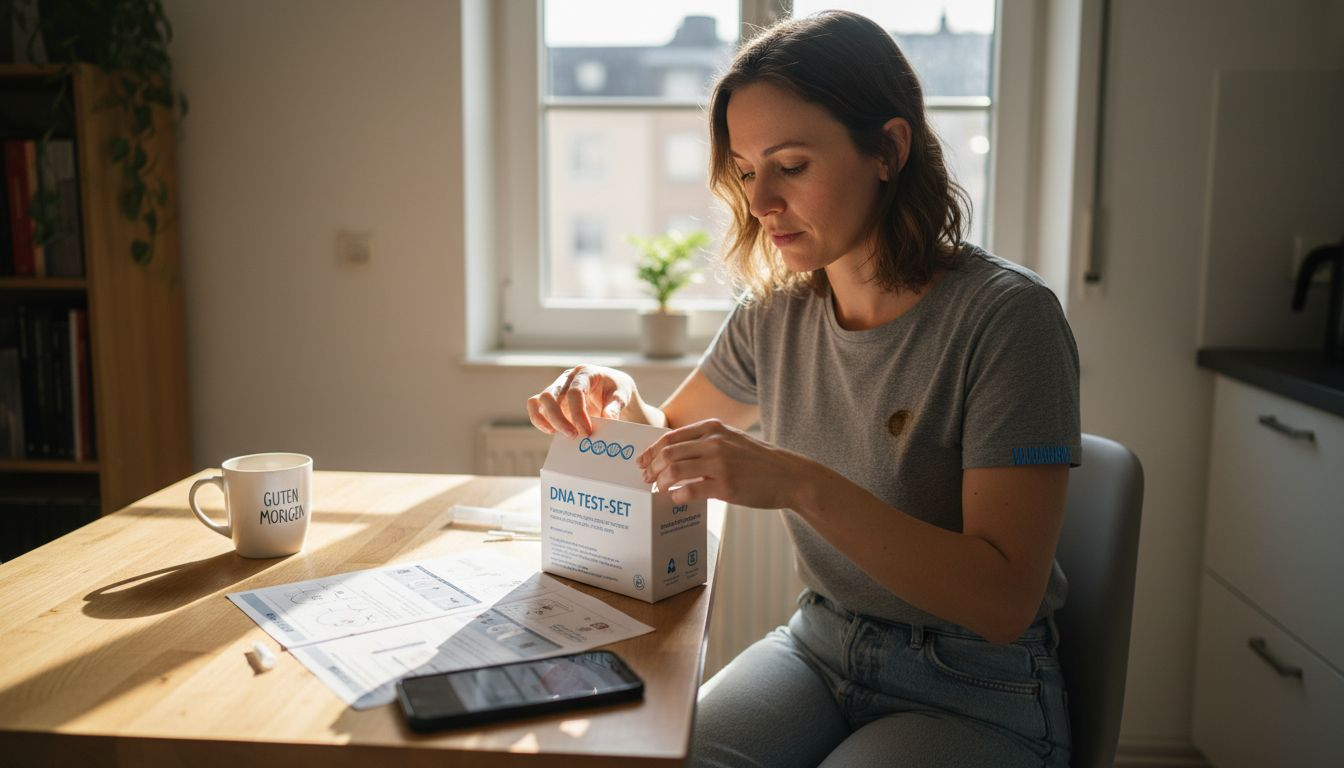
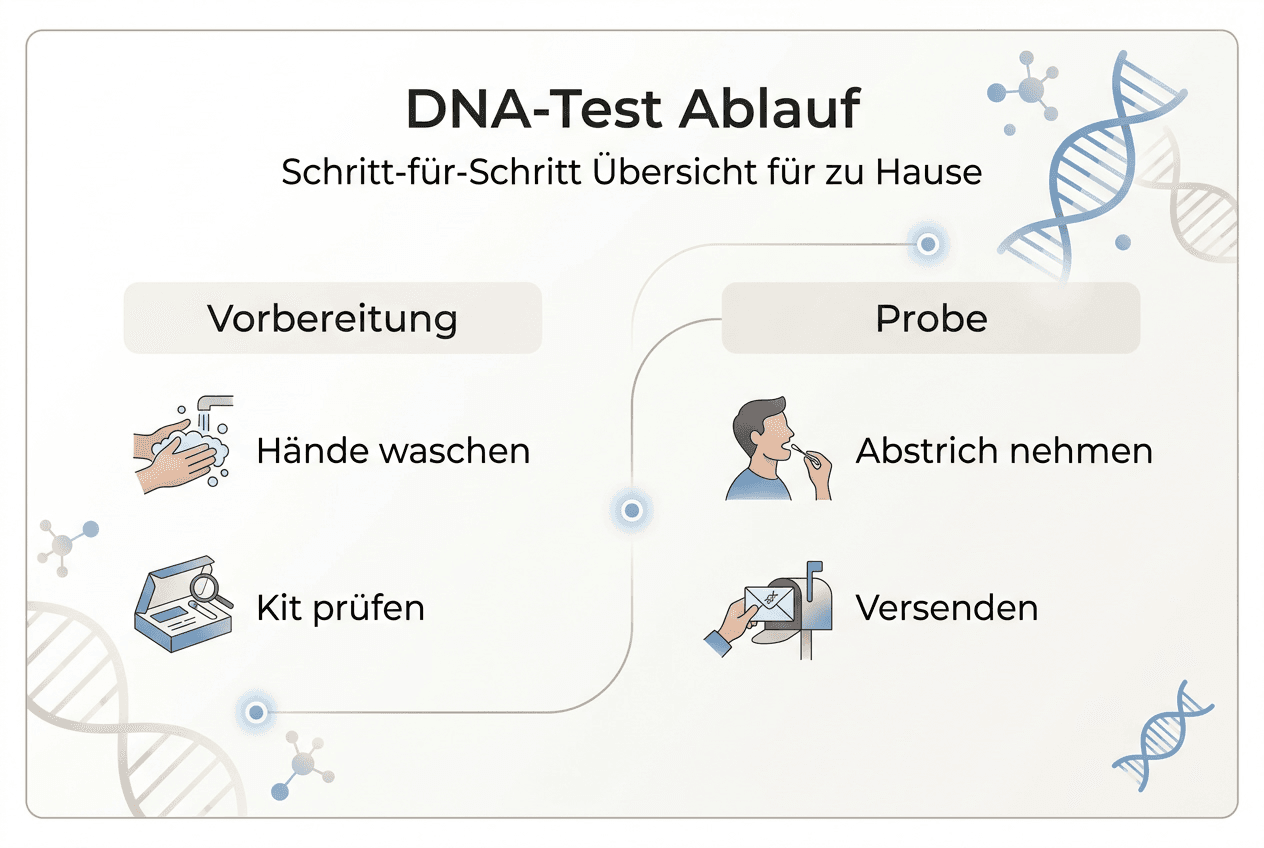
Step 1: Unpack the test kit and check the materials Carefully open the test kit and check that all components are present. These usually include the collection tool (cotton swab or saliva tube), a sample container with stabilizing solution, a shipping bag, a return label, and the instructions. Read the enclosed instructions in full before you begin.
Step 2: Hygienic preparation Wash your hands thoroughly with soap and warm water for at least 20 seconds. Dry them with a clean towel. Make sure you have not eaten, drunk, or smoked anything in the last 30 minutes. Following the sample collection procedure precisely guarantees reliable results and prevents costly repeat tests.

Step 3: Collect the sample For a cheek swab, open the sterile package containing the cotton swab without touching the tip. Insert the swab into your mouth and firmly rub it up and down along the inside of your cheek for at least 30 seconds. Gently rotate the swab as you do so to collect as many cells as possible. For a saliva sample, fill the tube to the marked line by collecting saliva without coughing or creating bubbles.
Step 4: Package the sample securely Immediately place the swab or saliva tube in the designated sample container. Close it firmly until you hear a click. For saliva samples, mix the sample with the stabilization solution by gently shaking it. Place the sealed container in the provided shipping envelope and seal it carefully.
Step 5: Prepare and ship the sample Attach the prepaid return label to the shipping envelope. Make a note of the tracking number, if available. Take the sample to the post office the same day or drop it in a mailbox. The faster the sample reaches the laboratory, the better the DNA quality.
Pro tip: Avoid shipping the sample on a Friday, as it may then be in transit over the weekend. Ideally, ship it from Monday to Wednesday so that the sample reaches the laboratory quickly and analysis can begin promptly.
Common mistakes you should avoid at all costs include touching the swab tip with your fingers, rubbing the cheek insufficiently (too briefly or too gently), eating or drinking shortly before collecting the sample, and delaying shipment of the sample. These mistakes can impair DNA quality and lead to inaccurate or unusable results. If you are unsure, you can also follow the instructions for other at-home tests, such as the at-home blood test.
Receiving and understanding your results
After successful sample collection and shipping, the laboratory analysis begins, which can take between two and six weeks depending on the provider and scope of the test. During this time, your DNA is sequenced and compared with extensive databases to identify genetic markers. You usually receive your results digitally via a secure online portal or by encrypted email.
A typical DNA analysis report contains several categories with detailed information. DNA results provide valuable insights for individualized health measures and enable precise adjustments to your diet and lifestyle. The most important areas include:
- Metabolism and nutrition: How your body processes carbohydrates, fats, and proteins
- Nutrient requirements: Genetic predisposition to vitamin and mineral deficiencies
- Food intolerances: Lactose, gluten, histamine, and other intolerances
- Weight management: Genetic factors that influence your weight
- Athletic performance: Muscle type, recovery ability, and optimal forms of training
- Health risks: Predisposition to certain diseases such as diabetes or cardiovascular problems
Interpreting your results requires a basic understanding of genetic markers. These markers do not indicate that you will definitely develop a disease, but merely show your genetic predisposition. An increased risk means that you have a higher probability compared with the general population, but lifestyle and environmental factors also play an equally important role.
| Genetic finding | Meaning | Recommended action |
|---|---|---|
| Increased risk of type 2 diabetes | Genetic predisposition to insulin resistance | Low-carbohydrate diet, regular exercise, blood sugar monitoring |
| Slow caffeine metabolism | Caffeine is metabolized more slowly due to genetic factors | Reduce caffeine consumption, especially in the afternoon, and pay attention to heart health |
| Increased vitamin D requirement | Genetic variant makes vitamin D absorption more difficult | Consider supplementation, increase sun exposure, check blood levels |
| Lactose intolerance | Genetically determined reduced lactase production | Choose lactose-free products, and get calcium from other foods |
To integrate the results meaningfully into your everyday life, you should proceed step by step. Start with the recommendations that have the greatest impact on your health. For example, if a gluten intolerance has been identified, eliminate foods containing gluten and observe how your well-being changes. Record your dietary changes and physical reactions in a journal.
It is important not to view your DNA results in isolation. Consult a doctor or nutritionist, especially if health risks have been identified. These professionals can relate the genetic information to your current health, family history, and lifestyle. You can find more information about the benefits of DNA analysis in our detailed guide.
Common mistakes and tips for a successful at-home DNA test
Even when carried out carefully, errors can occur that compromise the quality of your DNA sample and lead to inaccurate or unusable results. Knowing about these pitfalls and actively avoiding them saves you time, money, and frustration. Here you will learn which common sources of error exist and how to avoid them.
The most common problems with at-home DNA tests arise from:
- Improper storage: Storing the sample at excessively high temperatures or in direct sunlight
- Contamination: Touching the sample tip with fingers or other surfaces
- Insufficient sample quantity: Too little saliva or swabbing for too short a time during the cheek swab
- Delayed shipping: The sample is not shipped until several days after collection
- Failure to fast: Eating, drinking, or smoking shortly before collecting the sample
- Incorrect sample type: Choosing a test that does not match your own health questions
Errors in sample collection and selection significantly reduce the reliability of the tests and, in the worst case, may require a costly repeat. Therefore, it is important to carry out each step consciously and carefully.
Checklist for the quality of the test kit and provider:
- ISO certification of the laboratory (ISO 15189 or ISO 17025)
- Transparent data protection policies and GDPR compliance
- Positive customer reviews and demonstrable expertise
- Detailed instructions in German
- Free customer service for questions
- Scientifically based evaluation with cited sources
- Option to delete data after completion of the analysis
Pro tip: Make sure the provider works with independent, accredited laboratories and does not conduct only in-house analyses. Independent laboratories are subject to stricter quality controls and provide an additional level of assurance regarding the accuracy of your results.
“The quality of a DNA test depends entirely on proper sample collection and the provider’s credibility. Take the time to choose and carry out the test carefully, because your genetic data is unique and deserves the utmost care.”
When choosing a provider, you should also consider value for money. Inexpensive tests costing under 50 euros often provide only basic information, while comprehensive analyses can cost between 150 and 400 euros. Consider in advance which information you really need. A test covering all areas is not always useful if you only have specific questions about nutrition or intolerances.
To find the right test, you should clearly define your health goals. Do you want to optimize your diet, lose weight, improve athletic performance, or identify health risks at an early stage? The more precise your question, the more specifically you can select the right test. A comparison of various at-home DNA tests can provide additional guidance.
Discover mybody®x for your personalized DNA analysis
Now that you know all the important steps for a successful at-home DNA test, we would like to introduce mybody®x as a trusted partner for your genetic health analysis. As a Swiss provider with ISO-certified laboratories, mybody®x offers comprehensive DNA tests that you can conveniently perform at home. The tests cover areas such as metabolism, nutrition, fitness, longevity, and nutrient requirements.
The strict data protection standards under the GDPR are particularly noteworthy. Your samples are pseudonymized and securely destroyed after analysis. You receive not only detailed results, but also personalized nutrition recommendations and lifestyle tips tailored to your genetic predisposition. With more than 11,300 satisfied customers and a rating of 4.77 stars, mybody®x is one of the established providers in the field of personalized health.
Visit the mybody®x homepage to learn more about the various testing options. You can also learn about the impact DNA tests can have on your health and how to make the most of your results for your individual health goals.
How accurate are at-home DNA tests?
At-home DNA tests provide reliable results when samples are collected correctly and the provider works with accredited laboratories. With reputable providers, the accuracy of the sequencing itself is over 99 percent. However, the informative value of the interpretation depends on the quality of the reference databases used and the scientific basis. Modern laboratories use next-generation sequencing technologies that can reliably identify even the smallest genetic variants.
How do I protect my genetic data when using an at-home test?
Choose only providers with transparent privacy policies and GDPR compliance. Data privacy is particularly important for genetic data, and providers must be transparent about storage, use, and sharing. Make sure that your sample is pseudonymized and that genetic data is stored separately from personal information. You should have the right to have your data deleted at any time. Reputable providers never sell your genetic information to third parties without your explicit consent.
Which DNA test is best suited to me?
Different test types provide different health information, so choose according to your goal. If you primarily want to optimize your diet, a metabolism and nutrition test is ideal. Fitness DNA tests are suitable for athletes, as they analyze muscle type and recovery capacity. If you suspect intolerances, choose a specialized intolerance test. Comprehensive health tests cover several areas but are more expensive. If you are unsure, consult a nutritionist or doctor who can advise you based on your individual health concerns.
How long does it take to receive my DNA test results?
Processing time varies by provider and test scope, ranging from two to six weeks. Once your sample arrives at the laboratory, DNA extraction, sequencing, and bioinformatic analysis begin. Simple tests, such as intolerance analyses, are often available sooner than comprehensive health and metabolism tests. Many providers inform you by email when your sample arrives and about the progress of the analysis. Allow sufficient time, and avoid testing shortly before important decisions or events if you need the results promptly.
Can I also have a DNA test performed for my child?
Yes, DNA tests can also be performed for children, but they require the consent of a legal guardian. For children, tests for food intolerances, allergies, or nutrient deficiencies are particularly useful. Sample collection is identical to that for adults and completely painless. However, keep in mind that genetic health risks in children are ethically sensitive. Before conducting a comprehensive health test, consult a pediatrician to ensure that the information can be interpreted and communicated in an age-appropriate way.
What should I do if my sample is insufficient at the laboratory?
If your sample is insufficient or the DNA quality is inadequate for analysis, the provider will usually contact you and offer a free repeat collection. Reputable providers will then send you a new test kit. To avoid this, follow the instructions carefully, collect enough material, and send the sample promptly. For saliva tests, fill the tube up to the marked line; for cheek swabs, rub firmly for at least 30 seconds. If you are unsure, contact the provider’s customer service before collecting the sample.
Recommendation
- Performing a Blood Test at Home: Instructions for Accurate Results – mybody®x
- Step-by-Step DNA Analysis: Understanding Your Individual Health Data – mybody®x
- DNA Test in Austria: Everything You Need to Know About Genetic Tests – mybody®x
- DNA Test in Germany – Health, Metabolism & Kits – mybody®x
- Rapid Tests - Self-Testing - mybestpharmacy.net | Mybestpharmacy.net | Online Pharmacy



Share now:
Understand and actively improve gut health
Eating with digestive issues: A guide to your gut health