
Food for digestive problems: A guide to your gut health
Does your stomach rumble, pinch, and make everyday life difficult? You are not alone. Bloating, cramps, or unpredictable bowel movements are often your body’s direct response to what you eat. The right food for digestive problems is primarily about giving your digestive system a break and choosing easily digestible, soothing foods. Sometimes simple immediate measures, such as warm fennel tea or a hot-water bottle, are enough to relieve acute symptoms.
Understanding your gut’s signals and taking the right action

When your stomach rebels, it often feels as though your digestion is controlling your entire life. Plans become uncertain, eating turns into a minefield, and your overall well-being suffers. Instead of ignoring these signals or simply enduring them, the first and most important step is to listen closely.
Your body sends you a clear message with every rumble and every cramp. These symptoms are rarely without reason, but the causes can be as individual as you are.
What is really behind the symptoms?
Often, it is not just a single trigger but an interplay of various factors that throws your gut out of balance. The most common suspects include:
- Stress: The close connection between the gut and the brain, known as the gut-brain axis, means that psychological stress can directly affect your digestion.
- The wrong diet: Highly processed foods, too much sugar, unhealthy fats, or even certain “healthy” foods such as raw vegetables can quickly overwhelm your gut.
- Undetected intolerances: Lactose, fructose, or histamine are common culprits that quietly cause digestive chaos for many people.
- An imbalanced microbiome: The composition of your gut bacteria has a huge influence on how well you digest food and how you feel.
Irritable bowel syndrome (IBS) in particular is widespread in this country. Estimates suggest that between 4 and 17 percent of Germans suffer from it, with women affected about twice as often as men. Since the symptoms often persist for more than three months, a long-term dietary change is usually the key to a better quality of life for those affected. If you would like to explore the topic of IBS in greater depth, you can find a detailed analysis here.
Long-term improvement does not begin with suppressing symptoms, but with finding the root cause of the problem. The first step is always to uncover the true causes.
From guesswork to clarity
When you have symptoms, it is tempting to simply reach for painkillers or teas that relieve cramps. But a truly sustainable approach goes deeper. Instead of groping in the dark and randomly eliminating foods, targeted analyses can provide clarity.
For example, a food intolerance test from mybody-x.com can show you precisely whether your body reacts to certain food components such as lactose or gluten. A gut microbiome analysis, in turn, provides detailed insights into the world of your gut flora and shows where an imbalance may exist.
Once you know the specific triggers, you can finally develop a strategy tailored precisely to you. This turns vague suspicions into concrete knowledge and lays the foundation for lasting intestinal health. In our article, you can learn more about which symptoms may indicate an unhealthy gut.
A bland diet as effective first aid for the intestines
When your stomach is rebelling and everything feels overwhelmed, taking a targeted break is often the best thing you can do. This is where a bland diet comes in, also known as a light full diet. It is a proven way to give your intestines a much-needed period of rest. It is absolutely not about starving, but about temporarily giving your body only what it can process effortlessly, without having to forgo important nutrients.
For many people, the term “bland diet” conjures up images of bland hospital food—but we can safely put that misconception aside. With the right foods and gentle preparation, you can create incredibly delicious, stomach-friendly dishes that soothe your system and simply make you feel good.
What does a bland diet actually mean?
The essence is very simple: Choose easily digestible foods and prepare them gently. Your goal is to irritate the digestive tract as little as possible. This means focusing on foods that are naturally low in fat, contain no spicy seasonings, and have hardly any gas-producing substances.
The following foods are particularly suitable:
- Easily digestible carbohydrates: Think rusks, day-old white bread, mashed potatoes, white rice, or very fine rolled oats. They provide energy without straining the intestines.
- Steamed vegetables: Carrots, zucchini, fennel, and parsnips are especially gentle when cooked. They provide you with vitamins without overwhelming you with too much fiber.
- Lean protein: Chicken or turkey breast (skinless) and lean fish such as pollock or pike-perch are ideal sources of protein. It is best to steam or boil them.
- Mild fruit: A ripe banana, a grated apple (with the skin on but briefly exposed to air to oxidize), or sugar-free applesauce are easy to tolerate at this stage.
Preparation is just as important as the selection of foods. Steaming, gentle cooking, and boiling are your best friends right now. Leave the frying pan in the cupboard for now—be sure to avoid searing, deep-frying, and breading, as the browning compounds produced in the process can further irritate the gut.
When your gut sends out an alarm, targeted relief through a bland diet is often the first and most important step toward improvement. During this phase, it is crucial to know exactly which foods are beneficial and which could make the situation worse. The following table provides a clear overview.
Bland diet foods at a glance
| Food group | Recommended and well tolerated | Best avoided |
|---|---|---|
| Carbohydrates | White rice, mashed potatoes, rusks, stale white bread, fine rolled oats, durum wheat pasta | Whole-grain products, fresh bread, coarse rolled oats, muesli |
| Vegetables | Carrots, zucchini, fennel, parsnips, pumpkin (all well cooked or steamed) | Raw vegetables, gas-producing varieties (cabbage, onions, leeks), legumes |
| Fruit | Ripe bananas, grated apple, unsweetened applesauce, cooked pears | Raw fruit with tough skin, acidic fruit (citrus fruits, berries), unripe fruit |
| Proteins | Boiled or steamed chicken/turkey breast, lean fish (pollock, cod), plain tofu | Fatty or smoked meat, processed meats, breaded fish, eggs (hard-boiled or scrambled) |
| Dairy Products & Fats | Low-fat quark, low-fat plain yogurt, small amounts of vegetable oils (e.g. rapeseed oil) | Full-fat dairy products, cream, butter, lard, mayonnaise, nuts, rich sauces |
| Drinks & Other | Still water, unsweetened herbal teas (fennel, chamomile), clear broths | Carbonated drinks, coffee, alcohol, fruit juices, hot spices, sugar, chocolate |
This overview is intended to help you make safe choices and plan your meals in a way that truly gives your gut a break. Remember, this is not a permanent state, but a targeted measure for the acute phase.
A bland diet is not about giving things up, but about making a conscious decision to give your body a break. You are giving your body the rest it needs to regenerate and prepare for the next steps.
An example day with a bland diet
To give you an idea of how easy it is to implement eating with intestinal discomfort, here is a simple one-day plan. Think of it as inspiration that you can of course adapt to your preferences and tolerances.
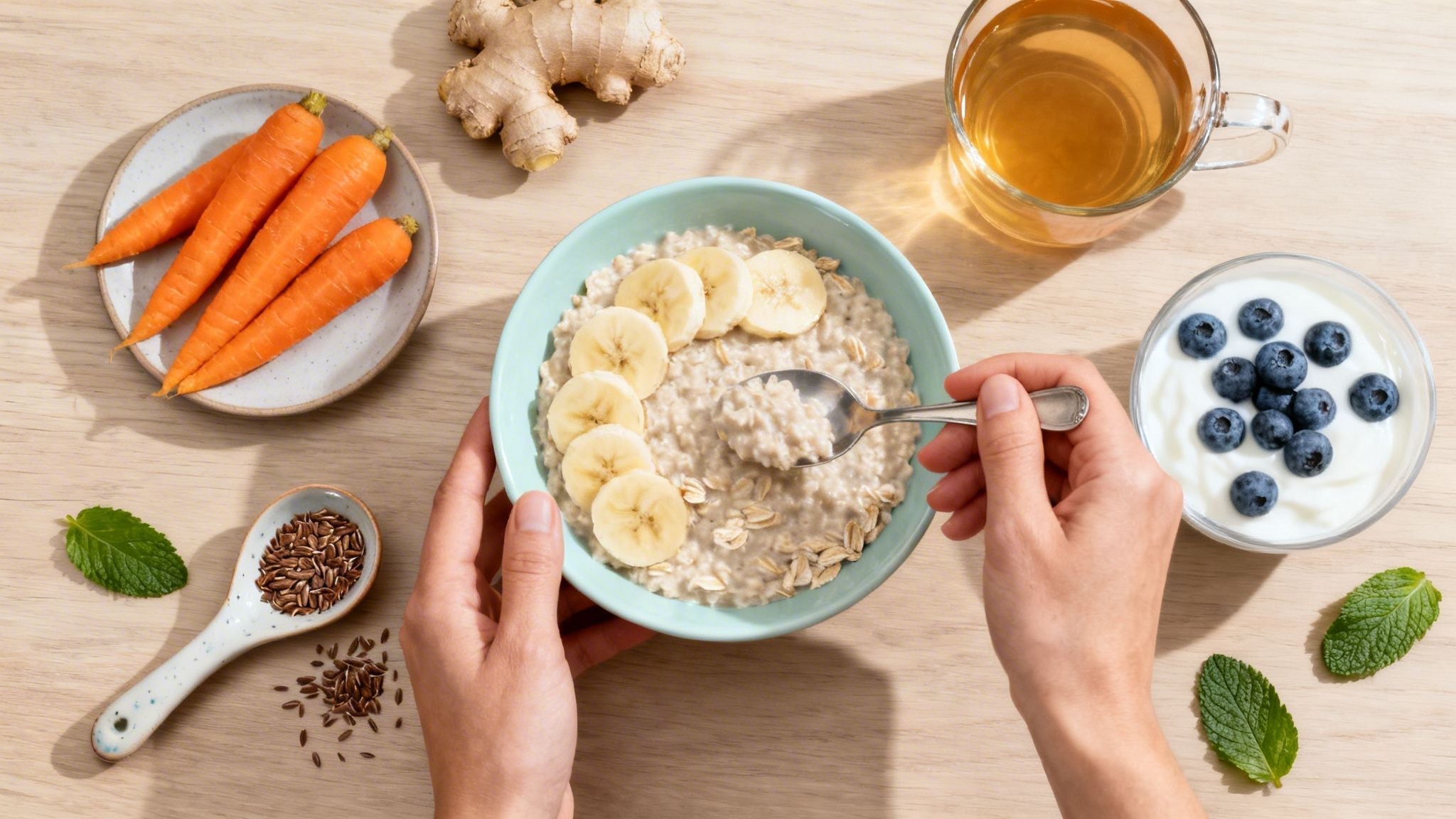
- Breakfast: Simple oatmeal porridge cooked with water and lightly sweetened with a mashed, ripe banana.
- Lunch: Gently steamed chicken breast with soft-cooked carrots and mashed potatoes prepared only with water or low-fat broth (that is, without milk or butter).
- Dinner: A clear chicken broth with a little rice added is just what you need right now. Alternatively, a mild carrot and ginger soup works well.
- Snacks: When you get a little hungry, reach for zwieback, a small grated apple or a cup of soothing fennel, anise and caraway tea.
How you eat also plays a huge role. Take your time, eat slowly and really chew every bite thoroughly. Several small meals spread throughout the day are often much easier on your gut than three large, heavy main meals.
This phase of the bland diet is purely an acute measure to help your digestive system settle down. It is the ideal starting point for relieving symptoms and preparing your body for what comes next. For example, if you have gotten through a bout of severe diarrhea, it is crucial to then support your gut flora in a targeted way. In our article, you can learn how to rebuild your gut flora after diarrhea. Once your symptoms have noticeably improved, you can gradually return to a balanced diet and get to the true causes of your problems.
Using the low-FODMAP diet strategically
Have you already switched to a bland diet and are painstakingly watching what you eat, yet the bothersome bloating, cramps or irritable bowel symptoms simply refuse to disappear? If you have reached this point, the low-FODMAP diet could be the crucial key you have been looking for. This approach is a kind of detective work for your gut and is particularly effective when certain carbohydrates are responsible for the chaos in your stomach.
But what is actually behind this strange abbreviation? FODMAP stands for fermentable oligosaccharides, disaccharides, monosaccharides and polyols. It sounds complicated, but essentially refers to a group of short-chain carbohydrates found in many everyday foods—from apples and wheat to milk. Most people digest them without any problems. In others, however, they travel undigested all the way to the large intestine. There, the gut bacteria practically rush to them and begin to ferment them. The result: gases that cause painful bloating and a distended feeling. On top of that, these molecules draw water into the intestines, which can in turn trigger diarrhea.
A journey of discovery in 3 phases
Most importantly: The low-FODMAP diet is not a lifelong list of forbidden foods, but a structured journey of discovery in three clearly defined phases. The goal is not to give up everything forever, but to identify your personal trigger foods so that, in the end, you can eat as freely and diversely as possible again.
Phase 1: The elimination phase (approx. 2–6 weeks) During this first and strictest phase, you consistently avoid all foods with a high FODMAP content. Think of it as a reset for your gut. You give it a real break so that the constant irritation can subside and your symptoms can noticeably improve. The goal is to create a stable, symptom-free foundation from which you can move forward.
Phase 2: The testing phase (approx. 6–8 weeks) Once you notice that your stomach is feeling significantly better, the real detective work begins. You start systematically testing individual FODMAP groups again. For example, you deliberately eat lactose-containing products for a few days and observe exactly how your body reacts. Then you test another group. Step by step, you discover which FODMAPs you tolerate well and which ones make your body rebel.
Phase 3: Your personal nutrition strategy With the knowledge gained during the testing phase, you are now the expert on your own body. You create an individual meal plan tailored precisely to you. You now know which foods you can enjoy without worry, which you tolerate only in small amounts, and which you should avoid. This personalized diet is flexible and can continue to adapt throughout your life.
The entire process follows a simple but effective principle: calm things down first, then provide targeted nourishment while carefully observing what happens.

This graphic sums it up perfectly: it is a three-part process of calming, mindful eating, and attentive self-observation—the cornerstones of any successful dietary change for digestive problems.
Mastering FODMAPs in everyday life
At the beginning, following the diet can feel a bit like detective work, especially when shopping. Many processed foods contain hidden FODMAPs such as fructose syrup, onion powder, or the fiber inulin. Taking a close look at the ingredients list will therefore become your new superpower.
Examples of low-FODMAP foods (suitable for the elimination phase):
- Fruit: Strawberries, blueberries (in moderation), oranges, kiwis, only fully ripe bananas (green ones contain more FODMAPs)
- Vegetables: Carrots, cucumbers, zucchini, bell peppers, potatoes, spinach
- Grains: Gluten-free oats, rice, quinoa, gluten-free bread
- Proteins: Chicken, fish, meat, eggs, firm tofu, tempeh
- Dairy products: Lactose-free milk and yogurt, hard cheeses such as Parmesan (which contain hardly any lactose due to the aging process)
By the way, this trend toward a conscious, gut-friendly diet has long since reached the mainstream. The gut health market in Germany is huge and reached a value of almost 2 billion euros in 2024. With projected growth of more than 12%, it is clear how strong the demand is for proactive and natural solutions for digestive problems. For as many as 59% of experts, gut health is the central dietary trend of all.
Test selectively instead of giving up foods across the board
A complete low-FODMAP diet is time-consuming and should not simply be started on a whim. It is primarily a diagnostic tool, not a permanent lifestyle for everyone.
An intolerance test can be a major shortcut. If you already know that you react to lactose or fructose, for example, you can adjust your diet much more precisely without unnecessarily having to eliminate countless other foods.
A intolerance test from mybody-x.com quickly and easily clarifies whether certain FODMAPs such as lactose, or other foods such as gluten, are at the root of your problems. Instead of experimenting for weeks, you get a clear answer and can immediately start an adapted diet to regain your well-being much faster.
Think of the low-FODMAP diet as a powerful tool for getting to know your body better and finding your own personal formula for a symptom-free diet. You can also find detailed information, strategies, and food lists in our comprehensive article on diet for irritable bowel syndrome.
Immediate help from the kitchen: The right diet for diarrhea and constipation
Diarrhea and constipation are two extremes that have one thing in common: They completely disrupt your daily life and clearly show that your digestive system needs help. In both cases, the right diet is by far the most powerful lever you have for regaining balance.
Yet the strategies could not be more different. While diarrhea is about soothing and “binding” the intestines, with constipation we need to specifically stimulate intestinal activity. The goal is not merely to combat symptoms, but to actively regain control over your digestion.
What helps immediately with acute diarrhea
With acute diarrhea, your body loses not only large amounts of fluid but also valuable minerals known as electrolytes. The top priority is therefore to quickly make up for these losses and soothe the intestines. Gentle, mildly binding foods are your best friends now.
These three home remedies often provide quick relief:
- Grated apple: A true classic that has proven its worth time and again. Finely grate an unpeeled apple and leave it in the air for about 15 minutes until it turns brownish. The pectin released in the process is a natural bulking agent that binds excess water in the intestines and thickens the stool again.
- Ripe bananas: They are not only easy to digest and gentle on the stomach, but also rich in potassium—an important electrolyte that you lose during diarrhea. They also contain pectin.
- Moro carrot soup: This soup is a little miracle remedy from the home medicine cabinet. To make it, cook 500 g of carrots in one liter of water for at least one hour, purée them, and add a teaspoon of salt. The long cooking process creates special sugar molecules that attach to the intestinal wall, preventing harmful germs from settling there.
During this acute phase, you should absolutely avoid anything that could further irritate your intestines. This includes fatty, spicy, or heavily sugared foods. Dairy products and coffee are also off-limits for now. Still water and mild herbal teas, on the other hand, are ideal.
How to get your bowels moving again when you’re constipated
At the other end of the spectrum is constipation—a problem that is far more widespread than most people realize. A German study shows that 77 percent of the population suffered from it last year. What is alarming is that 72 percent of those affected misinterpret the symptoms, and 54 percent do not know that untreated constipation can get worse. Learn more here about these alarming findings on the widespread condition of constipation.
With constipation, the goal is exactly the opposite of diarrhea: We want to increase stool volume and stimulate bowel movement. The keys are fiber and plenty of fluids.
A common mistake is increasing fiber intake too quickly. This often leads to painful bloating. Give your gut time to adjust and increase the amount gradually.
It is also important to know the two types of fiber and combine them strategically:
- Soluble fiber: It absorbs water and swells in the intestines, making stools softer and easier to pass. You can find it mainly in oats, barley, apples, carrots, and legumes. Psyllium husks are particularly effective.
- Insoluble fiber: It increases stool volume and stimulates bowel movement through mechanical action. It is found mainly in whole-grain products, nuts, seeds, and the skins of fruits and vegetables.
How to incorporate active digestion into your daily routine
A fiber-rich diet can easily be incorporated into your daily routine with a few simple tricks. For example, start with a tablespoon of ground flaxseed or psyllium husks in your morning yogurt or porridge. Very important: Make sure to drink at least two liters of water or unsweetened tea throughout the day. Without enough fluids, fiber cannot do its job and may even worsen constipation.
This is what a fiber-rich day could look like:
- Breakfast: Oatmeal with a grated apple, a tablespoon of flaxseed, and a handful of berries.
- Lunch: A large mixed salad with chickpeas, bell peppers, cucumbers, and a slice of whole-grain bread.
- Dinner: A warming lentil soup or a colorful vegetable stir-fry with quinoa.
If symptoms such as diarrhea or constipation keep recurring or alternate despite these adjustments, there may be more to it. Often, undetected food intolerances or an imbalance in your gut flora are the real cause. Targeted analyses can finally provide clarity. An intolerance test from mybody-x.com can show whether your body reacts to certain foods, while a gut microbiome analysis reveals the composition of your gut bacteria. This knowledge helps you address the true causes instead of merely treating the symptoms.
Finding and Maintaining Your Personal Gut Balance
You have now learned a great deal about how to support your gut during acute phases. But knowledge alone changes nothing—the crucial step happens in everyday life. The goal is to develop a long-term strategy that not only alleviates symptoms but also sustainably stabilizes your gut health. This is the path away from merely reacting to discomfort and toward actively shaping your well-being.

To recognize patterns, you first need to make them visible. A simple food diary can work wonders here. For one to two weeks, write down not only what you eat, but especially how you feel afterward. This helps you uncover the often subtle connections between certain foods and how you feel. This turns a vague suspicion (“I think wheat doesn’t agree with me”) into a concrete, traceable observation.
From Knowledge to Action in Everyday Life
A packed schedule often makes it incredibly difficult to consistently eat in a gut-friendly way. One stressful week, and suddenly we are reaching for quick, often unhealthy ready-made meals again. This is exactly where meal prepping comes in. By planning and preparing your meals a few days in advance, you take the pressure off and stay in control.
- Plan your week: Think about which gut-friendly dishes you want to cook.
- Cook in larger quantities: For example, prepare a large portion of quinoa, steamed vegetables, or an easy-to-digest soup.
- Portion wisely: Divide the prepared components into individual containers. That way, you always have a healthy meal ready to go, even when time is tight.
This small habit can have an enormous impact. It ensures that you take good care of your gut even during hectic periods.
The Important Role of Probiotics and Prebiotics
Imagine your gut flora as a vast, complex ecosystem inhabited by trillions of bacteria. For healthy digestion and a strong immune system, it is crucial that the “good” bacteria are in the majority. And this is exactly where probiotics and prebiotics come into play.
Probiotics are the good guys themselves—living microorganisms that you can consume through fermented foods such as yogurt, kefir, or sauerkraut. They settle in the gut and directly support the resident flora.
Prebiotics, on the other hand, are food for these beneficial bacteria. They are indigestible fibers found, for example, in onions, garlic, leeks, chicory, and bananas. They promote the growth and activity of beneficial gut inhabitants.
Think of your gut like a garden. Probiotics are the seeds you plant, and prebiotics are the fertilizer that helps them grow. Both are important for a flourishing landscape.
Targeted use of probiotics as a dietary supplement can be a useful addition, especially after antibiotic treatment or in the event of a confirmed imbalance. But simply grabbing any product off the shelf is often just a shot in the dark.
Turn assumptions into knowledge
This brings us full circle to the data-driven solutions from mybody-x.com. Instead of guessing which bacterial strains you might be lacking, you can find out exactly. A gut microbiome analysis gives you detailed insight into the composition of your very own gut flora.
The results show you in black and white which bacterial genera may be underrepresented in your gut and where an imbalance exists. Based on this specific data, you can adjust your diet much more precisely and take exactly the probiotic cultures your microbiome truly needs.
This is the crucial difference between general guesswork and a personalized health strategy. By basing your diet and any supplementation on solid data, you create the best possible foundation for lasting gut balance and a whole new level of well-being.
Frequently asked questions about eating with intestinal discomfort
After all this information, you may feel a little overwhelmed, with a few very specific everyday questions still unanswered. No problem. Here I have collected the most frequently asked questions for you and answered them briefly, concisely, and practically—so you can quickly find the right help for your situation.
Which drinks are good for an irritated gut?
When your stomach is acting up, choosing the right drinks is often just as important as the food itself. The best and simplest choice is always still water and unsweetened herbal teas. They provide your body with fluids without putting additional strain on your stressed digestive tract.
Teas that even Grandma knew are particularly soothing:
- Chamomile: It has anti-inflammatory properties and is a classic remedy for abdominal cramps.
- Fennel-anise-caraway: The tried-and-tested blend when everything feels bloated and full.
- Peppermint: Can have a soothing effect on cramps, but be careful if you’re prone to heartburn—it may not be suitable for you.
You should avoid anything that could further irritate your gut. This includes carbonated drinks, sugary soft drinks, fruit juices, and too much coffee. Alcohol is, of course, absolutely off-limits during an acute phase.
How long should I eat a bland diet?
A bland diet is your emergency plan, not a long-term solution. It is intended to give your digestive system a much-needed break for a few days, until the worst symptoms, such as severe diarrhoea or cramps, have subsided. As a rule, we are talking about a period of two to five days.
As soon as you notice a significant improvement, it’s important to gradually return to a more balanced diet. This transition is the perfect time to dig deeper and find out what’s really behind your symptoms, so you can establish a long-term diet that suits you.
A bland diet is your fire extinguisher for acute flare-ups. The real work—preventing future flare-ups—begins afterward by investigating the causes and following a diet that truly suits you.
Can stress worsen my digestive problems?
A very clear yes. This connection is not imaginary; it has long been scientifically proven and is known as the gut-brain axis. Our brain and digestive tract are in constant communication. When you’re stressed, your body releases hormones such as cortisol, which directly affect your gut.
Stress can:
- Disrupt bowel movements and thus lead to diarrhoea or constipation.
- Actually intensify the perception of pain in your abdomen.
- Negatively affect the composition of your valuable gut flora.
That’s exactly why relaxation techniques such as yoga, meditation, or simply taking regular walks in nature are an essential part of any holistic strategy for dealing with digestive problems. By lowering your stress levels, you also help your gut finally calm down again.
To finally gain clarity about the causes of your symptoms and stop having to guess, data-based analyses are the best way forward. At mybody-x.com, you’ll find a selection of at-home tests to help you understand your body. Discover what’s really behind your symptoms and start living free from discomfort with the health tests from mybody-x.com.


Share now:
Perform a DNA Test at Home: Complete Guide 2026
How the Health Self-Test Works: Guide 2026