
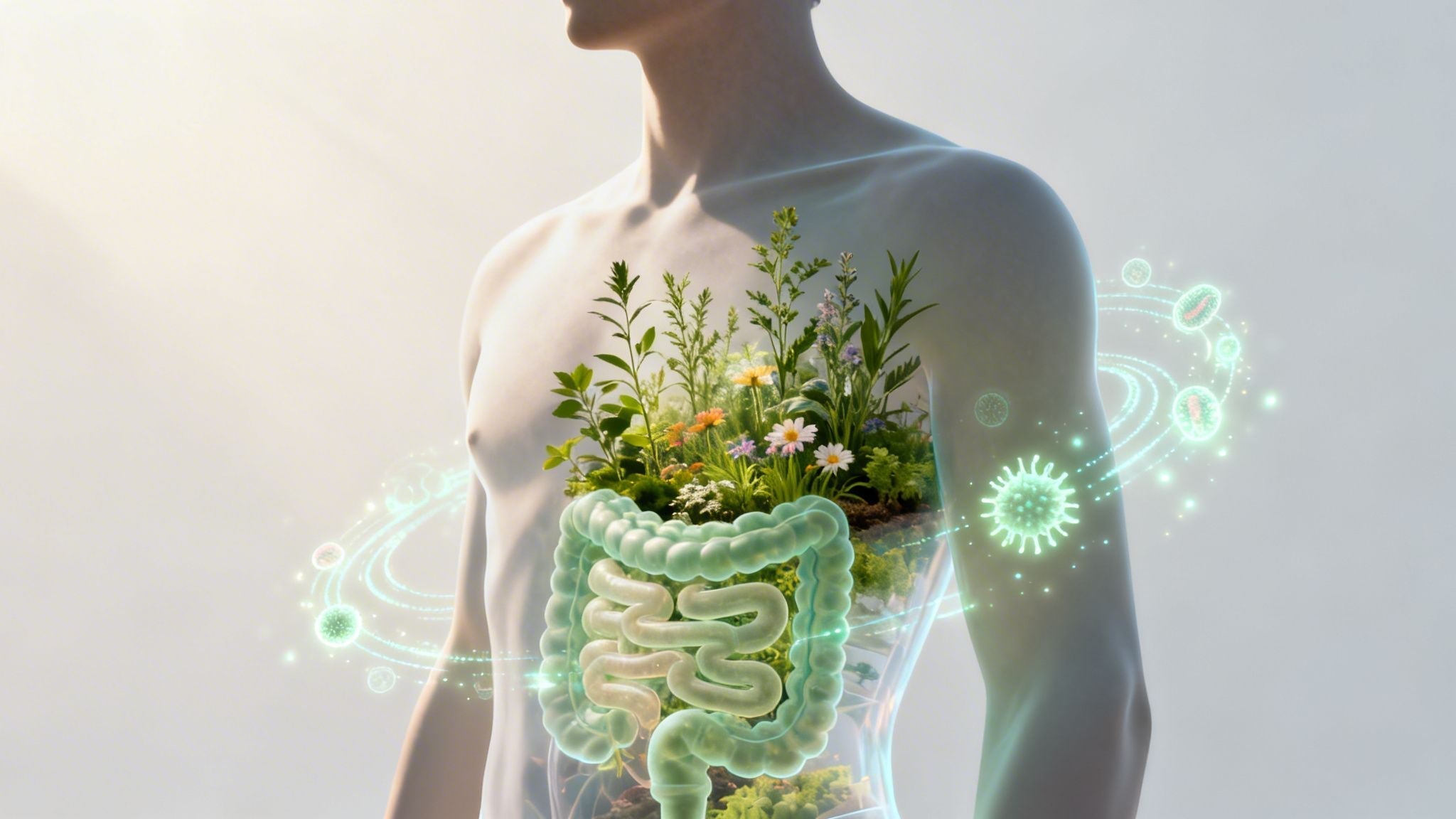
Gut problems: causes & tips for a better feeling in your stomach
Do you often feel tired or bloated, or struggle with mysterious abdominal pain that you simply cannot explain? If so, you are not alone. Such gut problems are far more than just a nuisance—they are a clear signal from your body that something is out of balance. Your well-being starts in your gut, and when your digestion is disrupted, you feel the effects throughout your body.

Your gut is more than just a digestive organ
Your gut is an incredibly complex and fascinating ecosystem, often referred to as your “second brain.” It is home to trillions of microorganisms that together form your gut microbiome. These tiny helpers influence not only how you process your food, but also play a crucial role in your immune system, your mood, and even the appearance of your skin.
When this delicate balance is disrupted, a wide range of problems can arise. The figures show that this is a widespread issue.
An analysis by KKH Kaufmännische Krankenkasse from 2022 found that around 189.000 People in Germany who received medical treatment for digestive problems. Particularly alarming: The proportion of young adults is steadily increasing. Learn more about the study results on gut health.
Why you should take your gut’s signals seriously
The causes of gut problems are extremely varied and often highly individual. What works for one person may be completely ineffective for another. General dietary advice therefore often falls short. The real reasons may lie in your lifestyle, stress levels, undetected food intolerances, or an imbalanced gut flora.
Perhaps you recognize yourself in some of these typical signs, which indicate that your gut needs help:
- Frequent bloating and uncomfortable abdominal distension: This may indicate an imbalance in your gut microbiome or that you simply do not tolerate certain foods well.
- Irregular bowel movements: Both constipation and diarrhea are clear signs that your digestion is not functioning optimally.
- Persistent fatigue and lack of energy: Your gut is crucial for absorbing nutrients. If it is not functioning properly, your body is simply missing its fuel.
- Skin problems such as acne or eczema: A compromised gut barrier can trigger inflammatory reactions throughout the body, which often appear on the skin.
Ignoring these symptoms is like simply covering up the warning light in your car. Your body is trying to tell you something important. The first step toward improvement is to listen carefully and understand the causes instead of merely fighting the symptoms. This is exactly where mybody-x’s blood tests and self-tests come in, providing you with precise insights into your body. Learn more in our guide about the central importance of gut health and how it affects your entire life.
Decoding the Language of Your Gut
A rumbling stomach, a constant feeling of fullness, or sudden cramps—your gut is constantly communicating with you. The only question is: Do you understand its language? These signals are rarely random. They are valuable clues about what is really going on in your body and can help you recognize and address intestinal problems at an early stage.

It is often difficult to correctly identify the symptoms. Is your bloated stomach caused by a simple intolerance, or is it already a sign of irritable bowel syndrome? To finally gain some clarity, we need to take a closer look at the most common suspects behind intestinal problems.
The Usual Suspects at a Glance
When your digestive system is acting up, there are usually three main possible causes. Each has its own typical characteristics and naturally requires an individual approach.
- Food intolerances: This is when your body reacts to certain food components such as lactose, fructose, or gluten. Symptoms often occur shortly after eating and range from bloating and diarrhea to abdominal pain. A mybody-x intolerance test can show you specifically which foods you may want to avoid for now.
- Irritable bowel syndrome (IBS): This is a functional disorder in which doctors cannot find an organic cause—but the symptoms are absolutely real and often very distressing. Typical symptoms include alternating constipation and diarrhea, cramps, and a constant feeling of fullness. Stress and psychological strain often play a huge role.
- Dysbiosis (disrupted gut flora): Think of it this way: your microbiome has become unbalanced, and harmful bacteria have gained the upper hand. This can be triggered by antibiotics, a very one-sided diet, or chronic stress. The result is not only digestive problems, but often also a weakened immune system and skin problems.
It is very important to understand that these conditions cannot always be clearly distinguished from one another. An unrecognized food intolerance can promote dysbiosis over time, which in turn can worsen the symptoms of irritable bowel syndrome. A true vicious cycle.
When you should listen more closely
In addition to classic digestive complaints, there are also subtler signs that may indicate deeper problems. These include sudden changes in weight, unexplained skin rashes, or constant, profound fatigue. These symptoms show that problems with the gut have long since begun to affect the entire body.
In some cases, the symptoms may also indicate more serious conditions. Chronic inflammatory bowel diseases (IBD), such as Crohn's disease and ulcerative colitis, are a growing problem in Germany. Around 650,000 people in Germany live with IBD, and the number is rising. Young people between the ages of 15 and 40 are often affected. You can read more about the prevalence of IBD in Germany here.
Symptom checklist for common intestinal problems
To help you better interpret your body's signals, we have created this checklist. It provides an initial guide to what might be behind your symptoms and which mybody-x tests may help you.
Symptom checklist for common intestinal problems This table will help you better categorize your symptoms and identify possible causes of your intestinal problems.
| Symptom | Possible cause (examples) | Which mybody-x test can help you? |
|---|---|---|
| Bloating & flatulence | Food intolerance (e.g., lactose), dysbiosis, irritable bowel syndrome, eating too quickly | Keep a food diary. An intolerance test can clarify which foods are not good for you. |
| Abdominal cramps | Irritable bowel syndrome, stress, food intolerance, menstruation | Use stress management techniques. A hormone test can shed light on hormonal causes. |
| Constipation or diarrhea | Disrupted gut flora (dysbiosis), irritable bowel syndrome, low-fiber diet, lack of fluids | Gradually increase your fiber intake and drink enough water. A microbiome test can show the condition of your gut flora. |
| Skin problems (acne, eczema) | Dysbiosis (“leaky gut”), inflammatory reactions caused by undetected intolerances | Focus on a gut-friendly diet. The intolerance test helps identify the cause in your gut. |
| Persistent fatigue | Nutrient deficiency due to poor intestinal absorption, chronic inflammation | Check your nutrient levels. A nutrient test can reveal deficiencies caused by gut problems. |
Understanding your body’s signals is the first and most important step. It gives you back the power to take control and address the real causes instead of always fighting only the symptoms.
Uncovering the real causes of gut problems
Does your stomach often feel like an unpredictable construction site? Sometimes it twinges, sometimes it rumbles, and often you have no idea what triggered it. The truth is: Most gut problems do not develop overnight. They are the result of habits that have gradually crept into our daily lives and keep our internal ecosystem under constant strain.
It is best to imagine your gut as a finely balanced garden. Certain influences can completely disrupt this delicate ecosystem. Once you know the real causes, you can finally stop merely treating the symptoms. Instead, you can start recognizing the root of the problem in your everyday life—and create the foundation for a truly healthy gut.
Your lifestyle as the biggest influencing factor
Your daily life has a huge influence on what happens in your gut. Usually, it is the small, seemingly insignificant things that add up over months and years and seriously disrupt the balance of your gut inhabitants.
Three factors play the main roles:
- Stress: Chronic stress is like a constant thunderstorm for your “inner garden.” It can make the protective intestinal lining more permeable (known as “leaky gut”) and negatively alter the composition of your beneficial bacteria. The stress hormone cortisol further weakens your immune system, making your gut more susceptible to inflammation.
- Nutrition: Highly processed foods, too much sugar, and artificial additives are like weeds for your gut flora. They feed the wrong, harmful bacteria and take space away from the beneficial helpers you need for strong digestion and a robust immune system.
- Medications: Antibiotics in particular often act like a scorched-earth campaign. They don’t distinguish between “good” and “bad” bacteria and frequently destroy a large proportion of your valuable gut inhabitants. But other medications, such as painkillers, can also damage the intestinal barrier over time.
Your gut forgets nothing. Every meal, every stressful period, and every medication leaves its mark. The goal isn’t to be perfect, but to understand how to consciously care for and protect your “inner garden.”
When your gut flora gets out of balance
These factors often culminate in what is known as dysbiosis—a pronounced imbalance in your microbiome. Harmful bacterial strains gain the upper hand, while the diversity and number of beneficial bacteria decreases dramatically. This imbalance is precisely the breeding ground for many chronic complaints.
Dysbiosis can manifest itself in many different ways and goes far beyond typical digestive problems. Perhaps you know the feeling of leaden fatigue, unexplained skin problems, or being constantly susceptible to the next infection. All of these can be warning signs from your gut that something is out of balance.
Sometimes the signs are much subtler. In addition to the obvious intestinal symptoms, there may be other physical signals that you don’t initially associate with your digestion. To better recognize the connections, it’s important to take all your body’s messages seriously. For example, you can learn more online about how to understand the causes of anal itching and what your body may be trying to tell you.
To take targeted action, however, you need to know exactly what’s going on in your gut. A test can help you analyze the state of your gut flora and perhaps even uncover previously undetected intolerances. With mybody-x self-tests, you gain precise insights and a scientifically sound basis for your next steps. This helps you make decisions that truly suit you and your body.
Gain clarity through targeted at-home tests
Have you been struggling with mysterious gut problems for some time and feel like you’re groping in the dark? You’ve probably already pored over countless guides, eliminated certain foods from your diet, and yet that nagging uncertainty remains. This constant guessing about what is and isn’t good for your gut is not only incredibly frustrating, but rarely leads to a lasting solution.
To truly understand what is happening in your body, you need clear facts instead of vague assumptions. Targeted tests from mybody-x are the key, allowing you to look beneath the surface and get directly to the real causes of your symptoms. Instead of continuing to experiment blindly, you can finally make informed decisions based on your own personal biological data.
Your gut ecosystem under the microscope
Imagine holding a detailed map of your inner ecosystem in your hands. That is exactly what a modern gut microbiome analysis makes possible. With mybody-x’s tests, gaining this deep insight is easier than ever, and you can do it conveniently from home. The entire process is designed to help you regain control.
The process couldn’t be easier:
- Collect the sample: You receive a test kit that allows you to discreetly and easily collect a small stool or blood sample.
- Send it in free of charge: Simply send the sample in the prepaid envelope to our certified partner laboratory in Germany.
- Receive your results: After a short time, a comprehensive and easy-to-understand report arrives directly on your smartphone or in your email inbox.
This analysis is so much more than just a dry list of bacteria or antibodies. It is a detailed health report that provides valuable insights and finally gives you answers to your questions.
A microbiome analysis shows you not only who lives in your gut, but also how well this community works together. It can uncover imbalances before they develop into serious problems and give you the tools you need to take targeted action.
What your test result reveals
Your personalized report is the starting point for a targeted journey toward better gut health. You’ll learn not only which bacterial strains are dominant in your gut, but also which may be missing or present in excess.
Specifically, the results provide insight into these areas:
- Diversity of your gut flora: A high diversity of beneficial bacteria is the foundation of a robust and resilient gut.
- Ratio of beneficial to harmful bacteria: You can see in black and white whether dysbiosis is present and which “troublemakers” could be responsible for your symptoms.
- Inflammatory markers: Elevated levels may indicate low-grade inflammation in the intestinal lining—often the root cause of intolerances or irritable bowel syndrome.
- Digestive function: The analysis can show how efficiently your body metabolizes fats, proteins, and carbohydrates.
- Production of important substances: You will learn whether your gut bacteria produce enough short-chain fatty acids such as butyrate—the super fuel for a healthy gut lining.
With this knowledge in hand, you can finally understand the connections between your diet, lifestyle, and symptoms. Our experts process the results so that you receive clear, immediately actionable recommendations. If you want to dive deeper, read our guide and learn everything about the mybody-x at-home gut test.
When is an intolerance test useful?
Sometimes the cause of gut problems is not the general composition of the gut flora, but your body’s reaction to specific foods. Do you often feel bloated or tired after eating, or experience abdominal cramps? Then a food intolerance test could provide the crucial answers.
This test examines in detail how your immune system reacts to a wide range of foods by measuring specific IgG4 antibodies in your blood. An elevated concentration of these antibodies may indicate that your body regards certain foods as “enemies” and responds with a defensive reaction that leads to inflammation and the typical symptoms.
Such a test is particularly worth considering if:
- You suspect a clear connection between certain meals and your symptoms, but cannot identify it precisely.
- A food diary has not revealed any clear patterns so far.
- Your symptoms simply refuse to go away, even though you already eat a generally healthy diet.
By identifying the foods that trigger reactions in you, you can adjust your diet in a targeted way. This relieves your digestive system, reduces inflammation, and creates the best conditions for a healthy gut flora and a completely new sense of well-being.
Your personal roadmap to a healthy gut
Holding a test result in your hands is the first step, but it is far from the goal. Now that you finally have clarity about your microbiome or possible intolerances, the truly exciting part begins: you can take action and specifically work on your gut health. Think of the result as a personal map for your gut—it shows you exactly where you are and which path you can take.
This isn’t about a short-term diet, but about building a mindful and sustainable relationship with your inner ecosystem. You’re taking control of your well-being again.
To make getting started as easy as possible, the at-home testing process has been deliberately designed to be straightforward.

The graphic shows you how simple the process is: You collect the sample conveniently at home, send it in, and receive precise insights into your body without having to leave your home.
Nutrition as medicine for your gut
Your test result is essentially the best shopping list you’ve ever had. It tells you exactly which beneficial gut bacteria love which foods and which foods you may need to avoid for a while if you already have gut problems.
Feed the good bacteria (prebiotics) Prebiotics are fibers that you don’t digest but that serve directly as food for your beneficial gut bacteria. Make a point of including these foods in your diet:
- Whole grains: Oatmeal, rye bread, and quinoa are fantastic sources of fiber.
- Vegetables: Artichokes, onions, garlic, and leeks are true superfoods for your microbiome.
- Legumes: Lentils, chickpeas, and beans provide not only fiber but also valuable plant-based protein.
Support your gut with live cultures (probiotics) Probiotic foods bring live bacterial cultures directly to your gut and actively support your flora.
- Natural yogurt and kefir: Make sure to choose products without added sugar.
- Sauerkraut and kimchi: Fermented vegetables are an excellent source of lactic acid bacteria.
- Kombucha: This fermented tea drink can be a healthy and delicious addition.
If your intolerance test points to certain triggers, it’s essential to consistently avoid them for a while. This gives your gut the much-needed break it needs to recover and allows inflammation to subside.
More than just food: stress management and exercise
A healthy gut needs more than just the right food. Your lifestyle plays an equally important role, because your gut and brain are inextricably connected through what is known as the gut-brain axis.
Chronic stress can negatively affect the composition of your gut flora and weaken the protective gut barrier. That’s why relaxation isn’t just a luxury, but an essential building block of your gut health.
Incorporate targeted moments of relaxation into your daily routine. Just 10–15 minutes a day can make a tremendous difference. Find out what works for you: meditation, yoga, a walk in nature, or simply a few minutes of mindful breathing.
Even moderate exercise gets your gut moving and promotes the diversity of your microbiome. A daily walk, a bike ride, or swimming are ideal. But don't overdo it: Extreme training can put your body under stress. To build a healthy gut flora, you need the right balance of nutrition, exercise, and mental well-being.
Your personal everyday checklist
Changes don't have to be complicated. With small but consistent steps, you can immediately relieve the strain on your digestion and noticeably improve your well-being.
- Drink enough water: At least 1.5 to 2 liters per day help get digestion moving and keep your stool soft.
- Eat slowly and chew thoroughly: Digestion begins in the mouth. Chewing well takes a great deal of work off your stomach and intestines.
- Stick to regular mealtimes: A consistent routine helps your digestive system prepare for its tasks.
- Prioritize your sleep: While you sleep, your entire body regenerates—including your gut. 7–8 hours per night are ideal.
Early prevention is the best protection, by the way. In Germany, deaths from colorectal cancer have fallen by 17 percent over the past 20 years thanks to improved screening. At the same time, however, the number of treatment cases among young adults is rising, showing how important a healthy lifestyle is from the very beginning. Learn more about the important developments in cancer screening.
This roadmap gives you the tools you need to make the right decisions for yourself based on your test results and get gut problems under control in the long term.
The most important questions about gut problems – answered briefly
Here we have collected the most important questions we repeatedly receive about gut health and distilled them into clear, concise answers. This gives you quick, easy-to-understand answers to the uncertainties and myths surrounding gut problems.
How long does it take for my gut flora to recover?
Patience is the key word here, as there is no one-size-fits-all answer. How long your gut flora takes to recover depends greatly on your personal starting point. Minor disruptions, such as brief stress or a single course of antibiotics, can settle down again within just a few weeks with the right diet.
However, if more severe dysbiosis is present—meaning a truly profound imbalance—rebuilding the gut flora can take several months or even longer. A mybody-x microbiome test can help you track your progress objectively and see whether your measures are actually bearing fruit.
Are expensive probiotics from the pharmacy always the best solution?
Not necessarily. The foundation of a healthy gut flora is and remains a gut-friendly diet. Think of plenty of prebiotic fiber from vegetables and whole-grain products, as well as probiotic foods such as plain yogurt, kefir, or sauerkraut.
Dietary supplements can be a useful addition when a test, such as the one from mybody-x, identifies a clear deficiency in certain beneficial bacterial strains. Simply taking something at random without knowing what your gut is actually lacking is often not the most effective solution. It is a bit like searching for the light switch in the dark—you might happen to find it, but usually you will not.
When should I see a doctor about my gut problems?
Many symptoms can be managed effectively through an adapted diet and a healthier lifestyle. A home test can help optimize your approach and provide valuable insights, but it never replaces a medical diagnosis in the case of serious illness.
If you experience certain warning signs, you should not delay and should always see a doctor. These include sudden, significant weight loss, blood in your stool, severe and persistent pain, or fever. These symptoms must always be medically evaluated to rule out serious causes.
However, a mybody-x test can provide valuable, data-driven insights and serve as an excellent basis for a conversation with your doctor.
Do you finally want to understand what is behind your gut problems and take targeted action? At mybody-x, you will find scientifically backed home tests that give you clarity about your microbiome, nutrients, or intolerances. Discover the right test for you now at mybody-x.com


Share now:
Persistent stomach pain and bloating: What’s really behind it
What to do for a healthy gut? Your honest guide