
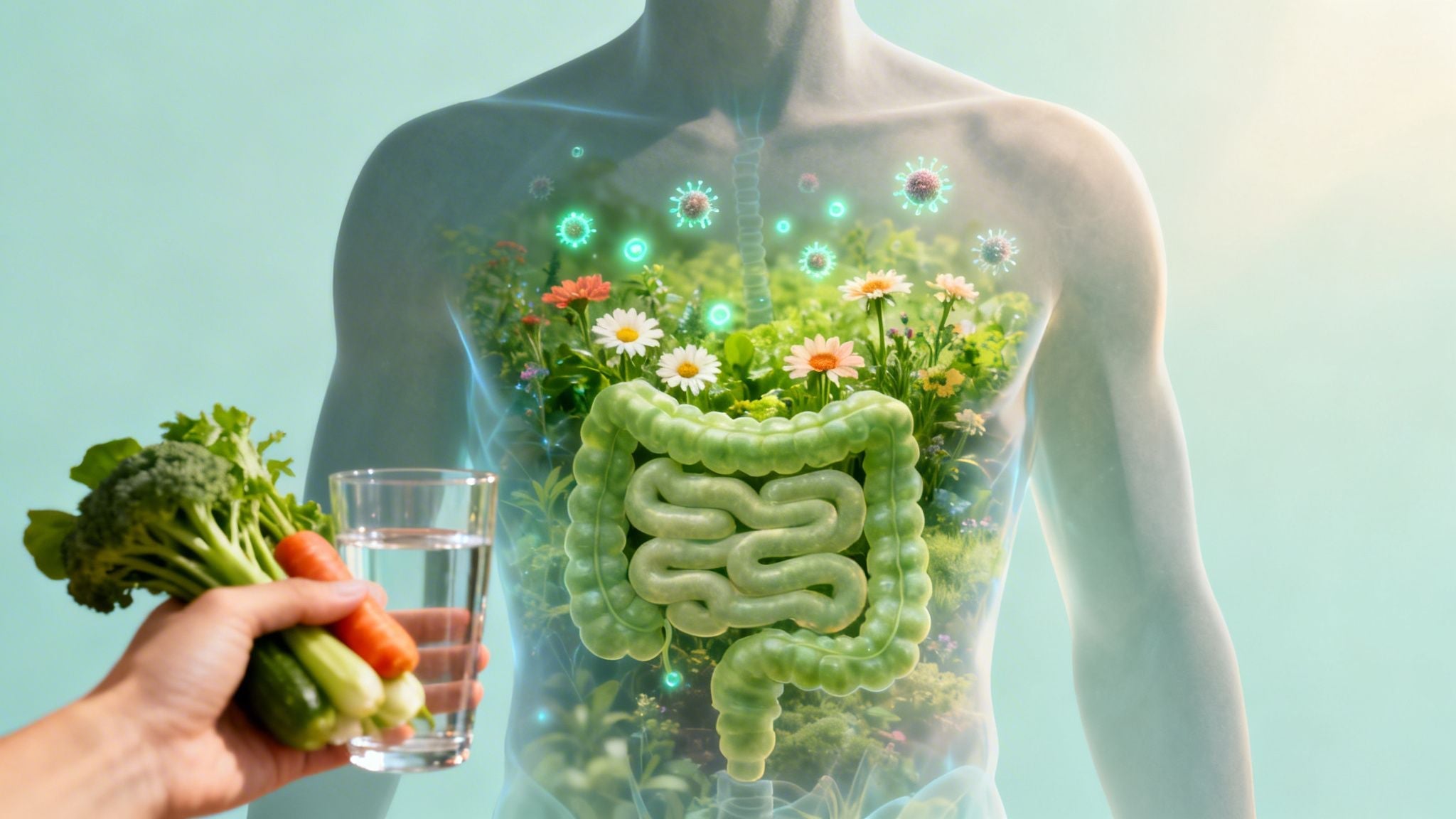
Understand and actively improve your gut health
Your gut feeling is far more than just an expression—it is the compass for your overall well-being. Good gut health is the foundation for more energy, a stable state of mind, and a strong immune system. If you finally want to understand your body's signals and actively do something for yourself, you have come to the right place. We will help you understand the connections and show you how the right self-tests from mybody-x can take you from guesswork to clarity.
Why your gut health is the foundation for everything

Do not think of your gut merely as a digestive tube. See it instead as the pulsating control center of your body—a complex ecosystem that influences far more than just what ends up on your plate.
Stable gut health is not an isolated issue; it is closely linked to your energy, skin, mood, and even your mental clarity. It is the invisible control center that determines your daily well-being.
The gut-brain axis as a communications hub
Did you know that your gut and brain are in constant dialogue? This connection, known as the gut-brain axis, functions like an information superhighway. The two organs constantly exchange information via nerve pathways, hormones, and countless messenger substances.
An imbalance in the gut can therefore have a direct impact on your mental health. Mood swings, concentration problems, or a feeling of mental exhaustion often originate here. So your “gut feeling” is a very real biological fact.
By the way, you are far from alone with these complaints. The topic is increasingly coming into focus, as impressive figures also show: The German gut health market reached a volume of almost 2 billion euros in 2024, driven by growing awareness of proactive health management. Around three out of five Germans experienced digestive problems in the same year, underscoring the immense relevance of the topic. You can find more information in this market report on gut health in Germany.
When your gut sends signals
An impaired gut is expressed not only through classic digestive complaints such as bloating or irregular bowel movements. The warning signs can be much subtler and affect areas you may never have associated with your digestion.
Some of these symptoms are easy to overlook, but they can be clear indications that your gut has become unbalanced.
Typical signs of an imbalance in the gut
This table summarizes common symptoms that may indicate impaired gut health.
| Symptom category | Specific examples |
|---|---|
| Digestion & Gut Feeling | Bloating, feeling of fullness, constipation, diarrhea, irregular bowel movements |
| Energy & Mind | Persistent fatigue, lack of energy, difficulty concentrating, mood swings |
| Skin & Immune System | Recurring skin problems (acne, eczema), dull complexion, frequent infections, new allergies |
| Metabolism & Appetite | Sudden food intolerances, cravings for sugar |
If some of these points sound familiar, they are not coincidences, but your body's way of communicating. Understanding them is the first step toward regaining control.
The causes often lie in an imbalance of gut bacteria, hidden intolerances, or a lack of important nutrients. This is where mybody-x blood tests come in: They help you move from guesswork to clarity. Want to delve deeper into these connections? Then also read our essential guide to the importance of gut health.
The most common disruptive factors for your gut
Your gut health is not a stable state, but an incredibly delicate balance that is put to the test anew every day. You can think of your gut as a finely tuned orchestra: When all the instruments harmonize, a beautiful symphony emerges. But even a single disruptive element can throw the entire melody out of tune.
Many of these disruptive factors have become a regular part of our modern lives, often without us even noticing their profound effects on our bodies. Yet this knowledge is the first and most important step toward understanding the causes of your symptoms and regaining control.
Diet as a double-edged sword
What you eat is the most direct form of communication with your gut. A diet rich in sugar and highly processed foods acts like fuel for the “wrong” bacteria. These undesirable microbes thrive in a sugar-rich environment and can simply displace beneficial bacterial strains.
At the same time, this kind of diet is often lacking in fiber. Fiber consists of indigestible plant matter and is the absolute favorite food of your good gut bacteria. Without this food, your helpful allies practically starve, drastically reducing their diversity and number.
We call this imbalance in the composition of your gut flora dysbiosis. Dysbiosis can be the starting point for countless complaints, ranging from bloating and constant fatigue to skin problems.
Chronic stress and sleep deprivation
Your gut and brain are inextricably linked through what is known as the gut-brain axis. Persistent stress—whether at work or in your personal life—puts your entire body into a permanent state of alert. Stress hormones released in the process, such as cortisol, can attack the protective mucus layer in the gut and promote inflammation.
The situation is very similar with sleep deprivation. While you sleep, important regeneration and cleansing processes take place in your gut. If you do not get this restorative sleep, these processes come to a standstill, which negatively affects the intestinal barrier and the diversity of your microbiome. Unexpected strains such as emotional and mental challenges while traveling can also seriously disrupt the foundation of your gut health.
Medications and other influences
Some medications can have a massive impact on your gut flora. Antibiotics are at the forefront here. They are often life-saving, but unfortunately do not distinguish between “good” and “bad” bacteria and can therefore decimate the microbiome.
But other factors also play a major role:
- Regular alcohol consumption: Alcohol can directly damage the intestinal lining and inhibit the growth of beneficial bacteria.
- Lack of exercise: Regular, moderate exercise stimulates bowel activity and supports healthy digestion.
- Environmental toxins: Pesticides and other chemicals that we ingest through food can also disrupt the sensitive ecosystem in the gut.
Current data also shows that these factors are playing an increasingly important role in the population. In 2023, gastrointestinal infections in Germany caused more sick notes than ever before—there were around 15 cases of incapacity for work per 100 insured people. It was notable that young people between the ages of 20 and 29 were particularly affected. The complex reasons for this increase are thought to include changes in dietary and lifestyle habits, as you can read in this report on gastrointestinal infections.
Your microbiome: The hidden superpower in your gut

We have already looked at what can throw your gut health off balance. Now it is time to take a deeper look into the fascinating world of your microbiome. Don’t think of your gut as an empty organ, but rather as a pulsating metropolis inhabited by trillions of microorganisms. This community of bacteria, viruses, and fungi is as unique as your fingerprint.
The microbiome is best compared to a thriving garden. The greater the diversity of plants (that is, your bacterial strains), the more resilient the entire ecosystem is against pests and bad weather. High diversity in your gut is actually one of the most important markers of robust health.
Your tiny helpers and their tasks
These microscopic inhabitants are far more than just quiet lodgers. They are a highly active team that works around the clock for you and takes on tasks that are crucial to your survival. Their work is the foundation of good gut health and your overall well-being.
A few of their most important jobs are:
- Digestion and nutrient absorption: They break down food components such as certain dietary fibers that your body could never digest on its own. They are what make these nutrients available to you.
- Producing vitamins: Your gut bacteria are tiny vitamin factories. They produce essential vitamins, including vitamin K and several B vitamins such as biotin (B7) and folate (B9).
- Training your immune system: Incredible but true: Approximately 70% of your immune cells are located in the gut. The microbiome trains these cells nonstop and teaches them to distinguish between friend (food, beneficial bacteria) and foe (pathogens).
- Strengthening the gut barrier: They produce short-chain fatty acids such as butyrate. This substance is the main energy source for your intestinal cells and keeps the intestinal wall strong and tightly sealed—like good mortar in a brick wall.
A healthy, diverse microbiome is like your own personal, built-in superpower. It protects you, supplies you with nutrients, and keeps your immune system in top shape.
Probiotics and prebiotics: The dream team for your gut
To care for your inner garden, you need to know two key terms: probiotics and prebiotics. They may sound similar, but they have completely different yet perfectly complementary functions.
Probiotics are, so to speak, the "good gardeners"—living, beneficial microorganisms. You can consume them through certain foods to directly increase the diversity in your gut. They help maintain balance and keep unwanted germs in check.
In contrast, prebiotics are the "food for the gardeners," so to speak. They are indigestible fibers that serve as nourishment for the beneficial gut bacteria you already have. When you feed your helpful allies well, they can multiply and perform their important jobs at their best.
How to make your inner garden bloom
The good news is that caring for your microbiome is largely in your hands and begins right on your plate. Studies show that people who eat 30 or more different plant species per week have significantly greater and healthier microbial diversity.
Here are some specific examples of how you can easily incorporate probiotics and prebiotics into your everyday life:
| Category | What it is | Examples of foods |
|---|---|---|
| Probiotics | Beneficial bacteria | Yogurt (with live cultures), kefir, raw sauerkraut, kimchi, kombucha |
| Prebiotics | Food for bacteria | Onions, garlic, leeks, asparagus, bananas (preferably green), oats, legumes, chicory |
You don't have to change everything at once. Start by consciously adding one or two prebiotic foods per day, or replace a sugary drink with a glass of kefir. Every small step helps promote the diversity of your inner ecosystem and strengthen your gut health in the long term.
However, if you continue to experience symptoms despite eating mindfully, a deeper analysis may be worthwhile. A test such as the mybody-x gut flora analysis can provide valuable insights into how your very own "garden" is composed and where there may be a lack of diversity.
When a gut test makes sense
Do you suffer from persistent bloating, irregular bowel movements, or often feel simply tired without knowing why? If you recognize these signals from your body, it may be time to stop guessing and take a closer look. A mybody-x self-test can finally give you clarity and is often the first step toward actively taking control of your gut health.
You are not alone with these nonspecific symptoms, even if it sometimes feels that way. Digestive problems are becoming noticeably more common, especially among younger people. Between 2012 and 2022, KKH Kaufmännische Krankenkasse recorded a 15 percent increase in irritable bowel symptoms among 20- to 24-year-olds. Women were affected almost twice as often as men. In this age group, more than one in five women (22 percent) had received medical treatment for digestive problems in 2022. You can read more about these figures in the KKH data on irritable bowel syndrome.
This development shows how important it is to take such symptoms seriously and investigate their underlying causes. At-home self-tests are a valuable and straightforward way to obtain initial, concrete indications.
From symptom to the right test
But which test is right for you? The answer depends entirely on your personal symptoms and questions. The aim is to narrow down the cause specifically instead of feeling around in the dark.
A test makes sense if you suffer from vague, recurring symptoms and want to understand what your body is trying to tell you. It turns a vague “gut feeling” into concrete, actionable data.
Instead of continuing to guess, you can use mybody-x tests to look for answers in a targeted way. Here is a brief guide to help you find the right test for your situation.
Which mybody-x test is right for your symptoms?
This overview will help you find the right blood or at-home self-test for your individual symptoms.
| Symptom or concern | Suitable mybody-x test | What the test shows you |
|---|---|---|
| Digestive problems after eating (bloating, a feeling of fullness, diarrhea), skin problems, headaches | Food intolerance test | Which foods could trigger a reaction from your immune system (IgG4) and place a burden on your system. |
| General digestive disorders, a weak immune system, mood swings | Gut flora analysis | The exact composition of your microbiome, the diversity of your gut bacteria, and whether an imbalance (dysbiosis) is present. |
| Persistent fatigue, difficulty concentrating, hair loss, susceptibility to infections | Nutrient test | Whether there is a deficiency of important vitamins and minerals such as vitamin D, B12, or iron, which is often associated with intestinal problems. |
| Hormonal symptoms (cycle problems, mood swings, sleep disorders) | Hormone test | Whether there is an imbalance in important hormones such as cortisol or sex hormones that may affect gut health. |
This table gives you an initial sense of direction. Now let’s take a closer look at how each test can specifically help you in everyday life.
How the tests can specifically help you
An intolerance test is like your personal food detective. It shows you in black and white which foods you should temporarily avoid to give your gut a well-deserved break. Often, it’s seemingly healthy foods that unknowingly keep your immune system on high alert and cause discomfort.
A gut flora analysis provides you with a detailed portrait of your inner ecosystem. You’ll learn whether you’re missing important bacterial strains and what the balance between “good” and “bad” bacteria looks like. With this knowledge, you can rebuild your microbiome in a targeted way through the right diet. If you’d like to learn more about whether such an analysis is right for you, you’ll find additional information in our article: When Is a Gut Analysis Useful?
A nutrient test, in turn, uncovers hidden deficiencies that are often the true cause of fatigue and exhaustion. A disrupted gut often cannot absorb nutrients properly, even if your diet is balanced. The test shows you where to take targeted action to replenish your stores and regain your energy. This finally closes knowledge gaps and allows you to improve your health based on facts rather than mere assumptions.
Your practical roadmap to a healthy gut
We’ve now looked at the background and causes of digestive problems—now it’s time to take action yourself. In this chapter, you’ll get a clear roadmap to follow. It’s packed with specific, practical measures you can implement right away to sustainably strengthen your gut health. This isn’t about complicated diets or strict rules, but about simple habits that can make a huge difference to how your gut feels.
Do you want clarity before changing your routines? This simple process shows how you can move from merely guessing at symptoms to targeted testing and valuable, practical insights for your health.

The graphic makes it clear: A mybody-x test can help you finally gain well-founded insights. These then serve as a solid basis for truly targeted measures instead of continuing to feel your way in the dark.
Nutrition that makes your gut glow
Without a doubt, your diet is the most powerful lever you have control over. At every meal, imagine that you are feeding not only yourself but also the trillions of small, beneficial helpers in your gut. The guiding principle is wonderfully simple: variety!
Scientific studies clearly show that people who eat 30 or more different plant species per week have a significantly more diverse—and therefore more resilient—gut flora. At first, that sounds like a huge challenge, but it is easier to achieve than you might think.
Tip: Every type of herb, every type of nut, and every vegetable color counts as a separate plant. A colorful salad with different leafy greens, tomatoes, cucumbers, bell peppers, a handful of seeds, and a herb dressing already brings you a huge step closer to your goal.
Simply start by consciously adding new foods to your diet. At the supermarket, pick up a type of vegetable you have never tried before, or add a new legume to your next stew. Your gut loves variety.
Actively use prebiotics and probiotics
To specifically support and nourish the inhabitants of your gut, two groups of foods are especially valuable:
- Prebiotic foods: They provide, so to speak, your good gut bacteria’s favorite food. These include onions, garlic, leeks, asparagus, chicory, and artichokes, as well as oatmeal and bananas that are still slightly green.
- Probiotic foods: These contain live, beneficial bacterial cultures. The classics include plain yogurt, kefir, and buttermilk, as well as raw sauerkraut, kimchi, and kombucha.
Try to include at least one serving from each of these groups every day. Yogurt with oatmeal in the morning or a small glass of kefir as an afternoon snack are simple but incredibly effective habits. You can also find more details on how to specifically nourish your gut flora in our article How to naturally build up your gut flora.
Lifestyle as the key to gut health
In addition to your diet, there are other factors in your life that play a crucial role in a good gut feeling and your overall gut health. Often, it is the small adjustments that have an enormous cumulative effect.
Stress management protects your gut Chronic stress is pure poison for your gut. Through the so-called gut-brain axis, it directly harms it. Find a relaxation method that really suits you. It does not have to be an hour-long meditation.
Just 5–10 minutes of mindful breathing, a short walk in the fresh air during your lunch break, or listening to your favorite music can lower your stress levels. This signals to your gut that everything is okay and that it can relax.
Exercise for better digestion Regular, moderate exercise gets not only your circulation but also your digestion moving properly. A 30-minute daily walk is often enough to stimulate intestinal activity (peristalsis) and prevent constipation.
Gentle forms of exercise such as yoga or swimming are also ideal for gut health. Excessive, high-intensity training, on the other hand, can stress the body—find a healthy balance that feels right for you.
Sleep as recovery time Good sleep is one of the best and simplest investments in your gut health. While you sleep, your entire body regenerates, including your intestinal lining.
Try to establish a consistent sleep routine and create a quiet, dark, and cool sleeping environment. Your gut will thank you with greater resilience and better function.
Alcohol and its effects Alcohol is a well-known disruptor of your microbiome. It can reduce the diversity of your beneficial bacteria and make the protective intestinal lining more permeable (“leaky gut”).
Even a short break, such as “Dry January,” can lead to measurable improvements. Studies have shown that after just two weeks of abstinence, initial positive effects on the gut flora appear, and protective, butyrate-producing bacteria begin to increase again. Why not consider incorporating alcohol-free days—or even entire weeks—into your routine?
When you should seek medical advice
A self-test and a mindful lifestyle are fantastic tools for your gut health. They give you guidance, help you understand connections, and enable you to take action yourself. But it is absolutely crucial that you also know the limits of these tools and when professional medical help is essential.
For example, a mybody-x test can show you which foods activate your immune system or whether your gut flora is out of balance. It is a valuable guide for optimizing your diet and lifestyle. However, what it cannot—and is not intended to—do is provide a medical diagnosis.
Clear warning signs you must not ignore
There are certain symptoms for which you should not hesitate to see a doctor immediately. These so-called “red flags” require prompt evaluation to rule out serious conditions or treat them in time.
Please always take the following signs seriously:
- Blood in the stool: Whether it is bright red or dark, almost black blood, it must always be evaluated by a doctor.
- Persistent, severe pain: Occasional stomach rumbling is normal. However, pain that is severe, lasts a long time, or wakes you up at night is a clear warning sign.
- Unexplained weight loss: If you are losing a significant amount of weight without changing your diet or exercise routine, this is a reason to see a doctor.
- Dramatic changes in bowel habits: A sudden and persistent change between constipation and diarrhea or a noticeable change in consistency should be evaluated by a doctor.
- Fever combined with abdominal pain: This combination may indicate acute inflammation in the body.
- Severe, recurring vomiting: Medical advice is especially important if there is no obvious cause, such as gastroenteritis.
Always remember: Your health and safety come first. Self-tests are intended to optimize your well-being. However, they are never a substitute for a necessary medical diagnosis when you have alarming symptoms.
Visiting a doctor gives you peace of mind and ensures that no serious conditions are overlooked. Once serious causes have been ruled out, you can make ideal use of mybody-x tests to further improve your gut health on a secure foundation and fine-tune the factors that influence your well-being.
Do you want to gain clarity about your gut health, possible intolerances, or your nutrient status? Discover at mybody-x how you can better understand your body and specifically improve your quality of life with scientifically based blood tests and at-home self-tests. Find the right test for you now at https://mybody-x.com.

Share now:
Start dieting and understand your metabolism
Perform a DNA Test at Home: Complete Guide 2026