
What does metabolism mean? Decoding your code.
You may be at exactly this point right now: You watch what you eat, exercise regularly, try sensible routines, and yet your body still feels different from other people’s. Someone can casually eat pasta in the evening and maintain their weight. You merely look at bread and wonder why something seems to change immediately.
This is exactly where the question arises: What does metabolism actually mean? Not as an empty wellness phrase, but as a practical explanation for your everyday life, your weight, your energy, and how you feel in your body.
The short answer is: Metabolism is the way your body converts food into energy. And how quickly or slowly it does this is genetically different for every person. This matters because it explains why blanket diet rules often don’t suit your body. Your metabolism is not a character test or proof of discipline. It’s biology.
Why your metabolism works differently from other people’s
Two friends eat the same dinner. The same portion, similar height, comparable daily routine. Yet in the end, one feels that everything immediately goes to their waist, while apparently nothing happens to the other. It seems unfair. But it isn’t random.
One reason lies in individual biology. Genes can account for up to 40 to 70% of individual differences in weight. Variants such as the FTO gene directly influence appetite and fat storage and can increase the risk of obesity.
It becomes even more tangible when it comes to hunger. The MC4R gene regulates satiety and energy expenditure. Certain genetic variations can lead to a weaker feeling of satiety, meaning those affected eat more and lose little weight, even though their calorie expenditure may be similar.
A client once asked a very direct question: Why am I gaining weight even though I eat less than my sister? A DNA test revealed that she carried an FTO risk variant. Only this knowledge made it clear that her body reacts differently to the same input.
Then there’s your hormonal profile. Researchers from the Greifswald study showed that the concentration of key metabolism-regulating hormones such as insulin and leptin is partly determined by genetics. Two people can therefore react differently to the same meal because their hormonal starting points differ, as summarized in the idw report on the EU Greifswald study.
So if you’re wondering why standard advice doesn’t really work for you, it’s not automatically because you lack consistency. Often, the average simply doesn’t fit your body. That’s exactly why it’s worth viewing metabolism not just as a calorie calculator, but as an individual system.
What is metabolism really?
Metabolism or metabolism is the sum of all processes through which your body absorbs, converts, uses, stores, and breaks down nutrients. That may sound technical, but it is very concrete in everyday life: Every movement, every breath, and every instance of recovery after a long day relies on metabolic processes.
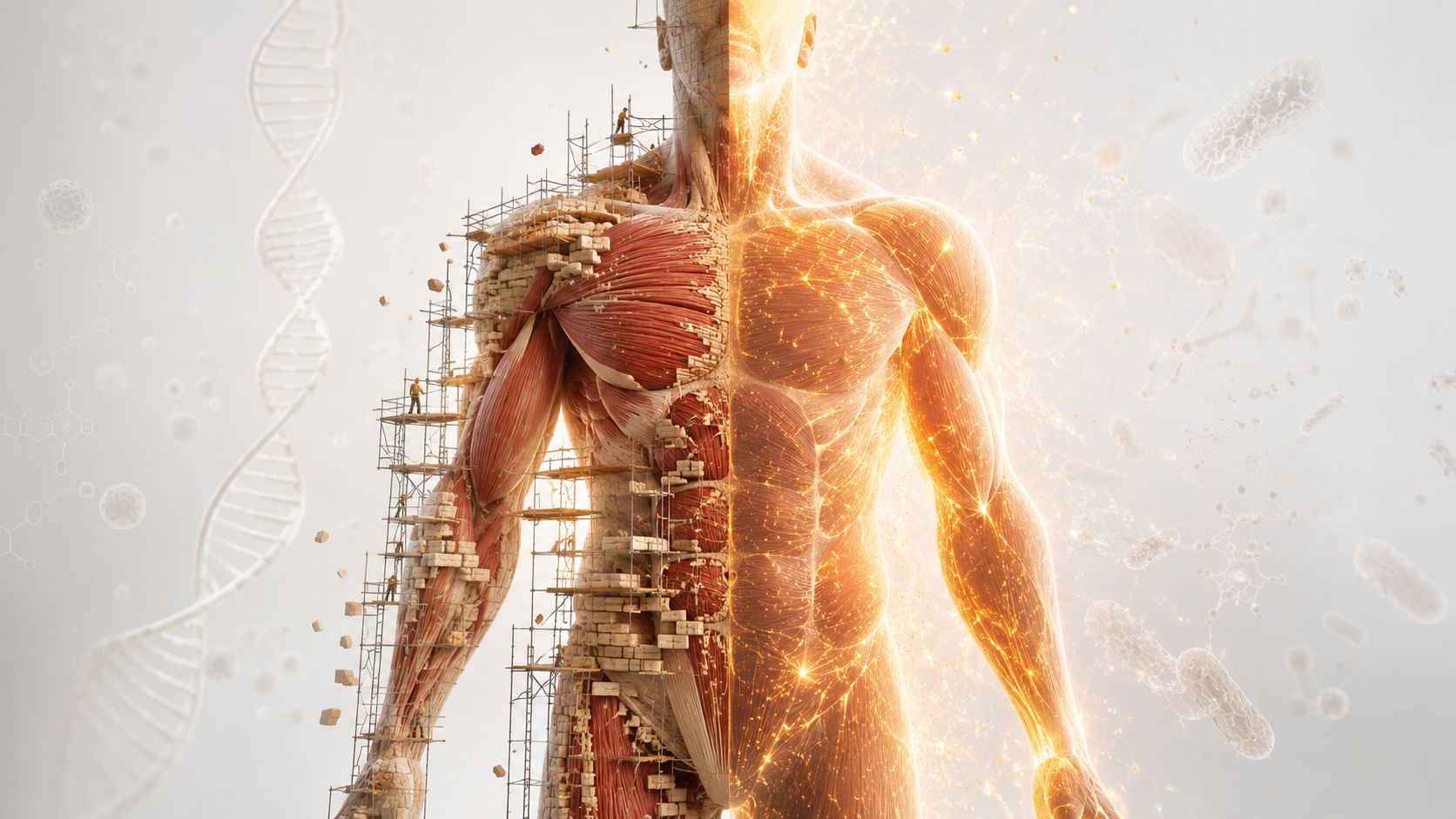
A construction site is a good way to picture it. At a construction site, materials are delivered, processed, assembled, and sometimes removed again. Your body works in much the same way.
Breakdown and buildup in the same system
The first part is called catabolism. In this process, your body breaks down carbohydrates, fats, and proteins to provide energy in the form of ATP. This is the part that supplies fuel.
The other part is called anabolism. Here, your body uses the building blocks it has obtained to build cells, tissues, hormones, and enzymes. This includes muscle growth as well as wound healing and the ongoing renewal of body structures.

These two sides constantly run in parallel. You never only build up. You never only break down. Your metabolism is more like a continuous process of remodeling than an on-off switch.
Hormones set the direction
Hormonal regulation is particularly important. According to Apotheken Umschau’s article on metabolism, metabolism comprises all anabolic and catabolic processes. It is regulated, among other things, by insulin as a predominantly anabolic hormone and glucagon as a predominantly catabolic hormone. If this network becomes unbalanced, for example in the case of insulin resistance, it can lead to metabolic diseases. In Germany, this affects approximately 9 million people.
This also makes it clear why the question “What does metabolism mean?” is about more than “How quickly do I burn calories?” It involves energy, building processes, storage processes, hormonal regulation, and how your body responds to food in the first place.
Anyone who wants to explore the basics in a simple way will find a good introduction in the article What is metabolism? at mybody-x.com.
Why measurability is so helpful
Many explanations end with general rules. In practice, however, what matters is how your own body processes nutrients. The NutriCare | INFINITY DNA Test analyzes genetic nutrient utilization, food intolerances, micronutrient requirements, and metabolic type. It is not a substitute for basic knowledge, but a tool if you want to move from general tips to a personalized nutrition plan.
Key takeaway: Metabolism does not only mean burning. It also means building, regulating, and adapting.
Your Energy Expenditure: Basal Metabolic Rate and Active Energy Expenditure
If you want to understand why weight is not determined by exercise alone, you need to distinguish between two terms: basal metabolic rate and active energy expenditure.
Basal metabolic rate is the energy your body needs in complete rest. Think of an engine idling. The car is stationary, but it still uses fuel. In your case, breathing, heartbeat, organ function, temperature regulation, and much more continue in this state.
Active energy expenditure is everything added on top. Walking, climbing stairs, shopping, training, housework, concentrated work. Everything beyond idling.
Basal Metabolic Rate Is Higher Than Many People Think
Basal metabolic rate accounts for around 60 to 75 percent of total daily energy needs. This means that most of your energy is used for basic bodily functions, not for sport or movement, as Deutschlandfunk explains in its coverage of basal metabolic rate and metabolism.
This changes the perspective. Many people overestimate what a workout alone can achieve and underestimate how hard their body continues to work even at rest.
What Your Body Needs at Idle
Average values can help put this into perspective. The average basal metabolic rate is around 1,500 to 1,800 kilocalories for women and around 1,800 to 2,200 kilocalories for men, as also described by Deutschlandfunk in its coverage of calories and metabolism. These are averages, not personal truths. Muscle mass, age, sex, and body composition can shift this figure.
| Term | What It Means | Everyday Analogy |
|---|---|---|
| Basal Metabolic Rate | Energy Used at Rest for Vital Functions | Engine Idling |
| Active Energy Expenditure | Additional Energy Expenditure from Activity | Driving on the Road |
Why Muscle Mass Matters So Much
Muscle tissue is more metabolically active than fat tissue. That is why increasing muscle mass can boost your basal metabolic rate by up to 15 percent in the long term. This is precisely why the phrase “I simply want to boost my metabolism” is often too vague. The more useful question is: How can I improve the conditions under which my body needs more energy at rest?
If you want to assess your own resting metabolism more realistically, the article Calculating your basal metabolic rate for weight loss can help. This is particularly useful if you want to manage your diet and training based not on intuition, but on a better understanding.
Why your metabolism is unique: the 6 main factors
There is no single metabolism. There is your metabolism. And it results from several influencing factors that work together like an orchestra. When one instrument sounds different, it changes the entire piece.

Genetics
Genetics is the part you did not choose, but it still has a major influence. Up to 40 to 70% of individual differences in body weight are genetically determined. Variants such as FTO directly influence appetite and fat storage and can increase the risk of obesity. Another fascinating point: A diverse gut microbiome can increase basal metabolic rate by 12 to 18% at the same muscle mass.
Genetics is therefore not an excuse. But it is a starting point.
Hormones
Hormones are your metabolism’s messengers. They send signals for hunger, satiety, storage, and energy release. When these signals do not work together properly, metabolism often feels “sluggish,” even though the problem lies more in regulation than in some mysterious metabolic weakness.
Particularly relevant are insulin, leptin, and thyroid hormones. In everyday life, you often notice hormonal differences not directly in lab results, but first through intense hunger, energy fluctuations, or a lack of satiety.
Muscle mass
Muscle tissue is your quiet partner in energy expenditure. More muscle generally means more metabolically active mass. This also explains why two people with the same weight can react very differently to the same diet.
More muscle mass changes not only how you look. It also changes how your body handles energy.
Age and sex
Metabolism does not change suddenly with age, but gradually. Sex also plays a role, partly through differences in hormone levels and body composition. That is why standard plans designed to work based only on calories are often too crude.
Nutrition
Not every calorie requires the same effort from the body. The composition of your meals influences how your body processes food, how full you feel, and whether you are more likely to maintain or lose muscle mass. Nutrition is therefore not just about “quantity,” but also about signals.
Microbiome
Many explanations of metabolism stop at the liver, fat cells, and calories. The gut is often left out. Yet the microbiome is an active participant. It influences how efficiently your body extracts energy from food and how calm or inflamed the system is overall.
This is one of the most fascinating reasons why two people can eat the same meal and still experience different reactions.
Anyone who wants to explore the individual influencing factors in greater depth will find a helpful supplement in mybody-x.com’s overview of metabolism factors.
The six factors at a glance
- Genetics: It influences appetite, fat storage, and, to some extent, hormonal responses.
- Hormones: They regulate whether energy is primarily used, stored, or released.
- Muscle mass: It increases metabolically active body mass.
- Age and sex: Both shape body composition and the hormonal environment.
- Diet: The nutrient composition directly affects processing and satiety.
- Microbiome: The gut microbiota influences energy extraction and the metabolic environment.
Metabolism Myths: A Fact Check
There are particularly many half-truths circulating about metabolism. The problem is not just that they are annoying. They also distract from the things that really make a difference.

Myth 1: You can boost your metabolism as much as you like
That sounds good, but it is not quite true. Your metabolism is not a button you can simply turn up. Your basal metabolic rate in particular depends heavily on your lean body mass.
Adding 1 kg of muscle mass increases your basal metabolic rate by around 13 to 15 kcal per day. Radical calorie restriction can even lower it in the long term. This phenomenon is known as adaptive thermogenesis. At the same time, only 22% of dieters in Germany maintain their weight loss over the long term. This shows how unsustainable purely “metabolism booster” ideas often are.
Myth 2: Eating less is always the best solution
In the short term, a calorie deficit can naturally change your weight. The problem begins when “eating less” becomes the permanent main strategy and muscle mass is lost in the process. This often worsens precisely the conditions that would be important for maintaining stable energy expenditure.
Rule of thumb: If a strategy makes it easier for you to lose muscle than to build habits, it is generally not a good long-term solution for your metabolism.
Myth 3: A fast metabolism is automatically better
Not everything that sounds “fast” is automatically healthy. What matters is whether your metabolism works steadily, adaptably, and in a way that suits your everyday life. Someone with clear hunger signals, stable energy, and sufficient muscle mass is often better off than someone who supposedly “burns everything” but eats restlessly all the time, sleeps poorly, and has no structure.
Another confusion concerns dietary supplements. They do not replace proper diagnostics or a sound foundation. The Vitamin D3 K2 Complex | Shield combines high-dose D3 with K2 to support calcium utilization, bone health, and the immune system. Something like this is particularly useful when a deficiency has been identified through a DNA or blood test. For metabolism as a whole, it is not a magic trick but a potential building block within a well-founded strategy.
What You Can Take Away from the Myths
- Muscle mass beats short-term tricks: It influences resting energy expenditure more reliably than advertising promises.
- Extreme diets have side effects: They can lower your basal metabolic rate over the long term.
- Individuality matters more than buzzwords: Not everyone responds to the same method in the same way.
How You Can Naturally Support Your Metabolism
If you want to support your metabolism, you do not need secret powders or detox rules. You need habits that make biological sense and suit your profile.
Protein as a Practical Lever
Protein has a special effect on energy expenditure. The body uses 20 to 30 percent of the calories consumed to break it down. For carbohydrates, the figure is 5 to 10 percent, and for fats, 0 to 3 percent. A high-protein diet can increase daily energy expenditure by 80 to 100 kilocalories, as explained by NDR on boosting metabolism through diet and exercise.
That does not mean you have to turn everything into protein shakes. It simply means that protein is not only of interest to athletes, but also supports satiety, muscle preservation, and thermogenesis.
Building Muscle Instead of Metabolism Magic
If you want to make a lasting change, strength training is often more useful than searching for the next trick. More muscle mass improves the starting point for your energy expenditure. It is unspectacular but effective.
Sleep, stress regulation, and a diet that does not constantly throw your sense of hunger out of balance also play a role. After all, a body under constant stress rarely makes good metabolic decisions.

Why Personalization Makes the Difference
The basic principles apply to many people. But the biggest lever is often individual. Some people respond particularly well to a higher-protein diet. Others benefit more from timing carbohydrates strategically or paying greater attention to preserving muscle mass. That is precisely why general advice often falls short.
The tips for naturally stimulating your metabolism at mybody-x.com provide useful, practical ideas for everyday life. If you want to know more precisely how your body genetically responds to fat and carbohydrate metabolism or weight-related risks, DNA analysis may be helpful. The DNA metabolism analysis identifies genetically determined metabolic types as well as fat and carbohydrate utilization and serves as the basis for a personalized nutrition and training plan.
Practical for everyday life
- Start with meal structure: Regular, well-balanced meals are often more helpful than constant snacking.
- Prioritize strength training: Even simple, repeatable exercises are valuable if you do them consistently over the long term.
- Pay attention to your gut feeling in the literal sense: Digestion issues, bloating, or constant discomfort after eating may indicate that your diet is not ideally suited to you.
You do not have to “defeat” your metabolism. You have to learn to work with it.
Conclusion: Your metabolism is not your destiny
If you previously thought metabolism was simply another word for calorie burning, the picture should now be clearer. Your metabolism is a complex system involving breakdown, building, hormonal regulation, body composition, genetics, and gut health.
That is precisely why the same plan does not work for everyone. Some people respond strongly to more protein. Others notice the difference mainly through muscle building, satiety, or better adaptation to their genetic predisposition. The question “What does metabolism mean?” is therefore not theoretical. It helps determine which diet, training approach, and routines are realistic for you.
The good news is that you are not helplessly at the mercy of your metabolism. You can understand it, monitor it, and support it in meaningful ways. Not with myths, but with knowledge. Not with blanket rules, but with strategies that suit your body.
The better you know your own code, the easier it becomes to make your health more predictable. And that is precisely where the real strength of modern prevention lies.
If you no longer want to assess your metabolism based on averages, taking a data-driven look at your body can be useful. MYBODY Lab GmbH offers health analyses for DNA, metabolism, the microbiome, and nutrient status that you can carry out from home. This is particularly helpful if you want to tailor nutrition, weight management, and prevention more precisely to your individual biology.



Share now:
Cost of metabolic analysis 2026: Prices & process
The 7 Metabolic Types: What’s Really Behind Them