
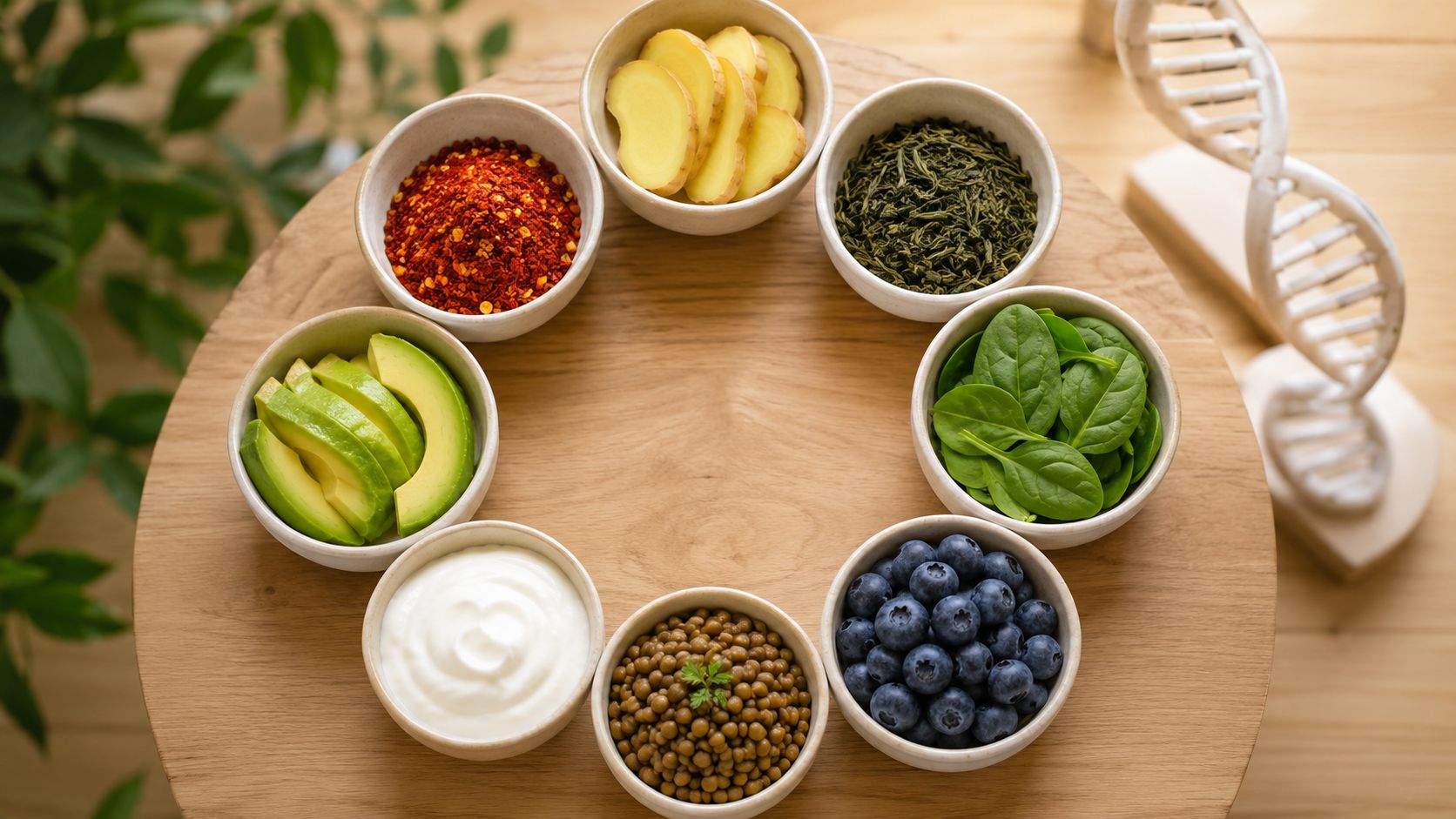
Stoffwechsel anregen Lebensmittel: 8 effektive Booster
Möchtest du deinen Energieverbrauch nachhaltig steigern, hast aber das Gefühl, dass die üblichen Tipps zu kurz greifen? Viele Menschen suchen nach Stoffwechsel anregen Lebensmitteln und landen bei simplen Listen mit Chili, Kaffee oder grünem Tee. Das Problem ist nicht, dass diese Lebensmittel irrelevant wären. Das Problem ist, dass ihre Wirkung nie isoliert stattfindet.
Dein Stoffwechsel reagiert nicht nur auf einzelne Zutaten, sondern auf Verdauung, Nährstoffverteilung, Darmflora, Alltagsrhythmus und genetische Unterschiede. Genau deshalb erlebt die eine Person mit denselben Lebensmitteln mehr Sättigung, bessere Energie und leichteres Gewichtsmanagement, während bei der anderen fast nichts spürbar passiert. Wer nur nach dem stärksten Booster sucht, übersieht oft den eigentlichen Hebel: die Kombination aus Thermogenese, Proteinverdauung, Ballaststoffen und Mikrobiom.
Besonders spannend wird es, wenn du wissenschaftlich belegte Mechanismen mit Personalisierung verbindest. Allgemein gelten Ingwer, grüner Tee und proteinreiche Lebensmittel als stoffwechselunterstützend. Aber die tatsächliche Wirkung hängt vom individuellen Gen-Profil ab. Genau hier setzen DNA- und Mikrobiom-Analysen an, weil sie nicht nur sagen, was theoretisch gesund ist, sondern was für dich wahrscheinlich besser passt.
Wenn du deinen Stoffwechsel intelligenter unterstützen willst, brauchst du keine Wunderlebensmittel. Du brauchst ein besseres Verständnis dafür, welche Lebensmittel welchen Mechanismus anstoßen und an welcher Stelle Personalisierung sinnvoll wird. Hier sind acht Optionen, die in der Praxis besonders relevant sind.
1. Ingwer – die stoffwechsel-aktivierende Wurzel

Ingwer ist eines dieser Lebensmittel, die in klassischen Ratgebern oft erwähnt werden, aber selten sauber eingeordnet werden. Die Stärke von Ingwer liegt weniger in einem isolierten Kalorien-Trick, sondern in seiner Rolle als thermogener Reiz und als Verdauungsbegleiter rund um Mahlzeiten. Gerade nach schwereren Essen berichten viele Menschen, dass Ingwer subjektiv “leichter” macht. Das passt zu seiner typischen Verwendung nach dem Essen.
Interessant ist der personalisierte Blick darauf. Allgemein gelten Ingwer, grüner Tee und proteinreiche Lebensmittel als stoffwechselunterstützend, aber die tatsächliche Wirkung hängt vom individuellen Gen-Profil ab. Wenn du also schon öfter gemerkt hast, dass scharfe oder aromatische Pflanzenstoffe bei dir stark oder kaum spürbar wirken, ist das kein Zufall.
So nutzt du Ingwer sinnvoll
Frischer Ingwer ist alltagstauglicher, als viele denken. Du musst daraus kein kompliziertes Gesundheitsritual machen. Ein kleines Stück im Tee, fein gerieben im Curry oder als Zusatz in einer Gemüsesuppe reicht oft, um ihn regelmäßig einzubauen.
- Morgens einfach starten: Reibe frischen Ingwer in warmes Wasser mit etwas Zitrone, wenn du vor dem Frühstück etwas Warmes trinken möchtest.
- Nach dem Essen einsetzen: Ein milder Ingwertee nach einer größeren Mahlzeit passt gut, wenn du deine Verdauung bewusst unterstützen willst.
- Beim Kochen mitdenken: Currys, Linsengerichte, Suppen und Smoothies nehmen Ingwer geschmacklich gut auf.
Ingwer ist kein Ersatz für Bewegung oder eine gute Ernährungsstruktur. Er funktioniert eher wie ein Verstärker in einem bereits sinnvollen Alltag.
Wo Personalisierung den Unterschied macht
Genau bei Ingwer zeigt sich eine Schwäche pauschaler Ernährungslisten. Zwei Menschen können denselben Stoffwechsel-Booster essen und sehr unterschiedlich darauf reagieren. Wenn du herausfinden willst, ob solche Pflanzenstoffe in deinem Alltag eher eine Nebenrolle oder einen echten Hebel spielen, ist eine DNA-Stoffwechselanalyse von mybody®x eine logische Ergänzung. Sie ersetzt keine Ernährung, macht aber sichtbarer, welche Strategien für dich eher Substanz haben.
2. Grüner Tee – das Langzeit-Stoffwechsel-Elixier

Warum taucht grüner Tee in Studien und Ernährungsstrategien zum Stoffwechsel so regelmäßig auf? Der Grund ist seine Kombination aus Koffein und Catechinen wie EGCG. Diese Stoffe greifen an mehreren Punkten an, unter anderem an der Thermogenese und an der Art, wie der Körper Energie kurzfristig bereitstellt. Der Effekt ist meist nicht spektakulär pro Tasse, aber gerade deshalb für den Alltag interessant. Kleine, wiederholte Reize sind bei Stoffwechsel anregen Lebensmitteln oft plausibler als starke Einzelmaßnahmen.
Grüner Tee passt besonders gut in einen langfristigen Ansatz. Er liefert einen moderaten Stimulus, ohne dass du daraus ein kompliziertes Ritual machen musst. Das macht ihn praxistauglich für Menschen, die ihren Stoffwechsel nicht über Extreme, sondern über wiederholbare Gewohnheiten beeinflussen wollen.
Was grünen Tee metabolisch interessant macht
Der relevante Punkt ist nicht nur das Koffein. Catechine können zusammen mit Koffein die Wärmebildung und den Energieverbrauch leicht unterstützen, während die Flüssigkeit selbst kalorienfrei bleibt. Für die Praxis heißt das: Grüner Tee ist vor allem dann sinnvoll, wenn die restliche Ernährungsstruktur stimmt, also genug Protein, ausreichend Ballaststoffe und insgesamt eine vernünftige Kalorienbilanz. Wenn du deinen Alltag an dieser Stelle verbessern willst, hilft auch ein Blick auf den täglichen Eiweißbedarf und sinnvolle Proteinmengen, weil der thermische Effekt von Protein im Gesamtbild meist stärker ins Gewicht fällt als einzelne Getränke.
Noch spannender ist der indirekte Nutzen. Wer regelmäßig grünen Tee trinkt, ersetzt damit oft zuckerreiche Getränke oder unstrukturierte Snacks am Nachmittag. Der Stoffwechsel profitiert dann nicht nur durch Pflanzenstoffe, sondern auch durch bessere Routinen.
Warum die Wirkung individuell unterschiedlich ausfällt
Hier wird Personalisierung relevant. Nicht jeder verarbeitet Koffein gleich schnell, und nicht jedes Mikrobiom reagiert identisch auf pflanzliche Polyphenole. Ein Teil der Catechine wird erst durch Darmbakterien weiterverarbeitet. Das bedeutet: Zwei Menschen können dieselbe Menge grünen Tee trinken und dennoch unterschiedlich von Fokus, Appetitregulation oder Verträglichkeit profitieren.
mybody®x verbindet genau diese Ebene aus Genetik und Mikrobiom mit der Ernährungspraxis. Wenn in einer DNA-Analyse etwa Hinweise auf eine langsamere Koffein-Verstoffwechslung sichtbar werden, kann für dich eine kleinere Menge oder ein früherer Einnahmezeitpunkt sinnvoller sein. Wenn dein Mikrobiom bestimmte pflanzliche Verbindungen besonders gut verwertet, bekommt auch grüner Tee eine andere Relevanz im Alltag als in allgemeinen Listen.
So setzt du grünen Tee sinnvoll ein
Grüner Tee funktioniert am besten als feste Gewohnheit, nicht als spontane Stoffwechsel-Hoffnung.
- Am Vormittag: Eine Tasse zwischen Frühstück und Mittag passt gut, wenn du einen milden Wachmacher suchst.
- Vor Bewegung: Wenn du nüchtern kein intensives Training magst, kann grüner Tee vor einem Spaziergang oder Workout eine leichte Aktivierung unterstützen.
- Als Getränkeroutine: Ungesüßt und regelmäßig getrunken ist er vor allem deshalb nützlich, weil er Struktur in den Tag bringt.
Grüner Tee hat Substanz, weil sein Effekt klein, wiederholbar und biologisch plausibel ist. Mit DNA- und Mikrobiom-Daten von mybody®x lässt sich besser einschätzen, ob er für dich eher nettes Beiwerk oder ein sinnvoller Baustein deiner Stoffwechselstrategie ist.
3. Proteinreiche Lebensmittel – der motorische Stoffwechsel-Treibstoff
Warum gehören proteinreiche Lebensmittel in jede fundierte Strategie für einen aktiveren Stoffwechsel? Weil Eiweiß unter den Makronährstoffen den höchsten thermischen Effekt hat. Bei seiner Verdauung und Verarbeitung verbraucht der Körper im Verhältnis mehr Energie als bei Kohlenhydraten oder Fetten, wie der NDR zum thermischen Effekt proteinreicher Ernährung zusammenfasst.
Der relevante Punkt liegt nicht in einem kurzfristigen Kick, sondern in der Summe kleiner, biologisch plausibler Effekte. Protein erhöht den Energieaufwand der Nahrungsverwertung, unterstützt den Muskelerhalt in Kalorienphasen und bremst oft den schnellen Wiederanstieg von Hunger nach einer Mahlzeit. Für den Alltag ist genau diese Kombination interessanter als einzelne Lebensmittel, die nur für kurze Zeit stimulierend wirken.
Warum Eiweiß stoffwechselrelevant ist
Protein wirkt auf mehreren Ebenen zugleich. Die Verdauung ist aufwendiger, die Sättigung hält häufig länger an, und eine ausreichende Zufuhr hilft dabei, fettfreie Masse zu erhalten. Das ist metabolisch relevant, weil Muskelgewebe Energie benötigt und weil stabile Sättigung die Wahrscheinlichkeit senkt, später impulsiv zu essen.
Besonders sinnvoll sind Lebensmittel, die Eiweiß nicht isoliert liefern, sondern mit weiterer Stoffwechselrelevanz verbinden:
- Tierische Quellen mit hoher Proteindichte: Fisch, Eier, Skyr, Quark und Naturjoghurt lassen sich leicht in Mahlzeiten einbauen.
- Pflanzliche Quellen mit Zusatznutzen: Linsen, Bohnen, Kichererbsen, Tofu und Tempeh kombinieren Protein oft mit Ballaststoffen.
- Alltagstaugliche Mischformen: Haferflocken mit Joghurt, Vollkornbrot mit Hüttenkäse oder Reis mit Hülsenfrüchten verbessern die Verteilung über den Tag.
Der Unterschied zeigt sich oft nicht nach einer einzelnen Mahlzeit, sondern in der Wochenbilanz.
Protein wirkt nicht bei allen Menschen identisch
Hier wird Personalisierung interessant. Zwei Menschen können dieselbe Eiweißmenge essen und trotzdem unterschiedlich davon profitieren. Gründe sind unter anderem Verdauungsverträglichkeit, Sättigungsreaktion, Blutzuckerantwort, Trainingsstatus und die Zusammensetzung des Darmmikrobioms. Vor allem pflanzliche Proteinquellen bringen eine zweite Ebene mit: Ihre Wirkung hängt auch davon ab, wie gut dein Mikrobiom Ballaststoffe und Begleitstoffe verarbeitet.
Genetische Unterschiede können ebenfalls relevant sein. Wenn bestimmte Varianten die Nährstoffverwertung oder den Bedarf an einzelnen Mikronährstoffen beeinflussen, verändert das die Qualität einer sinnvollen Proteinauswahl. Bei manchen Personen passt eine stärker pflanzlich geprägte Strategie sehr gut. Andere kommen mit fermentierten Milchprodukten, Eiern oder Fisch im Alltag besser zurecht.
Wer die eigene Menge realistischer einschätzen möchte, findet im Beitrag zum Eiweißbedarf pro Tag eine gute Orientierung. Für eine individuellere Bewertung verknüpft der NutriCare | INFINITY DNA-Test von mybody®x genetische Hinweise zur Nährstoffverwertung mit Stoffwechseltyp und persönlichen Ernährungsmerkmalen. In Kombination mit Mikrobiom-Analysen wird daraus keine pauschale "mehr Protein"-Empfehlung, sondern eine präzisere Frage: Welche Proteinquellen, Mengen und Mahlzeitenstrukturen passen biologisch und praktisch zu dir?
So setzt du Protein im Alltag sinnvoll ein
Entscheidend ist meist die Verteilung, nicht die Abendkorrektur mit einer einzigen großen Portion. Ein proteinarmes Frühstück und eine sehr eiweißreiche Spätmahlzeit sind für viele Menschen weniger günstig als drei ausgewogenere Kontaktpunkte über den Tag.
Ein pragmischer Aufbau sieht oft so aus: morgens Joghurt, Skyr oder Eier, mittags Hülsenfrüchte, Fisch oder Tofu, abends eine weitere eiweißhaltige Hauptkomponente. Wenn du dabei pflanzliche und tierische Quellen sinnvoll kombinierst, verbesserst du nicht nur die Versorgung, sondern oft auch Sättigung, Mahlzeitenqualität und Umsetzbarkeit.
4. Ballaststoffe & Vollkornprodukte – das unterschätzte Stoffwechsel-Geheimnis
Wenn Menschen ihren Stoffwechsel “ankurbeln” wollen, denken sie oft zuerst an Schärfe, Kaffee oder Supplements. Dabei wird ein Bereich regelmäßig unterschätzt: Ballaststoffe. Genau hier liegt oft mehr Alltagseffekt als in den meisten Quick-Fix-Ideen.
Die Deutsche Gesellschaft für Ernährung empfiehlt mindestens 30 g Ballaststoffe täglich. Ballaststoffe aus Vollkorn, Hülsenfrüchten, Gemüse, Leinsamen und Haferflocken regulieren den Blutzucker, fördern die Sättigung und verbessern die Darmflora, wie in der Übersicht zu ballaststoffreichen Lebensmitteln und Stoffwechsel beschrieben wird. Das ist deshalb so wichtig, weil ein stabilerer Blutzucker und längere Sättigung die Essentscheidungen im restlichen Tag verändern.
Warum Ballaststoffe oft stärker wirken als “Booster”
Ballaststoffe arbeiten leiser als Koffein oder Chili. Du spürst nicht plötzlich Wärme oder Wachheit. Dafür beeinflussen sie mehrere Ebenen gleichzeitig: Verdauungsgeschwindigkeit, Sättigung, Blutzucker und Darmmilieu. Genau diese Kombination macht sie für Gewichts- und Stoffwechselziele so stark.
Ein einfacher Tausch reicht oft schon. Haferflocken statt süßem Frühstückscereal, Vollkornbrot statt Weißbrot, Linsen im Salat statt nur Blattsalat. Das wirkt unspektakulär, verändert aber die Nährstoffdichte und die Sättigung pro Mahlzeit deutlich.
Wer Ballaststoffe unterschätzt, unterschätzt meist den Teil des Stoffwechsels, der täglich über Hunger, Energie und Regelmäßigkeit entscheidet.
So baust du Ballaststoffe ohne Überforderung ein
Viele scheitern nicht am Wissen, sondern an der Verträglichkeit. Wenn du von sehr ballaststoffarm auf sehr ballaststoffreich springst, reagiert der Darm oft mit Blähungen oder Druckgefühl. Deshalb lohnt sich ein stufenweiser Aufbau.
- Frühstück aufrüsten: Haferflocken mit Nüssen und Obst sind oft leichter umzusetzen als ein kompletter Ernährungsumbau.
- Mittagessen smarter machen: Hülsenfrüchte in Suppe, Bowl oder Eintopf liefern Ballaststoffe plus Sättigung.
- Brot bewusst wählen: Vollkorn statt Weißmehl ist einer der simpelsten Hebel im Alltag.
Mehr Hintergründe dazu findest du im Beitrag zu Präbiotika und Ballaststoffen bei mybody®x. Gerade wenn du verstehen willst, wie Ballaststoffe und Darmgesundheit zusammenhängen, ist das der wichtigere Blick als bloßes Kalorienzählen.
5. Grünes Blattgemüse – das genetische Powerhouse mit Folat
Grünes Blattgemüse wirkt auf den ersten Blick nicht wie ein klassischer Stoffwechsel-Booster. Kein Koffein, keine Schärfe, kein spektakulärer Soforteffekt. Gerade deshalb wird es oft unterschätzt. Dabei ist es für viele Menschen metabolisch hochrelevant, besonders dann, wenn genetische Besonderheiten bei der Folatverwertung eine Rolle spielen.
Je nach Genvariante wird bei einer MTHFR-Variante mehr natürliches Folat aus grünem Blattgemüse empfohlen, da die Verstoffwechslung synthetischer Folsäure eingeschränkt sein kann. Das ist kein Randdetail. Es verändert die Frage von “Welches Superfood soll ich essen?” zu “Welche Form eines Nährstoffs kann mein Körper sinnvoller nutzen?”
Warum Spinat, Rucola und Feldsalat mehr sind als Beilage
Grünes Blattgemüse ist für den Stoffwechsel nicht deshalb interessant, weil es viele Kalorien verbrennt. Es ist interessant, weil es Nährstoffdichte in eine geringe Energiedichte packt. Wenn du Spinat, Rucola oder Feldsalat regelmäßig mit Protein- und Fettquellen kombinierst, entsteht oft genau die Mahlzeitenstruktur, die bei Gewichtsmanagement funktioniert: sättigend, nährstoffreich, alltagstauglich.
Ein Beispiel aus der Praxis: Statt einer Brotmahlzeit mit wenig Volumen kann eine Bowl aus Blattgemüse, Bohnen oder Ei, Olivenöl und Kernen länger tragen. Nicht, weil sie magisch ist, sondern weil sie mehr physiologische Arbeit sinnvoll bündelt.
So wird Blattgemüse metabolisch relevanter
Roh ist nicht automatisch besser. Manche Menschen vertragen leicht gedünsteten Spinat oder Mangold besser als große rohe Mengen. Auch die Kombination ist entscheidend.
- Mit Fett kombinieren: Olivenöl, Avocado oder Nüsse passen gut, weil fettlösliche Pflanzenstoffe so besser eingebunden werden.
- Mit Protein koppeln: Ei, Fisch, Tofu oder Hülsenfrüchte machen aus Salat eine echte Mahlzeit.
- Sorten variieren: Feldsalat, Spinat, Rucola, Grünkohl oder Kräuter bringen unterschiedliche Schwerpunkte in den Alltag.
Wenn du häufiger das Gefühl hast, “eigentlich gesund” zu essen und trotzdem wenig Effekt zu spüren, lohnt sich genau hier ein personalisierter Blick. Denn Blattgemüse wird vor allem dann stark, wenn es zu deinem genetischen Bedarf passt.
6. Fermentierte Lebensmittel – das Mikrobiom-Fundament des Stoffwechsels

Viele Listen zu Stoffwechsel anregen Lebensmitteln bleiben an der Oberfläche. Sie nennen einzelne Booster, erklären aber nicht, warum dieselbe Strategie bei manchen Menschen greift und bei anderen versandet. Genau hier kommt das Mikrobiom ins Spiel.
Laut einer Einordnung zum Mikrobiom-Kontext bei stoffwechselaktiven Lebensmitteln zeigen neue deutsche Daten aus 2025, dass etwa 55 % der Bevölkerung in Deutschland eine verminderte mikrobielle Diversität aufweisen. Das ist deshalb relevant, weil eine geringere Vielfalt die Verwertung von Ballaststoffen und die Produktion kurzkettiger Fettsäuren beeinträchtigen kann. Wer also zwar “richtig” isst, aber kaum Veränderungen bemerkt, hat möglicherweise nicht nur ein Kalorienproblem, sondern ein Darmmilieu-Thema.
Warum Fermentation strategisch wichtiger ist als ein weiterer Booster
Fermentierte Lebensmittel wie Sauerkraut, Kimchi, Kefir, Miso oder Tempeh sind nicht bloß Trendprodukte. Sie sind interessant, weil sie die Brücke zwischen Ernährung und Darmumgebung schlagen. Und genau diese Umgebung entscheidet mit darüber, wie gut dein Körper Ballaststoffe, Pflanzenstoffe und Mahlzeiten insgesamt verarbeitet.
Das ist die eigentliche Denkleistung hinter Fermentation: Nicht jedes Lebensmittel wirkt direkt auf deinen Stoffwechsel. Manche verbessern zuerst das System, in dem Stoffwechselreaktionen sinnvoller stattfinden.
Wenn du bei Ballaststoffen, grünem Tee oder scharfen Gewürzen wenig merkst, lohnt sich oft zuerst der Blick auf den Darm und nicht auf den nächsten Ernährungs-Hack.
So setzt du fermentierte Lebensmittel alltagstauglich ein
Du musst nicht täglich exotisch kochen. Kleine Mengen reichen, wenn du sie regelmäßig nutzt.
- Zum Mittagessen: Ein bis zwei Gabeln rohes Sauerkraut passen gut zu Bowls oder Kartoffelgerichten.
- Beim Frühstück: Kefir kann Joghurt ergänzen oder ersetzen, wenn du fermentierte Milchprodukte verträgst.
- Beim Abendessen: Miso oder Tempeh bringen Fermentation in herzhafte Mahlzeiten.
Wer genauer wissen möchte, ob eine Mikrobiom-Analyse im eigenen Fall sinnvoll ist, findet im Beitrag Mikrobiom-Analyse sinnvoll eine gute erste Orientierung. Gerade bei wiederkehrenden Verdauungsproblemen oder stagnierendem Gewichtsmanagement ist das oft relevanter als noch mehr Disziplin.
7. Hochwertige Fette & Omega-3-Quellen – der Hormon- und Zellmembran-Treibstoff
Fette haben beim Thema Stoffwechsel ein Imageproblem. Viele denken sofort an “zu viele Kalorien” und übersehen, dass hochwertige Fette eine strukturelle Rolle spielen. Sie sind kein Turboeffekt wie Koffein. Sie sind eher die Baustoffe, ohne die hormonelle und zelluläre Prozesse schlechter laufen.
Vor allem Omega-3-Quellen sind hier interessant. Nicht, weil sie automatisch Fett schmelzen lassen, sondern weil sie in eine metabolisch sinnvolle Ernährung passen, die Entzündungsneigung, Sättigung und Mahlzeitenqualität mitdenkt. In der Praxis heißt das: Fisch, Leinsamen, Chiasamen oder Walnüsse sind keine Beilage zum “eigentlichen” Essen. Sie sind Teil des Mechanismus.
Warum Fettqualität wichtiger ist als Fettangst
Wenn du nur versuchst, Fett zu reduzieren, verpasst du oft die wichtigere Frage: Welche Fette essen du regelmäßig? Ein Frühstück mit Haferflocken, Joghurt und Leinsamen wirkt anders als ein fettarmes, aber stark verarbeitetes Produkt. Nicht wegen eines Wundereffekts, sondern weil Nährstoffqualität Sättigung und Mahlzeitenstruktur verändert.
Das gilt auch für Hauptmahlzeiten. Lachs mit Gemüse, Tempeh mit Sesam oder ein Salat mit Walnüssen und Olivenöl erzeugen meist mehr Zufriedenheit als “light” konstruierte Diätgerichte. Wer satt und stabil bleibt, trifft später oft automatisch bessere Entscheidungen.
Wo Genetik bei Fetten relevant wird
Auch die Fettverwertung ist nicht bei allen Menschen gleich. Im Kontext personalisierter Ernährung können dabei Gene wie APOE oder FADS relevant sein. Das ist besonders interessant, wenn du schon verschiedene Ernährungsansätze ausprobiert hast und bei Fettmengen oder Fettquellen sehr unterschiedlich reagierst.
Mehr dazu erklärt der Beitrag über Omega-3-Fettsäuren im DNA-Kontext bei mybody®x. Für viele Menschen ist das eine hilfreiche Perspektive, weil sie wegführt von pauschalen Regeln wie “weniger Fett” hin zu der sinnvolleren Frage, welches Fett im eigenen Alltag besser passt.
8. Chili und scharfe Gewürze – der thermogene Würzkickstart
Kann eine Prise Schärfe deinen Stoffwechsel messbar beeinflussen? Ja, aber nur in einem klar begrenzten Rahmen. Capsaicin aus Chili kann die Thermogenese anstoßen und den Energieverbrauch nach einer Mahlzeit leicht erhöhen. Für den Alltag heißt das: Scharfe Gewürze sind kein Haupthebel, sondern ein kleiner, gezielt nutzbarer Verstärker.
Interessant wird Chili vor allem dann, wenn du den Mechanismus verstehst. Schärfe aktiviert Rezeptoren, die Wärmebildung und teilweise auch das Sättigungserleben beeinflussen können. Der Effekt ist meist kurzfristig. Er passt deshalb eher zu einer gut aufgebauten Mahlzeit als zu der Erwartung, dass einzelne Gewürze den Stoffwechsel grundlegend verändern.
Wann Schärfe praktisch sinnvoll ist
Am meisten bringt Chili in Kombination mit Mahlzeiten, die bereits metabolisch günstig aufgebaut sind. Eine proteinreiche Bowl mit Bohnen, Gemüse und etwas Chili wirkt anders als eine stark verarbeitete Fertigmahlzeit mit scharfer Sauce. Der Unterschied liegt nicht nur in den Kalorien, sondern in der Kombination aus Protein-TEF, Ballaststoffen, Blutzuckerreaktion und Sättigung.
Genau deshalb ist Schärfe vor allem ein Multiplikator. Sie ergänzt bestehende Mechanismen, statt sie zu ersetzen.
Wenn du scharf gut verträgst, kannst du kleine Mengen unkompliziert einbauen:
- frische Chili in Linsen- oder Bohnengerichte
- etwas Cayenne oder Chili-Flocken in eiweißreiche Pfannen
- scharfe Gewürze in Kombination mit ballaststoffreichen Suppen oder Bowls
Warum die Reaktion so unterschiedlich ausfällt
Nicht jede Person profitiert gleich. Manche spüren mehr Wärme, essen langsamer oder sind schneller satt. Andere reagieren mit Magenreizungen, Schwitzen oder schlicht ohne spürbaren Effekt. Das ist biologisch plausibel, weil Empfindlichkeit gegenüber Schärfe, Verdauungstoleranz und Appetitregulation individuell variieren.
Hier wird Personalisierung relevant. Wenn du über DNA- und Mikrobiom-Analysen von mybody®x bereits weißt, wie dein Körper auf bestimmte Nährstoffmuster, Entzündungsreize oder Verdauungsbelastungen reagiert, lässt sich auch Schärfe sinnvoller einordnen. Für Menschen mit empfindlichem Magen oder auffälligen Mikrobiom-Mustern kann weniger mehr sein. Bei guter Verträglichkeit kann Chili dagegen eine einfache Ergänzung in einer stoffwechselfreundlichen Ernährung sein.
Schärfe funktioniert am besten im Verbund
Die spannendere Frage lautet also nicht, ob Chili den Stoffwechsel „ankurbelt“, sondern unter welchen Bedingungen der Effekt überhaupt relevant wird. In einer Mahlzeit mit Protein, Ballaststoffen und wenig stark verarbeiteten Zutaten ist die Chance höher, dass Schärfe einen nützlichen Zusatznutzen hat. In einer Ernährung mit vielen Kalorien aus stark verarbeiteten Produkten fällt dieser Effekt meist kaum ins Gewicht.
Daraus ergibt sich eine einfache Praxislogik:
- Starte mit kleinen Mengen und prüfe die Verträglichkeit.
- Nutze Chili eher zu Mahlzeiten als auf nüchternen Magen.
- Wähle reine Gewürze, frische Chilis oder wenig verarbeitete Pasten statt zuckerreicher Saucen.
Schärfe kann den Stoffwechsel also anstoßen. Relevant wird sie vor allem dann, wenn der Rest deiner Ernährung bereits in die gleiche Richtung arbeitet.
8 Stoffwechsel‑Booster im Vergleich
| Lebensmittel | Implementierungs‑Komplexität 🔄 | Ressourcenbedarf & Aufwand ⚡ | Erwartete Wirkung ⭐ / Ergebnis 📊 | Ideale Anwendungsfälle 📊 | Wichtige Vorteile & Tipps 💡 |
|---|---|---|---|---|---|
| Ingwer – die stoffwechsel‑aktivierende Wurzel | Niedrig; einfach in Küche/Tees integrierbar | Günstig, ganzjährig; frisch > Pulver | Postprandiale Thermogenese ↑ (≈5–10%); Verdauungsfördernd ⭐⭐ | Vor/nach Mahlzeiten, Tee, Smoothies für kurzen Stoffwechsel‑Kick | Anti‑entzündlich; 1–2 cm täglich starten; mit Zitrone; Gencheck (CYP3A4/COMT) |
| Grüner Tee – das Langzeit‑Stoffwechsel‑Elixier | Niedrig; regelmäßiger Konsum nötig | Günstig, Qualitätsabhängig; richtiges Brühen (70–80 °C) | Sanfte, nachhaltige Aktivierung; verbesserte Fettoxidation; mittl. Effekt ⭐⭐⭐ | Täglich 2–3 Tassen, 30 min vor Training, Nachmittags für Fokus | Hochwertige Sorten wählen; nicht kochend aufbrühen; CYP1A2 relevant |
| Proteinreiche Lebensmittel – motorischer Stoffwechsel‑Treibstoff | Mittel; Mahlzeitenplanung und Portionssteuerung | Variabel: tierisch teurer, pflanzlich Planungsaufwand | Höchster TEF (20–30%); Sättigung & Muskelerhalt → Ruhestoffwechsel ↑ ⭐⭐⭐⭐ | Proteinreiches Frühstück, Post‑Workout, Muskelaufbau/Erhalt | Protein über den Tag verteilen; 1,6–2,2 g/kg bei Training; MTHFR beachten |
| Ballaststoffe & Vollkornprodukte – unterschätztes Geheimnis | Niedrig‑mittel; schrittweise Erhöhung empfohlen | Sehr günstig (Hafer, Hülsenfrüchte, Obst); viel Wasser nötig | Sättigung ↑, Blutzucker stabilisiert, Mikrobiom‑Vorteile; langfristig Gewichtsverlust ⭐⭐⭐ | Frühstück (Hafer), Lunch (Linsen), Snacks (Obst/Nüsse) zur Sättigung | Langsam steigern, viel trinken, löslich+unlöslich kombinieren; Mikrobiom‑Test |
| Grünes Blattgemüse – genetisches Powerhouse mit Folat | Niedrig; vielseitig roh/gekocht verwendbar | Günstig, ganzjährig; geringe Kalorien | Liefert Methylfolat → bessere Methylierung bei MTHFR; Energieproduktion ↑ ⭐⭐⭐ | Täglich als Smoothie/Beilage für MTHFR‑Träger und Allgemeinversorgung | Leicht kochen gegen Goitrogene, mit Fett kombinieren, MTHFR‑Test empfehlen |
| Fermentierte Lebensmittel – Mikrobiom‑Fundament | Mittel; regelmäßige, rohe Produkte empfohlen | Günstig, selbstmachbar; kleine Startmengen (1 EL) | Mikrobiom‑Diversität ↑ in 4–8 Wo.; Einfluss auf Sättigung & Insulin ⭐⭐⭐ | Täglich kleine Portionen (Sauerkraut, Kefir) als Beilage/Snack | Rohe, unpasteurisierte Produkte wählen; Hitze meiden; Mikrobiom‑Analyse nützlich |
| Hochwertige Fette & Omega‑3 – Hormon‑ und Zellmembran‑Treibstoff | Mittel; Auswahl und Verhältnis beachten | Mittelhohe Kosten (Wildfisch, Nüsse); pflanzliche Alternativen | Entzündungsreduktion, Insulinsensitivität ↑; 2–3 g Omega‑3 effektiv ⭐⭐⭐⭐ | Wildlachs 2–3x/Woche, tägliche Samen/Nüsse, bei Entzündung/Insulinproblemen | Wildfisch bevorzugen, Omega‑6 reduzieren, APOE/FADS‑Check sinnvoll |
| Chili & scharfe Gewürze – thermogener Würzkickstart | Niedrig; Verträglichkeit prüfen | Sehr günstig; leicht integrierbar | Kurzfristige Thermogenese ↑ (≈3–5%), Appetitzügelung ⭐⭐ | Zu Hauptgerichten für akuten Stoffwechsel‑Kick und Geschmack | Langsam steigern, fettlöslich (mit Fett kombinieren), TRPV1/CYP2E1 beachten; Achtung Magenbeschwerden |
Dein nächster Schritt zum optimalen Stoffwechsel
Wenn du aus diesem Überblick nur eine Sache mitnimmst, dann diese: Es gibt nicht das eine Lebensmittel, das deinen Stoffwechsel zuverlässig “anschaltet”. Was funktioniert, ist das Zusammenspiel aus mehreren Mechanismen. Protein erhöht die Verdauungsarbeit. Ballaststoffe stabilisieren Sättigung, Blutzucker und Darmmilieu. Grüner Tee, Kaffee oder Chili können thermogene Reize setzen. Fermentierte Lebensmittel und Mikrobiom-Pflege beeinflussen, wie gut dein Körper solche Reize überhaupt verwertet.
Gerade deshalb greifen einfache Listen oft zu kurz. Sie nennen einzelne Lebensmittel, ohne zu erklären, warum dieselbe Strategie bei zwei Menschen unterschiedlich wirken kann. Allgemein gelten Ingwer, grüner Tee und proteinreiche Lebensmittel als stoffwechselunterstützend. Aber die tatsächliche Wirkung hängt vom individuellen Gen-Profil ab. Dasselbe gilt für Fragen wie Koffeinverträglichkeit, Folatverwertung, Fettmetabolismus oder den Umgang mit ballaststoffreicher Kost.
Praktisch heißt das für dich: Fang nicht mit Perfektion an, sondern mit Struktur. Eine proteinreichere erste Mahlzeit, mehr Vollkorn und Hülsenfrüchte, regelmäßig grünes Blattgemüse, kleine Mengen fermentierter Lebensmittel und gezielt eingesetzte thermogene Reize wie grüner Tee oder Chili. Diese Schritte sind oft wirksamer als radikale Programme, weil sie im Alltag bleiben.
Wenn du trotz sinnvoller Ernährung immer wieder das Gefühl hast, dass dein Körper anders reagiert als erwartet, wird Personalisierung interessant. Eine DNA-Analyse kann helfen, genetisch bedingte Stoffwechseltypen, die Fett- und Kohlenhydratverwertung oder individuelle Besonderheiten bei Nährstoffen besser einzuordnen. Eine Mikrobiom-Analyse kann ergänzen, wie dein Darmmilieu zu Verdauung, Ballaststoffverwertung und metabolischer Stabilität beiträgt. So wird aus allgemeinem Ernährungswissen eine präzisere Strategie.
mybody®x beziehungsweise die MYBODY Lab GmbH ist in diesem Kontext eine relevante Option, wenn du Ernährung nicht nur nach Trends, sondern auf Basis persönlicher Analysen strukturieren willst. Sinnvoll ist das vor allem dann, wenn du nicht die nächste allgemeine Diät suchst, sondern verstehen möchtest, warum bestimmte Lebensmittel für dich funktionieren oder eben nicht.
Am Ende geht es nicht darum, deinen Stoffwechsel mit einem Trick zu überlisten. Es geht darum, ihn besser zu verstehen. Genau dann werden Stoffwechsel anregen Lebensmittel vom oberflächlichen Trend zur echten Entscheidungshilfe im Alltag.
Wenn du herausfinden willst, welche Lebensmittel, Nährstoffschwerpunkte und Stoffwechselstrategien besser zu deinem Körper passen, kannst du dich bei MYBODY Lab GmbH zu DNA-, Stoffwechsel- und Mikrobiom-Analysen informieren. So verbindest du allgemeine Ernährungsprinzipien mit einem persönlicheren Blick auf Genetik, Verdauung und langfristige Alltagsumsetzung.
Share:
Mikrobiom-Analysen: Netflix-Doku lässt Nachfrage ums Zehnfache steigen
Ernährungstest auf Verträglichkeit: Welches Verfahren klärt welche Frage?