
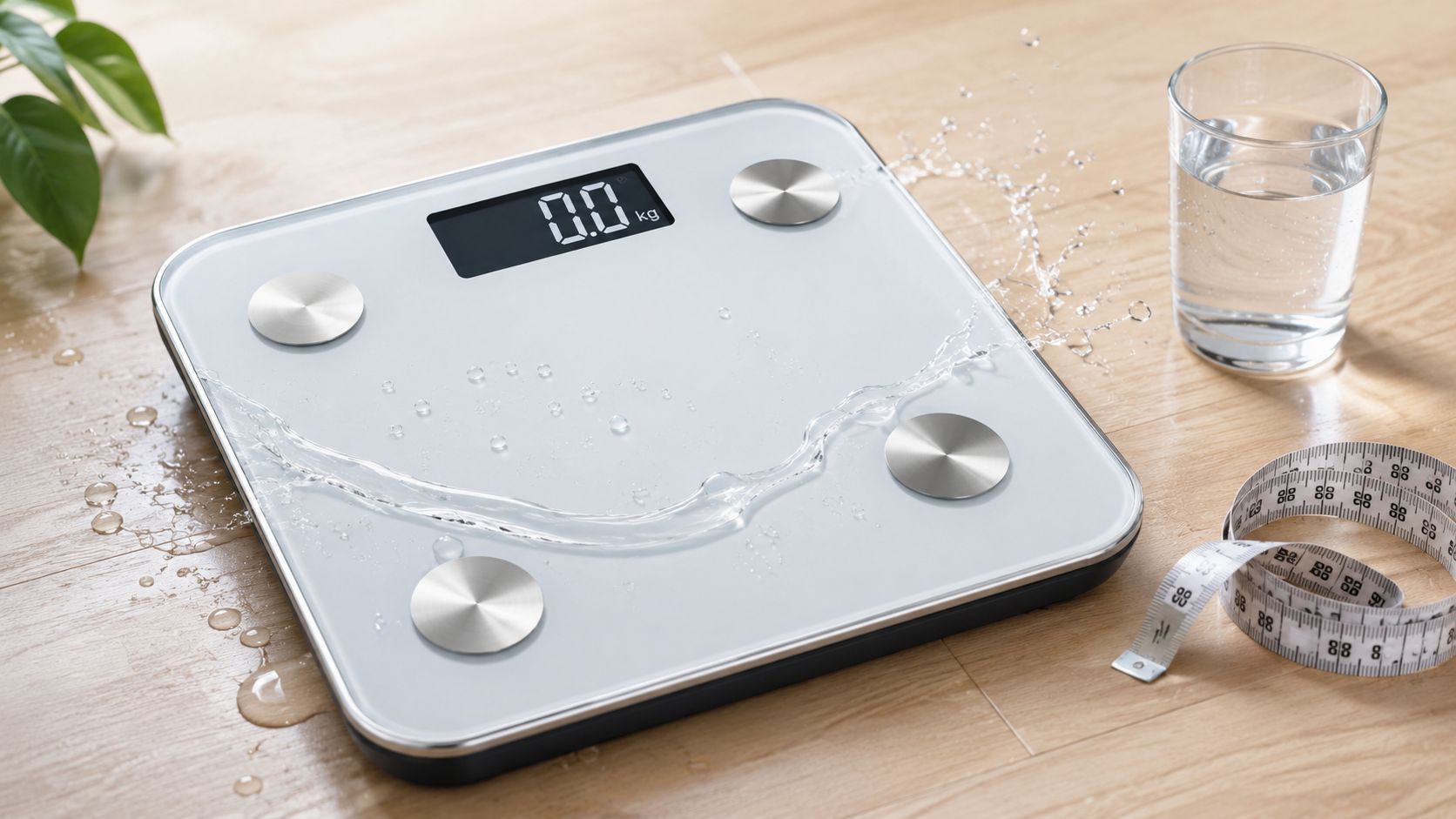
Suddenly Gained 5 Kilos? Causes and Immediate Help
The scale suddenly shows 5 kilos more. You have not consciously eaten more, your clothes fit differently, and one thought immediately flashes through your mind: What is going on?
If you have suddenly gained 5 kilos, it is initially alarming. But it is important to curb your first reaction. Such a rapid change is usually not simply fat; it is often a sign that your body is currently retaining water, has become hormonally imbalanced, or is reacting to stress.
At precisely this point, guessing rarely helps. Clarity comes from carefully separating the possible causes and then checking specifically what is actually behind it in your case.
Suddenly 5 Kilos Heavier? Why You Shouldn't Panic Now
Many people know this moment. You step on the scale in the morning, experience a brief shock, and then your mind starts racing. Have I done everything wrong over the past few days? Is my metabolism broken? Have I suddenly gained weight without noticing?
The reassuring truth is: If you have suddenly gained 5 kilos, it is very often not genuine fat gain. Your body weight is not a fixed number. It fluctuates—sometimes because of digestion, sometimes because of salt, sometimes because of your cycle, and sometimes because of stress.
There is something important to add: The phenomenon is far more common than many people think. Scientific studies by the Technical University of Munich and the Else Kröner-Fresenius Center document that around 35 percent of German adults have gained weight since the beginning of the coronavirus pandemic, by an average of 6.5 kilograms (EKFS on weight gain since the pandemic). This shows that a change of this magnitude is not an isolated oddity.
The number on the scale is not the whole story
The scale only measures weight. It does not tell you what that weight consists of. That is the crucial point.
A gain can mean:
- Water retention, for example after eating very salty food or due to hormonal fluctuations
- Stress responses that affect your fluid balance and appetite
- Slower metabolism, for example due to an underactive thyroid
- Digestive sluggishness or bloating, when your stomach suddenly appears noticeably fuller
If you also notice a bloated stomach along with the weight gain, it may be helpful to look at the guide to bloating and what can really help with it. In everyday life, digestion and weight fluctuations are often confused with each other.
Important thought: Your body is not “failing.” It is sending a signal.
Understand first, then act
Panic almost always leads to the wrong reactions. Radical diets, extreme exercise, or cutting out carbohydrates entirely often make the situation even more confusing.
A sober look is better: When did the increase begin? Did it happen very quickly? Do you feel swollen, tired, short of breath, stressed, or hormonally “different than usual”?
These questions bring you closer to the cause. And that is exactly where real control begins.
Fat, water, or hormones: the big difference
Before you do anything, you need to understand one clear distinction: Fat gain happens differently from fluid retention or hormonally induced fluctuations.
It sounds banal, but this is where most uncertainty arises. The scale simply shows a higher number. But your body knows exactly why.

When weight increases quickly, water is often the main suspect
According to the German Heart Foundation, a sudden weight gain of 5 kg within a few days is primarily caused by massive fluid retention, which can correspond to around 4.5 to 5 liters of fluid. Such rapid increases are rarely pure fat accumulation (German Heart Foundation on sudden weight gain).
This is easy to picture: Imagine a dry sponge. As soon as it absorbs water, it becomes heavier, even though its shape initially remains similar. In the same way, your body can retain fluid within a short period of time.
Three causes, three very different patterns
| Cause | Typical pattern | What you often notice |
|---|---|---|
| Fat | develops more gradually | Clothes become tighter over a longer period |
| Water | often happens quickly | swollen fingers, tight skin, a “soft” increase on the scale |
| Hormones | affect fluid balance and metabolism | Fatigue, cycle changes, diffuse fluctuations |
Rapid fluctuations are often more a matter of fluid and hormonal signals than body fat.
Where Genetics and Metabolic Understanding Can Help
Not every tendency toward weight fluctuations begins in everyday life. Some people react more sensitively to inflammation, nutrient utilization, or metabolic changes. In this context, the Longevity | ALL IN ONE DNA Test from mybody®x can help classify which genetic risk factors may play a role in aging, inflammation, nutrient utilization, and metabolism. This is not an acute test for the cause of today’s change, but it can make the broader context easier to understand.
Even so, for the immediate situation: If the change happened very quickly, think first of water and hormones, not immediately of fat.
The most common causes of your rapid weight gain
If you have suddenly gained 5 kilos, your body is often working like a detective story with several suspects. The difficult part is that many causes feel similar in everyday life. You are heavier, often more tired, and sometimes puffy. But the underlying trigger can vary greatly.

Water retention caused by salt, the menstrual cycle, or everyday habits
The most common explanation for a rapid increase is water. This often happens without much fuss. A few days of eating very salty foods, getting little sleep, sitting for longer periods, or experiencing hormonal changes during the cycle—and suddenly your body retains more fluid.
Many people describe it like this: Their fingers feel thicker, their ring fits more tightly, and their trousers feel tight around the waist, even though their eating habits have stayed the same. This is not an imagined sensation. The body constantly readjusts its fluid levels.
Typical triggers in everyday life include:
- Salty foods after restaurant meals, processed foods, or snacks
- Hormonal fluctuations around the menstrual cycle
- Periods of stress, during which the body “holds on” more strongly
- Less physical activity, which makes fluid more likely to remain in the legs and tissues
When stress affects the scales through hormones
One particularly common but often overlooked factor is acute stress. In practice, there are cases of people becoming significantly heavier within a short time without consciously eating more.
A clear example: A 33-year-old customer gained 5 kilos within 2 weeks without changing her diet. Lab tests showed significantly elevated cortisol linked to acute work-related stress. After reducing stress, her weight returned to normal within 10 days. Such cases show how quickly cortisol and fluid balance can change within days, while actual fat gain occurs much more slowly.
From practice: Reducing salt intake and drinking enough fluids often works surprisingly well against water retention. Sleep also helps because it can reduce cortisol levels.
Anyone who suspects typical signs of a hormonal imbalance can find useful initial guidance in the article on symptoms of a hormonal imbalance.
The thyroid as a silent contributor
Sometimes the change is caused not only by water retention but also by a slowed metabolism. An underactive thyroid is a common cause of unexplained weight gain. Hormone deficiency can cause basal energy expenditure to fall by up to 15 to 20 percent, and a blood test for TSH, fT3, and fT4 can quickly provide clarity (Overview of hypothyroidism and the relevant blood values).
The picture is simple: Your thyroid acts like an internal regulator for pace and energy expenditure. When this regulator slows down, many processes become sluggish. You feel tired, get cold more easily, your digestion slows down, and your weight changes even though you are not consciously living differently.
When it is time to see a doctor
Not every rapid weight gain is harmless. That is precisely why it is important to pay attention to the rate of gain and accompanying symptoms.
Medical guidelines, such as those issued by the European Society of Cardiology, define a 2-kilogram increase within 3 days as a critical threshold. A 5-kilogram increase without increased food intake can be a warning sign of heart failure and should be medically evaluated (Information on critical weight gain and heart failure).
You should take these warning signs seriously
Prompt evaluation becomes especially important if the following symptoms also occur:
- Shortness of breath or breathlessness, especially with little exertion
- Swelling in the legs or abdomen
- A feeling of tightness in the tissues
- Marked fatigue or a noticeable drop in performance
- Weight gain without an obvious explanation
When several of these occur together, it is no longer just a cosmetic fluctuation. Medical evaluation is needed.
When you should not wait
Some readers initially hope that “it will be gone again tomorrow.” That is understandable. But when the change is unusually rapid, simply observing is not enough.
If your weight is increasing significantly while you are also experiencing shortness of breath, swelling, or a feeling of pressure, you should seek medical help promptly.
A home test can provide guidance. However, it does not replace a doctor when red flags are present. In particular, heart problems, shortness of breath, or severe edema are not situations for self-experimentation.
Find the cause: which tests really help
Once the initial uncertainty has passed, the key question is: How can you find out what is specifically going on with you? This is exactly where overthinking gives way to meaningful diagnostics.
Instead of suspecting everything at once, a simple logic helps. Match your symptoms to the most likely area, then choose the test that checks that particular clue.

Which test matches which suspicion
| If you mainly notice | Then this direction makes sense |
|---|---|
| Changes in your cycle, feeling stressed, unexplained fluctuations in water retention | Hormone test |
| Fatigue, feeling cold, sluggishness, weight gain without eating more | Thyroid-related blood values |
| Digestive problems, bloating, suspected intolerance | Gut or intolerance test |
| Recurring fatigue or an unbalanced diet | Nutrient test |
If you suspect a thyroid issue, taking a closer look at the TSH hormone test and what it tells you can be especially helpful. This will help you understand why thyroid levels are often among the first useful markers to check.
Stop guessing, start testing
That is exactly the difference between frustration and progress. If you only speculate, you jump from one explanation to the next. Sometimes it’s salt, sometimes stress, sometimes “definitely hormones.” It feels proactive, but often brings no clarity.
A targeted test turns a vague feeling into a verifiable clue. At mybody x Gesundheit, you’ll find suitable at-home self-tests for hormones, nutrients, metabolism, gut health, and more. For recurring digestive issues and weight fluctuations, for example, the Darmflora MIKROBIOM-Test Complete may be relevant. It analyzes overall gut health, including bacterial diversity, leaky gut, inflammatory markers, and dysbiosis.
Nutrient status can also be indirectly important. If a deficiency has been confirmed, targeted action can be taken. The Vitamin D3 K2 Complex | Shield from mybody®x combines high-dose D3 with K2 for calcium utilization, bone health and the immune system and, according to the product snapshot, is intended primarily after a DNA or blood test has confirmed a deficiency.
Practical rule: Test according to your symptoms. Not everything at once—start with the most likely cause.
Your first-aid plan for quickly regaining balance
While you clarify the cause, you can do several things in everyday life to help your body regain its calm. Not as a radical cure, but more as a reset.

What makes sense right now
-
Drink more, not less
It sounds paradoxical, but it often helps. When your body retains water, it frequently responds to good hydration with better regulation. -
Consciously reduce salt for a few days
Ready-made products, snacks, takeaways and highly processed foods are often the silent drivers. Even simple, fresh meals can make a difference. -
Take sleep seriously
People who are under constant pressure often retain more water. Getting enough sleep is one of the most direct everyday measures when stress hormones are involved.
Small steps with big benefits
You do not need to make “everything perfect” right now. Simple, manageable steps are worthwhile:
- Gentle exercise such as walking instead of intense training
- Regular meals, so your body is not put under additional strain
- Observe rather than judge, for example by recording your weight, swelling and wellbeing
- No crash-diet mode, because it is more likely to conceal the causes than solve them
A sudden increase is often a signal from your body, not a character flaw.
When you need to regain your footing
The most important thought to take away is simple: Suddenly gaining 5 kilos does not automatically mean that you have “eaten too much” or “lost control.” More often, there is something measurable and understandable behind it.
When you know the cause, the next steps usually become much clearer. It is no longer about blame or restriction, but about taking the right approach.
If you no longer want to merely interpret your sudden weight gain but want to assess it specifically, you can find self-tests for hormones, nutrients, metabolism and gut health at mybody x Gesundheit. This turns uncertainty into a concrete next step.



Share now:
Find out your metabolic type: Your guide for 2026
How can you tell if you have a healthy metabolism? Signs & solutions