
HDL cholesterol too low: causes & how to raise it naturally
You have received your blood test results, and there it is in black and white: HDL cholesterol too low. Before the alarm bells start ringing, take a deep breath. Don’t see this level as bad news, but as what it really is: an important wake-up call and your personal opportunity to take an active role in your heart health.
What a low HDL level really means for you
You are holding your lab report in your hands, your eyes fall on the line “HDL cholesterol,” and the level is marked as too low. What does this mean for you specifically? Let’s translate this technical jargon into plain language so you can regain control.
Imagine your circulatory system as a busy highway. LDL cholesterol (the “bad” cholesterol) is like a truck that loses its load—fat and calcium—and consequently causes dangerous deposits and “traffic jams” along the blood vessel walls.
HDL cholesterol, on the other hand, is the diligent “waste removal service” for your arteries.
These HDL particles are the true unsung heroes: They collect excess cholesterol from the blood vessel walls and tissues and safely transport it back to the liver. There, it is broken down and excreted. So a low HDL level simply means that your body's own waste removal system is not working efficiently enough.
A low HDL level is not a fate, but a valuable indication. It shows you exactly where you can start to strengthen your cardiovascular health in the long term and proactively reduce risks.
Optimal HDL levels: When is your level really too low?
Okay, but which levels are actually good? The optimal levels differ slightly between men and women. This is because hormones such as estrogen have a protective effect and tend to raise HDL levels somewhat in women.
This table gives you a quick overview of HDL cholesterol levels and helps you put your own result into context.
HDL cholesterol reference ranges at a glance
| Assessment | HDL level in men (mg/dl) | HDL level in women (mg/dl) |
|---|---|---|
| Too low (increased risk) | under 40 | under 48 |
| Normal range | 40 - 60 | 48 - 70 |
| Optimal (protective) | over 60 | over 70 |
A truly critical HDL level is below 40 mg/dl in men and below 48 mg/dl in women. Alarming is the fact that around 20–30% of the population in Germany has levels below this threshold—a significant risk factor for cardiovascular disease.
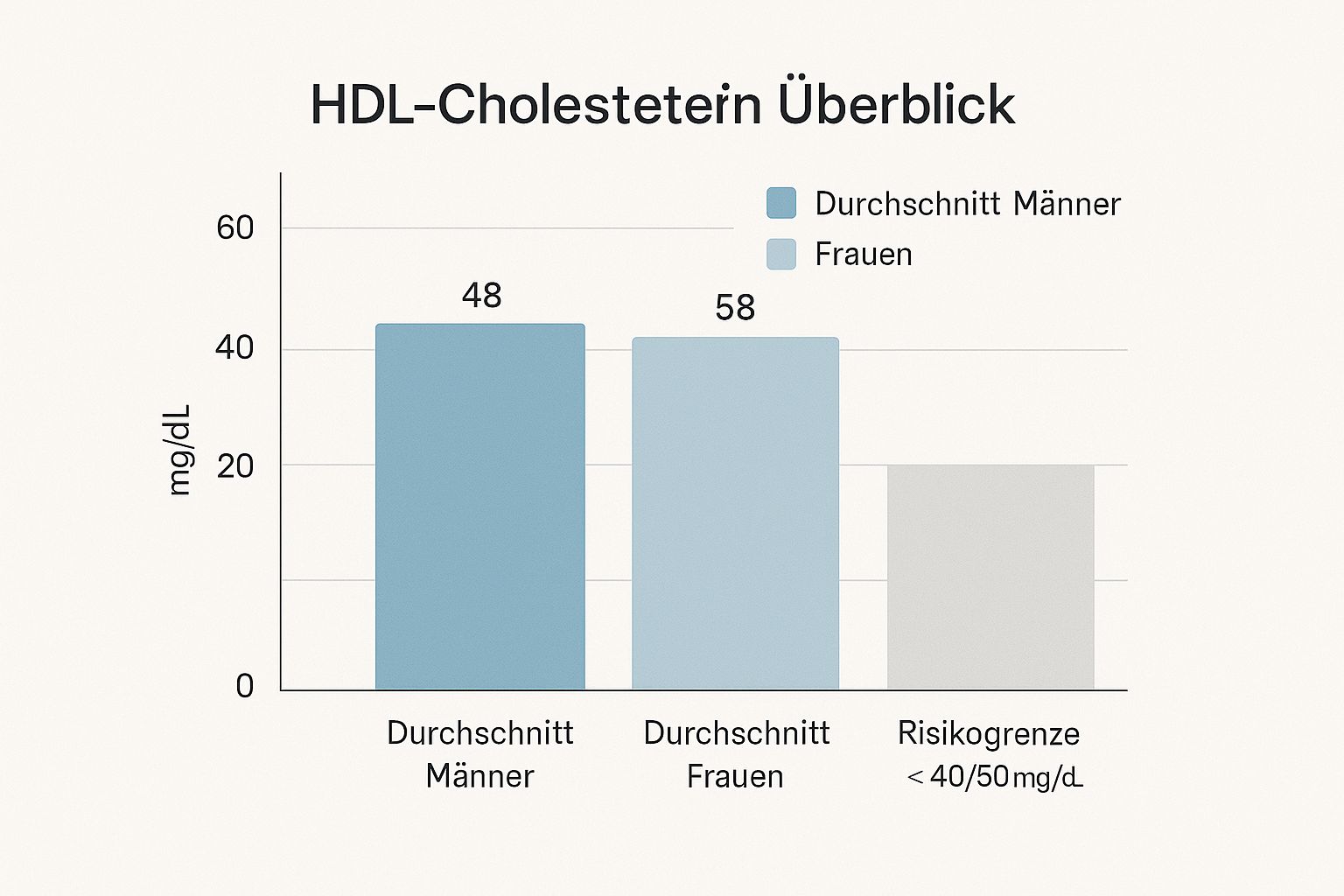
As you can see, women have slightly higher levels on average. However, the following applies to both sexes: A level that is near or below the lower limit should definitely be a reason to reconsider your lifestyle.
The good news, however, is that your HDL level is one of the factors you can influence very effectively yourself. With targeted adjustments to your diet and daily routine, you can noticeably boost the production of protective HDL cholesterol. You can also find out how a smart, balanced diet can help in our guide to losing weight without giving up the foods you love.
The real causes of low HDL cholesterol

When your HDL cholesterol is too low, there is rarely just one reason behind it. Most often, it is a combination of various factors in your everyday life that interlock like gears. The good news: You are in the driver's seat and can adjust many of these gears yourself. Let's take a closer look at the most common causes.
The answer to why your HDL level is too low is often right on your plate. A diet full of highly processed foods, trans fats (hidden in many baked goods and fast food), and simple sugars effectively puts the brakes on your body's ability to produce HDL. Imagine giving your body's “cholesterol garbage collection service” the wrong tool—then it simply cannot do its job properly.
At the same time, a lack of exercise plays a huge role. Regular physical activity, especially endurance training, is a real booster for HDL production. But when this engine constantly idles because you spend most of the day sitting, not only does your calorie consumption decrease, but so does your HDL level.
Lifestyle factors you can directly control
Alongside diet and exercise, there are other habits that directly affect your HDL level. Often, it is the small but consistent influences that add up over the years and make the difference.
- Smoking: Nicotine is pure poison for the inner walls of your blood vessels and has been shown to lower HDL levels. Quitting smoking is one of the most effective steps you can take—improvements in your blood test results are often visible after just a few months.
- Excess weight: Excess abdominal fat in particular is highly metabolically active and seriously disrupts fat metabolism. Even a moderate weight loss of just 5 to 10% of your body weight can lead to a significant increase in your HDL level.
- Chronic stress: Ongoing stress causes the release of hormones such as cortisol, which can negatively affect metabolism. And let’s be honest: under stress, we often tend to adopt less healthy behaviors, such as eating unhealthy foods or exercising less, which further amplifies the effect.
Your lifestyle is the most powerful lever. Every healthy snack, every walk, and every cigarette you do not smoke is a direct investment in better blood lipid levels and your long-term health.
The role of hormones and genetics
Sometimes the causes lie deeper. Certain genetic predispositions can mean that your body naturally produces less HDL cholesterol. But that does not mean you are powerless—quite the opposite: a healthy lifestyle is all the more important for offsetting this genetic risk. You can find out more about how your lifestyle can influence your genes in our article on epigenetic lifestyle and longevity.
Hormones also play a central role, especially in women. The female hormone estrogen has a protective effect and contributes to a higher HDL level. When estrogen levels naturally decline during menopause, this can lead to a noticeable drop in HDL levels. This is an important but often overlooked reason for changing blood lipid levels in women in their mid-40s and older.
The long-term risks of low HDL
A low HDL level on your lab report is far more than just a number. Instead, think of it as a quietly blinking early warning light for your cardiovascular system. When you understand what this signal means, you can take timely, targeted action—without panicking.
The main problem when HDL cholesterol is too low is its limited function as a “cholesterol garbage collector.” If there are not enough HDL particles to remove excess LDL cholesterol (“bad” cholesterol) from the artery walls, it simply remains there.
Over months and years, these fats accumulate along with calcium and other substances. This creates so-called plaques, which thicken and harden the inner walls of your arteries. This gradual process is called atherosclerosis, commonly referred to as hardening of the arteries.
When the highway becomes a one-way street
Imagine your arteries as a wide, open multi-lane highway where blood can flow freely. Atherosclerosis gradually narrows this highway, effectively closing some lanes. Blood flow becomes sluggish, and the tissue beyond the narrowing is no longer supplied with oxygen and nutrients as effectively.
In the worst-case scenario, such a plaque can rupture. A blood clot (thrombus) then forms at this site, potentially completely blocking the vessel.
The real danger of a low HDL level therefore lies not in the level itself, but in the cascade it can trigger: inadequate cholesterol removal leads to atherosclerosis, which increases the risk of serious cardiovascular events.
The Interaction of Risk Factors
HDL cholesterol that is too low rarely occurs on its own. It often appears alongside other risk factors that dangerously amplify one another:
- High LDL cholesterol: When there is a lot of “bad” cholesterol circulating while the “good” waste disposal system (HDL) is weakened, plaque formation accelerates dramatically.
- High blood pressure (hypertension): Increased pressure in the blood vessels further damages the artery walls and makes them more susceptible to plaque deposits.
- Insulin resistance or type 2 diabetes: Impaired sugar metabolism very often goes hand in hand with unfavorable blood lipid levels, including low HDL.
This combination is particularly dangerous. Statistically, the average total cholesterol level among Germans aged 35 to 65 is around 236 mg/dl (6.1 mmol/l), with men often having lower HDL levels. This is one of the reasons cardiovascular diseases are the leading cause of death in Germany, accounting for around 40% of all deaths. You can also find more in-depth information in this overview article from cholesterinspiegel.de.
But this knowledge shouldn’t frighten you. On the contrary, it shows you the tremendous opportunity you have. By deliberately working to increase your HDL, you’re not just improving a single value—you’re actively intervening in this complex system and comprehensively protecting yourself from the long-term consequences.
Your Practical Plan for Naturally Increasing HDL
Now we’re getting to the heart of the matter. You understand why low HDL is a wake-up call, but also that you’re in control. This section is your personal roadmap—packed with practical, everyday tips for naturally increasing your “good” cholesterol.
It’s not about completely overhauling your life overnight. The key is to create sustainable habits that feel good and truly make a difference. I experienced this myself: By consciously changing my diet and exercising more, I was able to increase my own HDL level by almost 20% within six months. That’s incredibly motivating!
Choose the right fats
Probably the greatest leverage for healthy HDL lies on your plate. But don’t worry—this doesn’t mean giving anything up, just making smart choices. Your focus should be on unsaturated fatty acids—they are your HDL level’s best friends.
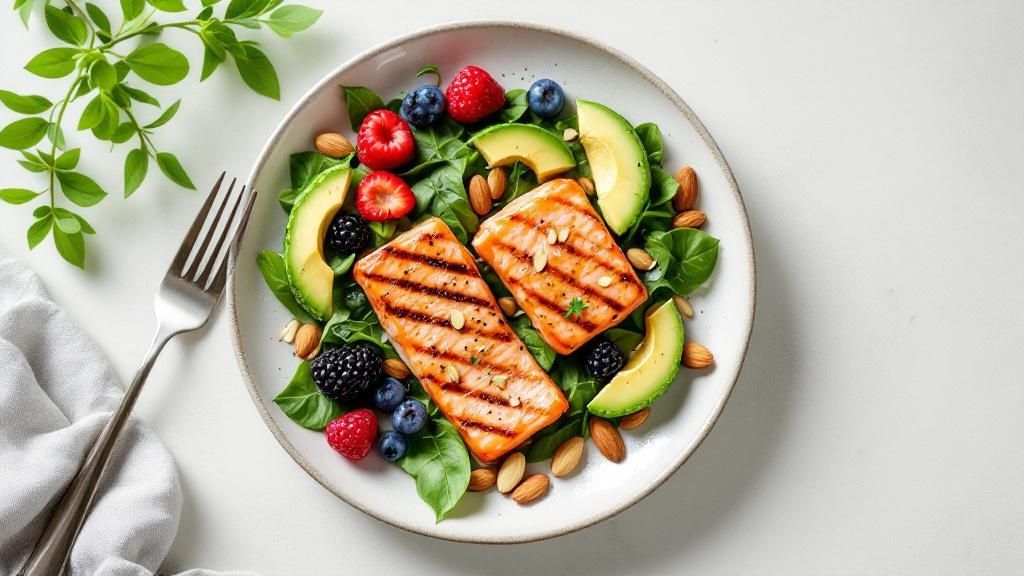
Here is an overview of the best foods to help you increase your “good” cholesterol. These foods are very easy to incorporate into your daily meal plan.
Table: Foods that increase your HDL cholesterol
An overview of the best foods for increasing “good” cholesterol, including practical tips for your daily meal plan.
| Food group | Examples | Why it helps |
|---|---|---|
| Healthy oils | Extra virgin olive oil, rapeseed oil, flaxseed oil | Rich in monounsaturated fatty acids and polyphenols, which have been shown to support HDL. Perfect for salads and cooking. |
| Nuts & seeds | Almonds, walnuts, flaxseeds, chia seeds | They provide healthy fats, fiber, and important micronutrients. A handful a day is an ideal heart-healthy snack. |
| Fatty fish | Salmon, mackerel, herring, sardines | Excellent sources of omega-3 fatty acids, which have anti-inflammatory effects and positively influence HDL levels. |
| Avocados | Plain, as guacamole, or on bread | A true nutrient powerhouse, packed with monounsaturated fatty acids. A clear benefit for your blood lipid levels. |
Consciously incorporating these foods into your daily routine is the first and most important step. At the same time, you should avoid so-called trans fats. They are often hidden in ready-made meals, industrially produced baked goods, or fried foods, and are the direct adversary of your HDL level. A quick look at the ingredients list usually reveals them.
Get moving—with enjoyment, not pressure
Exercise is a real HDL booster. Regular physical activity revs up your metabolism and stimulates precisely the enzymes that transport cholesterol from the arteries back to the liver. Ideally, combine endurance and strength training.
Just 30 minutes of moderate exercise five days a week can increase your HDL level by 5 to 10%. It doesn’t have to be a marathon. A brisk walk, a bike ride, or swimming are perfect.
Choose an activity you genuinely enjoy. That’s the only way exercise can become a regular and welcome part of your daily routine instead of a tiresome obligation.
Achieve and maintain a healthy weight
If you are overweight, losing weight is one of the most effective ways to improve your HDL. Abdominal fat in particular (visceral fat) is metabolically very active and directly negatively affects your blood lipid levels.
Every kilogram of body fat you lose can raise your HDL level. A moderate weight loss of 5 to 10% of your body weight often leads to noticeable improvements. This works best through the proven combination of smart nutrition and regular exercise.
The ultimate tip for your blood vessels
If you smoke, quitting is the single greatest benefit you can provide for your heart health and HDL level. Nothing else has a comparable effect. Nicotine damages the cells lining your blood vessels and impairs their ability to process cholesterol.
Quitting smoking has an almost immediate positive effect. Within just a few weeks, your body begins to recover, and within a year, your HDL level can improve significantly. It may be the hardest step, but by far the most effective.
Why hormones and targeted tests can be the key

Did you know that your cholesterol levels don’t exist in a vacuum? They are closely connected to the delicate ballet of your hormones—a factor that is often overlooked when HDL cholesterol is too low. This complex network of messenger substances orchestrates your entire metabolism, including how your body produces and breaks down cholesterol.
This connection often becomes especially tangible for women in their mid-40s and beyond. During menopause, estrogen levels naturally decline. Because this hormone protects the blood vessels and tends to keep HDL levels high, its decrease often leads to a noticeable drop in “good” cholesterol.
Suddenly, the lab report shows an inexplicably low HDL level, even though you may not have changed anything about your lifestyle. This is a classic example of how hormonal shifts can directly affect your blood values. But don’t worry—hormones such as testosterone also play an important role in healthy lipid metabolism in men.
When the standard blood test reaches its limits
A routine blood test at your primary care doctor’s office is a fantastic and important first step. It measures the standard blood lipid levels: total cholesterol, LDL, HDL, and triglycerides. But sometimes this test simply doesn’t tell the whole story, especially when the underlying causes run deeper.
If your values remain stubbornly low despite a healthy lifestyle, or you suspect a connection with hormonal changes, advanced diagnostics can be worth their weight in gold. The goal is to get to the roots of the problem rather than treating only the symptoms at the surface.
A standard blood test is like looking at the surface of a lake. Advanced tests allow you to dive deeper and understand what is really happening beneath the surface—and why your values are the way they are.
Targeted tests for the complete picture
Specific tests can help you and your doctor put the pieces together and gain a comprehensive picture of your health. Such analyses are especially valuable when you want to develop a strategy that is truly tailored to you and addresses the underlying causes.
- Hormone status analysis: A test that measures the levels of important hormones such as estrogen, progesterone, or testosterone. It can quickly reveal whether a hormonal imbalance is contributing to your low HDL levels. Today, such hormone tests can often be performed easily at home.
- Advanced blood lipid analysis: These tests go one step further. They can determine the size and density of individual cholesterol particles, providing much more detailed insights into your individual risk.
- Genetic tests: Sometimes the cause simply lies in our genes. A DNA analysis can reveal whether you have a predisposition to certain metabolic disorders. You can also find comprehensive information on how a DNA test can improve your diet directly in our health portal.
With the results in hand, you have a valuable basis for talking with your doctor to find the best solution tailored to you—whether through targeted nutrients, lifestyle adjustments, or other measures.
Patience and consistency are the true keys to success
You now have the knowledge and tools at your disposal to actively steer your HDL cholesterol in the right direction. But do not think of this as a sprint; think of it as a marathon for your health. The most important insight is this: Your body loves consistency, not short-term drastic measures.
Blood values, especially HDL cholesterol, do not change overnight. It takes time for the positive effects of a better diet and more exercise to truly show up in your lab results. Radical diets or an excessive exercise program that you will not stick with anyway will not get you any closer to your goal in the long run.
Small but consistent steps that you can permanently integrate into your everyday life are much more effective.
Find your personal path
The real key to success is finding a lifestyle that truly suits you and even brings you joy. It’s not about slavishly following a perfect plan, but about making conscious, better choices for yourself—day after day.
- Celebrate your progress: Every walk, every healthy meal, and every conscious decision is a small victory for your health. Acknowledge these successes, because they are the building blocks of major change.
- Just keep at it: Of course, there will be days when it feels difficult. That’s completely normal. The only important thing is not to give up, but to keep going again the next day.
- Use your knowledge as a strength: You now understand the connections between your lifestyle, hormones, and blood lipid levels. This knowledge gives you the power to make targeted, well-informed decisions.
Investing in your health is the most valuable decision you can make for your future. Every step you take today will pay off tomorrow in the form of greater well-being and quality of life.
Have your levels checked regularly so you can see your progress in black and white—that’s a huge motivation. And if you notice that you’re not making further progress despite all your efforts or often feel tired, it’s worth taking a closer look. Sometimes nutrient deficiencies or other factors may play a role. You can read more about the causes of feeling tired despite a healthy diet in our DNA test guide.
Low HDL cholesterol? Your most frequently asked questions, our answers
To wrap up, we want to answer a few questions that we regularly encounter in connection with low HDL cholesterol. We’ve summarized the answers for you clearly, understandably, and without the technical jargon.
How quickly can I actually increase my HDL cholesterol?
That depends greatly on where you start and how consistently you stick with it. However, if you really commit to changing your diet and following your exercise program, you’ll often see the first positive changes in your blood work after just three to six months.
The most important thing is patience. This isn’t about a quick sprint, but about establishing healthy habits in the long term that will continue to benefit you and your body.
Are there medications specifically designed to increase HDL cholesterol?
Yes, there are medications such as fibrates that can increase HDL levels. In modern medicine, however, their use is viewed more critically today. The reason is that their actual benefit for heart health is often unclear, and side effects can occur.
The focus should therefore clearly be on lowering harmful LDL cholesterol—with the proven lifestyle changes that are in your hands. Nevertheless, you should discuss with your doctor whether medication could be a useful addition in your individual case.
The cornerstone of any successful strategy for improving blood lipid levels remains a healthy lifestyle. Medication can help, but it will never replace a heart-healthy diet and regular exercise.
Can stress really lower my HDL cholesterol?
Absolutely. Chronic stress is an often underestimated saboteur of your blood lipid levels, and it affects them in several ways. For one thing, stress often tempts us to make unhealthy choices: We reach for fast food more quickly, may drink more alcohol, or simply skip the planned workout.
On the other hand, the stress hormone cortisol can directly disrupt metabolism and thereby reduce the production of protective HDL cholesterol. Effective stress management—whether through yoga, meditation, or simply regular breaks in nature—is therefore an active and important contribution to healthier blood lipid levels.
Is a very high HDL level always better?
For a long time, people thought: “The higher, the better.” However, newer studies suggest that extremely high HDL levels (above 90 mg/dl) offer no additional protection and, in rare cases, could even be associated with other health risks.
For the vast majority of us, however, low HDL cholesterol remains the real problem. Your goal should therefore not be to drive the level to extremes, but to bring it steadily into the healthy normal range and keep it there.
Would you like to dive even deeper and understand how your body works individually? The targeted analyses from MYBODY Lab GmbH can help you understand your metabolism, nutrient supply, and genetic predispositions precisely. Discover your personal health strategy with scientifically based tests that you can conveniently carry out at home. Learn more and take control at https://mybody-x.com.



Share now:
Hormone Test for Women: When Is It Useful?
Lower LDL cholesterol: Your practical guide to healthy levels