

High cortisol levels? Symptoms in women you should know.
Do you often feel like you're running on empty all day, barely able to get out of bed in the morning and unable to relax at night? If you also notice persistent weight gain around your midsection, constant irritability, or sleep problems, these could be typical symptoms of high cortisol levels in women . These signs aren't just in your head; they're often your body's way of telling you to cry for help.
Why you constantly feel exhausted and stressed

Perhaps you know this feeling all too well: The alarm clock rings, but you feel just as exhausted as the night before. Every day feels like a marathon you somehow have to get through. If this sounds familiar, you're not alone. Many women who are heavily involved in their professional and personal lives experience exactly this – and often a hormonal imbalance is the culprit.
At the heart of this problem is often the hormone cortisol. Normally, cortisol is your friend and helper. As our most important "stress hormone," it wakes us up in the morning, provides energy for the day, and activates our full performance capacity in critical situations. Think of it as the manager of your body's own energy balance, ensuring that you are up to any challenge.
When the helper becomes a burden
The problem begins when the stress simply doesn't stop. Job pressure, family life, financial worries, or the constant pressure to be perfect – all of this puts your body in a permanent state of alert. Your adrenal cortex continuously produces cortisol because it thinks you're in constant danger.
This short-term protective mechanism thus becomes a chronic strain. Your body remains trapped in "survival mode," which has far-reaching consequences for your well-being.
You're not alone with this problem. In Germany, about one in seven women suffers from chronic stress , which often leads to elevated cortisol levels. This not only affects mental health but also has very real physical consequences such as persistent weight gain and digestive problems. Many women with high cortisol also suffer from sleep disorders, which further exacerbates fatigue the next day. You can learn more about the connection between stress and cortisol at fernarzt.com .
The first step towards greater clarity
The feeling that something is wrong, but you can't put your finger on why, is debilitating. The good news is: you are not helplessly at the mercy of your symptoms. Understanding that a measurable hormonal imbalance could be behind your exhaustion and weight gain is the first and most important step to regaining control.
A hormone test for women can provide the necessary clarity. Instead of continuing to grope in the dark, you'll receive a concrete analysis of your hormone levels, including your cortisol levels. With this knowledge, you can finally take targeted steps to bring your body back into balance and regain your energy.
The most common signs of high cortisol levels
When your cortisol levels are elevated for an extended period, your body sends clear signals. These warning signs are more than just an off day – they are your body's language, indicating that something is out of balance. It's crucial to interpret these symptoms correctly and understand that they are not simply imagined.
Many women first notice the changes in their bodies. Perhaps you recognize yourself in some of these points:
- Weight gain, especially around the stomach: Are you gaining weight even though you haven't changed your diet? Chronically high cortisol levels can cause your body to store more fat in the abdominal area. This typical "stress belly" is often stubborn because it's hormonally related.
- Skin problems such as acne: Sudden onset of blemishes or even acne in adulthood can be a sign. Cortisol also affects the skin's sebum production.
- Hair loss: If you suddenly experience increased hair loss, this can also be related to the stress hormone. It can significantly disrupt the natural growth cycle of your hair.
- Digestive problems: Your gut is extremely sensitive to stress. Persistent problems like bloating, constipation, or diarrhea are often a direct consequence of this.
Mental and emotional stress
But excessively high cortisol doesn't just leave physical marks. It can also throw you off balance mentally and emotionally. These signs are often just as distressing:
- Constant inner restlessness: You often feel "on edge", are nervous and simply cannot switch off, even when there is objectively no reason to worry.
- Concentration problems and "brain fog": You suddenly can't remember simple words or you have difficulty concentrating on a task for any length of time. It feels as if your brain is working through cotton wool.
- Irritability and a short fuse: Little things drive you up the wall and you react much more quickly than before.
- Persistent fatigue and exhaustion: Even though you might be getting enough sleep, you never feel truly rested. If you're wondering why you 're tired despite eating a healthy diet, a DNA test could provide some interesting insights.
Data from Germany shows just how widespread these problems actually are. Gastrointestinal issues are a particularly common symptom. Approximately 30% of the population suffers from stress-related digestive problems. At the same time, weight gain in the abdominal area is observed in around 60% of women over 30 – a condition often linked to elevated cortisol levels.
The following table summarizes the physical and psychological signs that may indicate excessively high cortisol levels.
Typical symptoms of elevated cortisol levels in women
| Symptom area | Concrete signs | Why this happens (simplified) |
|---|---|---|
| Physically | Weight gain (abdominal area), skin blemishes, hair loss, digestive problems, high blood pressure, menstrual irregularities | Cortisol affects metabolism, fat distribution, the sebaceous glands and the hormonal system. |
| Psychological | Inner restlessness, anxiety, irritability, mood swings | The brain is in a constant state of alert, which disrupts emotion regulation and stress processing. |
| Mental | Difficulty concentrating, "brain fog", forgetfulness | An overload of the hippocampus in the brain, which is important for memory and learning. |
| Energy | Persistent fatigue, sleep disturbances (difficulty falling asleep or staying asleep) | The natural day-night rhythm of cortisol is disrupted, leading to exhaustion during the day and restlessness at night. |
Recognizing these symptoms is the first step towards improvement. You are not alone in these experiences, and there are specific causes for how you feel that you can actively address.
Chronic stress is often the main trigger for an imbalanced cortisol level. The following graphic shows the most common causes that can lead to a persistently elevated cortisol level.
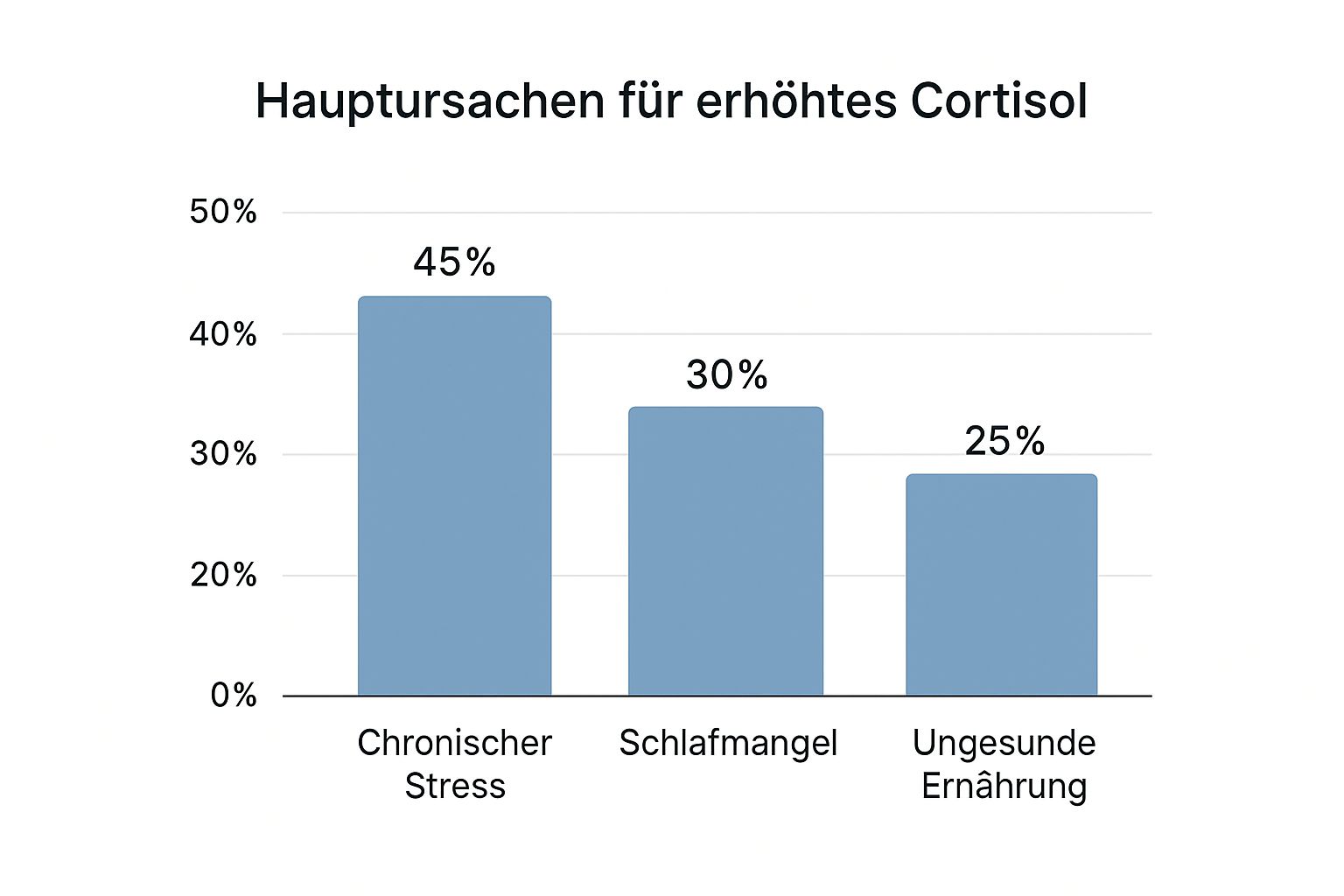
As the data clearly shows, chronic stress is by far the most common cause at 45% . Sleep deprivation and an unbalanced diet follow closely behind. These factors are often closely linked and can reinforce each other – a real vicious cycle.
If you recognize these signs in yourself, a hormone test for women can help you finally gain clarity and understand whether your cortisol level is the cause of your symptoms.
What really raises your cortisol levels

Rarely is a single factor solely to blame for persistently elevated cortisol levels. Much more often, it's a combination of various stressors in a woman's life that slowly but surely pushes her over the edge. These modern stressors are often so ingrained in our daily lives that we barely perceive them as an extraordinary burden.
The constant balancing act between a demanding career and family needs, financial worries, or the underlying pressure to be perfect in all areas of life – all of this keeps your body constantly in "survival mode." Your system continuously releases cortisol because it believes it has to ward off an imminent threat.
Imagine your body has a "stress tank." Every day, various stressors fill this tank. If it never gets the chance to empty, it will eventually overflow—and you'll feel this through the symptoms of high cortisol levels.
Don't underestimate physical triggers
In addition to mental and emotional stress, there are also very specific physical triggers that can keep your cortisol production unhealthily high. These habits can contribute to your condition unnoticed and exacerbate the symptoms of high cortisol in women .
- Chronic sleep deprivation: Your body already perceives less than seven hours of sleep per night as stress. It tries to compensate for the energy deficit by producing more cortisol, which makes you "awake" during the day, but also restless and exhausted.
- The wrong diet: A diet high in sugar, refined carbohydrates, and excessive coffee consumption causes your blood sugar levels to spike and then crash. This rollercoaster ride is pure stress for your body and boosts cortisol production.
- Excessive training: Exercise is healthy, but training that is too intense or too frequent without sufficient recovery is not. Excessive HIIT training or daily, high-intensity workouts can exhaust your body more than they strengthen it and can permanently raise cortisol levels.
- Nutrient deficiencies: A lack of essential vitamins and minerals can also affect the stress response. If you'd like to learn more about how a nutrient deficiency can affect fatigue and lack of motivation , you'll find valuable information here.
The vicious cycle of stress and cortisol
These factors often reinforce each other. You sleep poorly because you're stressed, and therefore you reach for more coffee and sugary snacks, which further disrupts your sleep and drives your cortisol levels even higher.
Recognizing these patterns is the first, crucial step. It's not about completely turning your life upside down overnight, but about understanding the underlying causes. Once you know which of your habits are unconsciously contributing to your condition, you can take targeted countermeasures. A hormone test for women can help you gain certainty and see exactly where your body needs support.
How you can finally get clarity about your hormone levels
If you recognize yourself in the described symptoms, that's an important first step. But a mere suspicion isn't enough. Real certainty about your hormone levels is key to finally being able to take targeted action. Instead of continuing to wonder whether your constant exhaustion is really due to high cortisol, you can simply find out.
It's important to understand that cortisol follows a natural daily rhythm. Think of it like your body's internal clock: it releases the most in the morning to wake you up and get you ready for the day. Towards evening, the level drops so you can wind down and sleep. Therefore, a single measurement during the day is often not very informative – it's just a snapshot.
Overview of testing methods
Your doctor can determine your cortisol levels via a blood or urine test. While these methods provide an initial indication, a much more accurate and convenient method is the saliva test . You can easily and discreetly perform this test at home.
The key advantage of a saliva test is that it allows you to create a complete daily profile. You take several samples throughout the day – for example, right after waking up, at midday, and in the evening before going to bed. This creates a curve that clearly shows whether your cortisol rhythm is out of sync.
Such a daily profile ruthlessly reveals what's really going on. Is your cortisol level far too low in the morning, making it difficult for you to get out of bed? Or is it too high in the evening, robbing you of sleep? This detailed analysis is often the crucial clue to understanding the true causes of your symptoms of high cortisol as a woman .
Looking at the big picture
Cortisol isn't a solitary hormone in your body. It's closely linked to other important hormones, most notably thyroid hormones and the female sex hormones estrogen and progesterone. When one hormone becomes unbalanced, it often has far-reaching consequences, disrupting others as well.
That's why it's incredibly insightful to look at more than just a single value. A comprehensive hormone test for women , offered by specialized providers, gives you a complete picture of your hormonal situation. You'll see the connections and can finally tackle the problems at their root cause together with your doctor or therapist. Learn more here about the advantages a comprehensive hormone test for women can offer.
Your path back to balance: How to bring your cortisol levels back into balance

The good news first: You don't have to simply accept the symptoms of high cortisol levels. You have the power to actively counteract them and gradually reclaim your well-being. Think of this section as your personal toolbox, packed with tried-and-tested strategies that you can implement immediately.
It's not about turning your life completely upside down overnight. Often, it's the small, conscious changes that have the greatest impact. That's exactly what we're focusing on now.
Start with conscious relaxation.
If your body is trapped in a state of constant stress, the first thing you need to do is signal to your nervous system that it can switch off. This sounds more complicated than it is – just a few minutes a day can make a huge difference.
- Deep abdominal breathing: Simply sit or lie down for five minutes. Breathe deeply into your abdomen so that it rises, and then exhale slowly. This simple exercise activates the parasympathetic nervous system – the part of your nervous system responsible for rest and recovery.
- Mindfulness in everyday life: Create tiny moments to fully arrive in the here and now. Feel the warm water on your hands while washing dishes or focus solely on the taste of your tea. Such mini-breaks interrupt the constant stream of thoughts and noticeably lower your stress level.
In Germany, there are specific treatment approaches for women with high cortisol levels that are based precisely on these methods. A survey showed that approximately 40% of German women prefer to cope with stress by talking to others, which has a strong stress-reducing effect. The introduction of self-tests to monitor cortisol levels has also proven very helpful, as it allows women to better understand and control their stress levels. Learn more about these treatment approaches and how you can reduce stress at gofeminin.de .
Eat for your hormone balance
What you eat has a direct connection to your hormones. With the right foods, you can support your adrenal glands and noticeably alleviate the symptoms of high cortisol in women .
These foods are especially good for you right now:
- Healthy fats: Avocados, nuts, seeds and good olive oil are the building blocks for your hormones.
- Complex carbohydrates: Whole grain products, sweet potatoes and legumes ensure a stable blood sugar level and prevent stress spikes.
- Magnesium-rich foods: Green leafy vegetables, almonds or pumpkin seeds are like balm for your nervous system.
And you should avoid these:
- Sugar and white flour: They cause your blood sugar to spike, triggering a stress response in the body.
- Excessive caffeine consumption: Too much coffee can further boost cortisol production.
- Alcohol: It disrupts your sleep and puts a strain on the liver, which directly affects your hormone balance.
Nutrition also plays an important role in thyroid function, which is closely linked to cortisol levels. Would you like to specifically support your thyroid? Then take a look at our guide to the right diet for hypothyroidism .
Move gently, but powerfully
If your cortisol levels are already high, an intense workout like HIIT or a long run can be exactly the wrong thing to do. It will only stress your body even more. Gentle exercise is often much more effective right now.
Your goal should not be to exhaust yourself, but to regenerate and strengthen your body.
A walk, preferably in nature, can work wonders. The so-called "forest bathing" has been proven to lower cortisol levels. Yoga, Pilates, or light strength training are also ideal for reducing stress and recharging your batteries without overloading your system.
Combining these strategies will help you regain control. Remember: every step, no matter how small, is a victory on your path back to balance. A hormone test for women can provide valuable guidance and show you where your body needs the most support.
Frequently asked questions about high cortisol in women
Finally, I'd like to address a few questions that many women have in their daily lives. Here you'll find clear, understandable answers that will hopefully give you a little more confidence on your journey.
Can high cortisol levels affect my menstrual cycle?
Yes, absolutely. Chronic stress is one of the most common disruptive factors for the female cycle. Imagine it like this: your body is in a constant survival mode. In such a state, it prioritizes reproduction over other things in order to conserve valuable energy.
A consistently high cortisol level can directly inhibit the production of other crucial hormones such as progesterone and estrogen. This often has noticeable consequences:
- Irregular cycles: Your period suddenly comes earlier or later than usual.
- More severe PMS symptoms: You may experience increased mood swings, breast tenderness, or food cravings before your period.
- Absence of menstruation (amenorrhea): In extreme cases, the cycle may even stop completely.
Such symptoms are a clear signal from your body that your hormonal balance is disrupted. The good news is that once stress levels decrease, your cycle often returns to normal on its own.
How quickly do measures to lower cortisol take effect?
This question is perfectly understandable, because anyone suffering naturally wants a quick recovery. However, it's important to have realistic expectations. Hormonal changes are not a sprint, but rather a marathon – they require time, patience, and above all, consistency.
So don't expect miracles overnight. You can often feel the first positive changes, such as better sleep or more inner peace, after just a few weeks if you consistently implement new routines.
However, a stable and measurable reduction in your cortisol levels can take several months. Your body first needs to relearn that the "danger" is over and that it can switch out of alarm mode. Every small step in this process is a success.
Why is a comprehensive hormone test often more useful for women?
High cortisol levels are rarely an isolated problem. Often, they are both the result and the cause of a larger hormonal imbalance. Hormones don't work in isolation, but rather together, like a finely tuned orchestra.
Cortisol has a direct influence on:
- Your thyroid hormones: A persistently high cortisol level can impair the conversion of thyroid hormones, which can lead to symptoms of hypothyroidism.
- Your sex hormones: As already mentioned, estrogen and especially the calming progesterone are suppressed by too much cortisol.
- Your sleep hormone melatonin: If the cortisol level is too high in the evening, it blocks melatonin production and robs you of restful sleep.
A single value is therefore just one piece of the puzzle. A comprehensive hormone test for women provides you with the complete picture of your hormonal situation. It helps you find the true causes of your symptoms and develop a holistic plan, instead of just tweaking a single factor.
Do you suspect your hormone levels are out of balance and that you, as a woman, are experiencing symptoms of high cortisol ? Gain clarity with a scientifically sound hormone test from MYBODY Lab GmbH . Our at-home saliva and blood tests provide precise lab results and show you where your body needs support. Discover the right analysis for you now at https://mybody-x.com .


Share:
Hormone test for women: When is it useful?
What to do if your HDL cholesterol is too low?