

Your nutrition genetic test for optimal results
Imagine having a kind of personal user manual for your body. A handbook that clearly tells you which diet works best for you. That is exactly what a nutrition genetic test is: a detailed analysis of your genetic predisposition that helps you finally leave general diet rules behind and find your own path.
What a nutrition genetic test means for you

Do you sometimes feel overwhelmed by the sheer flood of diet advice? Low-carb, low-fat, keto, paleo—the list seems endless. The frustrating thing is that what works wonders for others may do absolutely nothing for you. The reason is actually simple: Each of us is unique and reacts very differently to food. And that is exactly where a nutrition genetic test comes in.
Instead of blindly following the next trend, such a test gives you deep insight into your personal biology. You can think of it as a tailored suit perfectly made for you—in contrast to off-the-rack diets that suit some people but not most.
Decode your personal metabolism
At its core, a nutrition genetic test examines specific genetic variations that help determine how your body processes nutrients. It is important to note that the results do not tell you that you must never eat certain foods again. Instead, they show you a clear tendency in how your body responds to the three major macronutrients:
- Fats: Do you tend to gain weight more quickly when eating a high-fat diet? Your genes, such as APOA5, can provide insight into how efficiently your fat metabolism really works.
- Carbohydrates: Are you one of the “carbohydrate types” who can make great use of energy from pasta and bread? Or does your body tend to be sensitive to them, making itself known through cravings or weight gain?
- Proteins: What is your personal protein requirement for effectively maintaining or building muscle while also feeling full for a long time?
These genetic predispositions are often the decisive factor in your success. While your friend may celebrate impressive results with a strict low-carb diet, according to your DNA, your body may respond much better to a balanced mixed diet with complex carbohydrates.
More than just losing weight
A nutrition genetic test is much more than just a weight-loss tool. The insights it provides can help you achieve a wide range of health goals. Do you want to stabilize your energy levels throughout the day? Improve your athletic performance? Or simply understand why you feel tired after some meals and full of energy after others? The answers could be hidden in your DNA.
A genetic test does not tell you what you must do. It shows you what could work best for you. It gives you back control and empowers you to make smart decisions for your well-being.
It is about no longer seeing your body as an opponent, but as a partner. Once you speak its language and understand its needs, it becomes much easier to find an eating pattern you can stick to in the long term—and enjoy. Perhaps you are wondering whether a DNA test can really improve your diet. That is exactly the question we examine, showing you how science can provide practical benefits.
This approach puts an end to endless guesswork and frustrating diet roller coasters. With the knowledge from a nutrition genetic test, you can finally tailor your meals to optimally nourish your body and help you feel strong, healthy, and full of energy every day.
The science behind your DNA-based nutrition plan

You may have wondered how a simple saliva sample can provide such personal and in-depth insights into your body. This is not hocus-pocus, but solid science. The answer lies in nutrigenetics, a fascinating field that explores the interaction between your DNA and your diet.
Imagine your DNA as a gigantic library containing absolutely every blueprint for your body. But a nutrition genetic test does not read the entire thing from beginning to end. Instead, it focuses on very specific “chapters”—that is, genes—that play a key role in your metabolism. These genes help determine how you respond to fats, carbohydrates, and proteins.
Your genes as personal controls
You can think of these metabolism genes as the controls in a cockpit. They determine how your body responds to certain nutrients and how efficiently it can process them at all. A reputable nutrition genetic test analyzes these exact “controls” to show you which settings are personally optimal for you.
Some of the best-known genes that play a role include:
- The FTO gene: Often referred to as the “weight-control gene.” It has a noticeable influence on how strong your feeling of hunger is and whether you tend to be overweight, especially when your diet is very high in fat.
- The APOA5 gene: This gene is an important player in your fat metabolism. Certain variants can cause your body to process fats less efficiently, which may affect your blood lipid levels and weight.
- The PPARG gene: This concerns how your body reacts to saturated fatty acids and how effectively you can lose weight through exercise.
Analyzing these and other genes provides a scientifically grounded picture of your predisposition. But don’t worry: your genes are not an unchangeable verdict. They merely reveal your potential and individual tendencies.
From science to practical application
The insights from a nutrition genetic test finally put you in the driver’s seat. You will learn whether a low-carb or low-fat strategy works better for you personally, or whether you benefit most from a balanced mixed diet. That is pure gold in a time when general awareness of healthy eating is, fortunately, continuing to grow.
Your DNA does not determine who you are. Rather, it provides valuable insights into how you can get the most out of yourself. It is your personal compass for a diet that truly suits you.
This knowledge allows you to make decisions that go far beyond general recommendations. Nutrigenetics gives you a real advantage because it is based on data that specifically applies to your body. If you want to delve deeper into the subject, our article explains in detail what nutrigenetics is and how it shapes our lives. This turns the eternal guessing game about the right diet into a clear, fact-based strategy for your well-being.
Your path to a personal genetic analysis

A nutrition genetic test may initially sound like complicated science, perhaps involving doctor visits, blood draws, and long waiting times. Forget that! The path to discovering your genetic insights is now surprisingly simple and can be completed entirely from home.
It is a simple yet extremely effective step toward finally understanding how your body really works. Let’s go through the process together – from ordering your test kit to the moment you hold your results in your hands. You’ll see, it’s easier than you think.
Step 1: Ordering and collecting the sample – conveniently from home
The first step feels like placing a regular online order. You choose the right nutrition genetic test and have the kit delivered directly to your home. It contains everything you need, with no needles or complicated instructions.
You collect the sample itself with a simple cheek swab. You simply rub a cotton swab against the inside of your cheek for a few seconds. It is completely painless and takes less than a minute. This collects enough cells from your oral mucosa for the laboratory to perform a comprehensive DNA analysis.
The entire process is designed to make your life as easy as possible. You do not need a doctor’s appointment and can collect the sample whenever and wherever it is most convenient for you.
You then safely package the sample in the enclosed tube, activate your kit online using an individual code, and send everything directly to the specialized laboratory in the prepaid return envelope.
Step 2: What happens in the laboratory – and how your data is protected
As soon as your sample arrives at the laboratory, the exciting part begins. But what exactly happens there, and is your privacy safe?
- Pseudonymization of your sample: Your sample is not linked to your name, but only to the code of your test kit. This means that the laboratory staff conducting the analysis do not know your identity. A crucial step in protecting your data.
- DNA extraction: First, your DNA is isolated from the cells in the saliva sample. This is an established laboratory process that prepares your genetic information for analysis.
- Targeted gene analysis: The laboratory does not examine your entire genome. Instead, it analyzes only the specific genetic variations that are truly relevant to the metabolism of fats, carbohydrates, and proteins. It specifically analyzes markers such as FTO and APOA5, which enable scientifically sound conclusions about your diet-related predispositions.
The security of your data is our top priority. Reputable providers strictly comply with the General Data Protection Regulation (GDPR). After the analysis, the samples are properly destroyed, and you retain full control over your results.
Step 3: The results – your personal guide
After the laboratory analysis, the raw data collected is translated into an understandable, practical report. This is not a dry scientific document, but your very own guide. It clearly and comprehensibly explains which genetic predispositions you have and what they specifically mean for your diet.
This guide removes all uncertainty and shows you how easy it can be to take the first step toward a diet that truly suits you. With this knowledge, you are well equipped to finally make informed decisions for your health and well-being.
Understanding and using your genetic results
At last, you are holding the report from your nutrition genetic test in your hands—a significant moment. But what do you do now with all those scientific terms and data? Don’t worry, this report is not an unreadable technical textbook. Think of it as your personal guide to a diet that finally suits you. We translate the findings into clear, practical recommendations for everyday life.
Your results report is like a map of your metabolism. It does not set a destination for you, but it shows you the best and fastest routes to get there. Whether you want to lose weight, boost your energy, or simply feel better—now you have the inside information you need to make the right decisions.
Interpreting your results report correctly
A good results report does not overwhelm you with technical jargon. Instead, it uses clear categories to explain your genetic predispositions. You will very likely come across terms that describe your so-called “metabolic type.” Let’s take a look at what that means in practice.
- Carbohydrate-sensitive: If you fall into this category, your body reacts more sensitively to carbohydrates—especially simple sugars and white flour. Your blood sugar level may fluctuate more significantly, which can promote cravings and faster fat storage.
- Fat-sensitive: This classification indicates that your body does not process fats, especially saturated fatty acids, quite as efficiently. A very high-fat diet could lead to weight gain more quickly for you than for others.
- Protein-optimized: This is good news if you want to build muscle or improve your feeling of fullness. Your body can make excellent use of protein. This means that a high-protein diet keeps you full for longer and supports muscle retention.
These categories are not rigid rules, but valuable tendencies. They help you understand why certain diets may have failed for you and where your personal strengths lie.
Genetic metabolic types at a glance
This table provides a simplified overview of the most common metabolic types identified by a nutrition genetic test and shows initial practical dietary recommendations.
| Metabolic type | Typical genetic characteristics | Recommended nutrient balance | Suitable foods |
|---|---|---|---|
| Carbohydrate-sensitive | Predisposition to greater blood sugar fluctuations. | Focus on complex carbohydrates, moderate proportion. | Whole-grain products, legumes, quinoa, vegetables. |
| Fat-sensitive | Less efficient processing of saturated fats. | Focus on unsaturated fats, moderate total fat intake. | Avocado, nuts, seeds, olive oil, fatty fish. |
| Protein-optimized | Efficient use of protein for satiety and muscles. | Slightly increased protein content in every meal. | Lean meat, fish, eggs, tofu, lentils, skyr. |
Of course, reality is often a mixture of these types. However, the test gives you the crucial direction you need to adapt your diet purposefully.
From knowledge to action: Your next shopping trip
With this new knowledge, your next trip to the supermarket will be much more targeted. Imagine that your test shows carbohydrate sensitivity. Instead of panicking and avoiding all carbohydrates, you simply make smarter choices.
Your nutrition genetic test does not ban any foods. It shows you which options are personally smarter choices for achieving your goals.
Instead of white bread and sugary cereal, whole-grain bread, oats, quinoa, or lentils now end up in your shopping cart. They provide complex carbohydrates that help keep your blood sugar stable. If, on the other hand, you are classified as “fat-sensitive,” you focus on healthy fats from avocados, nuts, and high-quality vegetable oils instead of fatty sausage and ready-made meals.
Preparing meals and eating at a restaurant
Of course, implementation doesn’t stop at the supermarket checkout. You can also apply these insights directly when cooking. If you are the protein-optimized type, you make sure that every meal contains a good source of protein such as chicken, fish, tofu, or lentils. This can not only help with weight loss but also improve your well-being. Sometimes intolerances and discomfort have deeper roots, and it is extremely helpful to understand the genetic causes of digestive problems.
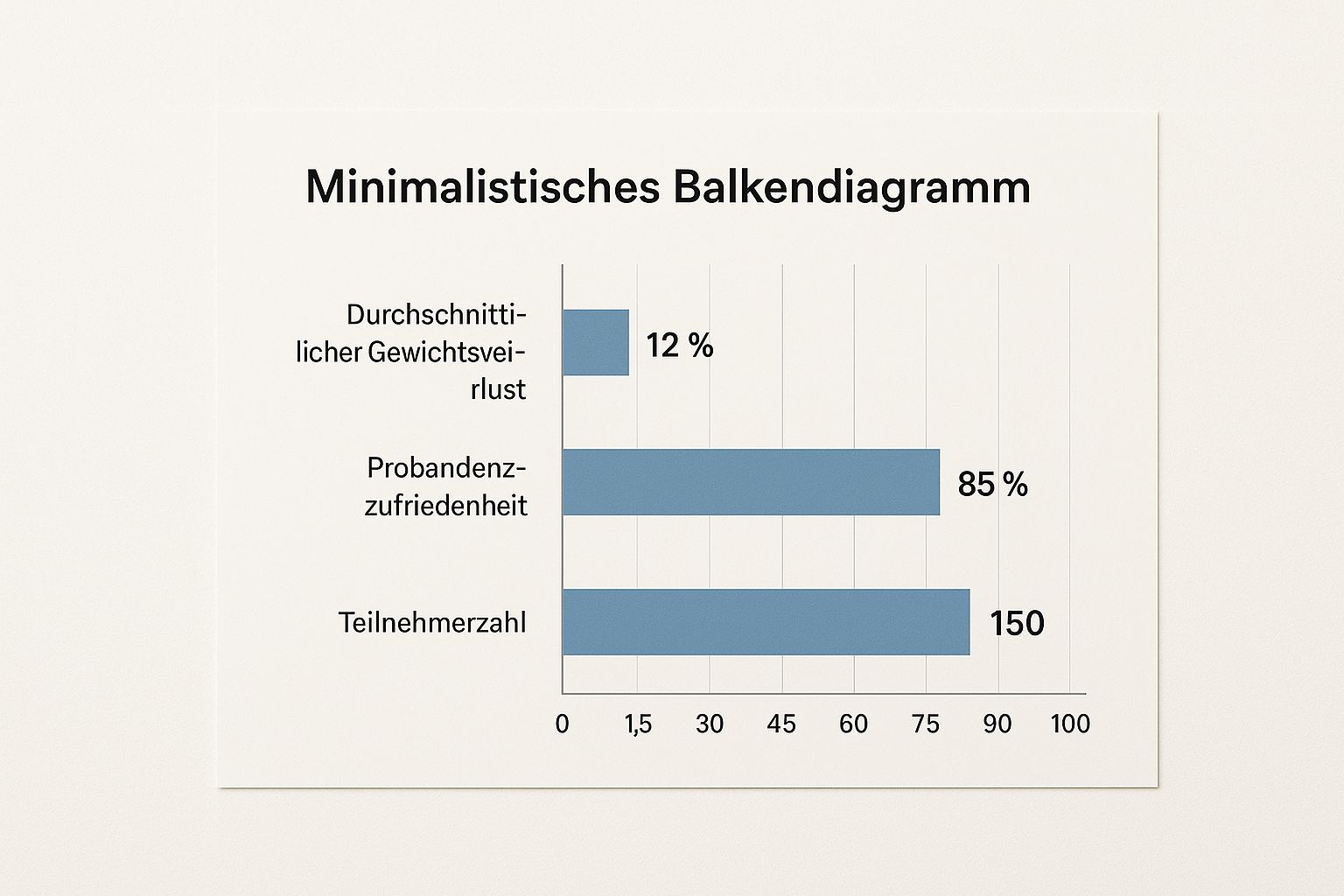
The graphic above shows what is possible when you change your diet based on a genetic test. An average weight loss of 12 % and a satisfaction rate of 85 % speak a clear language – a personalized strategy works.
You remain in control even at a restaurant. Instead of studying the menu at a loss, you know exactly which dishes will bring you closer to your goal. You might choose grilled fish with vegetables instead of creamy pasta—not because you’re depriving yourself, but because you know your body will thank you for the decision. Your nutrition genetic test thus becomes your most powerful ally in leading a healthier, more self-directed life.
Enough myths: What a nutrition genetic test can really do—and what it can’t
Countless myths surround the topic of nutrition genetic testing. Do your genes determine your destiny? Do you have to give up everything tasty forever? It’s high time to clear away these outdated ideas and take an honest look at the facts.
Because a genetic test is not a hopeless prophecy. Rather, it is a valuable guide that gives you the freedom to finally make informed decisions instead of allowing rigid rules to restrict you.
Myth 1: My genes are my destiny
This is probably the most persistent myth of all. Many people fear that an unfavorable result means they will have to struggle with obesity or other problems forever. That is simply wrong. Your genes are not your destiny, but your genetic potential.
Imagine your DNA as a card game. You’re dealt a specific hand—you can’t change that. But how you play, meaning what your lifestyle, diet, and exercise look like, ultimately determines the outcome of the game.
A nutrition genetic test lays all your cards on the table. It gives you the strategy you need to make the most of your hand. You learn where your strengths lie and where you may need to take a closer look.
Myth 2: The test only means giving things up and facing restrictions
Many people associate a nutrition genetic test with the fear that they will have to give up all their favorite foods afterward. But the reality is quite different. It’s not about harsh prohibitions, but about smart balance and wise alternatives.
For example: Your test shows high fat sensitivity. That doesn’t mean you can never eat fat again! Rather, it means your body benefits particularly from eating fewer saturated fats (e.g., from sausages or processed foods) and choosing healthy fats from avocados, nuts, or high-quality olive oil instead.
A genetic test doesn’t take away your enjoyment of food—it gives it back to you. It frees you from diets that never worked for you anyway and shows you a path to eating in a way that tastes good, truly nourishes your body, and supports you.
Instead of focusing on what you should avoid, the test helps you discover the foods that are truly good for you and bring you closer to your goals.
Myth 3: General dietary rules are just as good, aren’t they?
Of course, general recommendations such as “Eat more vegetables” are a good starting point. But they completely overlook your personal biochemistry. Let’s take a look at the figures for Germany: In 2017, 59 percent of men and 37 percent of women were overweight. On average, men eat almost twice as much meat as women. These general trends show how differently we eat, but they do not explain why one person succeeds with this approach while another does not. You can find more information in this article about the dietary habits of Germans at mein.sanofi.de.
A nutrition genetic test takes the crucial next step. It explains why a particular strategy might work better for you personally than for someone else.
Myth 4: A genetic test is only for professional athletes or serious cases
In the past, analyses like these may have been found only in elite sports or medical research. But those days are over. Today, a nutrition genetic test is a tool for anyone who wants to take their health into their own hands.
It is incredibly useful for:
- People who want to lose weight: To finally find a strategy tailored to their metabolism that really works.
- Health-conscious people: To optimize their diet and take their long-term well-being to a new level.
- Recreational athletes: To specifically improve performance and recovery through perfectly tailored nutrient intake.
A genetic test is not an emergency tool. It is a proactive step toward gaining more knowledge about yourself—and therefore greater autonomy over your health.
Frequently asked questions about nutrition genetic testing
A nutrition genetic test is a very personal topic. It concerns your DNA and how it affects your well-being—so it’s understandable that questions arise. To put your remaining doubts to rest, we’ve collected the most frequently asked questions and answer them here for you.
Who can benefit from such a test?
It’s simple: A genetic test is ideal for anyone who no longer wants to leave their diet to chance. You’re in exactly the right place if you:
- have already tried everything, but simply can't seem to lose the weight.
- want to take your athletic performance to the next level through the perfect nutrient intake.
- finally want to understand why your body reacts so uniquely to fats, carbohydrates, or proteins.
- are looking for a scientifically sound basis for your nutrition choices instead of jumping on the next trend.
In short: The test is for anyone who's tired of endless guesswork and wants to give their body exactly what it really needs.
Does the genetic test replace medical advice?
A clear no. A nutrition genetic test is an incredibly informative tool, but it does not provide a medical diagnosis. If you have health concerns, illnesses, or allergies, consulting a doctor or qualified nutritional counselor is essential.
However, the test can provide the perfect basis for such a conversation. With the results in hand, you can ask much more targeted questions and plan the best next steps together with an expert.
How secure and confidential is my data?
With reputable providers, protecting your data is the absolute priority. Your test kit will be assigned an anonymous code. The laboratory analyzing your sample therefore only knows this code, not your name.
Your personal data will never be shared with third parties. After the analysis, your sample will be professionally destroyed. You retain full control at all times and can request the deletion of your data. When choosing a provider, be sure to look for transparent privacy policies and certifications.
Do I have to completely change my diet?
Don't worry, this isn't about a radical crash diet. Think of the results more as a kind of personal compass for your nutrition. It's about smart optimization, not strict deprivation.
Often, even small adjustments can make a big difference—for example, putting certain foods on your menu more often and reducing others a little. Enjoyment shouldn't be left behind! If you want to dive deeper into how you can lose weight strategically with your DNA, you'll find more valuable insights here on genetic nutrition testing and losing weight based on DNA.
Are you ready to put your nutrition on a scientific foundation and decode your body's needs? Discover the DNA tests from MYBODY Lab GmbH and start your journey toward greater well-being.



Share now:
What’s in your genes – Your personal DNA guide
Genetics explained simply for beginners