

How a DNA test changed my diet forever and more revealed about me.
Why I took the first step toward my DNA nutrition test
Do you know this feeling? You follow every conceivable nutrition tip, eat mindfully and healthily, yet still feel constantly tired and lacking energy. At the same time, other people around you seem able to eat anything without ever complaining about an afternoon slump. That exact situation was a real source of frustration for me for years.
Neither a crisp apple nor a handful of nuts could banish the persistent energy slumps. I began to suspect that my body simply worked differently. It felt as though I was living by general rules that simply didn’t suit me.
From skepticism to curiosity
When I first heard about a DNA nutrition test, I was more than skeptical. Amid a flood of diet trends, it seemed like another expensive promise without substance. Could my genes really reveal whether I responded better to carbohydrates or fats? The doubts were significant.
But with every low-energy afternoon, my curiosity grew. The prospect of finally getting personal, well-founded answers instead of continuing to grope around in the dark became increasingly appealing. I no longer wanted generic recommendations, but rather a kind of personal user manual for my body.
The investment in clarity
So I made a decision. I invested around 200 euros in a test without knowing whether it would be worth it. It was a leap into the unknown, but the alternative—endless guessing and trying things out—was no longer an option for me. I didn’t see it as an expense, but as an important investment in my health and, above all, in clarity.
My interest reflected a broader shift. More and more people in Germany are looking for personalized, scientifically supported approaches to nutrition. I even read reports showing that a genetics-based plan can make weight loss of up to 10 kilos in 12 weeks possible.
These figures encouraged me. It was time to stop guessing and rely on facts that came directly from my own DNA. Learn more here about the chances of success with gene-based diets.
What your DNA test really reveals about your body
Imagine your body as a highly complex orchestra. Each gene plays an instrument, and together they create a unique melody—your very own nutritional symphony. A DNA test for nutrition is like the score for this piece. It shows you which instruments naturally play louder or more softly and how you can bring the entire orchestra into harmony. This is the world of nutrigenomics, the science that deciphers the interaction between genes and nutrition.
Such a test examines very specific gene variants known as SNPs (Single Nucleotide Polymorphisms). These are tiny but crucial differences in your genetic code that shape your metabolism. These SNPs are exactly why your best friend can drink five cups of coffee and sleep soundly, while you lie awake in bed after a single espresso in the afternoon.
Your personal metabolic code
One of the most important insights from my own test was about my metabolic type. For years, I had relied on low-fat products because everyone said that was the "healthy" way—but the results never came. My genetic report showed me in black and white: for genetic reasons, my body can process fats much better and benefits more from a low-carbohydrate diet. That was a genuine turning point that changed my entire attitude toward food.
There are also enormous genetic differences in the way people process vitamins and minerals. Your genes influence how well your body absorbs and uses important nutrients such as vitamin D and omega-3 fatty acids. This explains why some people can develop a deficiency despite spending time in the sun and consuming healthy fats.
The following graphic shows how closely certain genes are linked to your personal nutrient requirements.
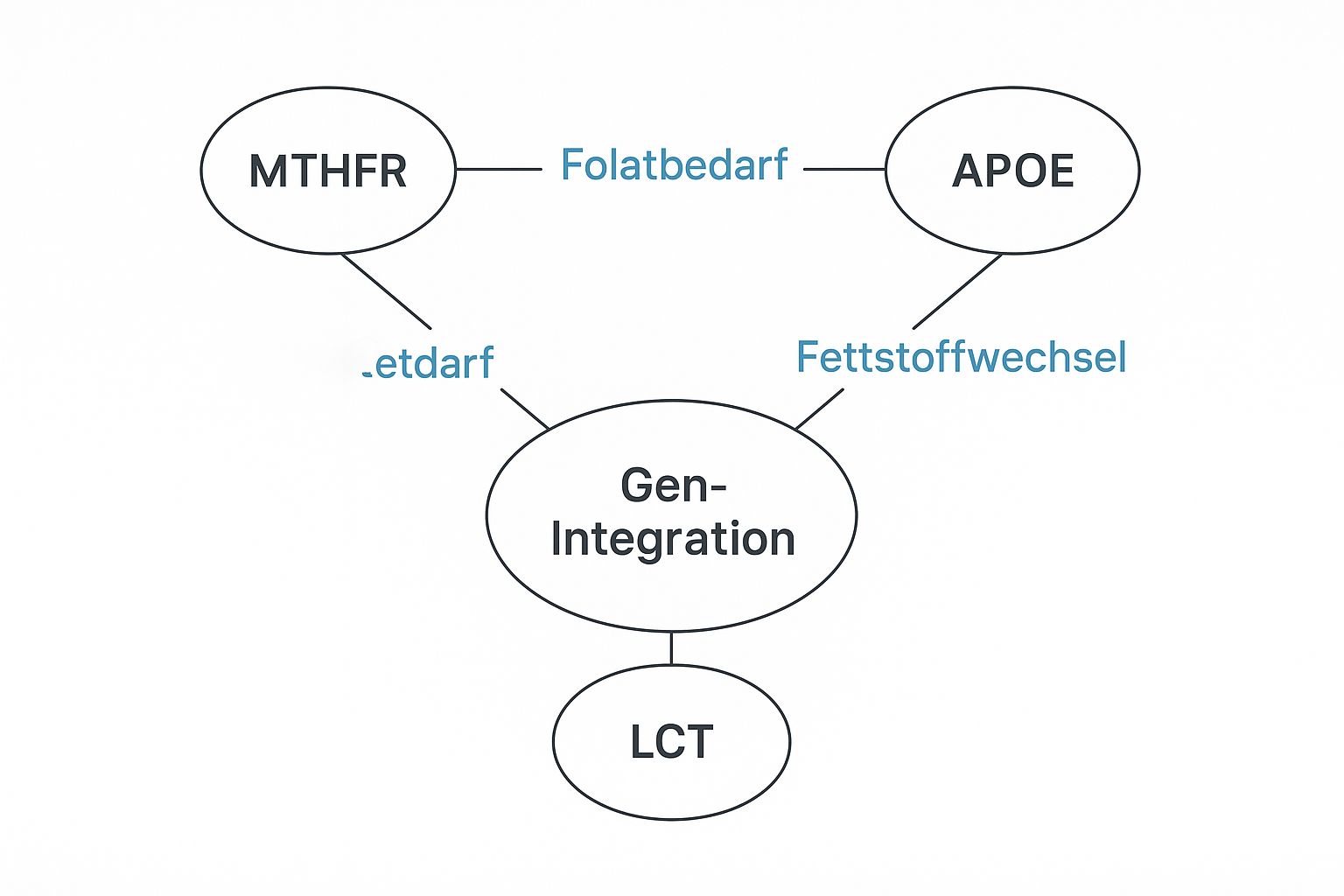
As you can see, for example, the MTHFR gene influences your folate requirements, while the LCT gene determines your ability to digest milk sugar (lactose).
Understanding intolerances and predispositions
A DNA test not only reveals your metabolic type, but also predispositions to intolerances, for example to lactose or gluten. These are often not severe allergies, but subtle sensitivities that manifest as constant fatigue, bloating, or a general feeling of discomfort. If you finally want clarity, can a DNA test improve your diet and provide the missing pieces of the puzzle.
This desire for individualized answers instead of blanket advice is a clear trend. Global interest in DNA tests for nutrition is growing rapidly, as more and more people seek scientifically sound, personalized solutions for their health. Learn more about the latest developments in the healthy nutrition market and see for yourself how the focus is shifting.
The Insights That Changed My Eating Habits Forever

When I opened the results of my DNA test for nutrition, it was a pivotal moment. It felt as though I had finally received a personal user manual for my body—one that had been missing for years. Suddenly, my constant struggles with energy dips, cravings, and my overall well-being made sense. It wasn’t a lack of discipline, but simply my genetic predisposition.
The Breakfast Dilemma: Why I Was Doing Everything Wrong
One of the biggest aha moments concerned my breakfast. For years, I started my day with muesli or toast with jam—what I considered the epitome of a light start. However, my genetic report painted a very different picture: My body can metabolize fats and proteins far better than it can fast carbohydrates. The sugar-rich breakfast sent my blood sugar soaring and inevitably led to the familiar mid-morning energy crash.
Since switching instead to scrambled eggs with avocado or a smoothie with plenty of protein, my energy level has remained stable throughout the morning. This one change has noticeably improved my productivity and overall quality of life. It’s incredible how the right combination of nutrients at the right time can influence the entire day. If you’d like to learn more, also read our article about how your genes can revolutionize your diet.
Unexpected Truths: From Salt to Omega-3
I was truly surprised by my genetic salt sensitivity. The test detected increased sensitivity, which explains why my body reacts more strongly to salt. I had never given any thought to my salt consumption. Since I started paying conscious attention to it and avoiding highly processed products, I feel less bloated and simply better.
Another important discovery was my ability to convert omega-3 fatty acids. My genes show that my body has difficulty converting plant-based omega-3 into the active forms EPA and DHA. Since deliberately incorporating fatty fish such as salmon and mackerel into my diet, I have noticed significantly better concentration and a more balanced mood.
To illustrate these points, I have compiled an overview of my most important test results and their practical effects on nutrition.
My Key Genetic Insights at a Glance
An overview of the most significant test results and their practical effects on nutrition
| Genetic trait | My result | Practical implication |
|---|---|---|
| Carbohydrate metabolism | Sensitive (”Low-Carb” type) | Fewer refined carbohydrates, replaced with more healthy fats and protein for breakfast. |
| Salt sensitivity | Increased | Mindful salt consumption and avoiding highly processed foods. |
| Omega-3 utilization | Reduced | Targeted intake of fatty fish or algae oil to support brain function and mood. |
The table clearly shows how personal and directly applicable the results are.
These examples show that a DNA nutrition test does not provide general recommendations, but a concrete roadmap for your own body. It bridges the gap between what you eat and how you feel—a realization that can permanently change your relationship with food.
How Personalized Nutrition Revolutionized My Daily Life
Do you know the feeling of waking up in the morning and still feeling tired? For a long time, this constant exhaustion was normal for me. That only changed when I consistently implemented the insights from my DNA nutrition test. It was a journey that led from small, conscious changes to a completely new sense of well-being.
From Knowledge to Action: The First Steps
Holding the analysis report in my hands was the decisive impetus. But the real change only began when I integrated this knowledge into my daily routine. And to be honest, getting started was a real challenge. Old habits, such as quickly reaching for the wrong snack, are simply persistent.
Instead of changing everything at once, I focused on the most important point: my breakfast. It was no longer about what is generally considered “healthy,” but about what my body really needs according to my genetics to get the day off to the best possible start. I learned to interpret my body’s signals in a new way. The feeling of satiety suddenly felt different—not heavy and sluggish, but satisfied and energized. It was as if I were finally understanding my body’s language properly for the first time.
Discovering the right timing
One of the biggest surprises for me was discovering that it’s not only about what I eat, but also when. I discovered the importance of proper timing, also known as chrono-nutrition. My report gave me clues about when my metabolism is most active. For me, this meant a major but effective change: a more substantial meal at lunchtime and a lighter dinner.
This adjustment had an immediate effect on my sleep quality. I slept more deeply and woke up feeling more rested because my digestive system no longer had to work at full speed during the night. Getting the timing right became a simple but incredibly effective lever for more energy the next day.
The noticeable results: A new feeling of vitality
The sum of these changes has fundamentally improved my daily life, far beyond the number on the scale. The most positive effects I feel every day now are:
- Stable energy levels: The dreaded afternoon slump has disappeared. My energy stays high and consistent throughout the day.
- Restful sleep: I don’t just fall asleep faster; I actually wake up feeling rested and ready for the day.
- Balanced mood: Thanks to stable blood sugar levels and the right supply of nutrients, my mood swings have decreased significantly.
- Improved digestion: Constant bloating and discomfort after eating are a thing of the past. I feel lighter and simply more comfortable in my own skin.
This experience showed me that a DNA nutrition test is not a short-term diet. Rather, it is a personal guide toward a healthier and more mindful life in the long term. It is an investment in yourself that pays off every single day.
When a DNA nutrition test can change your life
Let’s be honest: A DNA nutrition test is not a magic solution for everyone. But for some people, it can be exactly the decisive spark that ignites a completely new awareness of their body. If you’re wondering whether you’re one of those people, I’ll help you find clarity.
Are you one of the people for whom a test makes sense?
The journey toward a suitable diet is always individual. However, there are typical situations in which genetic analysis can be particularly revealing.
The following overview shows who can benefit particularly from a DNA nutrition test and helps you assess your own situation more effectively.
| Situation/problem | Potential benefit | Recommendation |
|---|---|---|
| The diet carousel | Understand why certain diets, such as low-carb versus low-fat, do not work for you and which alternative suits your metabolism. | A test can provide clear, genetically informed direction and put an end to the endless guesswork. |
| Unexplained symptoms | Identifying predispositions to nutrient deficiencies or intolerances that could be behind fatigue or digestive problems. | Use the test as a starting point to work with a doctor to plan further steps, such as blood tests. |
| Athletic ambitions | Optimizing nutrient intake for maximum energy and faster recovery, precisely tailored to your genetic needs. | Ideal for ambitious athletes who see and want to use their diet as a decisive performance factor. |
| Prevention & family planning | Early detection of genetic risks and ensuring an ideal nutrient supply for you and your child. | A test provides valuable information to proactively set the course for a healthy future. |
Do you recognize yourself in any of these situations? Then taking a look at your genes could be the key to finally achieving the progress you want.
The limits of genetics: What a test cannot do
Despite all the possibilities, it is important to remain realistic. Think of the result as a detailed map of your body. It shows you your potential, but you have to walk the path yourself. Your genes are not your destiny, but your personal starting point.
For example, a test may reveal a predisposition to an increased need for certain vitamins. However, only an analysis of your lifestyle and a specific laboratory test can determine whether a deficiency already exists. You can learn more about how nutrient deficiencies are detected from the Verbraucherzentrale.
The test is therefore the perfect starting point for targeted optimization, not a conclusive diagnosis.
The investment in your well-being
Ultimately, choosing a DNA nutrition test is a trade-off. Think of it less as an expense and more as an investment in your long-term health and quality of life. The clarity you gain about your body can save you years of trial and error and countless failed diet attempts.
If you would like to delve deeper into the science behind the tests, our article, What is nutrigenetics and how does it determine our lives?, explains the fundamentals. When choosing a provider, look for certified laboratories and strict data protection—this will ensure that you receive well-founded, secure results.
My proven strategies for successful implementation
The report from your DNA nutrition test is here. You are holding a wealth of fascinating, yet complex information in your hands. The first reaction is often a feeling of being overwhelmed, accompanied by the question: “And what do I do with this now?” That is completely normal.
To turn this valuable data into a real change in your life, I have developed a simple roadmap. Instead of trying to overhaul everything at once, we focus on small, deliberate steps that truly make a difference.
My 3-Phase Strategy: Step by Step to Success
I divided my journey into three manageable phases. This approach takes the pressure off and helps ensure that the new habits really stick.
Phase 1: Focus on the most important guideposts Browse through your report and find the one or two insights that could have the greatest impact on your well-being. Is it, as in my case, your personal metabolic type? Or perhaps an unexpectedly strong reaction to caffeine? This is exactly where we begin.
For example, if your report indicates a metabolism that processes carbohydrates less efficiently, you could start by adjusting only your breakfast. This first, small step creates a quick sense of accomplishment and gives you the motivation you need to keep going. Especially if weight management is your goal, this initial boost can be crucial. Learn more about how you can successfully lose weight with a genetic nutrition test.
Phase 2: Make your environment supportive Once the first adjustment has become a habit, it's time to focus on your surroundings. Make your kitchen your ally. This means that foods your report identifies as less than optimal for you should be moved out of direct sight. Instead, stock your cupboards and refrigerator with suitable alternatives.
Create a shopping list based on your genetic recommendations. Meal prep is also a great method: Prepare your meals for two or three days in advance. That way, when you're stressed, you won't reach for unsuitable snacks—you'll always have a good option ready.
Phase 3: Cement your new routines in everyday life In the final phase, we make sure that your new habits are practical for everyday life and also work outside your own four walls. After all, your social life should not suffer because of your new way of eating.
Practical tips for everyday life: How to keep it realistic
A personalized diet should not be a rigid corset, but a flexible companion. These tips helped me integrate it into my everyday life in a relaxed way:
-
Your genes point the way; your taste determines the route. The best genetic recommendations are useless if you don't enjoy the food. Think of your report as a guardrail, not an immutable law. You don't like salmon even though you need more omega-3 fatty acids? No problem. Try mackerel or herring instead, or opt for high-quality algae oil capsules. There are always delicious alternatives.
-
How to navigate restaurant meals and cafeteria food. You can maintain control even when eating out with a few simple tricks. Ask for dressings or sauces to be served separately. Choose grilled rather than fried dishes. Order an extra portion of vegetables instead of starchy side dishes such as fries or croquettes if these don't suit your metabolic type.
-
Talk openly about your new habits. Explain to your family and friends in a matter-of-fact way why you are changing your diet. It's not about converting them, but about making the right decisions for your own health. You'll see: Most people respond with understanding when they know the reasons.
Your journey to more energy and well-being starts today
After these personal insights, you may realize that a change is needed. The crucial point is: A DNA nutrition test is not the goal, but the starting point. It is the first step on a journey toward a life with more energy and a better sense of well-being in your body.
You don't have to be perfect or already know everything about nutrition. It's about being curious and having the courage to finally give your body the kind of attention that's based on facts—your facts.
The freedom that comes from understanding: My personal conclusion
The greatest gift of this experience for me was the clarity I gained. It is incredibly liberating to no longer grope around in the fog and finally understand why your body reacts the way it does. The endless guessing about the afternoon slump or the feeling that certain foods simply affect me differently—all of that became clear once I knew my genetic “rules of the game.”
This knowledge is the real key, because it gives you back control. You are no longer a victim of cravings or unexplained fatigue. Instead, you become the architect of your own well-being and can make conscious choices every day that truly suit you.
Your individual journey: Patience and motivation
Always remember: Your journey is as unique as your DNA. What worked for me is my personal map—yours will look completely different. That’s why it’s crucial to be patient with yourself. Real change takes time, and a setback doesn’t mean you’ve failed. It’s simply part of the journey.
Motivation isn’t something you find once and then have forever. You have to nurture it. Here are my three most important tips for staying on track in the long term:
- Listen to your body, not just the plan. Pay close attention to how your energy, mood, and sleep change. This direct feedback is the strongest motivator.
- Be kind to yourself. Perfection is a myth. If you stray from your path for a day, it’s not the end of the world. The next day, simply return to being mindful and kind to yourself.
- Focus on small, consistent habits. What is the one thing you can manage even on the most stressful days? Maybe it’s a protein-rich breakfast or a walk. These small, reliable successes keep you on track.
A DNA nutrition test is more than a passing trend to me. It was the compass that guided me safely through the jungle of nutrition advice—straight to a life with noticeably more energy. It proved to me that health doesn’t have to be a constant struggle, but rather an act of self-care based on genuine understanding. It’s the chance to finally stop guessing and start knowing.
If you also long for this clarity and are ready to take responsibility for your health into your own hands, now is the right time. Your body will thank you—with a sense of well-being you may not have felt in a long time.
Are you ready to discover your unique nutritional symphony? Start now with a scientifically grounded MYBODY Lab test and find out what your body really needs.



Share now:
Personalized nutrition through epigenetics: How to eat right for your genes
Metabolic analysis is worthwhile: Here’s how it can improve your health