
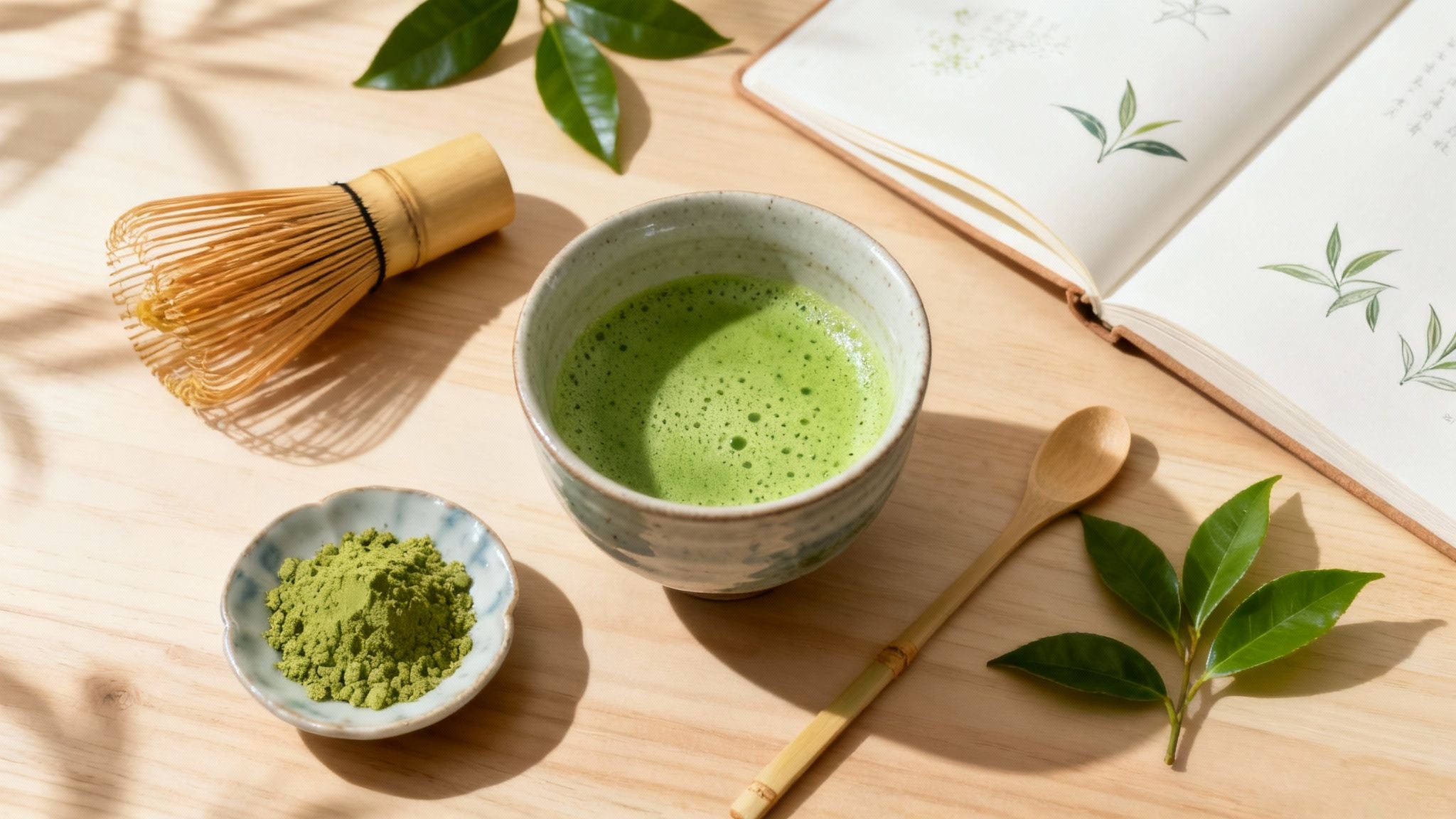
What is matcha tea and how does the green powder work?
Matcha tea is essentially green tea ground into a fine powder, made from specially cultivated, shade-grown tea leaves. The crucial difference from classic green tea as we know it is simple: with matcha, you do not just drink the infusion, but consume the entire tea leaf. As a result, you provide your body with a much higher concentration of valuable nutrients.
What makes matcha tea so unique
So what exactly is behind the bright green powder? At its core, matcha is the most concentrated and nutrient-rich form of green tea. Its intense color and complex, slightly sweet flavor are no coincidence, but rather the result of an elaborate cultivation and production process perfected over centuries in Japanese tea culture.
The secret begins in the field. Weeks before harvesting, the tea plants are covered with nets and shaded. This targeted reduction of light stimulates the production of chlorophyll and important amino acids – exactly what later gives the powder its characteristic color and distinctive flavor.
To help you quickly grasp the most important points, we have created an overview here for you.
Matcha tea key points summarized
This table provides a quick overview of the key characteristics of matcha tea, from its definition to its contents.
| Feature | Description |
|---|---|
| Definition | Green tea made from shade-grown tea leaves (tencha), ground into a fine powder. |
| Consumption | The entire tea leaf is whisked into water and consumed in its entirety. |
| Origin | It has its roots in Zen Buddhism and was developed into an art form in Japan. |
| Cultivation | The tea plants are shaded for 3-4 weeks before harvesting, which increases chlorophyll and amino acid production. |
| Taste | Complex, full-bodied, often described as “umami” – a savory, slightly sweet note. |
| Contents | High concentration of antioxidants (catechins), L-theanine, caffeine, vitamins, and minerals. |
These unique characteristics make matcha a true powerhouse that clearly stands out from conventional green tea.
The key difference from green tea
The most important difference probably lies in the way we enjoy it. When you brew a cup of regular green tea, many of the valuable ingredients remain in the tea leaf, which you throw away at the end. With matcha, however, the powder is whisked directly into water and consumed in its entirety.
- Complete nutrient absorption: You absorb 100% of the tea leaf's contents, including antioxidants, vitamins, and minerals.
- Higher concentration: One bowl of matcha contains about ten times as many antioxidants as a cup of conventional green tea.
- Intense flavor: The flavor is much stronger and more complex. Connoisseurs often describe it as “umami”—a pleasant, savory-sweet note.
These properties make matcha a truly special beverage, one that is much more than just a passing trend.
Matcha is not simply a beverage; it is a ritual. You consciously take time to do something good for your body and mind.
Origin and Traditional Production
Matcha may seem like a modern superfood today, but its history goes back hundreds of years. The journey begins in ancient China during the Tang Dynasty, where powdered tea was initially valued as a medicinal remedy. It was not until the 12th century that the Buddhist monk Eisai brought the first tea seeds and knowledge of the green powder to Japan. There, the art of making matcha was not only preserved but perfected and deeply rooted in Zen culture.
While the tradition gradually faded into the background in China, the Japanese turned it into an artistic ritual and refined the cultivation methods over generations. They understood that exceptional quality is inseparably linked to the care taken at every single step. This is how matcha became what it is today: a symbol of mindfulness and the highest form of tea enjoyment.
From Shade to Powder: The Elaborate Process
Making authentic matcha is a science in itself—a complex and time-consuming process that requires absolute precision. It all begins weeks before harvesting.
This infographic shows the most important stages at a glance, from shading the tea plant to the finished matcha in the bowl.
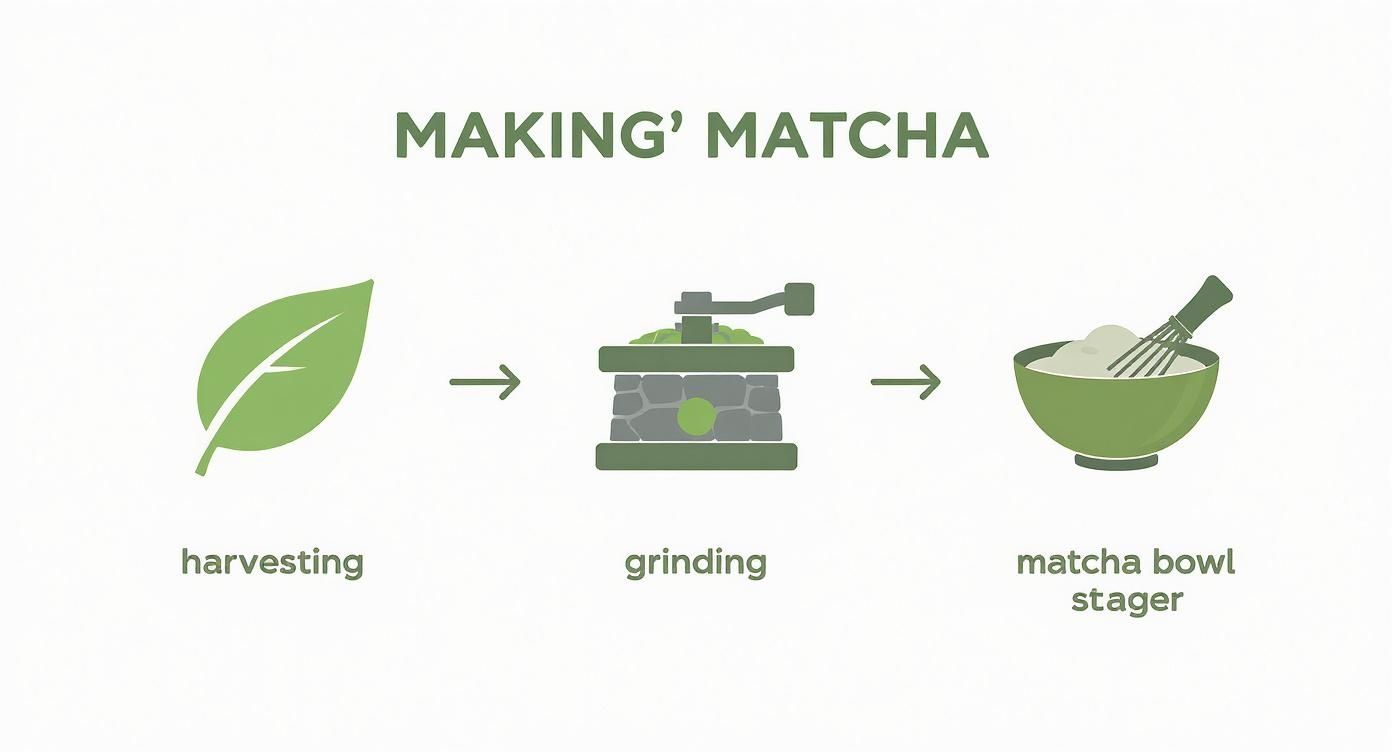
Each of these steps is crucial. It influences not only the taste and quality, but also the health benefits that make this tea so special.
About three to four weeks before harvesting, the tea plants are covered with special nets or bamboo mats. This shading triggers a special reaction in the plant: to compensate for the lack of light, it produces large amounts of chlorophyll and the valuable amino acid L-Theanine. These two substances are precisely the secret behind the vibrant green color and the mild, slightly sweet umami flavor.
After harvesting, during which only the most tender and youngest leaves are hand-picked, steaming follows. This brief heat shock stops oxidation and ensures that the brilliant green color and delicate nutrients are preserved. The leaves are then dried and carefully cleared of all stems and veins. What remains is the pure essence of the tea leaf: the so-called “Tencha.”
The final step is the slowest and perhaps the most important: traditionally grinding the tencha into the finest powder. In traditional granite stone mills, it takes about an hour to produce just 30 grams of matcha.
This slow grinding is no coincidence. If it happened too quickly, the frictional heat generated would destroy the valuable aromas and ingredients. The result is an ultrafine powder whose particles are only 5 to 10 micrometers in size—finer than a human hair.
Ingredients and their health effects
There is a reason matcha is often called a superfood. Its secret lies in the exceptionally high concentration of powerful nutrients that you consume in full with every bowl. Unlike brewed tea, you drink the entire nutrient-rich leaf here—and that is exactly what makes the crucial difference.
The real star in matcha is a group of antioxidants called catechins. One of the most prominent is the so-called epigallocatechin gallate (EGCG), which is found in matcha at a concentration up to 137 times higher than in regular green tea. You can think of these potent plant compounds as a shield for your cells.
Antioxidants help your body neutralize free radicals. Think of these free radicals as small, aggressive particles that can cause cellular stress. Good protection against them is essential for your well-being.
Relaxed alertness through L-theanine and caffeine
What makes matcha's effects so unique is the ingenious interplay of caffeine and the amino acid L-Theanine. While caffeine provides the stimulating effect, L-theanine promotes the production of alpha waves in the brain, creating a state of relaxed concentration.
This special synergy creates a very distinctive kind of energy:
- Sustained focus: Instead of a quick, nervous kick like with coffee, the caffeine is released more slowly. The result is a gentle but long-lasting alertness.
- Inner calm: L-theanine has a calming effect without making you tired. It can reduce feelings of stress and improve your ability to concentrate.
- No energy crash: The typical nervousness and subsequent energy slump that many people experience with coffee stay away.
This combination makes matcha an ideal companion during focused work sessions or moments when you simply need to keep a clear head.
A boost for metabolism and health
In addition to mental clarity, matcha offers other positive effects. The catechins it contains, especially EGCG, can stimulate the metabolism and support fat burning. At the same time, matcha is rich in chlorophyll, vitamins, and minerals that promote your overall health.
If you would like to delve deeper into the world of cell-protecting nutrients, you’ll find plenty of other interesting information in our guide to antioxidant foods.
For your body to optimally absorb and use these valuable nutrients, it needs to be well supplied. A nutrient test from mybody-x.com can show you exactly whether your body has all the building blocks it needs or whether there are deficiencies you can specifically address.
The right preparation for complete enjoyment
Preparing matcha is far more than just making tea—it’s a small ritual that helps you pause for a moment and fully savor the experience. When prepared correctly, the fine green powder reveals its full, creamy potential. The traditional method in particular not only produces the best flavor, but also a perfect, frothy texture.
The key to truly good matcha lies in the details. Even small mistakes, such as with the water temperature or dosage, can quickly turn the flavor for the worse. But don’t worry—with our simple guide, you can make perfect matcha from the very beginning.
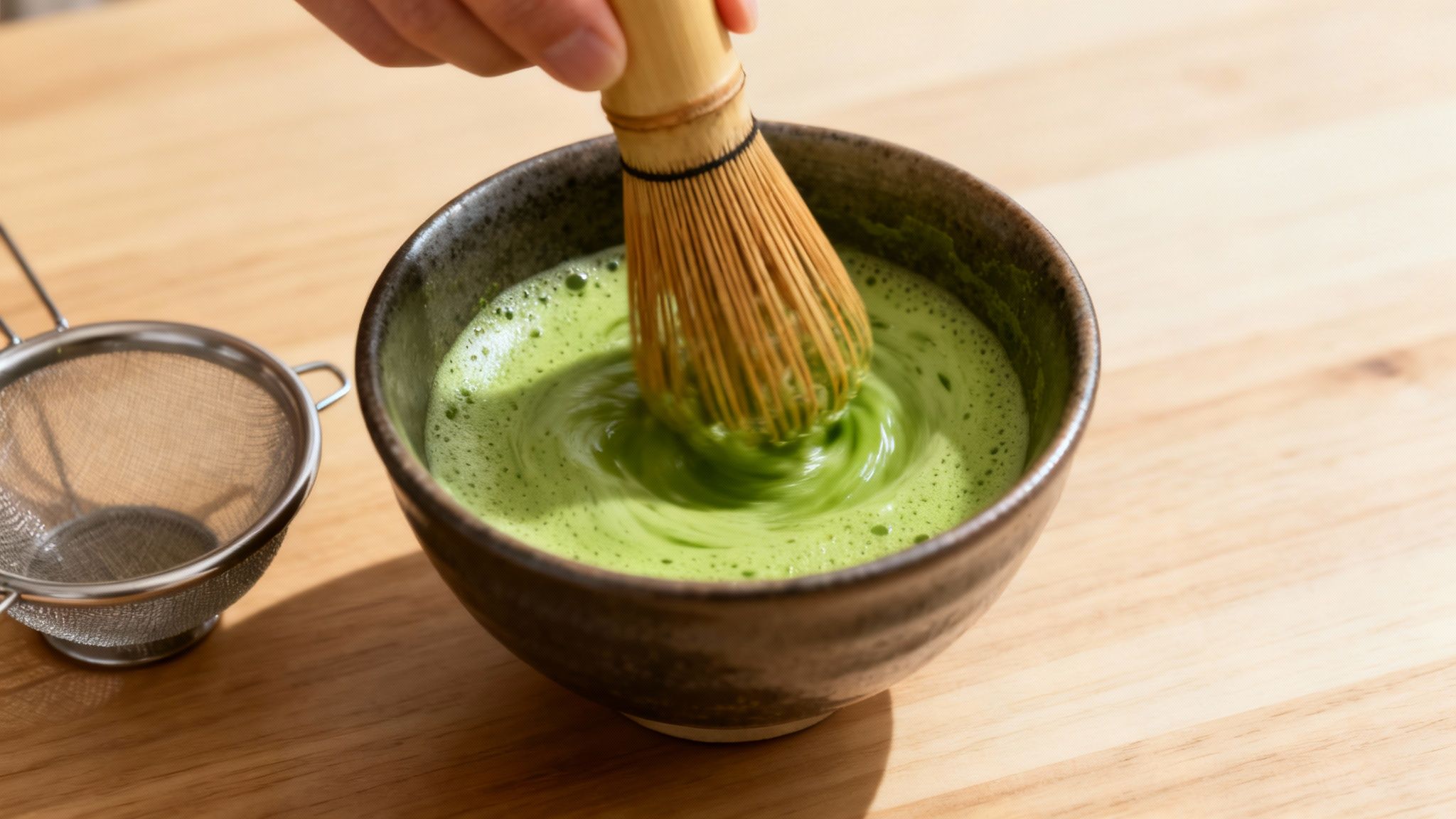
The traditional preparation, step by step
For a truly authentic experience, it’s best to have a matcha bowl (chawan), a bamboo whisk (chasen), and a bamboo spoon (chashaku).
- Sifting the powder: Add 1–2 bamboo spoonfuls (equivalent to about 1–2 teaspoons) of matcha powder through a fine sieve directly into the bowl. This step is especially important for preventing lumps and creating a truly smooth tea.
- Pouring in the water: Heat fresh, preferably soft water to approximately 80 °C. Caution: Boiling water would destroy the delicate aromas and make the tea bitter. Then pour about 80 ml of the hot, but no longer boiling, water over the powder.
- Whisking: Now it’s time to use the bamboo whisk. Hold the chasen loosely from the wrist and whisk the tea in quick “M” or “W” motions. Continue until a fine, creamy foam forms on the surface.
The goal is an even, jade-colored foam without large bubbles. Traditionally, the quality of this foam is considered a sign of well-prepared matcha.
Modern matcha variations for every taste
The great thing about matcha is its versatility. It can be wonderfully incorporated into modern recipes, giving them that special something.
- Matcha latte: For a creamy alternative, simply froth your favorite milk (or a plant-based alternative) and pour it over a concentrated matcha “shot.” Delicious!
- Smoothies: Add a teaspoon of matcha powder to your morning smoothie for an extra boost of nutrients and energy.
- Baking and desserts: Whether in cakes, cookies, or ice cream, matcha gives sweet treats not only a unique color but also a wonderfully pleasantly bitter note.
Simply experiment a little and find out how you enjoy matcha most. If you need even more inspiration, take a look at our detailed article about Matcha Green Tea. There you’ll find more recipe ideas and tips.
Matcha as a modern coffee alternative
Daily coffee is simply part of the routine for many people, but more and more are looking for an alternative. One that wakes you up without the typical drawbacks, such as nervousness or the dreaded afternoon slump. This is exactly where matcha comes in: a traditional yet modern option that stands out with its unique effects.
But what exactly makes the green powder so special compared with classic coffee? It’s not just the caffeine content, but rather the way your body absorbs it. While coffee takes effect quickly and often leads to an abrupt drop in energy, matcha releases its power much more gently and evenly.
Long-lasting energy instead of a quick kick
The key difference lies in the amino acid L-theanine, which is abundant in matcha. It ensures that caffeine is released into the body more slowly and gently. The result is a kind of “relaxed alertness” – a state of clear concentration that can last for several hours, without the typical “coffee crash.”
Matcha and coffee compared directly
This table shows you the key differences at a glance:
| Feature | Matcha | Coffee |
|---|---|---|
| Caffeine content | Moderate (approx. 38-89 mg per cup) | High (approx. 100-120 mg per cup) |
| Onset of effects | Slow and steady | Fast and intense |
| Duration of effects | Long-lasting (3–6 hours) | Short-term (1–3 hours) |
| Special feature | L-theanine promotes relaxed focus | May cause nervousness and a “crash” |
| Stomach tolerance | Often perceived as gentler | May cause heartburn in some people |
The unique combination of caffeine and L-theanine makes matcha an excellent choice for anyone who wants to be productive without feeling stressed.
If you want to learn more about which pick-me-up best suits your lifestyle, you’ll find further fascinating insights in our article Coffee or Tea – Which Is Healthier?.
If you are generally unsure how your body reacts to certain foods such as coffee, an intolerance test from mybody-x.com can provide targeted clarity. It helps you understand what is good for your body so that you can tailor your diet to your needs.
How to recognize good matcha and find the best quality
One thing is clear: not all matcha is the same. The differences in quality are enormous and have a direct impact on the flavor and, of course, the health benefits. To avoid making the wrong choice when buying, you should know a few key characteristics.
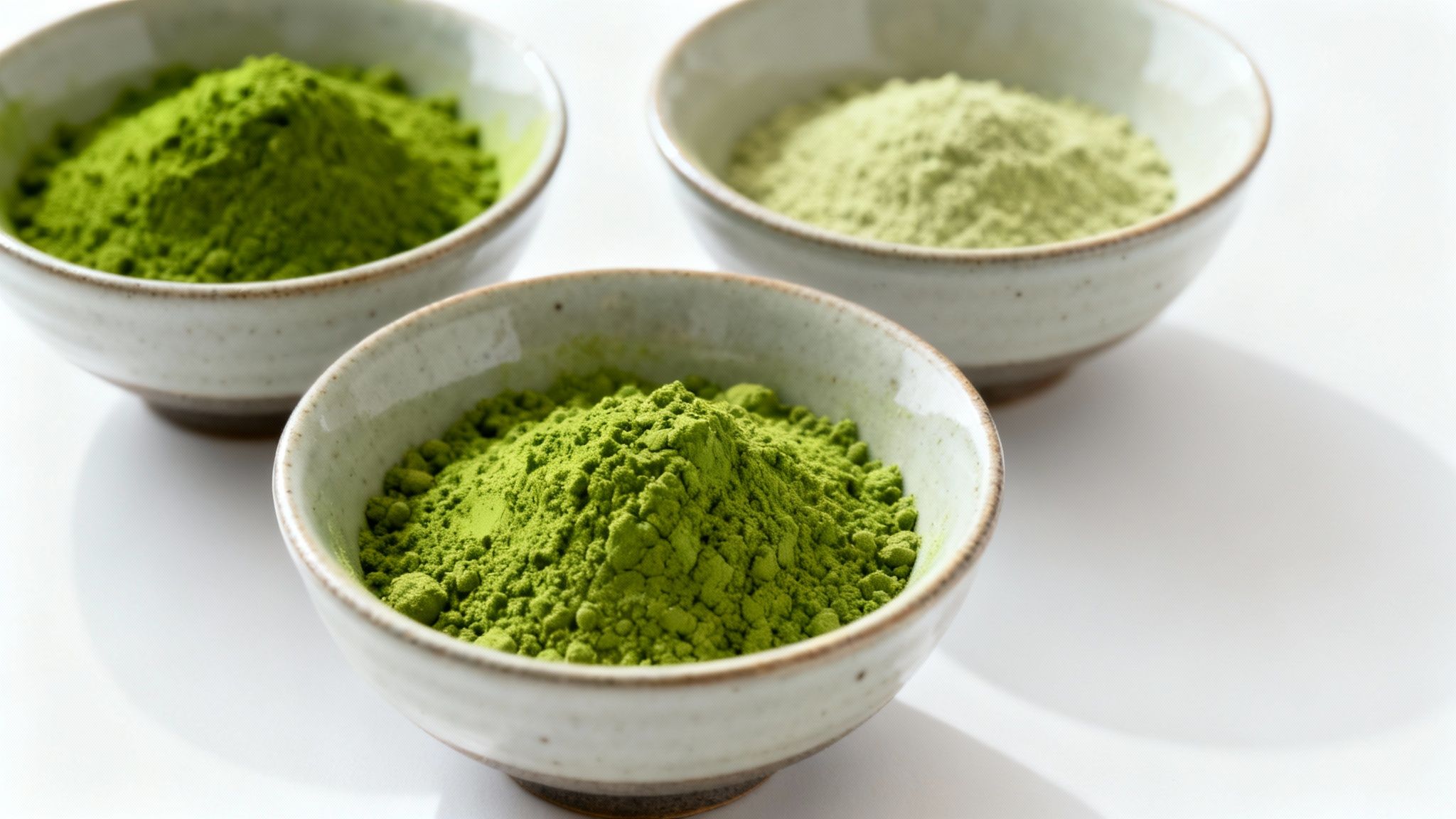
The most important distinction is probably between ceremonial and culinary grade. Ceremonial matcha is, so to speak, the top tier. It is made from the very first, most tender tea leaves of the first harvest and is intended to be enjoyed on its own. Its flavor is mild, slightly sweet, and full of umami, with a vibrant green color.
Culinary matcha, on the other hand, comes from later harvests. It has a stronger, more astringent flavor, which makes it perfect for matcha lattes, smoothies, or baking. However, it is usually too bitter to enjoy on its own.
What to look for when buying
To separate the wheat from the chaff, it helps to look at four very simple characteristics:
- The color: Good matcha has an intense, vibrant jade green color. Does the powder look dull, yellowish, or even brownish? Stay away! This indicates poor quality or improper storage.
- The texture: The powder should feel ultrafine and velvety, almost like powdered sugar. If it feels noticeably grainy, it was not ground in traditional stone mills, which is a clear quality flaw.
- The smell: Try smelling the opened tin. High-quality matcha has a fresh, slightly sweet, and somewhat grassy aroma. A hay-like or musty smell, on the other hand, is a bad sign.
- The origin: Japan is still considered the gold standard for matcha. The regions of Uji, Nishio, and Fukuoka in particular are world-famous for their ideal growing conditions.
However, the current matcha hype keeps causing supply shortages of high-quality tea from Japan. For this reason, some retailers are turning to alternatives such as Korean matcha, which often meets similarly high quality standards. You can read more about the current market situation for matcha here.
One final tip: When buying matcha, always look for an organic certification seal. This helps ensure that your matcha is free from pesticides and that you can enjoy it without worry.
Possible side effects and what to watch out for
As impressive as the health benefits of matcha may be, it is not the right choice for everyone or in every amount. As with most things in life, it is also about finding the right balance here so that you can enjoy the positive effects without risking unwanted reactions.
The ingredient you should pay the most attention to is caffeine. Although it is released more slowly and gently in matcha than in coffee, too much—especially in the late afternoon or evening—can still lead to sleep problems, inner restlessness, or nervousness. Everyone reacts differently to caffeine, which is often also influenced by their genes. If you are curious about how your body processes caffeine, you can find fascinating insights in our article about the connection between genes, sleep, and caffeine.
Who should be particularly cautious?
For some people, it is especially important to enjoy matcha mindfully and in moderation.
- If you have iron deficiency: Like other green teas, matcha contains so-called tannins. These compounds can inhibit the absorption of iron from plant-based foods in the intestine. So if you are prone to iron deficiency, it is better not to drink matcha directly with meals.
- During pregnancy: Because of its caffeine content, pregnant women should limit their consumption of matcha and other caffeinated beverages as a precaution.
- If you have a sensitive stomach: Drinking matcha on an empty stomach can cause mild stomach discomfort in some people. Simply try it and see what works best for you.
Important note about heavy metals: Since the entire tea leaf is ground into powder and consumed when drinking matcha, the quality of your product is absolutely crucial. Tea plants can absorb heavy metals from the soil. Therefore, be sure to choose a high-quality, certified matcha from a trusted source to rule out contamination.
Are you generally unsure how your body reacts to certain substances or whether your nutrient balance is in order? The tests from mybody-x.com can provide valuable guidance here. Taking a targeted look at your levels is the first step toward taking control of your health.
Still have questions? Here are the answers about matcha
Have you already delved deeper into the world of matcha, but still have a few questions on your mind? No problem. Here you will find clear, practical answers to the most common questions that come up again and again.
When is the best time to drink matcha?
The perfect time for a bowl of matcha is clearly the morning. The caffeine it contains gives you a gentle yet long-lasting energy boost and helps you start the day focused and clear-headed. Many appreciate it as an alternative to morning coffee, especially because it promotes calm alertness without the typical coffee jitters.
It is best to avoid enjoying it in the late afternoon or evening. Even if you do not feel overly stimulated, the caffeine can significantly disrupt your sleep.
How should I store matcha powder properly?
Matcha is very delicate. Light, air, heat, and moisture are its greatest enemies, as they quickly rob it of its fine aroma and valuable nutrients. Proper storage is therefore essential for preserving its quality.
- Cool and dark: It is best to store the opened container in the refrigerator.
- Keep tightly sealed: Always make sure the lid is firmly closed. This minimizes contact with oxygen.
- Use promptly: Once opened, you should use the powder within 3 to 4 weeks. This is the only way to enjoy maximum freshness and full flavor.
Does matcha really help with weight loss?
Matcha can be a wonderful addition to a mindful diet and an active lifestyle, but it is not a miracle cure. The catechins it contains, especially EGCG (epigallocatechin gallate), are known to gently stimulate the metabolism and support fat burning.
Think of matcha as a healthy companion on your journey, not a shortcut. It can support you, but it does not replace a balanced diet and regular exercise.
In addition, the long-lasting energy boost can help you keep going for longer during exercise or prevent cravings that often occur when your energy levels drop.
Are you curious about how your body reacts to certain nutrients or whether you might be missing important building blocks for your well-being? With the blood tests from mybody-x.com, you gain precise insights into your health and can find out exactly what your body really needs. Discover the right tests for you at mybody-x.com now.



Share now:
VO₂max value: Improve your endurance and performance
Apple cider vinegar diet: What really works and what you should know