

Apple cider vinegar diet: What really works and what you should know
Yes, an apple cider vinegar diet can support your weight loss – especially by helping you stay fuller for longer and balance your blood sugar levels. But let’s be honest: It is not a miracle cure. Think of it instead as a sensible companion to a balanced diet and regular exercise on your journey toward greater well-being.
What’s really behind the hype
You’ve surely heard it before: Apple cider vinegar is supposed to make the pounds melt away virtually overnight. In magazines and on social media, the apple cider vinegar diet is often marketed as the ultimate trick for achieving your dream figure. But how much truth is there to it? Let’s take a closer look and separate the myths from the facts.
Of course, the idea of losing weight quickly and easily with a simple home remedy is tempting. But if you want to achieve your goals in a healthy and, above all, long-term way, you need to have realistic expectations. Apple cider vinegar can be a smart aid, but it won’t do the actual work for you.
Science – between hope and skepticism
Studies promising sensational results keep appearing. A study by the Holy Spirit University of Kaslik in Lebanon caused a particularly big stir. It suggested that taking apple cider vinegar daily could significantly accelerate weight loss. After twelve weeks, participants who regularly drank apple cider vinegar had lost an average of up to 8 kilograms.
That sounds fantastic at first, doesn’t it? But experts such as Daniela Kehl from the Bavarian Consumer Advice Center urged caution. Their criticisms: The results were statistically shaky, the exact mechanism of action remained unclear, and long-term effects were not investigated at all. You can find more on this critical assessment at GEO.
This is a classic problem with many health trends: A single, often small study is taken out of context and celebrated as the ultimate proof. But science agrees: Truly reliable conclusions require considerably more research.
It’s important to understand: The positive effects of apple cider vinegar should be seen as support. It doesn’t replace a healthy lifestyle, but it can complement it in a smart way.
What apple cider vinegar can actually do in your body
If we set aside the exaggerated promises, a few tangible effects remain that can genuinely help you with your diet. Don’t think of apple cider vinegar as a fat burner, but rather as a smart regulator for your body.
Here are the effects that are best supported by evidence and easiest to understand:
- You feel full for longer: The acetic acid in apple cider vinegar may cause your stomach to empty more slowly. The result? You stay full and satisfied for longer after eating, taking the edge off nasty hunger attacks.
- Your blood sugar stays more stable: Studies suggest that apple cider vinegar improves insulin sensitivity. Stable blood sugar levels prevent the typical roller-coaster fluctuations that often end in an uncontrollable craving for sweets.
- Your digestion gets moving: Apple cider vinegar may stimulate the production of stomach acid. This is particularly helpful after large or fatty meals to support digestion and prevent an uncomfortable feeling of fullness.
These mechanisms show that apple cider vinegar does not burn calories directly, but it can indirectly lead you to eat less overall. It helps you get your eating habits under better control and listen more closely to your body’s signals again. So rather than hoping for a miracle, view apple cider vinegar for what it is: a natural tool that can accompany you on your journey to a healthier self—if you use it correctly.
How to incorporate apple cider vinegar strategically into your daily routine
Are you convinced and want to harness the power of apple cider vinegar for yourself? Great! The next step is crucial: How can you sensibly incorporate it into your daily routine without it feeling like a tedious chore? It’s not about turning everything upside down overnight. Instead, find a routine that suits you and your body and that you can stick to in the long term.
It all starts with choosing the right product. And believe me, this is where it pays to take a closer look instead of simply reaching for the cheapest vinegar on the supermarket shelf. Quality makes all the difference.
What to look for when buying
To achieve the best possible effect, you should definitely choose a naturally cloudy organic apple cider vinegar. Look out for these characteristics, and you’ll be on the safe side:
- Naturally cloudy and unpasteurized: Clear, filtered apple cider vinegar has been heated to make it last longer. However, this destroys valuable enzymes and living cultures—exactly what we want.
- With the “mother”: In high-quality, naturally cloudy vinegar, you can often see stringy formations at the bottom of the bottle. This is the so-called “mother”, a culture of acetic acid bacteria and yeasts. It is the hallmark of a living, unprocessed product.
- Made from whole apples: Good apple cider vinegar is made from whole, fresh organic apples, not apple scraps or concentrate. This ensures a broader range of nutrients.
The following graphic sums it up: It is about looking beyond the trend and making an informed decision for your health.
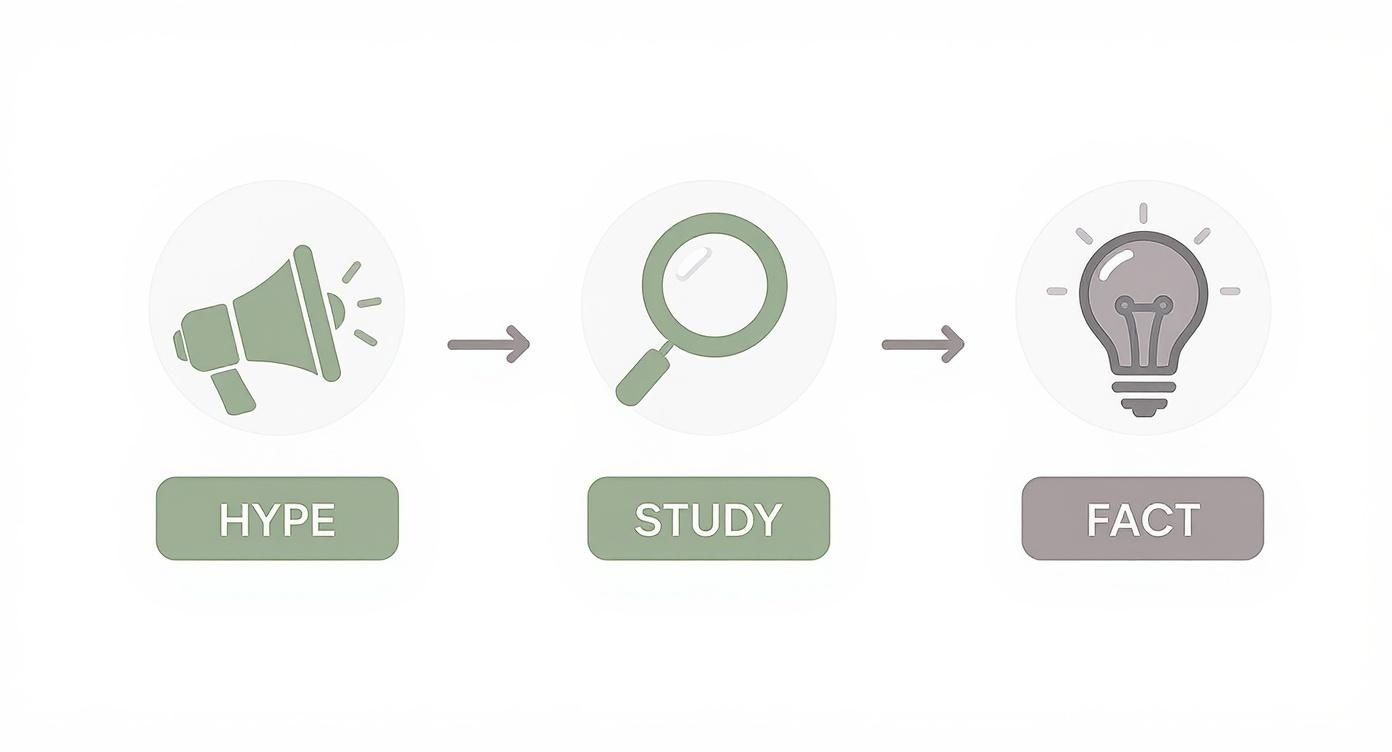
It is clear that it is worth questioning the initial hype in order to recognize the facts and use vinegar in a genuinely beneficial way.
Dosage and timing: When and how much is optimal?
The question of “when” and “how much” is absolutely crucial. If taken at the wrong dosage or at the wrong time, apple cider vinegar may not work properly or may even be unpleasant.
The golden rule is: Start slowly and always dilute the vinegar! The acid is concentrated and should never be consumed undiluted, as it can damage tooth enamel and mucous membranes.
A good starting dose is one teaspoon (approx. 5 ml) of apple cider vinegar in a large glass of water (approx. 250 ml). After a few days, you can gradually increase the amount to up to two teaspoons per glass. However, you should not consume more than two tablespoons per day.
But when is the best time? There are two proven methods:
- In the morning on an empty stomach: Drinking the apple cider vinegar drink about 15–20 minutes before breakfast may gently stimulate your metabolism and prepare your body for its first meal. Many people report feeling more awake and energized more quickly as a result.
- Before main meals: Taking apple cider vinegar before lunch or dinner may help stabilize blood sugar levels after eating and prolong feelings of fullness. This is especially useful for preventing afternoon or late-evening cravings.
Simply find out what works best for you. Every body reacts a little differently, and the most important thing is a routine you enjoy maintaining. The combination of apple cider vinegar and an active metabolism can provide additional support for your goals. If you would like to explore the topic in greater depth, you will find valuable tips in our guide on how to boost your metabolism naturally.
To make getting started easier, I have put together a simple weekly plan. This allows your body to slowly adapt to the new habit.
Your Apple Cider Vinegar Weekly Plan for Getting Started
A sample plan for gradually incorporating apple cider vinegar into your routine and gently helping your body get used to it.
| Day | In the morning (before breakfast) | At lunchtime (before eating) | In the evening |
|---|---|---|---|
| Days 1–2 | 1 tsp in 250 ml of water | - | - |
| Days 3–4 | 1 tsp in 250 ml of water | 1 tsp in 250 ml of water | - |
| Days 5–6 | 1.5 tsp in 250 ml of water | 1.5 tsp in 250 ml of water | - |
| Day 7 | 2 tsp (1 tbsp) in 250 ml of water | 2 tsp (1 tbsp) in 250 ml of water | Optional: 1 tsp in tea |
After this first week, you can stick with the dosage that feels best for you. Listen to your body—that is always the best guide.
Creative ideas for everyday enjoyment
Admittedly, the sour taste is not for everyone. But don't worry—you don't have to gulp down the vinegar while holding your nose. There are many pleasant ways to incorporate it into your diet.
- The classic drink: Mix 1–2 teaspoons of apple cider vinegar with lukewarm water. A small spoonful of honey or maple syrup makes it noticeably milder.
- In tea: A splash of apple cider vinegar in lukewarm herbal tea, such as ginger or lemon tea, tastes surprisingly soothing and nicely masks the acidity.
- As a salad dressing: This is probably the tastiest method. Simply replace the regular vinegar in your favorite dressing with apple cider vinegar. Combined with good olive oil, herbs, a little mustard, and honey, it makes an amazing dressing.
- In smoothies: A small amount of apple cider vinegar is barely noticeable in a green smoothie, while still providing all the benefits.
By making apple cider vinegar a regular yet flexible part of your daily routine, you are laying the foundation for a successful and, above all, enjoyable apple cider vinegar diet.
A clear-eyed look at the science behind apple cider vinegar
Do you want to know and understand exactly what is really behind the headlines about the apple cider vinegar diet? Perfect, because that is exactly the right approach. In the world of health trends, it is invaluable to question hype critically in order to make the best decisions for your body.
When you look at the research on apple cider vinegar, things quickly become confusing. There are countless small studies, personal testimonials, and traditional wisdom. What is missing, however, are truly large, meaningful long-term studies in humans. That is why premature conclusions are often drawn that do not withstand closer scrutiny.
When science becomes a headline
A prime example is a widely publicized study from Lebanon that initially caused quite a stir. The results sounded simply too good to be true—and, as it later turned out, they were. The media picked up such studies at lightning speed because they promise a seemingly simple solution to a complex problem like obesity.
Yet science is a process of constant review. What is celebrated as groundbreaking today may already be put into perspective by new findings tomorrow. That is exactly what happened here: The famous Lebanon study was officially retracted by the journal 'BMJ Nutrition, Prevention and Health'. Independent experts had uncovered serious errors in the statistical methodology, and the results could not be replicated. If you would like to read the details, you can find more about the background to the retracted apple cider vinegar study at FOCUS online.
This case offers an important lesson: Scientific standards are indispensable. Methodological errors can lead to completely false conclusions and raise unrealistic hopes. It is a wake-up call not to blindly chase every hype.
What we really know
Despite this controversy, there are some plausible mechanisms by which apple cider vinegar could meaningfully support a diet. They may not be as spectacular as losing eight kilos in just a few weeks, but they are far more realistic and scientifically plausible.
- Impact on blood sugar levels: Smaller but methodologically sound studies suggest that the acetic acid it contains may slow the absorption of carbohydrates from food. This helps prevent blood sugar spikes after eating.
- Promotes a feeling of fullness: Acetic acid appears to slow stomach emptying. The result? You feel full and satisfied for longer after a meal, which naturally helps you reduce your calorie intake.
- Support for digestion: Apple cider vinegar can stimulate the production of stomach acid. This is particularly helpful for breaking down food more effectively and can counteract uncomfortable feelings of fullness.
These effects may be subtle, but as part of a well-considered strategy, they can make all the difference. Blood sugar levels in particular play a central role in weight loss. In our health portal, you’ll find a detailed article about the glycemic index and how you can use it to your advantage.
Apple cider vinegar is not a magical fat burner. Think of it more as a clever tool for regulation. It helps your body process nutrients more effectively and supports you in establishing healthy eating habits.
The takeaway for your daily routine
So what can you take away from all this? It’s simple: Keep your expectations of apple cider vinegar realistic. It is a valuable addition, but never a substitute for the foundations of a healthy lifestyle. Lasting weight-loss success is always based on a balanced diet, regular exercise, and a mindful approach to your own body.
Think of apple cider vinegar as one of many building blocks on your journey. It can help you manage cravings, optimize your digestion, and stabilize your blood sugar. What it cannot do is offset the effects of an unhealthy diet. Instead, use it as an incentive to take a closer look at your body and your diet—because that is precisely the path that will truly get you where you want to go.
What to keep in mind when taking it
Apple cider vinegar is a great natural product, but it isn’t a miracle cure without side effects. Its strong acidity and active ingredients are effective—and that’s exactly why it’s so important to use it mindfully. Your health comes first, so let’s clarify together what you need to keep in mind so you can safely benefit from it.
The goal isn’t to scare you, but to give you the knowledge you need. With a few simple precautions, apple cider vinegar can become a safe and positive addition to your daily routine.

Protect your tooth enamel from acid
This is probably the greatest and most frequently underestimated danger of the apple cider vinegar diet: the effect of acetic acid on your teeth. When undiluted or taken in too high a dose, the acid can attack and gradually wear away the tooth enamel—the hard protective layer of your teeth. As a result, your teeth become more susceptible to cavities and more sensitive to hot or cold.
But do not worry, you can protect your teeth very easily.
- Always dilute thoroughly: This is the golden rule. Never drink apple cider vinegar undiluted. Always mix just 1–2 teaspoons into a large glass of water (at least 250 ml).
- Use a straw: It sounds simple, but it is effective. Drinking the apple cider vinegar water through a straw prevents the acid from coming into direct contact with your teeth.
- Rinse your mouth: Rinse your mouth thoroughly with clean water immediately after drinking. This helps neutralize any remaining acid.
- Wait before brushing your teeth: This is very important: Do not brush your teeth immediately afterward. The acid temporarily softens the tooth enamel slightly. It is better to wait at least 30 minutes before reaching for your toothbrush.
Gastrointestinal discomfort in sensitive individuals
Although apple cider vinegar is generally supposed to stimulate digestion, sensitive stomachs may react in exactly the opposite way. Especially on an empty stomach, the acid can cause mild discomfort, heartburn, or unpleasant pressure in the stomach.
If you are already prone to heartburn, start extremely cautiously. At first, half a teaspoon in a large glass of water may be enough. It is best to drink it just before a meal rather than on a completely empty stomach. Pay close attention to how your body reacts. If you notice that it does not agree with you, do not force yourself. There are many other ways to achieve your health goals. If you have persistent symptoms such as constant belching or stomach pressure, you should take a closer look; you can find more information in our guide about constant belching and stomach pressure.
Your body gives you the best signals. If you experience discomfort or pain, it is a clear sign to reduce the dose, take a break, and determine the cause.
Possible interactions with medications
This point is especially important if you regularly take medication. Apple cider vinegar is not just a food; it can affect how your body absorbs or processes certain active ingredients.
Be especially cautious with:
- Diabetes medications: Apple cider vinegar can lower blood sugar levels. Combined with insulin or other blood sugar-lowering medications, there is a risk of hypoglycemia (low blood sugar). Be sure to talk to your doctor beforehand so your levels can be closely monitored.
- Diuretics (water pills): Some diuretics flush potassium from the body. A high, regular intake of apple cider vinegar could theoretically intensify this effect and lead to potassium deficiency.
- Heart medications (e.g., digoxin): Low potassium levels can, in turn, increase the side effects of certain heart medications.
Who apple cider vinegar is less suitable for
In summary, there are certain groups of people who should be particularly cautious about following an apple cider vinegar diet or preferably avoid it altogether.
Be sure to consult your doctor if any of these points apply to you:
- You have kidney disease.
- You have a chronic stomach condition such as gastritis or a stomach ulcer.
- You regularly take medication, particularly for diabetes, heart conditions, or high blood pressure.
- You are pregnant or breastfeeding.
Your health is your greatest asset. An informed decision is the best way to support your body safely and effectively on its journey toward greater well-being.
Combining apple cider vinegar and nutrition wisely

It is now clear: apple cider vinegar is a valuable aid, but it is not a miracle cure. The real key to the success of your apple cider vinegar diet lies not in the glass, but on your plate. Simply drinking the vinegar while sticking to old eating habits will hardly get you where you want to go.
The key factor is the smart combination: the supportive effect of apple cider vinegar on the one hand and a mindful, nutrient-rich diet on the other. Think of the vinegar as your ally, further enhancing the positive effects of your healthy choices. It may help balance blood sugar levels and curb cravings, but the real work is done by your daily diet.
Foods that support your goals
Your body needs the right building blocks to function optimally and burn fat. If you use apple cider vinegar to increase your feeling of fullness, you should also provide it with food that supports this effect. Instead of relying on empty calories that quickly make you hungry again, choose foods that keep you full for a long time and boost your metabolism.
Three groups are particularly valuable here:
- Fiber-rich vegetables & legumes: Broccoli, spinach, lentils, and chickpeas fill your stomach without blowing your calorie budget. They also provide important vitamins and minerals.
- High-quality proteins: Lean meat, fish, eggs, as well as tofu and quark, are essential for protecting your muscle mass during a diet. Remember: Muscles are your body's own furnaces!
- Healthy fats: Avocados, nuts, seeds, and high-quality oils such as olive or flaxseed oil are essential. They regulate hormones, keep you feeling full for a long time, and provide important fatty acids for your brain.
This table shows which food groups are especially well suited to an apple cider vinegar cleanse and support your goals.
| Food group | Why it fits well | Example of a meal |
|---|---|---|
| Leafy greens & salads | Rich in fiber, low in calories, and promotes satiety. | Large mixed salad with cucumbers, tomatoes, and an apple cider vinegar dressing. |
| Protein (chicken, fish, tofu) | Important for maintaining muscle and boosts the metabolism. | Grilled chicken breast with steamed broccoli. |
| Legumes (lentils, beans) | Slow-digesting carbohydrates that keep blood sugar stable. | Lentil soup or a chickpea salad. |
| Healthy fats (avocado, nuts) | Promotes long-lasting satiety and provides important nutrients. | Half an avocado with your salad or a handful of nuts as a snack. |
These foods form the foundation for meals that truly bring you closer to your goal.
What you should avoid for real success
What you eat is just as important as what you leave out. Apple cider vinegar can try as hard as it likes to stabilize your blood sugar—but if you constantly spike it with sugar and white flour, it is fighting a losing battle.
Think of apple cider vinegar as the captain of your team. But you need to put the right teammates alongside it. Sugar and processed foods are the opponents that weaken your team.
Cut these things from your plan as much as possible:
- Sugary drinks: Sodas, iced teas, and juices are liquid calorie bombs that trigger cravings.
- White-flour products: White bread, classic pasta, and sweet pastries provide quick energy that fades just as quickly.
- Ready-made meals: They are often full of hidden sugar, unhealthy fats, and additives that sabotage your goals.
By reducing these foods, you create the ideal foundation for apple cider vinegar to have its full effect.
Practical tips for your meal plan
Theory is good, but practice is better. So what does this look like in everyday life? Focus on whole, unprocessed foods. A typical meal might look like this, for example: a large portion of salad (fiber), a piece of grilled salmon (protein), and half an avocado (healthy fats).
You could drink your apple cider vinegar drink about 15–20 minutes before this meal to stimulate digestion and feel full more quickly.
Another particularly delicious method is to incorporate it directly into your meals. A homemade salad dressing made with apple cider vinegar, olive oil, herbs, and a little mustard is not only healthy but also tastes fantastic.
This well-designed approach can also be combined excellently with other dietary strategies, such as intermittent fasting. Apple cider vinegar’s blood sugar-stabilizing effect can be particularly valuable here. If you’re interested in the topic, feel free to read our detailed article on 16/8 intermittent fasting. Ultimately, it’s about finding a routine that not only works but that you also enjoy maintaining.
Your most important questions about the apple cider vinegar diet
Finally, I want to address the most common questions I keep receiving about the apple cider vinegar diet. I’ve summarized them briefly and clearly so you can be well informed and get started with confidence.
How quickly can I lose weight with an apple cider vinegar diet?
First and foremost: Be patient with yourself and your body. Healthy and, above all, sustainable weight loss is around 0.5 to 1 kilogram per week. However, you can only achieve this goal if you make comprehensive changes to your diet and exercise regularly.
Apple cider vinegar is a brilliant aid, but not a miracle cure. It can improve your feeling of fullness and curb cravings. Just don’t expect miracles overnight—realistic goals and consistency are the keys to long-term success.
Can I drink apple cider vinegar undiluted to enhance its effects?
No, please do not do that under any circumstances. Drinking apple cider vinegar undiluted is harmful. The highly concentrated acid not only attacks your tooth enamel but can also irritate your esophagus and stomach lining. We definitely want to avoid that.
Proper use is essential. Always dilute one to two teaspoons of vinegar in a large glass of water (at least 250 ml). This is the only way to benefit from its advantages without harming your body.
Which apple cider vinegar is best for losing weight?
This is where quality makes the difference. It is best to always choose an unfiltered organic apple cider vinegar that has not been heated (pasteurized). Make sure it contains the so-called “mother of vinegar.”
What is that? This cloudy, string-like substance at the bottom of the bottle is a clear sign of a living, untreated product. It is full of valuable enzymes and cultures, to which many of the positive effects are attributed. Clear, industrially filtered apple cider vinegar unfortunately no longer contains these important components.
Do I need to change my diet if I drink apple cider vinegar?
Yes, absolutely! This is even the most important part of the whole thing. Apple cider vinegar alone will not make a diet successful. It is merely a supportive tool in a larger plan. To lose weight sustainably and improve your health, a balanced diet with fresh, unprocessed foods is essential.
Think of apple cider vinegar as your partner, helping you:
- get cravings under control,
- support your digestion and
- stabilize your blood sugar level.
However, it never replaces the basics—a nutrient-rich diet and enough exercise.
How often and when should I drink apple cider vinegar?
A tried-and-tested routine is to drink the apple cider vinegar drink once or twice a day. Many swear by taking it in the morning on an empty stomach, around 15 to 20 minutes before breakfast. This is supposed to get your metabolism going right away.
Others prefer to drink it directly before their main meals. This can help slightly cushion the rise in blood sugar after eating and prolong the feeling of fullness. Simply try out what best fits into your daily routine and what you can easily get used to.
Do you want not only to alleviate symptoms but truly understand what your body needs? The analyses by mybody® Lab GmbH get to the root cause. With a DNA metabolism test, you can find out which diet is truly right for you and achieve your health goals on a scientifically sound basis. Discover now how your body really works.



Share now:
What is matcha tea, and how does the green powder work?
Understanding the VO2max value chart and improving it effectively