

Why balance hormones—key to women's health
Persistent fatigue, mood swings, or unexplained weight gain may indicate that hormonal balance has fallen out of sync. For many women in Central Europe, these chemical messengers regulate not only the menstrual cycle but also affect metabolism, energy, and well-being. Hormonal imbalances often arise from stress, diet, or lack of sleep and can be addressed with targeted, scientifically proven methods. Here you will learn which approaches can actually help you regain your balance.
Table of contents
- What lies behind hormonal balance?
- Types of hormones and their functions
- Typical symptoms of hormonal imbalance
- Scientifically validated methods for balancing hormones
- Risks of untreated hormonal disorders and alternatives
Key insights
| Point | Details |
|---|---|
| Hormonal balance is essential | Hormones control many important bodily functions, and their balance is essential for health. |
| The impact of lifestyle and stress | Diet, sleep, and stress management are essential for maintaining hormonal balance. |
| Recognizing the symptoms of an imbalance | Mood swings and physical symptoms such as weight gain can be signs of a hormonal imbalance. |
| Early diagnosis and treatment | Regular health checkups help detect hormonal changes early and treat them appropriately. |
What lies behind hormonal balance?
Hormones are the secret conductors of our bodies—chemical messengers that control almost every process. They regulate our metabolism, energy balance, mood, and even reproductive functions with precise fine-tuning.
Hormonal balance is like a complex orchestra in which each hormone plays its specific role. Hormones in the body are produced in the endocrine glands and act as chemical messengers that coordinate various bodily functions.
The most important hormones in women include:
- Estrogen: Responsible for female characteristics and reproductive functions
- Progesterone: Regulates the menstrual cycle and pregnancy
- Testosterone: Influences libido, bone density, and muscle mass
Stress, diet, sleep, and exercise can significantly affect hormonal balance. Psychological stress can alter hormone secretion and disrupt the delicate balance.
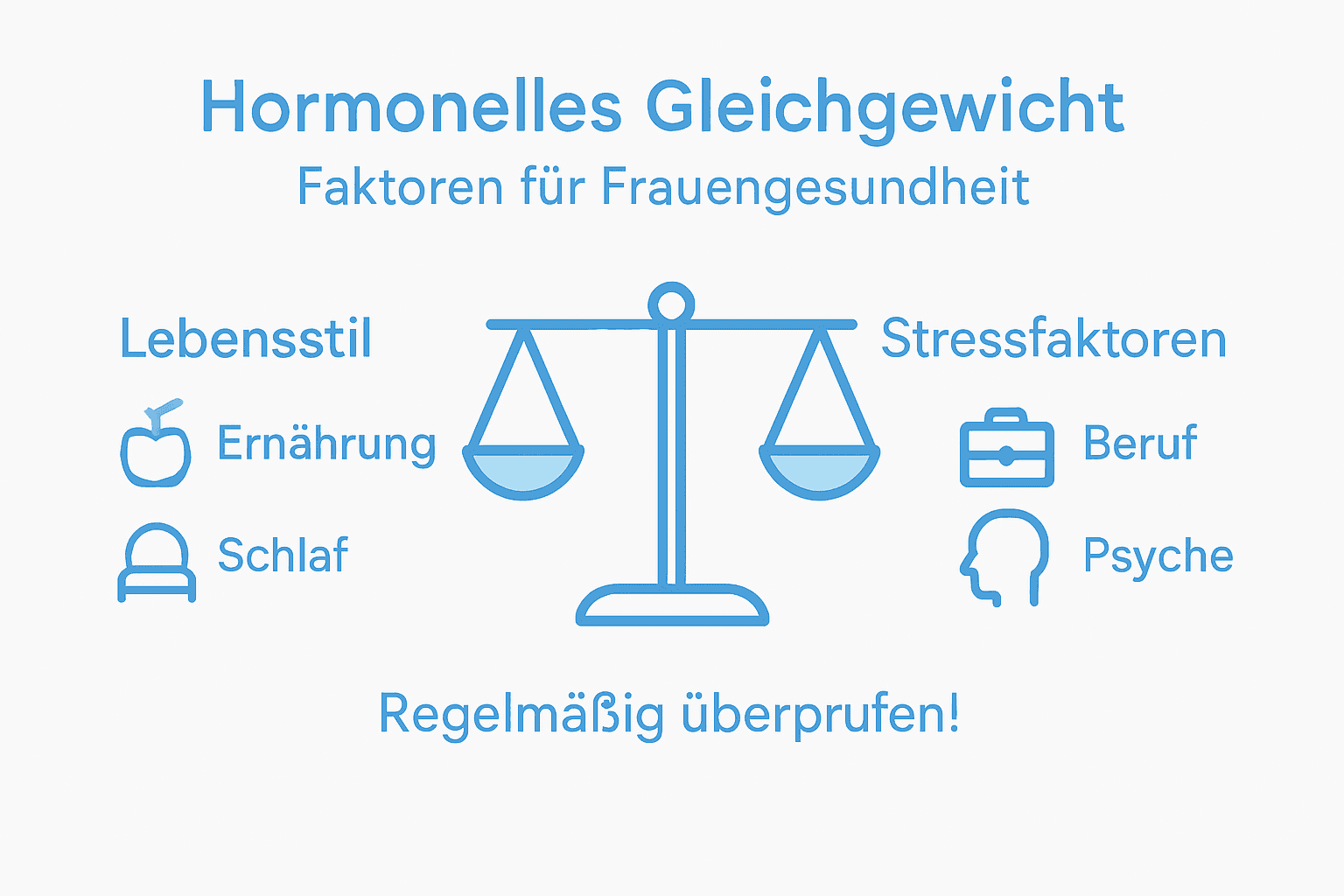
Pro tip: Ensure adequate sleep, a balanced diet, and stress reduction to naturally support your hormonal balance.
Types of hormones and their functions
Hormones are highly complex signaling molecules that keep our bodies in precise balance. Signaling molecules in the human body control nearly all vital processes and often exert their effects in parts of the body that are entirely different from where they are produced.
The most important hormone groups in women include:
-
Sex hormones
- Estrogen: Responsible for female characteristics
- Progesterone: Regulates the menstrual cycle
-
Stress hormones
- Cortisol: Affects metabolism and the stress response
- Adrenaline: Activates the fight-or-flight response
-
Metabolic hormones
- Insulin: Regulates blood sugar levels
- Thyroid hormones: Control energy metabolism
Each hormone has a specific function and operates within a complex regulatory system. The endocrine glands, such as the hypothalamus, pituitary gland, thyroid, and adrenal glands, produce these chemical messengers, which precisely control our bodily functions.

Here is an overview of which hormones are produced by which glands and which bodily functions they control:
| Hormone | Hormone-producing gland | Main function |
|---|---|---|
| Estrogen | Ovaries | Development of female characteristics |
| Progesterone | Ovaries | Cycle regulation |
| Cortisol | Adrenal cortex | Control of the stress response |
| Insulin | Pancreas | Blood sugar regulation |
| Thyroid hormones | Thyroid | Energy metabolism |
Pro tip: Make sure to have regular hormone tests to detect and treat imbalances at an early stage.
Typical symptoms of hormonal imbalance
Hormonal imbalance can manifest in many ways and affects nearly all bodily functions. Symptoms of hormonal disorders often develop gradually and are initially not recognized by women as a related problem.
The most common signs include:
-
Psychological changes
- Mood swings
- Depressive moods
- Lack of motivation
-
Physical symptoms
- Irregular menstrual cycles
- Weight fluctuations
- Hair loss
- Skin changes such as acne
-
Sexual health
- Reduced libido
- Dryness of the mucous membranes
Chronic stress plays a significant role in hormonal imbalances. Conditions such as polycystic ovary syndrome (PCOS) and thyroid dysfunction are particularly common and can severely disrupt hormonal processes.
For a better overview, here is a summary of common causes and recommended measures for hormonal imbalance:
| Cause | Typical risk | Recommended measure |
|---|---|---|
| Chronic stress | Elevated cortisol levels | Relaxation exercises and breaks |
| Poor diet | Blood sugar fluctuations | Eat a balanced diet and avoid sugar |
| Lack of exercise | Metabolic disorders | Incorporate more exercise |
| Sleep deprivation | Hormonal regulation disorder | Optimize sleep hygiene |
| Genetic factors | Increased susceptibility to illness | Medical monitoring, prevention |
Pro tip: Keep a symptom diary to identify and document changes in your hormone balance at an early stage.
Scientifically validated methods for balancing hormones
The hormonal system is a complex network that requires holistic and individually tailored approaches. Natural methods for hormonal balance aim to restore hormonal equilibrium in a gentle and sustainable way.
Scientifically supported methods for balancing hormones include:
-
Nutrition-based approaches
- Balanced, nutrient-rich diet
- Hormone-regulating foods
- Avoiding sugar and processed foods
-
Lifestyle interventions
- Stress management
- Regular exercise
- Sufficient sleep
-
Hormone therapy options
- Bioidentical hormone therapy
- Individually tailored hormone replacement therapies
- Natural hormone supplements
Bioidentical hormone therapies are particularly promising. They are chemically identical to the hormones produced by the body and are used especially for menopausal symptoms, menstrual disorders, or hormonal imbalances.
Pro tip: Have your individual hormone status comprehensively analyzed by a specialist before choosing treatment methods.
Risks of untreated hormonal disorders and alternatives
Hormonal imbalances are not trivial—they can have serious health consequences. Risks of untreated hormonal disorders can severely affect overall physical and psychological well-being.
Possible consequences of untreated hormonal disorders include:
-
Reproductive health
- Infertility
- Menstrual disorders
- Endometriosis
-
Physical health risks
- Osteoporosis
- Cardiovascular diseases
- Metabolic disorders
-
Psychological effects
- Chronic depression
- Sleep disorders
- Lack of motivation
-
Metabolic risks
- Weight problems
- Diabetes risk
- Thyroid dysfunction
The causes of hormonal imbalances are diverse—from stress and environmental influences to genetic factors. Early diagnosis and holistic treatment can significantly reduce many of these risks.
Pro tip: Carry out regular health checks to detect and treat hormonal changes at an early stage.
Test your hormones yourself and balance them specifically with mybody®x
Many women are familiar with typical symptoms such as mood swings, irregular cycles, or lack of energy, which may indicate a hormonal imbalance. This is where modern self-diagnosis comes in. With the at-home hormone tests – triglycerides, cortisol, testosterone & more – mybody®x, you have control over your health. These scientifically validated tests help you understand your individual hormonal balance precisely and influence it in a targeted way.
Take the opportunity to detect hormonal imbalances at an early stage and choose personalized recommendations for nutrition and lifestyle. In combination with our at-home nutrient deficiency tests, we support you in bringing your body into balance holistically. Start your journey toward greater well-being and health with mybody®x today. Discover all the options at mybody-x.com and take the first step toward hormonal balance now.
Frequently Asked Questions
What is hormonal balance, and why is it important for women?
Hormonal balance refers to the balanced ratio of hormones in the body, which is essential for numerous bodily functions such as metabolism, mood, and reproduction. An imbalance can lead to health problems.
What symptoms indicate a hormonal imbalance?
Typical symptoms include mood swings, irregular menstrual cycles, weight fluctuations, hair loss, and sexual health problems such as reduced libido.
What lifestyle measures can help restore hormonal balance?
To support hormonal balance, a balanced diet, regular exercise, stress management, and sufficient sleep are recommended. Keeping a symptom diary can also be helpful.
What are bioidentical hormone therapies, and how do they work?
Bioidentical hormone therapies are specialized treatment methods that are chemically identical to the body’s own hormones. They are often used for menopausal symptoms or hormonal imbalances and can help restore balance.
Recommendation
- Find Your Hormonal Balance for Greater Well-Being in Autumn – mybody®x
- Correct Estrogen Deficiency and Regain Your Balance – mybody®x
- Hormone Test for Women: When Is It Useful? – mybody®x
- Testosterone Testing: Simple and Discreet from Home – mybody®x
- Why Optimize Egg Quality – Impact on Fertility Outcomes
- Fitness Supplements for Women – Protein4Life



Share now:
Your gut microbiome test: The key to a better gut feeling and greater well-being
Gut Bacteria Test: Your Guide to Well-Being