
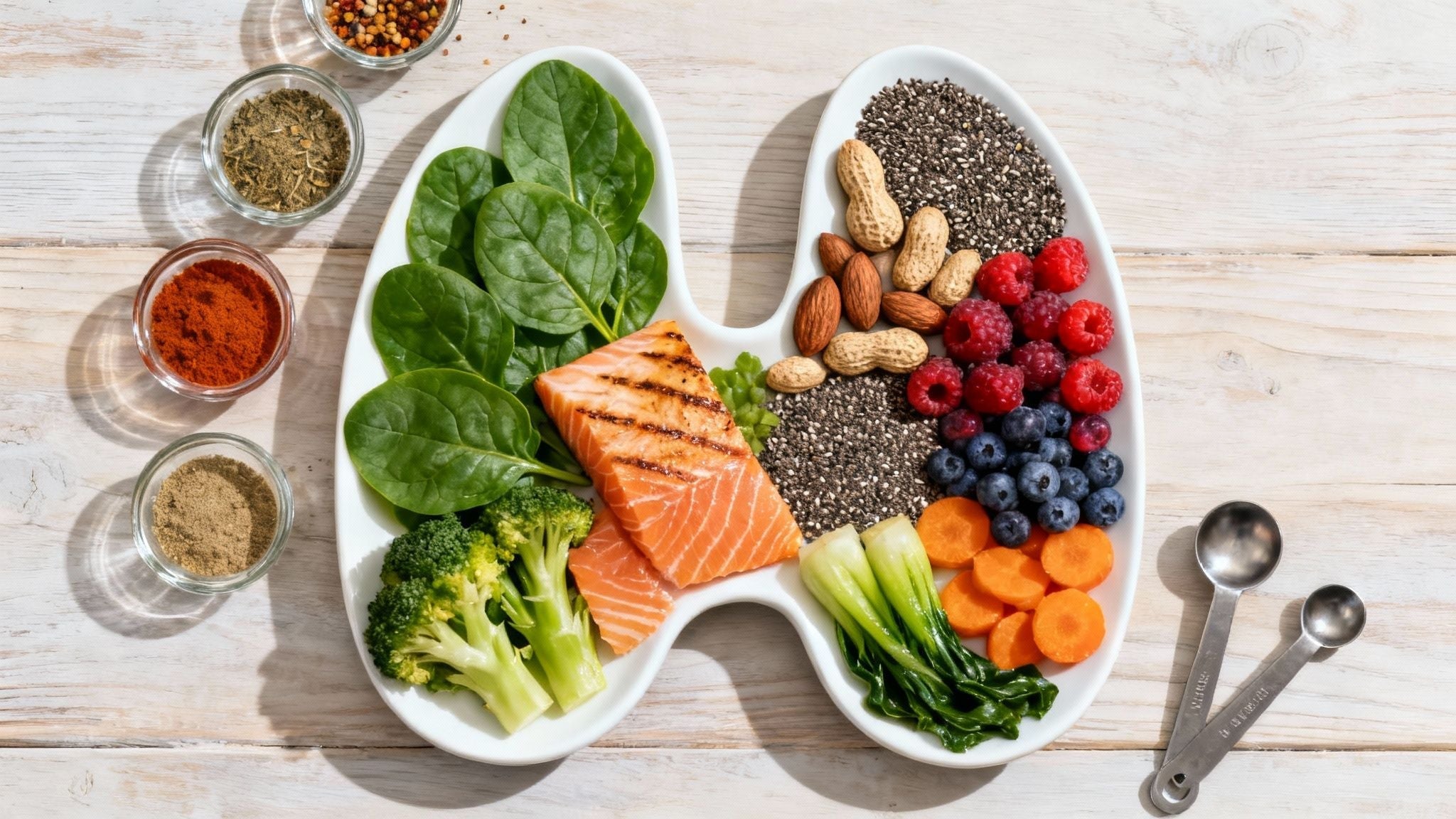
Nutrition for Hashimoto’s: How to boost your well-being with the right diet
If you have been diagnosed with Hashimoto’s, a targeted diet is probably your most powerful tool for calming inflammation in the body and getting those bothersome symptoms under control. The key? Focus on nutrient-rich, anti-inflammatory foods while also trying to avoid typical troublemakers such as gluten, industrially processed dairy products, and sugar.
What Hashimoto’s means for you and your body
Being diagnosed with Hashimoto’s can initially feel like a slap in the face—you feel uncertain, perhaps even alone. But you are not. Hashimoto’s thyroiditis is no longer a rare diagnosis; quite the opposite. Estimates suggest that by now, more than 10% of the population in Germany is affected by this chronic autoimmune disease of the thyroid. You can read more about its prevalence here: Hashimoto as a widespread disease.
But what actually happens in the body with Hashimoto’s? Imagine your immune system as an overzealous security team. Normally, its job is to protect you from real dangers such as viruses or bacteria. With Hashimoto’s, however, a kind of mix-up occurs: the immune system mistakenly classifies your own thyroid tissue as hostile and launches an attack.
This constant attack leads to chronic inflammation of the thyroid. Over time, the sensitive tissue becomes damaged and can no longer fulfill its primary task—the production of vital thyroid hormones. The result is often an underactive thyroid. If you would like to learn more about the symptoms and the right diet for hypothyroidism, take a look at our detailed guide to nutrition for hypothyroidism.
Why nutrition is so crucial
This is precisely where nutrition becomes your most important ally. It has a direct line to your immune system and the inflammatory processes in your body. Certain foods can calm your immune system’s “confusion,” while others only stoke the flames of inflammation further.
This is not about following a strict, joyless diet full of prohibitions. Think of it instead as a conscious, loving decision for your body. You learn to give it exactly the nutrients it needs to finally calm down and regain its balance.
Your diet is more than just calorie intake—it is a daily opportunity to actively influence your well-being, ease the strain on your thyroid, and noticeably improve your quality of life.
To give you a quick overview, the following table summarizes the most important principles.
The foundational principles of a Hashimoto's diet at a glance
This table summarizes the most important dietary principles to give you a quick overview of what matters.
| Principle | Why it matters | Examples |
|---|---|---|
| Eat anti-inflammatory foods | To reduce the immune system's attacks on the thyroid and alleviate symptoms such as fatigue and pain. | Fatty fish (salmon, mackerel), berries, leafy green vegetables, turmeric, ginger. |
| Promote nutrient density | The thyroid needs specific nutrients (selenium, zinc, iodine) to produce hormones. Deficiencies are common in Hashimoto's. | Brazil nuts (selenium), pumpkin seeds (zinc), fish and algae (iodine in moderation), eggs. |
| Strengthen gut health | A healthy gut is the foundation of a balanced immune system. Many autoimmune diseases begin in the gut. | Fermented foods (sauerkraut, kimchi), fiber-rich vegetables, bone broth. |
| Avoid potential triggers | Foods such as gluten and, often, dairy products can intensify the immune response in many people affected. | Avoid gluten-containing grains (wheat, spelt); reduce dairy products if necessary. |
| Stabilize blood sugar | Sharp blood sugar fluctuations put stress on the body and can promote inflammation and hormonal imbalances. | Complex carbohydrates, sufficient protein, and healthy fats at every meal. |
These pillars form the foundation. In the following sections, we'll take a close look at which foods are your best allies, why gut health plays such a key role, and how you can easily—and, above all, enjoyably—incorporate all of this into your daily life.
Why your gut plays the leading role in Hashimoto's
To understand the right diet for Hashimoto's, we need to take a step back and look at the underlying problem: Hashimoto's is not simply a thyroid disorder. It is an autoimmune disease in which your immune system mistakenly attacks your own thyroid and triggers chronic inflammation.
Imagine that a fire is smoldering unnoticed inside your body. Certain foods can fan the flames, while others act like water, helping to contain the blaze. The most important setting for this process? Your gut.
Your gut as the guardian of the immune system
An incredible 80% of your immune system is located in your gut. This makes it the command center of your entire defense system. You can think of the intestinal lining as an extremely vigilant bouncer: its job is to let valuable nutrients in while keeping anything harmful—such as undigested food particles, germs, or toxins—strictly out.
In many people with Hashimoto’s, however, this bouncer is overwhelmed and weakened. This is referred to as a “leaky gut”, meaning a permeable intestine. The tight junctions between the intestinal cells loosen, and the protective barrier becomes full of gaps.
A “leaky gut” is like an open door for intruders. Unwanted particles enter the bloodstream and alert your immune system. It immediately switches into attack mode, leading to inflammation throughout the body—including in the thyroid.
This infographic shows how a smart diet can serve as a decisive lever here to stop precisely these inflammations and alleviate the symptoms.

You can clearly see here that a mindful diet not only directly combats the fire of inflammation but also improves your quality of life by alleviating symptoms. It is a cycle that you can actively steer in a positive direction.
The direct connection between the gut and the thyroid
A healthy gut is therefore the foundation for a relaxed immune system. When the gut barrier is intact, your immune system does not have to constantly operate at full speed and fight against perceived threats.
However, several factors can promote a leaky gut and keep the inflammatory fire burning:
- Certain foods: Gluten, industrial sugar, and highly processed dairy products are known troublemakers that can irritate the intestinal lining.
- Chronic stress: Constant stress directly affects gut health and the balance of your gut bacteria.
- Nutrient deficiencies: If important nutrients such as zinc or vitamin D are lacking, the intestinal wall cannot regenerate as effectively.
- Dysbiosis: An imbalance between good and bad gut bacteria (dysbiosis) further weakens the barrier function.
Once you understand this connection, it immediately becomes clear why an anti-inflammatory diet has such a powerful effect. Every bite becomes a decision: Are you feeding the inflammation or helping your body overcome it? If you want to delve deeper into the topic, you’ll find valuable tips in our article on building up the gut flora.
How an anti-inflammatory diet helps in concrete terms
Changing your diet aims to strengthen the “bouncer” in your gut again and stop the inflammation. You can achieve this by deliberately avoiding foods that fan the flames while eating foods that have a healing and calming effect on your gut and immune system.
The results are often impressive. Many people affected report a noticeable improvement in their symptoms: the debilitating fatigue disappears, joint pain subsides, concentration returns, and the dreaded “brain fog” finally lifts.
By healing your gut, you not only relieve the strain on your thyroid but also strengthen your entire body. This is the key to taking charge of your health again.
The most important nutrients for your thyroid
Imagine your thyroid as a small but extremely important factory. To run smoothly and produce the hormones that control your entire metabolism, it needs very specific raw materials—vitamins and minerals. Nutrition for Hashimoto’s is therefore not just about what you eliminate, but above all about what you deliberately provide your body.
A deficiency in these key nutrients is unfortunately widespread and can further worsen symptoms such as fatigue, hair loss, or concentration problems. By replenishing your nutrient stores, you give your thyroid the tools it needs to do its job.
Selenium: The shield for your thyroid
When it comes to thyroid health, selenium is undoubtedly one of the superstars. It is an essential component of enzymes that play a crucial dual role. On the one hand, they help convert the inactive thyroid hormone T4 into the active form T3, which acts on cells.
On the other hand, selenium acts as a powerful antioxidant and protects thyroid tissue from oxidative stress, which occurs during hormone production. This protective mechanism is extremely valuable for an already inflamed thyroid. A deficiency can therefore further fuel the immune response.
The good news is that you can often easily meet your selenium needs.
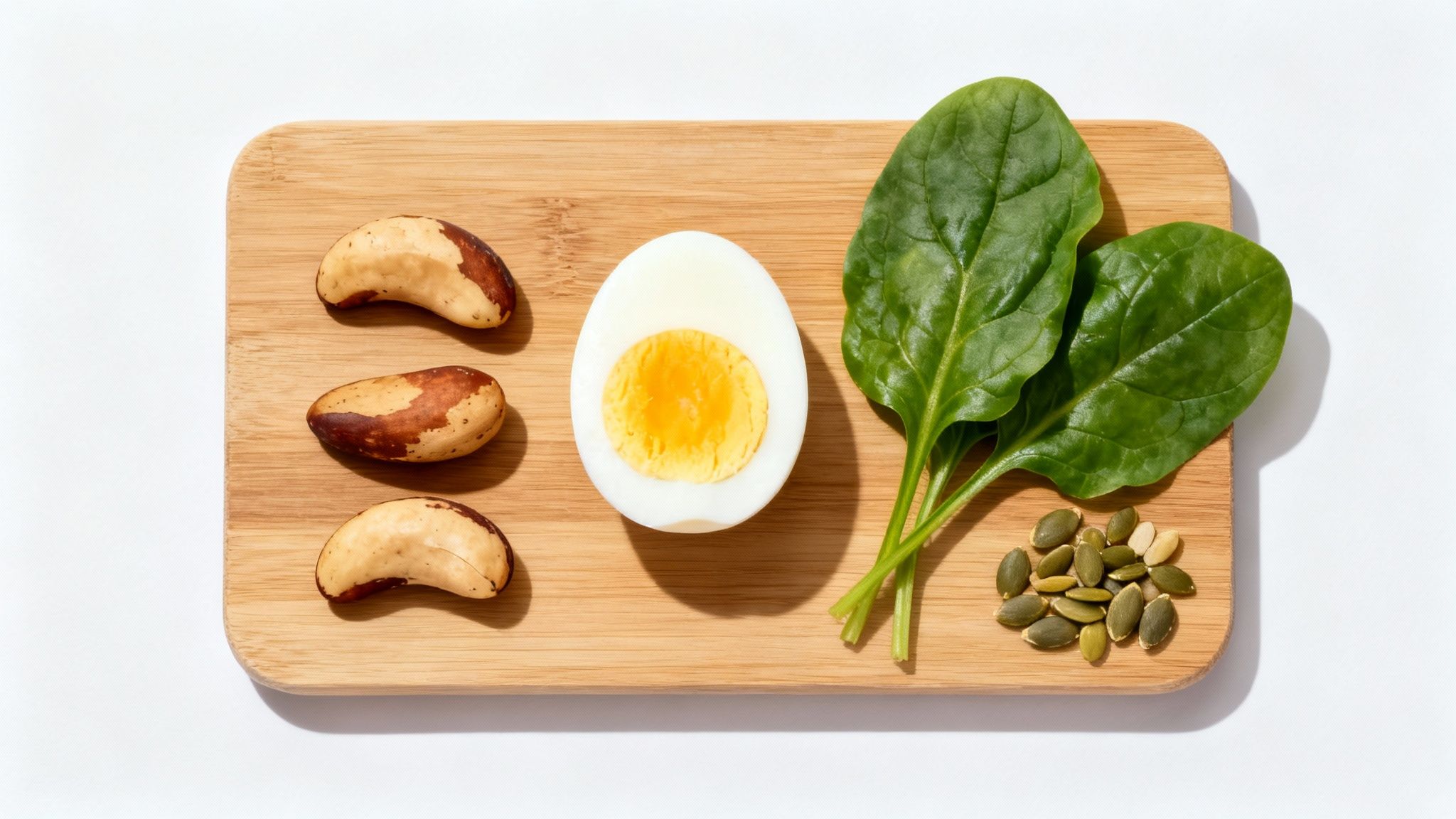
- Brazil nuts: They are the undisputed leaders. Often, just 2–3 nuts per day are enough.
- Fish: Herring, salmon, and tuna in particular are rich in selenium.
- Eggs: Another nutrient-rich food that provides a good amount of selenium.
- Sunflower seeds: Ideal as a snack or topping for salads and muesli.
Studies strikingly underscore the importance of selenium. In Hashimoto’s patients with a confirmed deficiency, daily supplementation with 200 µg of selenium was able to significantly reduce antibody levels, the markers of autoimmune activity. If you would like to explore the topic in greater depth, you’ll find everything you need to know about foods high in selenium in our guide.
Zinc: The versatile helper
Zinc is another indispensable helper for your thyroid. Much like selenium, it is involved in the conversion of T4 to T3. Without sufficient zinc, this process can stall, even if enough T4 is available.
Zinc also plays an important role in regulating the immune system. A zinc deficiency can disrupt the immune system's delicate balance and thereby intensify the autoimmune processes associated with Hashimoto's.
Think of zinc as the manager of your hormone production. It ensures that the right signals are sent and that conversion processes run efficiently. Without it, chaos can quickly ensue.
Good sources of zinc include:
- Pumpkin seeds and flaxseeds: Perfect for vegetarians and vegans.
- Beef: Red meat in particular is a very good source of zinc.
- Lentils and chickpeas: Plant-based powerhouses rich in zinc and fiber.
- Oatmeal: A good start to the day that also provides you with zinc.
Iron: The energy provider
Iron is primarily known for transporting oxygen in the blood, but its role in the thyroid is often underestimated. The enzyme responsible for producing thyroid hormones (thyroid peroxidase, or TPO for short) depends on iron.
Iron deficiency, which is common in women due to menstruation, can directly slow hormone production. The result is symptoms such as extreme fatigue, hair loss, and sensitivity to cold—conditions you know all too well from Hashimoto's.
So make sure to eat iron-rich foods such as:
- Red meat and liver: The best sources of highly bioavailable iron.
- Legumes: Lentils, beans, and peas are excellent plant-based sources.
- Spinach and other green leafy vegetables: It is best to combine them with vitamin C (e.g., bell peppers or lemon juice) to improve absorption.
Vitamin D: The sunshine vitamin for your immune system
Strictly speaking, vitamin D is a hormone and is immensely important for regulating the immune system. Interestingly, people with autoimmune diseases such as Hashimoto's are often found to have very low vitamin D levels.
A deficiency can misdirect the immune response and promote inflammatory processes in the body. Since in our part of the world, especially in winter, we often do not get enough sunlight to produce sufficient vitamin D, checking vitamin D levels and, if necessary, taking supplements in consultation with a doctor is often advisable.
B vitamins: The anti-stress helpers
The entire complex of B vitamins, especially B12, B6, and folic acid, is essential for energy metabolism and nerve function. Many people with Hashimoto's have reduced stomach acid production, which makes it more difficult to absorb vitamin B12 from food.
A deficiency in B vitamins can intensify fatigue, depressed mood, and neurological symptoms. Therefore, make sure you get enough through whole-grain products (gluten-free), legumes, nuts, seeds, and green vegetables.
By consciously choosing nutrient-rich foods, you provide your thyroid with the fuel it needs to function optimally and calm inflammation.
Which foods you should avoid with Hashimoto’s
After looking at which nutrients support your thyroid in everyday life, let’s now turn to the other side: the foods that often cause problems for people with Hashimoto’s.
Certain foods can quietly act like fuel on the fire. They promote inflammation in the body, further irritate the immune system, and can noticeably worsen your symptoms.
This is not about taking away the joy of eating through rigid prohibitions. Rather, we want to show you why your body might react sensitively to certain things. Once you understand the connections, it becomes much easier to make conscious decisions for your well-being. The focus is primarily on three familiar suspects: gluten, many dairy products, and sugar.
Gluten and the body’s deceptive mix-up
Gluten, the sticky protein found in grains such as wheat, spelt, and rye, is probably the most widely discussed troublemaker in Hashimoto’s. The reason is a fascinating but problematic mechanism called molecular mimicry.
Imagine it as a mix-up at the cellular level: The protein structure of gluten bears a striking resemblance to that of your thyroid tissue. When your immune system—which is already on high alert with Hashimoto’s—recognizes gluten as an “enemy” and sends antibodies against it, it may accidentally attack your own thyroid tissue as well. It simply confuses friend and foe because they look so similar.
Every time you eat gluten, you are essentially giving your immune system new targets that are confusingly similar to those on your thyroid. This can repeatedly fuel the autoimmune attack.
For many people affected, temporarily avoiding gluten for a few weeks is the first and most effective step toward greater well-being. The results are often astonishing.
Dairy products as potential drivers of inflammation
Just like gluten, dairy products can also cause problems for many people with Hashimoto’s. Two components in particular are suspected: the milk protein casein and the milk sugar lactose.
Like gluten, the structure of casein can provoke an immune response. The A1 casein in conventional cow’s milk is considered potentially inflammatory in particular. Many people affected report that symptoms such as bloating, skin problems, or joint pain noticeably improve when they stop consuming dairy products.
In addition, quite a few people with Hashimoto’s struggle with lactose intolerance. The already sensitive gut cannot properly break down lactose, causing digestive stress and further weakening gut health.
Sugar: A roller coaster for blood sugar and the adrenal glands
Industrial sugar and quickly digestible carbohydrates are pure stress for the body. They send your blood sugar soaring, prompting your body to respond with a massive release of insulin to quickly remove the sugar from the blood. The result? A subsequent drop in blood sugar that triggers cravings, irritability, and overwhelming fatigue.
This constant blood sugar roller coaster puts enormous strain on your adrenal glands. They must continuously release the stress hormone cortisol to compensate for the fluctuations. Because the adrenal glands and thyroid work closely together hormonally, an overworked adrenal gland eventually weakens thyroid function as well. High sugar consumption also promotes inflammation throughout the body and throws your gut flora out of balance.
As you can see, food tolerance varies greatly from person to person. Sometimes, simply eliminating gluten is enough. Often, however, there are several triggers—sometimes even entire food groups such as nightshades. Eliminating gluten and significantly reducing sugar are often the most effective first steps, however. You can also read more about this topic in this article about the autoimmune protocol.
Finding your personal triggers requires a little detective work. The following table helps you identify problematic foods while also showing you delicious and healthy alternatives.
Potential trigger foods and healthy alternatives
This table helps you identify problematic foods while also showing you delicious and healthy alternatives.
| Food group | Why it may be problematic | Good alternatives |
|---|---|---|
| Gluten-containing grains | It can intensify the autoimmune reaction through molecular mimicry and irritate the gut. | Rice, quinoa, millet, buckwheat, oats (certified gluten-free), sweet potatoes. |
| Industrial dairy products | Casein can promote inflammation, while lactose often causes digestive problems. | Unsweetened nut milk (almond, coconut), coconut yogurt, plant-based cheese alternatives made from nuts or coconut. |
| Sugar & refined carbohydrates | Cause blood sugar fluctuations, put stress on the adrenal glands, and promote inflammation. | Fruit (in moderation), berries, stevia, erythritol; complex carbohydrates from vegetables and gluten-free grains. |
| Unfermented soy | Contains goitrogens, which can interfere with iodine absorption and hormone production. | Fermented soy such as tempeh or miso in moderation; otherwise, it’s best avoided. |
| Highly processed foods | Often contain hidden sugar, unhealthy fats, additives, and few nutrients. | Fresh, unprocessed foods; cook for yourself using high-quality ingredients. |
The key is to take things step by step and observe your body closely. Perhaps start by eliminating just one of these foods for a few weeks, while paying close attention to how you feel. This is the best way to find out what really benefits you.
Your Simple Everyday Meal Plan
Theory is all well and good, but at the end of the day, what matters is what ends up on your plate—and how it makes you feel. Let’s now put the theory into practice. This section is your roadmap, showing you how simple and delicious a diet for Hashimoto’s can be. We’ll ease your concerns about making the change and show you that healthy food can be pure enjoyment.
The key to success usually lies in preparation. It sounds simple, but it’s extremely effective. When you already know what you’re going to eat, you won’t even be tempted to reach for unhealthy snacks or ready-made meals in stressful moments.
A Sample Day for Your Thyroid
What might a typical thyroid-friendly day look like? Think of this as a template that you can adapt as you please. The goal is always the same: to keep your blood sugar stable and provide your body with everything it needs.
-
Breakfast (around 8 a.m.): A nutrient-rich start to the day is essential for keeping cravings at bay. Warm millet porridge with berries, a spoonful of almond butter, and a pinch of cinnamon is perfect. It provides complex carbohydrates, healthy fats, and antioxidants. When you’re short on time, a green smoothie with spinach, avocado, gluten-free protein powder, and a handful of blueberries is a great alternative.
-
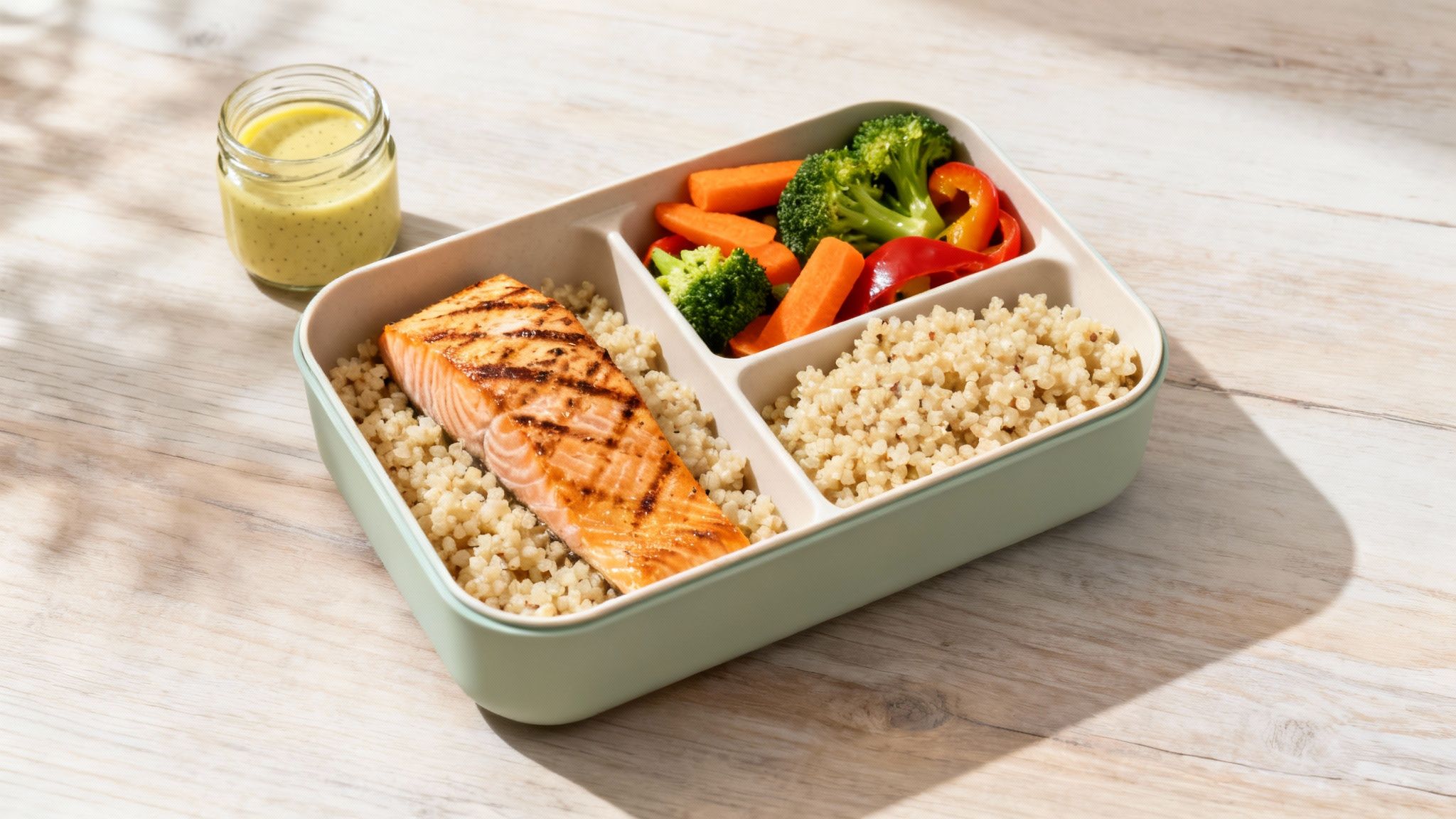
Lunch (around 1 p.m.): A colorful bowl is ideal, especially for meal prep. Quinoa or sweet potatoes make good bases. Add a large portion of leafy green vegetables, roasted broccoli, chickpeas, and perhaps a piece of grilled chicken or salmon. A simple dressing made with olive oil, lemon juice, and herbs rounds everything off and provides anti-inflammatory fatty acids.
-
Dinner (around 6 p.m.): In the evening, it should be easy to digest so that your body can wind down at night. A creamy vegetable soup—for example, made with pumpkin or zucchini and a splash of coconut milk—is wonderfully soothing. Steamed fish with plenty of colorful vegetables such as bell peppers and zucchini is just as good. This way, your digestive system isn’t put under unnecessary strain.
Meal prep tips for stressful weeks
Good preparation is half the battle. Simply set aside one or two hours on Sunday to prepare a few things for the week. You’ll see how much time and stress this saves you.
- Cook basic ingredients in advance: Cook a larger quantity of quinoa, millet, or rice. It will easily keep in the refrigerator for 3–4 days.
- Chop vegetables: Wash and cut bell peppers, carrots, or cucumbers and place them in airtight containers. That way, you’ll always have a quick raw vegetable snack ready to hand.
- Prepare proteins: Hard-boil a few eggs or fry some chicken breast. Both make a great addition to salads or provide a quick protein boost between meals.
- Mix dressings: A delicious salad dressing can be made from scratch in two minutes—and you know exactly what’s in it. No unnecessary sugars or additives.
A simple shopping trick: Stick mainly to the outer aisles of the supermarket. That’s where you’ll find fresh vegetables, fruit, fish, and meat—the foundation of your diet. The middle aisles are usually where highly processed products with endlessly long ingredient lists lurk.
Smart snacks to beat the afternoon slump
When you get a little hungry, it’s worth its weight in gold to have a healthy option on hand. Good snacks stabilize your blood sugar and give you energy instead of sending you into an afternoon slump.
- A handful of nuts (Brazil nuts for selenium, almonds for magnesium)
- An apple with a spoonful of nut butter
- Vegetable sticks (carrot, cucumber, bell pepper) with guacamole or a herb dip
- A few olives or a hard-boiled egg
- A small cup of coconut yogurt with a handful of berries
With these simple strategies, you can effortlessly incorporate the Hashimoto’s diet into your everyday life. It’s not about perfection. It’s about making a conscious decision for your well-being every day. You’ll quickly notice how positively your body responds to this kind of caring attention.
Your path to greater well-being: How to get started now
You’ve now learned a lot about how to use your Hashimoto’s diet specifically for your needs. The most important thing is this: An anti-inflammatory, nutrient-rich diet is not a dogma, but your very own tool for alleviating symptoms and easing the strain on your thyroid.
But remember: This is a journey, not a sprint. Be patient with yourself and your body. The hardest part is often taking the first step—not changing everything overnight.
The first steps—small but effective
Start at your own pace. Choose one or two foods known to be triggers, such as gluten or refined sugar. Simply try avoiding them or significantly reducing them for a few weeks. Instead, fill your plate with more of the good, nutrient-rich foods.
- Listen to your body: Keep a small food journal. How do you feel after meals? Do you have more energy? Is the feeling of fullness improving? Notes can help you identify patterns.
- Focus on abundance, not deprivation: Don't focus on what you're cutting out, but on all the delicious and healthy foods you can discover.
Every step, no matter how small, is a win and can make a huge difference to your well-being. See this change as a form of self-care. This is your way to regain control and give your body what it needs to return to balance.
The right diet is your opportunity to make a conscious choice for your health every day. It is a powerful tool for calming silent inflammation and noticeably improving your quality of life.
Also keep an eye on your lab results. They show you in black and white whether your efforts are paying off. If you want to dive deeper and understand what the numbers on your report mean, take a look at our guide to the most important TSH and thyroid levels.
Frequently asked questions about nutrition for Hashimoto's
After all the information about the right diet for Hashimoto's, a few very specific questions often remain. No problem! We've collected the most common ones here to give you even more confidence on your journey.
Do I need to completely avoid iodine with Hashimoto's?
Clear answer: No, most people neither need to nor should completely avoid iodine. Iodine is an essential trace element that your thyroid needs to produce hormones.
It usually only becomes problematic when extremely high amounts of iodine are involved—think certain seaweed supplements or medical contrast agents. Such overdoses can indeed fuel the inflammation associated with Hashimoto's.
However, a normal iodine intake, such as the kind you get from iodized table salt or occasionally eating sea fish, is absolutely harmless and even important for most people affected.
Think of iodine like the sun: We need a little of it to live, but too much can be harmful. It is all about finding the right balance.
It is best to discuss the amount that is right for you personally with your doctor. Based on your blood values and how you feel, they can give you the best recommendation.
How quickly will I notice an improvement after changing my diet?
We hear this question often because, of course, you want to see quick results. But the truth is that the answer is as individual as you are. Every body works at its own pace.
Some people notice a difference after just a few days. This may show up as more energy in the morning, a calmer stomach after eating, or simply a clearer mind.
For others, it may take a few weeks or even months for the deeper, positive effects to become apparent—for example, a measurable reduction in blood antibody levels or less joint pain. The important thing is to remain patient and consistently give your body the opportunity to adapt.
Can I cure Hashimoto’s through diet alone?
According to current scientific understanding, Hashimoto’s thyroiditis is a chronic autoimmune disease that is considered incurable. This means that your immune system’s fundamental tendency to attack the thyroid remains.
But—and this is the crucial message—your diet is an incredibly powerful tool for significantly influencing the course of the disease. You can use it to:
- Dramatically improve symptoms: Fatigue, brain fog, and digestive problems can be greatly reduced or even disappear completely.
- Reduce inflammation: You calm your immune system and, so to speak, take away the “ammunition” used in attacks on your thyroid.
- Slow the progression: A smart diet can help slow the destruction of thyroid tissue.
So your diet is one of the most important pillars of your treatment, usually working hand in hand with the right medication regimen. It gives you back control and the opportunity to actively improve your quality of life—so you can finally feel truly comfortable in your body again.
Would you like to delve even deeper into your personal health and find out which nutrients you are lacking or how your gut is doing? mybody-x.com offers scientifically based at-home analyses to help you better understand your body and optimize your diet in a targeted way. Discover the right tests for your health goals now at https://mybody-x.com.


Share now:
What helps with digestion? 10 tips that work immediately
Regulate Hormones Naturally: How to Restore Balance to Your Body