
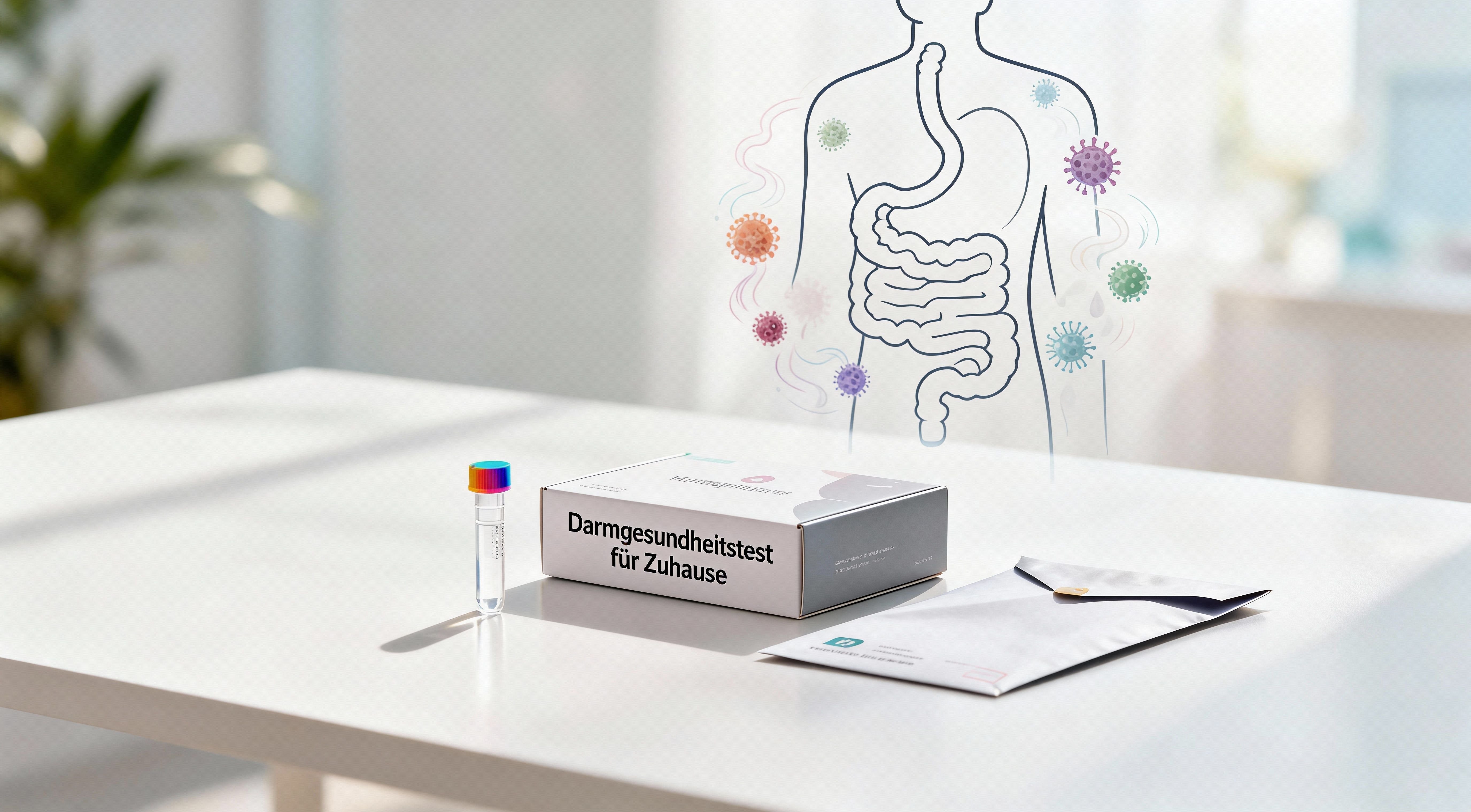
At-home gut test: Your guide to greater well-being
An at-home gut test is an easy way to gain initial insight into your gut health. A small stool sample is analyzed to help you better understand your microbiome and provide valuable guidance for your diet and lifestyle.
Why your well-being begins in the gut
Do you sometimes feel low on energy, struggle with bloating, or simply feel that your digestion is not running smoothly? You are not alone. Many people are looking for answers to such nonspecific symptoms, and the key to solving them often lies at the center of our body: the gut.
It is so much more than just a digestive organ—think of it instead as a kind of command center that influences your overall well-being.
Trillions of microorganisms live in your gut, together forming your very own gut microbiome. It is best compared to a thriving garden: the more diverse the plants—that is, your bacteria—the more stable and resilient the entire ecosystem.
A healthy microbiome is fundamental to your health. It not only supports digestion and nutrient absorption but also plays a crucial role in your immune system, skin, and even your mood.
The close connection between our gut and brain, known as the gut-brain axis, is increasingly coming into focus when it comes to our overall well-being.
The modern path to gut health
In the past, complex examinations at the doctor’s office were often the only way to learn more about the state of the gut. Today, modern testing methods, such as those from mybody-x, provide an easy way to gain insight from home. Such a gut test works like a personal health compass, providing you with precise data without requiring a doctor’s appointment.
This proactive approach to taking control of your own health is becoming increasingly important. For example, colorectal cancer screening in Germany reached 2023 a new peak, with demand for simple immunological stool tests rising sharply. This trend shows how valuable accessible at-home testing methods have become.
Our article will tell you more about the true significance that gut health has for your well-being.
What a gut test can do for you
An at-home test provides you with a detailed snapshot of your gut. It can help you identify the causes of recurring symptoms and take targeted action. The insights gained provide the basis for:
- Optimizing your diet in a targeted way: Find out which foods your body can process well and which ones specifically strengthen your microbiome.
- Getting to the bottom of unexplained symptoms: Discover possible causes of bloating, persistent fatigue, or skin problems.
- Strengthening your immune system: A balanced gut is the foundation of strong defenses.
- Taking control yourself: Instead of guessing, you receive evidence-based recommendations tailored to your individual needs.
What types of gut tests are available
Not all gut tests are the same. Depending on what you want to find out about your body, different analytical methods can provide you with targeted answers. It’s best to think of it as a well-organized toolbox: there’s a suitable tool for every task. Gut diagnostics work the same way.
The term “gut test” is actually an umbrella term for a wide range of different analytical methods. They all use a stool sample as their basis, but shed light on completely different aspects of your gut health. So choosing the right test depends entirely on your personal goal.
Do you simply want to understand the composition of your gut flora? Are you looking for the causes of your ongoing digestive problems? Or are you interested in targeted preventive care? Let’s take a closer look at the most important types of tests so you can find the right one for you.
Microbiome tests – the map of your gut bacteria
Probably the best-known and most comprehensive gut test is the microbiome analysis. It deciphers the DNA of microorganisms in your stool sample to create an incredibly detailed picture of your gut flora. You could also call it a census of your gut.
This test answers key questions such as:
- Who actually lives in my gut? You’ll find out which beneficial bacteria (e.g., lactobacilli and bifidobacteria) call your gut home and whether potentially problematic germs may have taken hold.
- How diverse is my microbiome? High species diversity is considered a sign of a strong and healthy gut ecosystem. Low diversity, on the other hand, may indicate an imbalance.
- Is dysbiosis present? This term describes an imbalance between beneficial and harmful bacteria. It is often associated with digestive problems, a weakened immune system, or constant fatigue.
A microbiome test provides the perfect foundation for targeted dietary recommendations. You learn which probiotic and prebiotic foods best support your personal microbiome, helping to specifically promote beneficial bacteria. If you would like to delve deeper into the world of gut bacteria, you will find plenty of further information in our comprehensive microbiome test comparison.
Inflammatory marker tests – detecting silent fires in the body
Sometimes it is not the “wrong” bacteria at all, but chronic, subtle inflammatory processes in the gut that are causing you problems. These “silent inflammations” can damage the intestinal lining and lead to nonspecific symptoms such as abdominal pain, discomfort, or bloating.
A test for inflammatory markers measures certain proteins in the stool that indicate precisely these kinds of processes. The best-known marker here is calprotectin. An elevated level can be a clear signal of inflammatory processes and should always be evaluated by a doctor. Such tests are particularly useful if you suffer from chronic symptoms whose cause simply cannot be found.
Pathogen screenings – a targeted search for troublemakers
While a microbiome test examines the entire ecosystem, pathogen screening is more like a targeted search. It specifically looks for pathogens such as certain bacteria (e.g., Clostridium difficile), parasites, or yeasts (e.g., Candida albicans).
Such a test is particularly relevant when there is a specific reason for suspicion—for example, after traveling to distant countries, following antibiotic therapy, or in cases of acute, severe gastrointestinal symptoms. It helps identify or rule out a specific infection as the cause of the problems.
Tests for hidden blood – an important screening indicator
Tests that look for occult (that is, hidden) blood in the stool are a key component of colorectal cancer screening. You may also know them as fecal immunochemical tests (FIT or iFOBT). These tests can detect tiny amounts of blood that are absolutely invisible to the naked eye.
Blood in the stool is not automatically a sign of a serious disease. However, it may indicate polyps or other changes in the intestinal lining. A positive result therefore does not mean that you have cancer, but it is an important signal that must be clarified by a medical examination—usually a colonoscopy.
This type of bowel test is therefore primarily intended for preventive healthcare. It helps identify potential risks at an early stage and take timely action before serious problems arise.
Which bowel test is right for your goal?
To make your decision easier, we have summarized the different test types and their areas of application in an overview. This table gives you a quick overview of which test type is best suited to which health-related questions and goals.
| Test type | What is measured? | Ideal for you if... | Reference to mybody-x |
|---|---|---|---|
| Microbiome test | The DNA of all bacteria and microorganisms in the stool sample (species diversity, dysbiosis) | ...you want a comprehensive picture of your gut flora, optimize your diet, or understand the cause of vague digestive problems. | Our gut microbiome test provides a detailed analysis of your gut ecosystem. |
| Inflammation marker test | Specific proteins that indicate inflammation (e.g., calprotectin) | ...you suffer from chronic, unexplained abdominal symptoms, discomfort, or suspect silent inflammation. | Markers such as calprotectin are part of our more comprehensive at-home self-tests. |
| Intolerance test | Targeted detection of markers for food intolerances (e.g., histamine) | ...you suspect that certain foods are causing your digestive problems or discomfort. | Our histamine intolerance test tells you whether your body has problems breaking down histamine. |
| Test for hidden blood | Tiny, invisible traces of blood in the stool (fecal occult blood) | ...you want to undergo an important screening examination as part of colorectal cancer prevention. | These tests are an important part of preventive healthcare and should be discussed with a doctor. |
Each test has its own specific focus. Which one is right for you depends entirely on the answer you are looking for.
The various self-tests from mybody-x are specifically designed to give you precise insights into different areas of your health—from general well-being and nutrient absorption to specific intolerances. This gives you not just data, but a clear basis for action so you can finally take your health into your own hands.
How easy it is to do a bowel test at home
For many people, the thought of collecting a stool sample sounds off-putting at first. Honestly, who actually enjoys doing that? But that concern is a thing of the past. Modern at-home test kits are designed so cleverly that the entire process is not only discreet and hygienic but also genuinely straightforward—all from the comfort of your own home, without waiting rooms or appointment-related stress.
You can think of the process as a perfectly designed guide that takes you by the hand and safely leads you through each step. Everything you need comes in a small, compact package and is prepared so that you can hardly do anything wrong.
Your path to your results in four steps
The entire process, from deciding to take the test to receiving your completed results report, is divided into four clear and simple phases. This way, you always have a complete overview and know exactly what comes next.
- Order and get started: Order your mybody-x test kit conveniently online. As soon as it arrives, activate it with an individual code in your secure online customer account. That's the starting point.
- Collect your sample – easy: The kit contains everything you need to collect your sample, including clear, step-by-step instructions. Don't worry, collecting the sample itself only takes a few minutes.
- Free return to the laboratory: Pack the collected sample securely in the enclosed return envelope. Postage has already been paid, so you only need to drop it off at the post office or put it in the nearest mailbox.
- Analysis and your personal report: Your sample is analyzed at our specialist laboratory in Germany, which is certified according to ISO standards. As soon as the analysis is complete, you'll receive a notification and can view your results and personalized recommendations directly online.
What to expect in the test kit
Every mybody-x gut test kit was developed with one goal: to make collecting your sample as easy as possible. You don't need to purchase or prepare anything yourself. The kit typically includes:
- A sample tube containing a special stabilizing liquid that keeps your sample fresh during transport.
- A hygienic stool collection aid that you simply attach to the toilet and dispose of afterward.
- Detailed, illustrated instructions that explain every step with complete clarity.
- A prepaid return envelope for safe, free shipping to the laboratory.
This thoughtfully assembled kit takes away all the uncertainty. If you still have questions, our guide provides more details on how to collect your stool sample correctly.
Why home tests are so important for preventive screening
Accessible home tests are playing an increasingly important role in preventive healthcare. They make it possible to identify important health indicators at an early stage that might otherwise have gone unnoticed for a long time.
A pilot program by SBK impressively highlights this relevance: blood was detected in the stool in one in every ten tests—a clear sign of how important such analyses can be for early detection. You can read more interesting insights into this program on the SBK website.
The following graphic gives you an overview of the different areas a gut test can cover—from analyzing your bacterial community to important preventive screening.
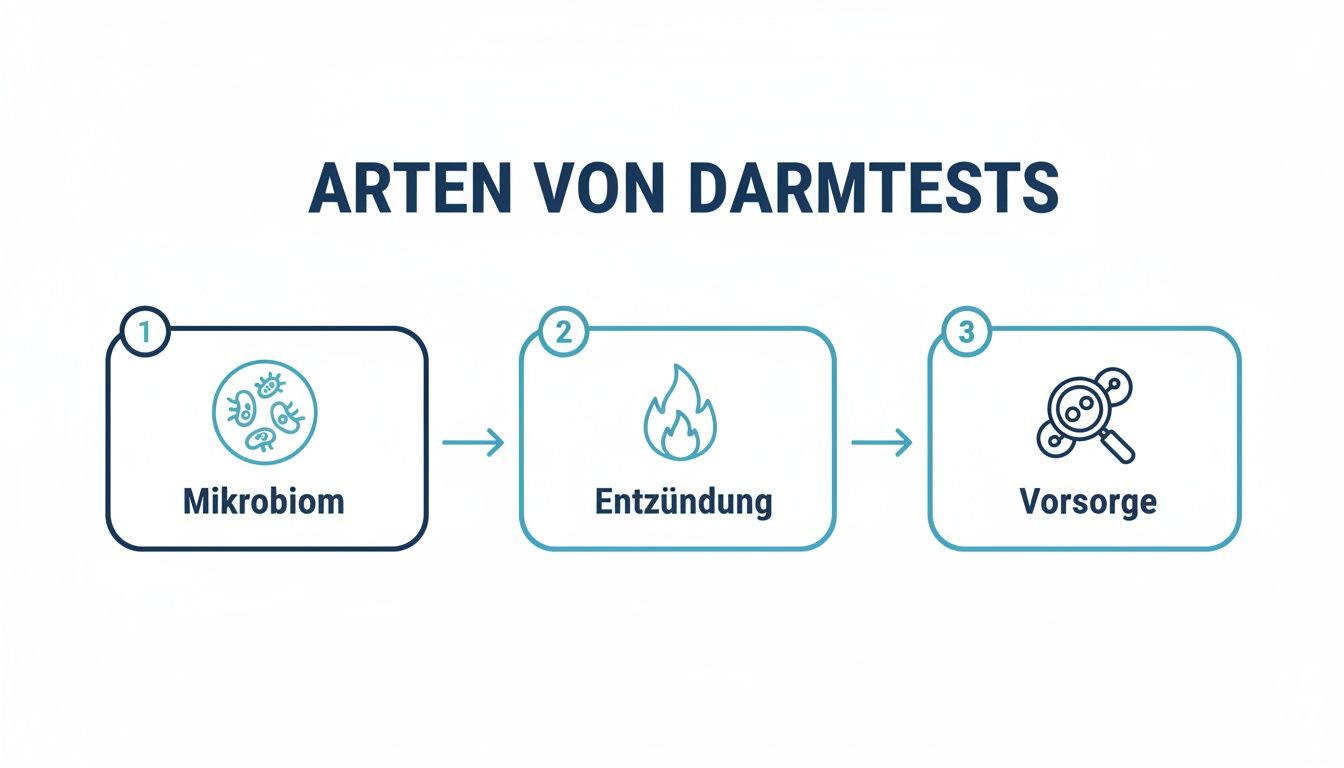
As you can see, a gut test can focus specifically on various aspects such as the microbiome, inflammation markers or screening values to give you a clear picture of your health.
A home gut test is more than just an analysis. It is a tool that enables you to take an active, informed approach to your health. It provides the data you need to make the right decisions for your well-being.
mybody-x tests make this process not only easy, but also completely secure. Your data is handled strictly in accordance with GDPR requirements, and the laboratory analysis is pseudonymized to protect your privacy at all times. This means you can focus fully on what really matters: your health.
Understanding and making the most of your results
Your results report is finally here. This is a pivotal moment, because you now hold the key to greater well-being in your hands. But what do you do with all the data, graphs and scientific terms? A test result is only as valuable as the tips you can take from it for your everyday life. That is exactly where we come in.
Your mybody-x report is not an incomprehensible laboratory document, but your very own roadmap to better health. We translate the complex data from your gut test into clear, understandable and, above all, actionable insights. This turns pure information into a real benefit for your gut feeling and your health.
Decoding the key terms
When you open your report, you will probably come across a few technical terms. Don’t worry—you don’t have to be a biologist to understand what they mean. Here are the key concepts explained simply so you can immediately get the full picture.
- Bacterial diversity: Picture your microbiome as a colorful, flourishing rainforest. A high diversity of different bacterial species makes this ecosystem resilient and stable. When diversity is low, it is more like a monoculture that is more susceptible to disruption.
- Dysbiosis: This is the technical term for an imbalance in your gut flora. Put simply, the balance between beneficial bacteria and potentially harmful bacteria has been disrupted. This is often the root cause of many nonspecific digestive complaints.
- Enterotype: Your microbiome can be broadly assigned to one of three main types, depending on which bacterial genera predominate (e.g., Bacteroides, Prevotella, or Ruminococcus). This type provides initial clues about how your body prefers to process certain nutrients, such as fats or carbohydrates.
These three cornerstones give you an initial overview of your gut health and indicate where there may still be room for improvement.
From data to truly personalized recommendations
The truly exciting part of your report is the personalized recommendations. These are not generic tips; they are based directly on your individual analysis results. This ensures that you receive exactly the advice your body really needs right now.
Your results report is not a verdict, but an opportunity. It shows you precisely which small changes to your diet and lifestyle could have the greatest positive impact on your well-being.
For example, a mybody-x gut test analyzes how well your microbiome can produce important vitamins, such as vitamin K or B vitamins. It also examines how efficiently it converts dietary fiber into valuable short-chain fatty acids. These fatty acids—especially butyrate—are the main source of energy for your intestinal cells and also have an anti-inflammatory effect throughout your body.
Concrete examples from practice
Let’s walk through two examples to see how laboratory results become practical everyday tips:
Example 1: Low bacterial diversity
- Your result shows: Your gut ecosystem is relatively low in species diversity. Certain groups of beneficial bacteria that are important for digesting fiber are missing.
- Your personal recommendation: Intentionally include more prebiotic foods in your diet. These include leeks, onions, asparagus, oatmeal, and legumes, for example. They are your good bacteria’s favorite food and help them multiply and increase the diversity in your gut.
Example 2: A lack of butyrate producers
- Your result shows: Your microbiome produces too little butyrate because the bacterial species responsible for this are underrepresented. This could explain why you often feel low on energy.
- Your personal recommendation: Eat more resistant starch. You can find it in cooled potatoes, green bananas, and whole-grain products. This special type of starch is essentially fuel for butyrate-producing bacteria.
You can see that the recommendations are always directly linked to your results. It’s not about general health platitudes, but about targeted measures based on your unique microbiome composition.
mybody-x analyses often go even further and can also provide indications of intolerances or the status of important nutrients. This gives you a comprehensive picture that goes far beyond a purely microbiome analysis. With this knowledge, you can adjust your diet and lifestyle to alleviate digestive discomfort, boost your energy, and strengthen your immune system over the long term.
From knowledge to action: Your concrete roadmap
A lab report full of data is a great start. But the real value of a gut test lies in translating these insights into your everyday life. That’s exactly where we come in: We turn your results into simple, achievable habits that can genuinely improve your well-being.
After the analysis comes action. This section gives you practical tools to turn your test recommendations into a healthier lifestyle. It’s not about radical restrictions, but about smart adjustments that genuinely fit you and your life.

Making your diet gut-friendly
Your gut test may have shown that certain beneficial bacteria are underrepresented or that your overall diversity is somewhat low. The good news: Your diet gives you the greatest leverage to change this.
Think of prebiotics as the absolute favorite food of your beneficial gut inhabitants. These are special fibers that stimulate the growth of precisely these beneficial bacteria.
Think of every meal as an investment in your microbiome. Every gut-friendly ingredient is like a little gardener that tends your inner ecosystem and helps it flourish.
At the same time, probiotics are living microorganisms that directly reinforce your gut flora—like hands-on support for your team in the gut. You can find them primarily in fermented foods.
The Best Foods for Your Gut
To put the theory into practice, you can easily incorporate the following foods into your diet.
Prebiotic Powerhouses (The Food):
- Vegetables: Chicory, artichokes, leeks, onions, garlic, and asparagus are true champions.
- Legumes: Lentils, chickpeas, and beans provide valuable fiber.
- Whole grains: Oats, whole-grain bread, and quinoa keep you full for a long time and nourish your good bacteria.
- Resistant starch: Chilled potatoes, pasta, or rice from the day before, as well as green bananas, are an excellent source of nourishment.
Probiotic Helpers (The Reinforcement):
- Yogurt & kefir: Choose unsweetened varieties with live cultures.
- Sauerkraut: A traditional and highly effective source of lactic acid bacteria.
- Kimchi & miso: Fermented specialties from Asian cuisine add variety.
Even small changes, such as natural yogurt with oats for breakfast or a serving of lentils for lunch, can make a huge difference.
More Than Just Nutrition: Your Lifestyle Matters
A happy gut needs more than just the right food. Your lifestyle plays an equally crucial role. Often underestimated factors have a direct impact on the composition of your microbiome.
Stress management: Chronic stress can weaken the gut barrier and disrupt the balance of your gut flora. Find routines that help you switch off. These could include 10 minutes of meditation in the morning, a walk in nature, or mindful breathing exercises.
Exercise: Regular, moderate exercise promotes bowel activity and can increase the diversity of your gut bacteria. You don't have to run a marathon—even just 30 minutes of brisk walking a day supports your digestion and well-being.
Sleep: Sufficient, restful sleep is absolutely essential for the regeneration of your entire body, including your gut. Try to establish a consistent sleep routine to help your internal clock.
The effectiveness of measures like these, often prompted by a gut test, can be measured. For example, since its introduction in 2002, colorectal cancer screening, which often begins with a stool test, has shown a continuous decline in new cases. This demonstrates that early detection and proactive action have a direct positive impact. Learn more about the development of screening on zi.de.
By combining the insights from your mybody-x test with these practical tips, you turn knowledge into action and lay the foundation for long-term gut health.
Your most frequently asked questions about the gut test
A home gut test? It often raises a lot of questions. Completely understandable, since your health is at stake. To help you feel confident, we have collected the answers to the most pressing questions here—clearly, honestly, and straight to the point.
How reliable is a home gut test, really?
The reliability of a home test depends entirely on the quality of the provider. There is a world of difference between cheap tests from the internet and reputable offerings such as mybody-x. The crucial difference is that we work exclusively with ISO-certified specialist laboratories in Germany—the exact same laboratories that doctors and clinics entrust with their samples.
The analytical methods, such as DNA sequencing of your microbiome, are scientifically validated and provide extremely precise data. Of course, such a test does not replace a medical diagnosis in the case of acute illnesses. But think of it this way: It is like an incredibly sharp, data-based picture of your gut, providing you with an absolutely reliable basis for making personal health and nutrition decisions.
Do I need to change my diet before the test?
No, and that is a very important point! To get an authentic result, it is crucial that you eat as usual during the one to two weeks before collecting the sample. After all, the test is intended to provide a realistic picture of your current gut health and everyday habits.
If you radically changed your diet shortly beforehand, you would distort the results. You would not see how your gut responds to your normal daily routine, but only to a short-term exception. So just continue as usual.
Important note: The only exception is antibiotics. Since they have a significant impact on the microbiome, you should wait a certain amount of time after your last dose. You can always find precise instructions in your test kit’s instructions.
Does a gut test replace a visit to the doctor?
A clear no. A gut test is a fantastic tool for health prevention and optimization. It gives you the opportunity to proactively support your well-being, understand connections, and improve your diet in a targeted way. But for acute, severe, or persistent symptoms, it never replaces a diagnosis by a doctor.
Think of the test as a valuable complement. It is your personal health compass, providing valuable information that you can also discuss with your doctor if needed. Your doctor is responsible for medical diagnosis and treatment; the test empowers you to take responsibility for your health into your own hands.
What happens to my data? Is it secure?
Protecting your data is mybody-x’s top priority. We understand how sensitive health data is and follow the strictest German and European data protection regulations.
The entire process is designed to protect your privacy at all times:
- Pseudonymization: Your sample is analyzed under a pseudonym in the laboratory. The laboratory therefore receives only a sample ID and no personal data such as your name or address.
- Encryption: Your results are transferred from the laboratory to your personal online account using secure end-to-end encryption.
- GDPR compliance: Your data is handled strictly in accordance with the requirements of the General Data Protection Regulation (GDPR) and stored on secure servers in Germany.
- Your control: You retain full control over your data at all times and can decide whether and when it should be deleted.
So you can be absolutely sure that your sensitive health information is in the best and safest hands with us.
Are you ready to take control of your well-being and finally understand what your body really needs? A mybody-x gut test provides you with the scientifically sound answers and clear recommendations for action you’re looking for. Discover the possibilities now and start your journey toward better gut health at https://mybody-x.com.



Share now:
How are the intestines and bladder connected, and what helps with symptoms?
Your gut microbiome test: The key to a better gut feeling and greater well-being