
Step-by-step DNA analysis: Understanding individual health data
DNA tests are increasingly fascinating to people, as they promise individual insights into health and ancestry. However, many are surprised. Although over 80 percent of errors in the results are caused by simple sample contamination , most users pay little attention to proper preparation. This is precisely where it's decided whether a simple saliva sample will yield valuable results or not.
Table of contents
- Step 1: Prepare your DNA test kit
- Step 2: Take your DNA sample
- Step 3: Send your sample to the laboratory
- Step 4: Wait for the results of the analysis.
- Step 5: Interpret the results
- Step 6: Use the insights gained
Brief summary
| Main point | Explanation |
|---|---|
| 1. Careful preparation of the kit | Thorough study of the instructions ensures precise sampling and correct handling. |
| 2. Correct sample collection | Avoid contamination by eating and touching the swab area before taking the sample. |
| 3. Correct dispatch of the sample | Complete labeling and shipping within the timeframes ensures the integrity of the sample. |
| 4. Patience during the analysis period | Use the waiting time to learn about genetic health and write down any questions you may have. |
| 5. Active implementation of the results | Develop personalized health strategies based on your genetic insights for a better quality of life. |
Step 1: Prepare your DNA test kit
Preparing your DNA test kit is crucial for accurate and reliable results. This first step involves gathering all necessary materials and creating optimal conditions for sample collection. Care and attention during this phase guarantee the quality of your analysis .
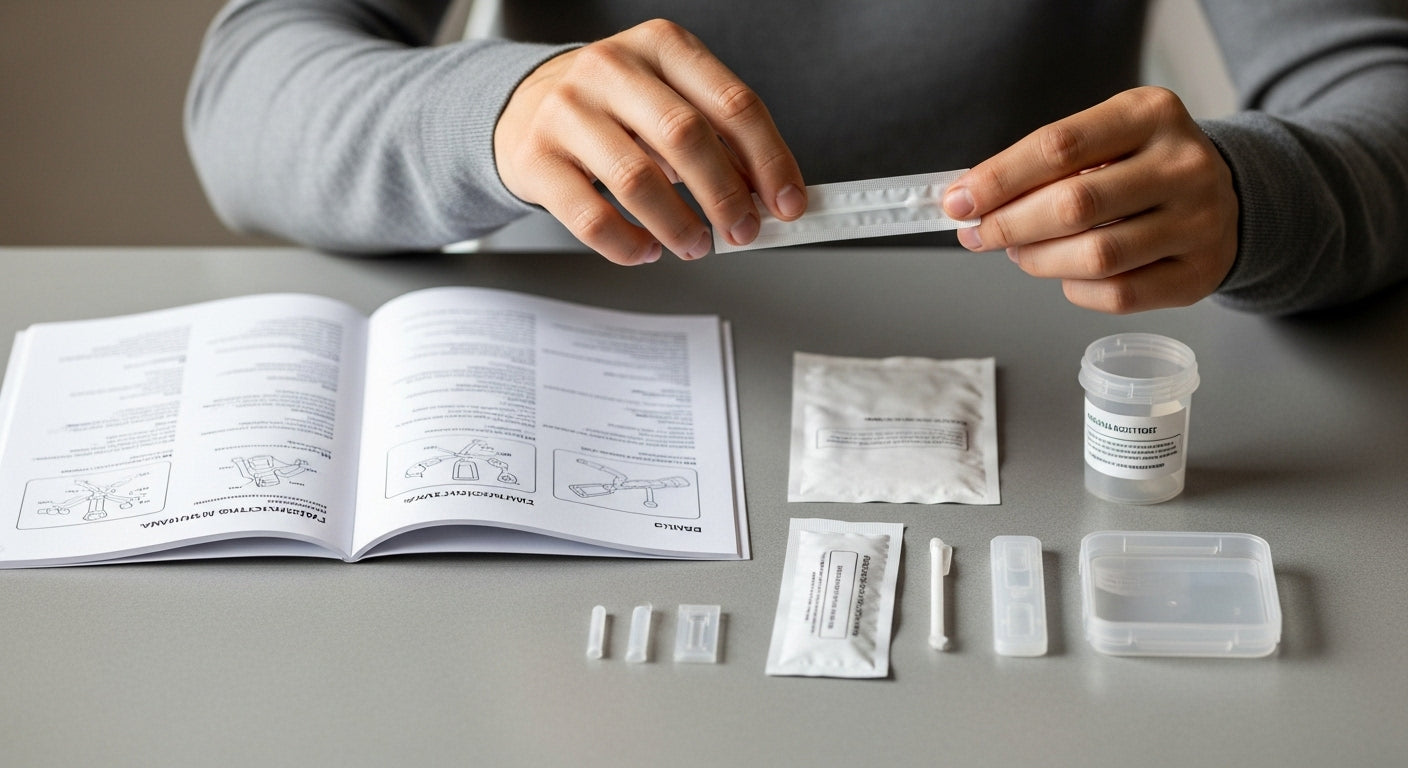
Take your time to carefully review the kit. Each DNA test is slightly different, but generally you will need some standard items: the provided sample collection kit, instructions, identification labels, and the return envelope. Our DNA analysis guide offers additional background information should you require further details.
Before taking the sample, you need to make some important preparations. First, wash your hands thoroughly with soap and clean water to avoid contamination. Avoid eating, drinking, or smoking immediately before taking the sample. These activities can leave saliva residue or chemical traces that could falsify the test result.
Read the enclosed instructions very carefully. Pay particular attention to:
- The exact sampling method
- Time limits for sample submission
- Specific storage instructions
Prepare a clean, well-lit work area where you can collect the sample undisturbed. Place all materials within easy reach and check that the sample collection container is properly labeled and ready. Important: Do not touch the inside of the collection container with your hands to avoid contamination.
With these preparations, you are optimally equipped for the next step and can ensure that your DNA sample meets the highest quality standards.
Below is a table summarizing the most important materials required to correctly perform a DNA test according to the instructions.
| material | Purpose | Special notes |
|---|---|---|
| Sampling kit | Collecting the DNA sample | Do not touch the inside |
| Instructions | Guided walkthrough of all steps | Read thoroughly before starting. |
| Identification labels | Sample identification | Apply immediately after removal |
| Return envelope | Sending the sample to the laboratory | Use immediately after sampling |
| Soap and water | Clean your hands before taking the product | Wash thoroughly to avoid contamination. |
| Pen | Label and document | Handwritten and easily legible |
Step 2: Take your DNA sample
Sample collection is the crucial moment when your individual genetic information is captured. This step requires precision and care to ensure a high-quality DNA analysis. The quality of your sample directly determines the accuracy of the test results .
Research on genetic testing has shown that a correct sample collection procedure is crucial for precise analyses. Most DNA tests are based on a buccal swab, a simple and non-invasive method for obtaining material.
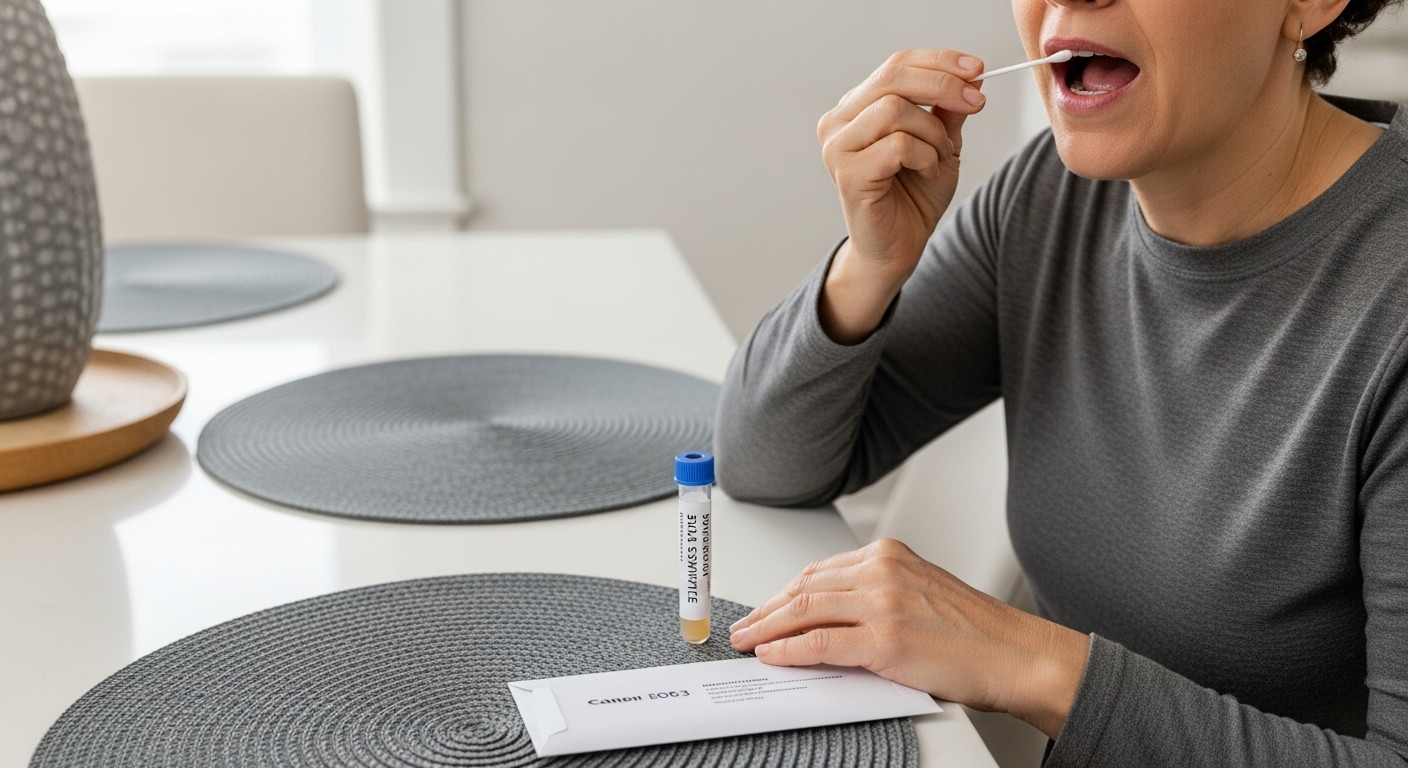
Prepare for sample collection by not eating or drinking anything for at least 30 minutes before the test. This prevents contamination and ensures that your saliva sample is pure and unaltered. Carefully remove the swab from the packaging without touching the cotton tip. Important: Avoid any direct contact with the swab surface to prevent contamination.
For successful sample collection, follow these instructions:
- Open your mouth wide
- Gently stroke the inside of both cheeks three to four times with the swab.
- Rotate the swab slightly to collect sufficient cell material.
Be sure to seal the swab in the provided container immediately after taking it. Label the container immediately with the supplied identification labels to prevent mix-ups. Our DNA test for nutrition provides further background information on sample analysis.
After taking the sample, immediately place the sealed container in the provided return envelope. Store the sample in a cool, dry place and send it in promptly.
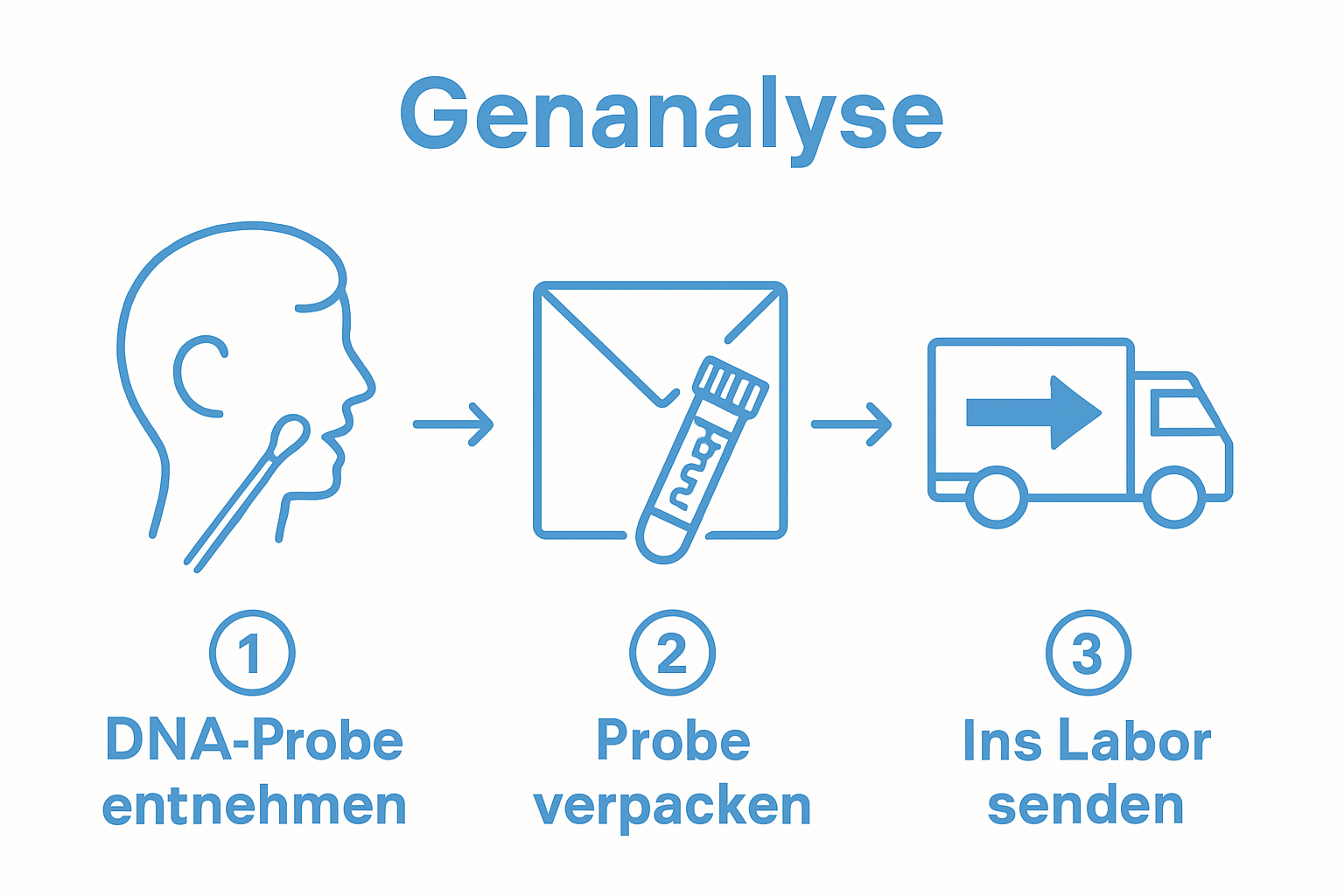 Please be sure to observe the submission deadlines to maintain sample quality.
By following these careful steps, you have prepared an optimal DNA sample that meets scientific quality standards and promises meaningful results.
Step 3: Send your sample to the laboratory
After careful sample collection, the crucial moment of laboratory transmission begins. This step is more than just sending a letter – it transfers your personal genetic information into the hands of highly specialized scientists. The correct shipping method and documentation are essential for the integrity of your sample .
According to genome research institutes, DNA analysis requires precise handling from sample collection to analysis. First, check all labels and identification numbers for completeness and accuracy. Incorrect or incomplete labeling can lead to delays or even the loss of your valuable sample.
Preparing for shipment is a multi-step process. Seal the sample container completely according to the enclosed instructions. Ensure that no liquid can leak out. Carefully place the sealed container in the provided return envelope. Important: Avoid extreme temperatures or direct sunlight during transport .
For smooth shipping, we recommend:
- Send the return envelope immediately after packaging the sample.
- To carry out the shipment within the specified time period.
- Use shipment tracking if possible.
Before sending the envelope, photograph the tracking number and the shipping confirmation. This documentation serves as your personal proof of purchase and can be helpful in case of any queries. Our DNA tests are easy to use and provide additional information about the analysis process.
After your sample is shipped, an exciting wait begins. Our lab technicians will now analyze it using state-of-the-art methods. Depending on the scope of the test, this can take anywhere from a few days to several weeks. Please keep the tracking information and be patient – you will soon gain insights into your unique genetic makeup.
By submitting your sample, you have completed the most important step towards your personalized health analysis. The scientific journey of your DNA now begins in the laboratory.
Below is a checklist summarizing the most important points for sending your DNA sample, so that no crucial steps are forgotten during shipping.
| Test step | Done (✓/✗) | Special features |
|---|---|---|
| Sample container correctly sealed | No liquid may leak out. | |
| Identification labels attached | Label immediately after removal | |
| All instructions followed | Do not skip any steps | |
| Return envelope used | Use original envelope | |
| Shipping was carried out promptly. | Within the recommended timeframe | |
| Tracking number noted | For personal documentation | |
| Sample stored in a cool, dry place before shipping. | No sunlight/heat |
Step 4: Wait for the results of the analysis.
The waiting period after submitting your sample is a time of excitement and anticipation. During this time, your genetic information undergoes a highly complex analysis procedure that provides insights into your individual biological characteristics. Patience during this phase is key to gaining valuable insights .
According to scientific genome research, the analysis can take several days to weeks, depending on the scope and level of detail. During this time, your sample undergoes various precise stages of analysis, utilizing state-of-the-art laboratory technologies.
To make good use of the waiting time, we recommend a few helpful strategies. Keep your contact information up to date and check your emails and inbox regularly. Most laboratories will keep you informed about the progress of your analysis digitally. Our analysis booklet can also give you an initial idea of what to expect from the results.
To make the waiting time constructive, you can:
- Learn about genetic health aspects
- Make notes on current health habits
- Gather questions you would like to ask when you receive the results.
Important to know : Reputable laboratories communicate transparently and promptly. If you haven't received a response after two weeks, contact customer service. Keep all shipping documents and your personal tracking number so you can quickly provide information if needed.
The waiting period is more than just passive waiting – it's an opportunity for self-reflection and preparation. Your genetic data will be carefully analyzed during these weeks to provide you with tailored health insights. Remain patient and positive – you will soon receive valuable insights into your individual genetic makeup.
Step 5: Interpret the results
The arrival of your DNA analysis results marks a significant moment in your health journey. This step requires more than just a cursory reading—it's about a deep understanding of your individual genetic characteristics. Interpretation is key to translating scientific data into practical insights .
According to genetic counseling guidelines, test results should not be viewed in isolation, but holistically. Take sufficient time to study the results calmly and carefully. Ideally, do this in a quiet environment where you can devote your full attention to the documents.
First, take a look at the overall structure of your results report. Professional reports are usually clearly organized and include explanations of scientific terms. Our DNA nutrition test provides additional guidance for interpretation.
For effective results analysis, we recommend:
- Read the results several times
- Researching unclear terms
- Note down any open questions
- Seek professional advice if needed.
It's important to understand that genetic results are not diagnoses, but rather statements of probability. They show your individual predispositions and risks, not absolute certainties. Consider the results as a personal health compass, not as an unalterable fate.
Pay particular attention to the recommendations and action options in your report. These are often tailored to your genetic characteristics and offer concrete starting points for lifestyle adjustments. Whether it's dietary recommendations, exercise strategies, or preventative healthcare – the results provide you with valuable, personalized insights.
Handling the results professionally also means not panicking, but thinking constructively. Genetic information is a tool for optimizing health, not a death sentence. Stay positive, informed, and proactive.
Step 6: Use the insights gained
Genetic insights are more than just scientific data – they are a personal roadmap for your health and quality of life. This crucial step transforms theoretical knowledge into practical, actionable options. The key is to integrate this information wisely and constructively into your daily life .
According to medical research, genetic information can significantly support medical decisions regarding prevention and individual healthcare. Start with an honest self-assessment: Which specific aspects of your health would you like to improve?
Systematic implementation requires a precise and targeted approach. The importance of personalized nutrition illustrates how individual health strategies can be. Translate your genetic insights into specific areas of action such as nutrition, exercise, stress management, and preventative care.
For effective implementation, we recommend:
- Defining specific health goals
- Plan small, incremental changes
- Regularly check your progress
Important to note : Genetic results are probabilities, not absolute determinants. They show your individual risks and potential, not your unalterable fate. A healthy lifestyle can positively influence genetic predispositions.
The best way to communicate your findings is to talk to your family doctor or a healthcare professional. Together, create a personalized health plan that takes your genetic information into account. Document your changes and be patient with yourself.
The journey to optimizing your health is an ongoing process. Your DNA analysis is not an endpoint, but a valuable guidepost. Stay curious, open, and proactive – your health is your most valuable resource.
Make health insights part of your new everyday life
You have now learned how a step-by-step DNA analysis can help you truly understand your individual health data. Headings like "Preparing a DNA Sample," "Interpreting the Analysis Correctly," and "Using the Insights Effectively" reveal that many people are unsure how to derive precise and practical benefits from scientific findings. The question often remains: how can complex genetic values translate into concrete improvements in nutrition, performance, and long-term health?
This is precisely where mybody®x comes in : With certified DNA metabolic tests, you effortlessly transform your results into practical recommendations. You not only receive an analysis, but also tailored tips for nutrition, weight management, or performance enhancement. Your data is secure with us, the tests can be easily performed from home, and our specialized team will guide you from sample collection to implementation. Explore our complete test overview now and take advantage of the opportunity to immediately apply your genetic insights to your everyday life. Take the first step today – towards a healthier future that's perfectly suited to you.
Frequently Asked Questions
How do I prepare my DNA test kit?
First, wash your hands thoroughly and carefully study the kit. Make sure all materials, such as the sample collection kit, instructions, and return envelope, are ready. Avoid eating or drinking before taking the sample.
How do I correctly collect my DNA sample?
To take a buccal swab, open your mouth wide and gently wipe the inside of both cheeks with the swab. Be careful not to touch the swab with your hands and immediately seal and label the sample in the container.
What do I need to consider when sending my DNA sample?
Seal the sample container according to the instructions and avoid extreme temperatures during transport. Send the sample promptly and document the tracking number for your records.
How do I interpret the results of my DNA analysis?
Take your time to read the results thoroughly and clarify any unclear terms. The results are probabilistic statements and should be considered in the context of your health. Seek professional advice if needed.
Recommendation
- DNA analysis for weight loss: Find your way to your ideal weight – mybody®x
- Your personalized nutrition: Why diets don't work – mybody®x
- DNA analysis: Your personal key to health and nutrition – mybody®x
- DNA test for nutrition: Your personal guide to optimal nutrition – mybody®x
- Understanding Why Test Multiple Biomarkers for Health Insights – Lola Health


Share:
The advantages of DNA analysis: Simple explanations
Understanding genetic analysis: Your personal compass for health