

The benefits of DNA analyses: Simple explanations
DNA analyses provide unprecedented insight into your genes. Scientists have discovered that even a simple saliva sample is enough to identify thousands of genetic variants. Sounds completely futuristic, right? What many people do not expect is that these analyses not only change research but also directly affect your everyday life. They can reveal how your body processes food, which type of training suits you, or whether you have an increased risk of certain diseases.
Table of contents
- What are DNA analyses and how do they work?
- Why Are DNA Analyses Important for Personal Health?
- How DNA Analyses Provide Insights into Genetic Predispositions
- Practical applications of DNA analyses in preventive healthcare
- The role of DNA analyses in personalized nutrition strategies
Quick overview
| Takeaway | Explanation |
|---|---|
| DNA analyses reveal genetic risks | They help identify health risks early and take preventive measures. |
| Personalized nutrition based on genetics | The analyses enable customized nutrition strategies that are optimally suited to your genetics. |
| Early detection of hereditary diseases | Genetic tests can detect potential hereditary diseases before symptoms appear. |
| Genetic variants influence metabolism | Everyone has unique variants that control nutrient utilization and metabolic processes. |
| Science-based health decisions | DNA analyses provide valuable information for making informed decisions about health and lifestyle. |
What are DNA analyses and how do they work?
DNA analyses are modern scientific methods of examination that make it possible to decode your individual genetic characteristics and traits. They provide unique insight into your biological makeup and help you better understand your health and lifestyle.
The basics of DNA analysis
DNA analysis is based on examining your deoxyribonucleic acid (DNA), the genetic blueprint of your body. Every cell in your body contains this unique sequence of information, which functions like a personal genetic code. Modern sequencing technologies enable scientists to decode and analyze this code precisely.
The key aspects of DNA analysis include:
- Identifying genetic variants
- Examining genetic information
- Assessing individual health risks
How DNA analysis works in practice
The process of DNA analysis usually begins with a simple saliva or blood sample. After the sample is collected, your DNA is extracted in the laboratory and examined using state-of-the-art molecular biology methods. Specialized algorithms and computer programs help decode and interpret the complex genetic information.
You can learn more about personalized genetic testing in our guide to DNA-based nutrition. This process enables you to understand your individual genetic predispositions and make targeted decisions for your health.
This table provides an overview of the key steps in a DNA analysis, so you can easily understand the process.
| Step | Description |
|---|---|
| Sample Collection | A saliva or blood sample is collected. |
| DNA Extraction | The genetic information is isolated from the sample. |
| Laboratory Analysis | The DNA is examined using modern methods and technologies. |
| Computer-Assisted Analysis | Special algorithms decode and interpret the data. |
| Result Interpretation | You receive clear, easy-to-understand information about your genetic traits. |
Why Are DNA Analyses Important for Personal Health?
DNA analyses are far more than just scientific investigations. They are a powerful tool for preventive healthcare that helps you understand your biological characteristics and respond specifically to your individual needs.
Prevention and Early Detection
One of the most significant functions of DNA analyses is the early detection of health risks. Medical studies show that genetic tests can help identify the risk of certain hereditary diseases before symptoms appear. This enables you to take proactive preventive measures and address potential health challenges at an early stage.
The most important benefits for your preventive healthcare include:
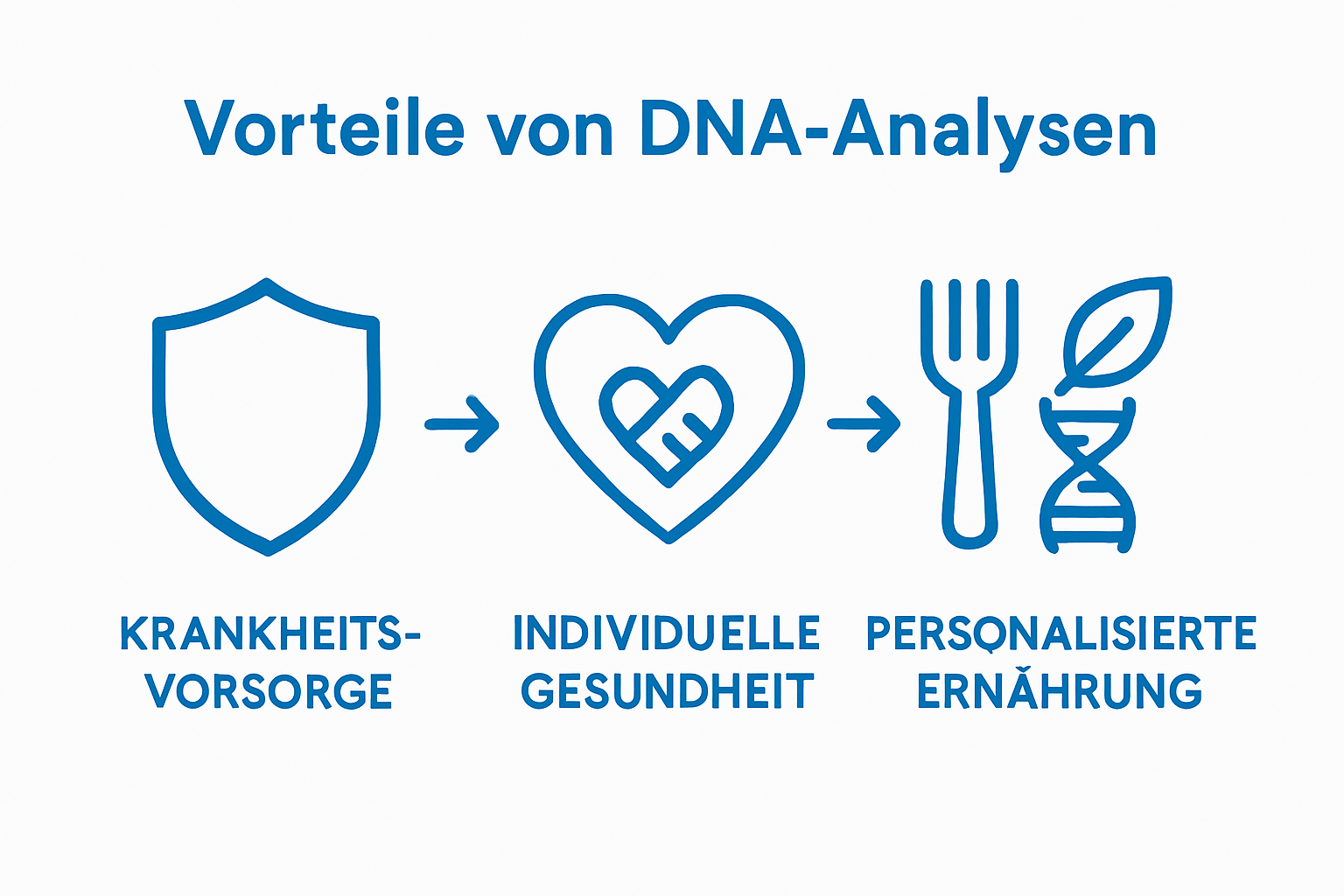
- Identification of Genetic Risk Factors
- Opportunity for Targeted Prevention Strategies
- Improved Treatment Planning
Personalized Nutrition and Lifestyle
Your genes play a crucial role in metabolism, nutrient utilization, and physical performance. With a DNA analysis, you can better understand challenges such as weight management, food sensitivities, and athletic performance. The NutriCare INFINITY DNA Test, for example, can help you optimize your personalized nutrition plan.
By understanding your genetic predispositions, you can develop targeted strategies perfectly aligned with your biological makeup. This means more energy, better performance, and greater well-being—all based on your unique genetic profile.
How DNA Analyses Provide Insights into Genetic Predispositions
DNA analyses are like a personal treasure hunt through your genetic code. They reveal hidden information about your biological traits, health risks, and individual potential, deeply embedded in your genes.
Genetic variants and their significance
Scientific research shows that every person has unique genetic variants that influence their health, metabolism, and performance. These genetic differences explain why people can achieve completely different results despite having similar diets and lifestyles.
The key aspects of genetic predispositions include:
- Individual metabolic responses
- Risks of certain diseases
- Inherited physical predispositions
Practical applications of genetics
With the help of modern DNA analyses, you can gain concrete insights into your personal traits. The WeightLoss SLIM DNA Test, for example, offers tailored insights into your genetic predispositions for weight management and eating behavior.
These analyses help you understand your individual genetic strengths and challenges. They enable you to make scientifically sound decisions about your health, nutrition, and lifestyle—based on your unique genetic profile.
Practical applications of DNA analyses in preventive healthcare
DNA analyses are no longer a thing of the future but a modern tool for preventive healthcare. They enable you to actively and proactively manage your health by providing unique insights into your biological systems.

Nutrition and metabolism
Scientific studies show that genetic variants have a decisive influence on eating behavior and metabolic processes. These analyses help you understand how your body processes nutrients, which foods are ideal for you, and how to optimally shape your nutritional strategy.
The key aspects of nutritional analysis include:
- Individual nutrient utilization
- Genetic predisposition to being overweight
- Potential food intolerances
Disease prevention and risk assessment
With a DNA test for nutrition, you can identify potential health risks at an early stage. These analyses enable you to take targeted preventive measures and adapt your lifestyle to your individual needs. You receive specific recommendations on how to proactively address genetically determined health risks.
Preventive healthcare through DNA analyses is not just about knowing your risks, but about actively and knowledgeably shaping your health. It empowers you to take preventive action and make the most of your biological strengths.
To illustrate the benefits of DNA analyses for your health, this table compares the traditional and DNA-based approaches in the areas of nutrition and preventive healthcare.
| Aspect | Traditional approach | DNA-based approach |
|---|---|---|
| Preventive healthcare | General recommendations | Individualized prevention & risk assessment |
| Nutrition recommendations | One-size-fits-all diet rules | Personalized recommendations based on genetics |
| Disease risk detection | Usually responds to symptoms | Early detection before symptoms appear |
| Treatment/intervention | Standardized methods | Customized treatment and prevention strategies |
The role of DNA analyses in personalized nutrition strategies
Your genes are more than just a biological blueprint - they are a dynamic system that significantly influences how your body processes food, absorbs nutrients, and produces energy. DNA analyses enable you to unravel these complex relationships and develop customized nutrition strategies.
Genetic foundations of nutrition
Scientific research shows that genetic variants have a decisive influence on how your body absorbs, metabolizes, and stores various nutrients. These individual genetic differences explain why diets and eating patterns produce completely different results for different people.
The most important genetic nutrition factors include:
- Individual metabolic rate
- Genetic tendency toward weight fluctuations
- Personal nutrient utilization
Personalized nutrition recommendations
With the DNA analysis for weight loss, you can gain precise insights into your genetic predispositions for nutrition and weight management. These analyses help you develop nutrition strategies that are perfectly tailored to your individual genetic predispositions.
By understanding your genetic traits, you can make targeted dietary choices that optimally support your health, performance, and well-being. This is not about a diet, but about a scientifically sound nutrition strategy tailored to you.
Get the most out of your genes – Choose personalized DNA analyses
Many people feel uncertain in everyday life when it comes to their diet, weight, or hidden health risks. In this article, you have learned how the science of DNA analysis sheds light on these issues and how you can respond specifically to your health weaknesses and strengths. Use these new insights to stop relying on chance. With a DNA metabolic test for your optimal nutrition, you can find out which diet truly suits your body. This gives you not only fast results, but above all sustainable results based on science.
Start your personal health journey now and benefit from state-of-the-art laboratory quality, convenient at-home tests, and detailed recommendations from mybody®x. Discover all our testing options and take the next step toward greater well-being and quality of life. Act now to gain more confidence, energy, and control over your health.
Frequently Asked Questions
What are DNA analyses and how do they work?
DNA analyses are scientific methods for examining your genetic characteristics. The process usually begins with a saliva or blood sample, whose DNA is then analyzed in a laboratory.
Why are DNA analyses important for my health?
DNA analyses help you identify genetic risk factors and plan preventive measures for your health. They enable the early detection of diseases and targeted adjustments to your lifestyle.
What benefits does a DNA analysis offer for nutrition?
A DNA analysis can help you understand your individual metabolic responses and develop optimally tailored nutrition strategies. It shows which nutrients your body can process more efficiently and which foods are suitable for you.
Can DNA analyses help with weight loss?
Yes, DNA analyses provide specific insights into your genetic predispositions for weight management. They help you develop personalized weight-loss strategies based on your genetic profile.



Share now:
Increase longevity for a healthy, long life
Step-by-step DNA analysis: Understanding individual health data