
healthy aging: More vitality through smart nutrition
Healthy aging does not mean stopping time. Rather, it is about breathing more life, vitality, and joy into every single year. Think of it as an active process in which you take control of your physical and mental well-being—and set the course today for an energetic future.
What healthy aging really means
Forget the old image of aging as nothing more than decline. In reality, it is your greatest opportunity to shape your health proactively instead of always reacting to problems once they have already appeared. It is about truly understanding your body, correctly interpreting its signals, and providing it with exactly what it needs.
Prevention plays the leading role here. The decisions you make today are the foundation for a long, active, and above all self-determined life. This approach is more important than ever, because a look at demographic trends in Germany shows where things are headed.
As early as 2025, people over 65 will account for around 23 percent of the population—approximately 19 million people. Unfortunately, this age group also carries the highest burden of disease, as many people enter retirement with at least one chronic illness. The goal, therefore, must be to preserve independence for as long as possible and delay the need for care well into the future. You can read more about the challenges and goals of healthcare for older adults here.
Understanding the basics: your body in transition
Aging is a completely natural biological process that affects every single cell in your body. The good news is that you have a significant influence over how quickly and how strongly this process progresses. Two aspects are particularly important:
- Cell renewal: Your body is a master of renewal, constantly replacing old cells with new ones. Over time, however, this process can become less efficient. A nutrient-rich diet and a healthy lifestyle are the best “fuel” for keeping your cells fit and functional.
- Hormonal shifts: Hormones are your body’s hardworking messengers, controlling countless processes. Their balance changes throughout life, which can affect your energy, sleep, mood, and metabolism.
Healthy aging is a bit like gardening. You can’t prevent the seasons from changing. But you can nourish the soil, pull weeds, and strengthen the plants so they thrive beautifully in every season.
The individual factor: your genetics
Everyone ages differently. What works perfectly for your friends or family may not be right for you at all. The reason lies deep in our DNA, because your genes have a say. For example, they determine how your body processes nutrients, how sensitive your skin is to the sun, or how quickly your metabolism works.
This is where personalized prevention comes into play. Instead of blindly following general advice, you can find out what your body personally needs. The mybody®x Skincare DNA Metabolism Test is a perfect example. It analyzes your genetic predispositions and, so to speak, provides you with a personal "user manual" for your skin and metabolic health. This allows you to tailor your measures precisely and make your biology your strongest ally.
The four pillars for a long and vital life
Imagine your health as a house. For it to stand firmly and protect you for a long time, it needs a strong foundation. This foundation rests on four crucial pillars: nutrition, exercise, recovery, and mental fitness. As soon as one of these pillars develops cracks, the entire house begins to wobble. So aging healthily and staying vital simply means consciously taking care of each of these pillars.
The decisive point? These areas are not separate issues. On the contrary, they are closely intertwined and constantly influence one another. Good nutrition gives you the energy for your training. Regular exercise, in turn, leads to better sleep and therefore deeper recovery. And those who are physically rested also have a clear head and are mentally stronger.
This infographic sums it up: It is about a proactive approach that connects body, mind, and preventive care.
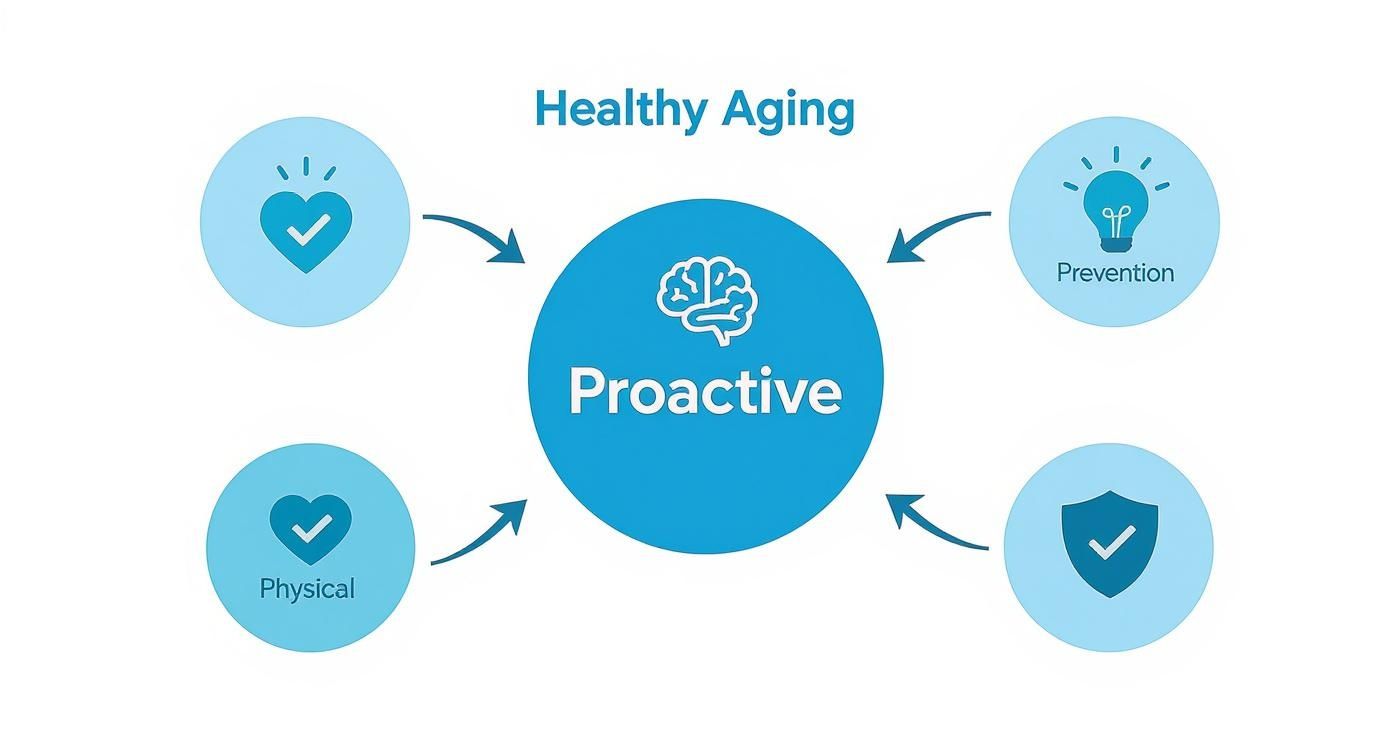
You can see immediately: A mindful, active approach to your own health is the central point from which everything else is strengthened.
To make the whole concept more tangible, let's take a closer look at the four pillars. The following table gives you a quick overview before we go into detail.
An overview of the four pillars of healthy aging
| Pillar | Why it matters | Practical implementation in everyday life |
|---|---|---|
| Nutrition | Provides the building blocks for cells, combats inflammation, and protects against oxidative stress. | A colorful variety of vegetables and fruit, healthy fats (avocado, nuts), and high-quality proteins. |
| Exercise | Maintains muscle mass and bone density, strengthens the cardiovascular system, and promotes mobility. | A mix of strength training (e.g. with weights), endurance exercise (walking, cycling), and balance exercises. |
| Regeneration | Repairs cell damage, regulates hormones, strengthens the immune system, and processes stress. | 7–8 hours of sleep per night, meditation, walks in nature, and mindful breaks. |
| Mental fitness | Promotes neuroplasticity (the brain's ability to adapt) and protects against cognitive decline. | Learn new things (a language, an instrument), solve puzzles, maintain social connections, and stay curious. |
Each pillar is important in its own right, but only together do they unleash their full power for a long, healthy life.
Pillar 1: Nutrition—your inner foundation
What you eat is so much more than just calories. It is the building material for every single cell in your body. Vitamins, minerals, and antioxidants are the invisible heroes that protect your cells from attacks by free radicals and keep silent inflammation in the body in check. These are precisely the processes that accelerate ageing.
This is not about strict prohibitions or complicated diets. It is about consciously giving your body exactly what it needs for its daily work. A colourful selection of vegetables, healthy fats from nuts or olive oil, and high-quality proteins form the foundation for a body that can meet life's challenges.
Your fork is one of the most powerful tools you have. Every meal is an opportunity to nourish your body, repair it, and strengthen it for the future.
Pillar 2: Exercise—the supporting framework of your body
Exercise is the best way to counteract the natural loss of muscle and bone with age. Your muscles are your body's supporting framework—they keep you upright, keep you mobile, and protect your joints from wear and tear. Regular activity not only slows muscle loss, but also keeps your heart fit and ensures good circulation right down to the smallest blood vessels.
And don't worry, you don't have to run a marathon. A smart combination makes all the difference:
- Strength training: Keeps muscles and bones strong.
- Endurance training: For a healthy heart and good lung function.
- Balance exercises: Help prevent falls and give you confidence in everyday life.
Every stair you climb and every walk you take counts. This is how you maintain your independence and enjoyment of life in the long term. If you are looking for practical suggestions, you will find 10 tips for a healthy lifestyle here to help you get started.
Pillar 3: Regeneration—the nightly repair workshop
While you sleep, your body is working at full speed. During this time, it repairs cell damage, organizes information in the brain, balances your hormones, and recharges your immune system. Good sleep is therefore anything but wasted time—it is the most important regeneration phase of all. Persistent sleep deprivation, on the other hand, is like fuel for the aging process.
How you deal with stress is just as important. Chronic stress puts your body in a permanent state of alarm. This promotes low-grade inflammation, one of the greatest enemies of healthy aging. Methods such as meditation, simple breathing exercises, or a walk in nature help lower your stress levels and actively support regeneration.
Pillar 4: Mental fitness—for an alert and clear mind
Your mental health is the fourth and often underestimated pillar. A curious mind stays young for longer. Your brain is like a muscle: it wants to be challenged. Whether you learn a new language, play an instrument, or solve tricky puzzles—all of this creates new connections between your nerve cells and keeps your mind flexible.
At least as important: social connections. Spending time with friends and family is pure nourishment for the soul. It protects against loneliness, gives life meaning, and lifts your mood—and this has been proven to have a positive effect on your physical health.
Using your genetics as a personal user manual
The four pillars—nutrition, exercise, regeneration, and mental fitness—are a great foundation for a vibrant life. But have you ever wondered why general advice works wonders for some people, while others barely notice any effect? The answer lies deep within you, in your DNA. Your genes are not your unchangeable destiny, but rather your very own personal user manual.
Imagine having a detailed map of your body—one that shows you exactly which routes are best for reaching your goal of aging healthily. Instead of groping through the fog of one-size-fits-all recommendations, you could take targeted shortcuts perfectly tailored to your biology. And thanks to modern genetic analyses, that is now possible.
What your DNA reveals about you
Your genetic predisposition plays a role in countless processes in your body that are crucial for healthy aging. It gives you insight into how efficiently your metabolism functions, how your body responds to certain nutrients, or what very specific needs your skin has.
An analysis can show you, for example:
- Your metabolism type: Do you burn carbohydrates or fats more efficiently? This knowledge is invaluable for optimizing your diet and maintaining your weight without much effort.
- Your nutrient needs: Might your body have a genetically determined higher need for certain vitamins or minerals, such as vitamin D or omega-3 fatty acids?
- Your skin health: How well is your skin naturally protected against UV radiation? Or how quickly does it tend to break down collagen—the protein so important for firmness and elasticity?
This information is the key to finally moving from reactive repair to proactive care. You stop guessing and start acting based on facts.
The mybody®x Skincare DNA Metabolism Test
This is where the mybody®x Skincare DNA Metabolism Test comes in. It is much more than just a test; it is your personal translator for the language of your genes. Using a simple saliva sample, it analyzes relevant genetic variations that significantly influence your skin aging and metabolism.
The result is not an incomprehensible lab report, but a clear guide with specific recommendations that apply only to you. You learn not only what you should do, but also why it is right for your unique body.
Imagine knowing exactly which skincare ingredients work best for you or which foods really boost your metabolism. This is no longer a vision of the future, but the power of personalized prevention.
With this kind of analysis, you invest your resources—your time, energy, and money—exactly where they make the greatest difference. Instead of blindly trying expensive creams or supplements, you choose specifically what suits your genetic profile.
From knowledge to targeted action
The real value naturally lies in practical application. Let’s assume your test shows a genetic predisposition to accelerated collagen breakdown. Armed with this knowledge, you can completely realign your healthy aging strategy.
Your personalized measures might then look like this:
- Nutrition: You make a deliberate effort to include collagen-supporting nutrients such as vitamin C (in peppers and berries), zinc (in nuts and lentils), and amino acids (in high-quality protein) in your meals.
- Skincare: When choosing your skincare products, you specifically look for ingredients such as Retinol or peptides that have been proven to stimulate collagen production.
- Lifestyle: You protect your skin from the sun even more consciously, because UV light is the biggest “collagen killer,” after all.
You can see that genetics provides the “why,” while you can shape the “how” through targeted measures. This approach makes you the manager of your own health. If you’d like to explore how DNA analysis works and what it can reveal about your nutrition and health, we recommend our in-depth article: Understanding Your Genes—DNA Analysis for Nutrition and Health.
By using your genetic blueprint, you make your biology your strongest ally. This allows you to optimize your measures for maximum impact and lay the foundation for a long life full of energy and well-being.
Nutrition that protects your cells from aging
What ends up on your plate each day may be the most effective tool you have for directly influencing the aging process at the cellular level. Your diet is so much more than fuel for the day. It is pure information—the instructions that tell your cells how to function, renew themselves, and, above all, protect themselves.
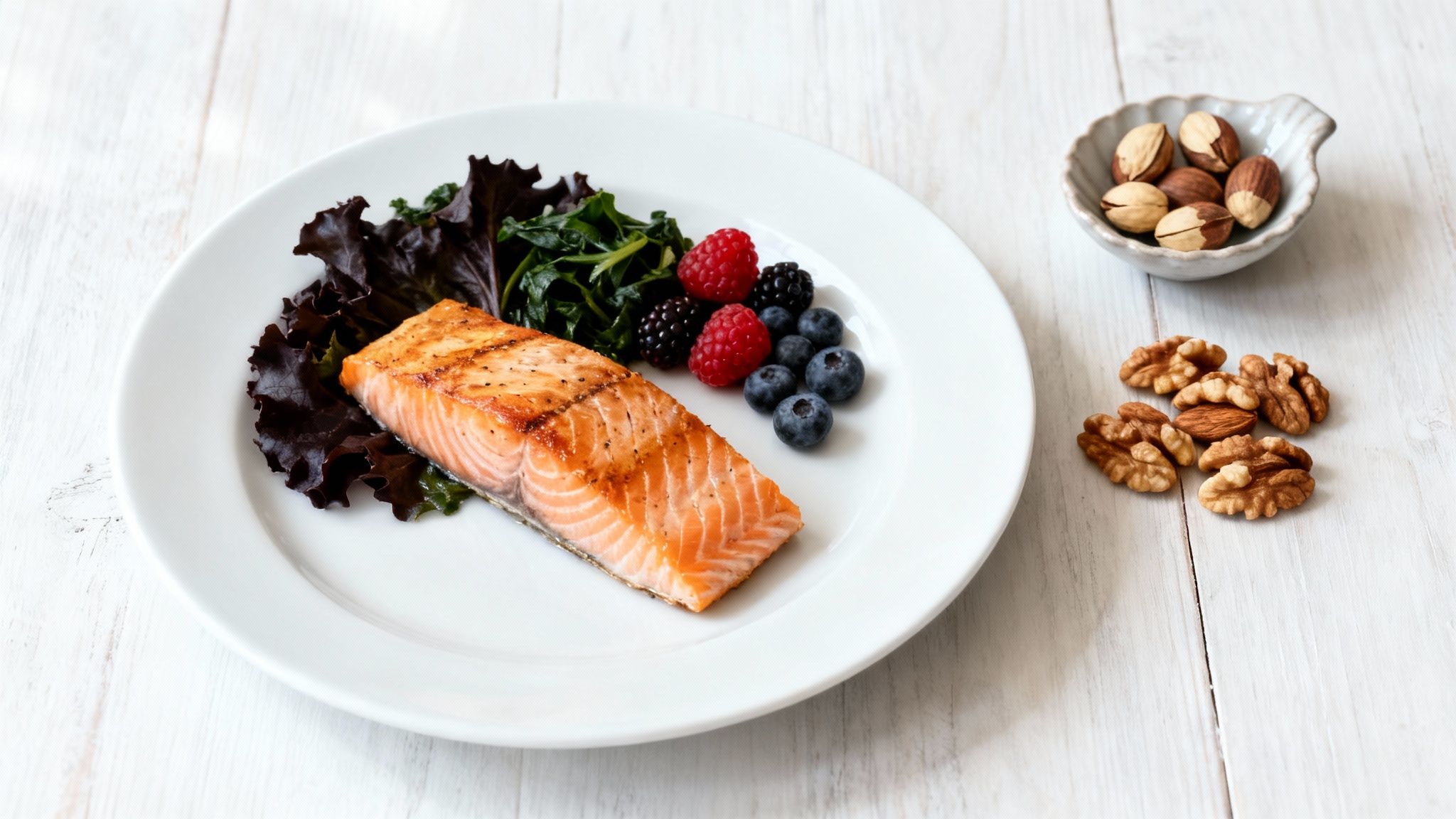
Every meal is a new opportunity to give your body the building blocks for true vitality. It’s not about following strict diets or giving up everything. It’s about developing a sense of which nutrients truly make your cells glow and make them more resilient to the effects of time.
Antioxidants: your cells’ bodyguards
Day after day, your cells are exposed to minor attacks from what are known as free radicals. These are unstable molecules produced by environmental stress such as UV radiation, as well as by perfectly normal metabolic processes in your body. When they become excessive, oxidative stress occurs—a condition that significantly accelerates cellular aging.
This is exactly where antioxidants come into play. Think of them as personal bodyguards for your cells. They intercept free radicals and neutralize them before they can cause any damage. This protects your cell structures and even your DNA.
A diet rich in these small helpers is therefore an absolute cornerstone of healthy aging. You can find them mainly in colorful fruits and vegetables. A good rule of thumb: The more intense the color, the more protective plant compounds they contain.
Every bite of a colorful meal is like delivering a protective shield directly to your body. This strengthens your internal defenses and gives your cells exactly the support they need for a long, healthy, functional life.
To ensure you get enough, you should bring as many different colors as possible to your plate. You can find an excellent overview of the best sources in our guide to antioxidant-rich foods.
Healthy Fats and Proteins for Structure and Strength
In addition to the protective shield provided by antioxidants, your cells also need the right building materials to remain stable and functional. Omega-3 fatty acids and proteins are the stars here.
Omega-3 fatty acids, found in fatty fish such as salmon, flaxseeds, and walnuts, are powerful anti-inflammatory agents. They help keep low-grade inflammation in the body under control—one of the main drivers of aging. They are also an important component of cell membranes and keep them flexible, allowing nutrients to enter and waste products to leave.
Proteins are the fundamental building blocks of life. As you age, they become increasingly important—not only for maintaining your muscle strength, but also for producing enzymes, hormones, and antibodies. An adequate intake ensures continuous repair and renewal throughout the body.
Micronutrients: The Spark Plugs of Metabolism
While macronutrients such as fats and proteins provide the building blocks, micronutrients—that is, vitamins and minerals—are the spark plugs that get all processes going in the first place. Their importance for healthy aging cannot be overstated.
Some of the most important players are:
- Vitamin D: Crucial for strong bones, a fit immune system, and communication between cells.
- Vitamin B12: Essential for nerve function, the formation of red blood cells, and DNA repair.
- Magnesium: Involved in over 300 enzymatic reactions in the body. It is essential for muscle function, energy metabolism, and stress regulation.
Even a slight deficiency in these important micronutrients can accelerate the aging process at the cellular level, even if you otherwise eat a healthy diet.
The Importance of Knowledge and Prevention
Fortunately, we are living longer and longer in Germany. The downside, however, is that many people do not spend these additional years in full health. It is alarming that today more than 82 percent of women and around 71 percent of men over the age of 80 suffer from several chronic diseases at the same time.
Studies repeatedly show that better health literacy is often associated with better health in old age. This underscores the importance of prevention. This is exactly where you can take action. By understanding how your diet protects your cells, you take control yourself. It is not just about adding years to your life, but above all about adding life to your years.
Exercise as the key to your independence
If a good diet is the foundation for a long, healthy life, then exercise is the framework that keeps you upright and strong. This is not about becoming a marathon runner. It is about using your body intelligently and preparing it for the typical wear and tear of aging—for an independent life guided by your own choices.
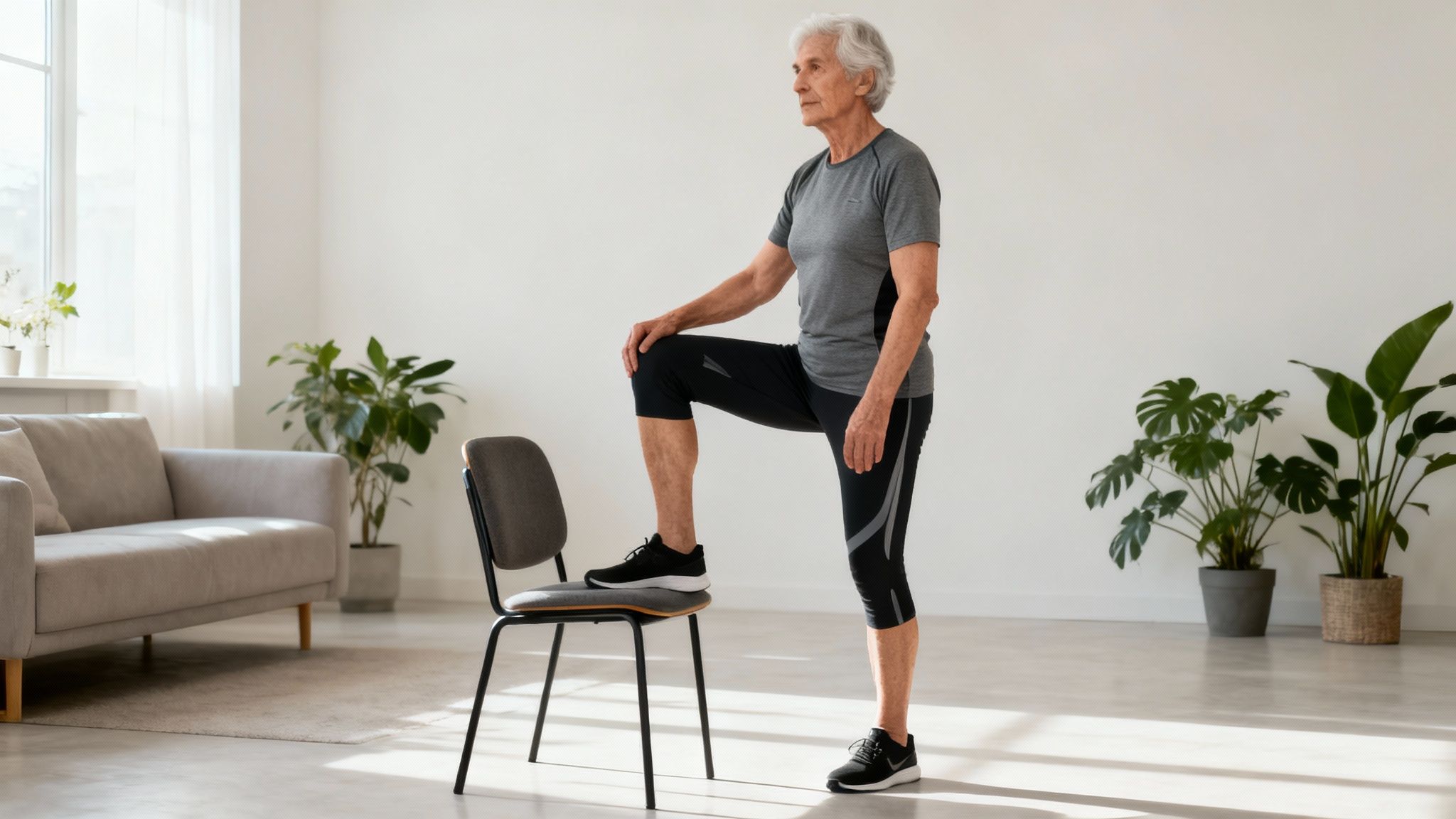
You may already have come across the term sarcopenia. It describes the age-related loss of muscle mass and strength, which many people dismiss as an unavoidable fate. But the truth is that you have some control over it. With the right mix of different forms of exercise, you can not only slow this process down but actively counteract it.
Strength training to combat muscle loss
Your muscles are so much more than just engines for movement. They are a huge metabolic organ that keeps your blood sugar balanced, supports your bones, and keeps your energy expenditure high even when you are resting. The problem? As early as age 30, the body begins breaking down muscle mass if you do not actively counteract it.
Targeted strength training is the most effective weapon against this decline. And don't worry—you don't have to sign up for a gym membership right away.
Simple exercises for at home that really make a difference:
- Squats (without weights): This is the perfect everyday exercise because it simulates getting up from a chair and strengthens your legs and core.
- Push-ups (against a wall or on your knees): These specifically build upper-body strength that you need for countless everyday tasks.
- Rows with a resistance band: The ideal exercise for a strong upper back and good posture—instead of sitting hunched over at your desk.
Regularity is what matters most here. Just two or three brisk sessions a week can make a huge difference to your stability and strength as you age.
Endurance for a strong heart
While strength training provides a stable framework, endurance training is essentially maintenance for your engine. Your cardiovascular system loves any activity that raises your pulse a little and leaves you slightly out of breath.
This keeps your blood vessels elastic, ensures that your entire body—including your brain—is better supplied with oxygen, and helps regulate your blood pressure. It is the absolute foundation for everyday energy and has been proven to reduce the risk of many typical age-related diseases.
Think of your heart as a pump. Regular endurance training is the maintenance program that keeps this pump efficient and strong, so it can reliably support you throughout your life.
Even moderate exercise such as brisk walking, going for a bike ride, or swimming is perfect. The only important thing is to find something you genuinely enjoy. That is the only way you’ll stick with it in the long term.
Balance for fall prevention
Falls are one of the greatest risks in old age. An unfortunate fall can quickly lead to fractures and end your independence from one day to the next. The good news: You can train your balance just like a muscle.
These small exercises are easy to incorporate into your everyday routine:
- Standing on one leg: Try standing on one leg for 30 seconds while brushing your teeth. Then switch sides.
- Heel walking: Walk a few steps around your home using only your heels, then switch to walking on your tiptoes.
These mini-sessions train the interaction between your nerves and muscles and give you noticeably more confidence and stability in everyday life.
The figures show just how important this independence is: At the end of 2022, around 12.5 million people between the ages of 65 and 80 were living in Germany. As the need for care increases with age, around 51.5 percent of all people in need of care are cared for at home by relatives. This underscores how crucial prevention is. The fact sheet on healthy aging offers more fascinating insights.
So exercise is far more than a hobby. It is your most active and best investment in a future filled with quality of life and independence.
Your personal roadmap to a vibrant life
Theory is all well and good, but what really matters in the end is putting it into practice in everyday life. You now know which pillars your well-being rests on and how strongly your genes influence your health. Now we’re taking this knowledge out into the real world—with a clear plan you can put into practice right away. Healthy aging is not a sprint but a journey. And it begins today.
The goal? A strategy that truly suits you. General advice is a starting point, but individual measures are the key. The insights from this article are your foundation. But if you want to dig deeper and hold the exact blueprint of your body in your hands, an analysis such as the mybody®x Skincare DNA Metabolism Test can reveal which lifestyle and nutrients are personally most effective for you.
Your checklist for the next four weeks
Forget the urge for perfection. We’ll start small, set realistic goals, and celebrate every single step. Here’s a simple checklist to get you started:
- Week 1: Add more color to your plate. Add one extra serving of colorful vegetables or fruit to your meals every day. A few berries in your muesli or a small salad with lunch? Perfect—that’s all you need to start.
- Week 2: Bring movement into your daily routine. Schedule two fixed 20-minute exercise sessions in your calendar. Whether it’s a brisk walk during your lunch break, a few squats at home, or a bike ride—the main thing is that you enjoy it.
- Week 3: Make recovery a priority. Try going to bed half an hour earlier on five out of seven nights. Most importantly: Turn off your phone and laptop one hour before going to bed.
- Week 4: Deepen your knowledge. Choose a topic that particularly captured your interest and read a more in-depth article about it. A great starting point is our article on personalized nutrition, which shows you just how uniquely your body works.
The key to success isn’t turning everything upside down overnight. It’s about building sustainable habits that fit naturally into your life and strengthen your health day by day.
Think of this roadmap as your personal starting point. Adapt it, expand it, and above all, stay curious. Every small step you take today is an invaluable investment in your future vitality and joy in life. You have everything in your hands to embark on this journey successfully and full of energy.
Any more questions? Here are the answers
Finally, we want to address a few more questions that we regularly receive about healthy aging. We hope they give you even more clarity on your journey.
Can I really influence the aging process?
Yes, absolutely! Your genes may be the foundation, but your lifestyle is the architect. Nutrition, exercise, and daily habits determine how quickly the aging clock ticks.
Think of your genes as a script: you are the director and determine how the story ends. You have the power to preserve your vitality through the right measures and actively shape your healthy years of life.
When should I start thinking about it?
The short answer: ideally yesterday. Healthy aging isn't a project for retirement, but a decision you should ideally make as early as your 30s and 40s.
The earlier you build a strong foundation of healthy habits, the more you will benefit from it later. But don't worry, it's never too late to start. Every positive change, no matter how small, counts!
Is physical health all that matters?
Absolutely not. Healthy aging is always a holistic matter. Mental fitness, social connections, and emotional balance play just as important a role as a fit body.
Staying curious, continuing to learn, and surrounding yourself with people who are good for you create the best conditions for quality of life and mental clarity well into old age. Body and mind are a team—they strengthen each other.
How can I tailor my approach to my needs?
General tips are a good start, but personalization is the key to success. Your body is unique. To find out what it really needs—what nutrients, type of exercise, or skincare—data-based insights are worth their weight in gold.
Analyzing your genes is like having a personal instruction manual for your body. It reveals how your metabolism works and what specific needs your skin has. This allows you to take targeted, effective action instead of simply guessing.
The mybody®x Skincare DNA Metabolism Test provides exactly these in-depth insights. You receive a clear, scientific basis for your decisions and can tailor your health strategy precisely to your needs.
Are you ready to learn the language of your body and take your health into your own hands? At mybody®x, you'll find scientifically backed self-tests that provide clear answers and personalized recommendations. Discover the Skincare DNA Metabolism Test now and start your journey toward a vibrant, self-determined life.

Share now:
Genetic Metabolism: Everything You Need to Know
Function of Metabolic Tests: Everything You Need to Know